

Direct Phone Numbers: How to Find & Use Them (2026)
Cold calling success rates dropped to 2.3% last year - down 53% from the prior year. The problem isn't cold calling itself. It's calling the wrong numbers. Sales reps lose over 70% of their calling time to gatekeepers, voicemail, and disconnected lines, and with verified direct phone numbers, the same 300 dials produce dramatically more real conversations than calling switchboards ever will.
This piece covers finding other people's direct dials for B2B outreach - not setting up a direct business line for your company. Below: seven sourcing methods, honest tool recommendations with pricing, and the compliance guardrails that keep your team out of trouble.
What Is a Direct Phone Number?
A direct phone number is a line tied to a specific individual rather than a company switchboard. When you dial it, you reach that person - or at minimum, their personal voicemail. No receptionist screening. No "let me transfer you." No hold music.
The distinction matters more than most teams realize. A switchboard number routes through a gatekeeper trained to deflect cold calls. A direct dial bypasses that layer entirely. A work mobile goes even further - it rings in someone's pocket, regardless of whether they're at their desk, in a meeting, or working from home.
| Number Type | What It Is | Dials per Connect | Relative Connect Rate |
|---|---|---|---|
| Switchboard | General company line | ~19 | Baseline |
| Direct Dial | Desk line to a person | ~13 | ~46% higher |
| Work Mobile | Personal mobile for work | Single digits | Up to 7x higher |
Research backs this up: it takes 8-18 dials to speak to a prospect through general numbers. With accurate direct dials, that number shrinks fast. With verified mobiles, you can get into single-digit dials per connect.
Why Direct Dials Change Sales Productivity
If your reps make 25 calls per hour - a reasonable pace with a dynamic dialer - the number type they're calling determines their entire day:
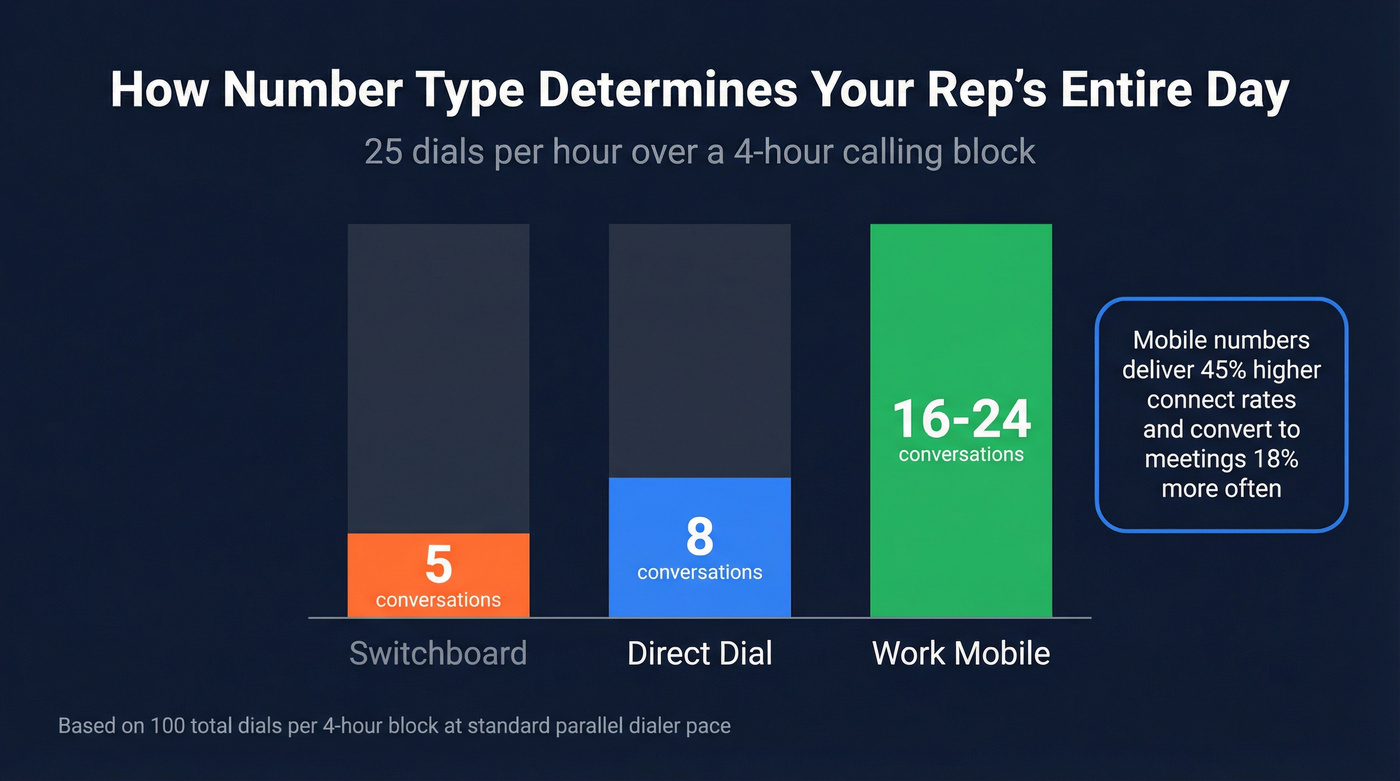
| Number Type | Dials/Hour | Connects/Hour | Conversations in 4-Hour Block |
|---|---|---|---|
| Switchboard | 25 | ~1.3 | ~5 |
| Direct Dial | 25 | ~2 | ~8 |
| Work Mobile | 25 | ~4-6 | 16-24 |
That's the difference between a rep who books one meeting per day and a rep who books three. Mobile numbers deliver 45% higher connect rates than landlines, and those conversations convert to meetings 18% more often. Gartner projects 60% of B2B sales organizations will shift to data-driven selling by 2026 - and direct dial quality is the foundation of that shift.
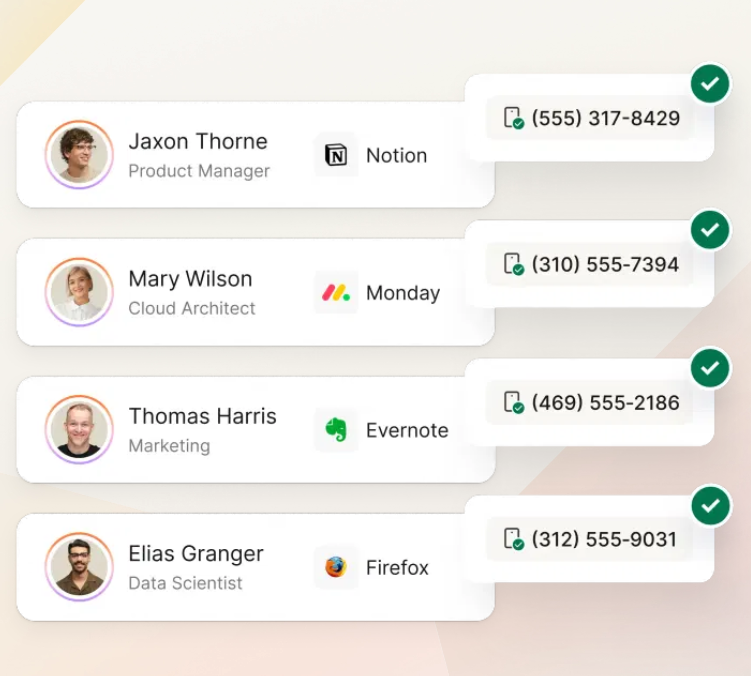
Now factor in data quality. A Salesfinity benchmark across 9 providers found accuracy ranging from 63% to 91%. If 25% of your phone data is wrong and an SDR makes 300 dials per day, that's 75 wasted calls daily - roughly $7,500 per rep per year in burned dial time and software minutes.
Local presence dialing pushes answer rates to 27.5% when the caller ID shows a local area code, versus 7% for toll-free numbers. So even after you get the right number, how you display yours matters.
Here's the thing: most B2B phone data is mediocre. Even the best provider in that Salesfinity benchmark had roughly 1 in 10 numbers wrong. If you're not actively testing your provider's accuracy, you're burning money and blaming your reps for it.
How to Find Direct Phone Numbers
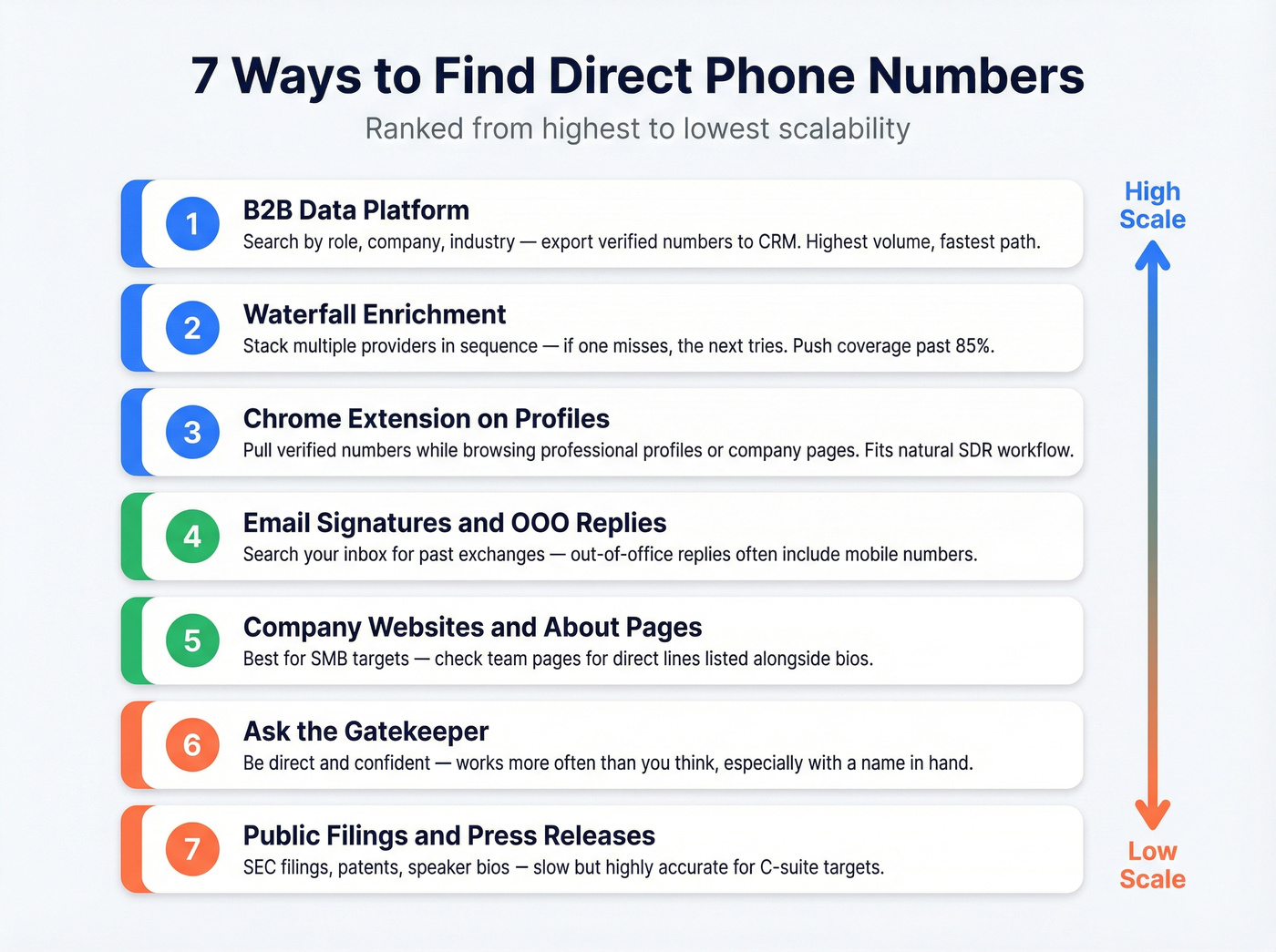
Use a B2B Data Platform
The fastest path to verified direct dials is a dedicated data platform. Search by role, company, industry, or dozens of other filters, then export verified numbers directly to your CRM or sequencer. Top platforms refresh data weekly and verify numbers before delivery - which matters because the industry-average refresh cycle is closer to six weeks.
Browse Company Websites and "About" Pages
Small and mid-market companies often list direct lines on their team pages, especially for sales and leadership roles. This doesn't scale for enterprise prospecting, but for targeted outreach to a shortlist of 20-30 accounts, ten minutes of manual research can surface numbers that no database has indexed yet. The key is distinguishing these from general office numbers - a direct line connects you to a specific person without routing through a switchboard.
Check Email Signatures and Out-of-Office Replies
People put their direct dials in email signatures constantly. If you've exchanged even one email with someone at the target company, search your inbox. Out-of-office replies are gold - they often include a mobile number and an alternate contact, giving you two numbers for the price of one bounced email.
Ask the Gatekeeper Strategically
Gatekeepers aren't the enemy. A simple "I'm trying to reach [Name] directly - do you have their direct line or mobile?" works more often than you'd expect, especially if you sound like someone who's supposed to be calling. Don't lie about who you are. Just be direct and confident.
Use a Chrome Extension on Professional Profiles
Browser extensions let you pull contact data while you're already researching a prospect. You're on someone's professional profile or company page, you click the extension, and it returns a verified email and phone number in seconds. This is the workflow most SDRs actually use day-to-day - it fits naturally into how they already prospect. Prospeo's extension, for example, returns verified mobiles from any website or CRM with a single click.
Cross-Reference Public Filings and Press Releases
For C-suite targets, SEC filings, patent applications, and press releases sometimes include direct contact information. Conference speaker bios are another underrated source. This method is slow and only works for senior executives, but the numbers you find this way tend to be highly accurate.
Stack Multiple Sources (Waterfall Enrichment)
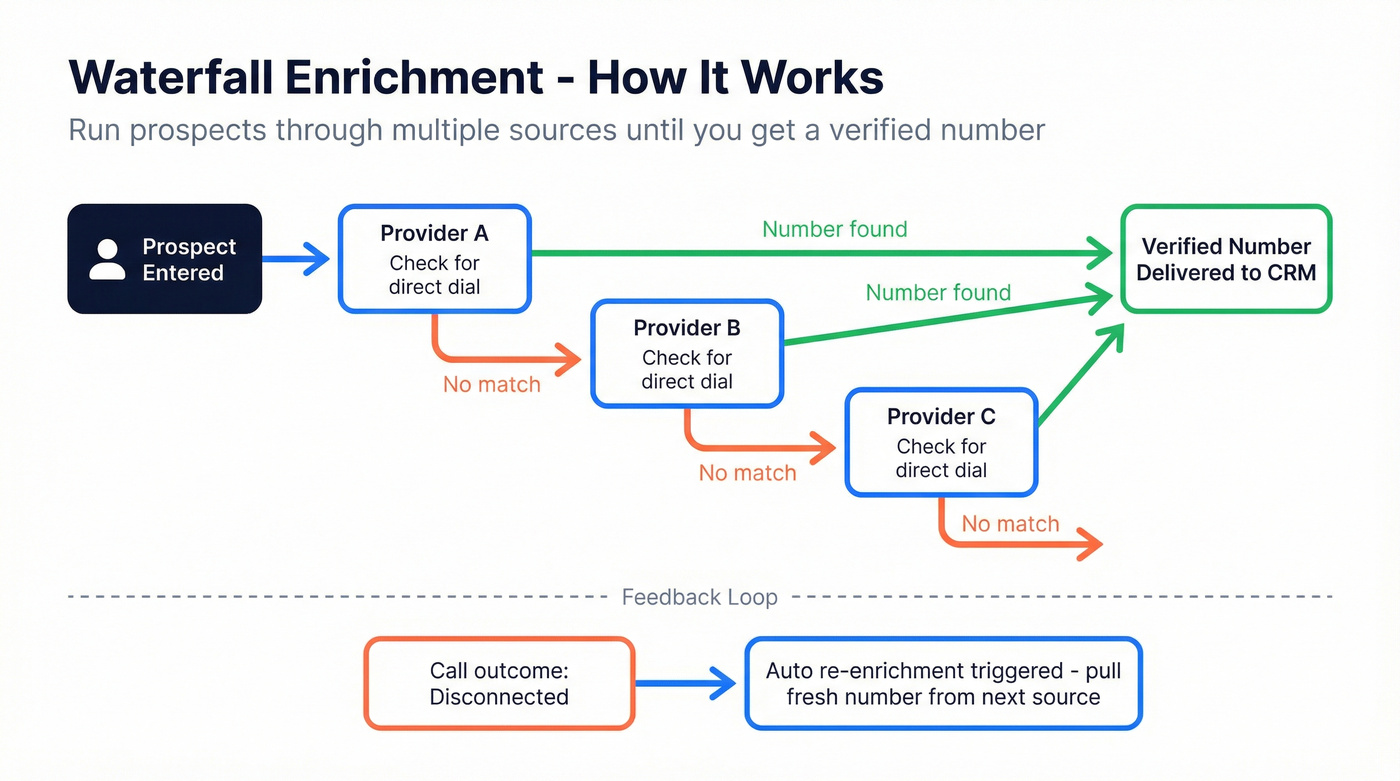
No single provider covers every contact. Waterfall enrichment runs a prospect through multiple data sources in sequence - if Provider A doesn't return a number, Provider B tries, then Provider C. The best teams also trigger re-enrichment based on call outcomes: if a number comes back disconnected, the system automatically pulls a fresh number from the next source. This is how you push coverage much higher without sacrificing accuracy.

Every wrong number costs your team time and money - 75 wasted dials per rep per day adds up fast. Prospeo's 125M+ verified mobile numbers deliver a 30% pickup rate, refreshed every 7 days so the number you pull today actually rings tomorrow.
Stop calling dead lines. Start connecting at 30% pickup rates.
Best Tools for Finding Direct Phone Numbers in 2026
Prospeo
Prospeo covers 300M+ professional profiles with 125M+ verified mobile numbers - all refreshed every 7 days, not the 6-week industry average. We've measured a 30% pickup rate on mobiles, the highest across providers we've tested, and 98% email accuracy means you're not burning sequences on bad data either.
The pricing model is what sets it apart for direct dials. At $0.01 per lead with a free tier (75 emails + 100 Chrome extension credits per month), you're not gambling credits on numbers that might be stale. The weekly refresh cycle means the number you pull on Monday is still accurate on Friday. Meritt, one of their customers, tripled pipeline from $100K to $300K per week and saw connect rates jump to 20-25% after switching.
Native integrations with Salesforce, HubSpot, Smartlead, Instantly, and Lemlist eliminate CSV juggling between your data source and your dialer.
Cognism
Skip this if your team only dials North America. Cognism's real advantage is EMEA.
Cognism's differentiator is Diamond Data - human-verified mobile numbers that go through a manual verification layer on top of automated checks. The platform checks against 15+ Do-Not-Call lists and bakes GDPR/CCPA compliance into the product rather than bolting it on as an afterthought.
Pricing is license-based rather than credit-limited, so your reps get unrestricted views subject to fair usage. Custom pricing typically runs $1,000-$3,000/mo for small teams - not cheap, but predictable. Cognism is widely considered strong in EMEA mobile coverage, while US depth tends to be stronger with other providers.
ZoomInfo
ZoomInfo's database runs 320M+ contacts and 100M company profiles, with the strongest coverage in North America. The platform layers intent signals, org charts, and workflow automation on top of the data - it's a full sales intelligence suite, not just a phone number provider.
The catch: small-team deployments frequently start above $15K/year and can run into six figures annually for enterprise deals. ZoomInfo is typically sold on a credit system, so if your reps only need direct dials, you're often subsidizing intent data, chat widgets, and workflow features nobody opens.
Let's be honest - ZoomInfo is still the best all-in-one sales intelligence platform. But most teams don't need all-in-one. If your average deal size is under $15K, it's often overkill, and you'll get better phone data from a specialist provider at a fraction of the cost.
One note on vendor benchmarks: claims like "1.55 dials per connect" reflect cherry-picked datasets. Independent benchmarks show ~13 dials per connect for direct dials as a more realistic baseline.
Apollo
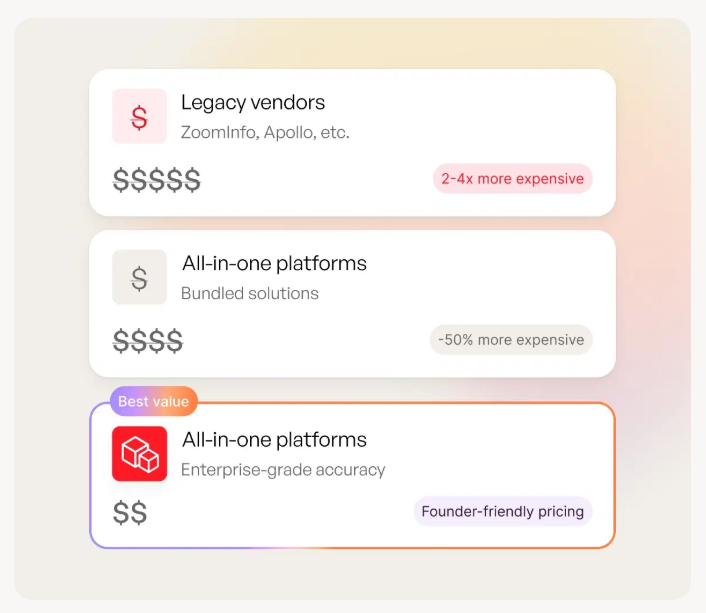
Apollo is the obvious starting point for SMB teams who want prospecting, sequencing, and a lightweight CRM in one tool. The free tier is genuinely useful, and paid plans run ~$49-$99/mo per user. Phone data coverage is decent for North America. Best for teams that want to get moving fast without stitching together five different tools.
Lusha
Lusha's Chrome extension is dead simple - click, get a number, dial. The free plan gives you 5 credits per user per month, with paid tiers at $29-$51/mo per user.
The problem: credits burn fast. A high-volume dialer will exhaust a monthly allocation in a single morning. Credit-based pricing is a trap for teams making 100+ dials per day. Lusha works for account executives doing targeted research on 10-15 prospects a week. It falls apart for SDR teams running volume plays.
Tool Comparison
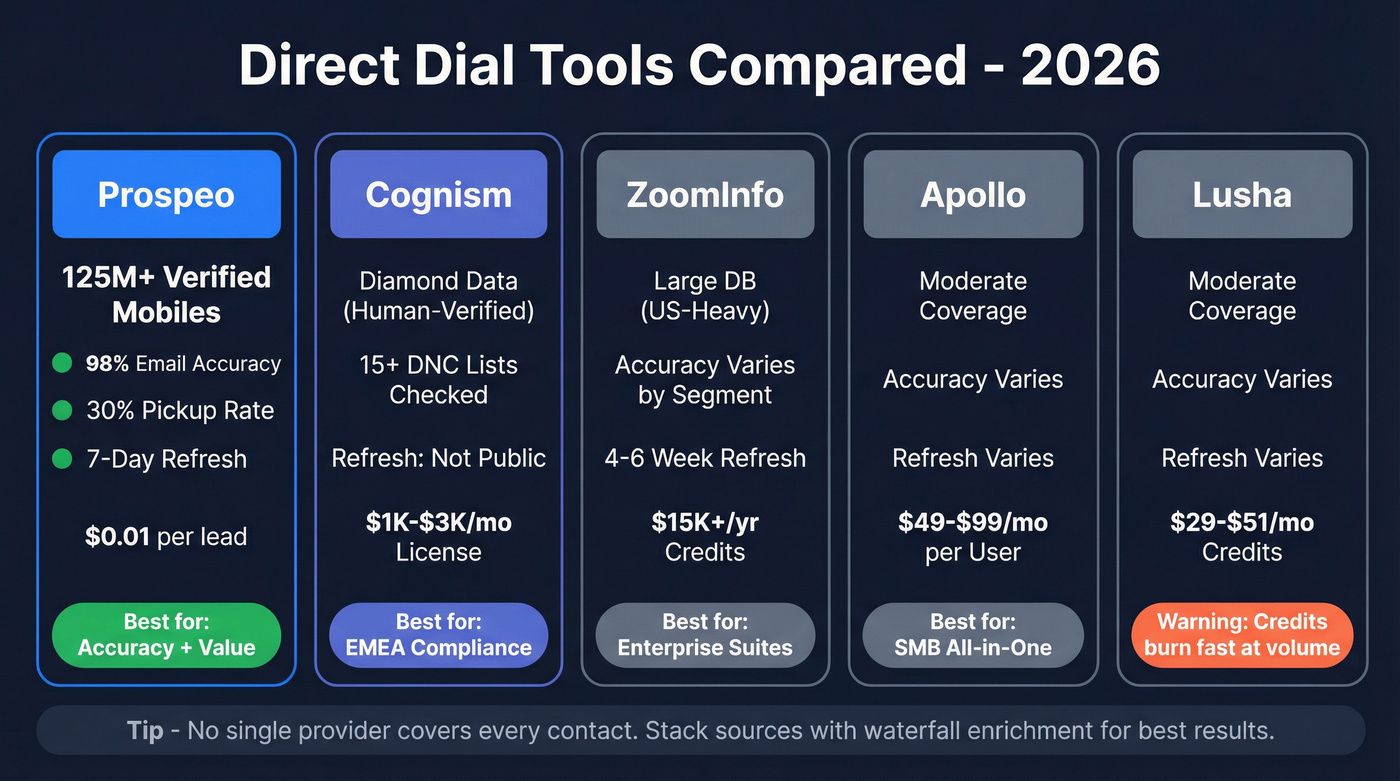
| Tool | Verified Mobiles | Accuracy | Data Refresh | Pricing Model | Best For |
|---|---|---|---|---|---|
| Prospeo | 125M+ | 98% email, 30% pickup | 7 days | Per-lead ($0.01) | Accuracy + value |
| Cognism | Diamond Data | Human-verified | Not public | License ($1K-$3K/mo) | EMEA compliance |
| ZoomInfo | Large (US-heavy) | Varies by segment | ~4-6 weeks | Credits, $15K+/yr | Enterprise suites |
| Apollo | Moderate | Varies by segment | Varies | $49-$99/mo/user | SMB all-in-one |
| Lusha | Moderate | Varies by segment | Varies | Credits, $29-$51/mo | Quick lookups |
Your reps don't have a calling problem - they have a data problem. Prospeo gives you direct dials to 300M+ professionals at $0.01 per lead, with 98% email accuracy and weekly data refresh. Meritt tripled pipeline and hit 20-25% connect rates after switching.
Replace stale switchboard numbers with direct dials that actually connect.
How to Evaluate a Direct Dial Provider
Database size is vanity. Refresh rate is sanity. A 500M-contact database refreshed every 6 weeks is worse than 300M contacts refreshed weekly. People change jobs, numbers get reassigned, and stale data kills connect rates silently.
The Salesfinity benchmark nailed the right framework: what matters is Accuracy x Coverage. A provider with 91% accuracy but 26% coverage still underperforms one with 80% accuracy and 85% coverage. You need both dimensions.
Here's the checklist we use when evaluating providers:
- Accuracy rate on your ICP, not their whole database. Ask for a test on your actual prospect list. Industry averages (63%-91%) are meaningless if your segment falls at the bottom of that range.
- Data refresh cycle. Seven days is best-in-class. Anything longer than 30 days means you're dialing numbers that have already been reassigned.
- Compliance features. DNC scrubbing, GDPR handling, and opt-out enforcement aren't optional - they're table stakes. If the provider doesn't check against multiple DNC lists, you're the one paying the fines.
- Pricing transparency. Credit-based models hide the true cost. Per-lead pricing or unlimited-view licenses let you forecast spend accurately. If you can't calculate your cost per connected conversation before signing, walk away.
Compliance Before You Dial
Real talk: compliance isn't optional, and the penalties aren't theoretical. The federal calling window is 8 a.m. to 9 p.m. in the recipient's local time zone. Miss that window and you're exposed immediately.
TCPA violations carry penalties of $500 per call, jumping to $1,500 for willful violations. The TCPA also includes a private right of action - meaning individuals can sue you directly, not just regulators. The FTC's Telemarketing Sales Rule adds another layer, focused on disclosures and deceptive practices, with DNC fines up to $50,120 per illegal call.
Your team needs to operationalize these five things before dialing at scale:
- Scrub your dial lists against the National DNC registry at least every 31 days. This isn't a suggestion - it's a legal requirement.
- Maintain an internal DNC list and honor opt-outs immediately.
- Respect state-level laws, which can be stricter. Connecticut, for example, imposes penalties up to $20,000 per violation.
- Understand the B2B mobile nuance: live agent calls to established business lines are typically less restrictive, but automated calls or texts to mobile numbers require prior consent. Mixed-use numbers - personal phones used for work - are treated as consumer lines.
One stat that should motivate compliance investment: 94% of recipients believe unidentified calls are fraudulent or spam. Proper caller ID management and local presence dialing aren't just nice-to-haves - they determine whether anyone picks up at all.
FAQ
What's the difference between a direct dial and a cell phone number?
A direct dial is any number reaching a specific person without a switchboard - it could be a desk phone, VoIP line, or mobile. A cell phone number is a device type. Work mobiles deliver up to 7x better connect rates than switchboards, but even a direct desk line significantly outperforms a main company number.
Are direct phone numbers legal for cold calling?
Yes, with guardrails. B2B cold calling to business lines with a live agent is generally permitted. Scrub against the National DNC registry every 31 days, call only between 8 a.m. and 9 p.m. recipient time, and honor opt-outs immediately. TCPA penalties run $500-$1,500 per call, and TSR/DNC penalties can reach $50,120 per illegal call.
How accurate are B2B phone number databases?
Accuracy varies from 63% to 91% across 9 benchmarked providers, with coverage ranging from 26% to 92%. The metric that matters is accuracy multiplied by coverage - a provider can be highly accurate but return numbers for only a quarter of your list. Prospeo's 30% mobile pickup rate and 7-day refresh cycle rank at the top of independent tests.
How often should I refresh my direct dial data?
Refresh every 30 days at minimum. Best-in-class providers refresh on a 7-day cycle. Data older than six weeks often produces a noticeable spike in disconnected numbers, wasting rep time and dialer costs.
What's the fastest way to find someone's direct number?
Use a Chrome extension while you're already researching the prospect. Pull a verified mobile from any professional profile or company website in seconds - no tab switching, no CSV uploads. For bulk needs, a platform with 30+ search filters lets you export directly into your CRM.