

How to Sell CRM Software (Without Sounding Like Every Other Vendor)
Your prospect just told you they're happy with spreadsheets. They've got a Google Sheet with 200 accounts, color-coded by "vibes," and they genuinely believe it's working. They're not entirely wrong - for now. But here's the reality: 50% of micro-businesses don't use CRM, the global CRM market is hitting $126B in 2026, and the AI-in-CRM segment alone is projected to grow from $11B to $48B by 2033. That gap between "fine with spreadsheets" and "desperately needs a system" is where you make money.
Your biggest competitor isn't Salesforce. It's inertia.
The Short Version
Stop selling "CRM." Diagnose business problems - lost deals, zero pipeline visibility, five-plus hours a week on manual data entry - and position CRM as the fix. Map the buying committee early, because CRM deals are never one-person decisions. 92.5% of buyers involve their team, and you need to know who's who before you demo. Then build a prospect list of companies actively researching CRM using intent data and verified contacts, so you find them before they find your competitor.
Know Your Buyer
CRM purchases look different depending on company size, but one thing's consistent: you're never selling to one person. Even at a 20-person company, the average CRM rollout touches multiple departments. If you're selling a lesser-known CRM, that's actually an advantage - buyer research shows name recognition is among the least important factors in the final decision. Usability, price, and support win.
The Buying Committee
| Role | What They Care About |
|---|---|
| Decision-maker | ROI, strategic fit |
| Champion | Day-to-day usability |
| Influencer | Integration, workflow |
| End user | Ease, speed, mobile |
| Blocker | Security, compliance |
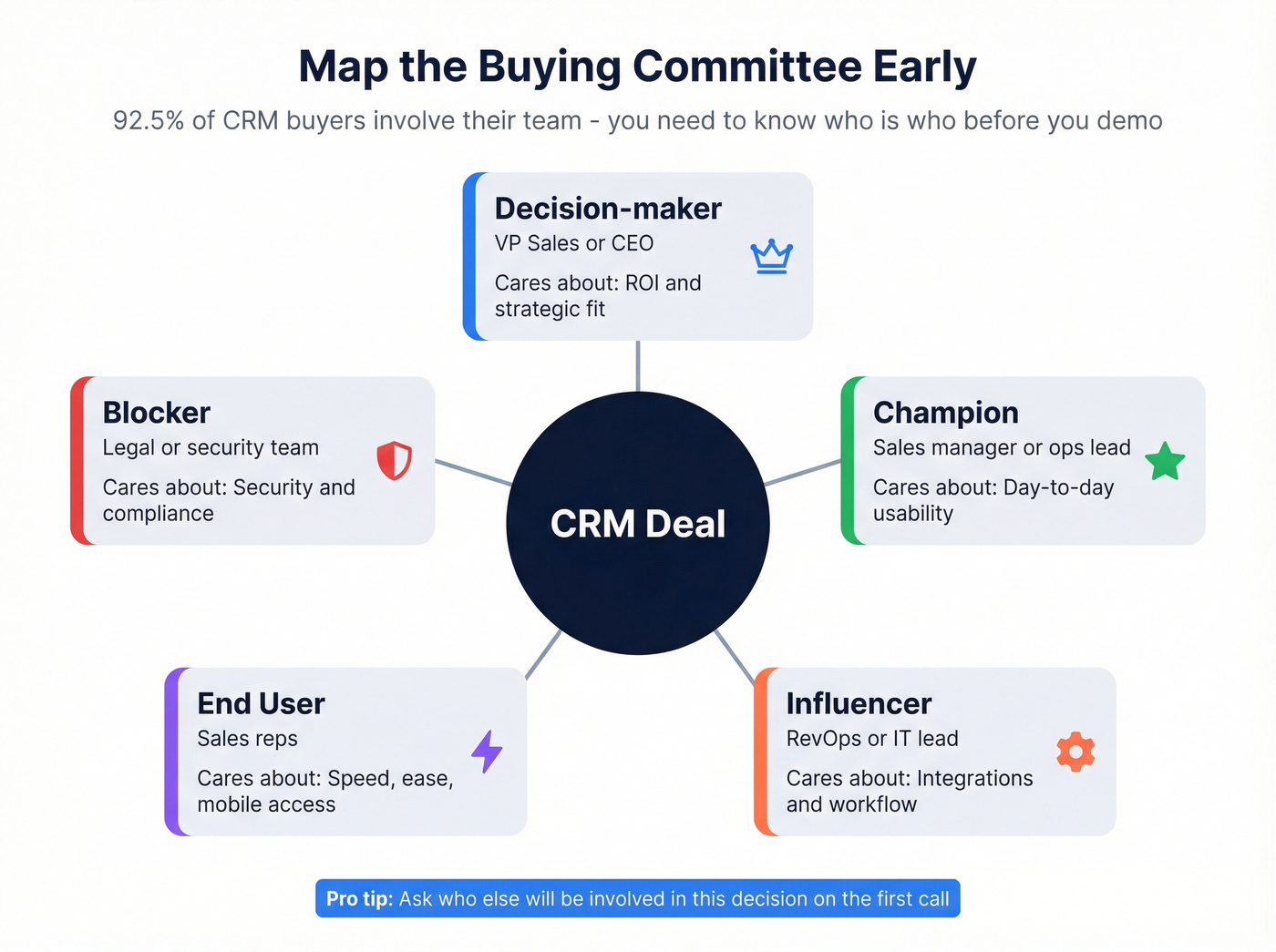
Ask early: "Who else will be involved in this decision?" Then track every role in your own CRM. Multi-threading isn't optional - it's how you avoid getting ghosted after a great demo.
Segment Expectations
| Segment | Cycle Length | Typical ACV |
|---|---|---|
| SMB | 2-4 weeks | $1k-$15k/yr |
| Mid-market | 1-3 months | $15k-$80k/yr |
| Enterprise | 3-9 months | $80k-$500k+/yr |
Know what your buyers are comparing you against. Salesforce dominates enterprise. HubSpot is a major SMB-to-mid-market option with a free tier that's hard to unseat. Pipedrive and Zoho compete aggressively on price. Microsoft Dynamics 365 often shows up in Microsoft-heavy stacks. Freshsales targets startups and SMB teams. If you're selling against any of these, your positioning needs to be sharper than "we're better" - it needs to be "we solve the specific problem they don't."
The 7-Stage CRM Sales Process
Most SaaS sales processes look similar on paper. What separates good CRM sellers is having clear entry and exit criteria for each stage so deals don't stall in "demo limbo" for weeks.
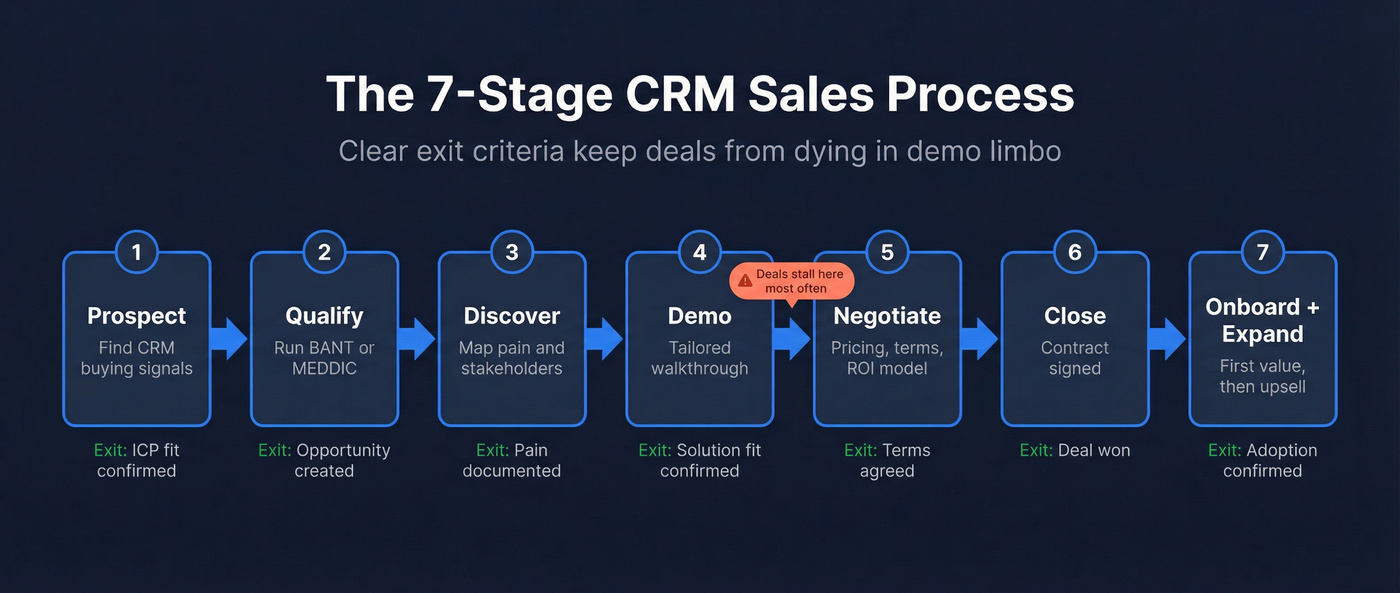
- Prospect - Identify companies showing CRM buying signals. Exit: confirmed ICP fit.
- Qualify - Run BANT or MEDDIC. Does the company have budget, authority, need, and timeline? Exit: qualified opportunity created.
- Discover - Deep-dive into their current workflow, pain points, and stakeholder map. Exit: documented pain plus buying committee mapped.
- Demo - Tailored walkthrough tied to their specific problems. Exit: verbal confirmation of solution fit.
- Negotiate - Pricing, terms, implementation timeline. Build a decision package: a one-page outcome summary, an ROI model, and a relevant case study. This single document does more to unstick deals than any follow-up email you'll ever send. Exit: commercial terms agreed.
- Close - Contract signed. Exit: deal won.
- Onboard + Expand - First value delivered, then upsell. 20-70% of CRM projects fail due to poor adoption, so enforce a simple rule from day one: "If it isn't in the CRM, it didn't happen." Appoint a CRM champion, run weekly check-ins for the first month, and don't disappear after the signature.
Let's be honest about something: management expects you to close CRM deals on the same timeline as a $500/month tool. Push back. Enterprise CRM deals take 3-9 months, and that's normal. One of the most common fears we've seen from reps considering CRM roles is exactly this - the cycles can be long, and the performance pressure hits before pipeline matures.

Long CRM sales cycles demand pipeline that's always full. Prospeo tracks 15,000 intent topics so you can find companies actively researching CRM solutions right now - then export verified emails (98% accuracy) and direct dials to every member of the buying committee.
Stop guessing who needs CRM. Let intent data tell you.
How to Find Companies That Need CRM
Half of micro-businesses don't use CRM. 32% of UK SMEs still run on spreadsheets. The whitespace is enormous - but you can't just cold-call every 15-person company and hope. You need signals.
The move that works is intent data. Find companies actively researching CRM solutions right now. Filter by tech stack to spot companies still on legacy tools or no tools at all. Layer in headcount growth signals - a company that just hired 10 reps probably needs a CRM yesterday.
Treat this as research first, outreach second. Understand what they're using, what they're searching for, and what trigger event made them start looking. Then reach out with context, not a generic pitch. What to avoid: buying generic "SMB" lists with no intent signals. You'll burn through hundreds of dials to find one company that's actually in-market.
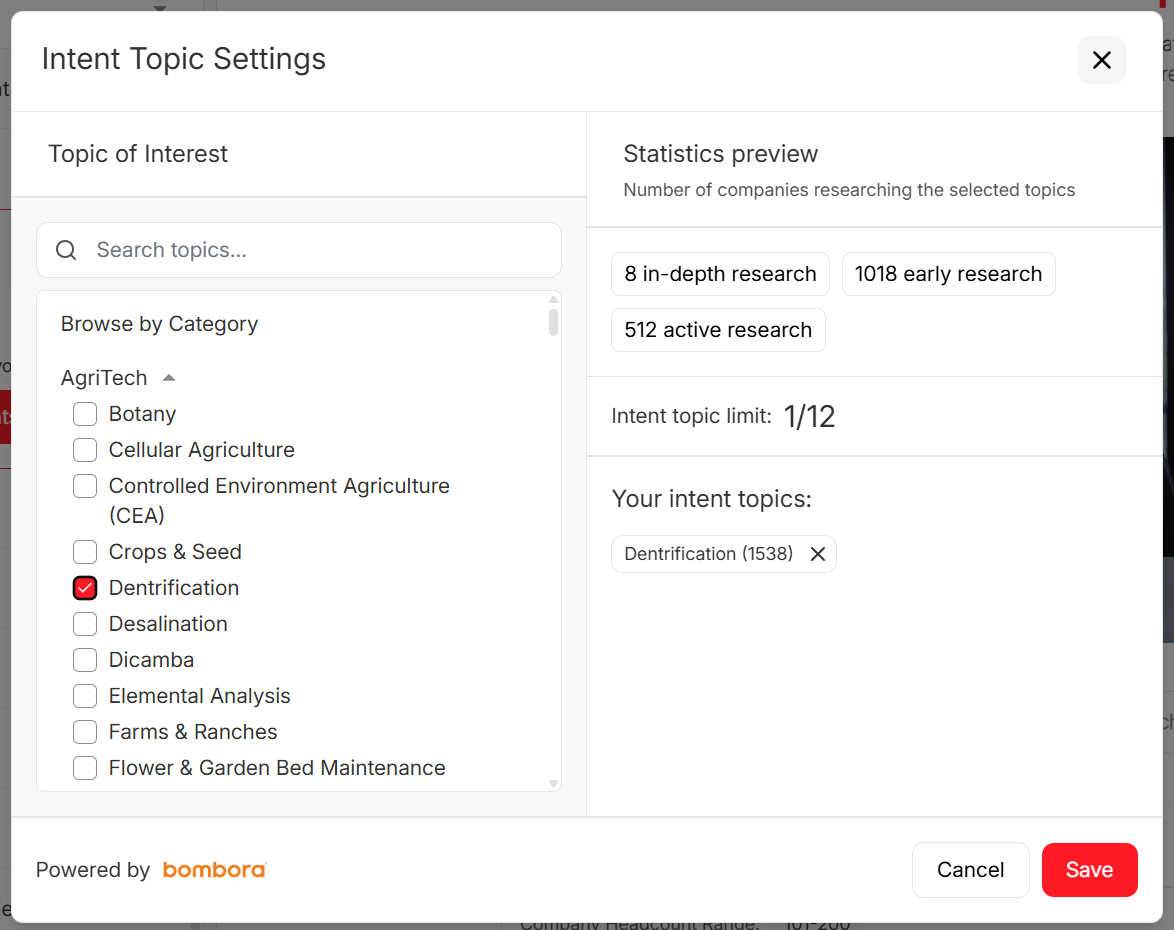
Prospeo makes this workflow fast. Set intent filters across 15,000 Bombora-powered topics, narrow by company size, tech stack, and headcount growth, and you're searching 300M+ profiles with 98% email accuracy - which keeps your bounce rate under control. The free tier gives you 75 emails a month to test it, no contract required.
Multi-threading the buying committee is how you avoid getting ghosted after a great demo. Prospeo gives you verified emails and mobile numbers for decision-makers, champions, and influencers at the same company - across 300M+ profiles refreshed every 7 days.
Reach every stakeholder in the deal, not just your champion.
Run a Demo That Converts
48.5% of CRM buyers want an in-depth conversation with a product expert before purchasing. Not a slick video. Not a self-serve trial. A real conversation. Your demo should be 80% about the buyer, 20% about the product.
| Block | Time | Focus |
|---|---|---|
| Welcome | 3 min | Set agenda, confirm goals |
| Discovery recap | 7 min | Replay their pain back |
| Relevant features | 15 min | Only what solves their problems |
| Interactive activity | 10 min | Let them drive the product |
| Wrap-up + CTA | 5 min | Next step, decision timeline |
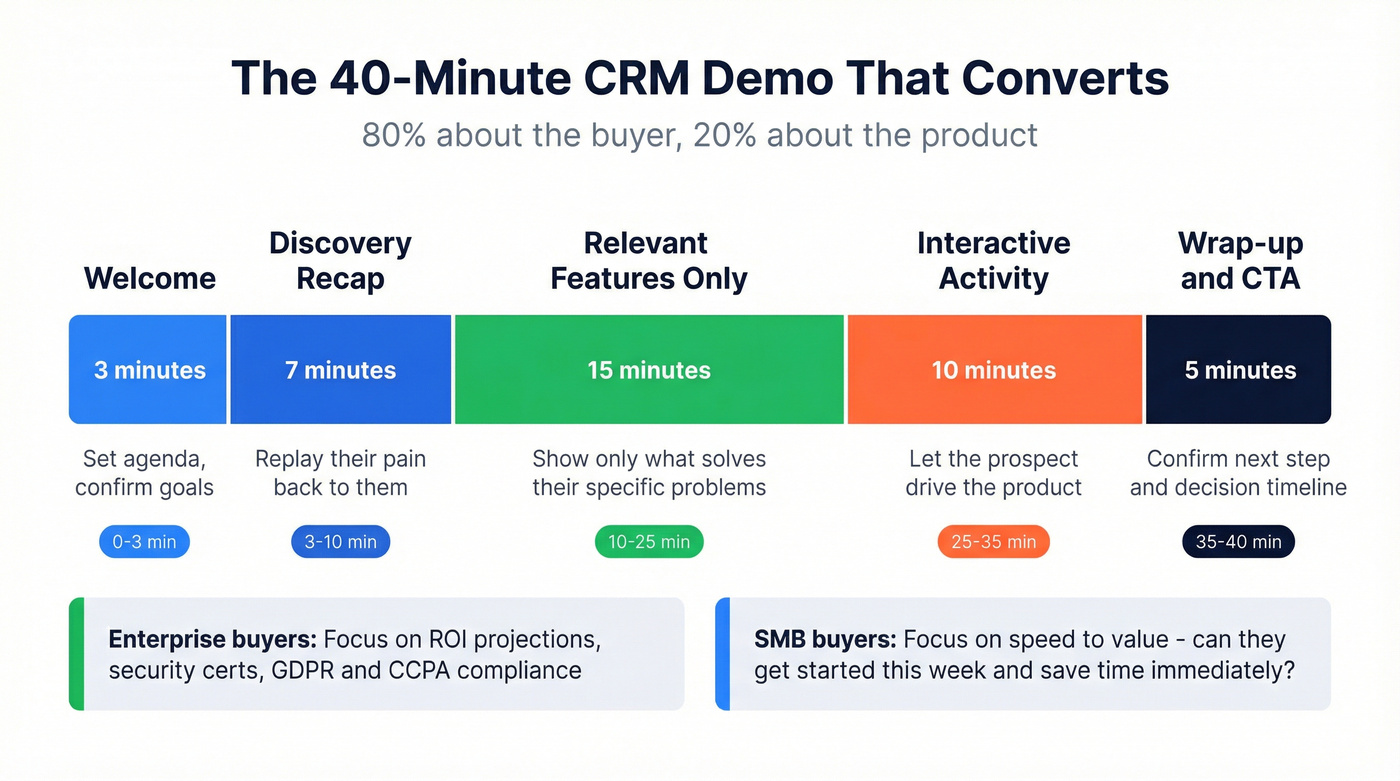
Tailor by segment. Enterprise buyers care about ROI projections, security certifications, and compliance like GDPR and CCPA. SMB buyers want to see how fast they can get started and whether it'll actually save them time this week. We've seen reps lose enterprise deals by demoing the same "quick setup" pitch they use for 5-person teams. Match the message to the room.
Objections You'll Hear
Every CRM sale hits the same walls. Here are the five you'll face most.
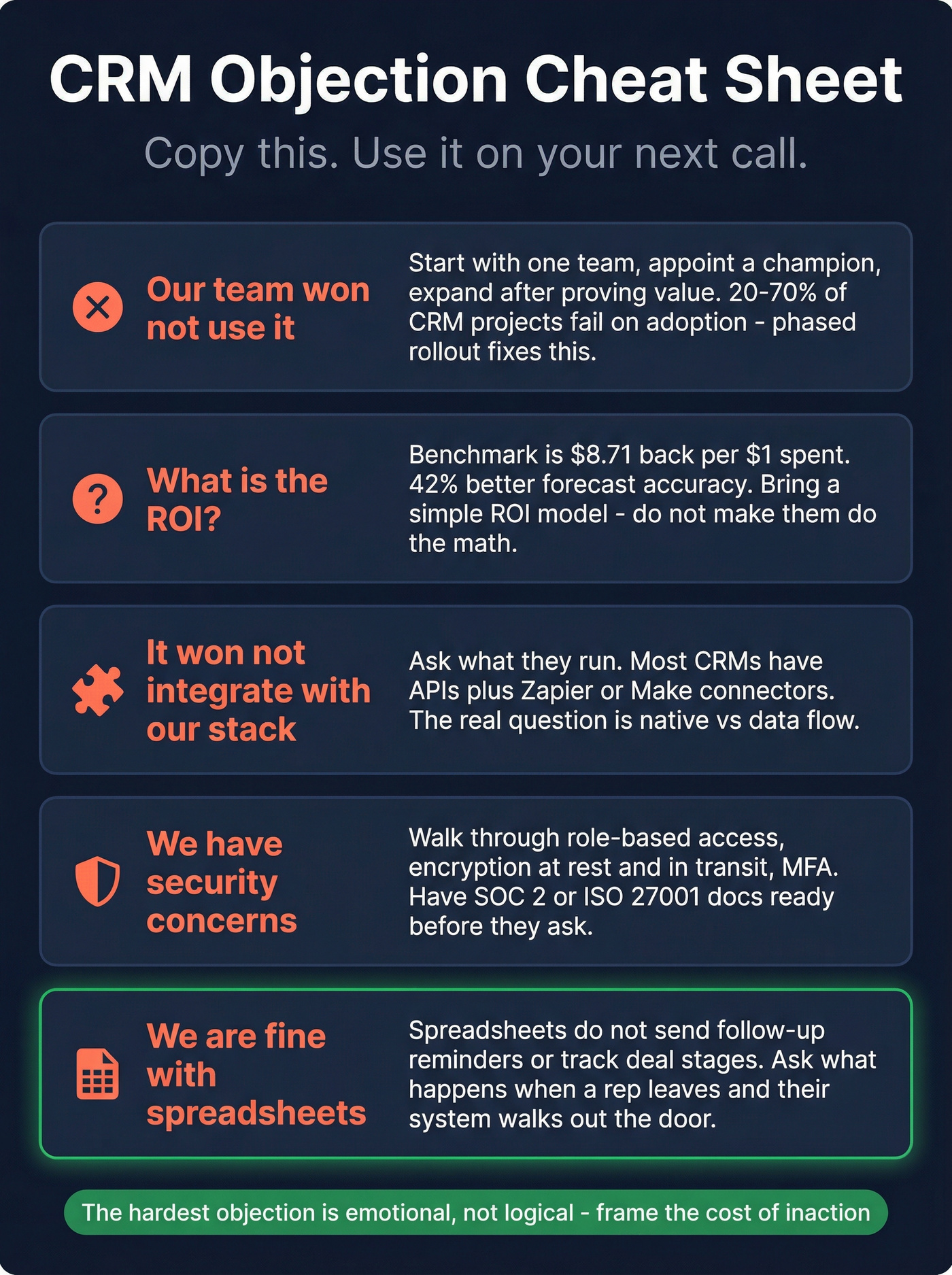
"Our team won't use it." Fair concern - 20-70% of CRM implementations fail on adoption. Counter with a phased rollout: start with one team, appoint a champion, and expand once you've proven value. Don't try to boil the ocean on day one.
"What's the ROI?" The benchmark is $8.71 returned per $1 spent. Companies also report 42% improvement in forecast accuracy and sales cycles that shorten 8-14%. Bring a simple ROI model to every negotiation - don't make them do the math.
"It won't integrate with our stack." Ask what they're running. Most modern CRMs offer API access plus connectors through Zapier or Make. The real question isn't whether integration is possible, but whether they need native integrations or just data flow.
"We have security/compliance concerns." Walk them through role-based access, encryption at rest and in transit, and MFA. If you're selling into regulated industries, have your SOC 2 or ISO 27001 documentation ready before they ask.
"We're fine with spreadsheets." In our experience, this is the hardest objection because it's emotional, not logical. Spreadsheets don't send follow-up reminders, track deal stages, or show you whether activities are getting logged consistently. Frame the cost of inaction, not the cost of the tool. Ask them to walk you through what happens when a rep leaves and their "system" walks out the door with them.
Mistakes That Kill CRM Deals
Leading with price instead of value. If the first thing out of your mouth is "$49/user/month," you've already lost the framing battle. Lead with the problem you solve.
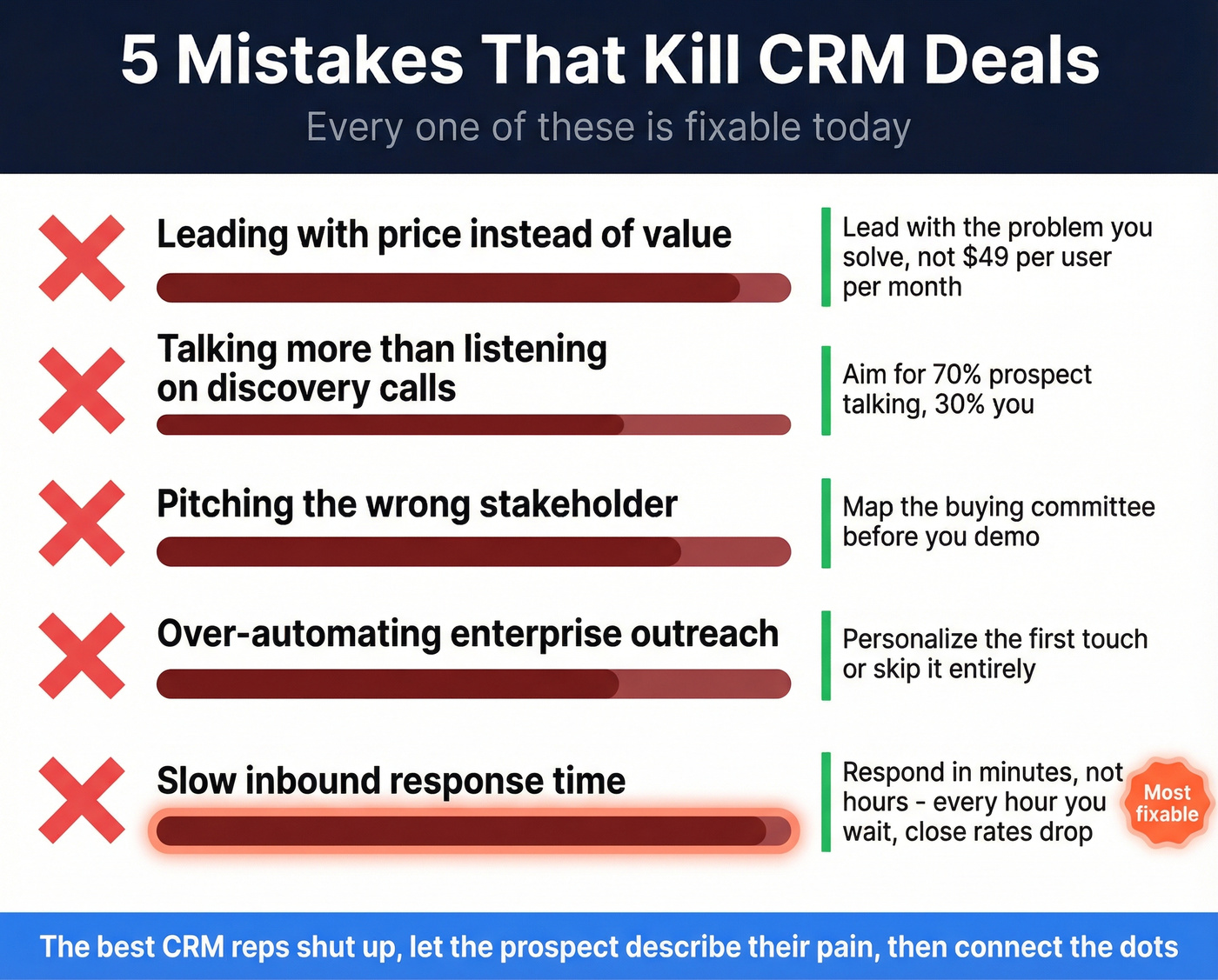
Talking more than listening. Discovery calls should be 70% prospect, 30% you. If you're doing most of the talking, you're pitching - not selling. The consensus on r/sales is that the best CRM reps are the ones who shut up and let the prospect describe their own pain, then connect the dots.
Pitching the wrong stakeholder. A champion who loves your product but can't sign a check is a dead end without executive sponsorship. Map the committee early.
Over-automating enterprise outreach. A 500-person company doesn't want your 8-email drip sequence. Personalize the first touch or skip it entirely.
Slow inbound response. When a prospect requests a demo, respond in minutes - not hours. Every hour you wait, the odds of closing drop dramatically. This one's frustrating because it's so fixable, yet we see teams blow it constantly.
FAQ
How long does it take to close a CRM deal?
SMB deals close in 2-4 weeks, mid-market in 1-3 months, and enterprise in 3-9 months. Multi-stakeholder alignment and procurement processes are the biggest variables - not your sales skills.
What's the average ROI of CRM software?
The widely cited benchmark is $8.71 returned per $1 spent. Companies also report a 29% increase in sales, 34% improvement in productivity, and 42% better forecast accuracy after adoption.
How do I sell CRM to a company using spreadsheets?
Don't attack the spreadsheet - respect it, then outgrow it. Ask them to walk through their process for following up on a stale deal or generating a pipeline report. The gaps reveal themselves. 92% of businesses say CRM is essential for hitting revenue goals, and their competitors aren't using spreadsheets.
What's the hardest part of selling CRM software?
Adoption risk. Buyers know that 20-70% of implementations fail, and they're terrified of paying for shelfware. De-risk the rollout with a phased plan, a named champion, and early wins that prove value before full deployment.
What tools help with CRM prospecting?
For finding companies actively researching CRM, you want intent data paired with verified contact info. Prospeo covers both with 15,000 Bombora intent topics and 98% email accuracy. ZoomInfo and Apollo also offer intent data, but at higher price points and lower email accuracy - 87% and 79% respectively.