

Intent Based Segmentation: How to Segment by Buying Signals, Not Demographics
Marketing hands sales a list of 2,000 "intent" accounts. Sales asks the only question that matters: "Which ones first?"
That's the problem intent based segmentation solves - and the problem most teams still get wrong. They buy the data, build the dashboards, and then treat every signal the same. The result is a firehose of "high-intent" accounts that reps ignore because there's no real prioritization behind it.
Quick note: if you're here from a networking or cybersecurity background, this term also refers to translating business requirements into network segmentation policy. This article covers the sales and marketing meaning - grouping prospects by buying signals to prioritize outreach.
The Short Version
Group prospects by buying signals, not job titles. Build a 3-tier signal hierarchy. Act within 48 hours of a high-intent signal. None of it works if your contact data is stale.
What Is Intent Based Segmentation?
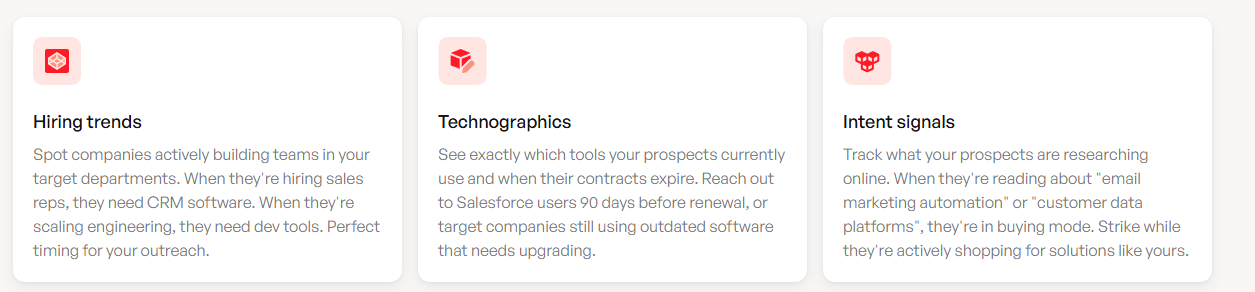
This approach groups prospects by what they're trying to accomplish right now, not by who they are or what they've done before. It borrows from behavioral, lifecycle, and benefit-sought segmentation but adds a forward-looking lens. At its core, it's a form of intent based audience targeting - reaching the right accounts because they're showing real buying signals, not because they match a static list.
The key distinction is active versus passive intent. Active intent means someone's comparing vendors, requesting demos, or hitting your pricing page repeatedly. Passive intent looks like reading blog posts or browsing reviews. Both matter, but they demand completely different responses. Treating a blog reader like a demo-ready buyer burns trust fast.
Why It Beats Traditional Segmentation
Demographics tell you who. Intent tells you when.
A VP of Engineering at a 500-person SaaS company is a great firmographic match. But if they're not actively evaluating solutions, you're just noise in their inbox. Meanwhile, a senior manager at a smaller company who's visited your pricing page three times this week? That's a live opportunity.
Intent-driven targeting surfaces these moments so reps focus on accounts that are actually in-market. 67% of B2B teams already use intent data for digital advertising, and adoption keeps climbing because intent captures goal alignment in real time - something big titles and feature usage never predicted well.

Intent signals decay fast - 48 hours is your window. Prospeo layers Bombora intent data across 15,000 topics with 30+ filters, then delivers 98% verified emails and direct dials so you can act on Tier 1 signals before they expire.
Stop watching high-intent accounts go cold while you hunt for contact data.
The 3-Tier Signal Framework
Not all signals are equal. Here's the hierarchy we use:
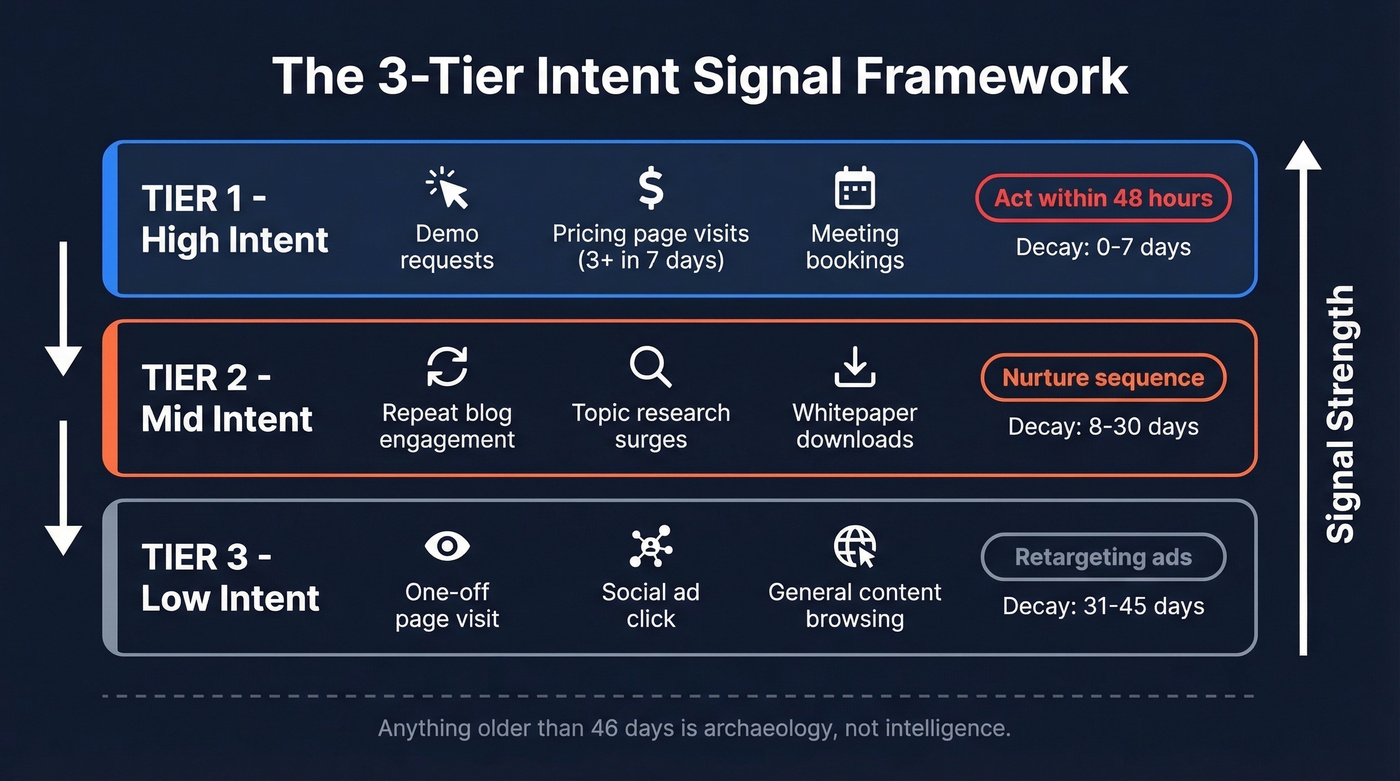
| Tier | Signal Type | Examples | Decay Window |
|---|---|---|---|
| Tier 1 | High intent | Demo requests, pricing activity | 0-7 days |
| Tier 2 | Mid intent | Repeat engagement, topic research | 8-30 days |
| Tier 3 | Low intent | One-off traffic, general browsing | 31-45 days |
Anything older than 46 days is archaeology, not intelligence.
Temporal clustering matters enormously. Five pricing page visits in one week signals active evaluation. The same five visits spread over three months signals idle curiosity. The raw count is identical - the pattern is completely different. We've found the most useful operational threshold is 3+ high-value interactions within 7 days.
Content sequencing is another underused signal. When a prospect jumps straight from awareness content to API docs and pricing calculators - skipping the usual comparison phase - that's a late-stage buyer. Track the sequence, not just the page count. Cross-device activity within 48 hours (laptop research, then mobile demo signup) also suggests a buying committee is forming, not just one curious individual browsing.
Here's the thing: a 48-hour action window on Tier 1 signals isn't aggressive. It's table stakes. By day three, your competitor's already in the conversation.
Five Mistakes That Kill Your Segmentation
1. The pricing page trap. Everyone over-indexes on pricing visits. 88% of high-intent visitors never touch the pricing page, and up to 94% of pricing visitors aren't ready to buy. If pricing is your top signal, you're chasing the wrong people and missing the real buyers.
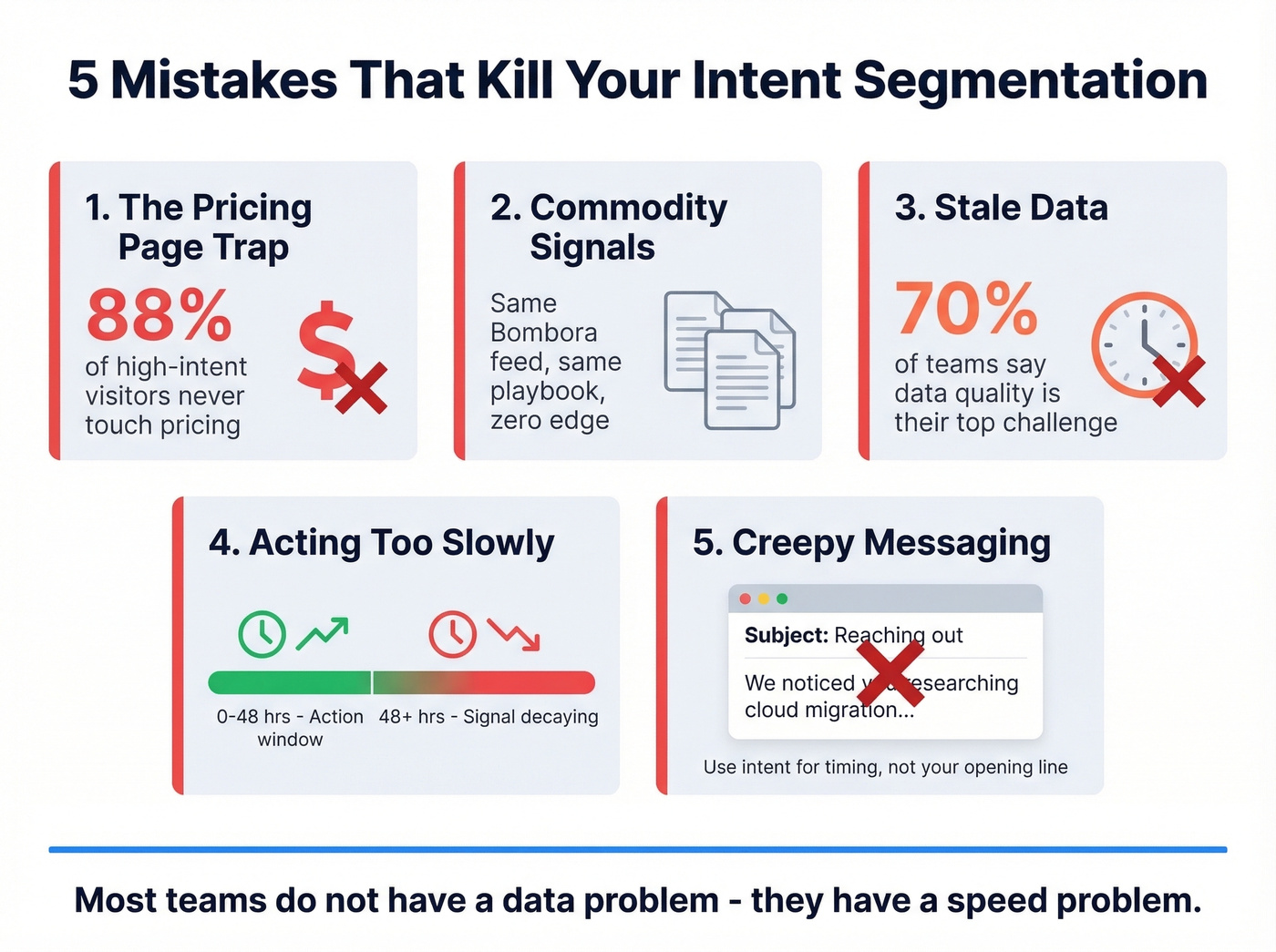
2. Commodity signals. When everyone buys the same Bombora or G2 feed and runs the same playbook, you have zero edge. The consensus on r/b2bmarketing is blunt: same data equals commodity. Layer proprietary first-party signals on top, or you're racing competitors to the same inbox.
3. Stale data. 70% of teams cite data quality as the top challenge with intent programs. Most intent platforms still refresh on a 4-6 week cycle. We've watched teams waste entire quarters acting on signals that expired before the first email sent. Fresh intent layered on stale contact data is a waste of both.
4. Acting too slowly. You identified the signal, scored it, routed it - and then it sat in a queue for two weeks. High-intent signals demand action within 48 hours. Speed beats perfection every time.
5. Creepy messaging. Don't open a cold email with "we noticed you researching cloud migration solutions." Even if it's true, it triggers a surveillance response that kills trust. Use intent to guide your angle and timing - not your opening line.
How to Build Dynamic Audience Segments
Start with first-party signals. Website behavior and email engagement are proprietary and high-fidelity. Layer third-party intent from providers like Bombora, G2 Buyer Intent, 6sense, or Demandbase on top.
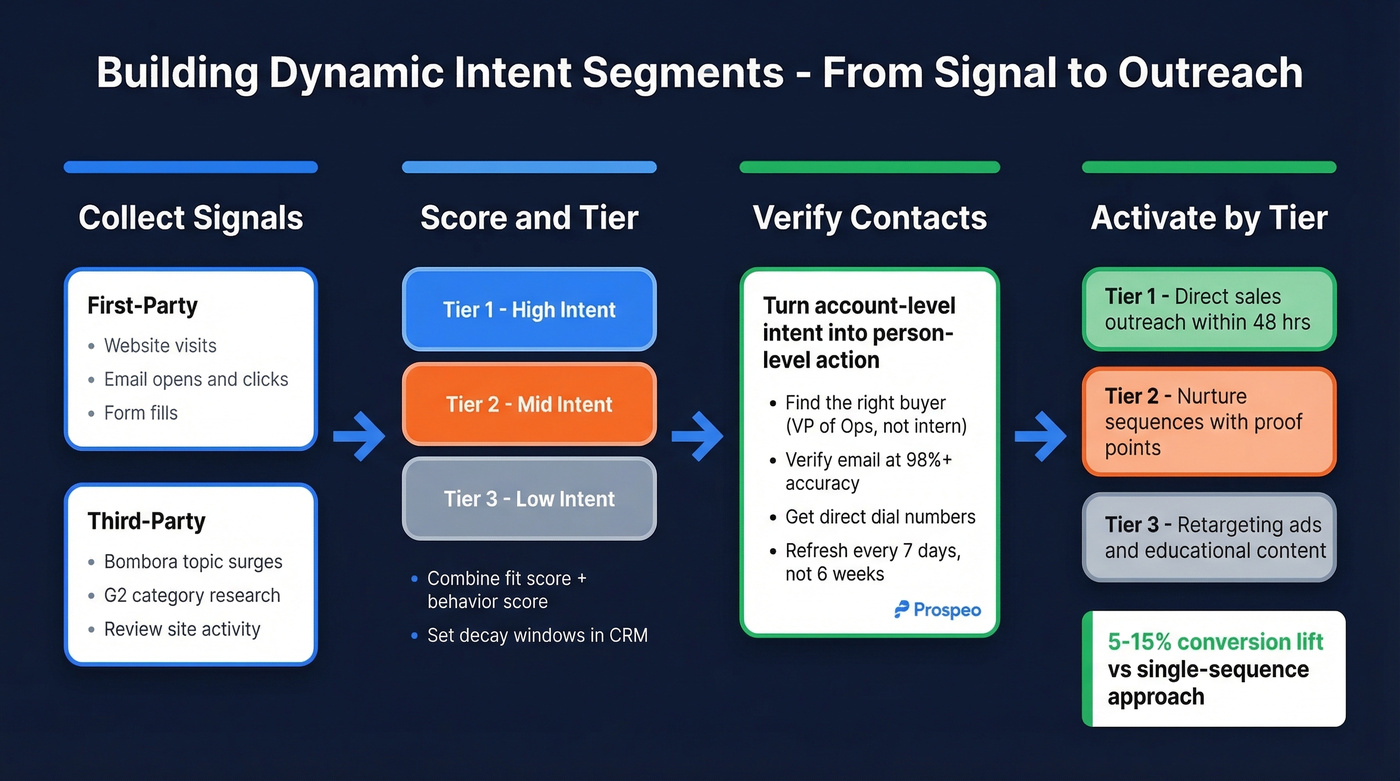
Enterprise intent platforms typically cost $30K-$100K+/year depending on seats and modules. If you're a smaller team or agency that doesn't need the full ABM suite, Prospeo offers intent data tracking 15,000 topics via Bombora with a free tier and credit-based pricing starting around $0.01 per verified email.
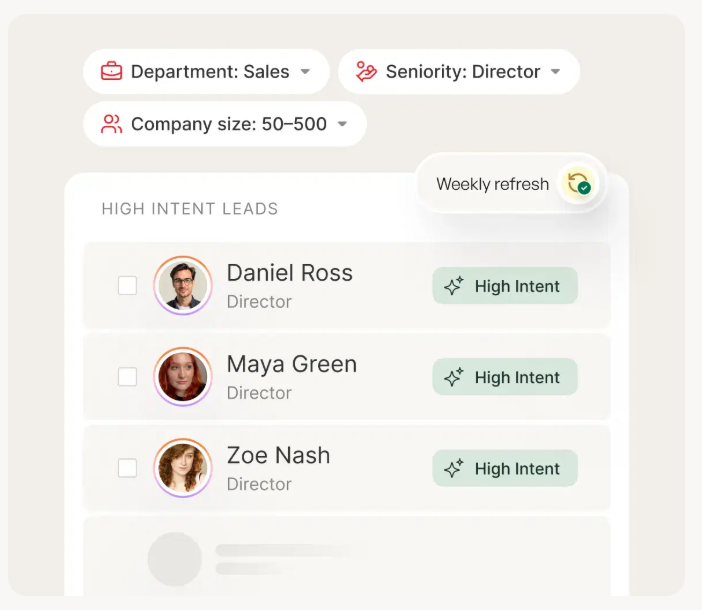
Score and tier every signal. Map interactions to Tier 1, 2, or 3. Combine fit and behavior - a high-fit account showing repeat engagement this week gets fast-tracked. Set explicit decay windows and automate them in your CRM. The goal is dynamic audience segments that update as intent data flows in, not static lists that go stale the moment they're exported. (If you need a deeper taxonomy, see intent prediction and how teams operationalize buyer intent signals.)
Activate with tailored messaging. Tier 1 gets direct outreach from sales. Tier 2 gets nurture sequences with proof points. Tier 3 gets retargeting ads and educational content. In our experience, teams that tailor messaging by tier see 5-15% conversion lift versus running a single sequence across all tiers.
For activation, you need verified contact data behind those signals. That means turning "this account is in-market" into "here's the VP of Ops's verified email and direct dial" - which is where a platform like Prospeo fits, letting you layer intent signals with 30+ filters and export verified contacts directly into your outreach tools. If you're comparing sources, start with a verified contact database or the broader list of the best B2B database options.
Fresh intent on stale contacts is wasted budget. Prospeo refreshes every 7 days - not the 6-week industry average - so the emails and mobiles behind your intent segments actually connect. At $0.01 per verified email, you can build dynamic segments without enterprise pricing.
Layer real-time intent with verified data for under a penny per lead.
ROI Benchmarks
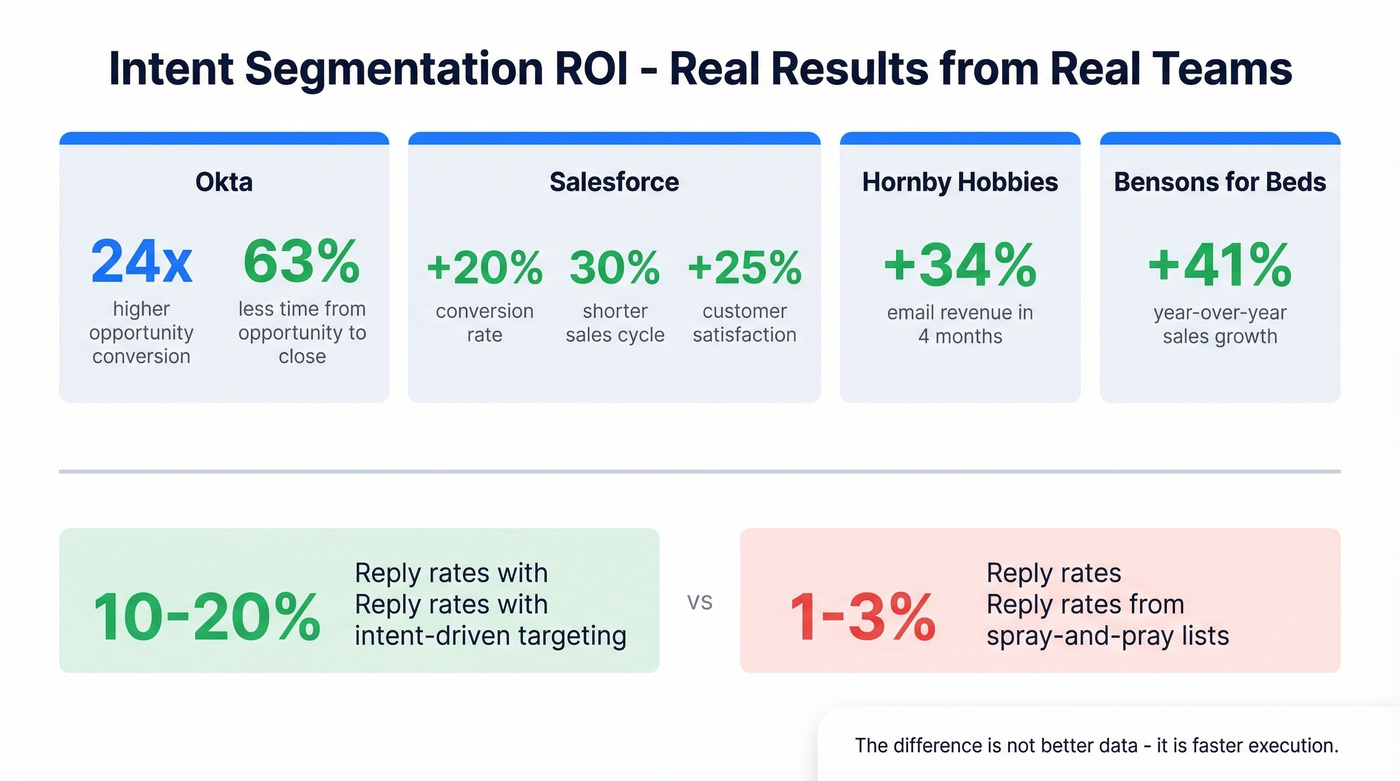
Let's look at what real teams are reporting:
| Company | Result |
|---|---|
| Okta | 24x higher opportunity conversion, 63% less time from opportunity to closed deal |
| Salesforce | +20% conversion, 30% shorter cycle, +25% customer satisfaction |
| Hornby Hobbies | +34% email revenue in 4 months |
| Bensons for Beds | +41% YoY sales growth |
Practitioners on r/coldemail report 10-20% reply rates with intent-driven targeting, compared to 1-3% from spray-and-pray lists. (If you're building the outreach motion, pair this with a tighter sales outreach strategy and proven B2B prospecting strategies.)
Real talk: most teams don't have an intent data problem. They have an execution speed problem. The companies in that table aren't using secret data sources. They're acting on signals before the signal decays. If your average response time to a Tier 1 signal is longer than 48 hours, buying a fancier intent platform won't fix anything. You need better routing, better SLAs, and better CRM automation so Tier 1 accounts don't sit untouched.
FAQ
What's the difference between intent and behavioral segmentation?
Behavioral segmentation groups by past actions; intent based segmentation interprets those actions to predict what someone's trying to accomplish next. It's forward-looking rather than backward-looking, which means your outreach aligns with where a prospect is headed, not where they've been.
How fast should you act on an intent signal?
Within 48 hours for Tier 1 signals. A 7-day-old signal is still actionable, but a 6-week-old one is a historical artifact. Route high-intent signals directly to reps via CRM automation to eliminate queue delays.
What tools help with intent data segmentation?
For intent data: Bombora, 6sense, G2 Buyer Intent, and Demandbase are the major players. For verified contact data behind those signals, Prospeo tracks 15,000 intent topics via Bombora, refreshes data every 7 days, and verifies emails at 98% accuracy - with a free tier to start.
How does intent based audience targeting differ from firmographic targeting?
Firmographic targeting filters by company size, industry, and revenue - useful for defining your ICP but blind to timing. Intent based audience targeting adds the "when" layer, so you reach accounts that match your ICP and are actively researching solutions right now. Skip it if your ICP is so narrow that timing barely matters, but for most B2B teams, it's the difference between relevant outreach and cold spam.