

Inbound or Outbound: The Benchmarks and Decision Framework You Actually Need
Your CEO just asked whether to double down on content or hire two more SDRs. You've got budget for one bet, not both. And every article you've read on inbound or outbound gives you the same non-answer: "it depends."
It does depend - but on specific, measurable things. Deal size. Market maturity. Team capacity. Not vibes. Most teams agonize over this decision for weeks, build elaborate spreadsheets, and still end up guessing. What follows is the actual data, the close rates, the cost benchmarks, and a framework that gives you a real answer.
The Quick Answer
If you need a decision in the next 30 seconds:
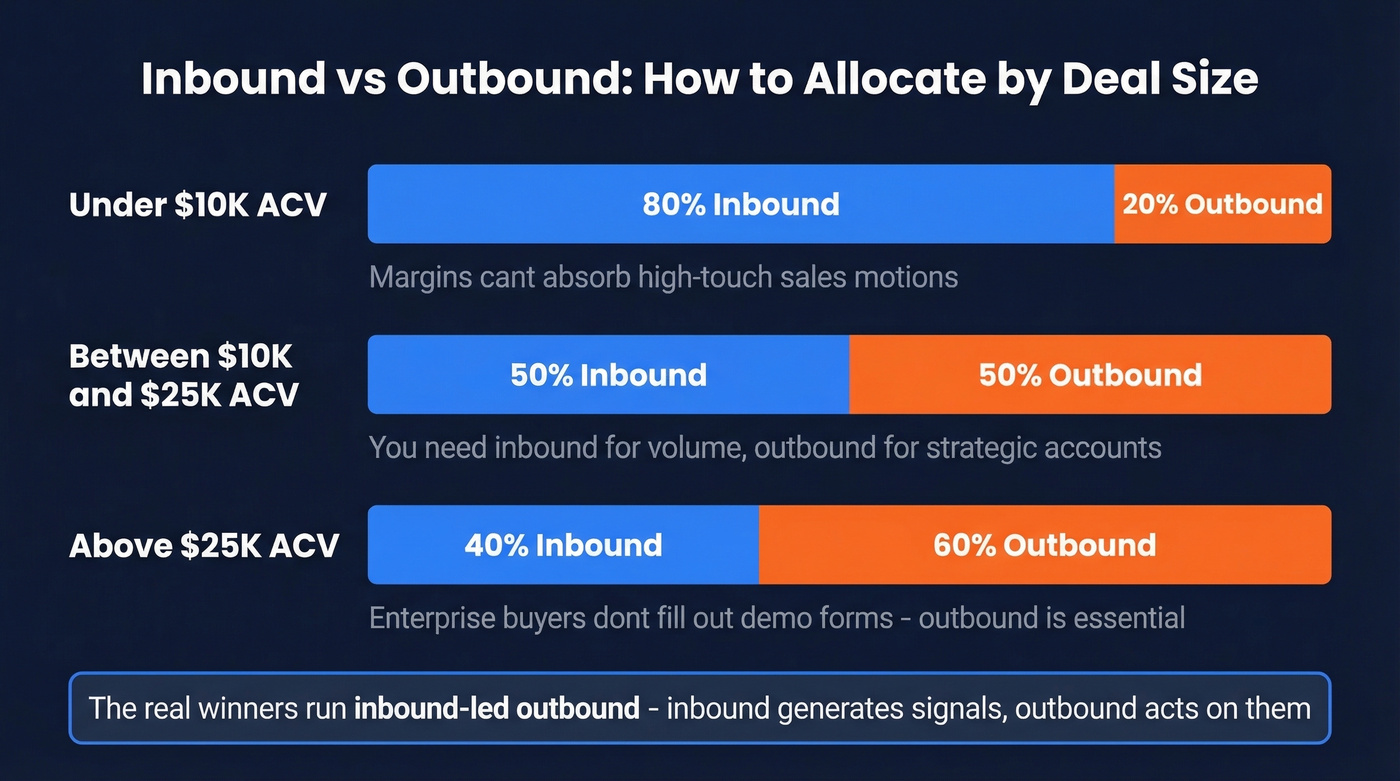
- Deals averaging under $10K: Lean 80% inbound, 20% outbound. Inbound captures existing demand efficiently, and your margins can't absorb high-touch sales motions.
- Deals in the $10-25K range: Run both at roughly 50/50. You need inbound for volume and outbound for strategic accounts.
- Deals above $25K: Lean 60% outbound, 40% inbound. Enterprise buyers don't fill out demo forms the way SMB prospects do, so outbound becomes essential once ACV crosses this threshold.
Here's the take most articles won't give you: stop debating the two motions as an either/or. The real winners run inbound-led outbound - inbound generates the signals, outbound acts on them. Companies that treat these as separate motions with separate teams and separate dashboards are leaving a meaningful chunk of pipeline on the table.
The Numbers: Inbound vs Outbound
Let's clarify what each motion means in a sales context. Inbound means prospects come to you - through search, content, referrals, or product-led growth. Outbound means you go to them - through cold calls, cold emails, and targeted prospecting. The distinction matters because the economics, timelines, and team structures differ dramatically.
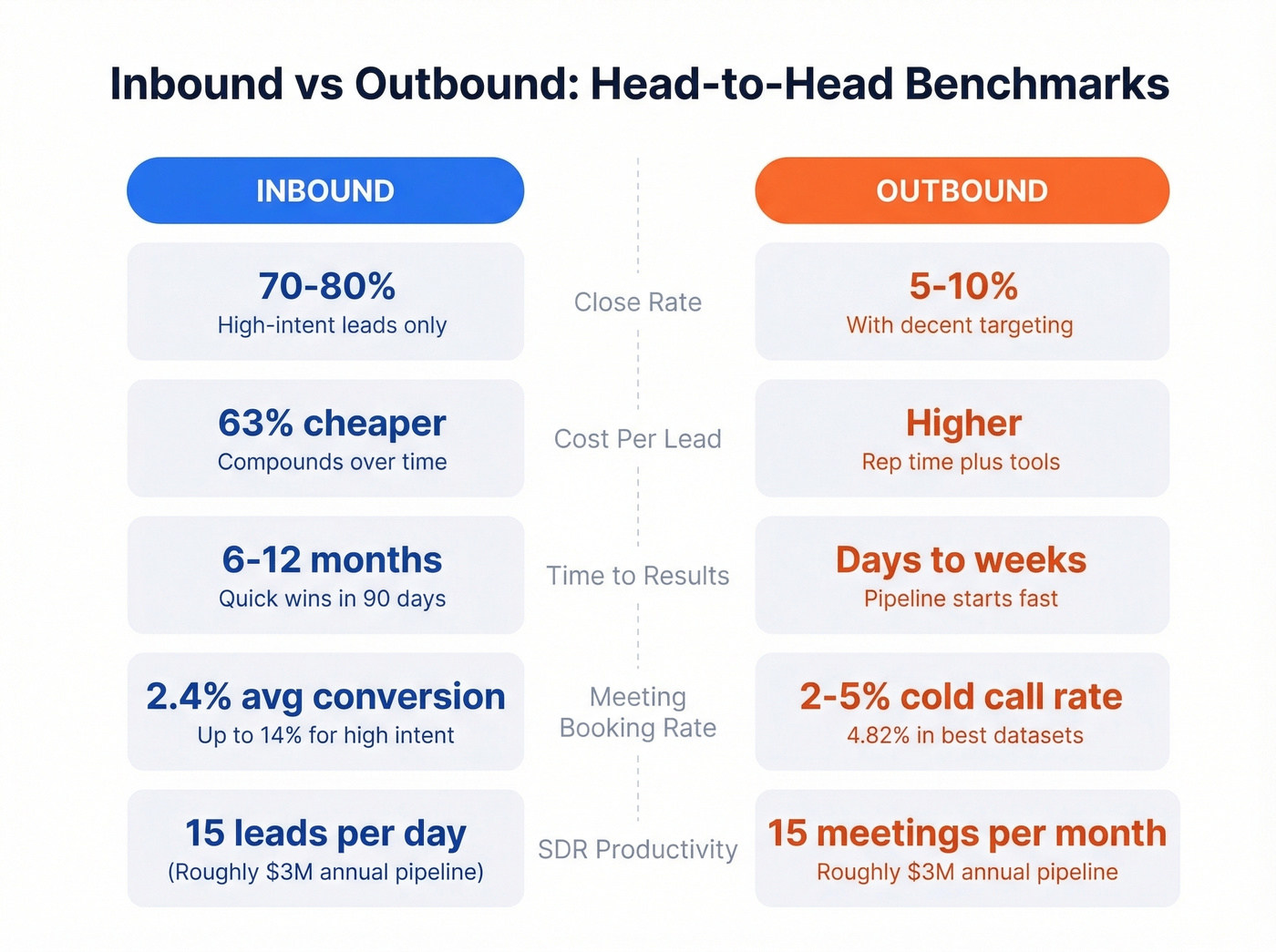
Here's how the two motions stack up with real benchmarks:
| Metric | Inbound | Outbound |
|---|---|---|
| Close rate (high-intent) | 70-80% | 5-10% |
| Cost per lead | ~63% cheaper | Higher (rep time + tools) |
| Time to results | 6-12 months | Days to weeks |
| Cold call meeting rate | N/A | 2-5% |
| Speed-to-lead impact | 5 min = 21x conversion | N/A |
| Avg cold call length | N/A | ~93 seconds |
| Best day to call | N/A | Tuesday |
| SAL to SQL conversion | 52.7% | Varies by list quality |
| Inbound SDR daily lead volume | ~15 leads/day | N/A |
| Outbound SDR monthly meetings | N/A | ~15 meetings/month |
| Median SDR annual pipeline | N/A | ~$3M |
A few numbers need context. That 70-80% inbound close rate applies to high-intent leads - demo requests, pricing page visits, free trial signups. Your average blog reader doesn't close at 70%. The outbound figure assumes decent targeting; spray-and-pray campaigns run well below 2%.
The cold calling range deserves explanation too. Cognism's dataset of 7.7M calls shows a 4.82% meeting rate, while other industry analyses report closer to 2%. The gap comes down to how the dataset is defined and how targeted the calling motion is.
Funnel Conversion Rates by Channel
Here's a benchmark set you can actually use for planning:
| Channel | Visitor to Lead | Opportunity to Close |
|---|---|---|
| SEO | 2.10% | 36% |
| 2.20% | 39% | |
| PPC / Paid search | 0.70% | - |
This is why SEO and brand distribution matter even if you're "outbound-led." Strong inbound channels don't just create leads - they create warmer opportunities that close at higher rates.
Estimated CAC by Segment
These ranges are industry estimates based on aggregated benchmarks. They'll vary by vertical and geography, but they're directionally accurate for planning:
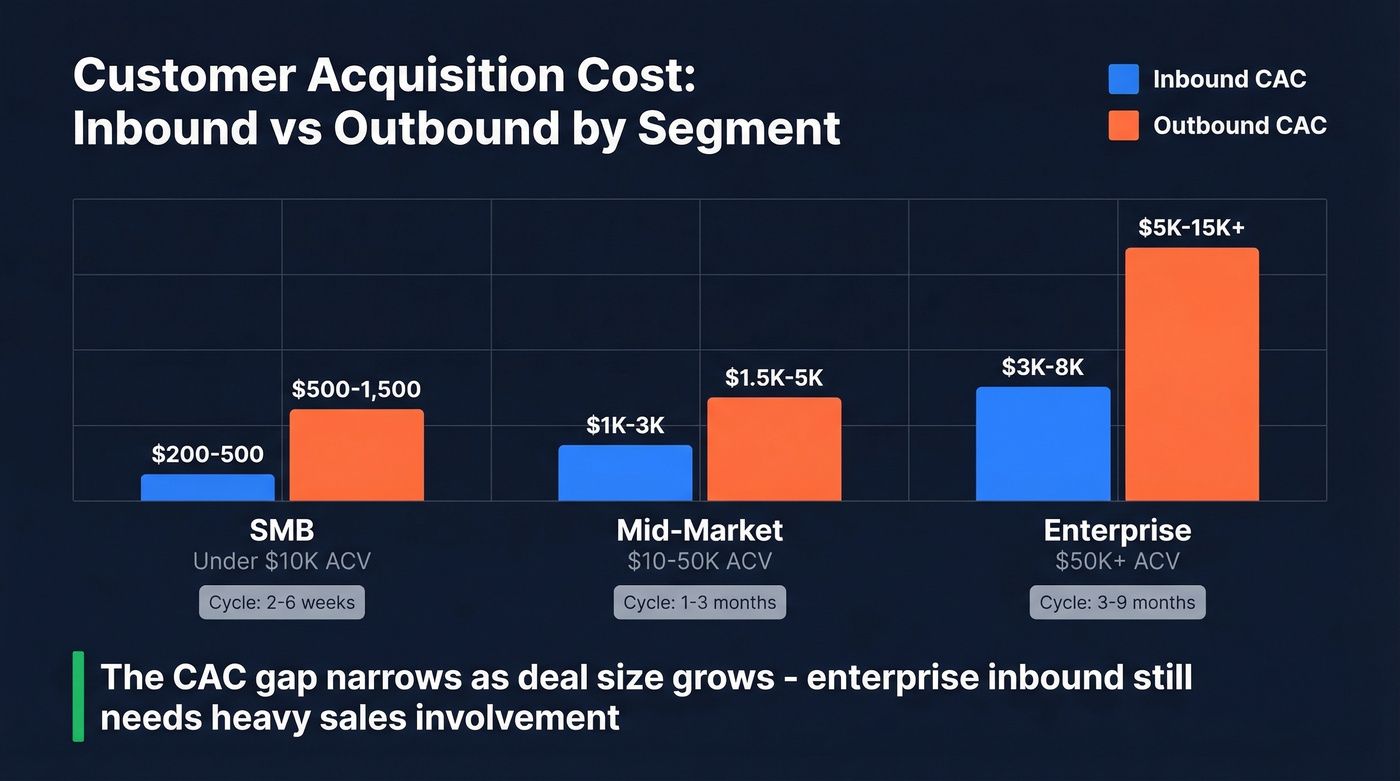
| Segment | Inbound CAC | Outbound CAC | Typical Cycle |
|---|---|---|---|
| SMB (<$10K ACV) | $200-500 | $500-1,500 | 2-6 weeks |
| Mid-market ($10-50K) | $1,000-3,000 | $1,500-5,000 | 1-3 months |
| Enterprise ($50K+) | $3,000-8,000 | $5,000-15,000+ | 3-9 months |
The gap narrows as deal size grows. For enterprise, inbound CAC rises because content alone rarely closes a six-figure deal - you still need heavy sales involvement. Outbound CAC is higher in absolute terms, but the ROI math works when a single deal is worth $100K+.
The Case for Inbound
Inbound generates 54% more leads than traditional paid advertising, and companies running inbound for over a year see CAC drop by roughly 38%. Inbound ROI averages 2.8x the cost of execution, and it accounts for roughly 44% of the average sales pipeline. Those numbers make the case - if you've got the patience.
The average inbound conversion rate sits around 2.4%, but high-intent leads convert at 8-14%. SaaS inbound forms average about 4.3%. The math is simple: inbound captures existing demand. When someone Googles "best CRM for agencies" and lands on your comparison page, they're already in-market. You're not convincing them they have a problem; you're convincing them you're the solution.
Think about how Slack grew. Their PLG motion is textbook inbound - a free tier drives adoption, content captures search demand, and the product sells itself. HubSpot built an entire category around inbound marketing by practicing what they preached: blog content, free tools, and SEO drove the engine. Neither story is primarily a cold-calling story.
The catch is time. Budget 6-12 months for meaningful SEO results. Quick wins appear in 90 days - long-tail keywords, niche topics - but competitive queries take roughly 32 weeks to crack page one. And inbound is volatile. Algorithm changes, seasonality, and budget cuts can crater your pipeline overnight. We've seen teams build beautiful content engines that flatline after a single core update.
For SMB and PLG motions with shorter sales cycles, inbound is the obvious foundation. But if you're selling to enterprise accounts that don't Google their way to vendors, inbound alone won't get you there.

Outbound ROI lives or dies on data quality. Bad emails burn your domain and tank reply rates - exactly the spray-and-pray failure this article warns about. Prospeo delivers 98% email accuracy with a 7-day refresh cycle, so every outbound sequence hits real inboxes. At $0.01 per email, your outbound CAC drops while your pipeline grows.
Stop debating inbound or outbound - fix the data powering both.
The Case for Outbound
Outbound creates demand where none exists. That's its superpower and its curse. You control who you talk to, when you talk to them, and how fast you enter new markets. No waiting for Google to index your blog.
Consider Palantir's early days. Nobody was Googling "intelligence analysis platform" - the category didn't exist in buyers' minds. Outbound was the only viable path. The same is true for any company creating a new category or selling a product buyers don't know they need yet.
The numbers are humbling, though. Cold calling books meetings at a 2-5% rate, which sounds low until you realize that three call attempts capture 93% of all conversations you'll ever have with a prospect. Five attempts get you to 98.6%. The average cold call lasts just 93 seconds - you've got a minute and a half to earn the next conversation.
Cold email is tougher to benchmark cleanly, but expect 2-5% reply rates and 0.5-2% positive replies on well-targeted campaigns. Elite teams running hyper-personalized sequences push reply rates above 10%, but that requires serious research per prospect. And it doesn't scale the way most SDR leaders want it to.
The "outbound is dead" narrative is half right. Mass-blast outbound - 10,000 generic emails to a purchased list - is dead. It tanks your domain, annoys buyers, and produces nothing. But signal-based outbound, where you're reaching the right person at the right moment with relevant context, still books meetings. The consensus on r/sales is that landing 1,000+ employee companies from pure cold outreach "is not easy," and that's an understatement. Enterprise buyers self-educate, build shortlists of 3-5 vendors, and ask their network before they ever respond to a cold email. Outbound gets you on the radar, but it rarely closes enterprise deals alone.
When to Choose One Over the Other
Let's turn the data into decision rules. Understanding the difference between inbound and outbound sales starts with mapping your go-to-market variables to the right motion.
| Factor | Lean Inbound | Lean Outbound |
|---|---|---|
| ACV | Under $10K | Over $25K |
| Market maturity | Established category | New/emerging market |
| Product complexity | Self-serve / PLG | Complex, needs demo |
| Team size | Small (1-3 reps) | Dedicated SDR team |
| Timeline | Can wait 6-12 months | Need pipeline now |
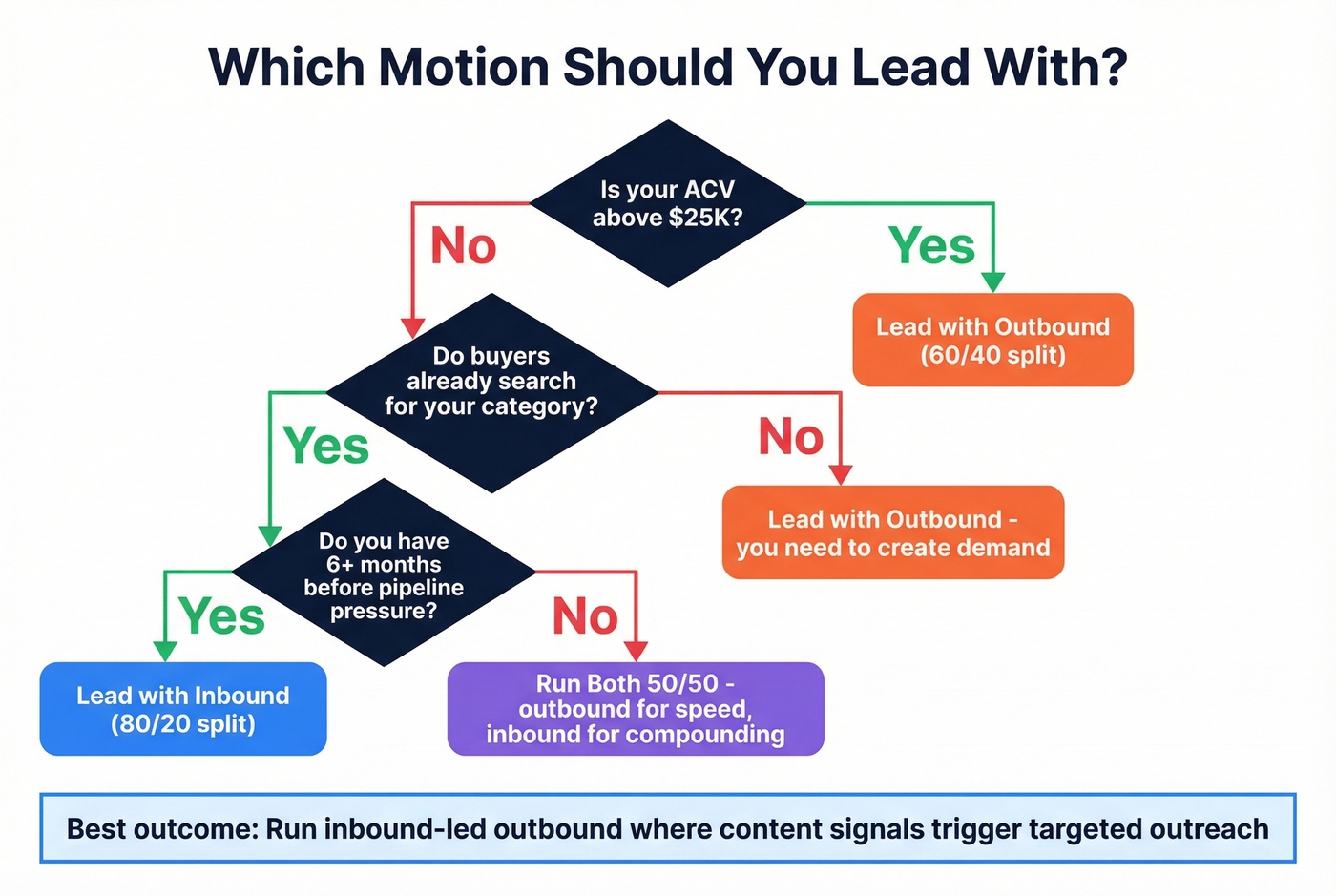
The ACV threshold at $25K is the clearest signal. Below it, inbound economics dominate because the cost of a human touching every deal eats your margin. Above it, outbound becomes essential because enterprise buyers don't self-serve their way to six-figure contracts.
Four Diagnostic Questions
If the table above doesn't settle it, run through this:
- Do buyers already search for your category? If yes, inbound captures that demand. If no, outbound creates it.
- Can your margins support a human touching every deal? When your average contract is under $10K and your sales cycle involves multiple calls, you'll burn cash faster than you close it.
- Do you have 6+ months of runway before pipeline pressure hits? Inbound compounds but starts slow. If the board wants pipeline next quarter, outbound is the only lever that moves that fast.
- Is your ICP reachable through content? A VP of Engineering at a Series B startup reads blogs and listens to podcasts. A procurement officer at a defense contractor does not. Know your buyer's information diet.
Team Composition Matters
Inbound requires a content marketer, an SEO specialist (or one person wearing both hats), and a designer for assets. Budget $150-250K/year fully loaded. Outbound requires SDRs at $60-80K base each, a data tool, and a sequencing platform. Two SDRs plus tooling runs $200-300K/year. Budget accordingly - the "cheaper" motion depends entirely on your existing team.
Market maturity matters just as much as deal size. If you're in an established category - CRM, email marketing, project management - there's existing search demand to capture. If you're creating a new category, outbound is how you build awareness. One benchmark worth noting: serious tech companies with mature go-to-market motions generate around 75% of leads through inbound, SDRs working warm leads, and partner channels. Pure cold outbound accounts for a smaller slice than most sales leaders assume.
The Hybrid Play: Inbound-Led Outbound
This is the section that actually matters. The line between outbound and inbound disappears when you run them as a single coordinated motion instead of two siloed teams.
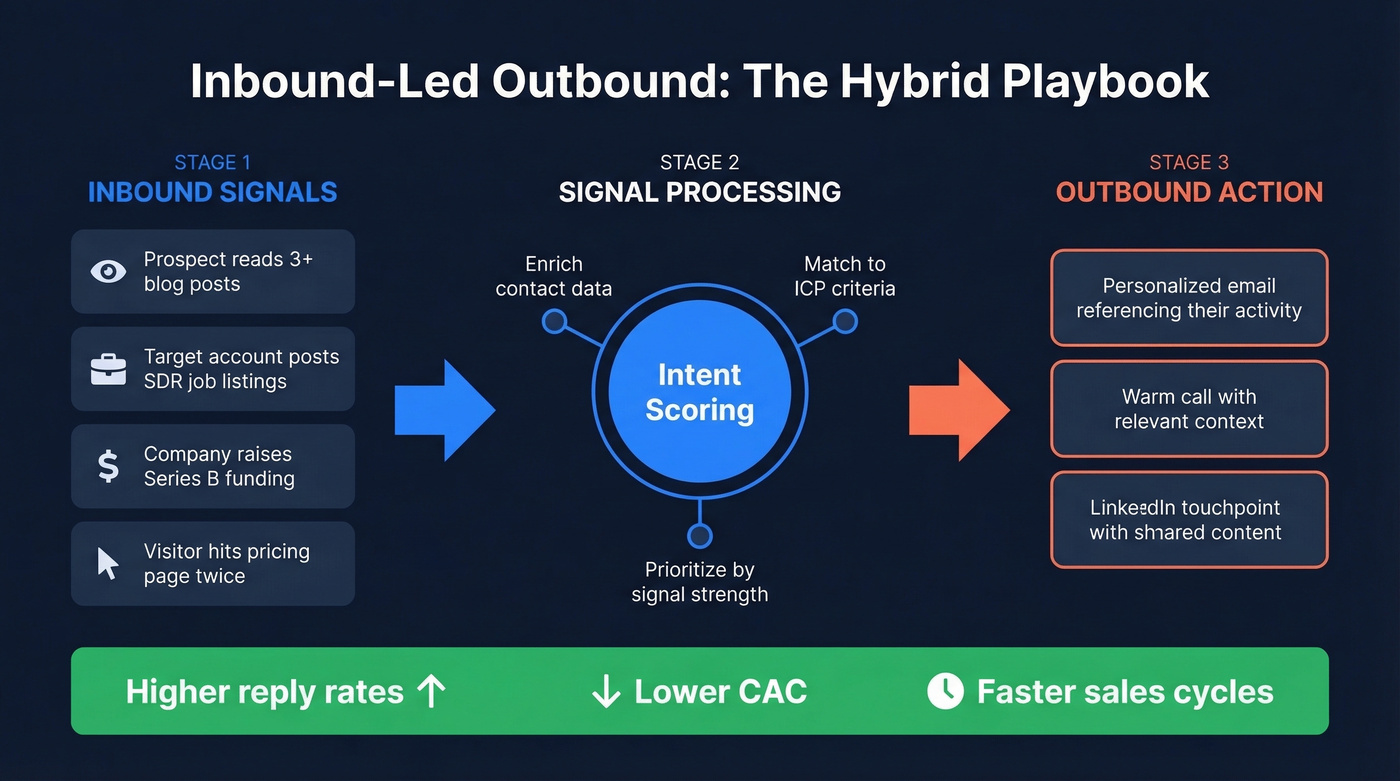
Inbound-led outbound works like this: your content, brand, and marketing generate signals - someone reads three blog posts, a target account's hiring page explodes with SDR roles, a prospect's company just raised a Series B. Instead of waiting for them to fill out a form, outbound acts on those signals with timely, contextual outreach.
The signals that trigger smart outbound:
- Content consumption patterns like repeat visits and pricing page views
- Firmographic shifts - headcount growth, new funding rounds
- Hiring spikes in relevant departments
- Job changes among your champions
- Intent data surges on topics you solve
HubSpot's own go-to-market is a strong example of this hybrid in action. Their blog and free tools generate massive inbound volume, but their sales team runs targeted outbound to enterprise accounts that engage with content without converting. The inbound signal tells the SDR who to call; the outbound motion makes the call happen.
Dreamdata's research makes the underlying reality clear: deals are almost never purely one motion or the other. An "outbound" deal usually has early marketing touches that warmed the account. An "inbound" deal still requires heavy sales effort to close. The labels are useful for pipeline accountability but terrible for credit assignment.
Here's the thing: if your marketing and sales teams are fighting over attribution instead of sharing signals, you're leaving pipeline on the table. The best teams we've worked with treat both motions as one engine with two execution layers. In our experience, the companies that figure this out first tend to pull away from competitors who are still running inbound and outbound as separate departments with separate OKRs.
Making Outbound Work: Data Quality
Every outbound team obsesses over sequences, scripts, and cadence timing. Almost none of them obsess enough over the thing that actually determines whether any of it works: data quality.
Teams invest thousands in Outreach or Salesloft licenses, hire SDRs at $60-80K base, and then prospect off stale databases with 35%+ bounce rates. That's not an outbound strategy - it's domain suicide. One bad campaign that bounces 30% of emails can tank your sender reputation for months.
The single highest-ROI investment for outbound teams isn't a better sequence tool - it's better data. Prospeo covers 300M+ professional profiles with 98% email accuracy and 125M+ verified mobile numbers carrying a 30% pickup rate. Data refreshes every 7 days, not the 6-week industry average that lets contacts go stale between campaigns. Snyk's sales team dropped their bounce rate from 35-40% to under 5% after switching, generating 200+ new opportunities per month.
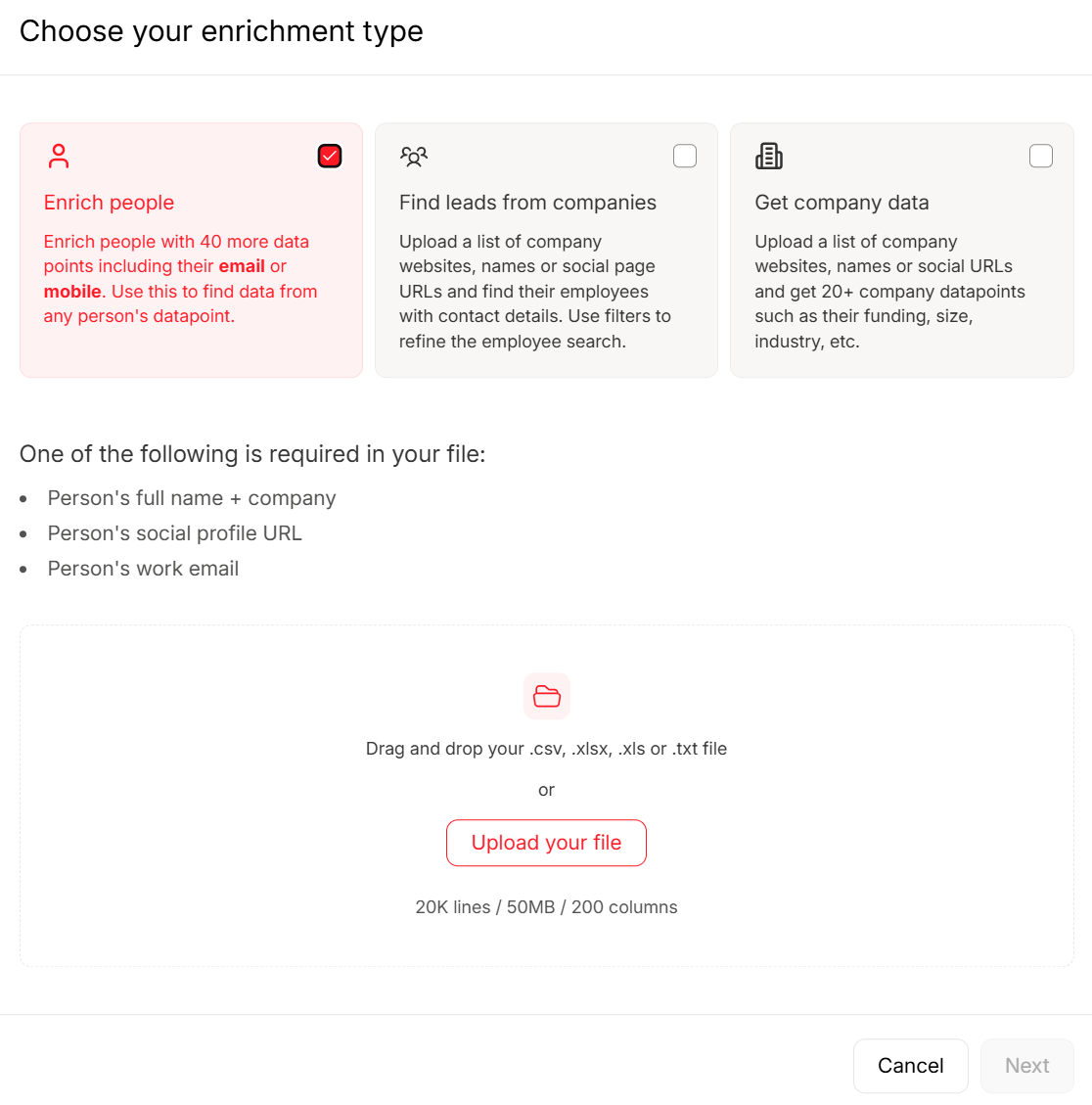
Skip this section if you're running a purely inbound motion with no outbound component. But if you're sending any cold email at all, verifying your data before it hits an inbox isn't optional - it's the difference between a productive campaign and a burned domain. The free tier gives you 75 verified emails per month to test, and scaling costs roughly $0.01 per email.
If you're tightening deliverability, start with email deliverability fundamentals and track your email bounce rate before you scale volume.
The article shows cold calling books meetings at 2-5% - but only if you're dialing real numbers. Prospeo's 125M+ verified mobile numbers deliver a 30% pickup rate, tripling the industry average. Pair that with intent data tracking 15,000 topics, and your outbound reps only call buyers already in-market.
Turn your outbound motion from coin flip to pipeline machine.
FAQ
Should I invest in inbound or outbound first?
Start with whichever matches your ACV and timeline. Under $10K ACV with 6+ months of runway? Inbound first. Over $25K ACV or need pipeline this quarter? Outbound first. For the $10-25K range, run both at 50/50 - but make sure your outbound team has access to inbound engagement signals so they're not prospecting blind.
What's the difference between inbound and outbound?
Inbound attracts prospects already searching for a solution - through content, SEO, and product-led growth. Outbound proactively reaches prospects who don't know your product exists - through cold calls, cold emails, and targeted sequences. The core distinction is who initiates: the buyer or the seller.
Is outbound dead in 2026?
Mass-blast outbound is dead. Signal-based, data-verified outbound still books meetings at a 2-5% cold call rate when targeting is precise and contact data is clean. The difference between a productive campaign and a domain-killing one comes down to data freshness and verification - stale lists with 30%+ bounce rates are what give outbound a bad name.
How long before inbound generates real pipeline?
Budget 6-12 months for meaningful SEO results. Quick wins on long-tail keywords appear in roughly 90 days. CAC drops about 38% after the first year of sustained effort, so the payoff compounds - but you need executive patience and consistent investment to get there.
What's a good inbound-to-outbound ratio?
For deals under $10K, run 80/20 inbound-heavy. In the $10-25K range, aim for 50/50. Above $25K, shift to 60/40 outbound-heavy. Mature tech companies with established brands often run roughly 75% inbound and partners, 25% outbound. Revisit the ratio quarterly as your ACV, market position, and team capacity change.