


InboxAware Review: Pricing, Pros, Cons, and Alternatives
Only 13% of senders actually test inbox placement. If you're in that 13% - or trying to be - InboxAware is one of the dedicated tools built for the job. This breakdown covers pricing, real pros and cons, and whether the $450/mo minimum is worth it when cheaper options exist.
30-Second Verdict
InboxAware is a solid seed-list deliverability monitor priced for mid-market senders doing serious volume. If you're pushing 50,000+ emails a month and need real-time placement alerts across ISPs, it works. But most teams have cheaper paths to the same answers.
- Budget pick: GlockApps at $59/mo gives you 360 spam tests at a fraction of InboxAware's entry price.
- Free starting point: Google Postmaster Tools + Microsoft SNDS cost nothing and use real engagement data, not seed lists.
What InboxAware Does
InboxAware focuses on seed-list inbox placement testing, 24/7 reputation monitoring with automated alerts, custom drag-and-drop dashboards, and segmentation by ISP, campaign, or sending domain. That's the full scope. No warm-up, no outreach, no CRM integration.
Pricing Breakdown
All three tiers are published on their pricing page:
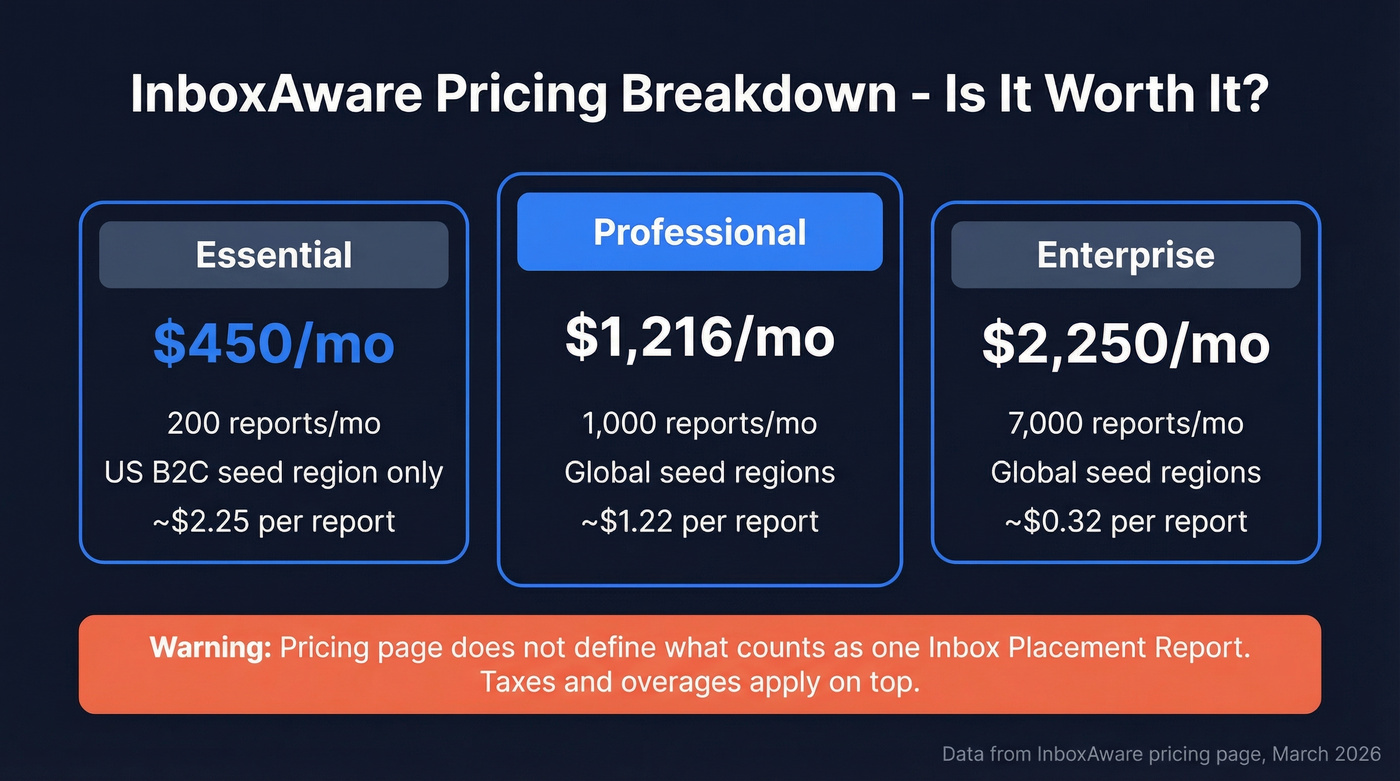
| Tier | Monthly Price | Placement Reports | Seed Region | Cost Per Report |
|---|---|---|---|---|
| Essential | $450 | 200/mo | US B2C | ~$2.25 |
| Professional | $1,216 | 1,000/mo | Global | ~$1.22 |
| Enterprise | $2,250 | 7,000/mo | Global | ~$0.32 |
The per-report economics improve dramatically at scale. The catch: the pricing page doesn't define what counts as one "Inbox Placement Report," and your ROI depends entirely on how that unit is counted. Taxes and overages apply on top.
Pros and Cons
Pros:
- Dedicated inbox placement focus with real-time alerting - you'll know within hours if placement drops
- Global seed regions on Professional and Enterprise tiers
- Interactive dashboards that don't require CSV exports
- Threshold-based automated monitoring eliminates daily manual checks
Cons:
- $450/mo entry point is steep when GlockApps offers 360 tests for $59/mo
- Seed-list methodology misses engagement-based filtering entirely - Gmail, Outlook, and Yahoo all use opens, clicks, and complaints to decide placement, and seed addresses generate none of those signals
- The "200/mo" capacity unit is never clearly defined on the pricing page
- Very limited public review footprint compared to mainstream deliverability tools, which makes it hard to validate real-world experiences before buying

Seed-list tools like InboxAware detect deliverability problems after the damage is done. Prospeo prevents them. Our 5-step email verification delivers 98% accuracy on 143M+ verified emails - refreshed every 7 days, not every 6 weeks. Stack Optimize built a $1M agency on Prospeo data with under 3% bounce rates across every client.
Fix your bounce rate for $0.01/email instead of monitoring it for $450/mo.
The Seed-List Problem
Here's the thing most deliverability reviews skip entirely. Seed-list testing - the core methodology behind InboxAware, GlockApps, and similar tools - has a fundamental blind spot that gets worse every year as mailbox providers get smarter.
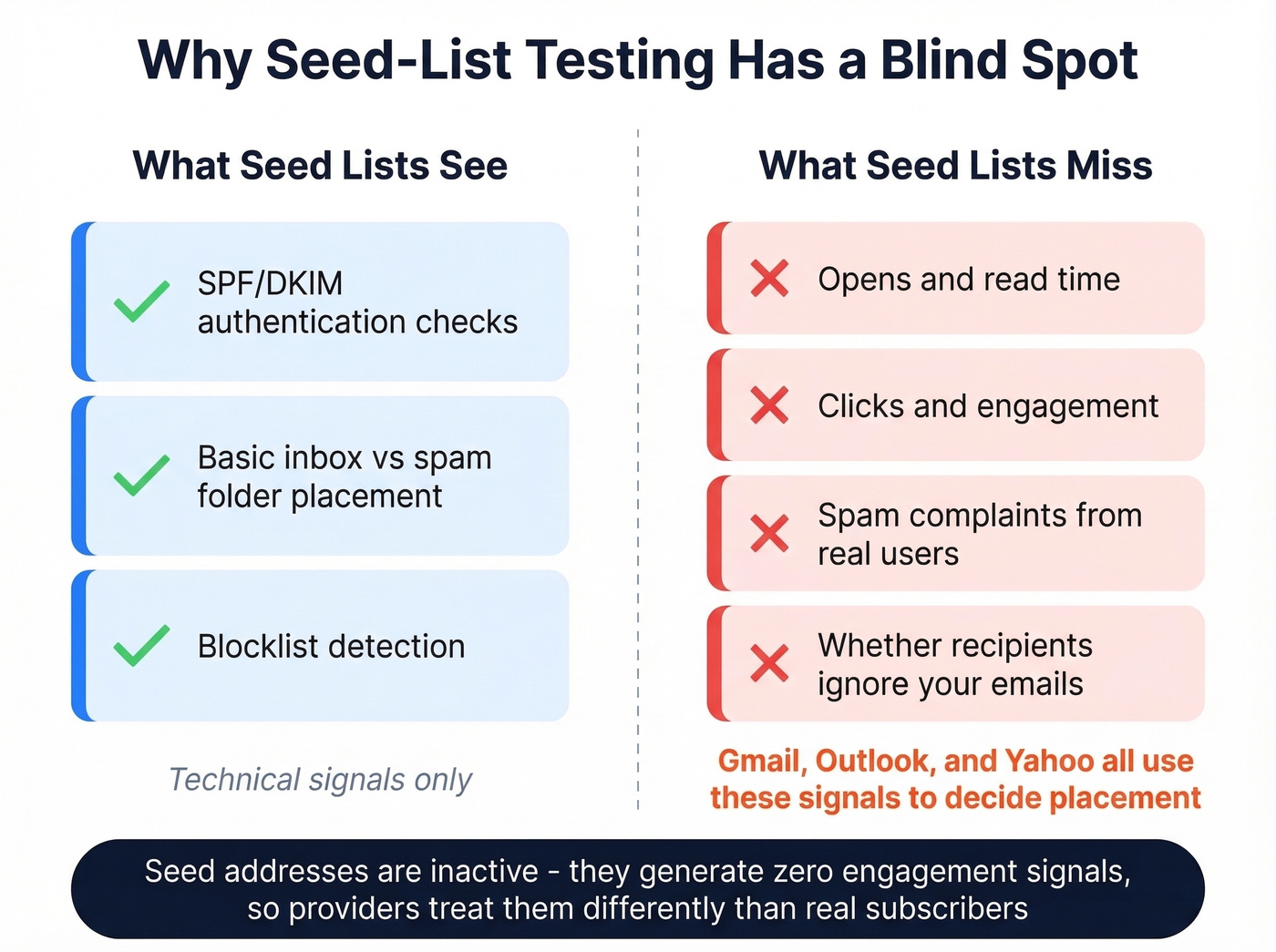
Modern providers increasingly filter based on [engagement signals](https://support.google.com/a/answer/81126?hl=en): opens, clicks, complaints, and whether recipients ignore you. Seed addresses are inactive accounts that don't generate any of those signals, so filtering algorithms treat them differently than real subscribers. Deliverability practitioners have been vocal about this limitation for years, and it's only gotten more pronounced as Gmail and Microsoft lean harder into behavioral filtering. Seed testing still catches technical issues like SPF/DKIM failures, but treat it as directional, not definitive. The smart move is to triangulate seed results with Postmaster Tools data and your actual open/click rates.
Our take: If your list is under 50,000 contacts, you probably don't need a paid seed-list tool at all. Google Postmaster Tools plus your ESP's built-in reporting will tell you 90% of what you need to know - for free.
Alternatives Worth Considering
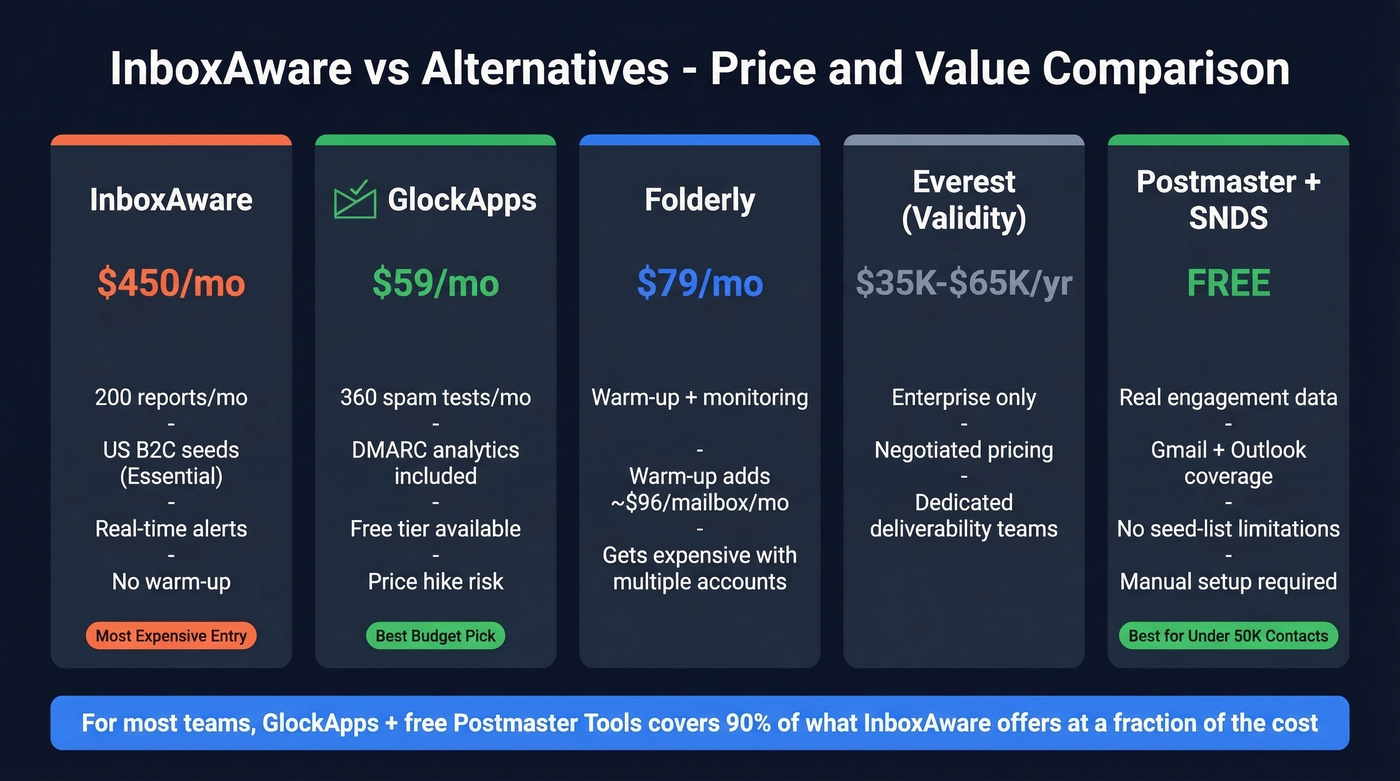
| Tool | Starting Price | Best For | Key Limitation |
|---|---|---|---|
| GlockApps | $59/mo (360 tests) | Budget placement testing | No warm-up; price hikes reported |
| Folderly | $79/mo | Warm-up + deliverability | ~$96/mailbox/month for warm-up adds up fast |
| Everest (Validity) | ~$35K-$65K/yr | Enterprise senders | Mid-five to six figures annually |
| Postmaster Tools | Free | Gmail engagement data | Gmail only |
| Microsoft SNDS | Free | Outlook reputation data | Microsoft only |
GlockApps - Our Pick for Most Teams
At $59/mo for 360 spam tests versus InboxAware's 200 reports at $450/mo, the math isn't close. GlockApps also includes DMARC analytics. The catch is that users reported 400-500% price hikes in 2023, so lock in your rate if you sign up. For pure inbox placement testing on a budget, we'd start here.
Folderly
Folderly combines email warm-up with deliverability monitoring. Inbox Insights starts at $79/mo, and the warm-up product runs around $96/mailbox/month on yearly billing. That gets expensive fast if you manage multiple sending accounts.
Everest by Validity
This is the enterprise option. Negotiated deals typically land $35K-$65K annually - only makes sense for high-volume senders with dedicated deliverability teams and the budget to match.
Google Postmaster Tools + Microsoft SNDS
Free and arguably more accurate for their respective ecosystems because they use real engagement data. Together, they cover the majority of B2B inboxes. We've used both alongside paid tools and honestly, for teams under 50K contacts, they're enough.
Fix Your Data Before Monitoring It
Look - most deliverability problems don't start with ISP filtering. They start with bad contact data. High bounce rates damage sender reputation, which triggers spam placement, which is exactly what tools like InboxAware then detect. You're monitoring the symptom, not the cause.
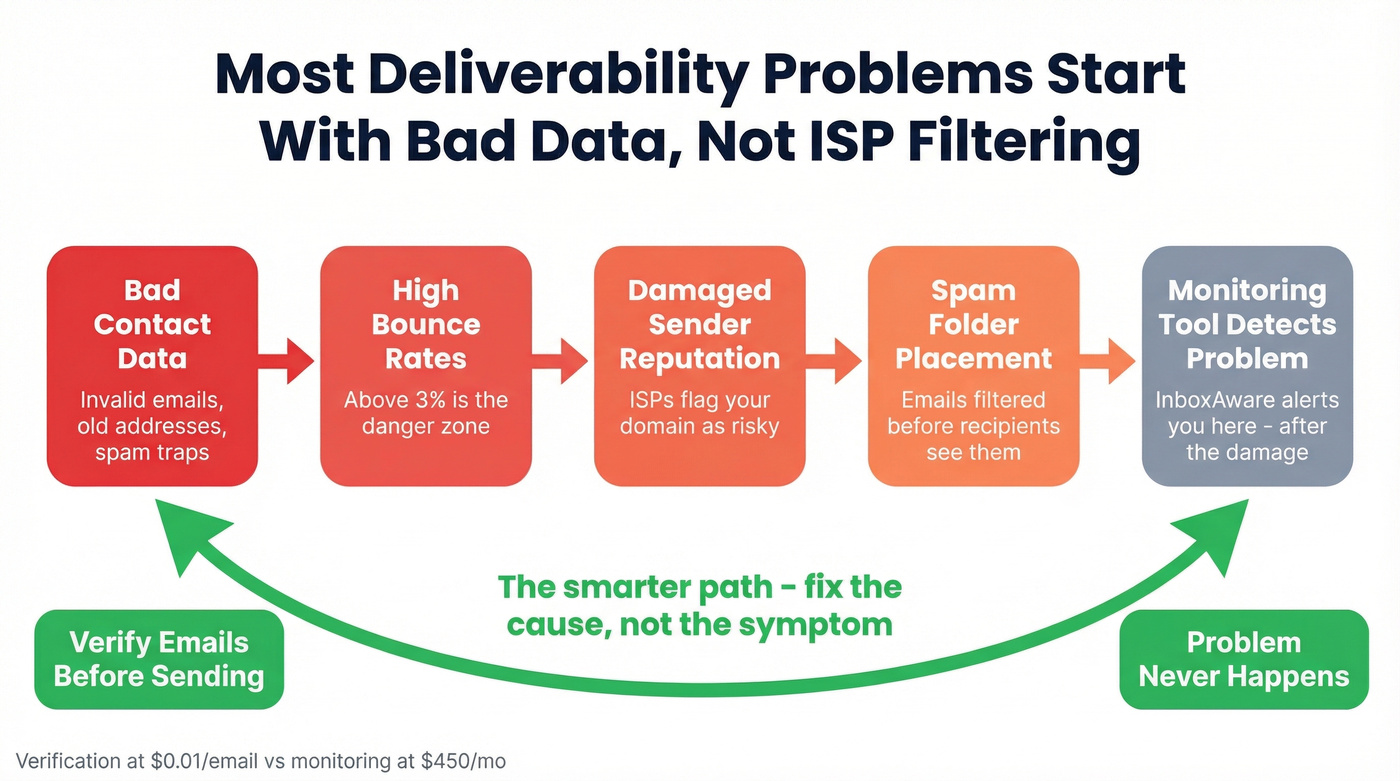
We've seen teams spend months debugging deliverability when the real fix was cleaning their list. Prospeo's 5-step email verification catches invalid addresses before you send, with 98% accuracy and a 7-day data refresh cycle. If your bounce rate is above 3%, fixing your data will do more for your inbox placement than any monitoring tool. One customer, Stack Optimize, maintains 94%+ deliverability and under 3% bounce rates across all client accounts by starting with verified data.

Before spending $450-$2,250/mo watching emails land in spam, ask why they're landing there. High bounce rates from bad data destroy sender reputation - and no monitoring tool fixes that. Prospeo's proprietary verification catches invalid addresses, spam traps, and honeypots before you hit send.
Clean data costs less than diagnosing dirty data. Start with 75 free verified emails.
Who Should (and Shouldn't) Buy
Buy if you send 50,000+ emails monthly, need real-time ISP-level placement alerts, and have $450+/mo budget on top of your ESP costs. At that volume, the per-report cost starts to justify itself, and the automated threshold alerts save genuine time.
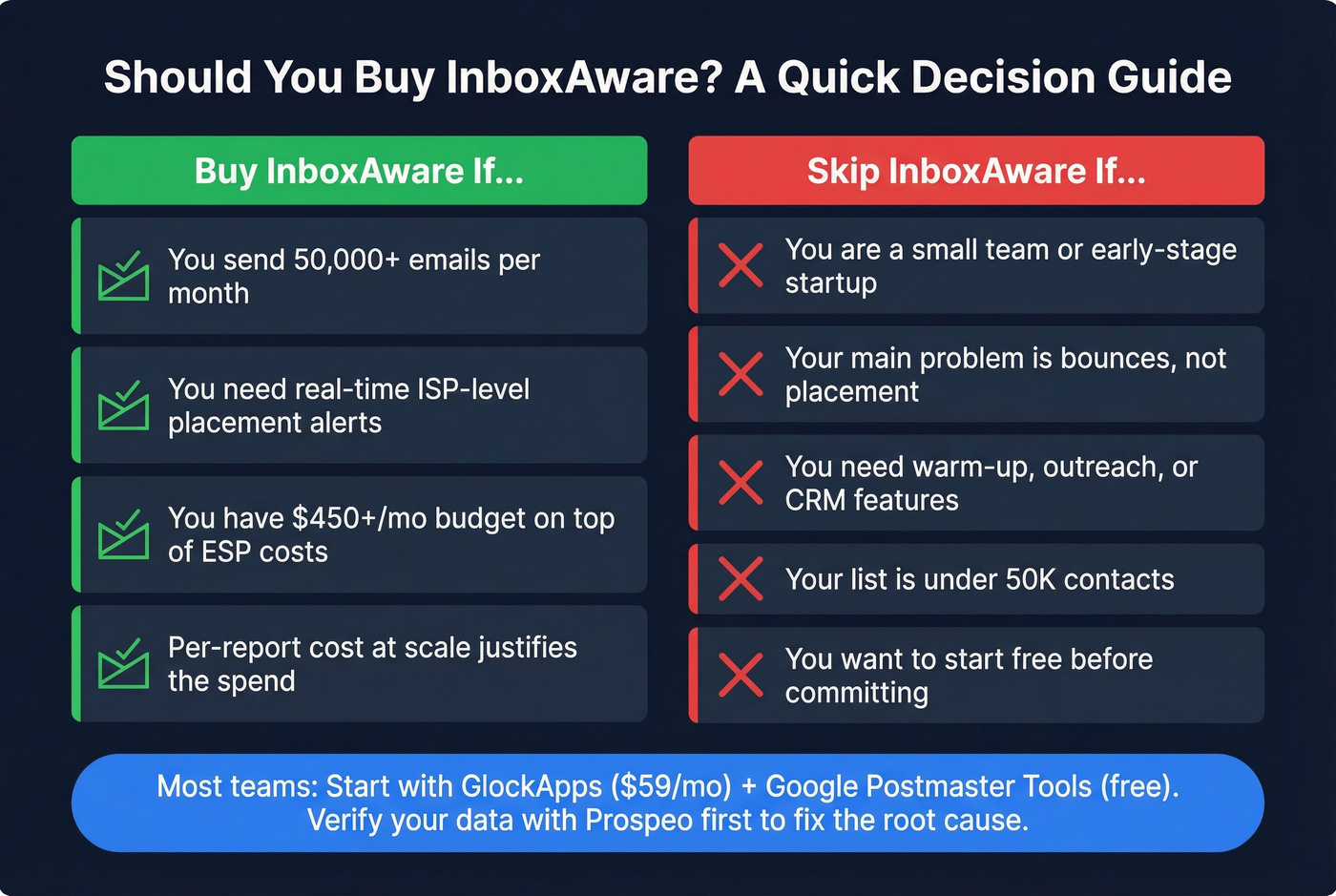
Skip if you're a small team or early-stage - GlockApps plus free tools cover you. Skip it if your main problem is bounces rather than placement, because you need to fix your data first. And skip it if you need warm-up, outreach, or CRM integration, because InboxAware doesn't do any of that.
FAQ
Does InboxAware offer a free trial?
Their site emphasizes booking a demo; a self-serve free trial isn't clearly listed on the pricing page. For a free starting point, GlockApps has a free tier and Google Postmaster Tools costs nothing. Prospeo also offers 75 free email verifications monthly if bounces are your core issue.
What does "200/mo" mean on the Essential plan?
InboxAware lists "200/mo" but doesn't define the unit on its pricing page. Whether that's 200 individual mailbox-provider checks or 200 full campaign tests changes your effective cost per insight dramatically. Ask during the demo before committing.
Can email verification replace a monitoring tool?
For most teams under 50,000 contacts, yes. High bounce rates directly damage sender reputation, causing the spam placement that monitoring tools detect after the fact. Verifying contacts before sending prevents the root cause rather than tracking the symptom - and it's a fraction of the cost.