

Intro Meeting Subject Lines: What 5.5M Emails Tell Us Actually Works
Your open rate says 45%. Your reply rate says 1%. That gap is where most intro meeting subject line advice falls apart - it optimizes for the wrong metric entirely. Apple Mail Privacy Protection now covers 53.67% of email clients, which means a huge chunk of your "opens" are phantom reads that never happened. Let's focus on what actually books meetings.
What You Need (Quick Version)
Three rules backed by data. Keep subject lines under 33 characters so every major device shows the full text. Aim for 2-4 words - that range hits a 46% open rate across 5.5M B2B emails. And stop optimizing for opens; with Apple MPP inflating numbers across a massive share of inboxes, reply rate is the only honest signal for cold outreach.
Three patterns that book meetings: benefit-led, mutual-connection, and direct-ask-with-duration. You don't need 100 templates. You need three good ones and a few hundred sends per variant to know which one wins.
Here's the thing: if your reply rate is under 3%, your subject line probably isn't the main problem. Your list is. Bad data burns domains faster than bad copy ever could.
What 5.5M Emails Say
An analysis of 5.5M B2B emails by Belkins gives us the clearest picture of what works. Personalized subject lines hit a 46% open rate versus 35% without - a 31% lift. Reply rates jumped from 3% to 7%, a 133% increase. That's the number that matters.
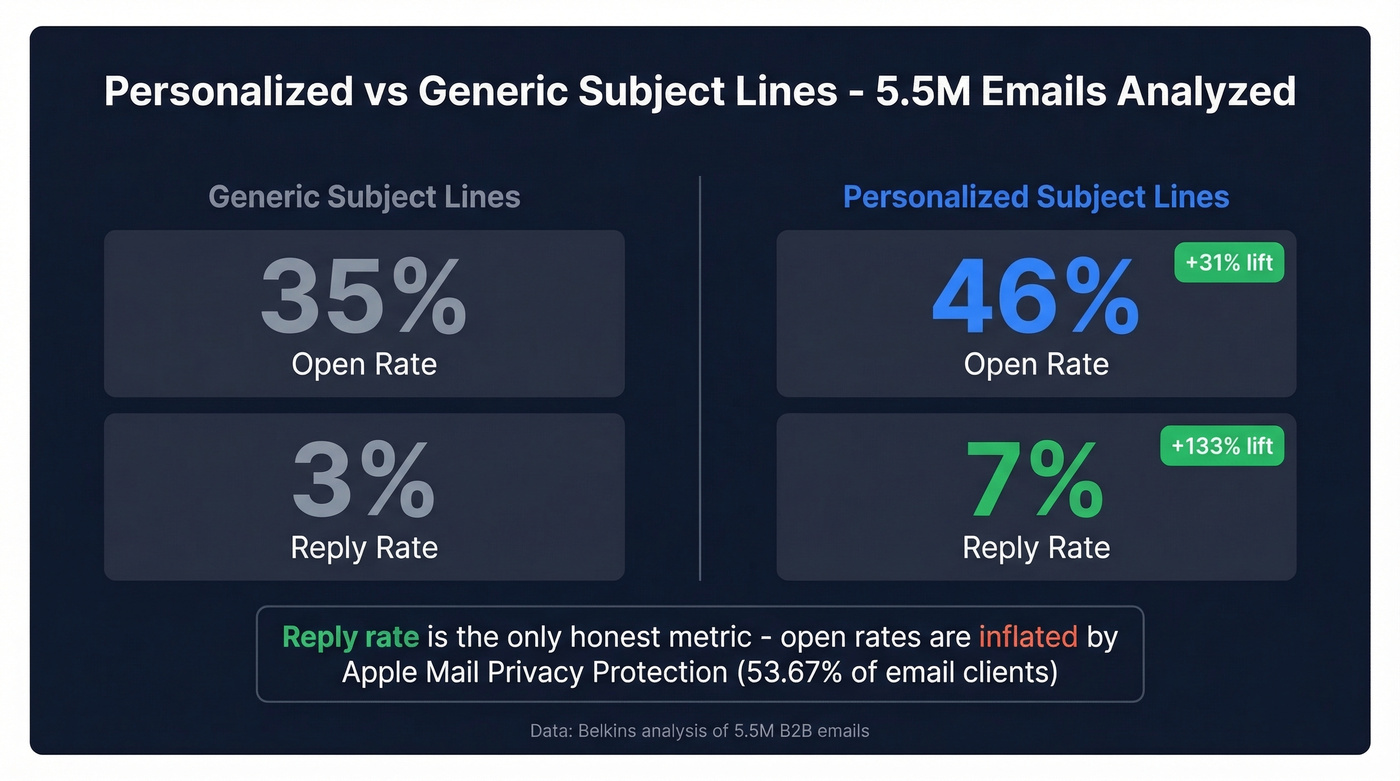
Generic first-name tokens like {first_name} don't reliably lift opens or CTR anymore. A 2023 academic replication study found no indication that first-name personalization increases opens or clicks. What does work is specificity - referencing a competitor, a mutual connection, or a concrete business outcome. We've tested this across dozens of campaigns: {first_name} tokens are table stakes that every sender uses, and they've lost their signal value entirely.
Salesy techniques tank performance. Urgency words, hype phrases, and generic greetings reduce open rates by as much as 17.9% per Gong's analysis of 85M+ cold emails. Be specific, be short, drop the sales voice.
The 33-Character Rule
EmailToolTester ran hands-on truncation tests across major devices. The results make the length debate simple.
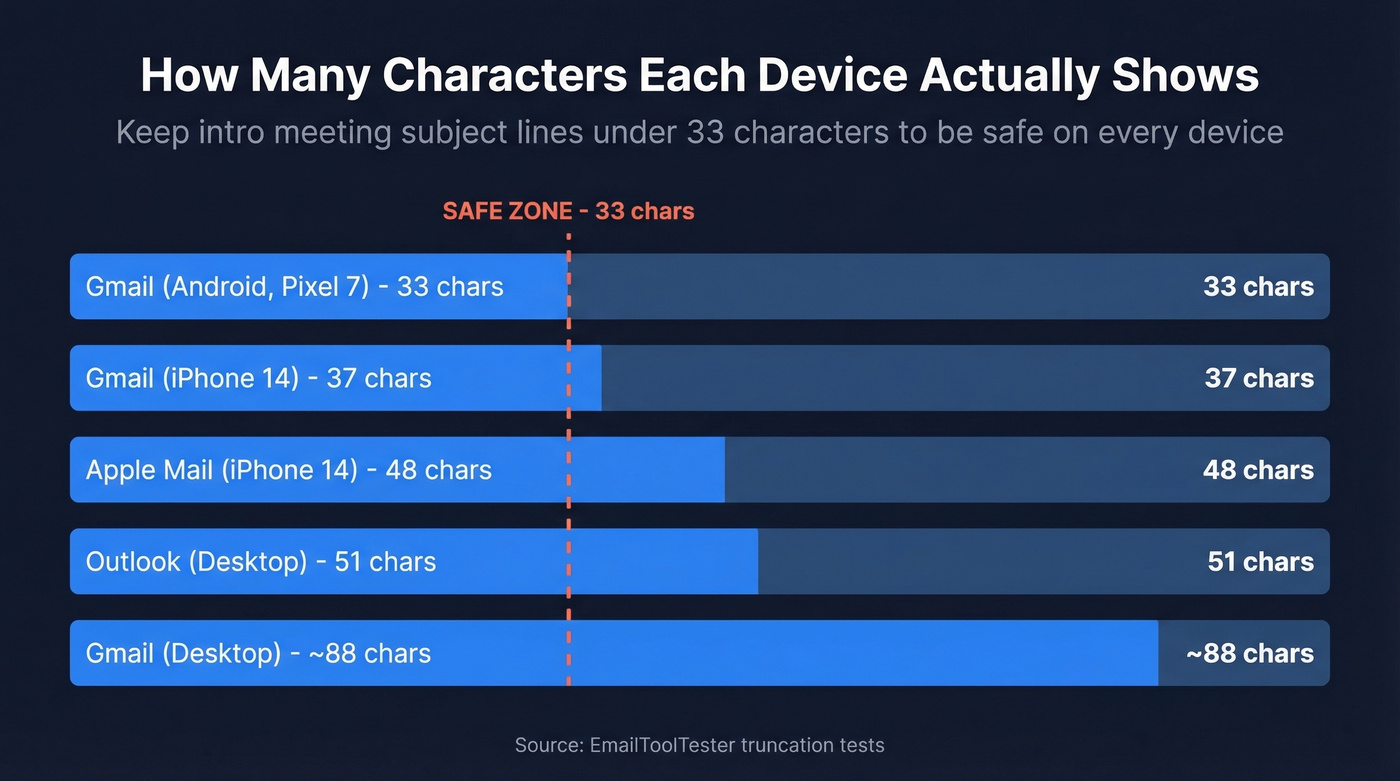
| Device / Client | Characters Shown |
|---|---|
| Gmail (Android, Pixel 7) | 33 |
| Gmail (iPhone 14) | 37 |
| Apple Mail (iPhone 14) | 48 |
| Outlook (desktop) | 51 |
| Gmail (desktop) | ~88 |
Twilio SendGrid's data backs this up: while the average subject line runs 6 words, the best performers clock in at 2-4 words. Front-load meaning. If your subject line gets cut after "Quick question about your," you've already lost.
I've seen this rule ignored more than any other piece of subject line advice - and it's the easiest one to follow.

A 46% open rate means nothing if half your list is dead addresses. Prospeo verifies emails with 98% accuracy on a 7-day refresh cycle - so your carefully crafted intro meeting subject lines actually land in real inboxes, not bounce logs.
Stop perfecting subject lines for emails that never arrive.
Templates That Book Meetings
Every template below follows the data: lowercase, under 33 characters, and built around a specific pattern. Adjust formality for your market - these assume US/UK norms.
Cold Intro (Stranger to First Meeting)
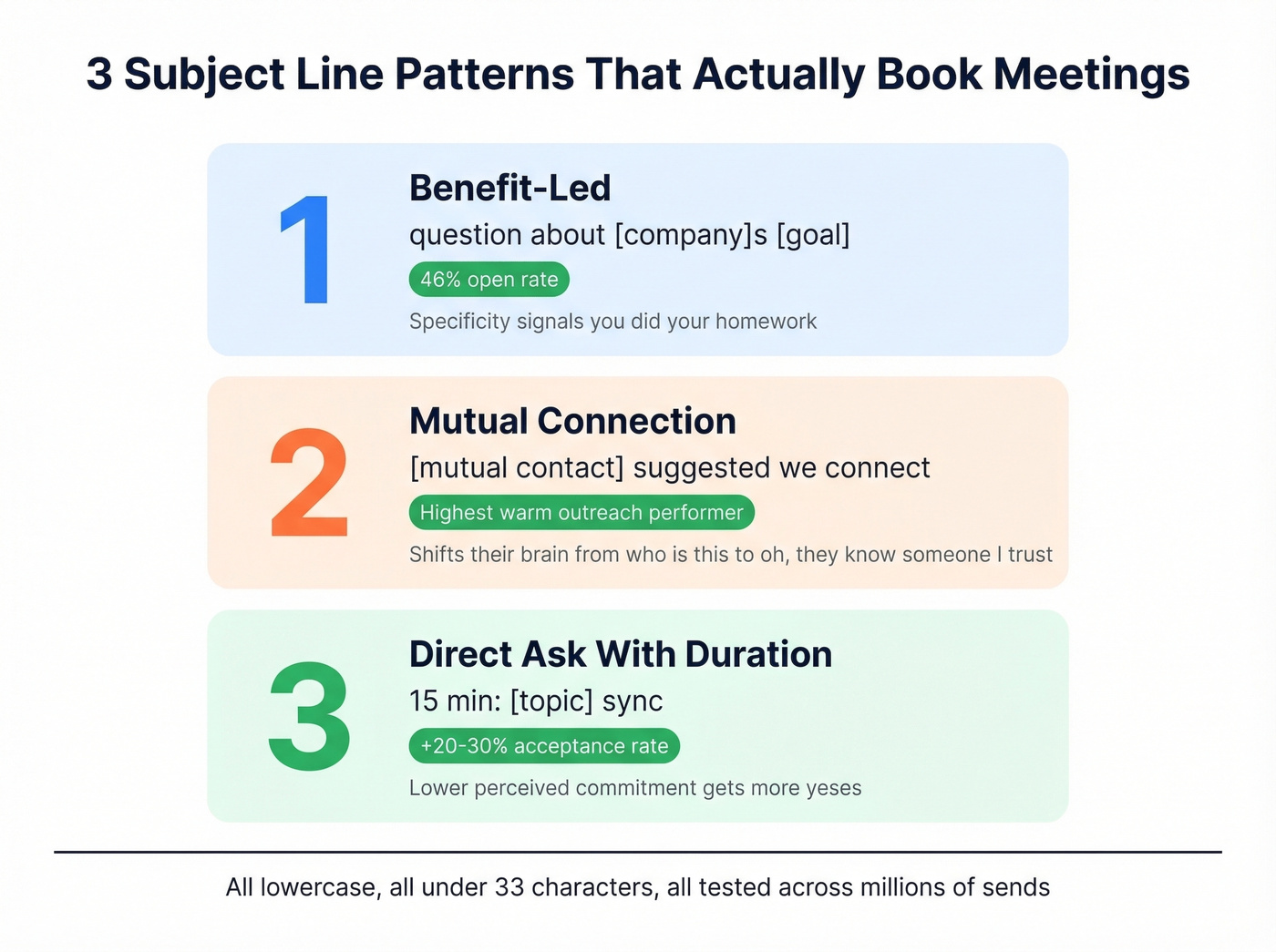
question about [company]'s [goal]- Specificity signals research. Question-form subject lines hit 46% opens in the Belkins dataset.how [competitor] cut [metric] 30%- Competitor references create genuine interest without sounding like a pitch. A pattern r/sales practitioners consistently recommend.[benefit] for [company name]- Benefit-led, direct, and under 30 characters for most company names.idea for [specific initiative]- Works when you can reference a job posting, press release, or product launch.[first name], quick thought- Only use this if the email body delivers genuine value. Otherwise it's bait.
When you're titling an email to a stranger asking for a meeting, lean toward the benefit-led or question patterns. They outperform vague "let's connect" lines by a wide margin.
Warm Intro (Referral or Mutual)
[mutual contact] suggested we connect- The recipient's brain shifts from "who is this?" to "oh, [name] sent them." We've seen this pattern outperform everything else in warm outreach.[name] mentioned your [project]- Ties the connection to something concrete rather than a generic referral.following up on [event/conversation]- Works for conference follow-ups. Keep the reference tight.
Meeting Invite / Calendar Subject
Calendar subject lines do double duty - they need to work in the inbox and on the calendar, where both parties will reference them for weeks. Calendar mobile views truncate aggressively, so keep these tight and descriptive.
15 min: [topic] sync- Including explicit duration can increase acceptance by 20-30%. Lower perceived commitment gets more yeses.[your name] <> [their name]: [topic]- Clean calendar label that both parties can scan later.intro: [your company] + [their company]- Standard for warm intros brokered by a third party.
All-lowercase subject lines have the highest open rates per Gong's data. It feels wrong. It works anyway. Proper nouns are the exception.
Mistakes That Kill Reply Rates
Salesy language kills performance. "Exclusive offer," "limited time," and "ASAP" reduce opens by up to 17.9%. Empty subject lines boost opens by ~30% but kill replies by 12% - a gimmick that hurts the metric you actually care about.
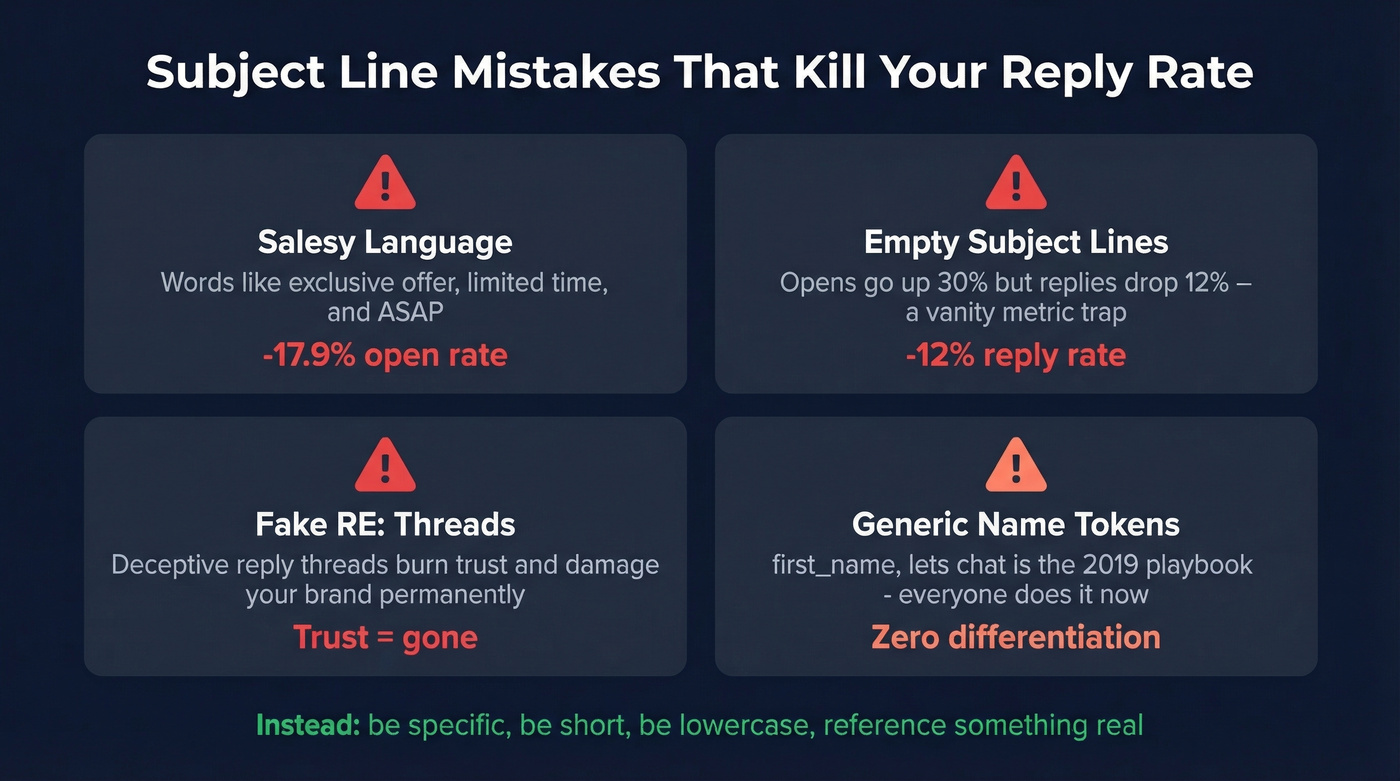
Fake "RE:" threads are the fastest way to burn trust. The consensus on r/coldemail is blunt: deceptive reply threads are "shitty" and damage brand reputation, even if they drive short-term opens.
ALL CAPS or excessive punctuation ("MEETING REQUEST!!!") screams spam filter. One exclamation mark is already one too many in B2B cold email.
And stop using generic first-name tokens as your only personalization. {first_name}, let's chat is the 2019 playbook. It doesn't differentiate you from the other 47 cold emails sitting in their inbox this morning.
Verify Before You Send
Your SDR spent an hour crafting the perfect intro meeting subject line. Then a chunk of emails bounced, and even the good addresses stopped seeing your messages because your sender reputation cratered. We've watched this play out with teams that skip verification - one bad campaign can take weeks to recover from.
Before you launch any cold sequence, verify your contact list. Prospeo checks emails in real time with 98% accuracy on a 7-day refresh cycle, so you're not sending to addresses that went stale last quarter. Upload a CSV, get verified results in minutes, and protect the domain reputation that makes everything else work.
Bad data tanks sender reputation faster than bad copy. Teams using Prospeo cut bounce rates from 35%+ to under 4% - protecting the domain reputation that makes every intro meeting subject line you send actually deliverable.
One bad campaign can wreck weeks of outreach. Verify first.
FAQ
What's the ideal length for an intro meeting subject line?
Under 33 characters - or 2-4 words - ensures full visibility on every major device, including Gmail on Android. An analysis of 5.5M emails found this length hits a 46% open rate; longer lines drop to 35%. Front-load the most important word so truncation doesn't bury your point.
How should I choose a subject for a first meeting email?
Focus on specificity over cleverness. Reference a concrete outcome, a mutual connection, or something you noticed about the prospect's business. The best subject for a first meeting reads like it was written for one person, not batch-sent to a thousand - because that specificity drives replies, not just opens.
Should I personalize the subject line with the recipient's name?
Generic first-name tokens don't reliably lift opens anymore - academic research confirms this. What moves reply rates is referencing something specific: their company initiative, a competitor's results, or a mutual connection. Specificity is the new personalization.
Does a great subject line matter if emails aren't reaching inboxes?
No. Stale contact data causes bounces, which tanks your domain reputation and sends even good emails to spam. Verify addresses before every campaign - skip this step and even the best subject line in the world won't help you.