

Marketing Sourced Pipeline: When It Matters, When It Doesn't, and What to Measure Instead
Every CMO has lived this moment: the board asks, "What percentage of pipeline did marketing source last quarter?" The number either looks too low - cue budget cuts - or too high - cue skepticism. The problem isn't the answer. It's the question.
Marketing sourced pipeline is one of the most tracked and least useful metrics in B2B, and the gap between those two things is widening fast.
The Quick Version
If you're running an SMB or PLG motion with deals under $15K, track marketing sourced pipeline - it's genuinely meaningful. Mid-market or enterprise with deals above $50K? Shift to marketing influenced pipeline as your primary metric. Running ABM? Stop splitting sourced vs. sales-sourced entirely and measure shared pipeline instead.
What Is Marketing Sourced Pipeline?
Marketing sourced pipeline is the dollar value of open opportunities where the first touch traces back to a marketing campaign, content asset, or inbound channel. You sum the pipeline value where Primary Source = Marketing in your CRM. Straightforward - it's the revenue potential that marketing activities directly created, not just touched.
The distinction from marketing influenced pipeline matters. Sourced means marketing created the opportunity. Influenced means marketing touched it at any stage. Forrester reports that 70% of B2B orgs track sourced pipeline, but only 48% regularly measure influenced - a massive measurement gap that distorts how leadership evaluates marketing's real contribution.
Why MSP Is Declining
Forrester's data shows 70% of B2B marketing orgs reported MSP as a KPI in 2015. By 2020, that dropped to 47%. Their projection: only 14% would still track it by 2025. We're now past that mark, and the trend has held.
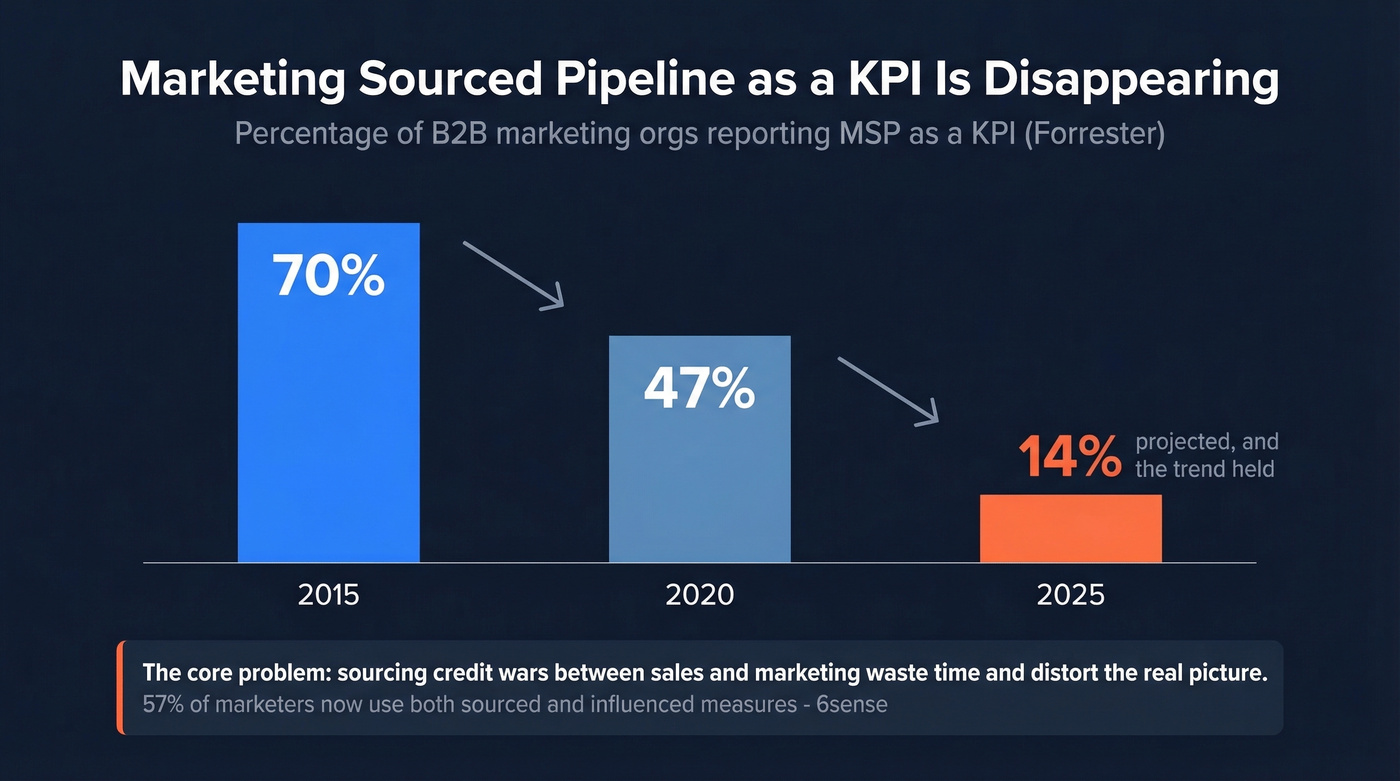
The core issue is the credit war. Sales says they sourced the deal because the AE sent the first email. Marketing says they sourced it because the contact downloaded a whitepaper three weeks earlier. Both are partially right, and the argument wastes everyone's time. 6sense's benchmark data found 57% of marketers now use both sourced and influenced measures - teams are moving past the either/or framing, which is long overdue.

Marketing sourced pipeline falls apart when 30% of your CRM contacts go stale every year. Prospeo's 7-day data refresh cycle and 98% email accuracy keep your attribution models honest - so your pipeline numbers reflect reality, not guesswork.
Clean data in, accurate pipeline out. Start with 75 free verified emails.
When MSP Still Makes Sense
Here's a decision framework based on what we've seen work across different GTM motions:
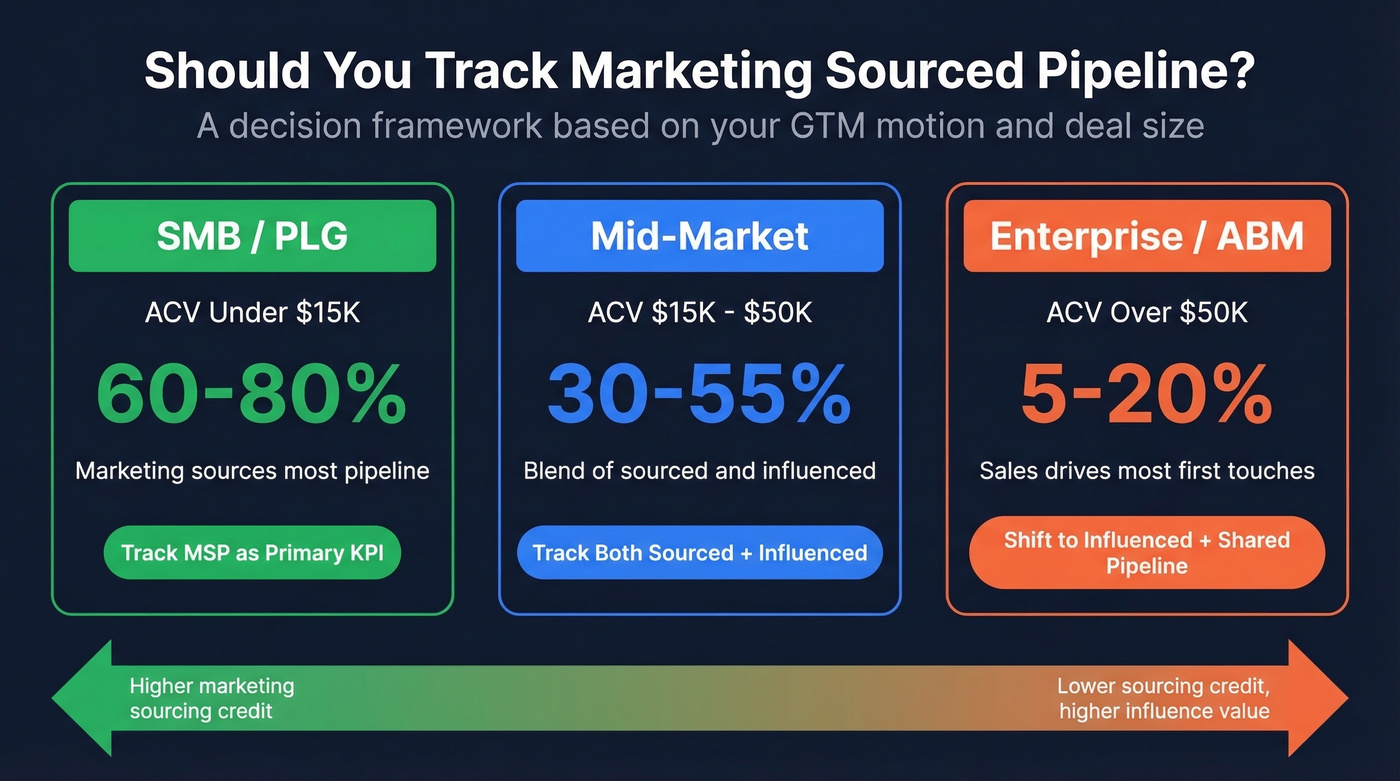
- High-velocity, PLG, or SMB with ACV under $15K: Track MSP. Marketing likely sources 60-80% of pipeline, and that number is actionable.
- Mid-market with ACV $15K-$50K: Track both sourced and influenced. The blend matters more than either alone.
- Enterprise or ABM with ACV above $50K: Shift to influenced and shared metrics. MSP naturally falls to 5-20% in these motions - by design, not failure.
On r/sales, AEs report marketing contribution to pipeline ranging from 5% to 100% depending on the GTM model. That's exactly why benchmarks must be segmented. In our experience, the ACV threshold matters more than company size.
Benchmarks by Revenue and Deal Size
| Revenue Band | Marketing Contribution % | Source |
|---|---|---|
| Under $5M | ~25% | LeanData |
| $5M-$20M | ~27% | LeanData |
| $20M-$50M | ~29% | LeanData |
| Over $50M | ~28% | LeanData |
| ACV under $50K | ~59% | Insights Squared |
| ACV over $50K | ~47% | Insights Squared |
The ASP effect is the most important row. When average deal size crosses $50K, the pipeline contribution marketing teams can claim drops from ~59% to ~47%. That reflects longer sales cycles with more human touchpoints, not marketing failure. Benchmarkit's data shows 62% of marketing teams still report "pipeline generated" as a top-three metric, and 82% have adopted ABM. How teams measure is evolving, but pipeline generation remains the anchor.
What to Measure Instead
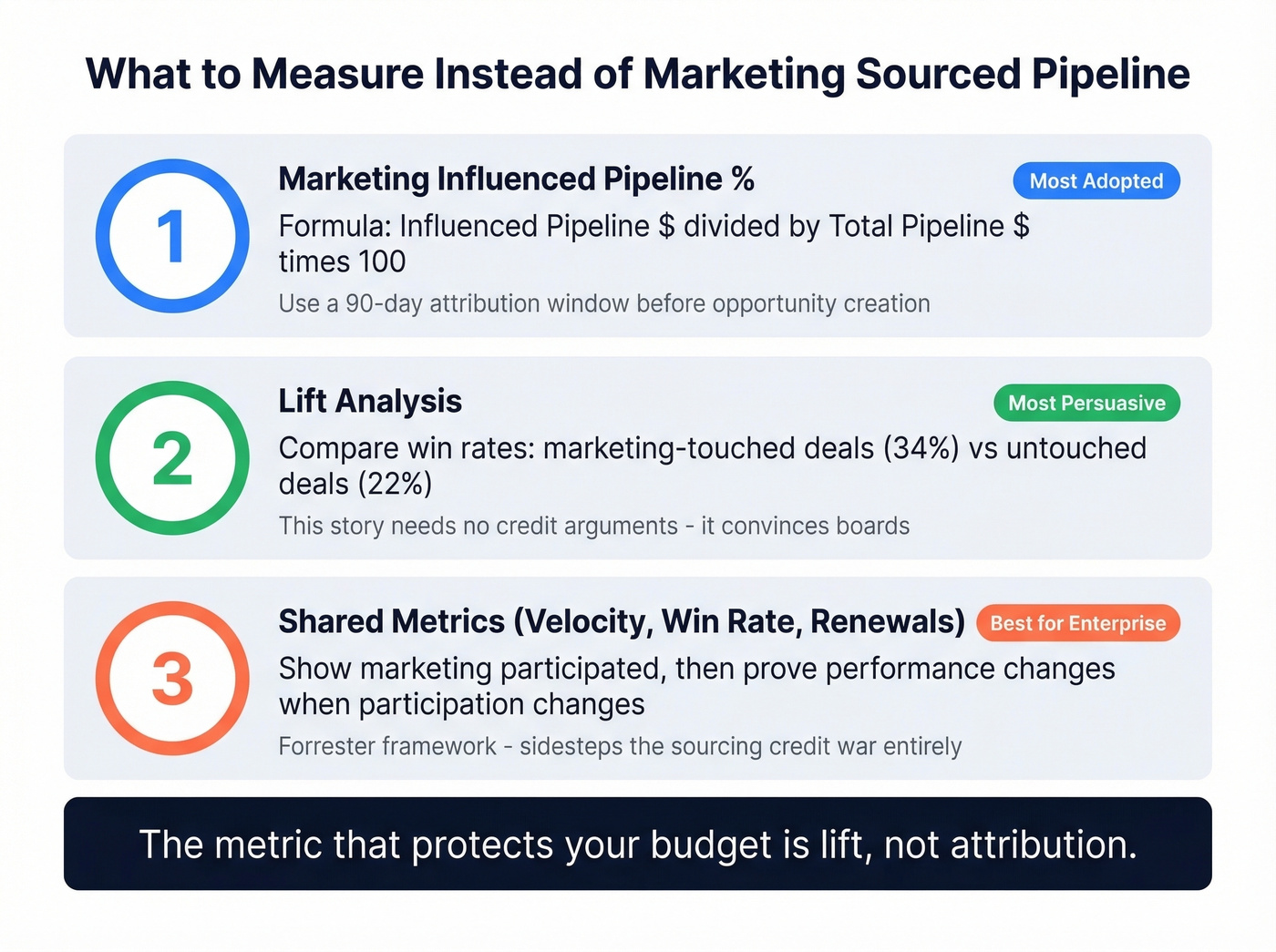
Marketing Influenced Pipeline % is gaining the most ground. The formula: Influenced Pipeline $ / Total Pipeline $ x 100. Use a 90-day attribution window - any marketing engagement within 90 days before opportunity creation counts as influence.
Lift analysis is what actually convinces boards. Compare win rate and average deal size for opportunities with marketing engagement versus those without. Say marketing-touched deals close at 34% and non-touched deals close at 22%. That story needs no credit arguments.
Forrester's framework puts it well: show performance on shared metrics like velocity, win rate, and renewals. Prove marketing participated. Then demonstrate that performance changes when marketing participation changes.
Let's be honest - most teams obsess over sourcing credit when they should obsess over influence quality. If your marketing touches don't measurably improve win rates, it doesn't matter who gets sourcing credit. The metric that actually protects your budget is lift, not attribution.
How to Measure Pipeline Correctly
Lock source values at opportunity creation. This is the single most important governance rule. If sources can be overwritten after the fact, your data is fiction. Sync UTMs between your MAP and CRM, and enforce naming conventions ruthlessly. Strong marketing pipeline reporting depends on these foundational hygiene steps before any dashboard gets built.
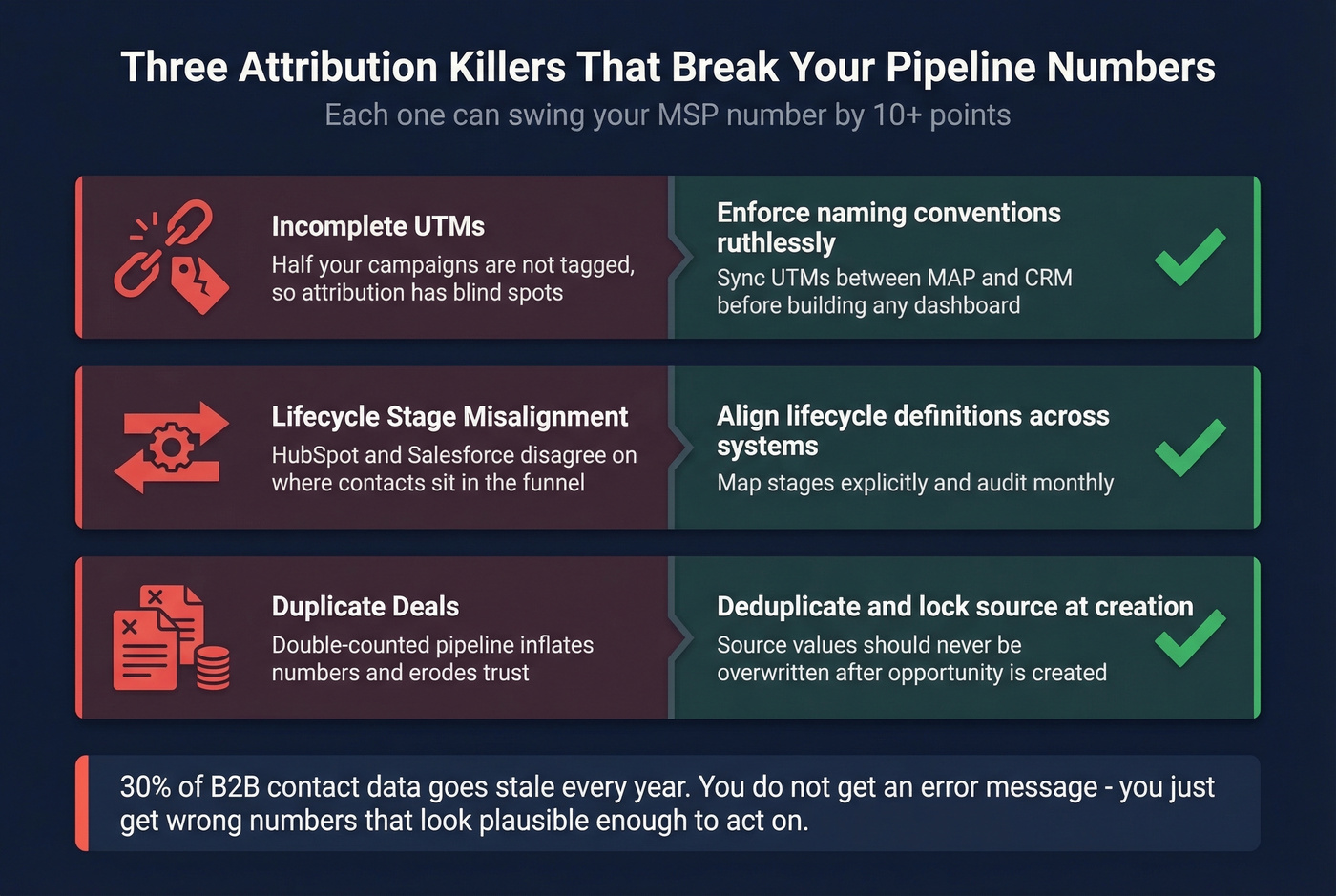
Three attribution killers we see repeatedly: incomplete UTMs where half your campaigns aren't tagged, lifecycle stage misalignment between HubSpot and Salesforce, and duplicate deals that double-count pipeline. Any one of these can swing your MSP number by 10+ points.
Here's the thing nobody talks about: attribution accuracy depends entirely on contact data quality. If your CRM has bounce rates of 35-40% - and we've seen this firsthand at companies like Snyk before they fixed it - your attribution and engagement tracking becomes unreliable. Roughly 30% of B2B contact data goes stale annually, and when it does, your attribution breaks silently. You don't get an error message. You just get wrong numbers that look plausible enough to act on, which is worse.

This is where CRM enrichment becomes a pipeline measurement tool, not just a sales tool. Prospeo's enrichment returns 50+ data points per contact with 98% email accuracy on a 7-day refresh cycle, which means your attribution models are working with current records instead of stale ones. Keeping contact data fresh isn't just about deliverability - it's about trusting your pipeline numbers.
If you're evaluating vendors, start with a quick scan of data enrichment services and how they handle refresh cycles and match rates.
Snyk cut bounce rates from 35-40% to under 5% with Prospeo - and their pipeline attribution finally became trustworthy. At ~$0.01/email with 92% enrichment match rates, fixing your data costs less than one bad board meeting.
Stop reporting pipeline numbers built on stale contacts.
FAQ
What's the difference between sourced and influenced pipeline?
Sourced pipeline means marketing created the opportunity through first-touch attribution. Influenced pipeline means marketing engaged the account at any stage before close. Most mature teams track both side by side so leadership sees the full picture of marketing's revenue impact.
What percentage of pipeline should marketing source?
For SMB and PLG motions with deals under $15K, expect 60-80%. Enterprise and ABM motions typically see 5-20%. The average selling price matters more than company size - Insights Squared data shows contribution drops from ~59% to ~47% once ACV crosses $50K.
How do you keep pipeline attribution data accurate?
Lock source values at opportunity creation so they can't be overwritten, sync UTMs between your MAP and CRM, and keep contact data current. A 7-day refresh cycle on your enrichment tool prevents attribution from breaking when contacts change roles or emails bounce.
Is marketing sourced pipeline still worth tracking in 2026?
Yes, but only for specific GTM motions. High-velocity and PLG teams with sub-$15K deals should still track it as a primary KPI. For mid-market and enterprise, influenced pipeline and lift analysis are more useful metrics that sidestep the sourcing credit war between sales and marketing entirely.