


Pipedrive Pricing, Reviews, Pros and Cons in 2026
There's a post on r/CRM from someone staring down an $800/mo HubSpot renewal, desperately looking at Pipedrive as an escape route. Fair enough. The sticker price looks like a bargain - $14/seat/mo on the entry plan. But the sticker price and the real price are different numbers, and the gap between them is where most teams get burned.
Here's what Pipedrive actually costs, where the plan limits bite, and whether it's the right CRM for your team (or one of many examples of a CRM).
Pipedrive Pricing Breakdown
Pipedrive runs four core plans: Lite, Growth, Premium, and Ultimate. Annual billing saves $10-$20/seat/mo depending on the tier, so it's worth locking in if your team size is stable.
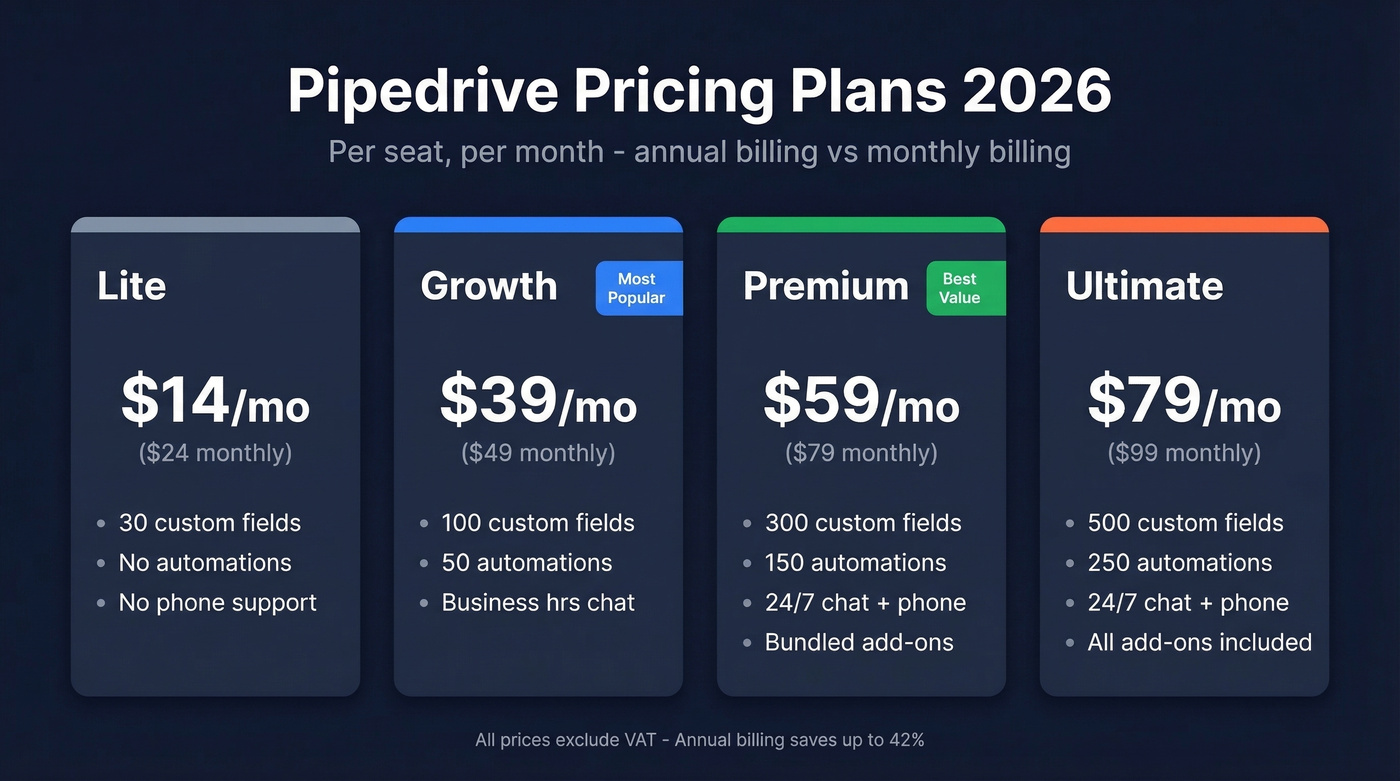
| Plan | Annual (per seat/mo) | Monthly (per seat/mo) |
|---|---|---|
| Lite | $14 | $24 |
| Growth | $39 | $49 |
| Premium | $59 | $79 |
| Ultimate | $79 | $99 |
All prices exclude VAT. Pipedrive advertises "save up to 42%" on annual billing.
Add-On Costs That Stack Up
Add-ons are billed per company, not per user - a small mercy. But they add up fast.
| Add-On | Annual Price | Monthly Price |
|---|---|---|
| LeadBooster | $32.50/mo | $39/mo |
| Campaigns (1K contacts) | $13.33/mo | $16/mo |
| Web Visitors (200 orgs) | $41/mo | $49/mo |
| Smart Docs | $32.50/mo | $39/mo |
| Projects | $6.67/mo | $8/mo |
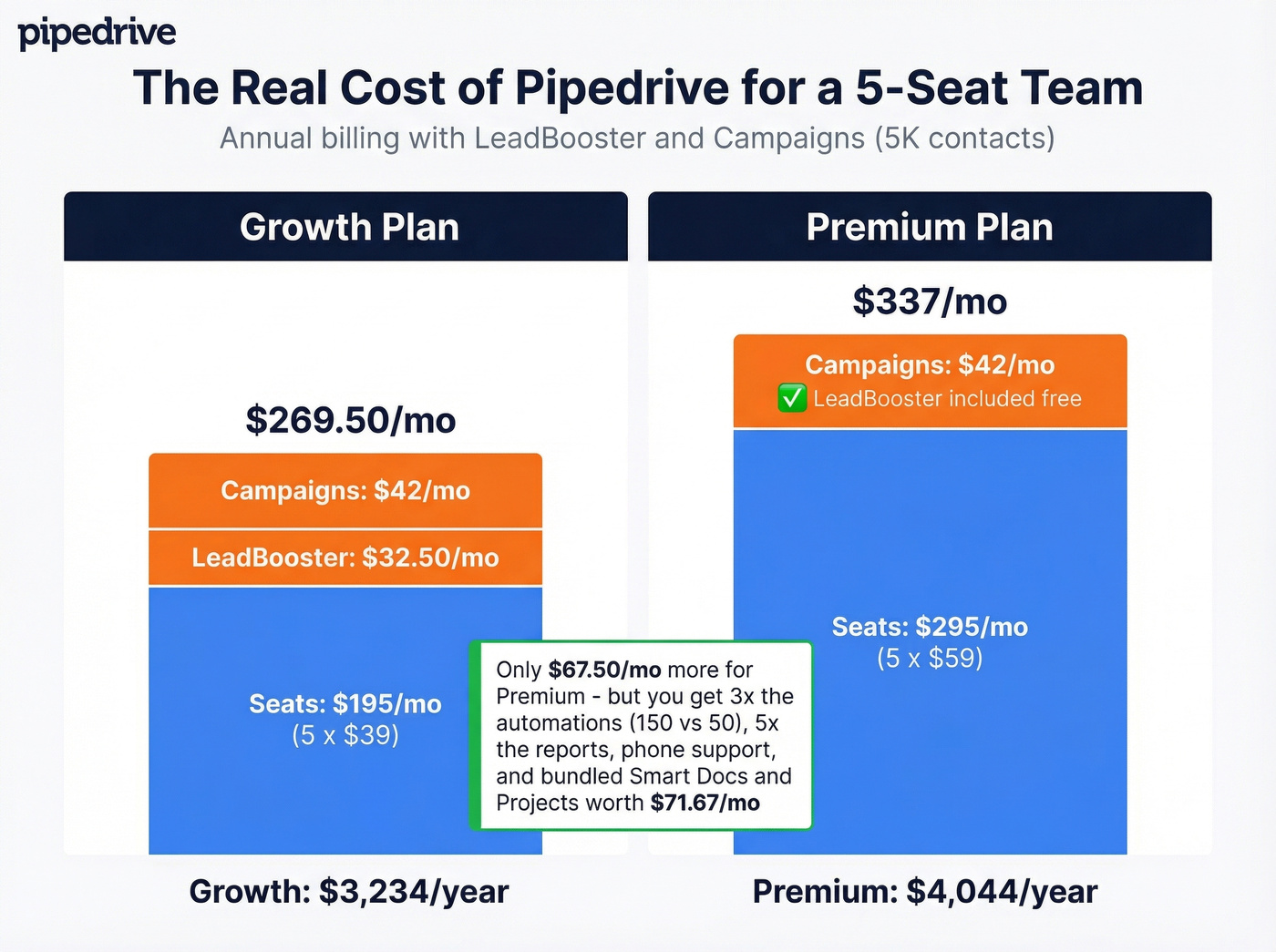
The detail most reviews miss: Premium and Ultimate bundle LeadBooster, Projects, and Smart Docs at no extra cost - saving $71.67/mo in add-ons versus buying them separately on Growth. That bundling changes the total cost of ownership entirely for teams that need those features.
We ran the numbers on a 5-seat team on Growth (annual) with LeadBooster and Campaigns at the 5,000-contact tier: $195 in seats + $32.50 + $42 in add-ons = $269.50/mo, or $3,234/year. On Premium, the same team drops LeadBooster from the bill and lands at $295/mo - only $25 more for dramatically better feature ceilings. That's the kind of math that makes the upgrade obvious.
What You Get Per Plan
Pipedrive updated plan limits in late 2025, and the ceilings are hard.
| Feature | Lite | Growth | Premium | Ultimate |
|---|---|---|---|---|
| Automations | N/A | 50 | 150 | 250 |
| Reports/user | 15 | 50 | 250 | 500 |
| Custom fields | 30 | 100 | 300 | 500 |
| Sequences | N/A | 5 | 25 | 50 |
| Multiple email sync | N/A | 1 acct | 3 accts | 5 accts |
| Teams | N/A | N/A | 15 | 25 |
| Phone support | No | No | Yes | Yes |
| Live chat | No | Business hrs | 24/7 | 24/7 |
All plans cap at 300,000 combined leads and deals.
Here's the thing: Lite isn't a real CRM plan for most teams. The limits are tight, support is minimal, and you'll feel the gating fast. Growth at $39/seat/mo (billed annually) is the actual entry point.
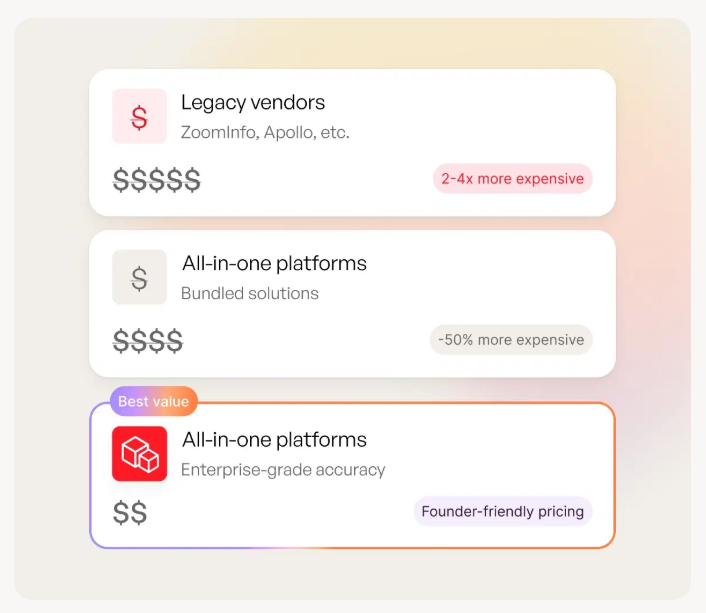

LeadBooster charges $32.50/mo plus credits for contact lookups. Prospeo gives you 98% accurate B2B emails from 300M+ profiles at ~$0.01 each - with a Zapier integration that pushes verified contacts straight into Pipedrive. No add-on math required.
Stop paying CRM add-on prices for contact data.
Pros and Cons Worth Knowing
What Pipedrive Gets Right
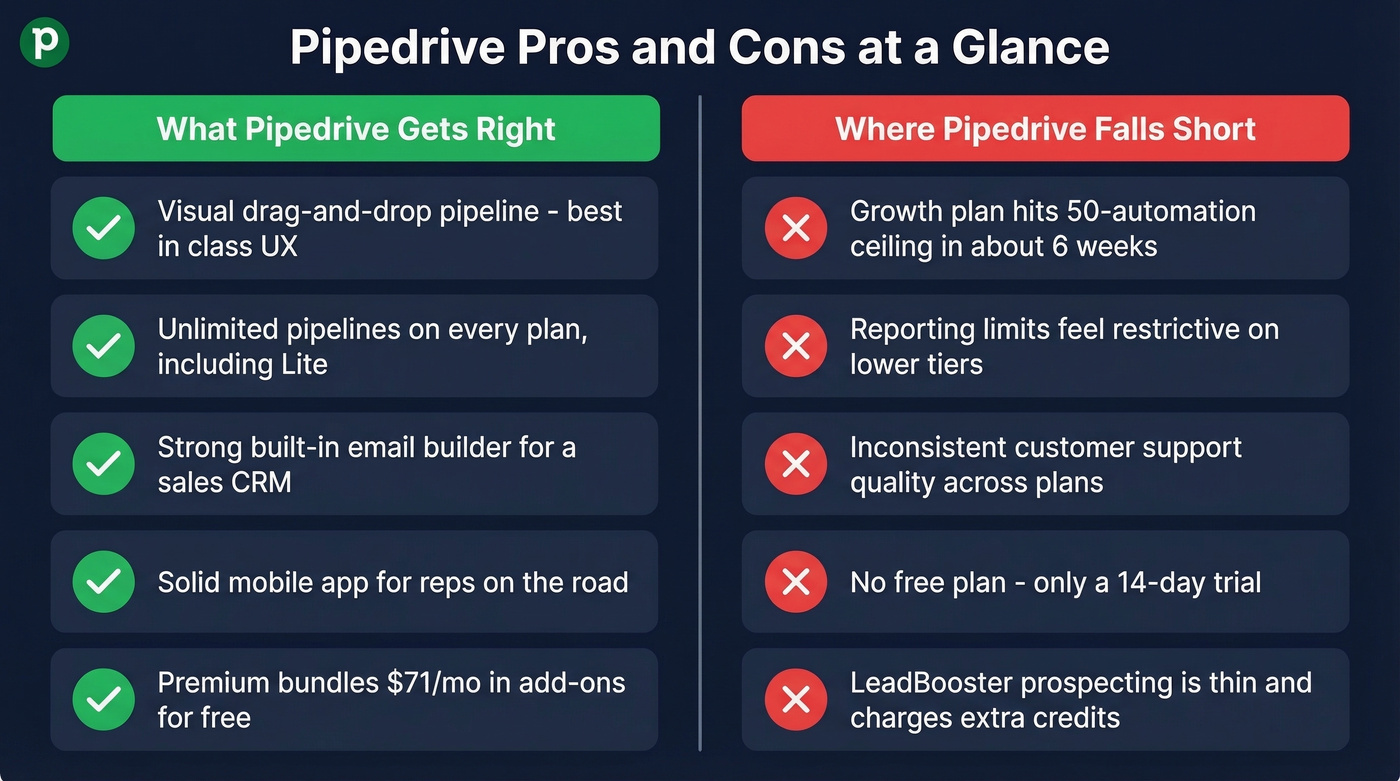
The visual pipeline is genuinely excellent. Drag-and-drop kanban boards feel intuitive from day one - it's the number one thing users praise on G2. Unlimited pipelines on every plan, including Lite, is a real differentiator versus competitors that gate pipeline count by tier. The built-in email builder is also surprisingly strong for a sales-first CRM, and the mobile app holds up well for reps working from the road (especially if you're tracking sales activities consistently).
Where Pipedrive Falls Short
Growth's 50-automation and 50-report ceilings will frustrate any team doing serious pipeline ops. We set up a Growth account to stress-test the automation limit - a mid-size team will hit it within six weeks. TechRadar flags "inconsistent customer support quality" as a known issue, and Capterra reviewers echo that loudly.
Native prospecting is thin. LeadBooster's Prospector tool gives you 10 free contact lookups, then charges credits on top of the $32.50/mo add-on fee. For teams filling the top of funnel, the smarter move is verifying contacts before they hit your CRM (see data enrichment services). Prospeo finds and verifies B2B emails at 98% accuracy with a Zapier integration that pushes clean data straight into Pipedrive - at a fraction of LeadBooster's cost.
What Users Actually Say
Pipedrive holds a 4.3/5 on G2 across 2,959 reviews (65% five-star) and a 4.5/5 on Capterra across 3,042 reviews (Ease of Use 4.5, Customer Service 4.4). Praise clusters around intuitive design and the visual pipeline. Complaints cluster around limited reporting, add-on pricing creep, and support quality.
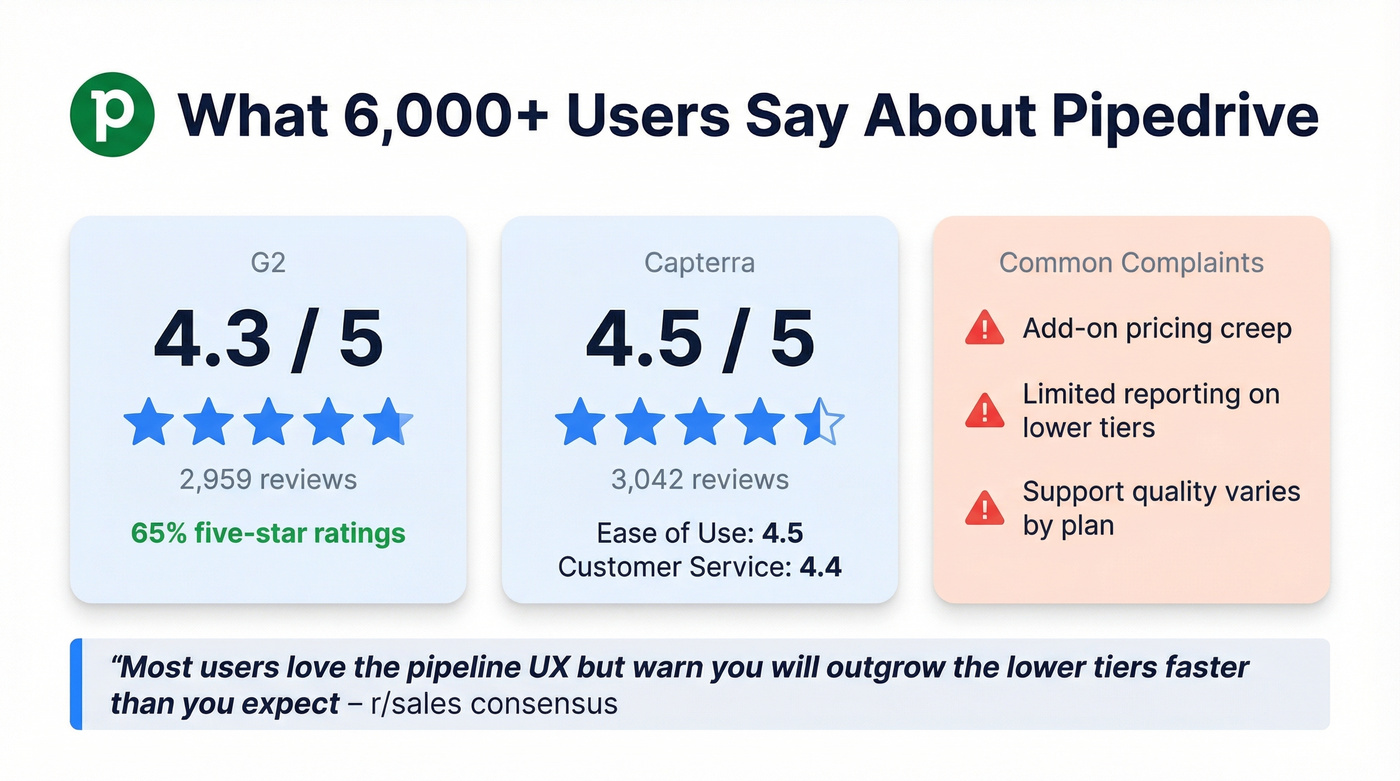
One Capterra headline captures the frustration perfectly: "Pipedrive customer service is so bad, that it ruins the product." That's harsh, but it reflects a real pattern. If you're on Lite or Growth, you don't get phone support - plan accordingly.
The consensus on r/sales and r/CRM is more nuanced: most users love the pipeline UX but warn that you'll outgrow the lower tiers faster than you expect. Several threads specifically call out the automation ceiling on Growth as the trigger for upgrading (a common theme in sales pipeline challenges).
Who Should (and Shouldn't) Use Pipedrive
Use Pipedrive if you're a 3-7 rep sales team that lives in the pipeline, wants fast setup, and will start on Growth or above. It's the best pure-sales CRM at its price point - no other tool matches the pipeline UX for the money.
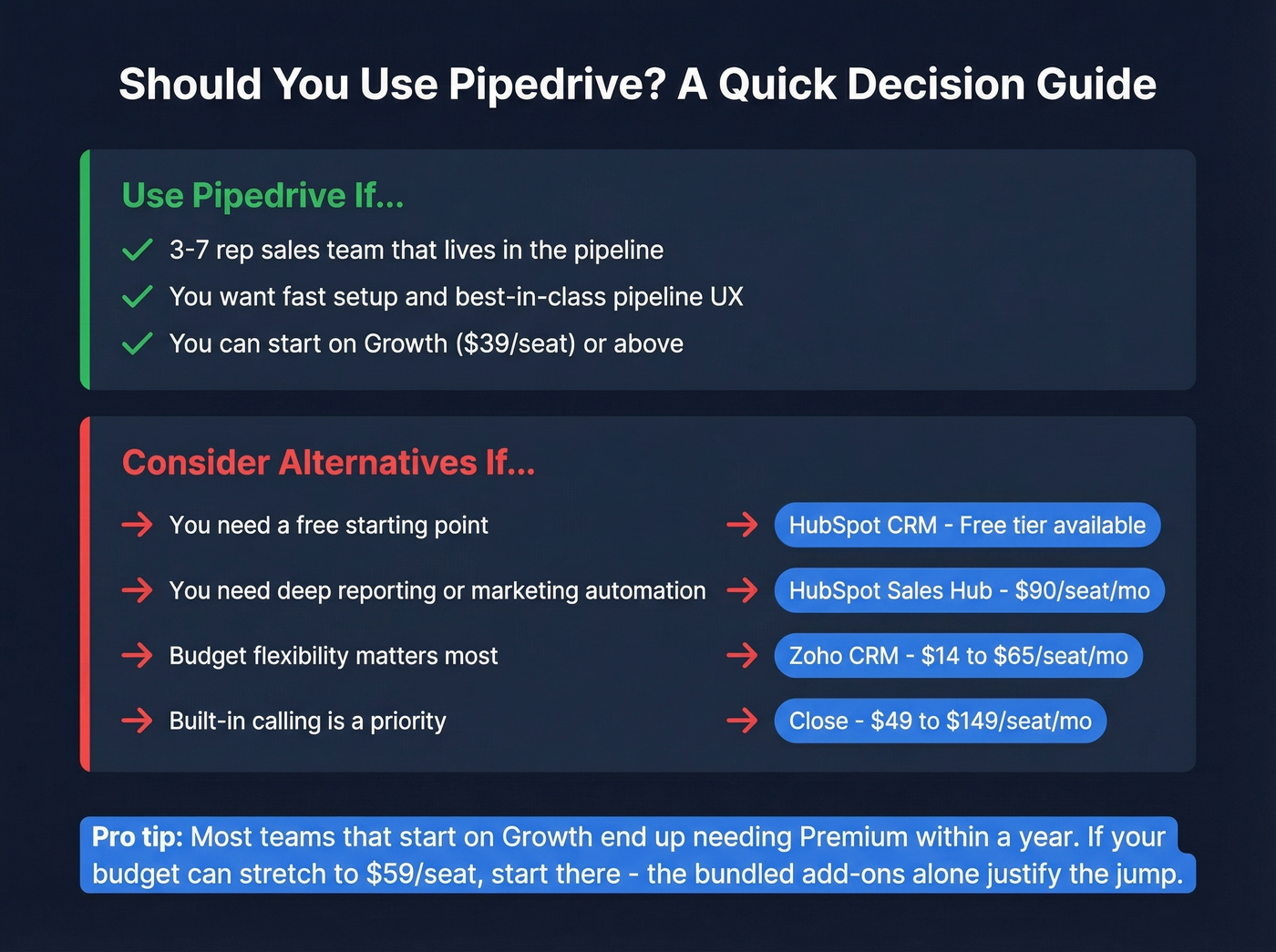
Skip Pipedrive if you need deep reporting, marketing automation, or a free starting point. HubSpot CRM has a genuinely usable free tier, Zoho CRM ($14-$65/seat/mo) offers budget flexibility, and Close ($49-$149/seat/mo) wins if built-in calling matters more than pipeline visuals.
Let's be honest: most teams that start on Growth end up needing Premium within a year. The automation ceiling is that tight. If your budget can stretch to $59/seat, start there - the bundled add-ons alone justify the jump.
You just did the math on Pipedrive plans and add-ons. Now do the math on your data. Prospeo's 7-day refresh cycle and 98% email accuracy mean fewer bounces, cleaner pipelines, and no wasted seats chasing dead contacts. Teams using Prospeo book 35% more meetings than Apollo users.
Your CRM is only as good as the data inside it.
FAQ
Is Pipedrive worth it in 2026?
Yes, on Growth ($39/seat/mo billed annually) or above. Lite's gating makes it impractical for most teams. Budget for at least one add-on - most teams need Campaigns or LeadBooster, adding $13-$39/mo to the bill.
Does Pipedrive have a free plan?
No. Pipedrive offers a 14-day trial but no permanent free tier. HubSpot CRM is the closest alternative with a usable free plan that includes basic pipeline management.
How does Pipedrive compare to HubSpot?
Pipedrive is simpler, cheaper per seat, and better for pure sales workflows with unlimited pipelines on all plans. HubSpot is broader - marketing, service, CMS - but costs escalate faster. Sales Hub Professional runs $90/seat/mo. For teams that only need pipeline management, Pipedrive wins on focus and price.
What's the best way to get leads into Pipedrive?
LeadBooster works but charges credits on top of its $32.50/mo fee. For teams running outbound at scale, a dedicated data tool paired with Pipedrive tends to be more cost-effective and gives you cleaner data from the start.