

Prospect Meaning: Every Definition You Need
A prospect is someone - or something - with potential. That single thread connects every use of the word, from a sales pipeline to a baseball draft board to a weather forecast. But the prospect meaning that matters most depends on your context, and most dictionary pages hand you eight definitions without telling you which one you actually need.
What "Prospect" Actually Means
In sales, a prospect is a qualified potential customer. In sports, it's a developing player projected to reach the top level. In everyday English, it's the possibility of something happening - "job prospects," "the prospect of rain." One word, three worlds.
So what does prospect mean in the context you care about?
Pronunciation: noun /ˈprɒspekt/ (BrE) or /ˈprɑːspekt/ (NAmE); verb commonly /prəˈspɛkt/.
Prospect Meaning in Sales and Marketing
This is the definition most people are looking for.
What Is a Prospect in Sales?
A prospect in sales is a potential customer who's been qualified - they fit your ideal customer profile, they have a genuine need, and they've shown some level of interest in what you sell. That last part separates a prospect from a random name in a spreadsheet.
Salesforce defines prospects as "the potential customers you want to sell to" and the fuel for your sales pipeline. The key distinction is qualification. A prospect isn't just anyone who might buy. They're someone you've vetted and believe can buy, with the budget and authority to make it happen. When marketers talk about prospective clients, they mean the same thing - contacts who've cleared enough qualification hurdles to warrant direct engagement.
The Hierarchy: Suspect to Opportunity
These terms get used interchangeably in most sales orgs, and it causes real problems. Mislabeled pipeline stages skew forecasting, waste rep time, and make reporting meaningless. We've seen this firsthand - ask five reps in any sales community to define "prospect" and you'll get five different answers. Here's how the hierarchy actually works:
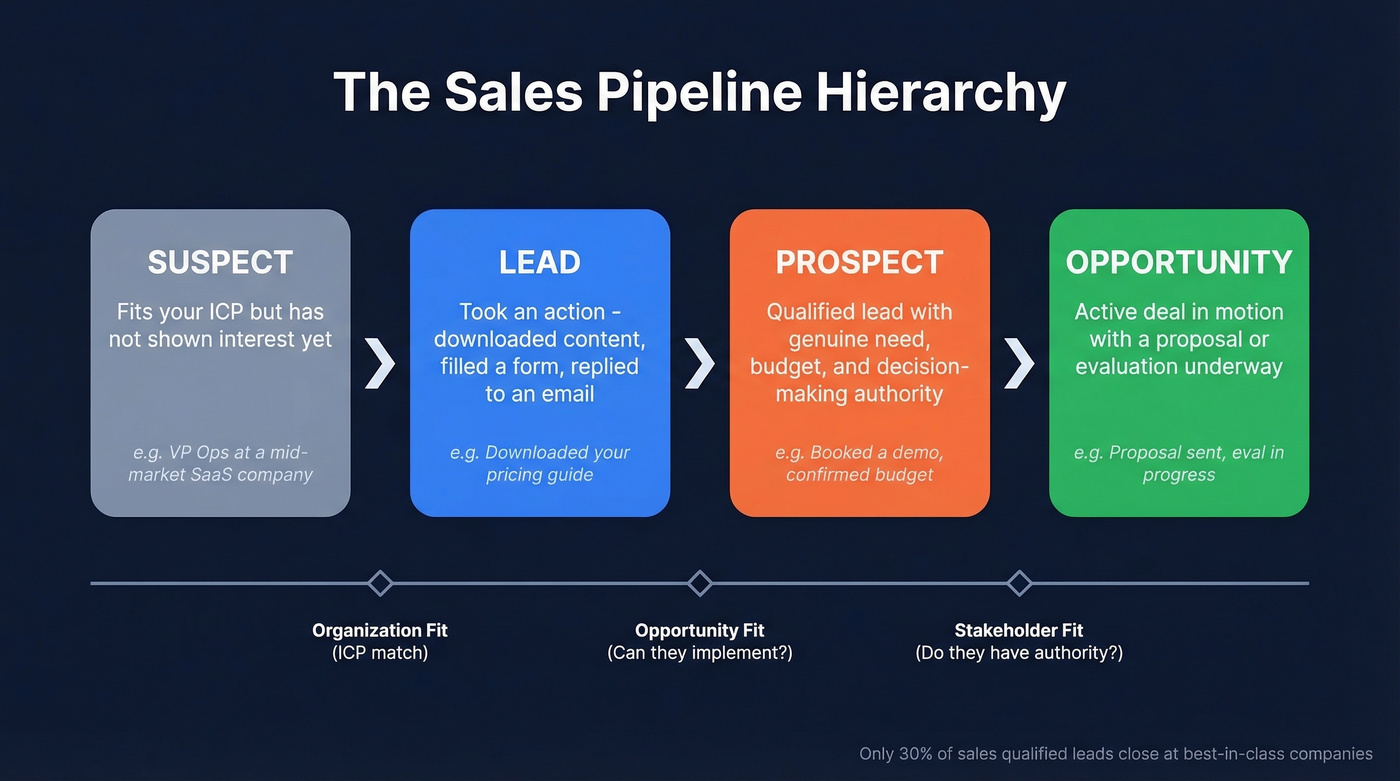
A suspect is anyone who fits your ICP but hasn't shown interest yet. A lead is a suspect who's taken an action - downloaded a whitepaper, filled out a form, replied to an email. A prospect is a lead that's been qualified as having genuine need, budget, and decision-making power. An opportunity is a qualified prospect with an active deal in motion.
Qualification typically happens at three levels: organization fit (ICP match), opportunity fit (can they implement?), and stakeholder fit (do they have authority?).
| Stage | Definition | Example | Action |
|---|---|---|---|
| Suspect | Fits ICP, no interest yet | VP Ops at a mid-market SaaS co | Research and outreach |
| Lead | Showed interest | Downloaded your pricing guide | Qualify fit and need |
| Prospect | Qualified lead | Booked a demo, has budget | Nurture and propose |
| Opportunity | Active deal | Proposal sent, eval underway | Close |
The stakes of getting this right aren't trivial. Best-in-class companies close just 30% of sales qualified leads. If you're dumping unqualified contacts into the wrong bucket, that number drops fast.
Aware vs. Unaware Prospects
Not every prospect knows they have a problem you can solve.
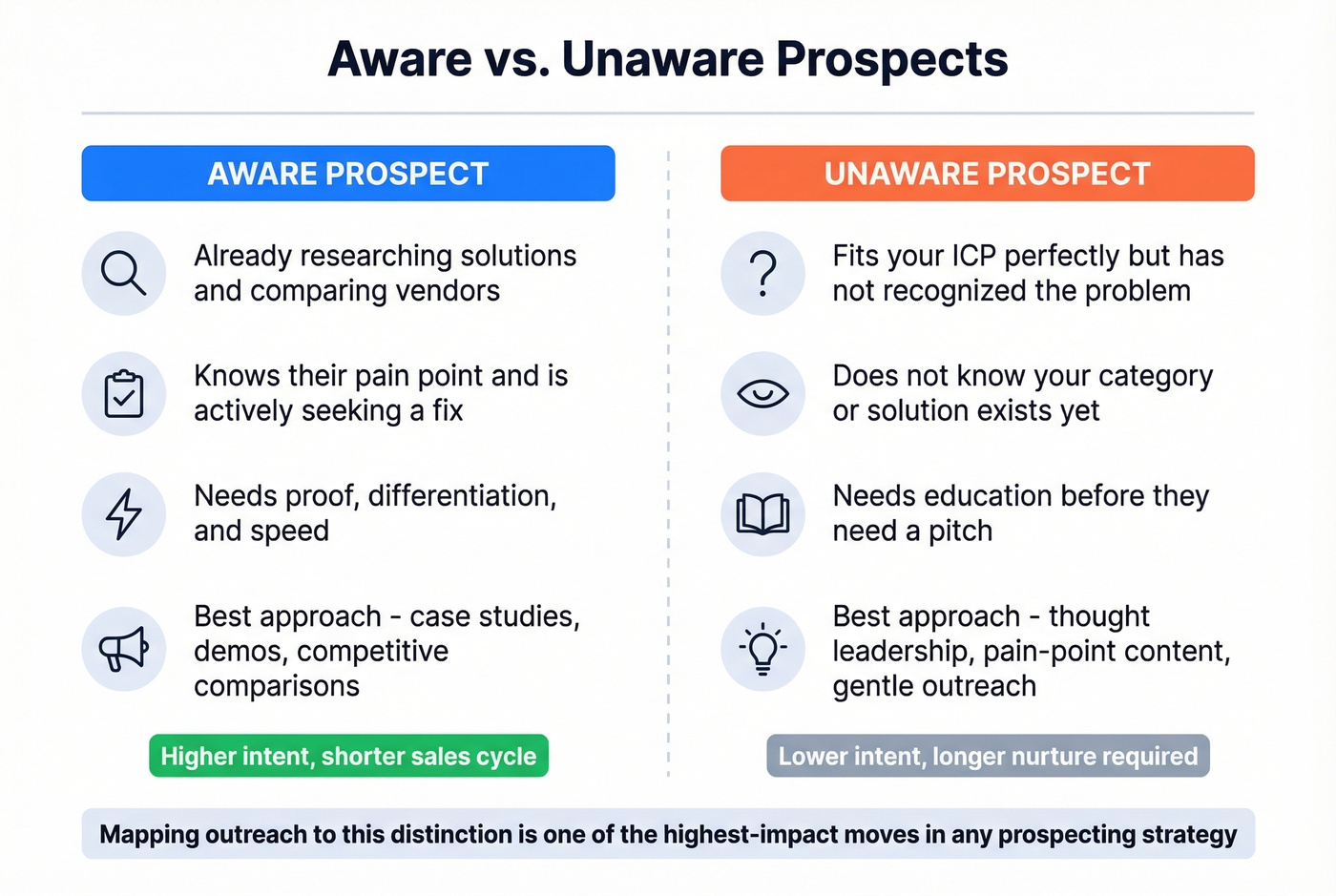
An aware prospect is already researching solutions and comparing vendors - they need proof, differentiation, and speed. An unaware prospect fits your ICP perfectly but hasn't recognized the pain point yet. They need education before they need a pitch. Mapping your outreach to this distinction is one of the highest-impact moves in any prospecting strategy, and it's something most teams skip entirely because they treat every prospect the same way regardless of where they are in their buying journey.
What Does "Prospecting" Mean?
Prospecting is the verb form - the active process of finding and engaging potential customers. It's how you fill the top of the pipeline so reps have something to work with.
The channels are familiar: cold calls, email outreach, social selling, networking events, inbound content. What's changed is the buyer's behavior. 81% of prospects now conduct research before inquiring about your product or service. Your prospecting has to meet people where they already are - informed, skeptical, and comparing you to three competitors before you even know they exist.
Here's the thing: most teams don't have a prospecting problem. They have a data quality problem. Stale emails, wrong numbers, and outdated job titles kill outbound before strategy even enters the picture. We've seen teams cut bounce rates from 30%+ to under 5% just by switching to verified data - and suddenly their "broken" prospecting process starts working fine.
The Prospect Decision-Making Process
Once you've identified key prospects, the next challenge is guiding them toward a buying decision. The process typically follows a pattern: recognizing a need, researching solutions, evaluating vendors, and committing to a purchase.
Your job as a seller is to reduce friction at every stage - providing the right content, answering objections proactively, and making it easy for prospective clients to say yes. Reps who map their outreach cadence to these stages consistently outperform those who blast the same message regardless of where a buyer sits in their journey. The consensus on r/sales is that multi-touch, stage-aware sequences outperform spray-and-pray by a wide margin, and our experience backs that up.
Prospect in Sports
In sports - especially baseball - a prospect is a developing player projected to become an impact performer at the highest level. It's not a compliment you hand out casually. It's a formal evaluation.
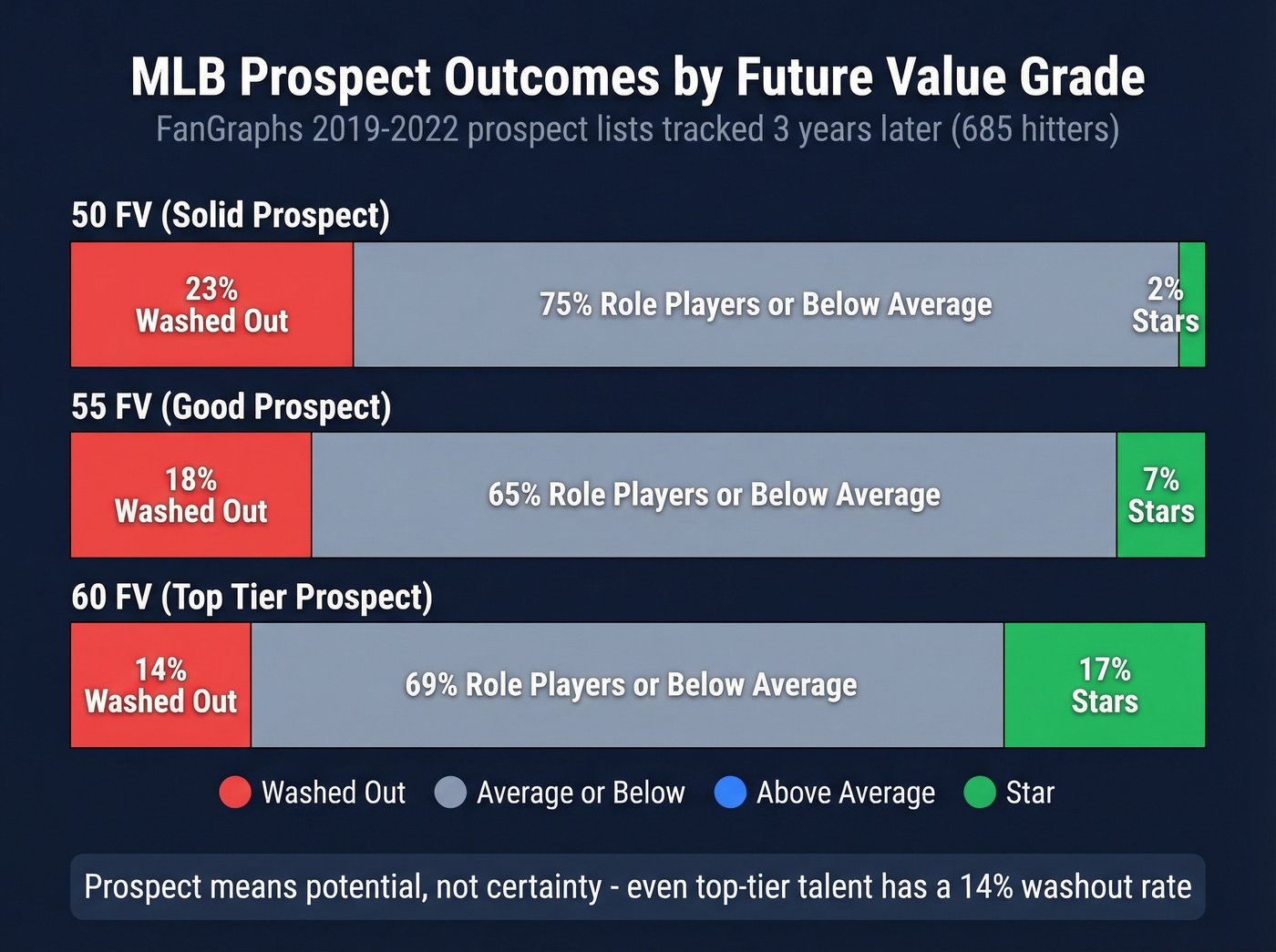
MLB scouts use a 20-80 grading scale to rate prospects on individual tools (hitting, power, speed, fielding, arm) and assign a future overall grade. A 50 is average major-league caliber. A 65 or higher signals a potential All-Star. But "prospect" doesn't mean "guaranteed star," and the data makes that painfully clear.
FanGraphs tracked 685 hitters graded 45-80 FV across their 2019-2022 prospect lists and compared outcomes three years later. Among 50 FV hitters - solid prospects - 23% washed out entirely and only 2% became stars. Even at 60 FV, where you're talking about consensus top-tier talent, 14% still washed out while 17% reached star status.
The takeaway: in sports, the word carries the same forward-looking DNA it has everywhere else. Potential, not certainty.

You just read that most teams don't have a prospecting problem - they have a data quality problem. Prospeo gives you 300M+ profiles with 98% email accuracy, refreshed every 7 days. Use 30+ filters to find prospects that actually match your ICP, not just names in a spreadsheet.
Turn the prospect definition into a pipeline reality.
Prospect in Everyday English
Outside sales floors and scouting reports, the word works as both a noun and a verb with several distinct flavors.
As a noun, it most often means the possibility or likelihood of something happening. "Job prospects" refers to your chances of finding employment. "The prospect of rain" means rain is possible or likely. You'll also hear "in prospect" as an idiom meaning "expected or likely" - "a promotion is in prospect."
There's a visual sense too, now mostly literary: a prospect as an extensive view or vista. Think of standing on a hilltop and surveying the terrain ahead. As a verb, prospect means to search or explore - most famously for gold or minerals.
Etymology and Word History
Every definition traces back to the same Latin root: prospicere, meaning "to look forward." The noun prospectus - "a distant view, a look out" - entered English in the early 15th century as exactly that: the act of looking into the distance.
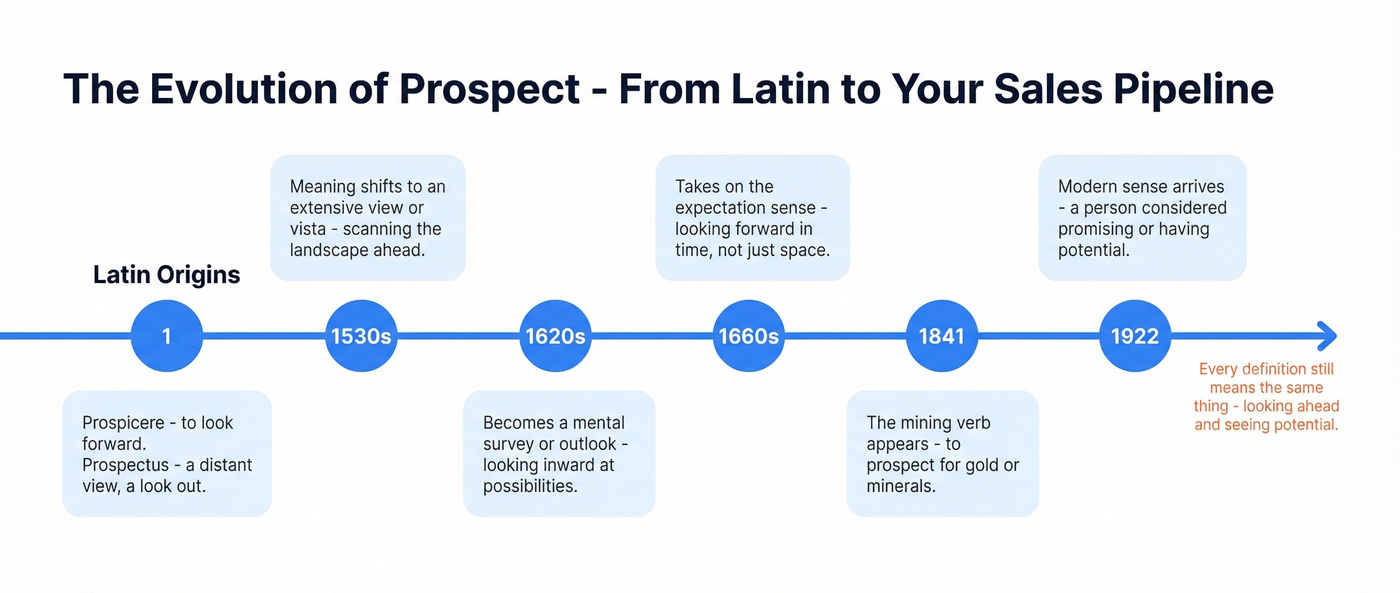
The word evolved in a straight line. By the 1530s, it meant an extensive view. By the 1620s, it had shifted inward to mean a mental survey or outlook. The 1660s brought the "expectation" sense - looking forward in time rather than space. The mining verb appeared in 1841, and the modern sense of "a person considered promising" didn't arrive until 1922.
Every evolution kept the same core metaphor. Whether you're scanning a hillside, evaluating a draft pick, or qualifying a sales lead, you're doing the same thing the Latin word described six centuries ago: looking ahead and seeing potential.
How Prospecting Works in Practice
Understanding what a prospect is matters. Finding them matters more.
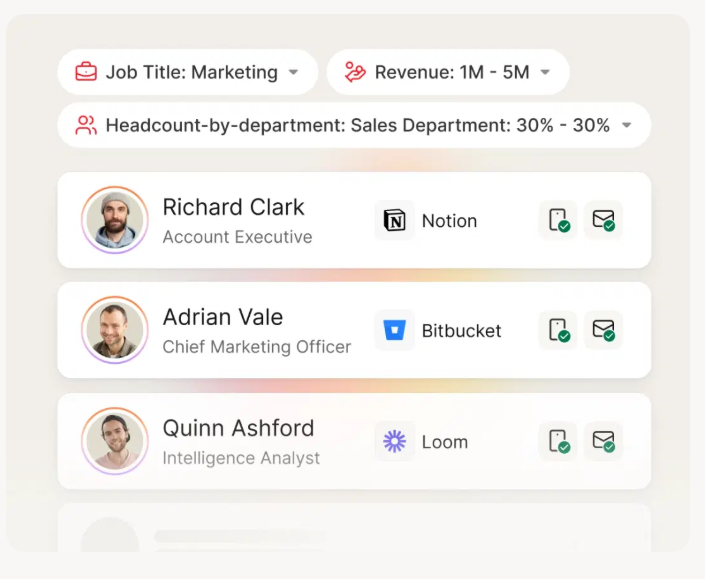
Modern prospecting boils down to three steps. First, define your ICP - the company size, industry, job titles, and signals that indicate a good fit. Second, source verified contact data so you're reaching real people at real companies. Third, track everything in your CRM so prospects move through your pipeline with context, not guesswork.
In our experience, the second step is where most teams stumble. Stale data, bounced emails, and wrong numbers kill outbound before it starts. Tools like Prospeo address this with 98% email accuracy and a 7-day data refresh cycle, plus 30+ search filters covering buyer intent, technographics, job changes, and more - so the lists you build actually match your ICP instead of just approximating it.
Skip the data step if you want, but don't be surprised when your reply rates tank. Bad data is the silent killer of outbound programs, and no amount of clever copywriting fixes a 30% bounce rate.
Suspects, leads, prospects, opportunities - none of it matters if your contact data bounces. Teams using Prospeo cut bounce rates from 35% to under 4% and tripled their pipeline. Verified emails at $0.01 each, 125M+ direct dials, zero annual contracts.
Stop qualifying prospects you can't actually reach.
FAQ
Is a prospect the same as a lead?
No. A lead has shown interest but hasn't been qualified. A prospect has been vetted against your ICP for fit, budget, and authority. Leads get nurturing sequences; prospects get demos and proposals. Getting this distinction right is critical for accurate pipeline reporting and forecasting.
What does "top prospect" mean in sports?
A top prospect is a developing player - usually minor-league or draft-eligible - projected to become an impact performer. In MLB, a future overall grade of 65+ on the 20-80 scouting scale signals potential All-Star caliber. It's a projection based on tools and trajectory, not a guarantee.
How do I find sales prospects?
Start with a clear ICP definition, then use a verified data platform to build targeted lists filtered by buyer intent, job changes, and company signals. Push contacts into your sequencer and CRM to start outreach with context rather than cold guessing.
What does "prospective clients" mean in business?
Prospective clients are people or organizations that could become paying customers. The term is used interchangeably with "prospects" in most business contexts, though "prospective clients" tends to appear more in professional services, consulting, and agency settings where the relationship is ongoing rather than transactional.