

RevOps Automation Platforms: What They Cost and How to Choose in 2026
Your VP of Sales just asked why reps are still manually routing leads. Your marketing ops person built 47 Zapier workflows that nobody documented. And your CRM enrichment is so stale that 30% of outbound emails bounced last quarter.
Here's our honest take after watching dozens of teams buy their way into this category: most of them don't need a platform. They need two or three tools that play nicely together, clean data feeding them, and one human who owns the rules.
What You Need (Quick Version)
Pick based on your biggest bottleneck:
- Routing broken? LeanData.
- Forecasting blind? Clari.
- Data quality falling apart? Prospeo.
- Need to connect everything? Zapier.
What Does RevOps Automation Actually Mean?
A revops automation platform is any system that automates revenue workflows across marketing, sales, and customer success - things like lead qualification, routing, enrichment, handoffs, forecasting, and reporting.
Two realities drive the category. Bad data is expensive: poor data quality costs organizations an average of $12.9M annually, and automation just spreads the damage faster. Handoffs are where revenue dies. In SaaS, 63% of leaders point to slow process handoffs as a top operational drag, which is why speed-to-lead and clean routing beat fancy dashboards every time.
The label is messy, too. Routing tools, forecasting tools, and iPaaS products all market themselves as "RevOps automation." If you don't sort the category first, you'll buy the wrong thing and still end up stitching tools together later.
Three Types of Revenue Operations Automation
| Type | What It Does | Examples | Best For |
|---|---|---|---|
| Orchestration | Connects apps + moves data | Zapier, Workato, Tray | Teams with an existing stack |
| Point Solution | Solves one problem deeply | LeanData, Gong | A clear bottleneck |
| All-in-One Suite | CRM + automation bundled | HubSpot, Default | Smaller teams starting fresh |
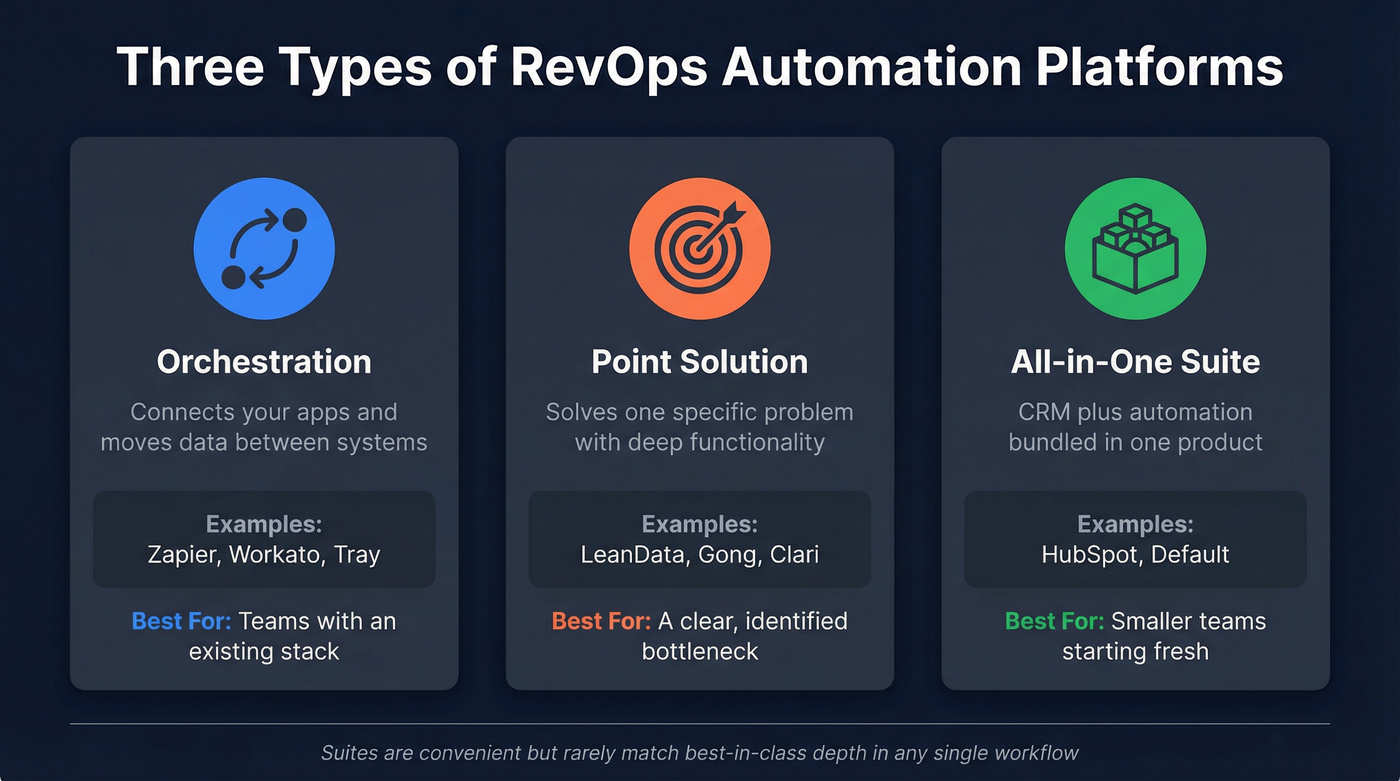
Orchestration tools move information between systems. Point solutions go deep on one workflow. Suites are convenient, but they rarely match best-in-class depth in routing, forecasting, or revenue intelligence.

Every RevOps workflow breaks when data is stale. Prospeo refreshes 300M+ profiles every 7 days - not 6 weeks - and returns 50+ data points per contact at a 92% match rate. Your routing, scoring, and sequences finally work because the fields aren't empty.
Stop automating bad data. Start with a clean foundation at $0.01/email.
How to Evaluate Your Options
Five criteria matter more than feature checklists:
- Actionability - Does it actually execute work (route, enrich, trigger sequences), or just show insights?
- Write-back quality - If it can't reliably write back to your CRM including custom objects, it isn't automation.
- Adoption - If reps won't use it, it's shelfware. UX and workflow fit win.
- AI maturity - Ignore "AI summaries." Look for automation that changes outcomes without extra meetings.
- Total cost of ownership - Licenses + implementation + admin time + renewal uplifts. First-year cost often lands at roughly 2x the sticker price.
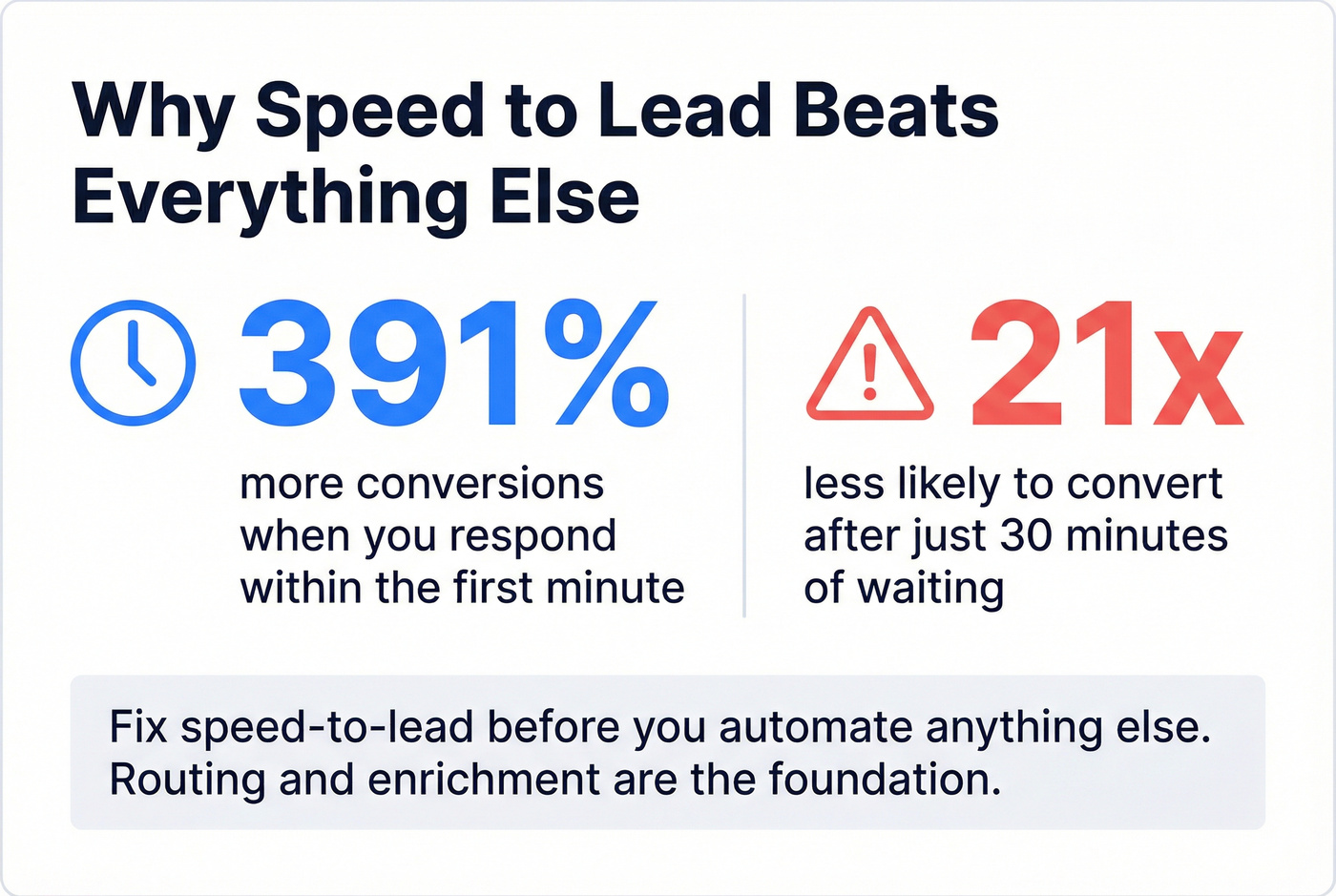
One benchmark still matters more than any "AI roadmap": responding to inbound leads within the first minute boosts conversions by 391%. After 30 minutes, leads are 21x less likely to convert. Fix speed-to-lead before you automate anything else.
Best RevOps Automation Platforms in 2026
| Platform | Best For | Starting Price | Model |
|---|---|---|---|
| Prospeo | Data quality + enrichment | Free; ~$0.01/email | Credit-based |
| LeanData | Lead routing (Salesforce) | $39/user/mo | Per-user, tiered |
| Gong | Revenue intelligence | $1,300--$3,000/user/yr + $5K--$50K platform | Platform + per-user |
| Clari | Forecasting | $100--$200/user/mo | Quote-based |
| Zapier | Orchestration | Free; $19.99/user/mo | Per-user + usage |
| HubSpot | SMB all-in-one | Free CRM; $15/user/mo | Per-user, tiered |
| Clay | Enrichment workflows | $134/mo Starter | Tiered plans |
| Default | Inbound qualification + routing | $500--$1,500/mo | Quote-based |
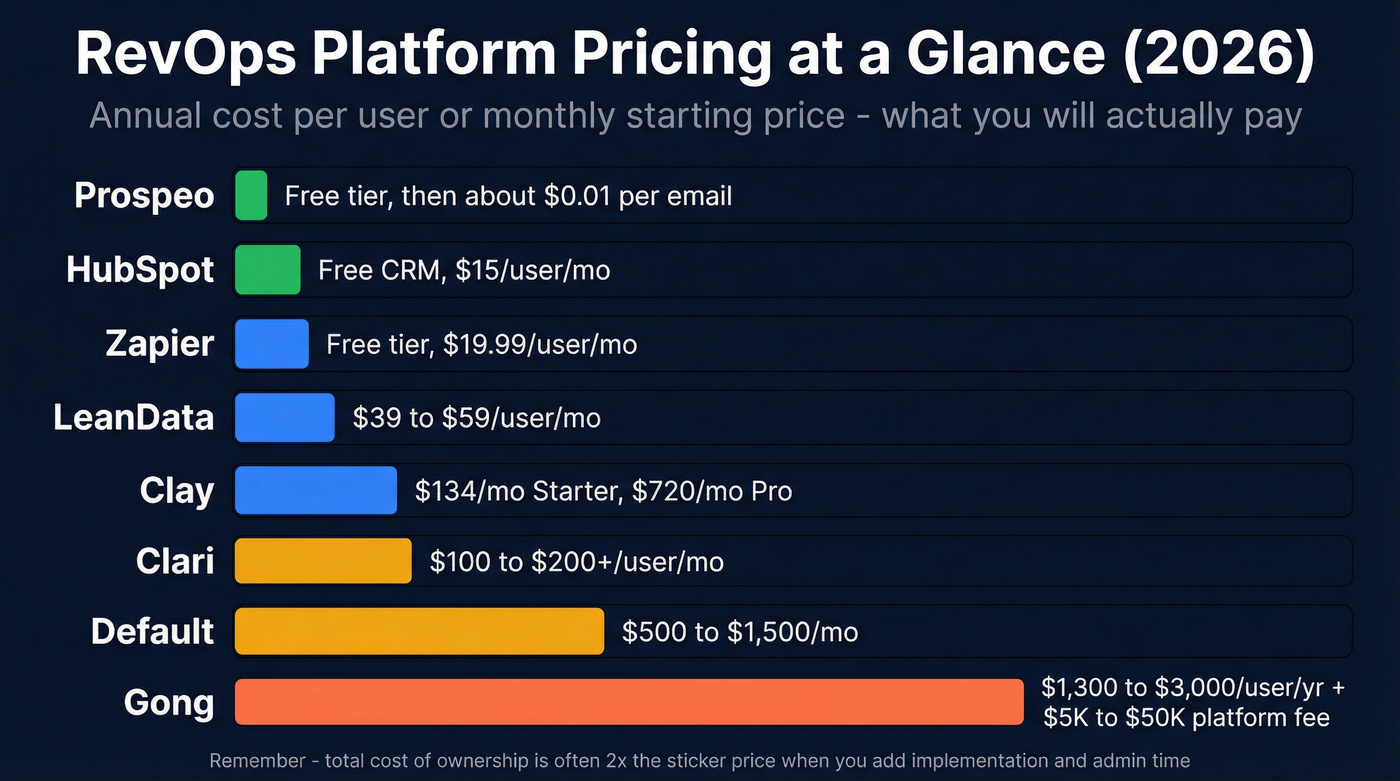
For context on iPaaS pricing: Tray.io starts around $595/month, and Workato typically lands between $30K--$250K+/year depending on scale and governance needs.
Prospeo - Data Quality & Enrichment
If your data is wrong, every "automation win" becomes a faster way to do the wrong thing. Prospeo is the clean-data foundation: 300M+ professional profiles, 143M+ verified emails, 125M+ verified mobile numbers, and 98% email accuracy, all refreshed on a 7-day cycle versus a 6-week industry average.
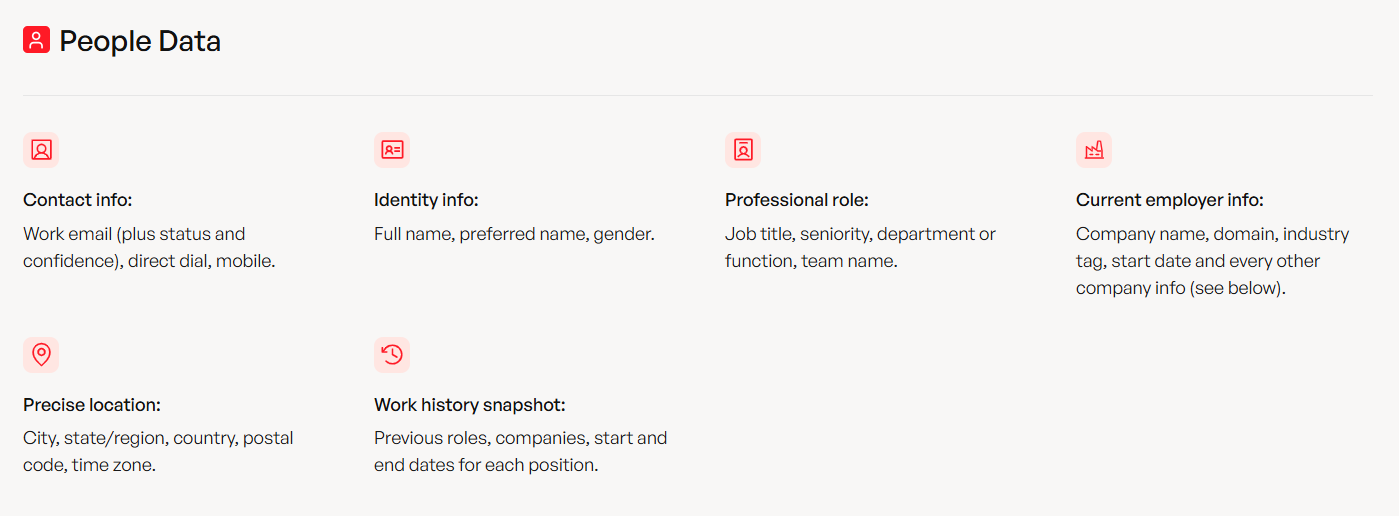
We've seen the before-and-after numbers firsthand. Snyk's 50-person AE team cut bounce rates from 35 - 40% to under 5%, grew AE-sourced pipeline 180%, and generated 200+ new opportunities per month after switching. The practical RevOps win is straightforward: CRM and CSV enrichment returns 50+ data points per contact with a 92% match rate, so routing, scoring, and sequences stop tripping over missing fields.
Pricing is self-serve: a free tier includes 75 emails/month plus 100 Chrome extension credits/month, and paid usage runs around $0.01 per email. If you want to explore the product paths, start with Data Enrichment or the Email Finder.
LeanData - Lead Routing
Use this if: You're on Salesforce and routing is the bottleneck. LeanData is the routing standard for a reason - teams use it to enforce territory logic, match leads to accounts, and stop "who owns this?" Slack threads.
Skip this if: You aren't on Salesforce, or you're under roughly 20 reps. You'll spend more time administering rules than you'll save.
Pricing starts around $39/user/mo (Standard), scaling to $49 (Advanced) and $59 (Premium). BookIt is often listed around $15,000/year and commonly negotiates closer to $9,060. Budget 15 - 25% of annual license for implementation. The consensus on r/salesops is consistent: people love the control, and they underestimate the time it takes to keep routing logic clean as territories change.
Gong - Revenue Intelligence
Gong is the best conversation intelligence product - and it's priced like it. Under Gong's Foundations packaging (rolled out in 2025), typical deals land around $1,300--$3,000/user/yr plus a $5K--$50K platform fee. Add-ons stack fast. Implementation typically ranges from $7,500 to $65,000.

The most common practitioner complaint on review sites isn't product quality - it's TCO surprise. Teams budget for per-seat costs and then get hit with platform fees, add-ons, and renewal uplifts that nobody modeled. If you buy Gong, buy it for coaching, deal inspection, and call analytics - not because you think it'll replace routing, enrichment, or your iPaaS.
Clari - Forecasting
Clari is a forecasting machine when your CRM hygiene is decent and your sales process is consistent. It shines at rollups, inspection, and forcing a single view of pipeline reality.
But the Salesloft merger (closed December 2025) complicates the roadmap. You're buying products that are being integrated, not one fully unified platform today. Pricing usually lands around $100--$200+ per user/month, with higher tiers and add-ons pushing above that. Implementation commonly runs $15,000--$25,000 and takes weeks to months. Community sentiment is split: teams that commit to the process love it; teams hoping it'll "fix forecasting" without behavior change churn out within a year.
Zapier - Orchestration
Zapier is the fastest way to connect your stack without turning RevOps into an engineering queue. The classic workflow still holds up: form fill, create/update CRM record, enrich, Slack alert, sequence enrollment. You can make that real in an afternoon.
Pricing starts at $19.99/user/mo with a free plan available. In our experience, if you're under about 50 reps, Zapier plus a couple of point solutions is the sweet spot. Workato and Tray are excellent, but you're paying for enterprise-grade governance and scale that smaller teams don't need yet.
HubSpot - SMB All-in-One
HubSpot is the cleanest "start here" choice for smaller teams that want one system to run marketing and sales without a dedicated RevOps hire. You get a free CRM, Sales Hub from $15/user/month, and enough automation to move fast.
You'll outgrow it when you need serious routing, complex data models, or deeper revenue intelligence. Until then, it's a strong default.
Clay - Enrichment + Workflows
Clay is a workflow builder for enrichment: waterfall across many data sources, chain steps, and create repeatable list-building processes. Starter is $134/month, and Pro is $720/month billed annually.
If you're serious about deliverability, pair Clay's workflows with a verification-first data source so you don't spray unverified emails into sequences.
Default - GTM Control
Default focuses on inbound qualification and routing with speed-to-lead as the core promise. Good fit when inbound volume is high and response time is the bottleneck. Mid-market teams typically land around $500--$1,500/month depending on routing complexity and seats.
What Breaks RevOps Automation
Look, automation fails from governance, not features.
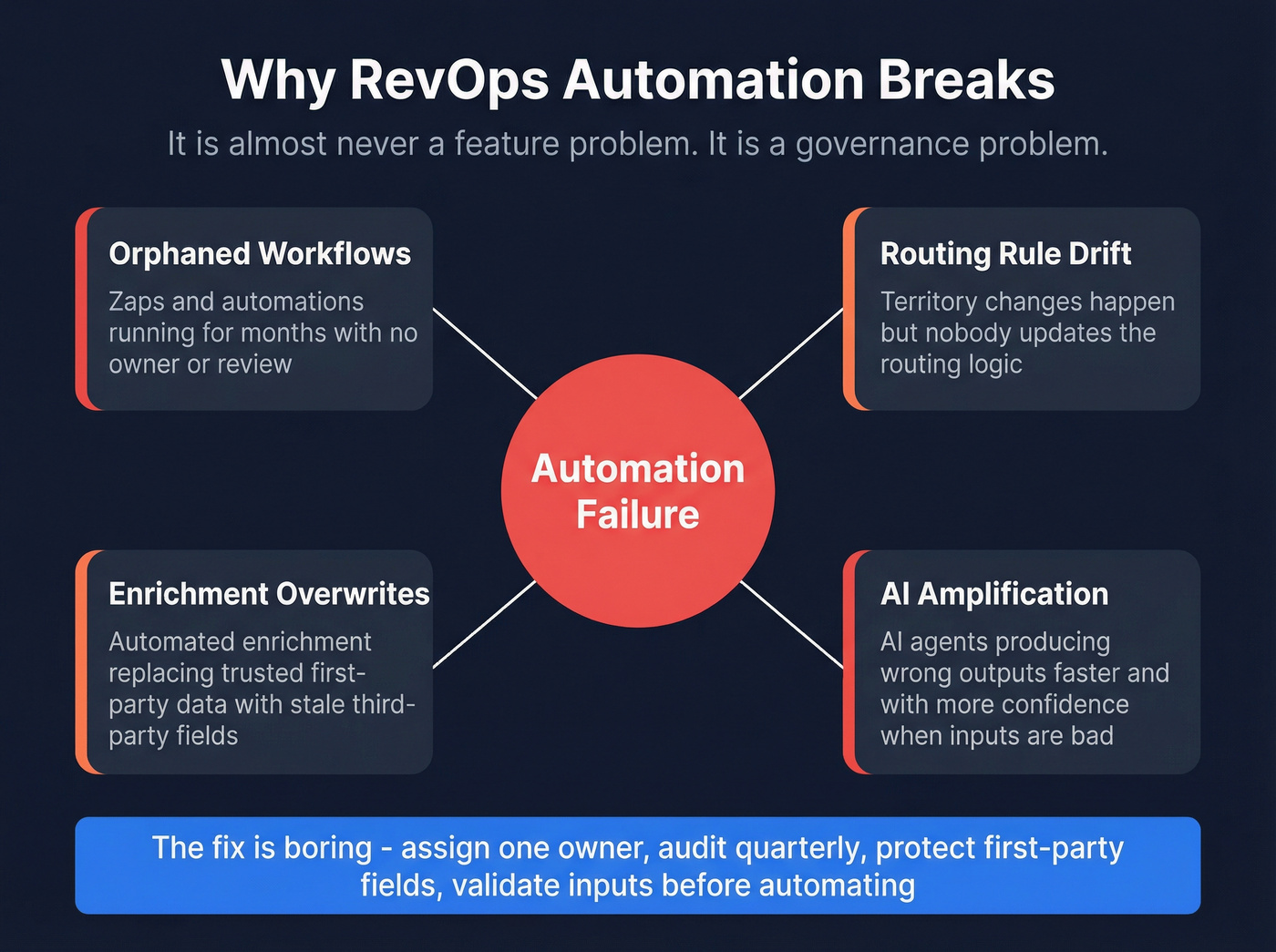
The repeat offenders are boring and brutal - routing rules nobody owns, workflows that run for months without review, enrichment overwriting trusted first-party fields, and "set it and forget it" logic that silently drifts as territories and ICP change. We've audited stacks where a single orphaned Zapier workflow was creating duplicate contacts for six months before anyone noticed.
2026 makes this sharper, not easier. RevOps teams are now orchestrating AI agents across the funnel, the GTM Engineer role is becoming normal (someone who ships automations like code), and waterfall enrichment is table stakes. All of that amplifies mistakes. If your inputs are wrong, AI just produces wrong outputs faster and with more confidence.
Build Your Stack by Company Size
| Stage | Recommended Stack | ~Annual Cost |
|---|---|---|
| Startup (<20 reps) | HubSpot + Zapier + verified enrichment | <$5K/yr |
| Mid-market (20 - 100) | Salesforce + LeanData + enrichment + Zapier | $30K--$80K/yr |
| Enterprise (100+) | Salesforce + LeanData + Gong + Clari + Workato | $200K--$500K+/yr |
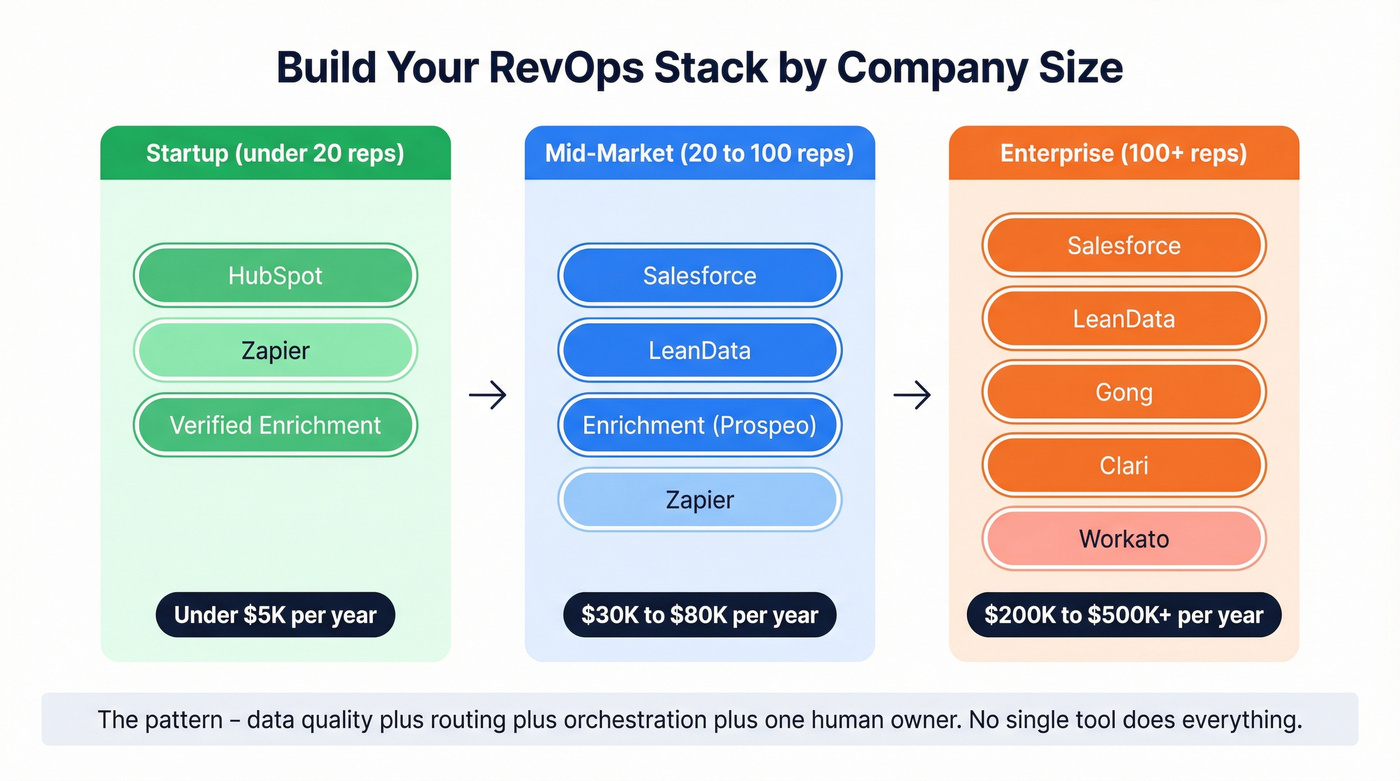
The pattern is the point. You aren't buying one monolithic platform. You're building a small system - data quality plus routing/insights plus orchestration - then assigning an owner to keep it from decaying. Choosing the right revops automation platform at each layer matters far more than finding a single tool that "does everything," because that tool doesn't exist and probably never will.

Snyk's 50 AEs cut bounce rates from 35% to under 5% and grew pipeline 180% - not by adding another automation layer, but by fixing the data underneath. Prospeo's 98% email accuracy and 7-day refresh cycle mean your RevOps stack finally runs on contacts that actually exist.
Clean data is the only RevOps automation that pays for itself on day one.
FAQ
What's the difference between a RevOps platform and an iPaaS?
An iPaaS (like Zapier, Workato, or Tray) moves data between tools and triggers workflows. A RevOps platform is purpose-built for routing, forecasting, or revenue intelligence. Most mid-market teams need both: one orchestration layer plus one or two point solutions that solve specific bottlenecks.
How much does a RevOps automation stack cost?
Startup stacks can stay under $5K/year with HubSpot, Zapier, and a free enrichment tier. Mid-market stacks commonly land at $30K--$80K/year once you add Salesforce, routing, and enrichment. Enterprise stacks with Gong, Clari, and Workato often run $200K--$500K+/year before implementation and admin time.
What should I fix before automating RevOps?
Data quality and field governance. If emails, accounts, and ownership fields are wrong, routing and sequences misfire and reporting becomes fiction. Start with verified enrichment, protect first-party fields from overwrites, and set a quarterly review of routing and lifecycle rules.
Is the Clari/SalesLoft merger good for buyers?
It's promising long-term but messy today. You're still buying products being stitched together. Buy Clari for what it does now - forecasting and pipeline inspection - not for a future "single platform" promise. Revisit the combined offering once integration matures in late 2026.