

12 Sales Role Playing Scenarios With Scripts Your Team Can Use Today
Your new AE freezes on the first pricing objection. The discovery call turns into a product dump. Someone asks "What keeps you up at night?" and the prospect says "Nothing, I sleep fine." Every sales leader has watched this happen - and every rep has been the one freezing. Sales role playing scenarios are how you fix it before it costs you pipeline.
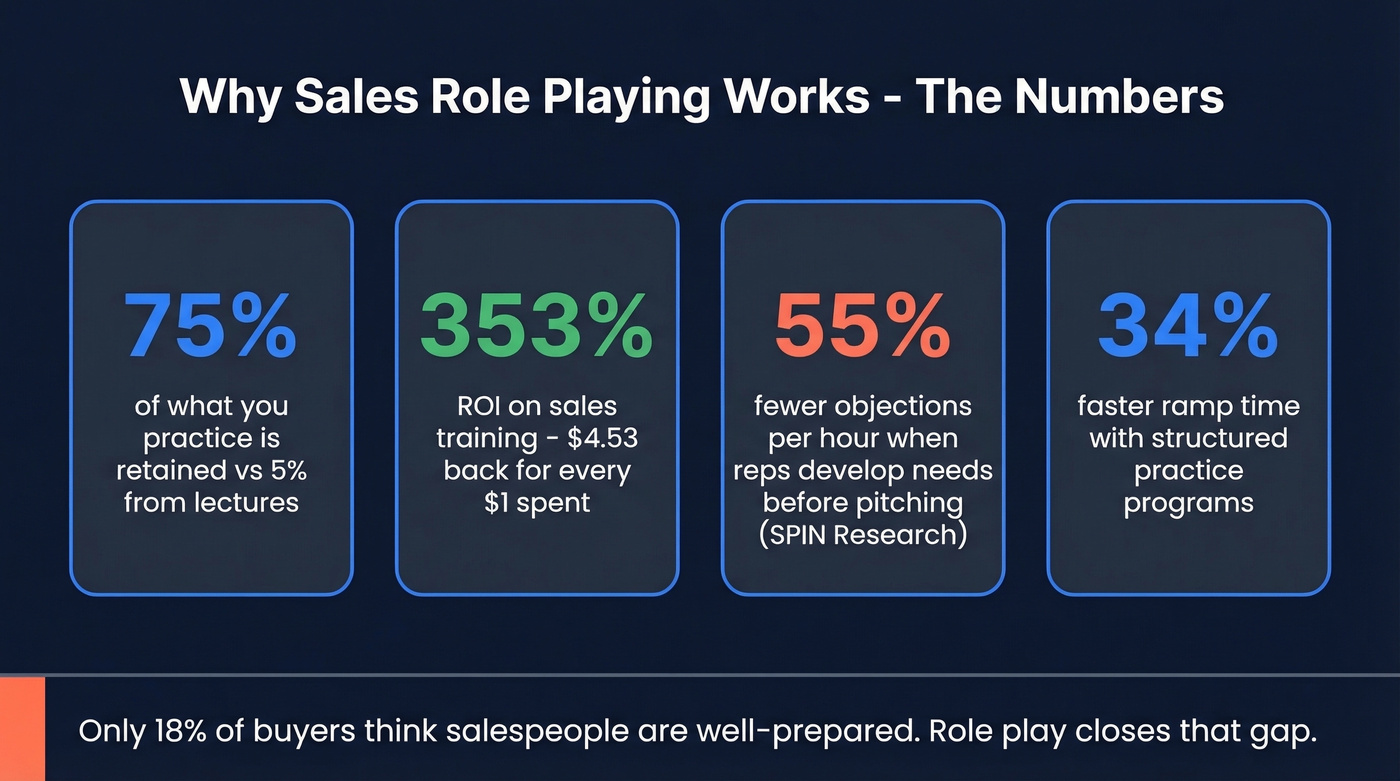
Here's the uncomfortable truth: only 18% of buyers think salespeople are well-prepared. Meanwhile, reps who practice regularly improve performance by 24%. The most honest line we've seen about role-play is that it feels like "performance theater for middle managers." They're not wrong - most teams run it badly. But the gap between those two numbers is where good role-play lives, and where most teams leave money on the table.
Most role-play guides give you scenario names, not actual scripts. That's like giving someone a recipe title without ingredients. Below you'll find 12 scenarios with word-for-word dialogue, a 25-point scoring rubric, and a facilitation blueprint you can run this week.
What You Need (Quick Version)
- Pick 3 scenarios to start: objection handling, discovery, and competitive displacement give you the highest ROI
- Run 15-20 minute weekly micro-sessions plus one monthly scored assessment
- Use the 25-point rubric (Section 7) to measure progress objectively
- Scripts are guides, not teleprompter text - adapt the language to your voice and your market
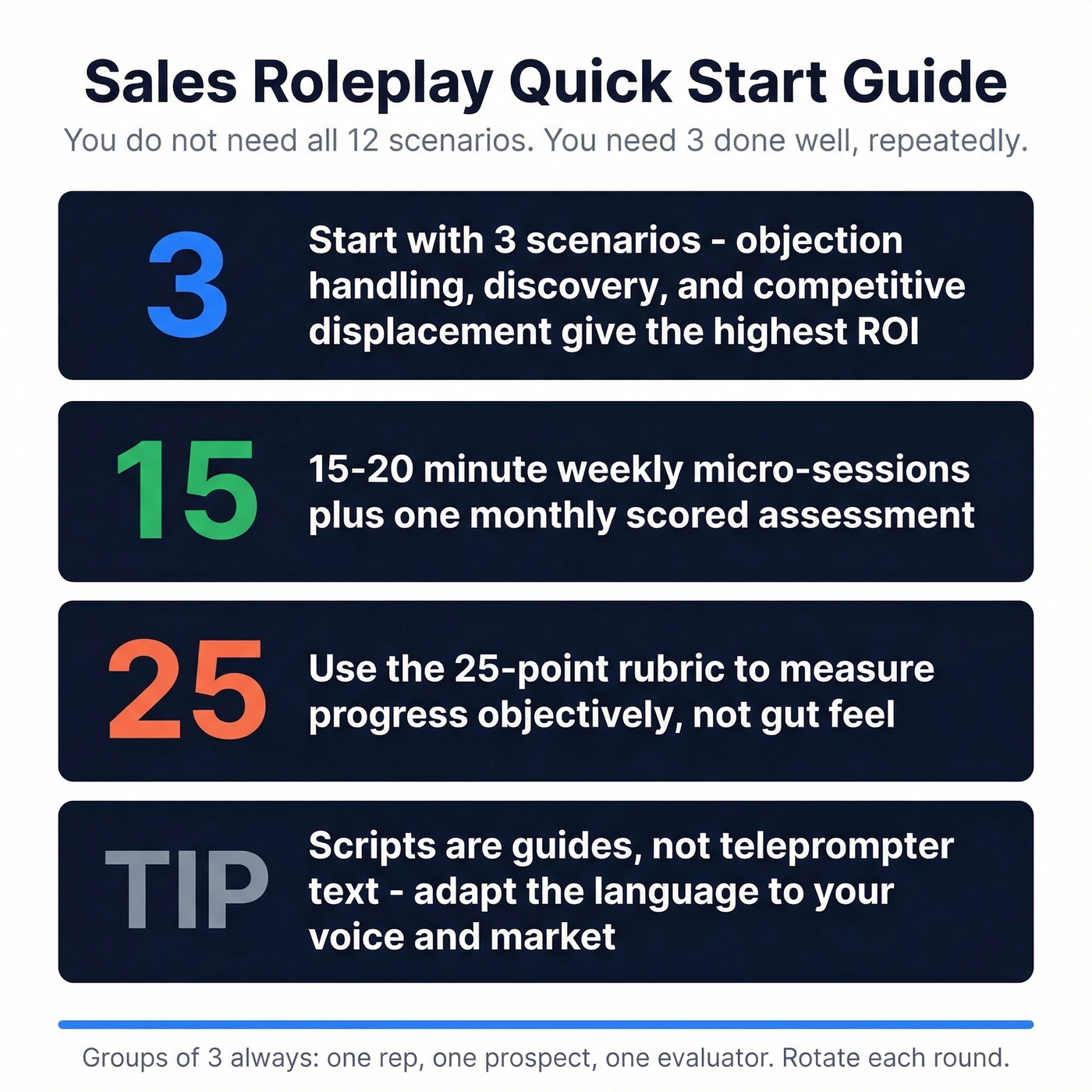
You don't need all 12 scenarios. You need three done well, repeatedly, with structured feedback.
Why Role Playing in Sales Training Works
People remember 75% of what they practice but only 5% of what they hear in lectures. Sales training returns $4.53 for every $1 spent - a 353% ROI. The sales training market is projected to hit roughly $19B by 2032, and role-play is the highest-leverage slice of that spend. Neil Rackham's SPIN research, built on 35,000+ sales calls across 23 countries over 12 years, found that when reps develop explicit needs before pitching solutions, objections per selling hour drop by 55%.
So why does role-play still feel like pulling teeth?
Because most teams do it wrong. Five failure modes show up repeatedly:
- Unrealistic scenarios - the "prospect" has no backstory, no real objections, no personality. Fix: use actual CRM data to build personas.
- Poor acting - colleagues break character, go too easy, or turn it into a comedy routine. Fix: prepare both sides with written briefs.
- Over-scripting - reps memorize lines instead of internalizing frameworks. Fix: teach the structure, let them find their own words.
- No psychological safety - reps focus on not embarrassing themselves instead of learning. Fix: leaders go first. Model vulnerability.
- Vague feedback - "work on your closing" isn't actionable. Fix: use the rubric. Score specific behaviors.
Your job is to make role-play feel like practice for a game reps actually want to win.
How to Run a Roleplay Session
Don't overcomplicate this.
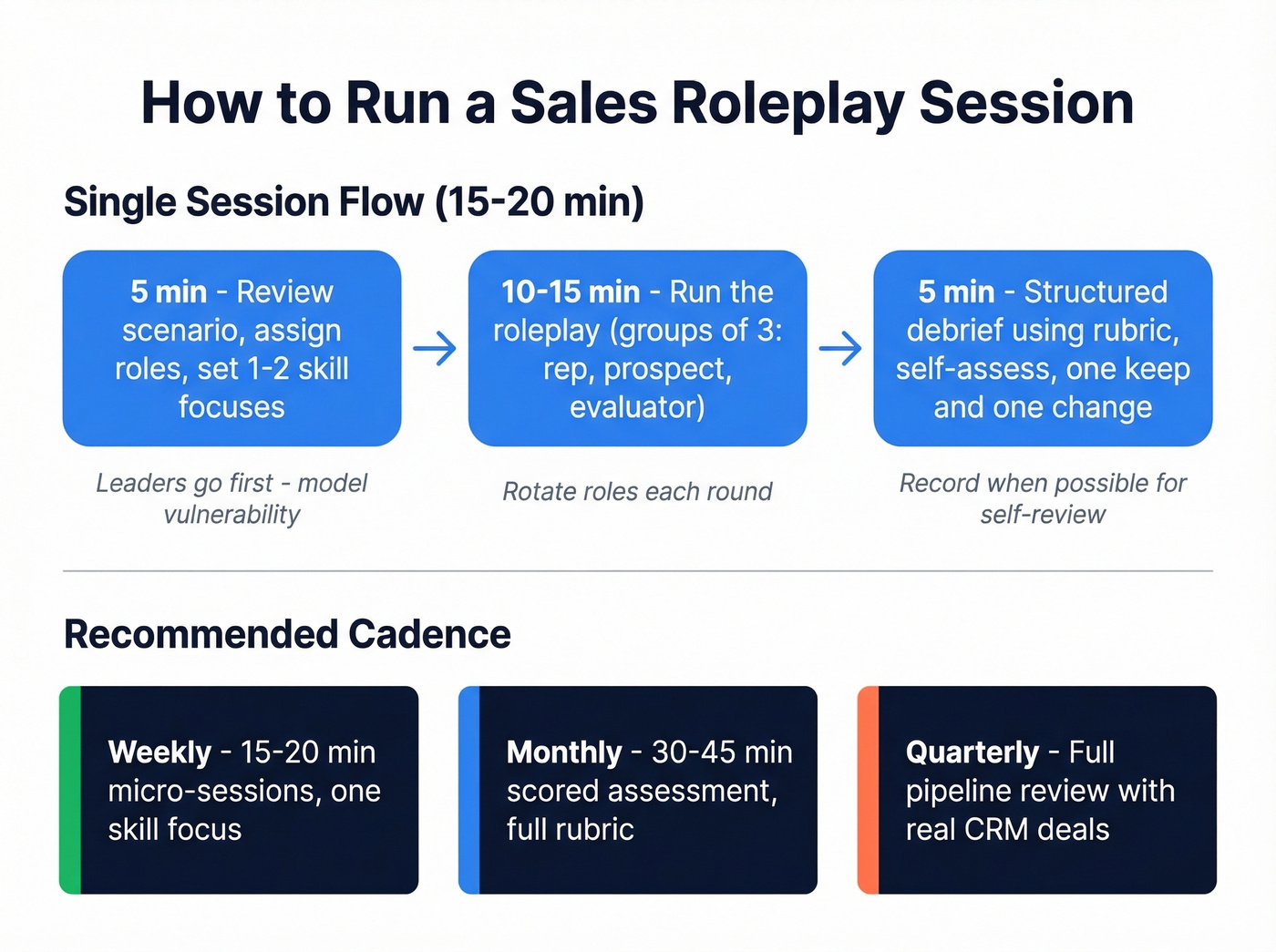
Session structure (15-20 minutes):
- 5 minutes - review the scenario, assign roles, set the skill focus (one or two skills max)
- 10-15 minutes - run the role-play
- Structured debrief - evaluator shares observations using the rubric, rep self-assesses, group discusses one thing to keep and one thing to change
Groups of three, always. One rep, one prospect, one evaluator. Rotate roles each round. This eliminates the "performing in front of the whole team" anxiety that kills participation. The evaluator role is secretly the most valuable - watching someone else's technique builds pattern recognition faster than doing it yourself.
Leaders go first. If you're the manager running the session, you take the rep seat in round one. Let your team watch you stumble, recover, and debrief honestly. This single move does more for psychological safety than any ground-rules speech.
Recommended cadence:
- Weekly: 15-20 minute micro-sessions focused on one skill
- Monthly: 30-45 minute scored assessment using the full rubric
- Quarterly: full pipeline review role-play with real deal scenarios from CRM
Record sessions when possible. Reps hate it at first, but reviewing their own tape is where the deepest learning happens. Structured onboarding programs that include regular practice reduce ramp time up to 34%.
12 Scenarios With Scripts
Scripts are frameworks, not teleprompter text. Reps should internalize the structure - the question flow, the reframe technique, the closing pattern - and then adapt the language to sound like themselves. If it sounds memorized, it sounds robotic. The goal is conversational fluency.
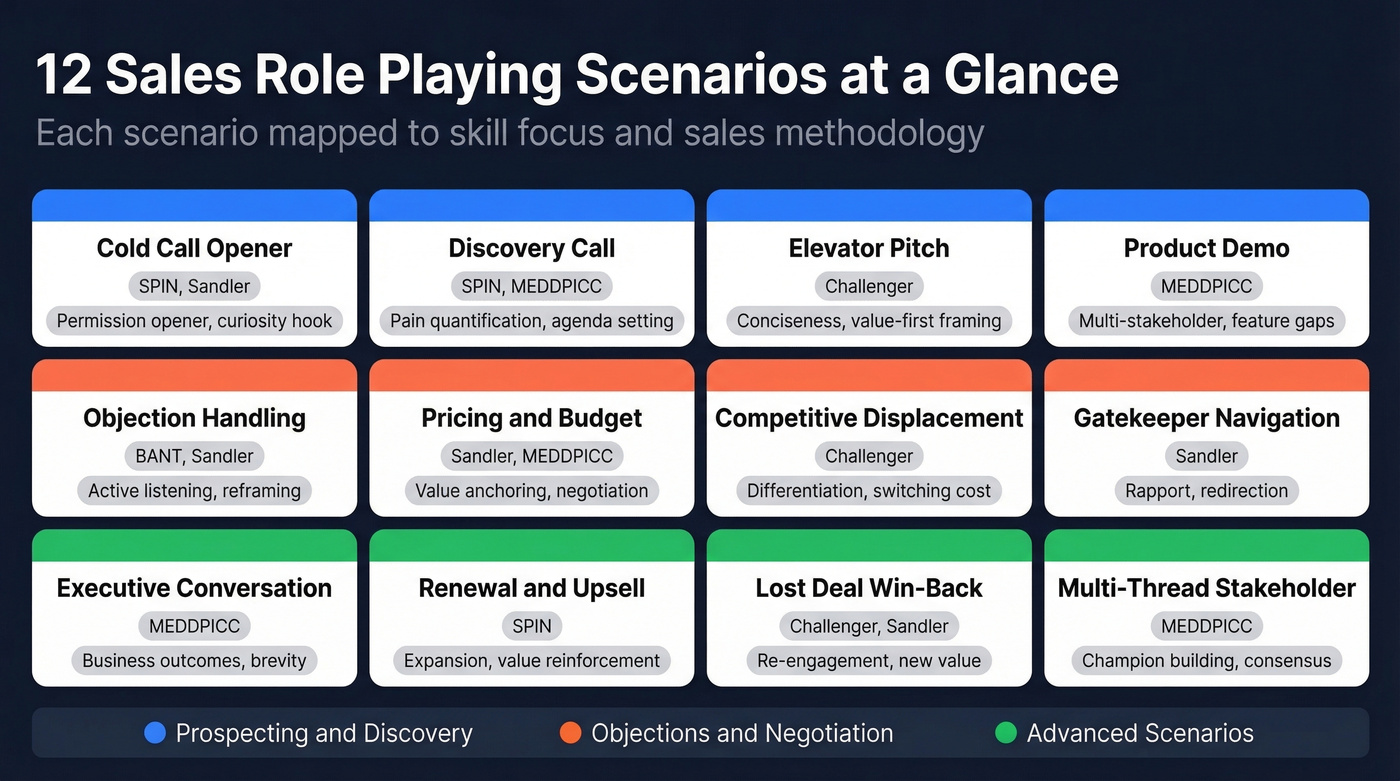
These simulations are built for B2B sales teams. If you sell into other verticals, swap the personas and pain points but keep the structures. Each scenario includes a methodology alignment tag so you can map these to whatever framework your team runs.
Cold Call Opener
Setup: You're calling a VP of Marketing at a mid-market SaaS company. You've got 15 seconds before they decide to hang up.
Sample dialogue:
Rep: "Hi Sarah, this is James from Acme. I know I'm calling out of the blue - is this a terrible time, or do you have two minutes?"
Prospect: "I've got a minute. What's this about?"
Rep: "Fair enough. We help marketing teams at companies like [similar company] cut their lead-to-SQL handoff time by about 40%. I don't know if that's a problem for you, but if it is, I'd love 15 minutes on your calendar this week. If not, I'll let you go."
Prospect: "We're actually looking at that. Send me something."
Rep: "Happy to. Would Thursday at 2 work for a quick call instead? I can tailor what I send based on what you're actually dealing with."
Skills practiced: permission-based opener, curiosity hook, specific value prop, calendar close Common mistake: launching into a pitch before earning permission to talk Methodology: SPIN (Situation), Sandler (Up-Front Contract)
One tip from our team: verify your call list before the session. Dead numbers kill momentum and waste practice time. Run contacts through an email and phone verification tool first so reps are dialing real people.
Discovery Call
Setup: First scheduled call with a Director of Sales Ops. They agreed to 30 minutes. Your job is to uncover pain, quantify it, and determine if there's a real opportunity.
Sample dialogue:
Rep: "Thanks for making time, Alex. Here's what I'd like to do in the next 30 minutes - I'll ask some questions about what's happening on your end, share a couple of things we've seen work for similar teams, and if there's a fit, we'll figure out next steps. If there's not, I'll tell you. Sound fair?"
Prospect: "Works for me."
Rep: "Great. Walk me through what a bad day looks like for your team right now."
Prospect: "Honestly? Reps spending half their day on data cleanup instead of selling."
Rep: "When you say half their day - is that literally four hours, or does it just feel that way?"
Prospect: "Probably two to three hours. But across 15 reps, that's 30-plus hours a week."
Rep: "What does that cost you in pipeline? If each rep could reclaim even half that time..."
Prospect: "We've done the math. It's probably $200K in missed pipeline per quarter."
Skills practiced: agenda-setting, open-ended pain questions, quantification, implication development Common mistake: accepting vague answers without digging deeper Methodology: SPIN (Situation + Problem + Implication), MEDDPICC (Identify Pain + Metrics)
Elevator Pitch (30-Second Constraint)
Setup: Timed exercise. You're in an elevator with your ideal buyer. Thirty seconds. Go.
Structure: Value prop, proof point, ask.
"We help B2B sales teams cut their list-building time by 80% while tripling email deliverability. Our customers like Snyk went from 35% bounce rates to under 5% and added 200 new opportunities per month. Can I send you a two-minute case study?"
Skills practiced: conciseness, value-first framing, proof point selection, clear ask Common mistake: leading with features instead of outcomes Methodology: Challenger (Teach)
Product Demo
Setup: You're mid-demo with a buying committee of three. The champion is nodding. The CFO looks skeptical. Someone asks about a feature you don't have.
Sample dialogue:
Prospect (CFO): "Does this integrate with our custom ERP system?"
Rep: "We don't have a native integration for that specific ERP today. What I can show you is our API, which our engineering team built to handle exactly these cases - [Company X] connected theirs in about two weeks. Let me pull that up. But before I do, can I ask what data you'd need flowing between the two systems?"
Prospect: "Mainly deal stage updates and revenue forecasting."
Rep: "Got it. So the core workflow you care about is keeping your forecast in sync without manual entry. Let me show you how that works through the API - and I'll connect you with our solutions engineer after this to scope the timeline."
Skills practiced: navigating the product while handling live questions, translating features to benefits, managing multiple stakeholders, handling "do you have X?" gracefully Common mistake: saying "great question" as filler, then rambling. Practice the pause - "Let me show you exactly how that works" buys you three seconds to think. Methodology: MEDDPICC (Decision Criteria)
Objection Handling
Setup: The prospect has raised a concern. Your job isn't to "overcome" it - it's to understand it, validate it, and reframe.
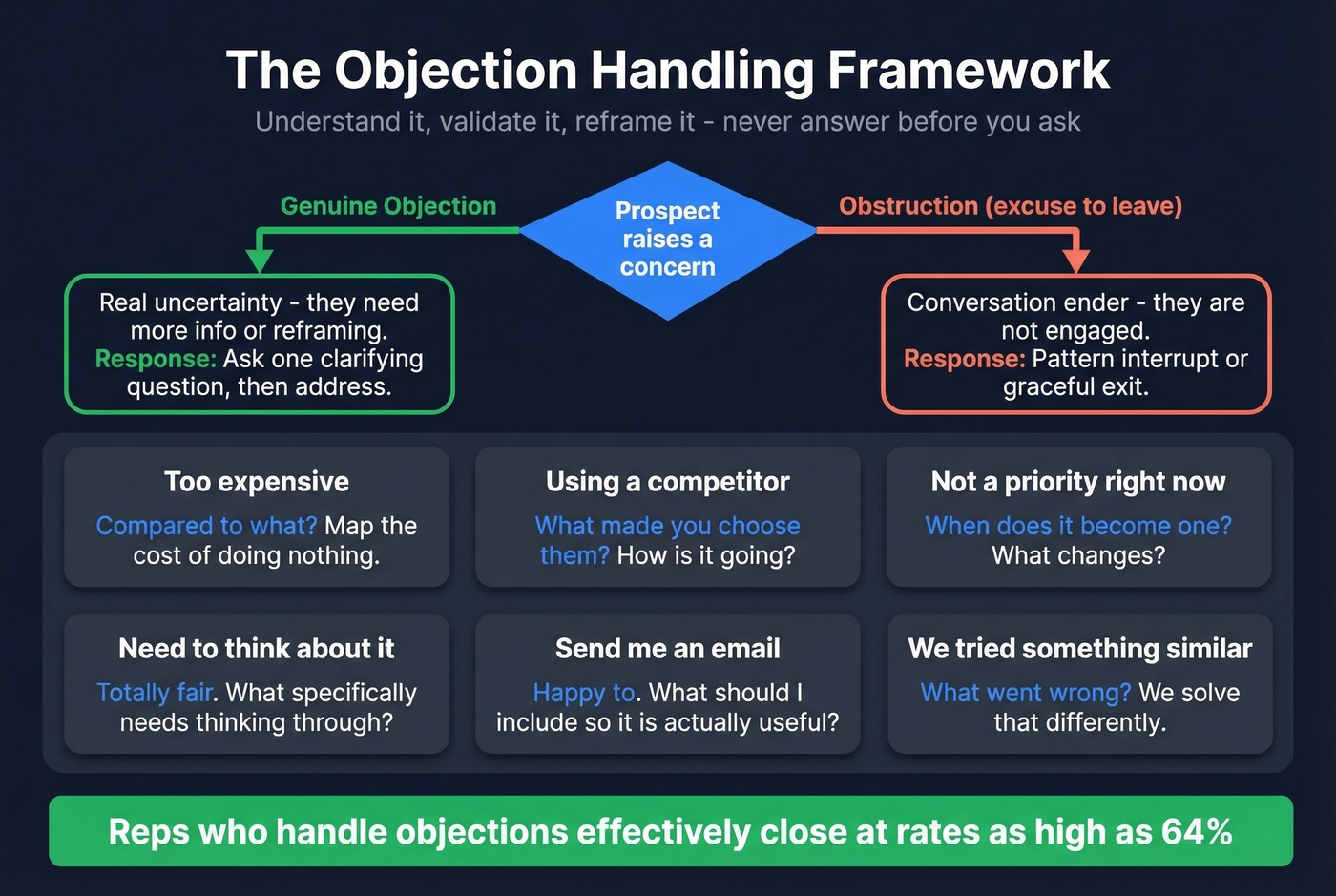
First, know the difference: an objection is genuine uncertainty ("I don't see how this helps us"). An obstruction is an excuse to end the conversation ("I'm too busy"). They require different responses.
Reps who handle objections effectively achieve close rates as high as 64%. Teams running consistent roleplay exercises on objection handling alone see 5-15% higher close rates within a quarter.
Mini objection bank:
| Objection | One-Line Rebuttal |
|---|---|
| "Too expensive" | "Compared to what? Map the cost of inaction." |
| "We're using a competitor" | "What made you choose them? How's it going?" |
| "Not a priority right now" | "When does it become one? What changes?" |
| "Need to think about it" | "Totally fair. What specifically needs thinking through?" |
| "Send me an email" | "Happy to. What should I include so it's useful?" |
| "We tried something similar" | "What went wrong? We solve that differently." |
Skills practiced: active listening, reframing, isolating the real concern, advancing without being pushy Common mistake: answering the objection before understanding it. Always ask one clarifying question first. Methodology: BANT (all quadrants), Sandler (Reversing)
Pricing & Budget Negotiation
Setup: The prospect says "This is more than we budgeted." You need to reframe price as investment without discounting immediately.
Prospect: "Your proposal came in at $48K. We budgeted $30K."
Rep: "I appreciate you being direct about that. Let me ask - when you set that $30K number, what were you expecting to get for it?"
Prospect: "Honestly, we weren't sure."
Rep: "Let's break down the ROI in the first 90 days. If we hit the pipeline numbers we discussed, you're looking at $180K in new revenue against a $48K investment. The question isn't whether you can afford it - it's whether you can afford to wait another quarter."
Skills practiced: anchoring to value, ROI framing, holding price without being combative Common mistake: offering a discount before the prospect even asks for one. Silence is your friend here. Methodology: MEDDPICC (Metrics + Economic Buyer)
Competitive Displacement
This is the scenario where most reps blow it by immediately listing why their product is better. Resist the urge. Curiosity beats confrontation every time.
Setup: The prospect opens with "We're happy with [competitor]." Your job is to create doubt without trashing the competition.
Rep: "That's great - what made you choose them originally?"
Prospect: "They had the best pricing at the time."
Rep: "Makes sense. How's it been going since then? Are you hitting the numbers you expected?"
Prospect: "Mostly. Data quality has been an issue lately."
Rep: "That's actually why most of our customers switched. They were getting 15-20% bounce rates on emails. We run 98% email accuracy with a 7-day refresh cycle. Would it be worth seeing a side-by-side on your actual data?"
Skills practiced: curiosity over confrontation, finding the crack, differentiation through specifics Methodology: MEDDPICC (Competition), Challenger (Reframe)
Getting to the Decision-Maker
Setup: You've been working with a champion for three weeks. They love the product but can't sign the contract. You need to reach the economic buyer without making your champion feel bypassed.
Rep: "You've been incredible to work with on this. For final sign-off, who else needs to weigh in?"
Prospect: "My VP would need to approve anything over $25K."
Rep: "Totally understand. What if we set up a 20-minute session where you present the business case and I handle the technical questions? That way you're driving it."
Skills practiced: multi-threading, empowering the champion, navigating org charts diplomatically Common mistake: going around the champion directly. They'll find out, and you'll lose both relationships. Methodology: MEDDPICC (Economic Buyer + Champion)
Stalled Deal / Re-Engaging a Ghost
Setup: It's been three weeks since your prospect went silent. Your last two emails got no reply. Time for a pattern interrupt.
Rep: "Hi Marcus, I'm going to assume one of three things happened: (1) you got busy and this fell off, (2) you went with someone else, or (3) you're being chased by a bear. If it's 1 or 3, I have something new that might change the math - we just published a case study showing a 140% pipeline increase for a team your size. Worth 10 minutes?"
Skills practiced: pattern interrupt, humor without being unprofessional, new value injection Common mistake: sending "just checking in" emails. They communicate zero value. Methodology: MEDDPICC (Decision Process + Timing)
Walking Away From a Bad Fit
Setup: The prospect wants three features you don't have and won't have on your roadmap. Practice disqualifying gracefully.
Rep: "I want to be straight with you - what you're describing sounds like you need [specific capability]. That's not what we do best, and I'd rather tell you now than waste your time. Have you looked at [competitor]? They'd be a better fit for that use case."
Skip this scenario if your team already has strong qualification habits. But if reps are stretching the truth about your roadmap to keep deals alive - and we've all seen it happen - this one's non-negotiable.
Skills practiced: intellectual honesty, protecting your time, earning trust for future opportunities Methodology: Sandler (Qualify/Disqualify)
Customer Success Storytelling
Setup: Tell a customer story in under 90 seconds. Problem, solution, result. No jargon.
"One of our customers, a 50-person sales team, was burning 35% of their emails to bounces. Reps were spending three hours a day on data cleanup instead of selling. Within 60 days of switching, bounce rates dropped to under 5%, and they added 200 new opportunities per month. Their VP told us it was the single highest-ROI decision they made that year."
Skills practiced: narrative structure, specificity, brevity, emotional resonance Common mistake: leading with the product instead of the customer's problem Methodology: Challenger (Teach + Tailor)
Virtual / Remote Selling
Setup: Camera on. Screen share ready. Halfway through your demo, your screen freezes. The prospect's kid walks into the frame. Handle it.
Rep: [Screen freezes] "Looks like my screen just froze - give me two seconds." [Restarts share] "And we're back. Where were we? Right - the pipeline dashboard. So this view is what your managers would see every Monday..."
Prospect: "Sorry about that - my daughter just wandered in."
Rep: "No worries at all. She's got great timing - I was just about to show the part that pays for her college fund. So this ROI calculator..."
Skills practiced: energy management on camera, eye contact (look at the camera, not the screen), smooth screen navigation, recovering from tech issues with grace Common mistake: apologizing excessively for tech glitches. A quick "give me two seconds" and a smile beats a 30-second apology spiral. Methodology: Any (format-agnostic skill)

Role-play only works when reps practice on realistic scenarios - and then dial real numbers. Prospeo gives your team 125M+ verified mobiles with a 30% pickup rate so the skills they rehearse actually convert into live conversations.
Stop practicing on dead leads. Start connecting with real buyers.
Map Scenarios to Your Methodology
Not every scenario maps to every framework. Here's how the 12 align:
| Scenario | SPIN | MEDDPICC | BANT | Challenger |
|---|---|---|---|---|
| Cold Call Opener | ✓ | |||
| Discovery Call | ✓ | ✓ | ||
| Elevator Pitch | ✓ | |||
| Product Demo | ✓ | |||
| Objection Handling | ✓ | |||
| Pricing Negotiation | ✓ | ✓ | ||
| Competitive Displacement | ✓ | ✓ | ||
| Getting to Decision-Maker | ✓ | |||
| Stalled Deal | ✓ | |||
| Walking Away | ||||
| Customer Storytelling | ✓ | |||
| Virtual Selling | ✓ | ✓ | ✓ | ✓ |
If you only have time for three scenarios this quarter: objection handling, discovery, and competitive displacement. These three cover the moments where deals are won or lost.
Which Scenarios by Role
Not everyone needs the same three.
BDRs/SDRs: Cold call opener, elevator pitch, objection handling. These are the daily reps - literally. If your BDRs can't handle "I'm not interested" without crumbling, nothing downstream matters.
AEs: Discovery, pricing negotiation, competitive displacement. AEs lose deals in the middle of the funnel, not at the top. Invest practice time where the revenue actually lives.
CSMs and AMs: Customer storytelling, stalled deal re-engagement, getting to the decision-maker. Expansion revenue depends on navigating existing relationships upward and outward.
Managers: Run every scenario from the rep seat at least once per quarter. You can't coach what you haven't practiced recently.
For SPIN-focused teams, improving investigation skills alone can increase sales volume 20%+ in major-account selling. Prioritize discovery and cold call scenarios. For MEDDPICC teams, don't try to practice all seven components in one session - focus on 2-3 per conversation. Identify Pain + Metrics is a natural starting pair, then layer in Economic Buyer and Champion as reps get comfortable.
Score Performance: 25-Point Rubric
Without a scoring system, feedback stays subjective. "That was pretty good" doesn't help anyone improve.
| Category | Weight | Excellent (5) | Acceptable (3) | Below (1) |
|---|---|---|---|---|
| Opening & Qualification | 15% | Sets agenda, earns permission, qualifies early | Opens adequately, some qualification | No agenda, jumps to pitch |
| Value Communication | 25% | Ties features to prospect's specific pain | Communicates value generically | Feature dumps |
| Objection Handling | 30% | Clarifies, reframes, advances | Addresses but doesn't advance | Gets defensive or caves |
| Closing & Next Steps | 25% | Clear ask, mutual commitment, timeline | Suggests next steps vaguely | No close attempt |
| Process Adherence | 5% | Follows methodology naturally | Partial methodology use | No framework visible |
Objection handling gets the highest weight because it's where most reps lose deals - and where practice creates the most measurable improvement. Organizations with dynamic coaching programs see a 28% increase in win rates alongside a 57% boost in sales effectiveness.
Here's the thing: most teams over-invest in closing skills and under-invest in objection handling. If your reps can't navigate a "we're happy with our current vendor" conversation, it doesn't matter how polished their close is. They'll never get there. Weight your practice time accordingly.
Implementation guidance: Pilot the rubric for 4-6 weeks before rolling it out team-wide. Calibrate your managers first - have two managers score the same role-play independently and compare. If they're more than 3 points apart on any category, tighten your behavioral definitions.
KPIs to track post-implementation:
- Win rate
- Average discount percentage (should decrease as negotiation skills improve)
- Objection-to-next-step conversion rate
- Ramp time for new hires
- Decision-maker meeting rate
Track these monthly. If your training program is working, you'll see movement within one quarter.
From Practice to Pipeline
Role-play builds the skill. Skill without accurate data is wasted motion.
We've watched teams invest weeks in training, nail every scenario in practice, then send reps into the field with phone lists full of dead numbers and bounced emails. GreyScout ran into exactly this - their reps were trained but their data was garbage. After switching to Prospeo, they cut rep ramp time from 8-10 weeks to 4 weeks. Not because the training changed, but because reps were finally calling real people at real numbers with 98% email accuracy and a 7-day data refresh cycle.
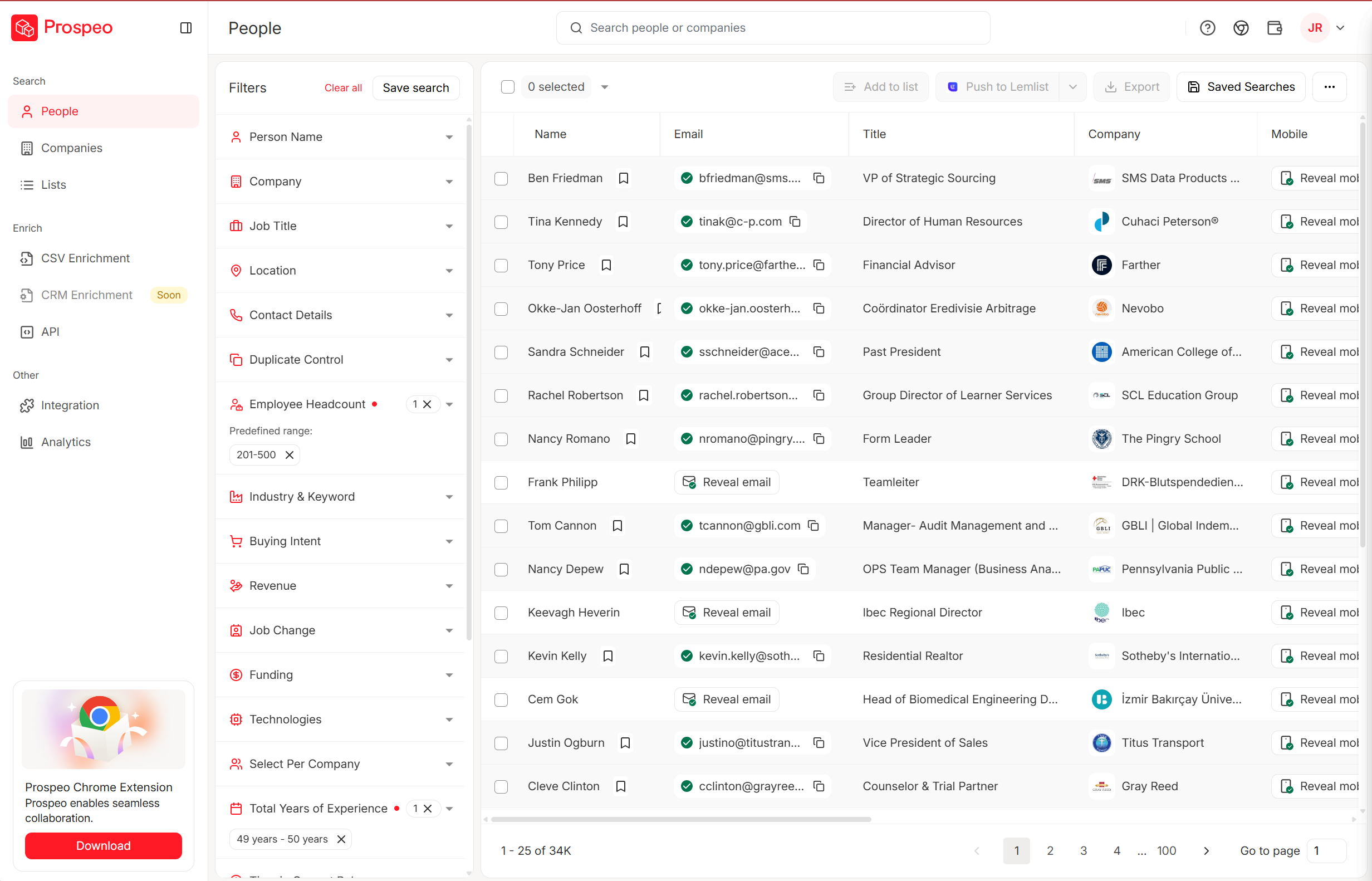
Your cold call scenario is useless if the call list is full of bounced emails and disconnected numbers. Prospeo's 7-day data refresh and 98% email accuracy mean reps go from role-play to real pipeline without the data cleanup your Sales Ops director is complaining about.
Give your trained reps data that matches their effort.
AI Role-Play Tools Worth Considering
AI platforms solve the scaling problem. A manager can't sit in on every practice session, but an AI bot can run simulations at 11 PM on a Tuesday when a rep is prepping for tomorrow's call.
| Tool | Starting Price | Best For |
|---|---|---|
| Yoodli | ~$11/mo | Individual reps, presentation practice |
| Kendo | ~$55/mo | Structured sales scenarios |
| Mindtickle | ~$30-50/user/mo | Mid-market teams, readiness programs |
| Quantified | Enterprise (custom) | Large-scale coaching programs |
AI is useful for solo practice with consistent feedback. But it doesn't replace a manager who knows the rep's actual deals, their specific weaknesses, and the nuance of their territory. Use AI for volume and consistency. Use live sessions for depth and deal-specific coaching. They're complementary, not interchangeable.
If you're building a modern enablement stack, start with your SDR tools and layer in practice + coaching from there.
FAQ
How often should teams practice?
Weekly 15-20 minute micro-sessions for skill maintenance, plus monthly scored assessments using the full rubric. Quarterly cadence isn't enough - reps forget what they practiced within two weeks without reinforcement.
What if reps refuse to participate?
Leaders go first - model vulnerability by taking the rep seat in round one. Use groups of three instead of performing in front of the whole team, and focus on one skill per session. When it feels like targeted practice instead of a performance review, resistance drops fast.
Do scripts make reps sound robotic?
Only if they recite word-for-word. Think of scripts like jazz chord progressions: learn the structure, then improvise. The goal is conversational fluency, not memorization - reps who internalize frameworks outperform those who wing it by 24%.
How do you measure if role-play is working?
Track win rate, average discount percentage, and new-hire ramp time monthly. Use rubric scores to measure individual improvement over 4-6 weeks. If scores climb but pipeline doesn't move, revisit which scenarios you're prioritizing - objection handling and discovery drive the most revenue impact.