

B2B Sales Explained: Benchmarks, Tactics, and What Works
Every B2B sales guide tells you the same thing: build a pipeline, qualify leads, close deals. Groundbreaking. Meanwhile, Forrester estimates B2B sales will hit $3 trillion by 2027 and the way buyers actually purchase has shifted underneath most sales orgs. Here's B2B sales explained properly - with data and field-tested tactics, not platitudes.
The Quick Version
- The median B2B conversion rate is 2.9% end-to-end. Most funnels leak at MQL-to-SQL.
- The average buying cycle runs 10.1 months. Deals over $500k average 270 days.
- 92% of buyers already have a vendor in mind before they start "evaluating."
- Every deal touches 6-10 stakeholders, and buying committees can flex up to 20.
What Is Business-to-Business Selling?
| Dimension | B2B | B2C |
|---|---|---|
| Deal size | $5k-$500k+ | $10-$500 |
| Cycle length | 90-270 days | Minutes to days |
| Stakeholders | 6-11 (up to 20) | 1 |
| Decision driver | ROI / risk | Emotion / price |
| Relationship | Long-term, multi-touch | Transactional |
The stakeholder count is the real killer. Outreach puts the average buying committee at 11, and notes it can flex upwards of 20. You're never selling to one person - you're navigating a committee where any single member can stall a deal. That's the core of business-to-business selling: every deal is a group decision, and your job is to align the entire room.
How the B2B Buyer Journey Actually Works
Forget the linear funnel. Gartner breaks the buyer journey into six stages - Problem Identification, Solution Exploration, Requirements Building, Supplier Selection, Validation, and Consensus Creation - and buyers loop between them constantly.
Here's the part most sales teams miss: 92% of buyers start research with at least one vendor already in mind, and 6sense data shows the winning vendor appears on the Day One shortlist 95% of the time. First contact with sales doesn't happen until 61% of the journey is complete.
The traditional model - cold outreach, discovery call, demo, proposal, close - assumes you're entering the conversation early. In reality, by the time a prospect takes your call, they've already done most of the work. Your job isn't to educate. It's to not lose the deal.

You just read that 85% of MQLs never become sales-qualified - and it's almost always a data problem. Prospeo's 300M+ profiles with 98% email accuracy and 7-day refresh cycle mean your 6-8 touchpoints actually reach real buyers, not dead inboxes.
Stop losing pipeline to bad data at $0.01 per verified email.
B2B Sales Benchmarks Worth Knowing
Funnel Conversion by Stage
| Stage | Conversion Rate |
|---|---|
| Lead to MQL | 35-45% |
| MQL to SQL | ~15% |
| SQL to Opportunity | 25-30% |
| Opportunity to Closed-Won | 6-9% |
| Overall end-to-end | 1.5-2.5% |
The median overall conversion rate is 2.9%. The biggest drop-off? MQL to SQL. If that conversion sits around 15%, roughly 85% of marketing-qualified leads never become sales-qualified. We've seen this over and over: that's where most pipeline dollars evaporate, and it's almost always a data quality problem, not a messaging problem. Win rates typically land between 15-25% depending on how you define "opportunity."
If you want a tighter view of stage-by-stage leakage, use a B2B sales funnel with benchmarks baked in.
Sales Cycle Length
| Segment | Avg Days |
|---|---|
| Software | 90 |
| Manufacturing | 130 |
| Healthcare | 125 |
| Deal < $1k | 25 |
| Deal $50-100k | 120 |
| Deal > $500k | 270 |
58% of B2B professionals say cycles got longer over the past year. Referrals close in about 20 days versus 60 for cold calls. The average sale needs around 6-8 touchpoints before it closes, which means everything downstream depends on accurate contact data. A data platform like Prospeo with 98% email accuracy and a 7-day refresh cycle ensures those touches actually land instead of bouncing into the void.
If your touches are bouncing, start by tracking your email bounce rate and fixing deliverability at the source.
B2B Selling Tactics from the Field
Only 5% of B2B buyers say salespeople exceed expectations. That's a low bar. Here's how to clear it.
1. Shut up more. Gong's data shows top-closing reps speak 43% of the time on calls. Average reps talk 65%. The gap is listening, not pitching.
2. Multithread during no-shows. If a prospect ghosts a meeting, connect with their colleagues and offer to share notes. The r/sales consensus is that multithreading is the most underused tactic in B2B selling. In our experience, the teams that multithread early cut their stall rate in half.
3. Watch proposal opens. Call when the document opens a second time. If it gets shared internally, call that person too.
4. Send the calendar invite without asking. When a prospect goes dark, drop a 5-minute optional meeting invite on their calendar. Don't ask permission. It's low-friction and surprisingly effective.
5. Keep proposals short. Buyers have done 95% of their research. They don't need a 40-page deck - they need a clear answer to "why you, why now."
If you need a system for the “go dark” moments, keep a set of sales follow-up templates ready for each stage.
Here's the thing: if your average deal is under $25k, you probably don't need a complex sales methodology at all. You need faster follow-up, cleaner data, and a tighter demo. Most smaller deals are lost to slow response times, not weak frameworks.
To tighten outbound execution, borrow a few modern sales prospecting techniques that match 2026 buyer behavior.
Choosing a Sales Methodology
Don't overthink this. Three frameworks cover 90% of scenarios.
SPIN Selling works best when the buyer doesn't fully understand their own problem. Built from 35,000+ sales calls across 20+ countries, it's the gold standard for complex, consultative deals. If you're selling six-figure solutions to technical buyers, start here.
Skip Challenger unless you're in a commoditized market. Studied across 6,000 reps and 90 companies, Challenger is designed for situations where your product looks identical to competitors on paper and you need to reframe how the buyer thinks. If you already have clear differentiation, Challenger adds unnecessary friction.
MEDDIC is non-negotiable for enterprise. When you're navigating 10+ stakeholders and multi-month cycles, MEDDIC keeps deals from stalling by forcing you to map the buying committee, identify your champion, and quantify the pain. I've never seen a team consistently close $100k+ deals without some version of this framework.
If you're selling enterprise, pair MEDDIC with a dedicated enterprise B2B sales motion so qualification doesn’t collapse under committee complexity.
For deals under $50k, SPIN or Sandler will serve you well. Enterprise north of $100k? MEDDIC every time.
AI in B2B Sales - What's Real in 2026
89% of revenue organizations now use AI, up from 34% in 2023. Teams using AI saw revenue growth at 83% versus 66% without. Daily AI tool usage rose 233% in six months. The adoption curve isn't gradual - it's vertical.
But here's the catch: AI SDRs can process 1,000+ contacts per day versus 50-80 for a human rep. Impressive volume. Yet they convert meetings to opportunities at just 15%, compared to 25% for human SDRs. AI is underrated for top-of-funnel volume and overhyped for closing.
If you're evaluating tooling, start with a shortlist of SDR tools and map them to your funnel constraints (data, deliverability, or follow-up speed).
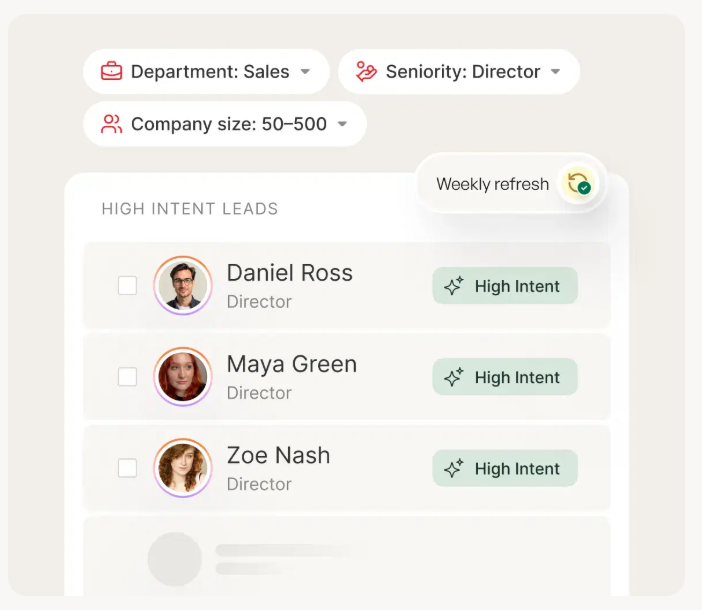
Gartner predicts 75% of B2B organizations will complete their highest-revenue deals via digital channels by 2028. The reps who win will be the ones who let AI handle the prospecting grind - filtering intent data across thousands of topics to surface in-market accounts - and spend their time on the conversations that actually close.
If you’re operationalizing intent, build it into your lead generation workflow so signals actually turn into meetings.
Let's be honest about one more thing: if you're a founder, sell early yourself. Outsourcing sales before you have a tight feedback loop between product and customer is the most common early-stage mistake we see.
Every deal touches 6-10 stakeholders. Multithreading only works when you can actually find verified contact data for the entire buying committee. Prospeo gives you emails, direct dials, and 50+ data points per contact - with 125M+ verified mobiles and a 30% pickup rate.
Map the full buying committee in minutes, not days.
FAQ
What is B2B sales?
Business-to-business sales means selling products or services to other companies rather than individual consumers. Deals typically involve 6-11 stakeholders, cycles of 90-270 days, and decision-making driven by ROI rather than emotion.
Can you give some B2B sales examples?
Common examples include a SaaS company selling CRM software to an enterprise, a staffing agency providing contract developers to a tech firm, or a raw materials supplier fulfilling orders for a manufacturer. In each case, the buyer is another business, not an end consumer.
How long does a typical B2B sales cycle take?
Software averages 90 days, while deals over $500k average 270 days. The overall B2B average is 10.1 months, and 58% of sales professionals report cycles getting longer year over year.
What tools help improve B2B prospecting accuracy?
Prospeo delivers 98% email accuracy across 300M+ profiles with a 7-day data refresh cycle, making it a strong fit for outbound teams. Other popular options include ZoomInfo and Apollo, though both refresh data less frequently and report lower verification rates.