

Sales Team Alignment: The 2026 Playbook for Your Entire Revenue Engine
Marketing says they delivered 2,000 MQLs. Sales says the leads are garbage. It's the same quarterly fight, and the real damage isn't the argument - it's the black hole between "MQL" and "closed-won" where nobody knows what happened. Up to 70% of B2B reps missed quota last year. The pipeline isn't broken because reps can't sell. It's broken because sales team alignment doesn't exist.
Here's the short version: alignment isn't just marketing + sales. It's SDRs, AEs, CS, and RevOps operating from shared definitions, shared data, and shared incentives. Write down your MQL and SQL definitions this week. If sales and marketing can't agree on them, you've already found your problem.
What Revenue Team Alignment Actually Means
Let's stop calling it "sales and marketing alignment." That framing is too narrow and it's part of the problem. Real alignment means every revenue team runs the same go-to-market playbook - SDRs, AEs, marketing, CS, and RevOps all sharing language and metrics.
Think of your sales process as an operating system. When every customer-facing team runs on the same OS - same definitions, same handoff rules, same scorecard - friction drops. Only 11% of companies have both effective handoffs and high audience overlap between marketing and sales. That means 89% are leaking revenue somewhere in the funnel. Eighty-nine percent.
Why B2B Alignment Is Breaking Now
Three forces are making this worse, not better.
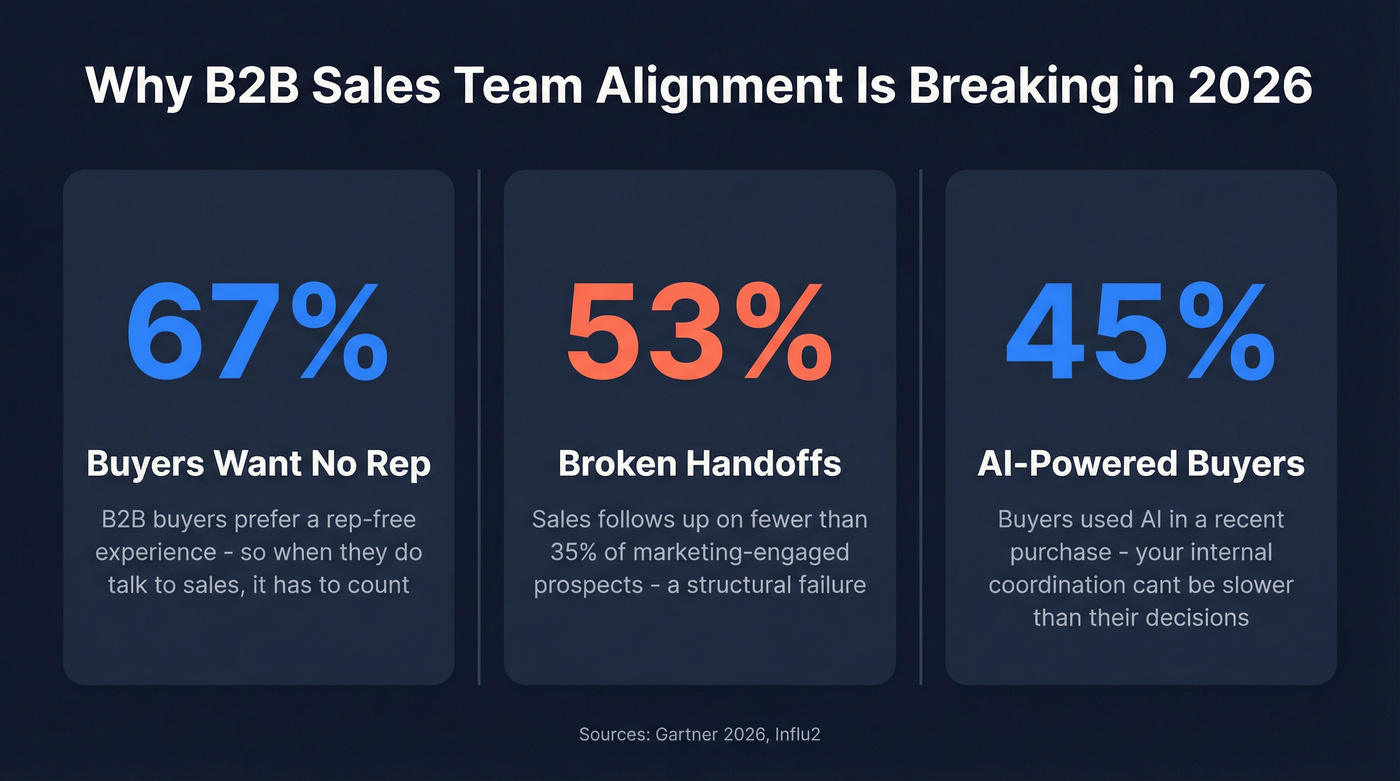
67% of B2B buyers now prefer a rep-free experience, per Gartner's survey of 646 B2B buyers. When buyers finally talk to a rep, that touchpoint has to count. There's zero room for "let me re-ask what you already told our marketing team."
Then there's the handoff problem: 53% of companies have broken ones, with sales following up on fewer than 35% of marketing-engaged prospects. That's not a communication issue. It's a structural failure.
And buyers are accelerating. 45% used AI during a recent purchase. Your internal coordination can't afford to be slower than their decision process - but at most companies, it is.

53% of companies have broken handoffs - but bad data makes it worse. When emails bounce at 35%, reps stop trusting marketing's leads and alignment collapses. Prospeo's 98% verified emails and 7-day data refresh ensure every MQL your team passes actually connects to a real buyer.
Alignment starts with data reps actually trust.
5 Levers That Fix Alignment
1. Shared Definitions + an Actual SLA
Everyone talks about SLAs. Nobody actually writes one.
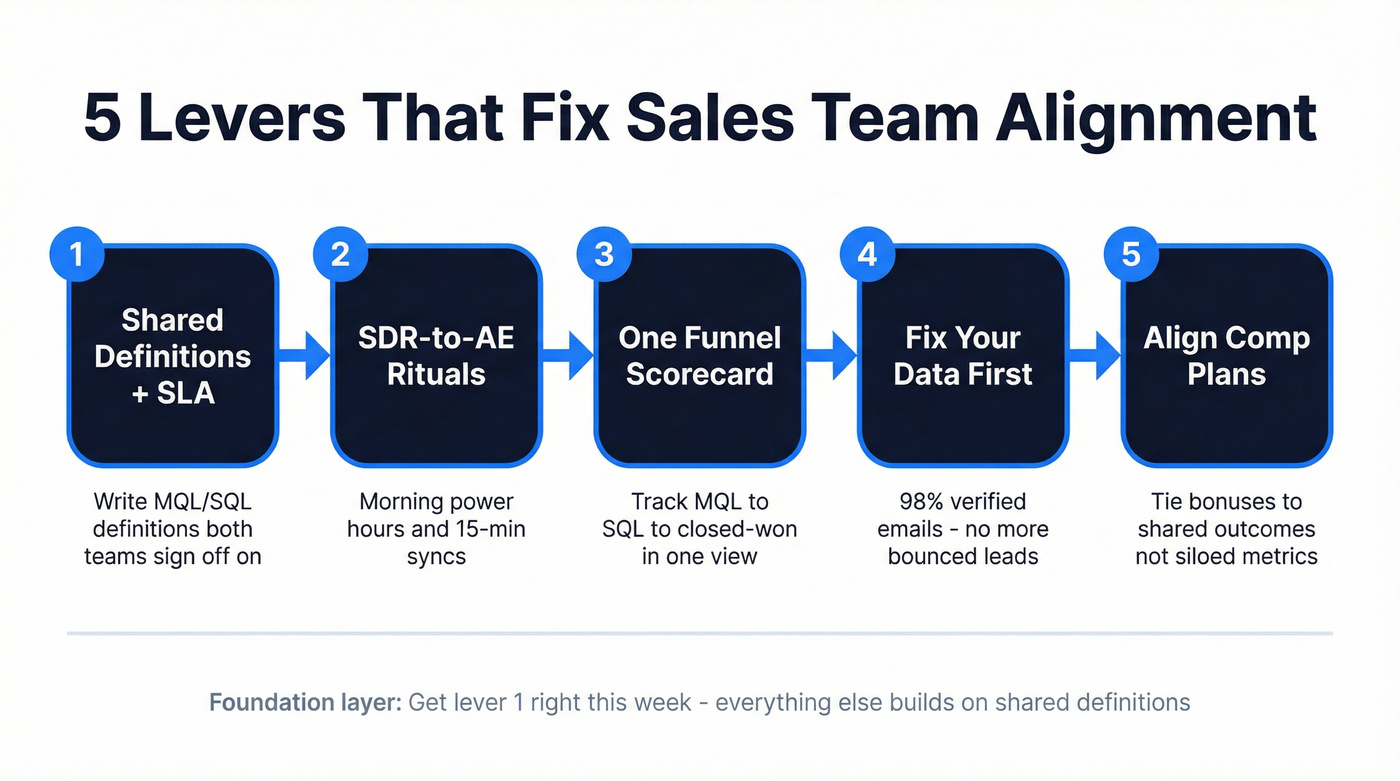
Here's what yours needs: written MQL and SQL definitions that both teams agree on, a marketing commitment to deliver leads within 24 hours of qualification, a sales commitment to first-touch within 4 hours of handoff, escalation paths for when targets are missed two weeks running, and rejection reasons that sales logs and feeds back to marketing monthly.
Downloadable SLA templates exist - grab one and customize it. A mediocre SLA you actually use beats a perfect one sitting in a Google Doc nobody opens. We've seen a mid-market SaaS team cut their MQL-to-SQL dispute rate by 60% simply by co-writing definitions in a single 90-minute session. Ninety minutes. That's it.
2. Intra-Sales Rituals (SDR to AE)
The SDR-to-AE handoff is where alignment lives or dies inside the sales org. We've watched teams where SDRs book meetings that AEs ignore, and AEs blame SDRs for "low-quality" pipeline. The fix isn't a Slack channel.
Run a morning power hour - 30 to 45 minutes - to review engagement signals and prioritize follow-ups. Add a 15-minute SDR-AE sync to divide multi-stakeholder outreach on priority accounts. The language matters here: instead of "Which accounts should I go after?" an SDR should ask "Which accounts should I avoid?" That signals ownership and builds trust between the two roles in a way that no CRM workflow can replicate.
3. One Funnel-Wide Scorecard
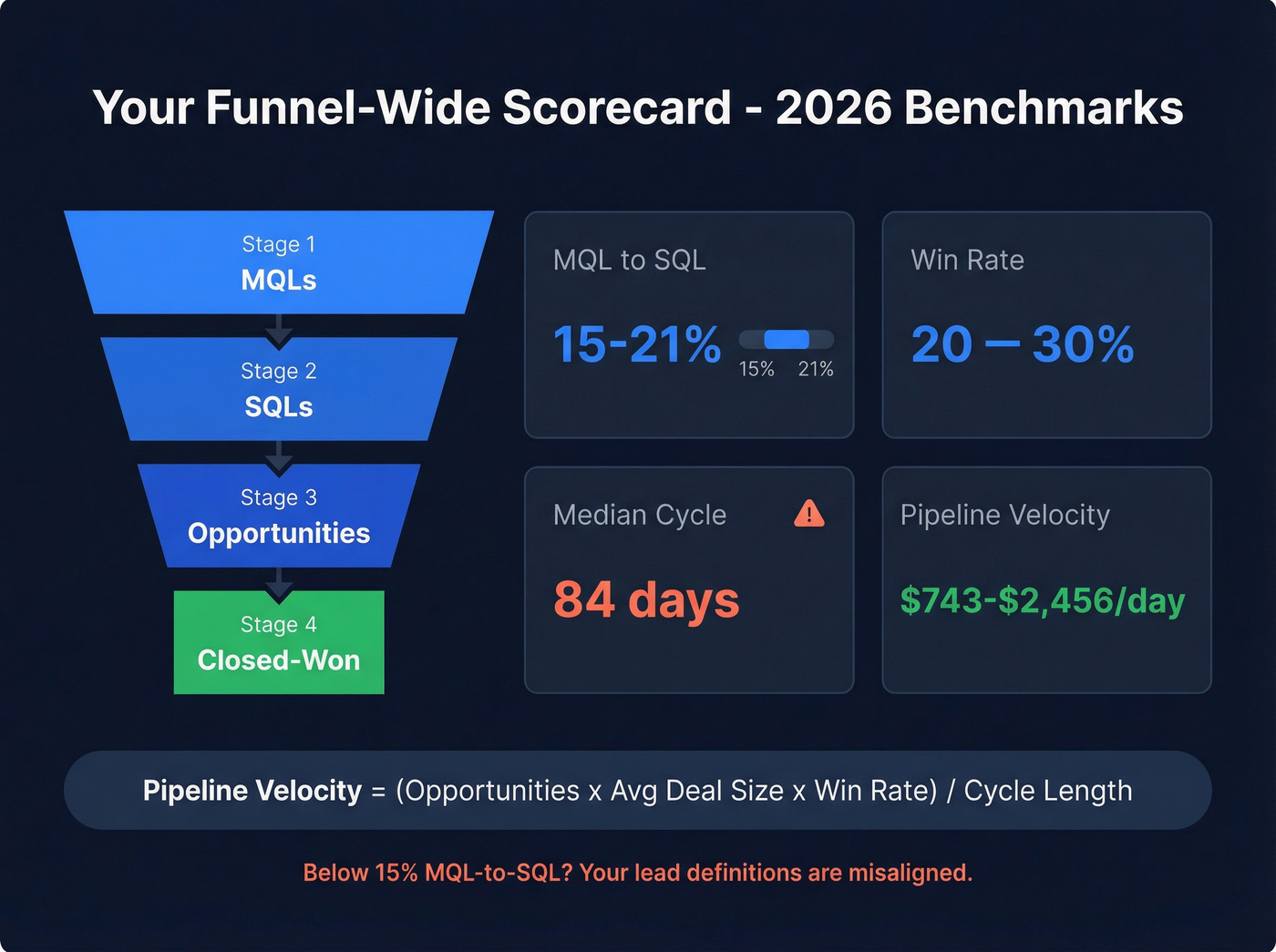
If marketing tracks MQLs and sales tracks closed-won and nobody owns the middle, you don't have a funnel. You have two disconnected spreadsheets. Here are the benchmarks that matter:
| Stage | Benchmark |
|---|---|
| MQL to SQL | 15-21% |
| Win rate | 20-30% |
| Median cycle | 84 days |
| Pipeline velocity | $743-$2,456/day |
Pipeline velocity = (Opportunities x Avg Deal Size x Win Rate) / Cycle Length. If your MQL-to-SQL rate is below 15%, your lead definitions are misaligned. If your cycle stretches past 84 days, look at the handoff between stages - that's where deals stall and reps lose momentum.
4. Fix Your Data Before Adding Meetings
Look, sales blames marketing for "bad leads," but often the real issue is bad contact data. Emails bounce. Numbers are dead. When a team's outbound emails bounce at 35-40% - as Snyk experienced before switching to Prospeo - the problem isn't process, it's reachability.
Reps stop trusting marketing's leads because they literally can't reach anyone. Snyk cut their bounce rate to under 5% with 98%-accuracy email verification and saw AE-sourced pipeline jump 180%. When reps can actually reach the people marketing warmed up, the lead quality fight disappears. Clean data doesn't just help outbound - it's the foundation that makes every other alignment lever work.

5. Align Comp Plans to Shared Outcomes
Here's my hot take: misaligned comp plans will override every SLA, every ritual, and every dashboard you build. If SDRs are paid on meetings booked and AEs are paid on closed-won, you've structurally incentivized meeting spam and cherry-picking.
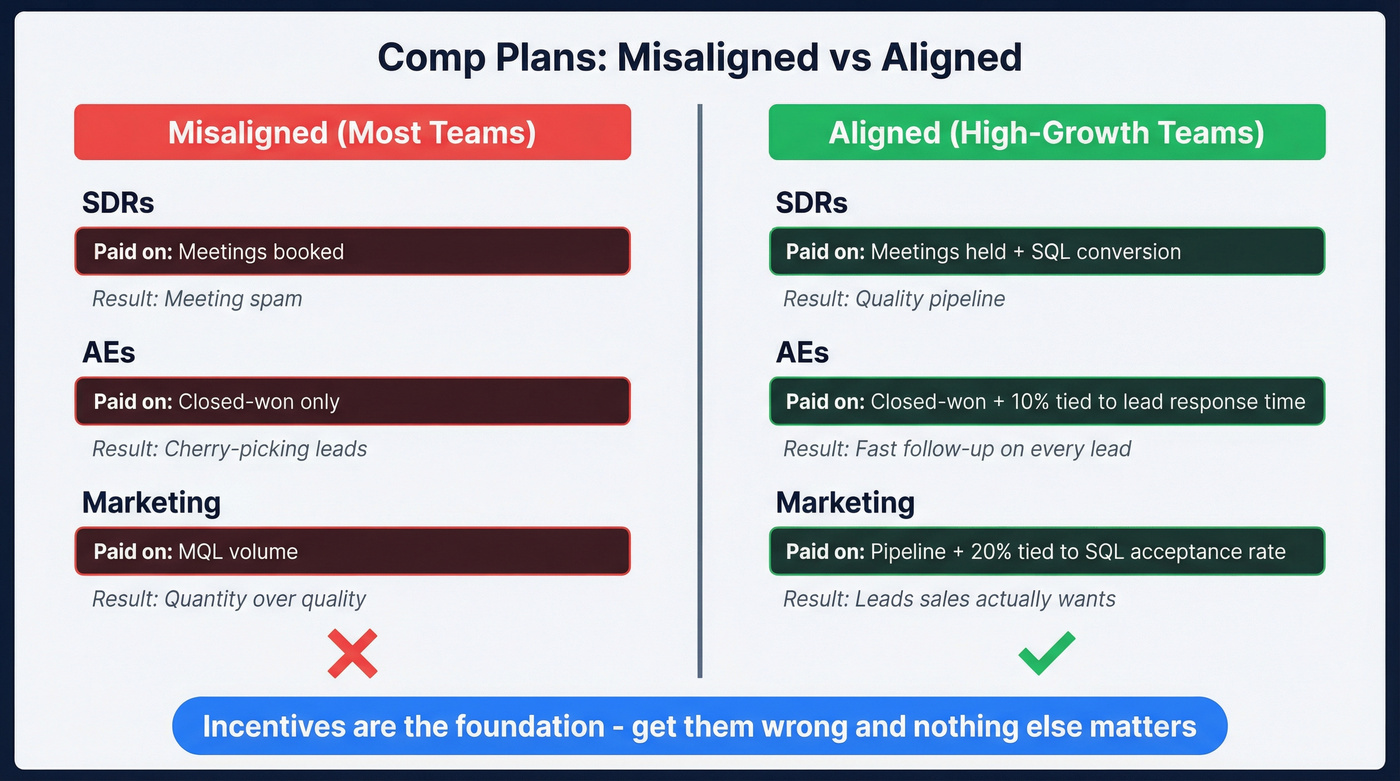
The fix isn't complicated. Tie marketing partially to pipeline and renewal metrics. Measure sales on early engagement quality, not just closed revenue. A concrete example: marketing gets 20% of their bonus tied to SQL acceptance rate, and sales gets 10% tied to lead response time compliance. Incentives are the foundation. Get them wrong and nothing else matters.
Three Mistakes That Kill Alignment
Speaking the wrong language. Marketing talks MQL volume; sales talks pipeline. If marketing can't articulate how their work affects time-to-close, they'll always be seen as a cost center. The fix: marketing reports on SQL acceptance rate and influenced pipeline, not just lead volume.
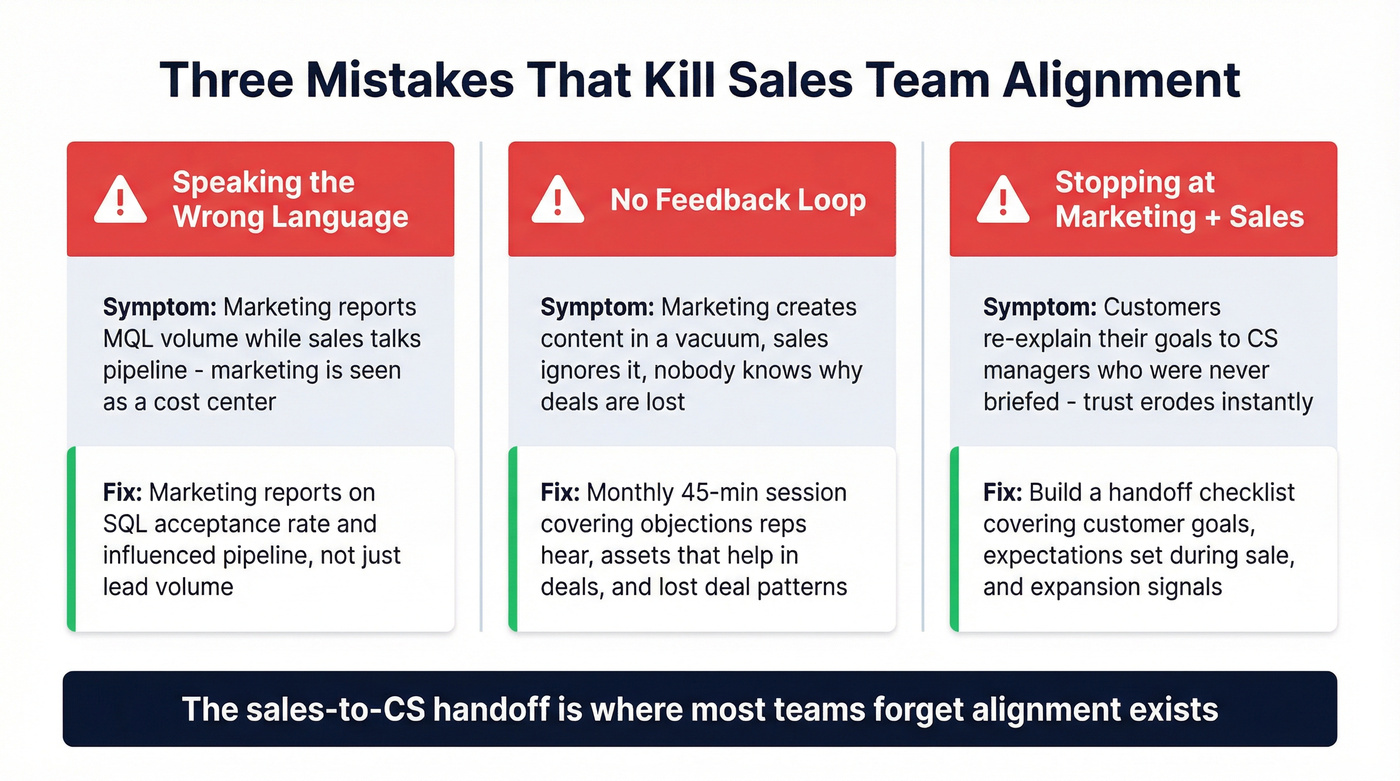
No feedback loop. A monthly 45-minute session with a tight agenda changes everything. Cover three things: objections reps are hearing, which assets help in deals, and patterns from lost deals. Without this, marketing creates content in a vacuum and wonders why sales ignores it.
Stopping at marketing + sales. In our experience, the sales-to-CS handoff is where most teams forget alignment exists. When a customer re-explains their goals to a success manager who wasn't briefed, trust erodes immediately. Build a handoff checklist covering customer goals, expectations set during the sale, and expansion signals. Enterprise teams are especially vulnerable here - with longer cycles and more stakeholders, a single broken handoff can unravel months of deal momentum.
The One Thing to Do This Week
Write down your MQL and SQL definitions and get sales and marketing to sign off. If they can't agree, you've found your sales team alignment problem - and it's cheaper to fix than any new tool or process.
Alignment isn't cultural. It's operational. Highly aligned companies grow roughly 20% annually. The gap between aligned and misaligned teams isn't closing. It's widening. And the teams that figure this out first aren't just hitting quota - they're pulling away from everyone else.
Snyk's 50 AEs cut bounce rates from 35% to under 5% and grew AE-sourced pipeline 180% - because reps could finally reach the people marketing warmed up. When your contact data is accurate, the lead quality fight disappears and your SLAs actually work.
Stop blaming leads. Start verifying them at $0.01 each.