

How to Run a SWOT Sales Analysis That Actually Improves Performance
Your VP just asked for a territory plan by Friday. You're staring at a blank SWOT grid, and you already know what's going to happen: you'll brainstorm some vague bullets, drop them into four quadrants, present the slide, and never look at it again. That's how most SWOT sales exercises die - not because the framework is broken, but because teams treat it like a checkbox instead of a system.
We've sat through dozens of these sessions. The consensus on r/sales tracks with our experience: the analysis produces a slide that doesn't change what the team does next.
The gap between a useful analysis and a forgotten one comes down to three things: running it at the right altitude, quantifying every bullet, and connecting findings to specific plays.
What a Useful Sales SWOT Requires
- Run it at three levels - team-wide, territory, and deal. A single SWOT for "the sales org" is too generic to drive action.
- Quantify every bullet with real KPIs. "Strong product" isn't a strength. "42% faster implementation than the next competitor, validated by 30+ deployments" is.
- Map each finding to an action using the TOWS framework. SWOT describes. TOWS prescribes. You need both.
Three Levels of Sales SWOT Analysis
The biggest mistake teams make is running one SWOT for the entire sales org and calling it done. A sales-specific analysis works at three distinct altitudes, each with different inputs and different outputs.
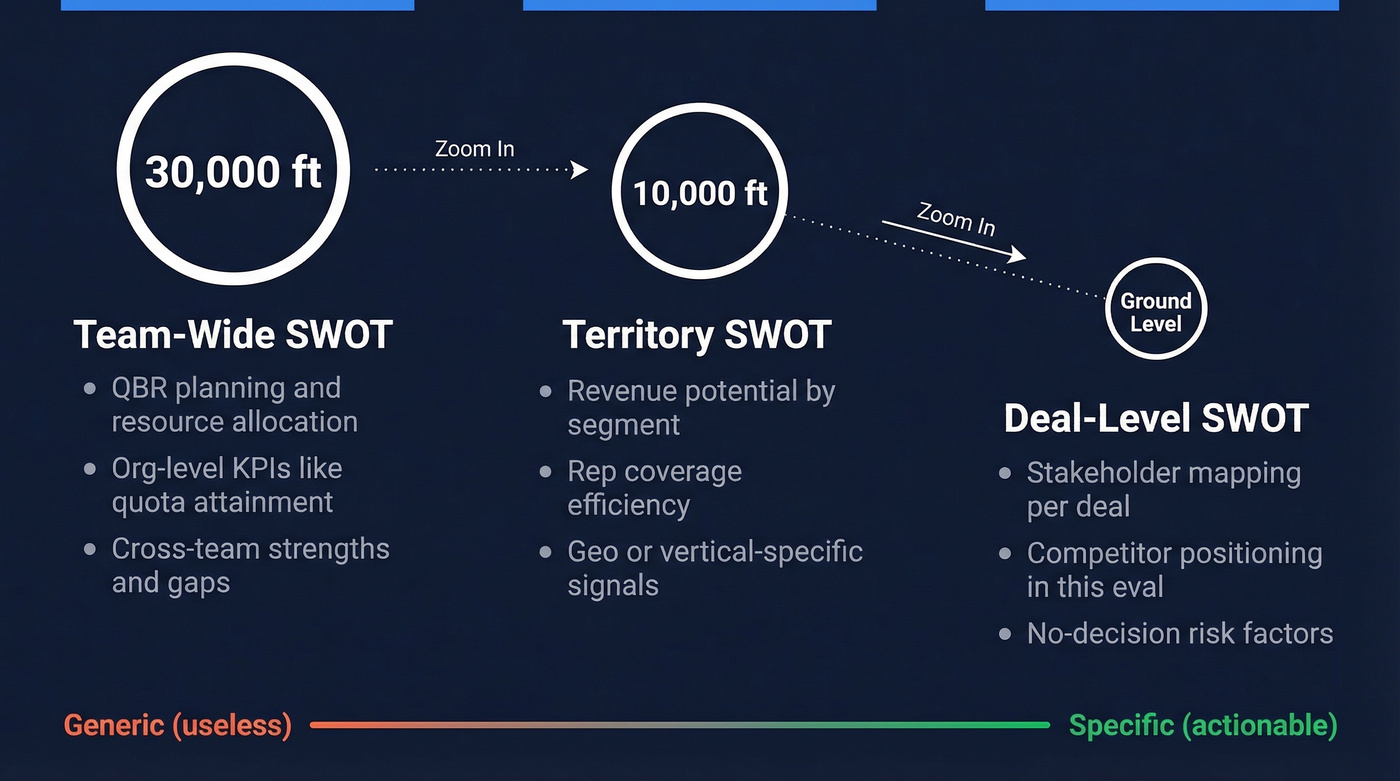
Team-Wide SWOT
This is the 30,000-foot view - how your sales team stacks up as a unit. Think of it as the foundation for QBR planning and resource allocation.
A software sales team's strengths might include high closing rates and deep product knowledge backed by customer feedback. Weaknesses show up as limited competitor understanding, difficulty handling technical objections, and inconsistent follow-up. Opportunities include growing demand in adjacent verticals and untapped partnership channels. Threats cover increased competition, technology shifts that could commoditize your product, and budget constraints from economic headwinds.
Here's a sales SWOT analysis example showing what that looks like as an actual matrix - with numbers, not platitudes:
| Strengths | Weaknesses |
|---|---|
| 92% quota attainment (mid-market, 3 consecutive quarters) | 40% of leads untouched after first contact |
| 42% faster implementation vs. nearest competitor | Reps can't articulate competitive differences |
| Opportunities | Threats |
| Healthcare vertical growing 18% YoY | Competitor raised $40M Series C |
| 3 partner channels untapped | Budget freezes in 2 of 5 target verticals |
Every cell has a number or a concrete fact. "Good team culture" doesn't belong here.
Territory-Level SWOT
Zoom in one level. Territory SWOT narrows the lens to revenue potential, customer base quality, and rep coverage efficiency within a defined segment.
Start by defining the territory precisely - something like "Enterprise SaaS accounts with >$50M ARR in the Northeast region." Then pull internal metrics: revenue per territory, win rate, pipeline-to-quota ratio, and rep activity data. Layer in external signals: competitor activity, market trends, and economic indicators specific to that geography or vertical.
Here's why this matters: 58% of B2B companies consider their territory design ineffective. A territory-level analysis forces you to confront whether your coverage model actually matches where the revenue lives.
Deal-Level SWOT
This is the microscope view. Run it for every deal above your threshold - anything north of $50k in annual contract value deserves this treatment. The questions shift because you're evaluating a single opportunity, not a market:
- Which stakeholders have we reached, and who's missing from the thread?
- Where do our capabilities gap against the buyer's stated requirements?
- What's the "no decision" risk, and what's driving it?
- What internal politics could derail this deal?
- How are we positioned against the specific competitors in this evaluation?
If you can't answer these with data, you don't have a deal-level SWOT. You have a guess.
Gathering Data for Your SWOT
A SWOT is only as good as its inputs. Brainstorming in a conference room produces opinions. Pulling from real data sources produces intelligence.
CRM and Pipeline Data
Your CRM is the primary source for Strengths and Weaknesses. Pull win rate by segment, average cycle length, deal slippage rate, activity-to-opportunity conversion, and pipeline coverage ratio. These numbers are harder to argue with than opinions.
If your team thinks follow-up is a strength, but your CRM shows 40% of leads go untouched after initial contact, the data wins. Every time.
Here's the thing: most teams already have enough CRM data to build a strong SWOT. They just never export it into the framework. You can use AI tools - even a basic ChatGPT prompt like "Analyze this CRM export and categorize each metric as a strength or weakness based on these benchmarks" - to get a first draft in minutes instead of hours.
Win/Loss Interviews
This is the single most underutilized data source in sales. A Corporate Visions analysis of 6,000+ B2B deals found that only about 25% of enterprise deals are truly competitive - meaning buyers see comparable value among their options. If you're winning, it's often not because of product superiority but because of how you sold.
Run structured interviews with recent wins and losses. Ask open-ended questions about decision drivers and prompt direct comparisons against competitors. The patterns that emerge feed directly into your internal quadrants with a level of specificity that no brainstorm session can match.
External Intelligence
This is where most sales SWOTs fall apart. Teams populate the Opportunities and Threats quadrants with guesswork because they don't have a systematic way to collect external data. "Growing market" isn't an opportunity - it's filler.
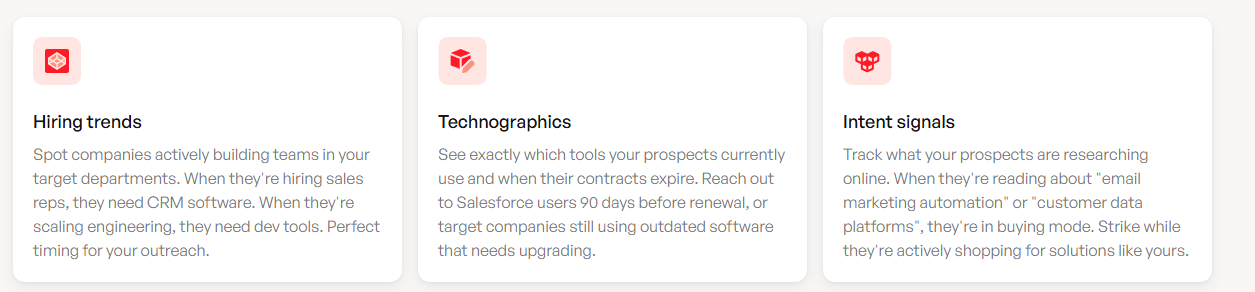
Real opportunities and threats come from concrete signals: competitor hiring surges, technology adoption shifts in your ICP, funding rounds that signal budget availability, and buying intent spikes in specific verticals. Tools like Prospeo surface these through intent data tracking 15,000 topics via Bombora, layered with 30+ search filters covering technographics, headcount growth, and funding signals - all refreshed on a 7-day cycle. That means your Opportunities quadrant reflects what's actually happening this week, not what someone assumed last quarter.
Quantify Your SWOT With KPI Benchmarks
Every bullet in your SWOT should have a number attached. Resist the urge to track everything - a grid with 20 KPIs is a spreadsheet, not a strategy tool. Pick 5-7 that directly map to your team's role, then use this reference table to classify each as a strength or weakness.
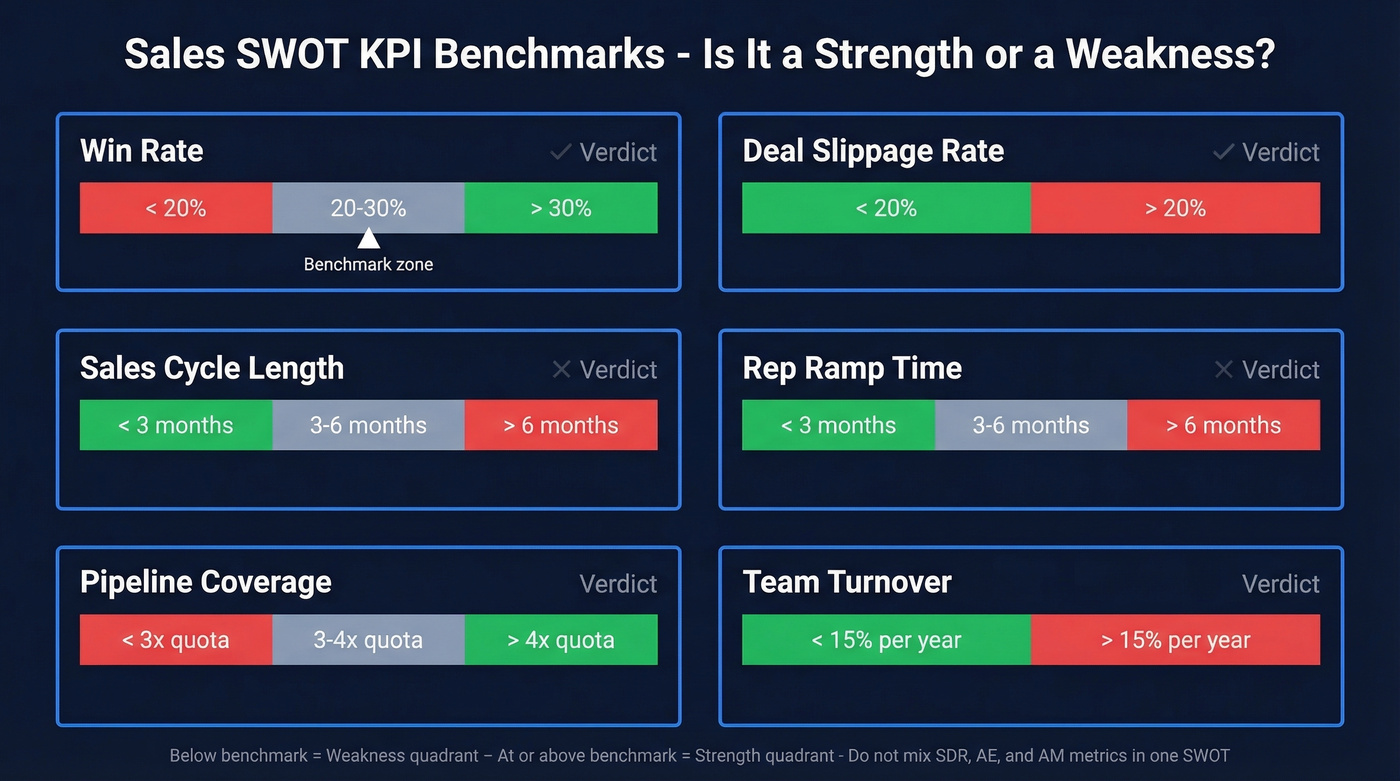
| KPI | Quadrant | Benchmark | Signal |
|---|---|---|---|
| Win rate | S or W | 20-30% | Below 20% = weakness |
| Sales cycle | S or W | 3-6 months | Above 6 mo = weakness |
| Pipeline coverage | S or W | 3-4x quota | Below 3x = weakness |
| Deal slippage | W or T | <20% | Above 20% = weakness |
| Rep ramp time | W | 3-6 months | Above 6 mo = weakness |
| Team turnover | W or T | <15%/year | Above 15% = threat |
| Sales growth rate | S or O | 15-25%/year | Below 15% = investigate |
One important nuance: don't mix role-based metrics. Your SDR team's SWOT should focus on activity metrics - calls, meetings booked, response rates. Your AE team's should center on pipeline creation and closed revenue. Your AM team's should track retention and expansion. Blending them into one matrix dilutes every insight.

Your Opportunities and Threats quadrants are only as good as your external intelligence. Prospeo tracks 15,000 buyer intent topics via Bombora, layered with technographics, funding signals, and headcount growth - all refreshed on a 7-day cycle. Stop filling your SWOT with last quarter's assumptions.
Turn your SWOT from a slide deck filler into a live intelligence system.
Turn SWOT Into Action With TOWS
SWOT by itself is descriptive. It tells you what's true. It doesn't tell you what to do.
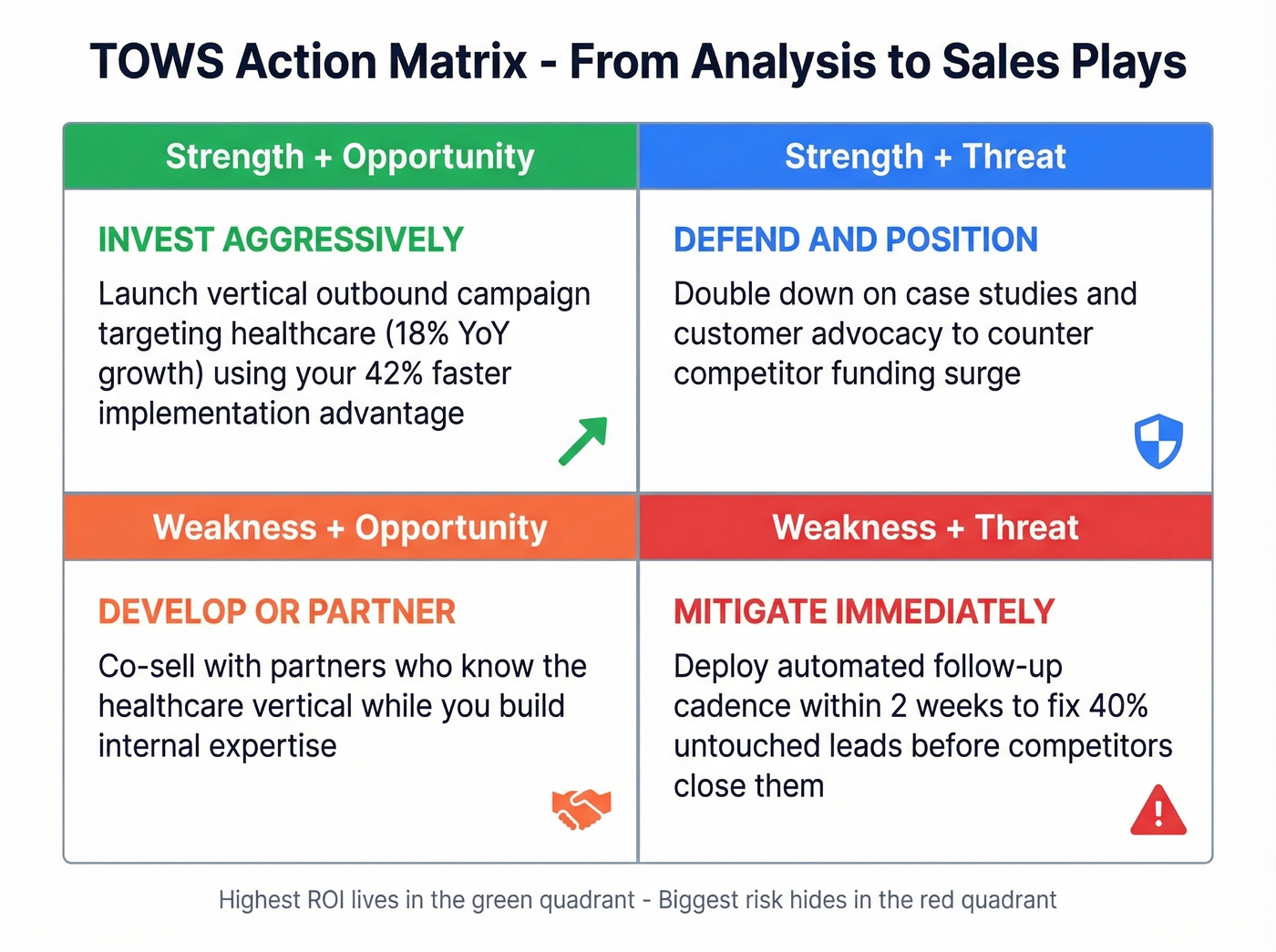
The TOWS framework bridges that gap, and it's the single most important addition to a basic analysis. If you bolt on one extra step, make it this one.
TOWS works by combining quadrants to generate specific strategies:
| Combination | Strategy | Sales Play |
|---|---|---|
| Strength + Opportunity | Invest aggressively | Launch vertical outbound |
| Weakness + Threat | Mitigate immediately | Deploy automated cadence in 2 weeks |
| Strength + Threat | Defend and position | Double down on case studies and advocacy |
| Weakness + Opportunity | Develop or partner | Co-sell with partners who know the market |
The "Invest aggressively" quadrant is where your highest-ROI plays live. The "Mitigate immediately" quadrant is where your biggest risks hide. Most teams spend too much time in the middle two and not enough at the extremes.
Track each play's impact. If your "invest aggressively" play was a vertical outbound campaign, measure pipeline generated within 60 days against your baseline. SWOT without measurement is just another planning exercise that dies in a shared drive.
A deal-level SWOT demands knowing exactly which stakeholders you've reached - and who's missing. Prospeo gives you 300M+ verified profiles with 98% email accuracy and 125M+ direct dials, so you can map every buying committee member before your competitor does.
Fill the gaps in your deal-level SWOT with verified contact data at $0.01 per email.
Common Mistakes That Kill Usefulness
Five mistakes that turn a useful exercise into a wasted afternoon:
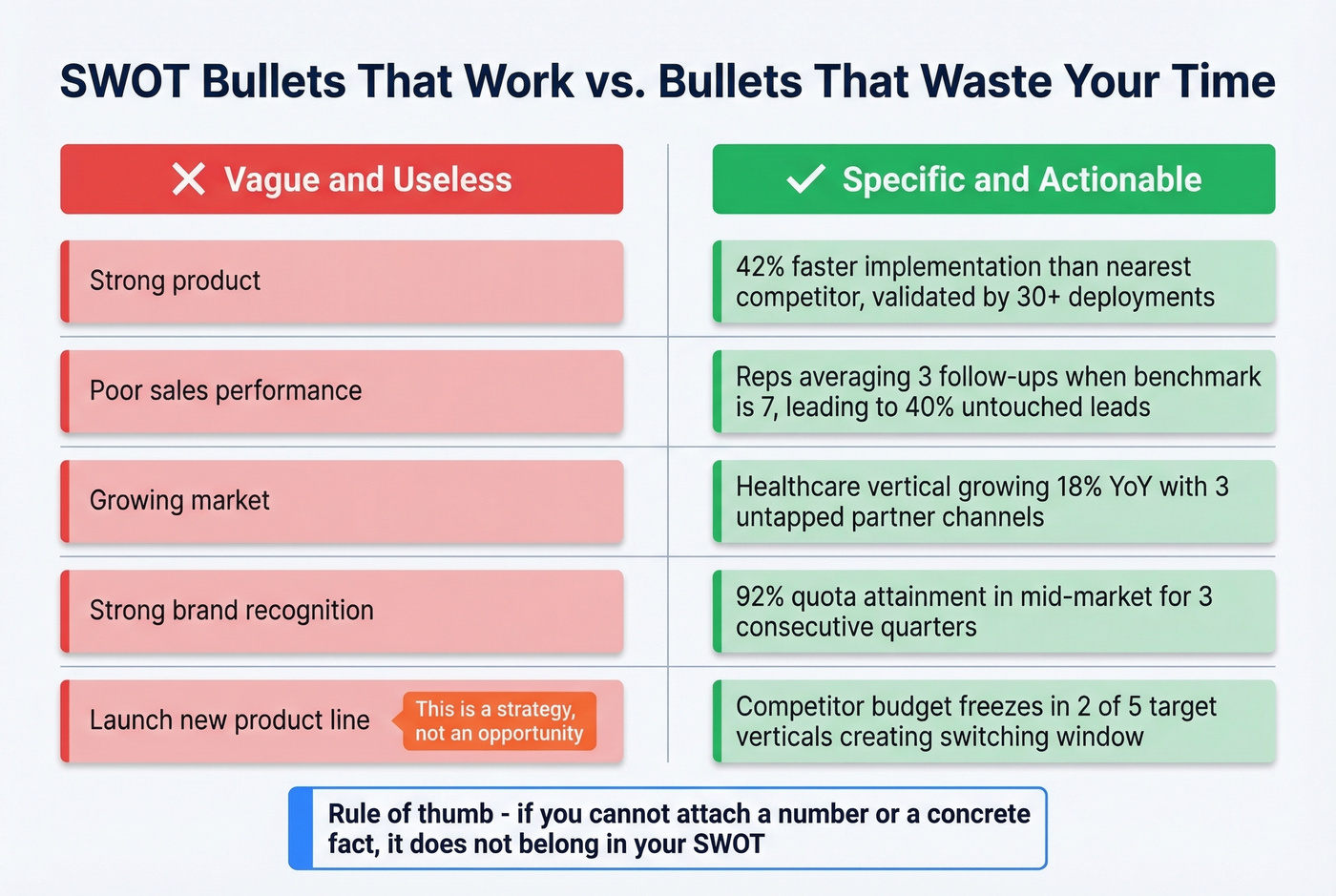
Listing outcomes instead of causes. "Poor sales performance" isn't a weakness - it's a symptom. The weakness is "no structured discovery process," or "reps averaging 3 follow-ups when the benchmark is 7." Dig to the root.
Mixing corporate and team-level items. Your sales team's SWOT shouldn't include "strong brand recognition" unless your reps are directly using it in deals. Keep the altitude consistent.
Treating internal plans as opportunities. "Launch a new product line" is a strategy, not an opportunity. Opportunities are external facts - market growth, regulatory changes, competitor stumbles. You don't control them.
No quantification. If you can't put a number on it, it probably doesn't belong. See the KPI table above.
Running it once and filing it away. A SWOT from January is stale by March. The cadence section below fixes this.
Sales and Marketing Alignment
One of the highest-value applications of this framework is running a joint SWOT across sales and marketing. When both teams contribute to the same grid, misalignment surfaces fast - marketing lists "strong inbound pipeline" as a strength while sales flags "low lead quality" as a weakness. That contradiction is the starting point for a productive conversation, not a conflict.
A joint session also strengthens the Opportunities quadrant. Marketing typically has better visibility into market trends, content engagement signals, and brand awareness data, while sales brings deal-level intelligence and competitive positioning insights. Combining those perspectives produces a more complete external picture than either team could build alone. We've seen teams uncover entirely new verticals just by comparing marketing's content engagement data with sales' win/loss patterns from the same period.
SWOT vs. SOAR vs. PESTLE
Not every situation calls for SWOT. Skip it entirely if your team's sessions consistently devolve into blame games - try SOAR instead for a quarter.
| Framework | Best For | Limitation |
|---|---|---|
| SWOT | Balanced internal + external view | Stops at description without TOWS |
| SOAR | Teams whose sessions become blame fests | Ignores weaknesses and threats |
| PESTLE | Macro territory or market planning | Too broad for deal-level use |
| TOWS | Turning any SWOT into action plans | Requires a solid SWOT as input |
For territory planning, pair SWOT with PESTLE to catch regulatory and economic shifts that a pure sales lens misses. And if you're going to use one framework beyond basic SWOT, make it TOWS. The combination of SWOT's diagnostic power with TOWS's prescriptive output is what separates teams that plan from teams that act.
How Often to Run It
Stop running annual SWOTs. They're stale before the ink dries.
The cadence that works: a quarterly deep-dive where you rebuild the full three-level analysis with fresh CRM data, win/loss insights, and updated external signals. Then a weekly 10-minute check-in - just the Opportunities and Threats quadrants - to flag signal changes that shift your plays. We've found that the weekly pulse is what actually keeps the framework alive between quarters; without it, the quarterly session just becomes another restart from scratch.
A lot of teams start with quarterly sessions and struggle to sustain them. The fix isn't discipline - it's reducing the effort. Automate the data collection, pre-populate the quadrants with CRM exports and intent signals, and spend the session debating actions instead of gathering inputs.
FAQ
What's the difference between a sales SWOT and a regular SWOT?
A sales SWOT uses pipeline metrics, win/loss data, and territory intelligence instead of generic business factors. It runs at three levels - team, territory, and deal - and its outputs map directly to quota attainment and revenue plays rather than broad corporate strategy.
How do I populate the Opportunities quadrant with real data?
Use concrete external signals: buyer intent data showing which accounts are researching your category, technographic changes indicating a competitor's tool was recently dropped, and funding events that signal budget availability. Intent data platforms that track thousands of topics with frequent refresh cycles give you a factual basis rather than assumptions.
Can I use SWOT for individual rep coaching?
Yes - adapt the team-level framework to individual performance. Map each rep's win rate, cycle length, and activity metrics against the benchmarks in the KPI table above. If a rep's deal slippage runs above 20% while their win rate is healthy, the issue is pipeline management, not selling ability. That's a much more actionable coaching conversation than "you need to close more."
Do you have a sales SWOT analysis example I can follow?
The team-wide matrix earlier in this article is a complete worked example - each quadrant contains quantified metrics rather than vague statements. Swap in your own win rate, pipeline coverage, market growth figures, and competitive threats, then run the TOWS step to convert each finding into a concrete play with a measurable outcome.