


6 Trigify Alternatives That Actually Fix Your Workflow
Trigify finds the person who engaged with a competitor's post or mentioned a keyword you're tracking. Great. But then you're left with a name and no verified email, no direct dial, and no way to reach them without stitching together two or three more tools.
That's the real frustration - not the signal detection, but the dead end that follows it.
An analysis of 299,690 signals across 152 workspaces found that 84% of social engagement is noise. Even the 16% that matters needs enrichment and outreach infrastructure to convert. The B2B intent data market is projected to grow from $4.49B in 2026 to $20.89B by 2035, which tells you how many vendors are fighting for this space. Most of them still leave you with the same problem: signals without contact data.
Our Picks (TL;DR)
| Your real problem | Pick | Why |
|---|---|---|
| Contact data, not signals | Prospeo | 98% email accuracy, 125M+ verified mobiles, free tier |
| Signal-to-outreach automation | PhantomBuster | Per-workspace pricing, 100+ automations |
| One platform for everything | Apollo | Large database, built-in sequences, free tier |
Where Trigify Falls Short
Trigify is an AI agent-powered social listening and signal intelligence tool for B2B teams. It tracks engagement signals - who's interacting with competitor posts, what's being said around specific topics - and helps you monitor key accounts.
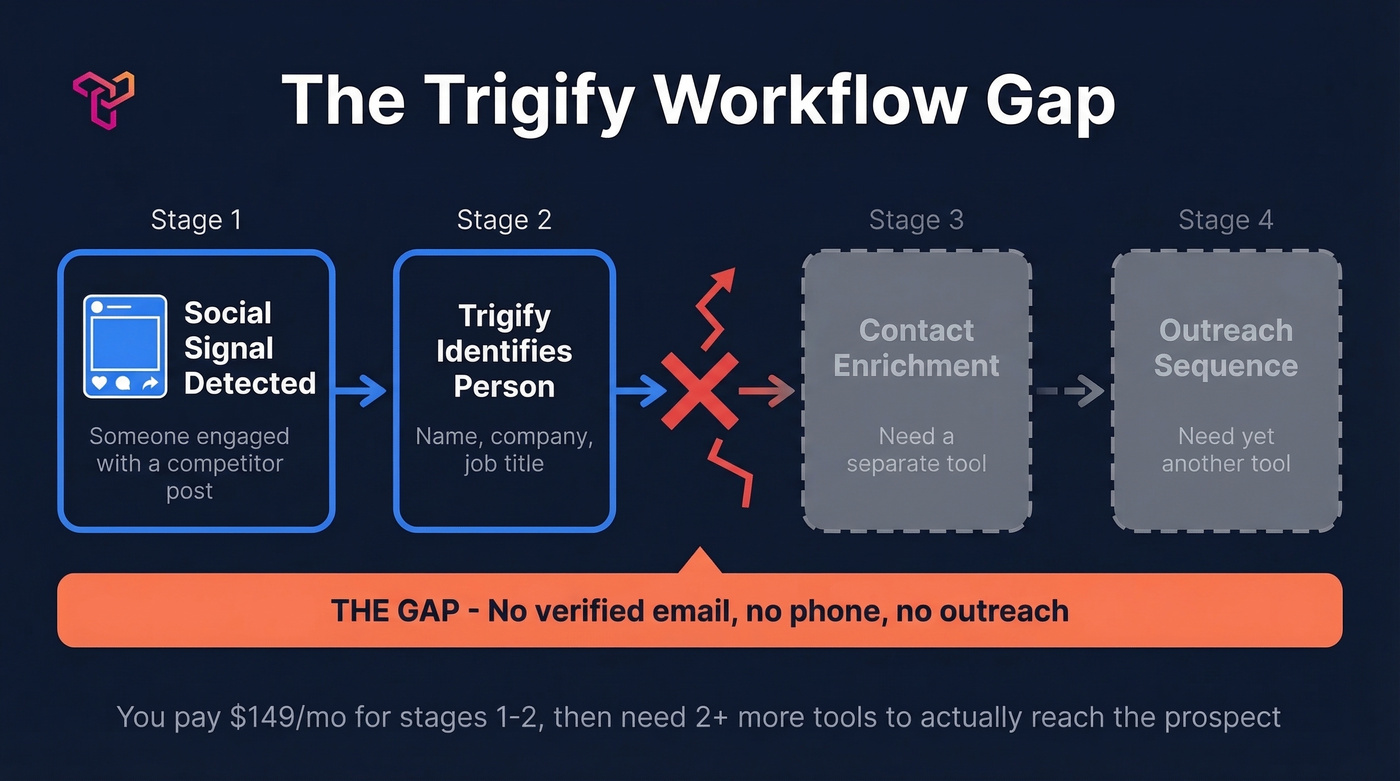
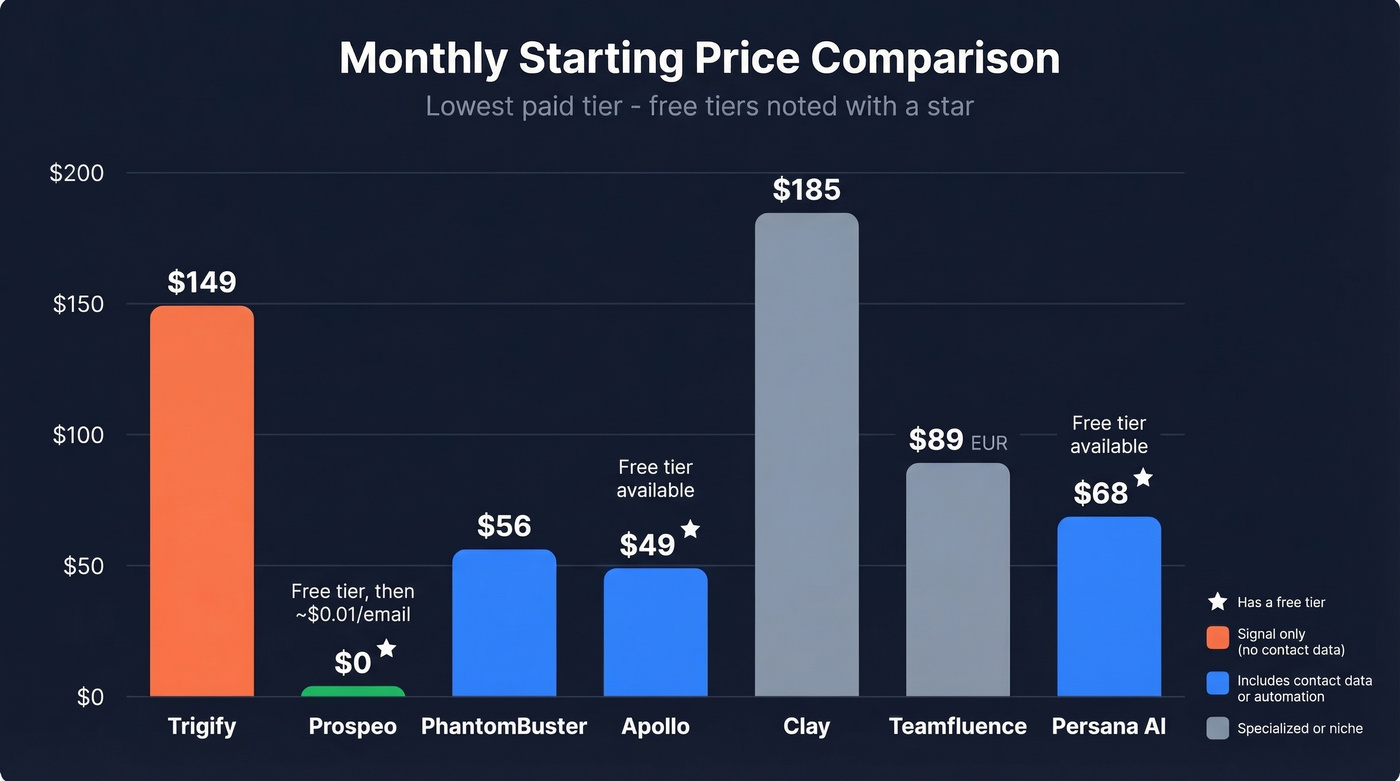
The problem is everything after the signal. Trigify doesn't enrich contacts with verified emails or phone numbers, and it doesn't have outreach built in. You're paying starting at $149/mo for signals only, then you need a separate tool to act on them. Growth runs $270/mo, Scale hits $549/mo, and Pay As You Go costs $0.012/credit.
There's also a compliance question worth flagging. Trigify-style social monitoring can involve third-party automation and data extraction from professional networks, and those platforms explicitly prohibit third-party scraping or automated activity. We haven't seen enforcement action against Trigify specifically, but it's a risk worth understanding before you build workflows around it.
Use Trigify if you already have a strong lead enrichment and outreach stack and just need the signal layer.
Skip Trigify if you're a lean team that needs signals and contact data and sequences in fewer tools.

Trigify leaves you with a name and no way to reach them. Prospeo closes that gap - 143M+ verified emails at 98% accuracy, 125M+ verified mobiles, and 15,000 Bombora intent topics built in. One platform replaces your signal tool, enrichment tool, and data provider.
Stop paying for signals you can't act on.
Best Alternatives to Trigify in 2026
Prospeo - Best for Verified Contact Data
Trigify tells you who's interested. Prospeo gives you the verified emails and direct dials to actually reach them - 300M+ professional profiles, 143M+ verified emails, 98% accuracy, and 125M+ verified mobile numbers, all refreshed on a 7-day cycle versus the 6-week industry average.
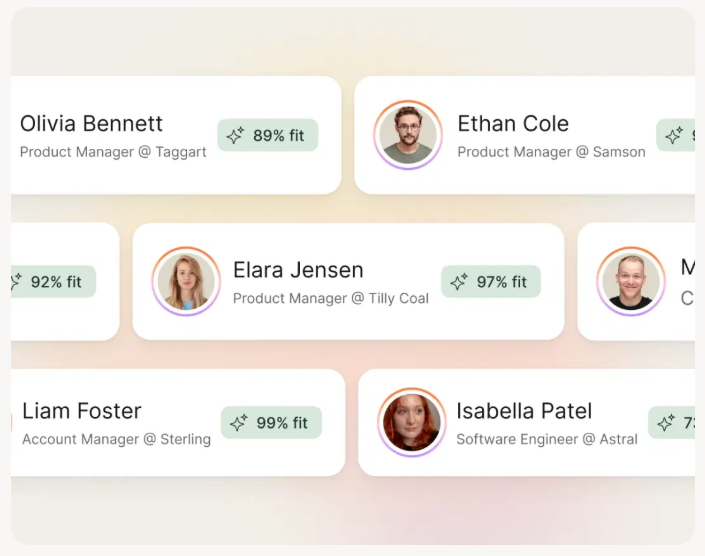
The intent data layer covers 15,000 Bombora topics, which means you can identify in-market buyers without needing a separate signal tool at all. Pair that with 30+ search filters - buyer intent, technographics, job changes, headcount growth - and you've got a prospecting engine that replaces three tools with one. In our testing, the data freshness alone (weekly refresh vs. the typical month-plus lag at competitors) made a noticeable difference in bounce rates and reply rates across campaigns.
Best for: Teams whose real bottleneck is contact data quality, not signal detection.
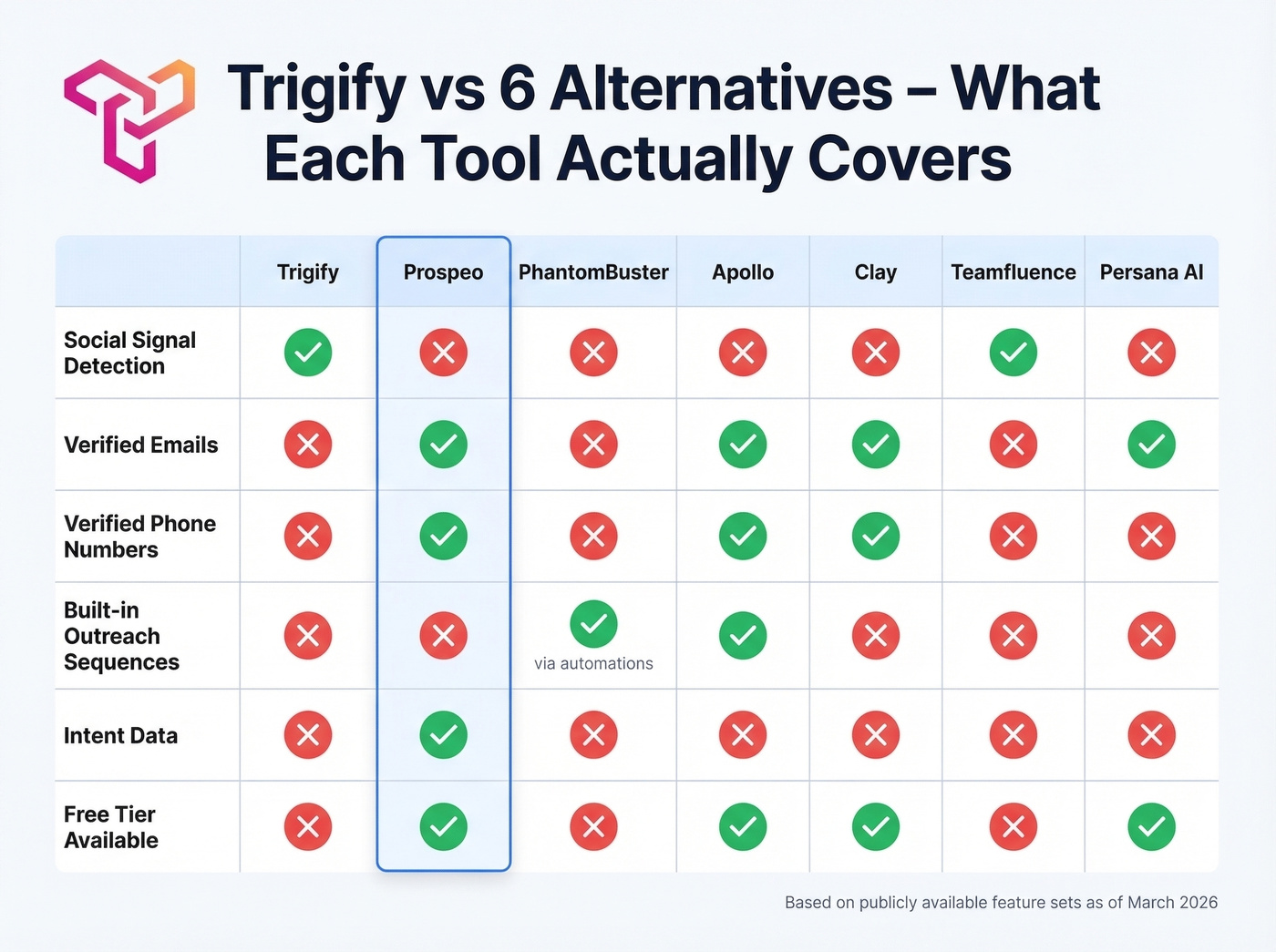
Pricing: Free tier (75 emails + 100 Chrome extension credits/mo). Credit-based at ~$0.01/email. No contracts.
PhantomBuster - Best for Workflow Automation
PhantomBuster automates the manual steps Trigify leaves you with - scraping, enriching, sequencing - in one workflow builder. It's not a contact database. It's the glue layer.
Pricing is per workspace, not per user. You can link up to 100 accounts per workspace, which makes it dramatically cheaper for teams than per-seat tools. The Start plan runs $69/mo ($56/mo annual), Grow is $159/mo, Scale is $439/mo. All plans include a 14-day free trial.
With 100+ pre-built automations and native integrations into HubSpot, Salesforce, Clay, Zapier, and Make, PhantomBuster bridges the gap between signal detection and outreach. Where Trigify stops at "this person engaged," PhantomBuster can scrape, enrich, and push to your sequencer automatically. For teams already running multi-tool stacks, it's the connective tissue that makes everything work without manual CSV exports.
Best for: RevOps teams and agencies who need to chain multiple tools into a single automated workflow.
Apollo - Best All-in-One Platform
Apollo is the obvious starting point for SMB outbound. Database, sequences, dialer - one login, one bill.
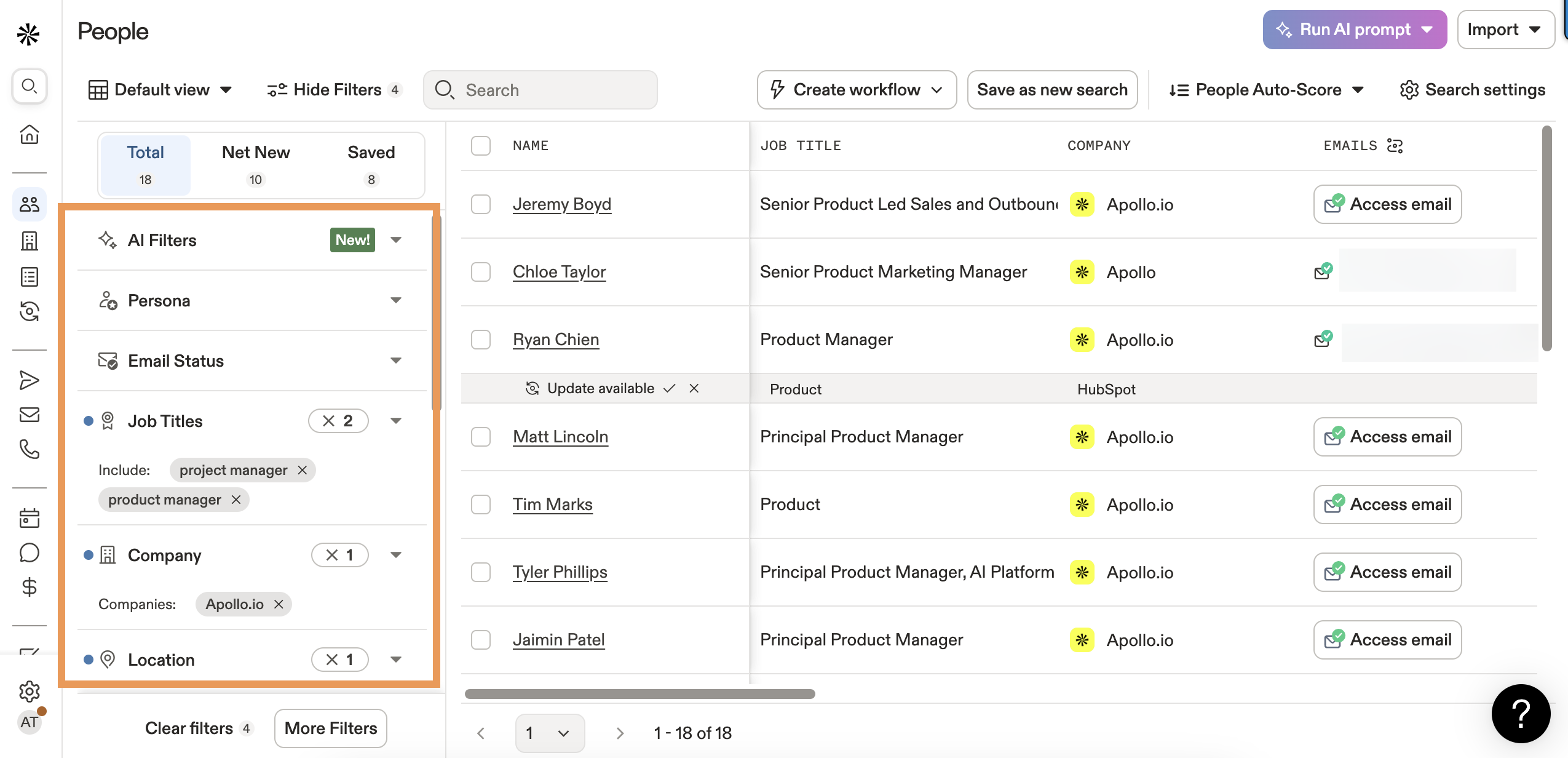
The tradeoff is a hybrid pricing model: per-user fees plus credits. The free tier includes 50 AI credits and 2 sequences. Basic starts at $49/user/mo with 1,000 email credits and 75 mobile credits. Professional is $79/user/mo, Organization is $119/user/mo with a 3-seat minimum. Credits don't roll over, which catches teams off guard - the consensus on r/sales is that you need to watch your credit burn rate closely or you'll blow through your allocation mid-month.
Best for: SMB teams that want prospecting, enrichment, and outreach in a single platform and don't mind managing credit budgets.
Clay - Best for Custom Data Workflows
Clay is the power tool for RevOps teams who want to build custom enrichment waterfalls. It's not for everyone.
After a major pricing restructuring in March 2026, the entry point is Launch at $185/mo and Growth at $495/mo. The upside: marketplace data costs dropped 50-90%, and you're no longer charged for failed lookups. There's a free tier with 100 data credits for testing.
Here's the thing - Clay is built for teams with a dedicated ops person. If you're a 3-person SDR squad, the complexity will eat you alive. We've seen teams spend more time building Clay tables than actually selling. But for a mature RevOps function that wants granular control over data sourcing and waterfall logic, nothing else comes close.
Teamfluence - Best for Team Signal Intelligence
Teamfluence takes a different angle: it surfaces signals from your team's professional network accounts rather than public social listening. At EUR89/seat/month, it's niche but effective - uploading target accounts yields a 4.7x ICP match rate versus organic signals.
Skip this one if your team's network is small or your reps are new to the industry. It works best when your people already have deep, relevant connections.
Persana AI - Budget AI Prospecting
Persana AI offers a free plan with unlimited users, making it the lowest-barrier entry point on this list. Paid plans start at $68/mo (Starter), $151/mo (Growth), and $400/mo (Pro). The AI-driven lead scoring is interesting but still maturing - worth experimenting with if budget is tight, but don't expect the data accuracy of more established platforms.
Pricing Comparison
| Tool | Starting Price | Model | Free Tier? | Best For |
|---|---|---|---|---|
| Trigify | $149/mo | Credit-based | 7-day trial | Signal detection |
| Prospeo | ~$0.01/email | Credit-based | Yes | Verified contact data |
| PhantomBuster | $56/mo (annual) | Per-workspace | 14-day trial | Workflow automation |
| Apollo | $49/user/mo | Per-user + credits | Yes | All-in-one platform |
| Clay | $185/mo | Credit-based | Yes (100 credits) | Custom enrichment |
| Teamfluence | EUR89/seat/mo | Per-seat | No | Team signal intel |
| Persana AI | $68/mo | Tiered | Yes | Budget AI prospecting |
How to Choose the Right Tool
Let's be honest: you don't need a Trigify replacement at all if your real problem is the data layer underneath. If your average deal size is under $15k and your team is under 10 reps, you probably don't need a dedicated social signal tool. You need accurate contact data and a way to sequence against it.
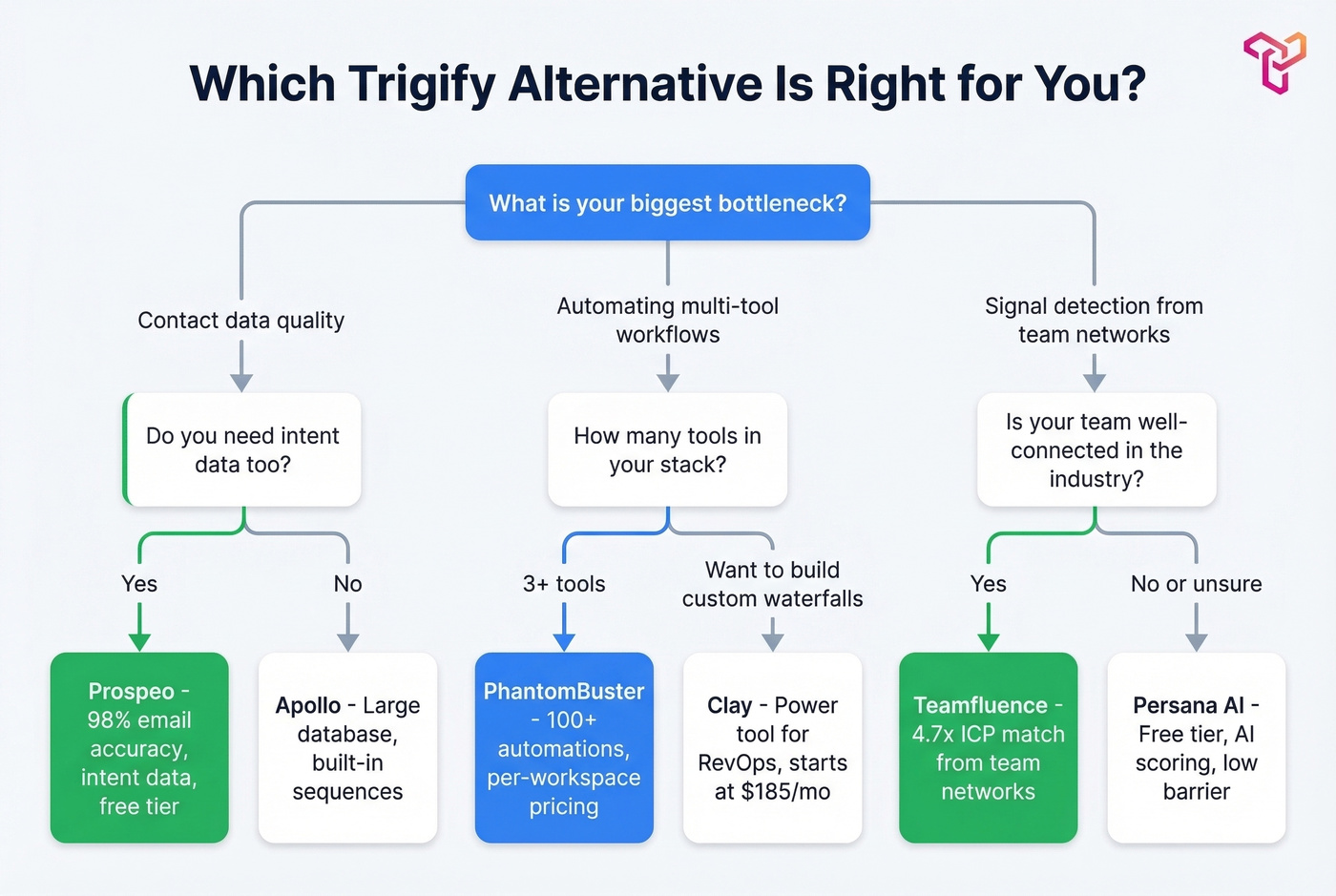
When contact data accuracy is the bottleneck, start with a verified data platform - 98% email accuracy and a 7-day refresh cycle will do more for your pipeline than any signal tool. For teams that need signal-to-outreach automation without manual CSV wrangling, PhantomBuster bridges that gap with pre-built workflows. Apollo is the pragmatic choice if you want everything in one tool and can tolerate the credit mechanics. And if you want to build custom enrichment waterfalls, Clay is powerful - but budget and staff accordingly.
One migration tip: export your Trigify signal lists as CSV before your subscription ends. Most data enrichment services accept CSV uploads, so you won't lose the prospect data you've already collected.
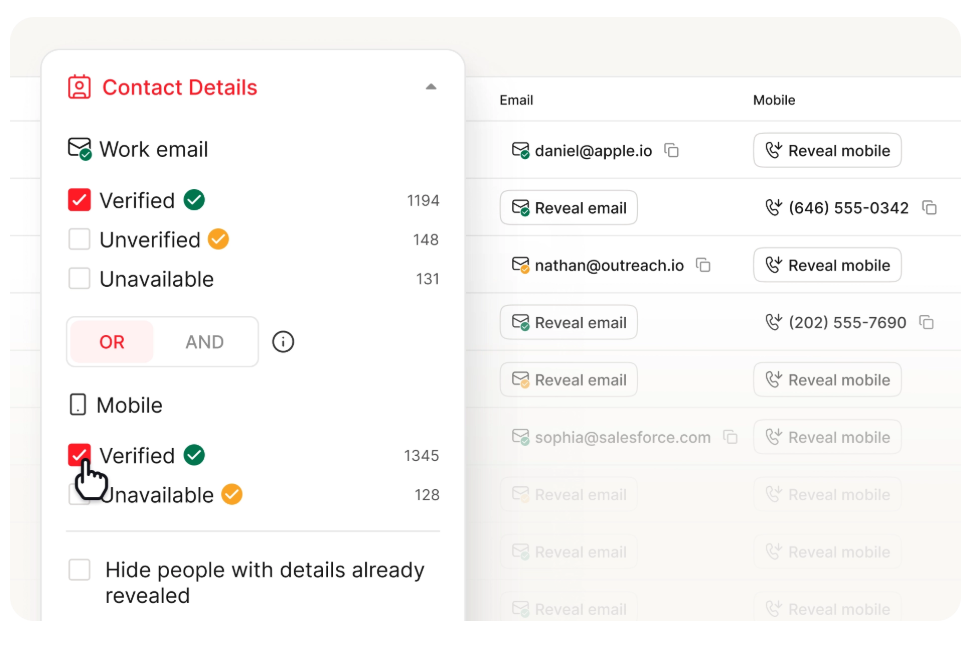
Most Trigify alternatives still make you stitch together signals, contact data, and outreach across multiple tools. Prospeo's 7-day data refresh, 30+ search filters, and ~$0.01/email pricing give you fresher, cheaper, more accurate data than stacking three separate subscriptions.
Replace your entire enrichment stack for a penny per email.
FAQ
Is Trigify worth $149/month?
Only if you already have enrichment and outreach tools underneath it. If you're paying $149/mo for signals but still manually hunting for emails, the ROI math breaks down fast. Apollo's free tier or Prospeo's 75 free emails/month will stretch that budget further while covering more of the workflow.
What's the cheapest alternative to Trigify?
Apollo and Persana AI both offer free tiers with no time limit. PhantomBuster starts at $56/mo on an annual plan. For pure verified contact data, Prospeo's free tier (75 emails + 100 Chrome extension credits/month) is the lowest-risk starting point - no credit card required.
Can I use Trigify with a data enrichment tool?
Yes - Trigify identifies engagement signals, and you can pipe those names into Clay, or Apollo for email and phone enrichment. The gap is that Trigify doesn't do this natively, so you'll need a manual CSV export or a Zapier workflow to connect the two. It works, but expect some manual glue.