

7 Types of Spam Traps (Not Just the 3 Everyone Covers)
A cold email sender on r/coldemail watched deliverability plummet overnight after a spam trap hit. Their "basic, cheap email verifier" caught hard bounces but missed everything else. Spamhaus - one of the world's most influential anti-spam organizations - has a blunt take: fix the problem, not the symptom.
Most guides cover three types of spam traps. Spamhaus identifies at least seven. The differences between them determine whether you get a warning or a full blocklist.
Pristine traps, recycled traps, and typo traps are just the beginning. Seeded traps, live traps, dead domain traps, and domain registration traps each carry different severity levels and different implications for sender reputation. The fix isn't hunting for trap addresses - they're secret by design. It's fixing how data enters your list in the first place.
What Is a Spam Trap?
A spam trap is an email address used by blocklist operators and mailbox providers to identify senders with poor list hygiene or questionable acquisition practices. They're diagnostic tools, signals that something in your data pipeline is broken. Not punishments handed out at random.
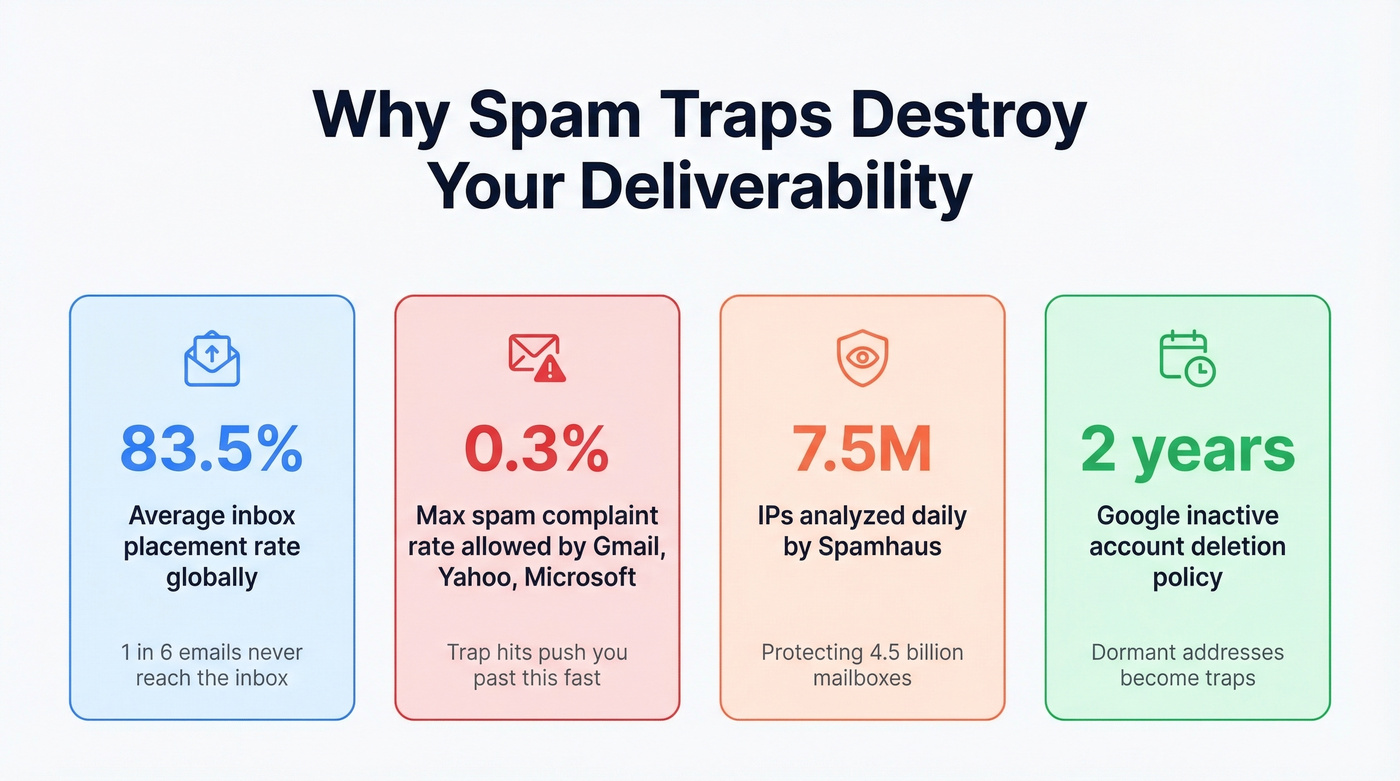
Spamhaus analyzes 7.5 million IPs daily and protects 4.5 billion mailboxes worldwide. When they flag your sending IP, consequences hit fast.
Why Spam Traps Wreck Deliverability
The global average inbox placement rate sits at 83.5% - roughly 1 in 6 legitimate marketing emails never reaches the inbox. Spam traps accelerate that problem dramatically.

We've seen teams lose months of domain warming from a single bad list import. Hit a trap and you're looking at blocklisting, spam-folder placement across major providers, and reputation damage that takes weeks to recover. Gmail, Yahoo, and Microsoft all enforce a spam complaint rate threshold below 0.3% for bulk senders, and trap hits push you past that line fast.

Most spam trap hits trace back to one root cause: bad source data. Prospeo's 5-step verification catches catch-all domains, strips honeypots, and removes trap patterns before emails ever reach your list. A 7-day data refresh cycle means stale addresses never linger long enough to become recycled traps.
Stop fixing deliverability damage. Prevent it with 98% accurate data.
The 7 Spam Trap Types Explained
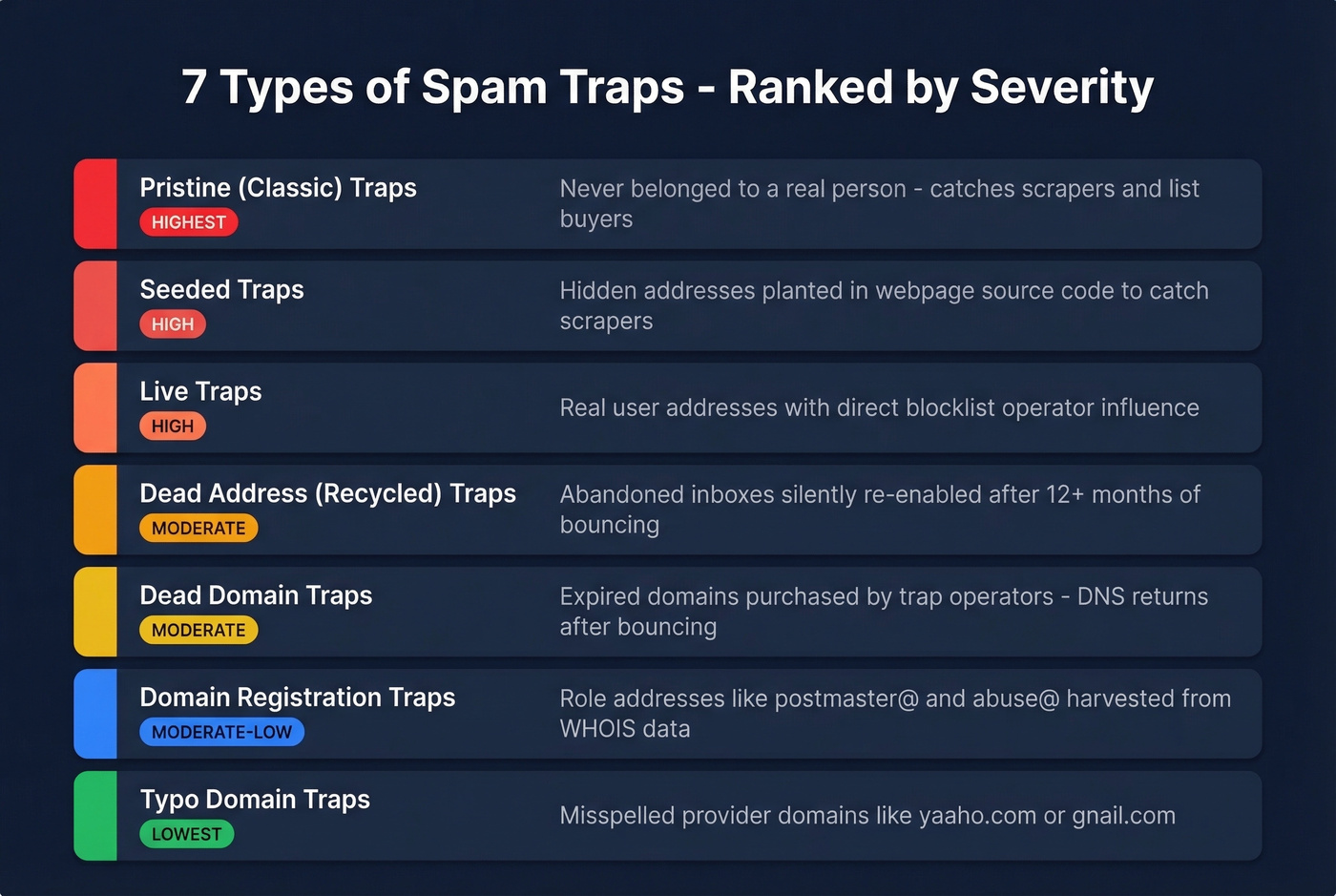
Most articles stop at three. Spamhaus' own taxonomy goes deeper. Here are the seven categories they highlight, with practical severity guidance for each.
Pristine (Classic) Traps
Severity: highest. These addresses never belonged to a real person. They exist solely to catch senders who buy or scrape lists. Some sit on wildcard domains that accept mail to any local part - meaning anything@example.com is a trap. Pristine traps are the most damaging variety because if one shows up in your list, it's a strong indicator you scraped, bought, or inherited bad data, often via a vendor who didn't vet their sources.
Seeded Traps
Severity: high. Imagine a hidden email address buried in a webpage's source code, invisible to anyone actually reading the page. That's a seeded trap. Blocklist operators scatter them in non-obvious places specifically to catch scrapers and list buyers. If your data provider hoovers up addresses indiscriminately, seeded traps will find their way into your pipeline.
Live Traps
Severity: high. Spamhaus calls these "extremely dangerous," and they aren't exaggerating. These are real user addresses used to make blocking decisions. The person behind the address has direct influence with blocklist operators. You won't know you've hit one until the damage is done - and by then, your IP is already flagged.
Dead Address (Recycled) Traps
Severity: moderate. Once-valid addresses that hard-bounced for 12+ months, then were silently re-enabled as monitoring addresses. The inactive period can range from 6 months to several years. Recycled traps are particularly common because any abandoned inbox can eventually become one.
If you're mailing someone who hasn't engaged in a year, you're rolling the dice. Google has enforced a 2-year inactive account deletion policy since late 2023, which means dormant addresses disappear, start bouncing, and can later reappear as traps. If you aren't processing bounces and suppressing inactive contacts, your risk climbs fast.
Dead Domain Traps
Severity: moderate. Expired domains purchased by trap operators. These domains often fail DNS checks for a period (your emails bounce), then silently return to accepting mail. If you didn't process those bounces and remove the addresses, you're now sending directly into a trap.
In our experience, this catches teams who import old lists without re-verifying. The domain "works" again, so they assume the address is fine. It isn't.
Domain Registration Traps
Think postmaster@, abuse@, admin@ - addresses harvested from WHOIS data. Severity: moderate-low. These should almost never appear on a marketing or outbound list. If they're in your database, your data acquisition process has a gap that needs closing.
Typo Domain Traps
Severity: lowest. Domains mimicking common providers - yaaho.com, homail.com, gnail.com. These aren't "pure" traps; they contain a mix of real mail and monitoring addresses, and they're weighted accordingly. A high volume of typo-domain sends still signals you're not validating input at the point of collection, which erodes trust with mailbox providers over time.
Can Verification Tools Actually Detect Traps?
If trap addresses are secret by design, how can any vendor claim to detect them? Practitioners on r/sysadmin raise this exact question. It's a fair one.
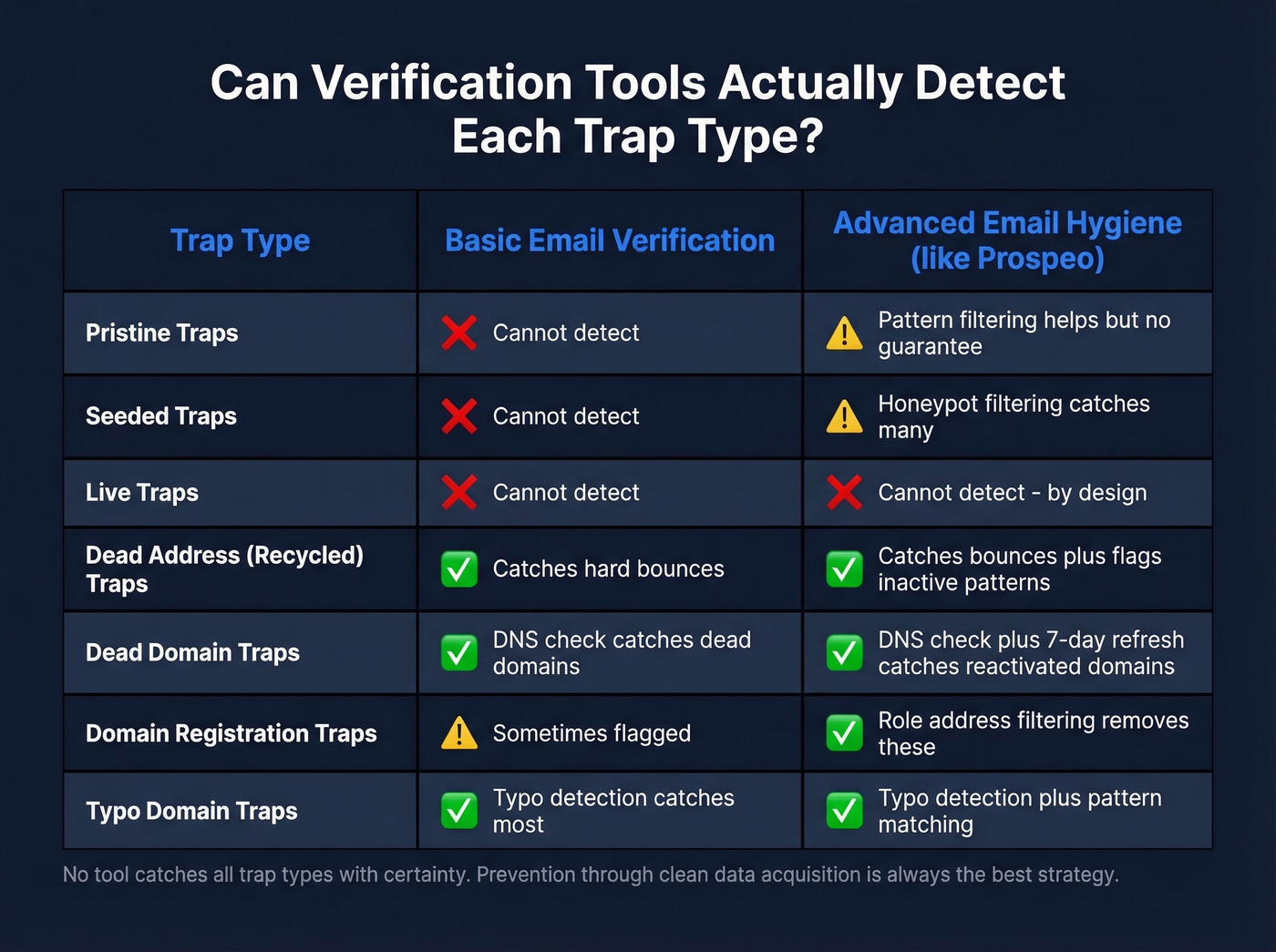
Basic email verification catches typos and dead addresses - it'll flag yaaho.com and hard bounces. Email hygiene goes further, filtering trap-like patterns and honeypots. But no tool catches pristine traps with certainty. Anyone who tells you otherwise is overselling.
Here's the thing: most deliverability problems aren't caused by exotic trap categories. They're caused by bad source data entering your pipeline in the first place. Prevention beats remediation every time. Prospeo's 5-step verification - with catch-all handling, trap pattern detection, and honeypot filtering - stops traps before they reach your list, backed by a 7-day data refresh cycle that keeps stale data from lingering long enough to become a recycled trap risk.
How to Avoid Spam Traps
Use confirmed opt-in for inbound lists. This is a top recommendation from Spamhaus and aligns with M3AAWG best practices. A confirmation click before subscription dramatically reduces the risk of pristine and recycled traps.
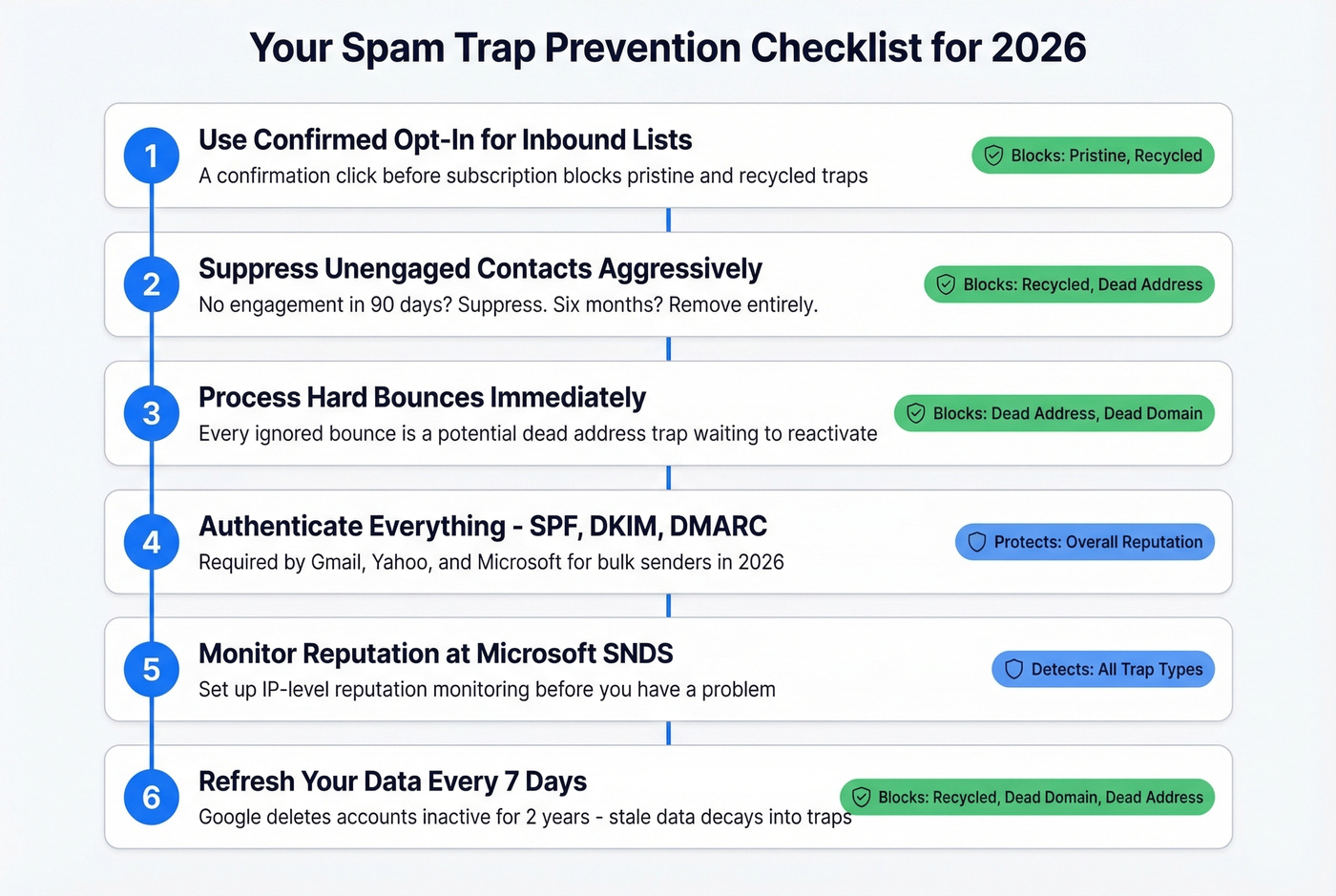
Suppress unengaged contacts aggressively. No engagement in 90 days? Suppress. Six months? Remove entirely. Don't get sentimental about list size.
Process hard bounces immediately. Every ignored bounce is a potential dead address trap waiting to reactivate. Let's be honest - most teams know this and still don't automate it.
Authenticate everything. SPF, DKIM, and DMARC aren't optional. Gmail, Yahoo, and Microsoft require them for bulk senders in 2026. (If you need a quick check, start with DMARC and your SPF setup.)
Monitor your reputation at Outlook. Microsoft SNDS gives you IP-level reputation data for Outlook.com. Set it up before you have a problem, not after.
Account for provider inactivity timelines. Google deletes accounts inactive for 2 years. If you're mailing addresses that haven't engaged since 2024, those addresses are either deleted or bouncing - and some will eventually become traps.
Dead address traps and dead domain traps exploit one thing: outdated data sitting in your pipeline. While the industry refreshes every 6 weeks, Prospeo refreshes every 7 days - eliminating the window where valid contacts decay into trap addresses. At $0.01 per verified email, clean data costs less than one blocklist recovery.
Your list decays every week. Prospeo's data refresh cycle outpaces it.
FAQ
How do I know if I've hit a spam trap?
You can't identify the specific address. Watch for sudden inbox placement drops, blocklist appearances on Spamhaus or Microsoft SNDS, and rising bounce rates with no change in sending volume. A drop from 95%+ to below 80% inbox placement within days is a strong signal.
Can I remove spam traps from my list?
You can remove likely traps - typo domains, long-inactive addresses - through hygiene tools. But pristine and seeded traps are undetectable by design. Fix your acquisition practices instead of chasing individual addresses.
What's the fastest way to build a trap-free prospect list?
Source data from a platform with built-in verification that filters traps before delivery. For inbound, confirmed opt-in is non-negotiable. Skip any vendor that can't explain their verification process in detail - if they're vague about how they handle catch-all domains or honeypots, that's a red flag.
Which types of spam traps cause the most damage?
Pristine and seeded traps carry the highest severity - a single hit can trigger an immediate Spamhaus blocklisting. Recycled and dead domain traps are moderate. Typo domain traps carry the lowest weight but still signal poor list hygiene to mailbox providers.