

Website Visitor Tracking for Leads: 10 Tools That Actually Convert Anonymous Traffic
Your campaign drove 5,000 visitors to your pricing page last month. Your CRM shows 12 form fills. The other 4,988? Gone - 97% of B2B website visitors leave without identifying themselves. Google Analytics tells you someone from "Dallas, TX" spent 3 minutes on your pricing page, but not which company, which person, or whether they're worth a follow-up.
This isn't a niche problem. The visitor identification market hit $3.55B in 2024 and is projected to reach $9.99B by 2032 at a 12.4% CAGR. Website visitor tracking for leads isn't about installing a pixel and watching dashboards - it's about building a workflow that goes from anonymous hit to booked meeting. We've tested and compared these tools extensively, and the enrichment step that bridges identification to actual outreach is the piece most guides skip entirely.
Our Picks
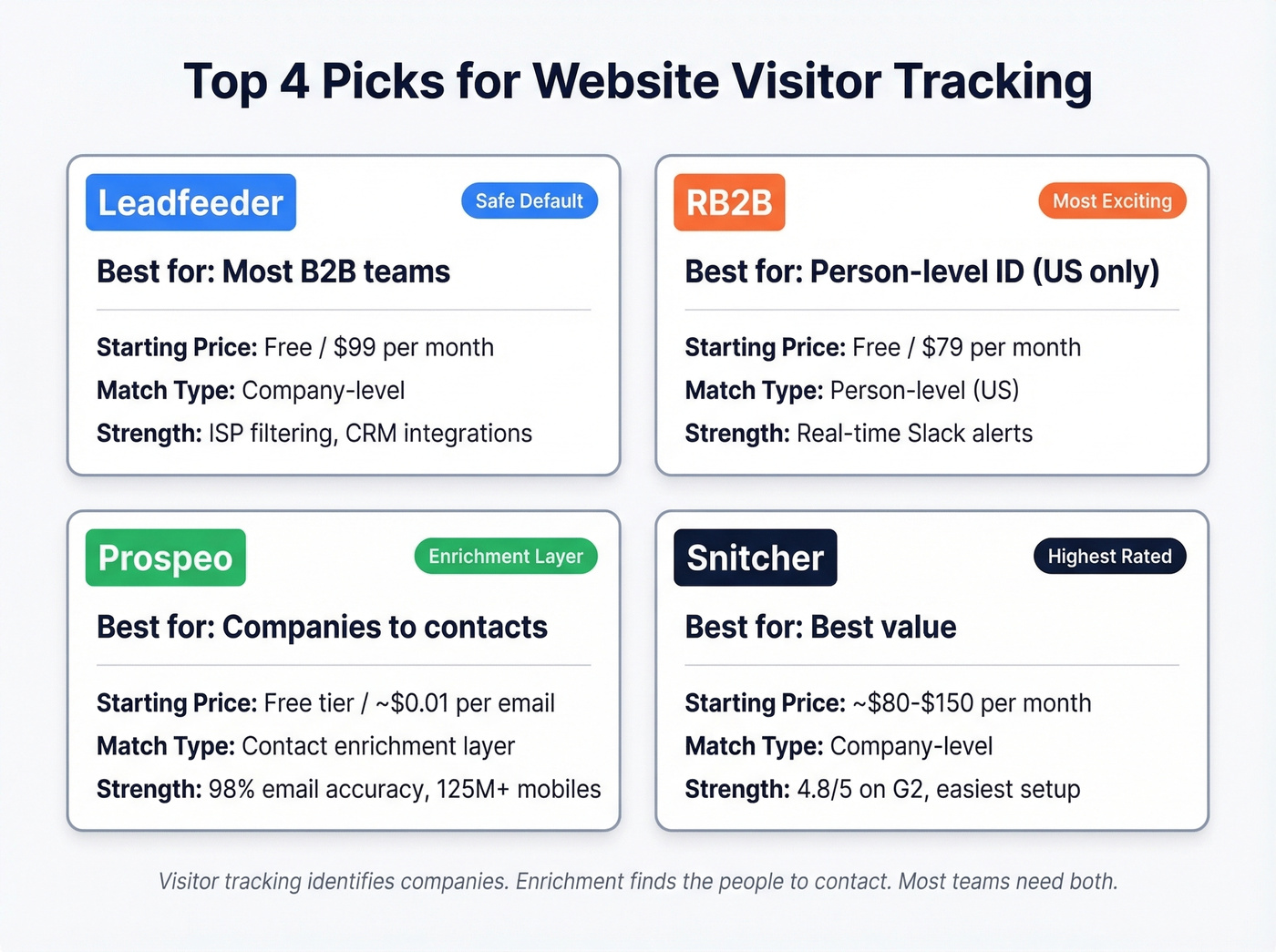
| Tool | Best For | Starting Price | Key Strength |
|---|---|---|---|
| Leadfeeder | Most B2B teams | $0 (free) / $99/mo paid | ISP filtering, CRM integrations |
| RB2B | Person-level ID (US) | $0 (free) / $79/mo | Person-level ID, Slack alerts |
| Prospeo | Companies to contacts | Free tier / ~$0.01/email | 98% email accuracy, 125M+ mobiles |
| Snitcher | Best value | ~$80-$150/mo | 4.8/5 on G2, easiest setup |
How B2B Visitor Tracking Differs From Analytics
Visitor tracking and web analytics solve different problems. Here's the distinction that matters:
| Capability | Visitor Tracking | Web Analytics (GA4) |
|---|---|---|
| Identifies companies | Yes | No |
| Identifies individuals | Some tools (US only) | No |
| Syncs to CRM | Yes | No |
| Tracks page behavior | Yes | Yes |
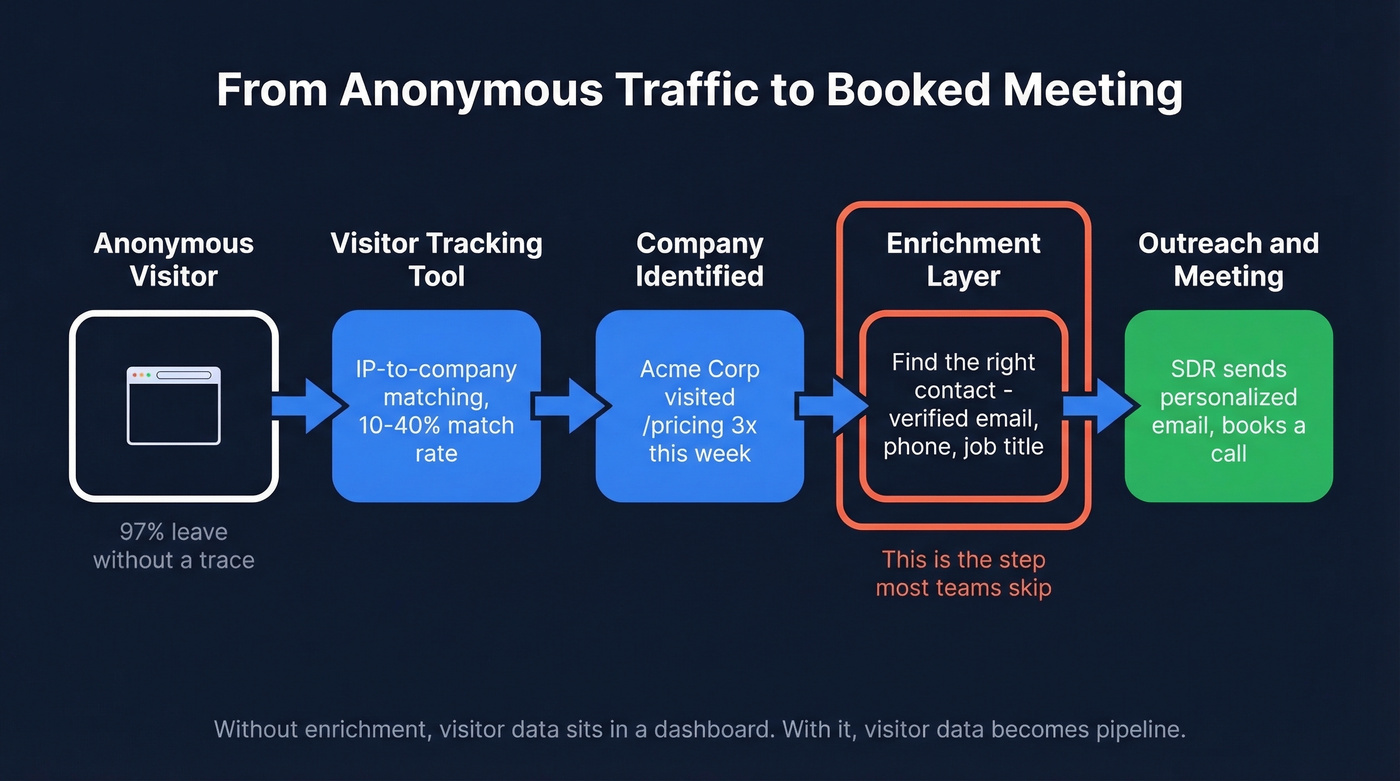
Most visitor tracking tools match IP addresses to company databases. That's company-level identification, and realistic match rates run 10-40% of your traffic on standard plans. Some vendors claim 60-80%, but those numbers typically reflect premium tiers or ideal traffic conditions - not what you'll see on day one.
Person-level identification is newer and more limited. Tools like RB2B use identity graphs and email pixel matching to resolve individual visitors, but it's largely a US-only capability, and typical coverage sits at 10-20% of traffic on standard plans. If you get fewer than 1,000 monthly visitors, most tools will disappoint you regardless of the approach. Start with a free tier and test before committing budget.
The most common question on B2B marketing forums isn't "which tool?" - it's "does tracking anonymous visitors actually generate pipeline?" That depends entirely on your traffic volume and what you do after identification.
The 10 Best Tools for Turning Visitors Into Leads
Leadfeeder (Dealfront) - Best for Most B2B Teams
Leadfeeder is the safe default. Not the cheapest, not the flashiest, but the most predictable tool in this category. It filters out ISPs and low-quality traffic automatically, which matters more than you'd think - nothing wastes an SDR's time like chasing a "visitor" that was actually a Verizon cell tower.
Pricing is refreshingly transparent. The free plan gives you 100 identified companies with 7 days of data. Paid starts at $99/mo (billed annually) for up to 50 companies/month and scales by volume: $143/mo for up to 200, $299/mo for up to 700, up to $1,199/mo for 40,000. It's priced per website, not per user - unlimited seats on every plan. Integrations cover Salesforce, HubSpot, and Pipedrive out of the box, and one customer reported a 34% increase in qualified leads after implementation.
Use this if you want a proven, low-risk starting point with clear pricing. Skip this if you need person-level identification or you're on a tight budget with low traffic.

RB2B - Person-Level Identification
RB2B is the most exciting tool in this category - if your traffic is US-heavy. While every other tool on this list tells you "Acme Corp visited your pricing page," RB2B tells you which person at Acme Corp visited and pushes their professional profile URL to Slack in real time.
Pricing starts free with 150 monthly resolutions (company-level only). Starter at $79/mo gets you 300 resolutions with person-level identification and Slack push, but no email addresses and no integrations beyond Slack. You'll need Pro from $149/mo for business email addresses and broader integrations, or Pro+ from $199/mo for Premium Resolution with 35-45% coverage versus 15-20% on the lower tiers. Overage runs $0.25-$0.45 per resolution depending on plan.
The catch is straightforward: person-level identification is US-only. If your traffic is heavily European or APAC, you'll get company-level data at best. And the 15-20% coverage on standard plans means you need meaningful traffic volume to justify the spend.
Use this if you sell to US companies and want individual-level visitor data pushed to Slack in real time. Skip this if your traffic is primarily international or below 1,000 monthly visits.

Prospeo - Turn Companies Into Contacts
Here's the gap every visitor tracking tool leaves open: you identified 300 companies last month, and your SDR team said "great, but who do we actually email?"
Tracking tools tell you which companies are on your site. Prospeo tells you who to contact at those companies - with 98% email accuracy and a database of 125M+ verified mobile numbers. It's not a visitor tracking tool itself. It's the enrichment layer that makes identification data actionable. Feed it a list of identified companies, and it returns verified contacts with 50+ data points per record at a 92% API match rate. Search by 30+ filters including buyer intent, technographics, job changes, headcount growth, and funding to find exactly the right person at each company. Native integrations with Salesforce, HubSpot, Instantly, Lemlist, Smartlead, Clay, and Zapier mean contacts flow directly into your outbound stack.
The free tier includes 75 emails and 100 Chrome extension credits per month. Paid plans run ~$0.01/email with no contracts, and data refreshes every 7 days versus the 6-week industry average.
Use this if you've got a visitor tracking tool identifying companies but no way to find the actual contacts to email. Skip this if you need the visitor tracking itself - pair Prospeo with one of the other tools on this list.

Snitcher - Best Value and Highest Rated
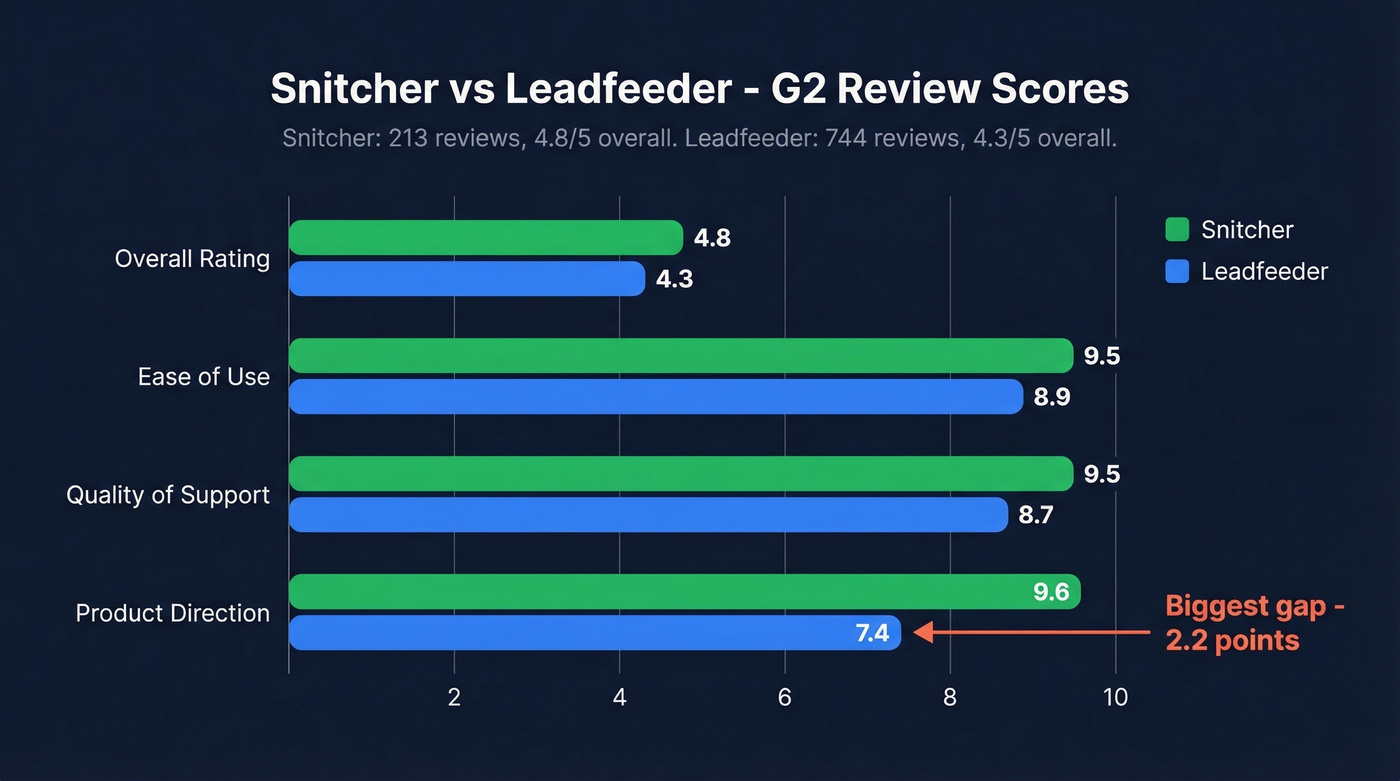
Snitcher is the most underrated tool in this category. On G2, it scores 4.8/5 across 213 reviews - beating Leadfeeder (4.3/5, 744 reviews) on every single dimension: ease of use (9.5 vs 8.9), quality of support (9.5 vs 8.7), and product direction (9.6 vs 7.4). That last number is telling.
Pricing typically starts in the ~$80-$150/mo range, with higher tiers on custom pricing. If Leadfeeder feels expensive for what you're getting, Snitcher deserves a trial first. Setup is dead simple, and the company-level identification is solid for European and North American traffic alike.
Lead Forensics - Enterprise Legacy Option
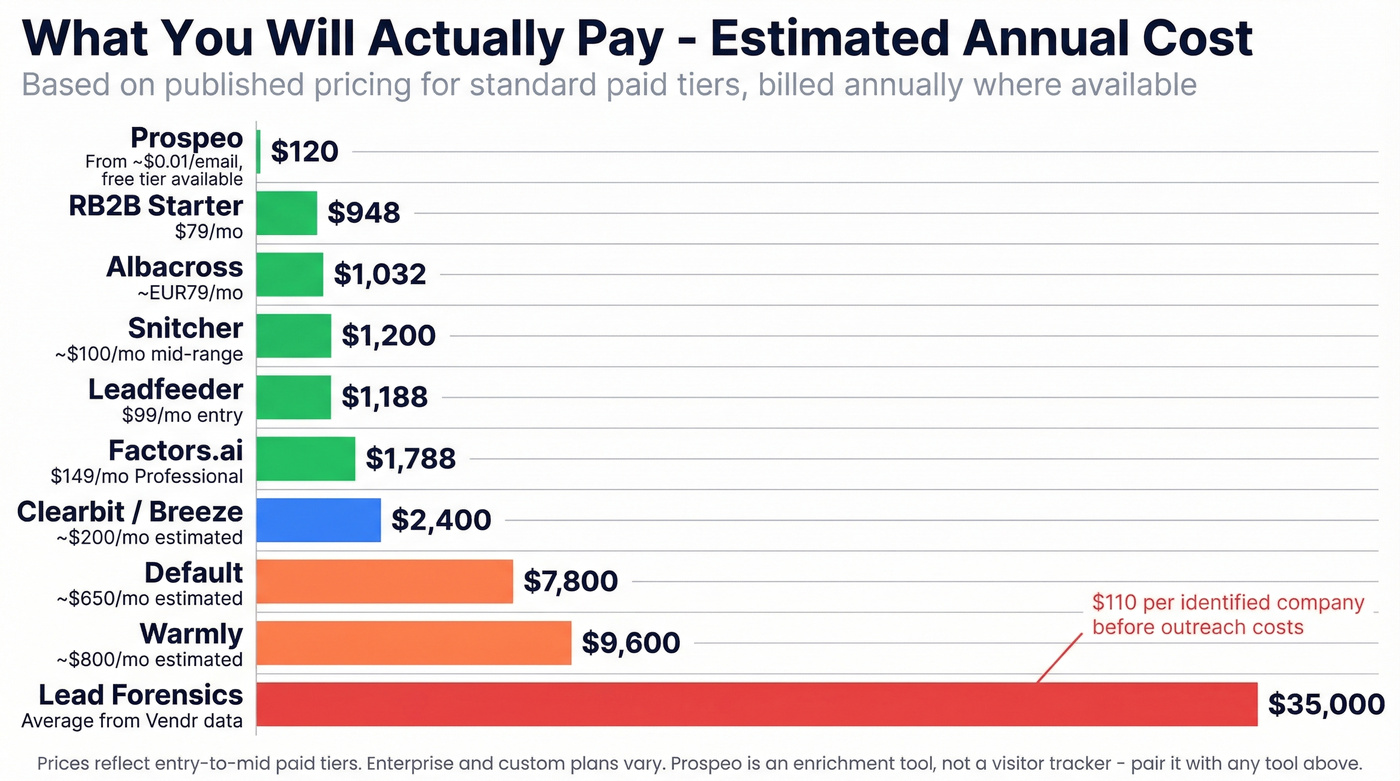
Look, Lead Forensics is the tool your VP of Marketing bought in 2019 and nobody's questioned the renewal since. Two tiers typically show up: Essential ($6K-$25K/year) and Automate ($25K-$95K/year). Contract data from Vendr transaction records shows an average around $35,000/year. Annual contracts only - no monthly billing. Contact data is commonly sold as an add-on at $260-$600/mo, and setup and training often run $1,000-$3,000. Budget for 10-20% renewal increases too.
The math gets ugly fast. At $22,000+/year identifying maybe 200 companies a month, you're paying $110 per identified company - before you've even contacted anyone. Reviews are polarizing: G2 gives it 4.3/5, but TrustRadius scores it 2.6/10 and Capterra 3.4/5. Skip this unless you're enterprise-scale with traffic to match.
Clearbit / Breeze Intelligence - For HubSpot Teams
If your entire stack runs on HubSpot, Clearbit (now Breeze Intelligence) is the native play. Real-time enrichment happens inside HubSpot without a separate dashboard. Pricing is credit-based and typically starts around $50/mo, scaling into the hundreds depending on how many credits you need. The limitation is obvious: it's not standalone. If you ever migrate off HubSpot, this investment walks out the door with it. For committed HubSpot shops, though, the integration depth is unmatched.
Factors.ai - Analytics-First Teams
Factors.ai blends visitor identification with marketing attribution and journey analytics. It advertises up to 64% company identification - an aggressive number that likely reflects optimal conditions, but even at half that rate, the analytics layer adds genuine value. Plans run $99/mo (Starter), $149/mo (Professional), and $499/mo (Growth), with Enterprise on custom quotes. Good for teams that want identification and attribution in one tool rather than stitching together separate platforms.
Warmly - AI-Powered Engagement
Warmly combines visitor identification with AI-driven chat and automated outreach sequences. Estimated pricing runs $700-$1,000+/mo. Best for mid-market teams wanting an all-in-one engagement layer on their site. Expensive if you only need identification.
Albacross - European Alternative
Starting at ~EUR79/mo (~$86) with Growth plans on custom pricing, Albacross is strong in European markets with solid company-level identification and intent scoring. Good Salesforce and HubSpot integrations. Consider it if your traffic skews EU-heavy and GDPR compliance is a top priority.
Default - Meeting-Centric Workflow
Default combines visitor identification with inbound scheduling and lead routing. Pricing isn't published, but expect something in the $500-$800/mo range. Best for teams optimizing form-to-meeting conversion rather than outbound prospecting. I haven't tested Default deeply enough to recommend it confidently, but it's on my radar for inbound-heavy teams.
A note on what's not here: Tools like Demandbase, ZoomInfo, and Cognism also offer visitor identification features, but they're bundled into much larger and more expensive platforms. If you're already paying for one of those, check whether visitor ID is included before buying a standalone tool.

Your visitor tracking tool identified 300 companies last month. Prospeo turns that list into verified contacts - 98% email accuracy, 125M+ mobile numbers, 50+ data points per record. At $0.01/email with a 7-day data refresh, your SDRs stop guessing and start booking.
Stop identifying companies. Start reaching the people inside them.
Pricing Comparison
Here's what these tools actually cost - including the estimated cost per identified company that reveals the real value equation.
| Tool | Starting Price | Free Tier? | Billing | Contract? | Est. Cost/Company |
|---|---|---|---|---|---|
| Leadfeeder | $99/mo | Yes (100 cos) | Annual | No | ~$2.00 |
| RB2B | $79/mo | Yes (150 res) | Monthly | No | ~$0.26 |
| Snitcher | ~$80-$150/mo | No | Monthly | No | ~$0.50-$1.50 |
| Lead Forensics | ~$6,000/yr | No | Annual only | Yes | ~$14.58 |
| Clearbit/Breeze | ~$50/mo | No | Monthly | No | ~$0.009/credit |
| Factors.ai | $99/mo | No | Monthly | No | ~$1.00-$2.00 |
| Warmly | ~$700/mo | No | Custom | Likely | ~$3.50-$7.00 |
| Albacross | ~EUR79/mo | No | Monthly | No | ~$0.50-$1.50 |
| Default | ~$500-$800/mo | No | Custom | Likely | ~$3.00-$5.00 |
Estimates based on typical traffic volumes and published identification rates. Your actual cost/company depends on traffic volume and match rate.
If your average contract value is under $5,000, Lead Forensics' $14.58 per identified company makes zero economic sense. You'd need a 3%+ close rate on identified visitors just to break even. Most teams are better off pairing Leadfeeder or Snitcher with an enrichment tool and spending the savings on better content that drives more traffic in the first place.
Why Lead Generation Stalls After Identification
Here's the problem we see constantly - and that every other article ignores. You installed Leadfeeder, identified 300 companies last month, and your SDR team said "great, but who do we actually email?" Company-level identification is step one. Without step two - enrichment - you've got a list of logos, not a pipeline.
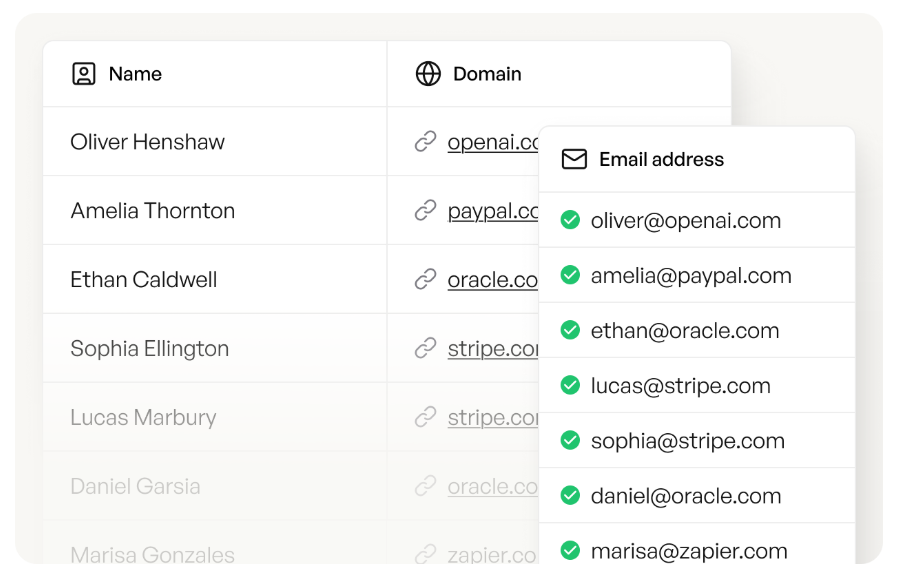
The workflow that actually converts looks like this:
- Identify - Leadfeeder, RB2B, or Snitcher flags that Acme Corp visited your pricing page three times this week.
- Enrich - Take "Acme Corp" and run it through an enrichment platform to get the VP of Sales' verified email, direct dial, and 50+ data points.
- Outreach - Push those contacts directly into Instantly, Lemlist, or Smartlead. The sequence fires within hours of the visit, not days.
Most teams stop at step one and wonder why their visitor tracking investment "doesn't work." We've seen teams identify hundreds of companies monthly and contact fewer than 20 because nobody bridged the gap. The ROI math changes completely when you close it.
Every tool on this list solves identification. None solve the enrichment gap. Feed Prospeo your identified companies and get back the exact decision-makers to contact - filtered by job title, buyer intent, technographics, and 30+ other criteria. 92% API match rate. No contracts.
Bridge the gap between anonymous traffic and booked meetings.
Compliance Essentials
You don't need a legal degree, but you do need to know three things.
GDPR applies to you if EU visitors hit your site - regardless of where your company is headquartered. It's extraterritorial. Fines reach EUR20M or 4% of global turnover, whichever is higher. Person-level identification raises more scrutiny than company-level. IP-to-company matching generally falls under legitimate interest, while resolving individual identities requires more careful consent handling.
CCPA/CPRA penalties are per-violation: $7,500 per intentional violation, $2,500 per unintentional. Those add up fast on a list of thousands.
Your compliance checklist: cookie consent banner, data processing agreement with every vendor, opt-out mechanism for identified visitors, and a documented retention policy. None of this is optional if you're selling into the EU.
How to Measure ROI on Visitor Tracking
Four metrics separate teams that get value from these tools and teams that cancel after three months.
Clean identification rate - exclude ISP traffic (Verizon, AT&T, Comcast). Your raw number will always look better than reality. Leadfeeder does this automatically; with other tools, filter manually.
ICP match rate - what percentage of identified companies actually fit your ideal customer profile? If you're identifying 500 companies but only 40 match your ICP, the tool isn't the problem. Your traffic is.
Enrichment-to-outreach conversion - how many identified companies become contacted prospects? This is where the enrichment gap shows up. If you're identifying hundreds of companies and contacting fewer than 20, the bottleneck is clear.
Pipeline influenced - track deals where visitor tracking data was the first or an assisting touch. Qualified traffic converts at roughly 12% versus 2% for unqualified, so the lift should be measurable within a quarter.
Let's be honest: if you're under 1,000 monthly visitors, start with a free tier and test before committing to paid. The math simply doesn't work at low volumes.
FAQ
How does website visitor tracking for leads differ from web analytics?
Visitor tracking identifies specific companies or individuals visiting your site and syncs that data to your CRM for sales follow-up. Web analytics tools like GA4 track anonymous behavior patterns - page views, bounce rates, session duration - without revealing who's behind the visit. Different tools, different jobs. You need both.
How many visitors do I need for tracking to be worth it?
At least 1,000 monthly visitors. Most tools identify 10-40% of traffic at the company level, so below 1,000 visits you're paying $99+/month to identify fewer than 400 companies - many of which won't match your ICP. Start with free tiers from Leadfeeder or RB2B to validate before spending.
Can visitor tracking tools identify individual people?
Only a few tools like RB2B offer person-level identification, limited to US traffic with 15-20% coverage on standard plans and 35-45% on premium. Most tools identify the company, not the individual. To find specific contacts at identified companies, pair your tracking tool with an enrichment platform that returns verified emails and direct dials.
Is B2B visitor tracking GDPR compliant?
Company-level identification via IP-to-company matching generally falls under legitimate interest under GDPR. Person-level identification requires more careful consent handling. Either way, you need a cookie consent banner, a data processing agreement with your vendor, and a documented opt-out mechanism.
What's a realistic match rate to expect?
Company-level tools typically identify 10-40% of your traffic on standard plans. Person-level tools cover 15-20% of US traffic on standard plans, rising to 35-45% on premium tiers. Vendor claims of 60-80% usually reflect ideal conditions, not first-month reality. Optimize traffic quality before blaming the tool.