

What Is Cold Calling? Examples, Scripts, and the Data Behind What Works
57% of C-level executives and VPs prefer hearing from sales reps by phone over any other channel. At the same time, 80% of B2B sales interactions now happen through digital channels. The channel most buyers secretly prefer is the one most reps have abandoned - and that gap is where the money is.
Here's the thing: cold calling isn't dead. Mediocre dialing is dead. If your average deal size is above $10k and you're not picking up the phone, you're leaving pipeline on the table. Let's break down what cold calling actually is, what the data says, and walk through scripts you can steal today.
The Short Version
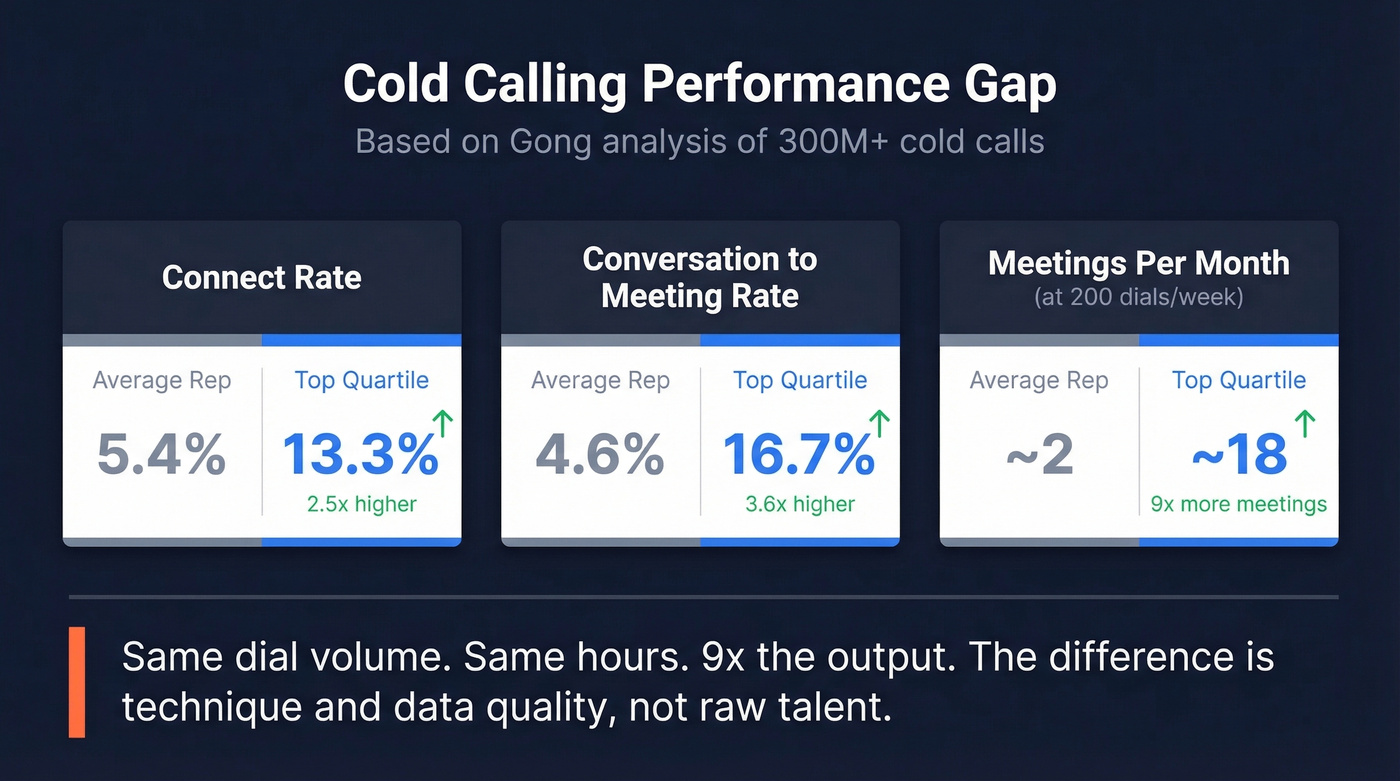
Cold calling works. Gong's analysis of 300M+ cold calls shows that top reps book about 18 meetings per month vs. roughly 2 for average reps at the same dial volume (200 dials/week). That's a 9x difference driven by technique and data quality, not raw talent.
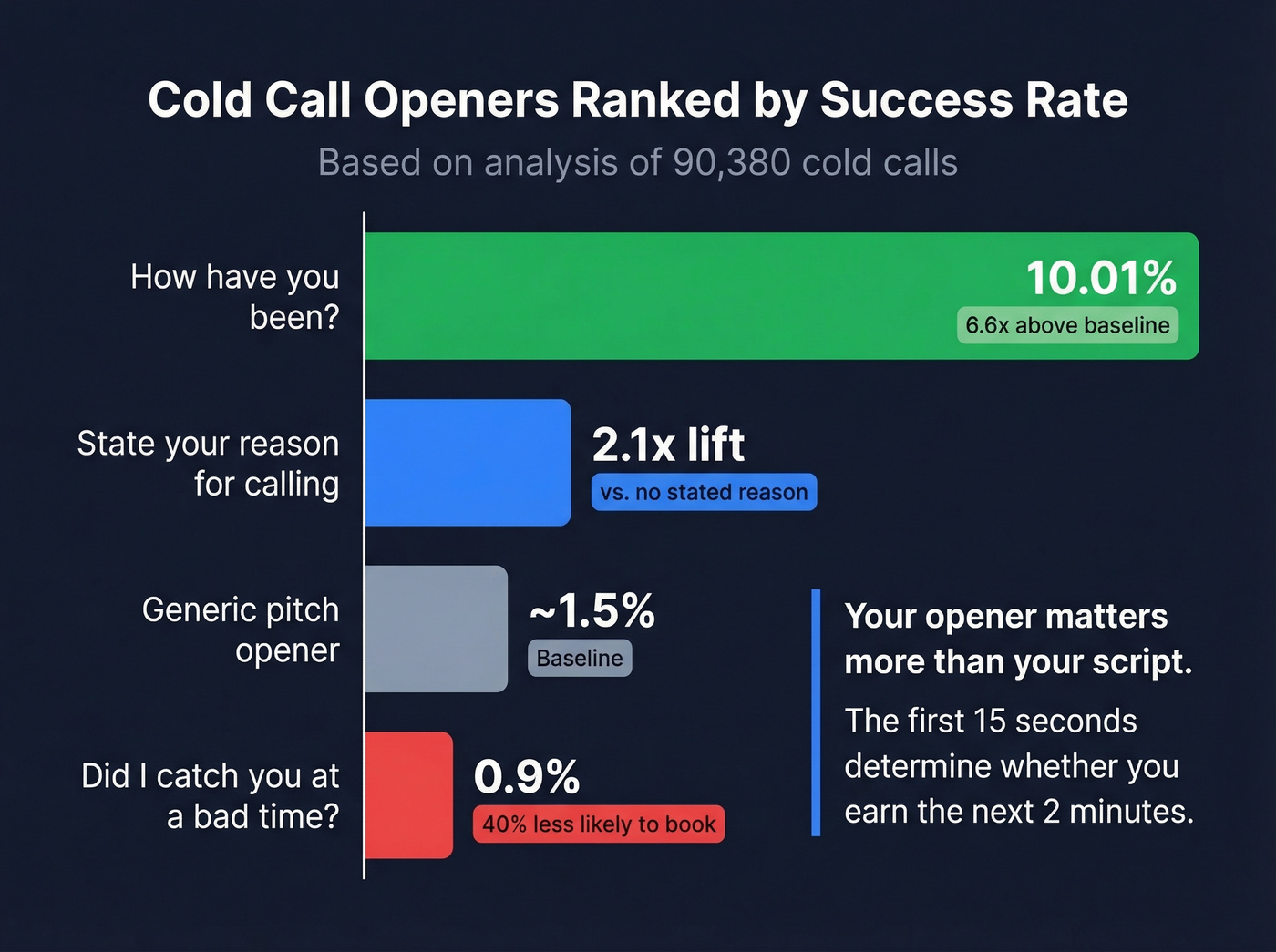
Your opener matters more than your script. "How have you been?" converts at 10.01% vs. 0.9% for "Did I catch you at a bad time?" - based on 90,380 analyzed calls.
Fix your data before your pitch. Bad numbers and wrong contacts waste huge chunks of call blocks. Verified contact data is the highest-return investment most teams overlook.
What Is Cold Calling?
Cold calling is an outbound sales technique where a rep phones a prospect who hasn't previously interacted with the company. No prior email exchange, no inbound form fill, no warm intro - just a phone call to someone who doesn't know you yet.
In B2B, cold calling targets specific decision-makers at companies that fit your ideal customer profile. That's fundamentally different from B2C telemarketing, which blasts through consumer lists with a generic pitch. B2B cold calls are researched, targeted, and aimed at booking a meeting rather than closing a deal on the spot.
Buyers now use roughly 10 channels during a purchase cycle, up from 5 in 2016, and spend only 17% of their buying time meeting with suppliers. But 69% of prospects have accepted a call from a new salesperson, and 81% of decision-makers engage with cold outreach when it's tailored to their company and context. The phone isn't dead. It's just harder to use well, and the bar keeps rising.
Cold Calling by the Numbers
The gap between average and top-performing reps is staggering. Here's what Gong found across 300M+ cold calls:
| Metric | Average Rep | Top Quartile |
|---|---|---|
| Connect rate | 5.4% | 13.3% |
| Set rate (conversation to meeting) | 4.6% | 16.7% |
| Meetings/month (200 dials/week) | ~2 | ~18 |
Same dial volume, same hours - 9x the output. That's not a marginal improvement. That's a completely different business.
Most SDR teams average 40-50 dials per day and 4-6 quality conversations, and top-performing cold callers convert up to 15% of those conversations into meetings. The multichannel effect is equally striking: even when a cold call doesn't connect, it nearly doubles email reply rates - 3.44% vs. 1.81% for prospects who received a call attempt before the email. The phone call primes the prospect's brain to recognize your name.
And that often-cited "2.3% success rate"? Let's reframe it. At 50 dials per day, 2.3% is about 1 meeting per day - roughly 23 meetings per month. The number sounds low in isolation, but the math works if your data is clean. We've seen the connect-rate gap between average and top reps trace back to a data quality problem more often than a skills problem. Top reps verify direct dials before they pick up the phone, so they're not burning their call block on disconnected numbers.
Openers That Work (and Ones That Kill Deals)
An analysis of 90,380 cold calls produced some of the most actionable data in sales:
| Opener | Success Rate | Notes |
|---|---|---|
| "How have you been?" | 10.01% | 6.6x above baseline |
| State reason for call | 2.1x lift | vs. no stated reason |
| Generic pitch opener | ~1.5% | Baseline |
| "Did I catch you at a bad time?" | 0.9% | 40% less likely to book |
"How have you been?" works because it pattern-interrupts. The prospect's brain expects a pitch and instead gets a conversational question. It buys you the first 15 seconds, which is all you need to deliver your reason for calling.
Stating your reason for calling early doubles your success rate. That's the single easiest fix for any rep struggling with cold calls - don't bury the reason behind small talk or a company overview. Lead with it. Successful cold calls run almost twice as long as unsuccessful ones, which means your job in the first 30 seconds is simply to earn the next 2 minutes. We've watched reps go from 2 meetings a week to 8 just by restructuring their first 30 seconds around a clear reason and a permission ask.

The data is clear: top reps book 9x more meetings at the same dial volume. The difference? They're not burning call blocks on disconnected numbers. Prospeo gives you 125M+ verified mobile numbers with a 30% pickup rate - refreshed every 7 days, not every 6 weeks.
Stop dialing dead numbers. Start every call block with verified direct dials.
The First-Minute Framework
Stop memorizing scripts. Build a system instead. Nooks breaks the first minute into 5 building blocks you can mix and match:
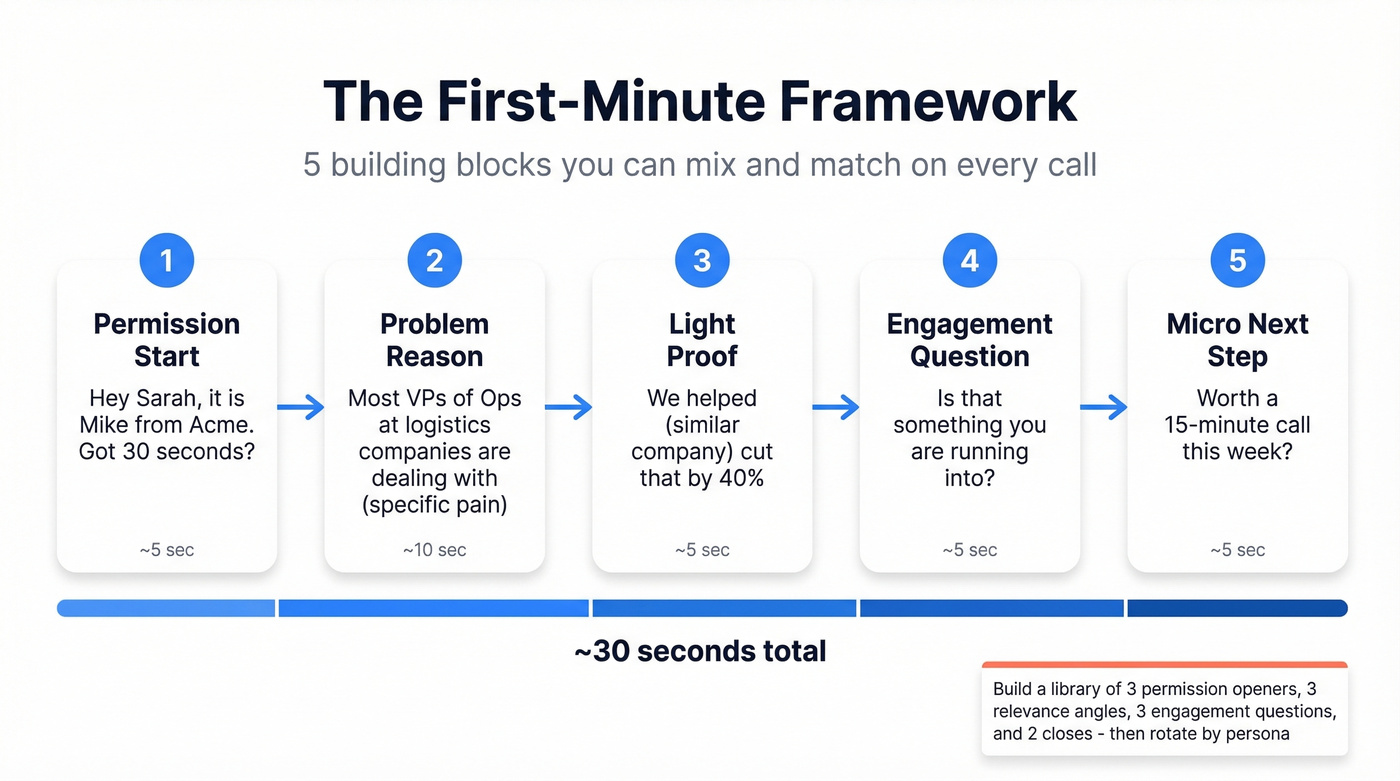
- Permission-based start - "Hey Sarah, it's Mike from Acme. Got 30 seconds?"
- Reason tied to a problem - "I'm calling because most VPs of Ops at logistics companies are dealing with [specific pain]."
- Light proof - "We helped [similar company] cut that by 40%."
- Engagement question - "Is that something you're running into?"
- Micro-next step - "Worth a 15-minute call this week?"
Some coaches break the opener into 10/10/10 - 10 seconds for your name, 10 for your reason, 10 for the ask. Either framework works. The point is the same: build an internal library of 3 permission openers, 3 relevance angles, 3 engagement questions, and 2 closes, then rotate them based on persona and trigger event. A trigger-event call (they just changed jobs, their company just raised funding) earns you more patience than a pure cold dial. That's a system, not a script.
7 Cold Calling Examples and Scripts
1. New B2B Prospect
"Hey [Name], it's [You] from [Company]. Got 30 seconds? I'm calling because [role] leaders at [industry] companies keep telling us [specific problem]. We helped [similar company] solve it in [timeframe]. Is that something on your radar?"
This asks permission, names a specific pain, and drops social proof - all in under 15 seconds. The engagement question at the end flips the conversation to them.
2. Trigger Event (Job Change / Funding)
"Hey [Name], congrats on the new role at [Company]. I'm calling because when someone steps into [title], the first 90 days usually surface [specific pain]. Worth a quick chat about how we've helped others navigate that?"
Trigger-event calls outperform generic outreach because the timing is naturally relevant. New hires, funding announcements, acquisitions - these create real urgency.
3. Gatekeeper Navigation
"Hi, this is [You] from [Company]. [Prospect Name] and I were supposed to connect about [topic]. Can you put me through?"
Confident, brief, and assumes the call was expected. Don't over-explain or ask for permission to be transferred.
4. Voicemail (30 Seconds Max)
"Hey [Name], [You] from [Company]. Calling because [one-sentence reason tied to their problem]. I'll shoot you an email - my number's [number]."
Keep it under 30 seconds. Seriously.
5. Referral-Based Call
A referral call is the closest thing to a cheat code in outbound. The mutual connection does the heavy lifting for you:
"Hey [Name], [Mutual Connection] suggested I reach out. They mentioned you're dealing with [problem] and thought we could help. Got 2 minutes?"
6. Follow-Up After No Response
"Hey [Name], I left you a message last week about [topic]. I know that probably landed in a pile of 50 other things. Quick reason I'm persistent: [new angle or data point]. Worth 15 minutes?"
7. Bad Call vs. Good Call (Before/After)
Before:
"Hi, is this Bob? Great. I'm calling from Acme Solutions. We're a leading provider of cloud-based workflow automation that helps companies streamline their operations and increase productivity by up to 40%..."
Three mistakes: "Is this Bob?" triggers defensiveness. No permission asked, no reason given. Pitching the product instead of selling the meeting.
After:
"Hey Bob, it's Sarah from Acme. Got 30 seconds? I'm calling because ops directors at mid-market SaaS companies keep telling us manual workflows are eating 10+ hours a week. We cut that in half for [Company X]. Is that a problem you're seeing?"
Every one of these cold calling examples shares a common thread: lead with a reason, ask for time, and sell the meeting - never the product.
Common Mistakes (With Fixes)
"Is this Bob?" Use an assumptive greeting instead: "Hey Bob, it's Sarah from Acme." Asking if it's them puts them on guard immediately.
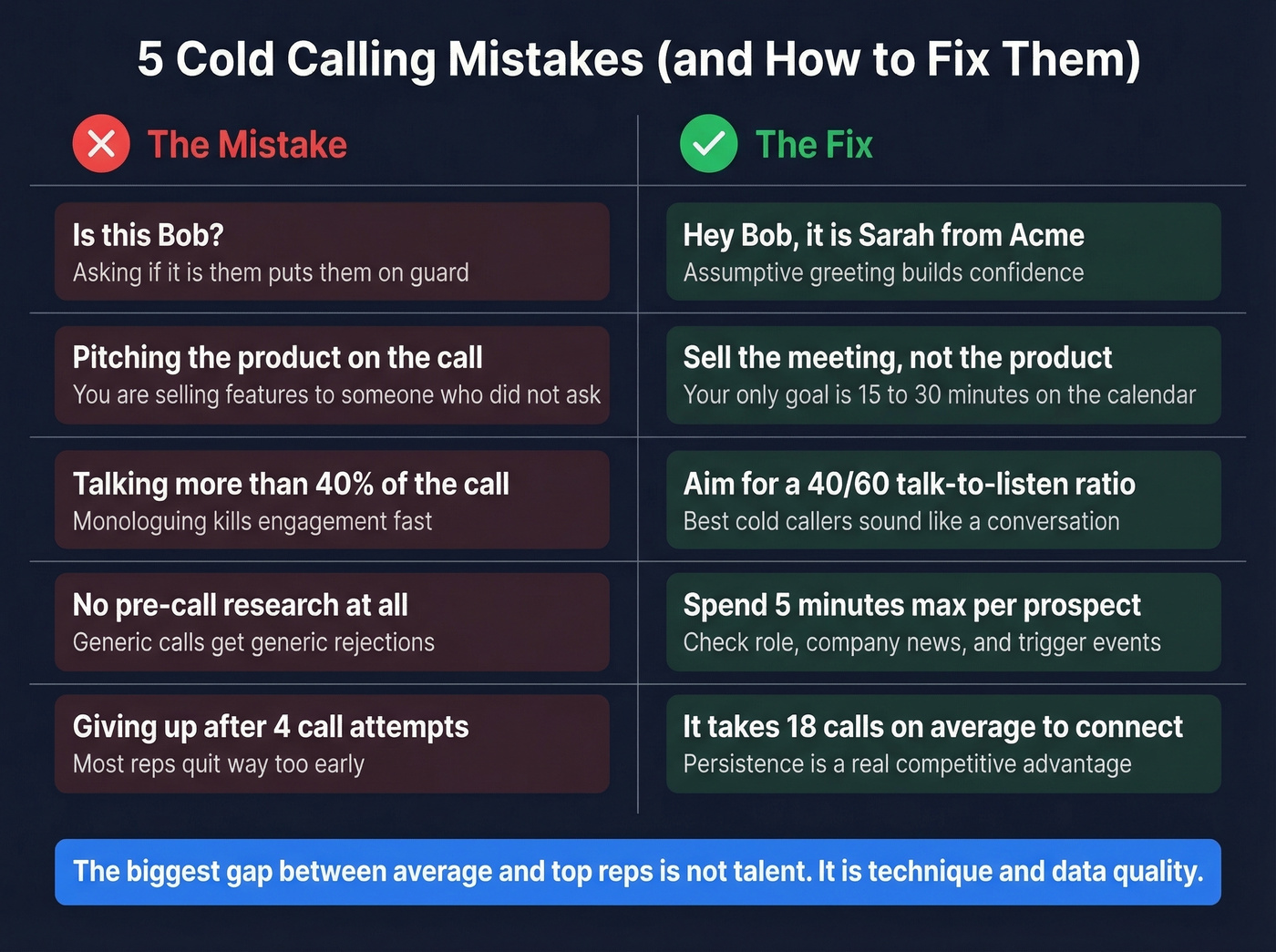
Pitching the product. Your only goal on a cold call is to earn 15-30 minutes on the calendar. The demo sells the product; the cold call sells the demo.
Talking too much. Aim for a 40/60 talk-to-listen ratio. If you're talking more than 40% of the call, you're monologuing. The best cold callers sound like they're having a conversation, not delivering a TED talk.
No pre-call research. Spend 5 minutes max per prospect. Check their role, recent company news, and trigger events. That's it.
Giving up after 4 calls. It takes an average of 18 calls to connect with a buyer. Most reps quit after 4. Persistence is a genuine competitive advantage - one of the cheapest ones you'll find. (If this is a recurring issue, build a cold calling system instead of relying on motivation.)
Pre-Call Research in 5 Minutes
Five minutes per prospect is the sweet spot - enough to personalize, not so much that you're researching instead of dialing. Look for their role and tenure (new in the role is a trigger event), recent company news like funding rounds or acquisitions, and any leadership changes that signal growth or pain.
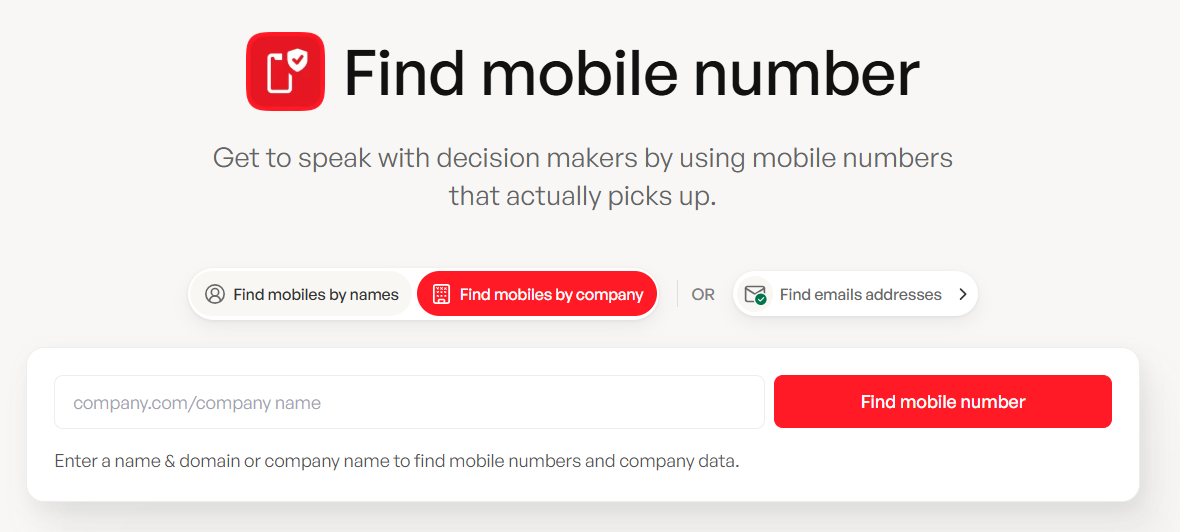
Look, the biggest time-killer in cold calling isn't research. It's bad data. We've seen teams waste entire call blocks dialing disconnected numbers or reaching the wrong person entirely, and that frustration compounds fast - reps lose momentum, skip dials, and eventually stop calling altogether. That's not a skills problem; it's a data problem. Prospeo's 125M+ verified mobile numbers with a 30% pickup rate and 7-day refresh cycle can cut that waste dramatically, and there's a free tier to test it with no credit card required. (If you're cleaning lists at scale, data enrichment services can help too.)
Compliance Basics (2026)
Cold calling is legal in the US, including for B2B. But the rules matter, and the fines are real.
TCPA vs. TSR - TCPA (FCC) governs the technology you use. TSR (FTC) governs disclosures and behavior. You need to comply with both.
Calling window - 8 AM to 9 PM in the prospect's local time zone.
DNC scrubbing - Scrub against the National DNC Registry at least every 31 days. The registry holds 244.3M numbers. It's designed for household/residential numbers rather than business lines, but you still need to maintain your own internal do-not-call list.
Fines - $500 per TCPA violation, up to $1,500 if willful. DNC violations can hit $50,120 per call.
The TCPA Revocation Rule (effective April 11, 2025) requires businesses to honor opt-out requests within 10 business days. Consumers can revoke consent in any reasonable manner, and you get one additional message to confirm before you stop.
Bottom line: call business direct dials during business hours, scrub your lists monthly, and honor opt-outs promptly. Document your compliance process and you're fine.
Trigger-event calls crush generic dials, but only if you have the right contact data the moment the trigger fires. Prospeo tracks job changes, funding rounds, and headcount growth across 300M+ profiles - with 98% email accuracy and verified mobiles to back every signal.
Pair your cold call scripts with data that actually connects you to decision-makers.
FAQ
What is the success rate of cold calling?
The average success rate is about 2.3%, which translates to roughly 1 meeting per 50 dials. Top-performing reps with verified data and trained openers hit 5-8%+, meaning 15-20 dials per booked meeting instead of 40-45.
Is cold calling legal in 2026?
Yes. B2B cold calling is legal in the US. The National DNC Registry targets household numbers, not business lines. Follow TCPA rules: call between 8 AM-9 PM local time, scrub DNC lists every 31 days, and honor opt-outs within 10 business days.
What's the best time to cold call?
Calling between 8-9 AM or 4-5 PM lifts connect rates 40-70% compared to random times. Avoid lunch hours and Monday mornings. Wednesday and Thursday consistently outperform other weekdays.
How many calls does it take to reach a prospect?
An average of 18 calls. Most reps give up after 4. That persistence gap is one of the easiest competitive advantages in outbound sales - simply outlasting other sellers who quit early.
How do I get accurate phone numbers for cold calling?
Use a verified B2B data provider instead of scraping random directories. Prospeo offers 125M+ verified mobile numbers with a 30% pickup rate and 7-day refresh cycle, starting free with 75 credits. Apollo and ZoomInfo are alternatives, though their mobile pickup rates (11% and 12.5% respectively) are significantly lower.