

Account Based Marketing Automation: Costs, Workflows, and Common Mistakes in 2026
Your SDRs are sending "I noticed your company is in the {industry} space" to 5,000 contacts and calling it account based marketing automation. It's not. It's email nurture with a fancier label, and it's why 71% of teams say they run ABM but most can't prove it's working.
Real ABM automation orchestrates personalized, multi-channel campaigns for specific accounts - a coordination layer on top of your marketing tools, not a rebrand of batch-and-blast. All-in-one platforms like Demandbase and 6sense typically start in the mid five figures and climb into the hundreds of thousands per year. Composable stacks built on Clay plus enrichment plus your CRM can cut costs by 60-70% while covering most use cases. The foundation that makes or breaks everything: accurate contact data.
What ABM Automation Actually Is
Here's the distinction most vendors blur on purpose: ABM is a strategy. Marketing automation is a tool. ABM tells you who to target and what to say. Automation handles the how and when at scale. Buying a $60K platform doesn't mean you're doing ABM - it means you own an expensive tool.
B2B buying groups typically comprise about 10 members, and 84% have already chosen a preferred vendor before initiating direct contact. That first touch typically happens more than two-thirds through the buying journey, which means if you're not engaging the full buying committee early with relevant content, you're losing deals you never knew existed.
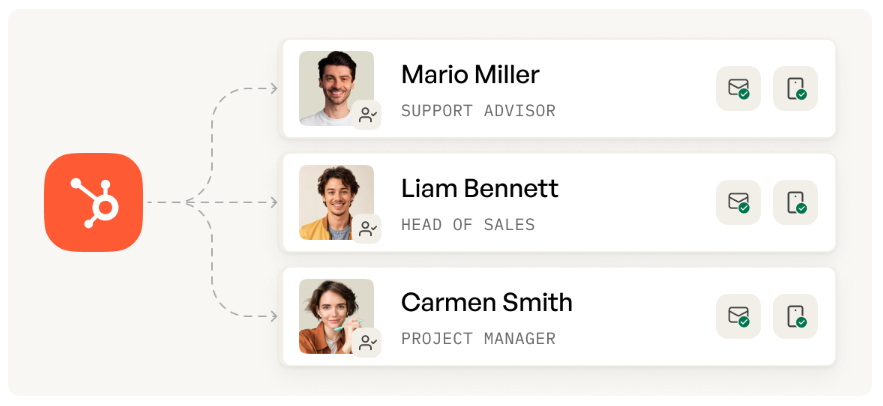
What a Real ABM Workflow Looks Like
A practitioner on Reddit's r/automation described what they called "real ABM" - and it's a useful benchmark. They used Clay plus Webflow to automate 171 personalized landing pages in under 30 minutes. The trigger wasn't a generic ICP filter. It was social media pain posts from target accounts, feeding into AI-written emails referencing the prospect's actual problem, paired with 1:1 ads pointing to a custom landing page.
That's the workflow pattern worth studying: signal detection -> enrichment -> personalized asset creation -> multi-channel delivery. Each step depends on the one before it, and the whole thing falls apart if your enrichment layer can't surface verified contacts across the buying committee.
Composable Stack vs. All-in-One Platforms
Let's be honest: the ABM platform market is designed to make you overspend. Hidden pricing, annual lock-ins, and expensive onboarding are the norm in enterprise suites. The smartest teams in 2026 are building composable stacks instead.
All-in-one platforms like Demandbase and 6sense bundle intent data, orchestration, advertising, and analytics. Unified reporting is the upside. The downside is cost ($12K-$300K+/year depending on vendor and scope), long implementation cycles, and paying for modules you don't use.
Composable stacks use Clay or Make as the orchestration layer, plug in best-of-breed tools for each function, and keep your CRM as the source of truth. We've seen teams achieve 60-70% cost reductions compared to all-in-one platforms while covering most needs for organizations with under 500 target accounts.
If your average contract value is under $15K, you almost certainly don't need a six-figure ABM platform. A composable stack with solid enrichment will outperform an all-in-one you can't fully implement.
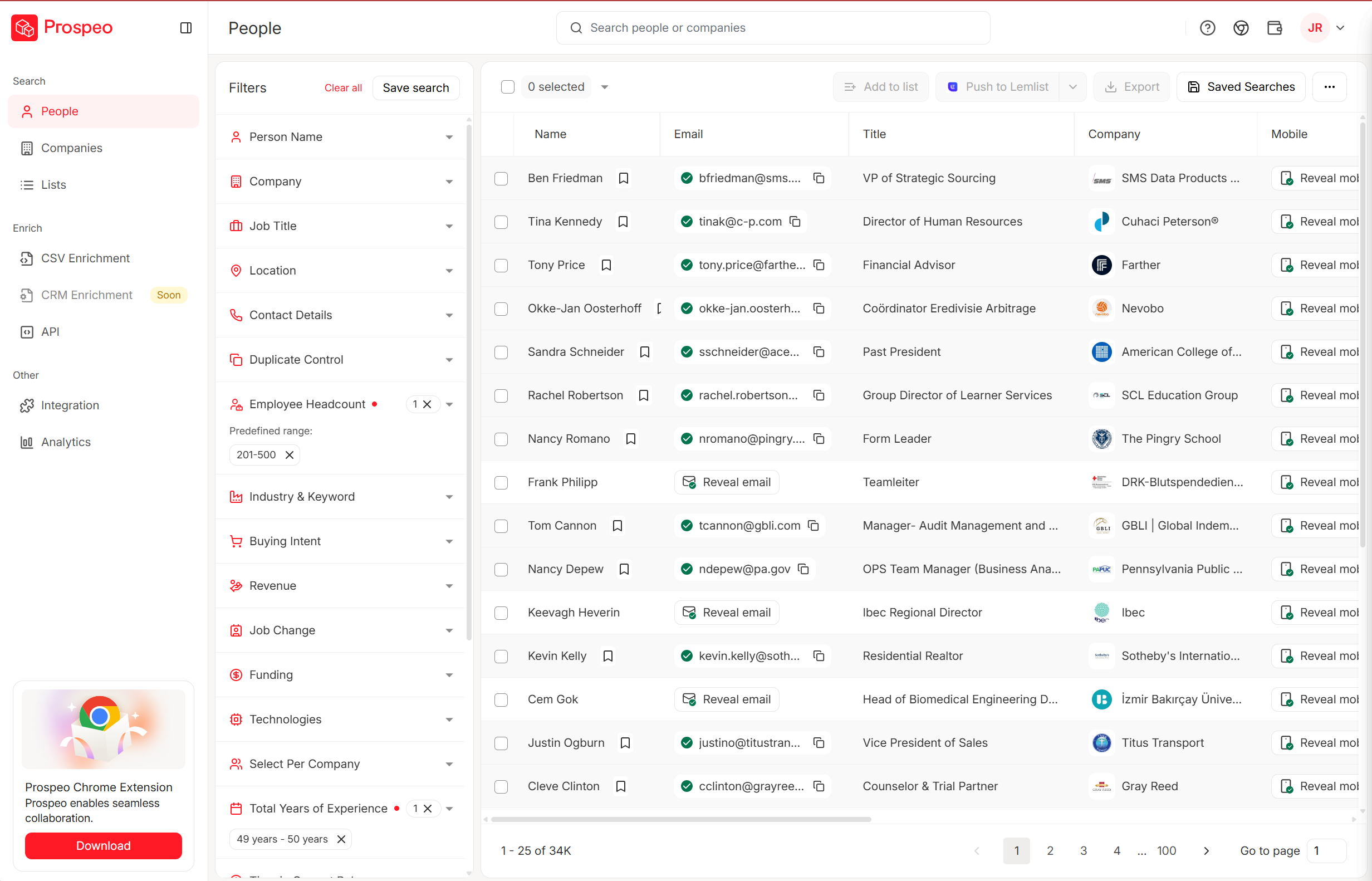

Your ABM automation is only as good as the contacts feeding it. Prospeo's 300M+ profiles with 98% email accuracy and 30+ filters - including buyer intent, technographics, and headcount growth - give composable stacks the enrichment layer that makes account-level personalization actually work.
Stop orchestrating campaigns to contacts that don't exist.
ABM Platform Pricing Breakdown
Every major ABM vendor hides pricing behind "contact sales." Here's what contracts actually look like:
| Platform | Annual Range | Notable Costs |
|---|---|---|
| Demandbase | $24K-$300K+ | ~$29K onboarding |
| 6sense | $10K-$138K (median ~$58K) | Credits don't roll over |
| Terminus | $18K-$87K | Part of DemandScience |
| RollWorks (AdRoll ABM) | $12K-$50K | Cookie/IP-based |
| HubSpot Enterprise | $43,200/yr | ABM tools bundled |
| Composable stack | ~$3K-$15K/yr | Best ROI under 500 accounts |
For sizing context, Demandbase contracts for ~200-employee companies typically run $18K-$32K; at 1,000+ employees, expect $58K-$109K+. Some 6sense full-stack deployments with Predictive AI hit $100K-$200K+. A detailed Demandbase vs. 6sense pricing breakdown shows mid-market Demandbase pricing commonly landing around $45K-$65K.
Don't forget hidden costs. Third-party intent data add-ons like Bombora or TechTarget run $15K-$40K annually on top of your platform contract. Additional Demandbase seats cost $1,200-$3,000/year each beyond the base 10 licenses.
For teams with under 500 target accounts, the composable stack delivers the best ROI. It's not close.
Where ABM Automation Breaks Down
In our experience, five mistakes kill more ABM programs than bad strategy:
Calling email blasts "ABM." If you're sending the same nurture sequence to 10,000 contacts with a {company_name} merge tag, that's marketing automation. ABM requires account-specific messaging, multi-threaded engagement across the buying committee, and coordinated sales involvement. I've watched teams burn through a $60K platform doing exactly this for a full year before anyone questioned the approach.
Trying to ABM every account. Use tiers. 1:1 for your top 20-50 accounts with fully custom plays. 1:few for 100-200 accounts grouped by shared pain points. 1:many for 500+ accounts using programmatic personalization. Skip the tiering step and you'll spread resources so thin that no account gets meaningful attention.
Measuring with lead-gen metrics. CPL and MQL volume are the wrong scoreboard. ABM measures engaged accounts, pipeline velocity, and deal size. The top challenges holding teams back: proving ROI (47%), sales/marketing alignment (43%), and scaling programs (40%).
Ignoring data quality. A single enrichment provider covers 40-50% of contacts - half your buying committee never gets your message. Run waterfall enrichment with verification before you send. Bad data corrupts scoring models and tanks deliverability faster than any other mistake. If you need a shortlist of vendors, start with these data enrichment services.
Believing the AI hype. 45% of practitioners see AI's promise for ABM personalization, but nearly 70% find its current effectiveness limited. AI accelerates content creation and signal processing. It doesn't replace strategy.
Measuring ABM Performance
Stop measuring ABM with demand-gen metrics. The right scoreboard is account-centric: engaged accounts, pipeline velocity, average deal size, and influenced revenue. Shift from "marketing sourced this lead" to "marketing influenced this deal." If you need a clean framework, use these funnel metrics to standardize reporting.
The results justify the effort. Per Forrester research, one-third of ABM organizations see 11-20% deal-size uplift, and nearly another third report 21-50% increases. Email remains dominant at 92% effectiveness, with in-person events at 72%. We've seen teams waste six months measuring with demand-gen metrics before switching to account-centric reporting - don't repeat that mistake.
The article above shows composable ABM stacks cut costs 60-70% vs all-in-one platforms. Prospeo is the enrichment layer that makes them work: 7-day data refresh, 92% API match rate, and emails at $0.01 each. Multi-thread every buying committee without the six-figure platform tax.
Cover the full buying committee at a fraction of the cost.
FAQ
What's the difference between ABM and marketing automation?
ABM targets specific high-value accounts with personalized campaigns across the buying committee, while marketing automation executes those campaigns at scale. You need both - when combined, the result is coordinated, account-level engagement that neither approach delivers alone.
How much does ABM automation cost?
All-in-one platforms range from $12K to $300K+/year depending on vendor and modules. Composable stacks built on Clay, an enrichment tool like Prospeo, and your existing CRM cost $3K-$15K/year - 60-70% less - while covering most use cases for teams with under 500 target accounts.
How long does it take to implement an ABM platform?
Enterprise implementations take 3-6 months for setup plus 2-3 months to reach full capacity. Composable stacks can be operational in 2-4 weeks since they layer onto tools your team already uses.
What are the best ABM tools for small teams?
For teams with fewer than 500 target accounts, a composable stack works best: Clay for orchestration, a strong enrichment layer for verified contacts, and your existing CRM. Start with accurate data and a clear tiering strategy before investing in additional tooling.