Demandbase vs 6sense: Pricing, Features & Verdict (2026)
Your CMO just asked you to evaluate ABM platforms. You've sat through two demos, requested pricing from both, and gotten back nothing useful - a "custom quote" from Demandbase, a "let's schedule another call" from 6sense. Comparing these two shouldn't require this much detective work. The ABM platform market grew from $1.2B in 2024 and is projected to hit $4.5B by 2033, yet both vendors treat their own pricing like classified intelligence. That's inexcusable for tools at this price point.
30-Second Verdict
Pick Demandbase if your primary use case is B2B advertising and account-level personalization, you've got a dedicated ABM ops person, and your budget clears $60K/year.
Pick 6sense if you need predictive analytics to prioritize accounts by buying stage and want to start with a free plan before committing real dollars.
Skip both if your real bottleneck is getting verified emails and direct dials for target accounts. Neither platform solves that well. Prospeo handles that layer at ~$0.01/email with no contract - 75 free emails/month to test it.
Feature Comparison
Both platforms cover intent data, account identification, orchestration, and integrations. The differences show up in where each one is genuinely best-in-class versus merely adequate.
G2 scores below are sourced from Demandbase's comparison page.
| Category | Demandbase | 6sense | Edge |
|---|---|---|---|
| Intent signals | 2T+/month, 133+ languages | 1T+ daily buyer signals | Tie |
| Predictive analytics | Deploys in <24 hrs | Core strength | 6sense |
| B2B advertising | Native DSP (purpose-built) | Advertising module available | Demandbase |
| Orchestration | Strong marketing workflows + activation | Strong account prioritization + insights | Tie |
| G2: Account-based ads | 8.2 | 7.6 | Demandbase |
| G2: Retargeting | 8.4 | 7.9 | Demandbase |
| G2: Attribution | 8.1 | 7.4 | Demandbase |
| Free tier | No | Yes (50 credits/mo) | 6sense |
Intent Data & Identification
Demandbase processes over 2 trillion signals per month across 133+ languages. 6sense counters with its "Signalverse" - over 1 trillion daily buyer signals fed into predictive models. Both numbers are massive. In practice, the difference matters less than how well each platform maps signals to your specific ICP and TAM. We've seen teams obsess over signal volume when the real question is signal relevance to their actual target accounts.
Predictive Analytics
This is 6sense's home turf. Its AI models are purpose-built to identify buying stages and predict when accounts are in-market. Demandbase has predictive capabilities too and can deploy tailored models in under 24 hours, but 6sense's predictive engine is deeper and more central to the product. If account prioritization by buying stage is your primary use case, 6sense wins.
B2B Advertising & DSP
Demandbase wins here, and it isn't close. It has the only DSP purpose-built for B2B advertising. 6sense offers advertising as a module, but it's not the core of the platform in the same way. For teams running account-based ad campaigns as a primary motion, this gap alone can justify the choice.
Integrations & Ecosystem
Both integrate with Salesforce, HubSpot, and the usual CRM/MAP stack. Demandbase leans heavier into marketing automation workflows; 6sense connects well with adjacent sales tools. Neither will leave you stranded here - integrations aren't a differentiator between these two.
What You'll Actually Pay
Both vendors make you work for pricing. We've pulled numbers from Vendr's contract dataset, AWS Marketplace anchors, and third-party pricing analyses to give you real ranges.
Demandbase Pricing
Demandbase is quote-based with no published tiers. Here's what contracts actually look like:
- Entry-level: $24K-$30K/year for basic modules
- Mid-market (most common): $45K-$65K/year
- Enterprise with full Demandbase One + Ads + Sales Intelligence: $100K-$300K+/year
- AWS Marketplace anchor: $215K for a 12-month Demandbase One contract
Onboarding runs ~$29K on top of your platform fee. Base contracts typically include ~10 user licenses, with each additional seat costing $1,200-$3,000/year.
6sense Pricing
6sense is slightly more transparent thanks to Vendr's dataset of 302 purchases:
- Median contract: $58,310/year
- Observed range: $10,621 to $137,984
- Sales Intelligence + Data Credits: $50K-$80K/year
- Full stack with Predictive AI: $100K-$200K+/year
- Entry point: ~$35K/year for smaller deployments
- Free plan: $0 with 50 data credits/month - company and people search, alerts, list builder, and a Chrome extension
One thing that catches teams off guard: credits don't roll over. A slow month means evaporated credits. That's a use-it-or-lose-it tax, especially during holidays or quarter transitions when outreach naturally dips.
Side-by-Side Pricing
| Demandbase | 6sense | |
|---|---|---|
| Entry price | ~$24K/yr | ~$35K/yr |
| Mid-market | $45K-$65K/yr | $50K-$80K/yr |
| Enterprise | $100K-$300K+/yr | $100K-$200K+/yr |
| Onboarding | ~$29K | Varies, sometimes included |
| Contract | Annual, custom | Annual, custom |
| Free tier | No | Yes (50 credits/mo) |

Demandbase and 6sense tell you which accounts are in-market. Neither gives you reliable contact data to reach buyers. Prospeo fills that gap - 143M+ verified emails at 98% accuracy and 125M+ direct dials, starting at $0.01/email with no $50K annual contract.
Stop paying six figures for ABM and still bouncing emails.
Implementation & Time to Value
Here's the thing: if you don't have a dedicated ABM ops person, neither platform will deliver. I've watched teams burn through an entire annual contract before getting meaningful insights because they assigned ABM to a marketing coordinator who "also handles it."
Enterprise implementations typically take 3-6 months, with another 2-3 months before the platform is really running at capacity. Budget for a 6-month ramp minimum. Both require someone who understands data hygiene, audience segmentation, and campaign orchestration - and if you don't have that person, budget for professional services on top of the platform fee. Otherwise, accept that you'll underutilize a $50K+ tool for the first year.
Most teams evaluating these two platforms aren't ready for either one. If you don't have a defined ICP, clean CRM data, and at least one person dedicated to ABM operations, you're buying a Ferrari to drive in a parking lot. Start with your data foundation first.
Day-to-Day UX
The experience of using these platforms daily differs more than the feature lists suggest.

Demandbase feels like a tool built by marketers for marketers. The UI is customizable and genuinely intuitive once you've spent time with it. Account views are clean, and the advertising workflow is tightly integrated - it performs strongest on larger, well-known accounts where data coverage runs deep. The tradeoff: ad campaign setup adds real complexity, and smaller or fast-changing organizations sometimes fall through the cracks in account identification.
6sense feels like a data platform first, marketing tool second. Dashboards are data-rich, and the predictive buying-stage insights are genuinely useful for prioritizing outreach. The free plan gives you a real taste of the product before committing. But the UI is overwhelming initially - there's a lot of data, and knowing where to look takes time. In our experience, data refresh delays frustrate sales teams who want faster signals, and contact data runs thin in niche markets.
On review sites as of early 2026, both tools are rated similarly overall: G2 shows Demandbase 4.3/5 (1,621 reviews) and 6sense 4.3/5 (870 reviews). TrustRadius shows Demandbase 8.3/10 (141 reviews) vs 6sense 8.2/10 (313 reviews). Essentially a dead heat.
Where Both Platforms Fall Short
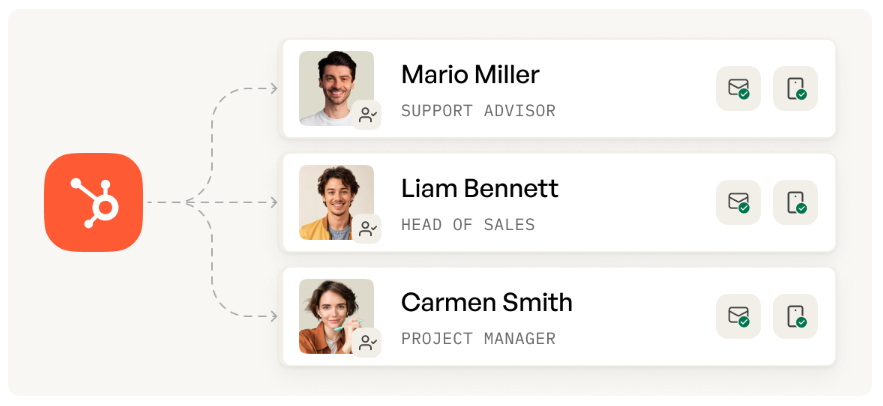
Here's the gap nobody talks about in ABM platform evaluations: both Demandbase and 6sense are excellent at telling you which accounts are in-market. Neither reliably gives you verified contact data to actually reach the people at those accounts.
Identifying that Acme Corp is surging on "cloud security" intent signals is great. But you still need the VP of Engineering's verified email and direct dial to do anything with that insight. Buying group identification doesn't equal verified emails and direct dials. We've seen this play out repeatedly - teams export contacts, and a chunk of them bounce within weeks.
Prospeo fills that gap with 143M+ verified emails and 125M+ verified mobile numbers, all refreshed every 7 days. At ~$0.01/email with a free tier and no contract, it's a fraction of the cost of either platform and purpose-built for the contact data layer that both leave incomplete.
Who Should Pick What
Go with Demandbase if you've got $60K+/year in budget, a dedicated ABM ops person, and your strategy is advertising-first. Demandbase's native DSP is unmatched for B2B ad targeting, and the account intelligence is strong for larger accounts.
Go with 6sense if you want predictive analytics driving your account prioritization, you value AI-driven buying stage recommendations, and you want to test the waters with a free plan before signing a five-figure contract.
Skip both if your budget is under $35K/year, or your primary need is verified contact data for outbound sequences.
For mid-market ABM on a smaller budget, RollWorks covers the core ABM playbook without the enterprise price tag at roughly ~$15K-$30K/year. If your real need is multi-touch attribution rather than account identification, HockeyStack is worth evaluating as a more focused alternative; pricing starts at $2,200/month.
And if verified emails and direct dials are the actual bottleneck - which, for most outbound teams, they are - Prospeo solves that with 98% email accuracy and a 30% mobile pickup rate at a fraction of the cost.
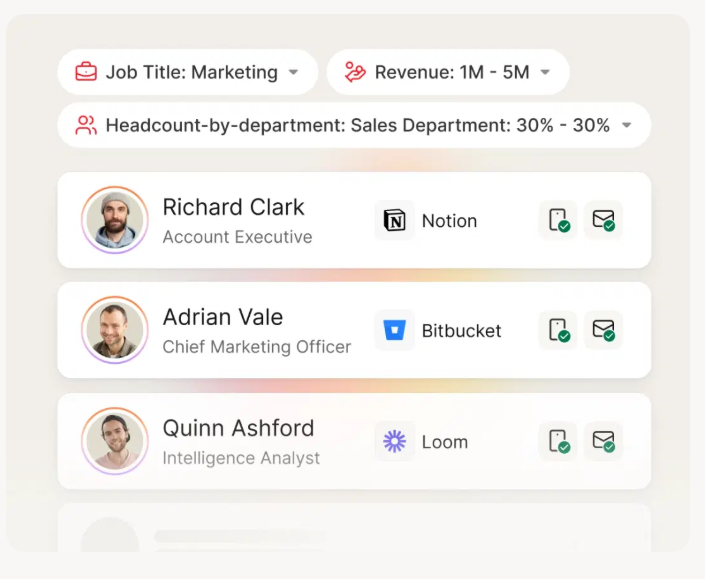
Before committing $60K+ to an ABM platform, fix your data foundation first. Prospeo gives you 300M+ profiles with 30+ filters - intent data, technographics, job changes, funding - refreshed every 7 days. No sales calls, no annual lock-in.
Build your ABM data layer for 90% less than either platform.
FAQ
Does 6sense have a free plan?
Yes. 6sense offers a $0 plan with 50 data credits per month, including company and people search, sales alerts, list builder, and a Chrome extension. Credits don't roll over - unused credits are lost at the end of each billing cycle.
How much does Demandbase cost per year?
Demandbase contracts range from $24K to $300K+/year depending on modules, seat count, and ad spend. Mid-market deployments typically run $45K-$65K/year, plus a ~$29K onboarding fee in year one.
Can you use both platforms together?
Technically yes, but the overlap is massive and the combined cost of $100K-$400K+/year is nearly impossible to justify. Most teams pick one platform and supplement with point solutions for gaps like contact data or attribution.
How long does implementation take?
Expect 3-6 months for full implementation, plus 2-3 months of ramp time before you're running at capacity. Budget for a 6-month minimum and dedicated ops headcount - without it, ROI stalls.
What if I just need verified emails for target accounts?
Neither ABM platform excels at individual contact data. Prospeo delivers 143M+ verified emails and 125M+ mobile numbers at ~$0.01/email with 98% accuracy and no contract - purpose-built for the contact data layer that both platforms leave incomplete. It includes 75 free emails per month to test.