

Adapt.io vs Apollo.io: They Solve Different Problems - Here's Which One You Need
Adapt.io and Apollo.io show up in the same "best sales tools" lists, but the decision between them is like comparing a gas station to a car. Adapt is a data enrichment engine - you go there to fill up on contacts. Apollo is a full outbound vehicle with sequences, a dialer, and a CRM baked in. Picking between them depends entirely on what's missing from your current stack.
30-Second Verdict
Pick Adapt.io if you need a dedicated data enrichment tool with API access and don't run outbound sequences from the same platform.
Pick Apollo.io if you want an all-in-one engagement platform with built-in email sequences and a generous free tier.
Feature Comparison: Head-to-Head
Both platforms skew heavily toward small-business users, which tells you a lot about their positioning.
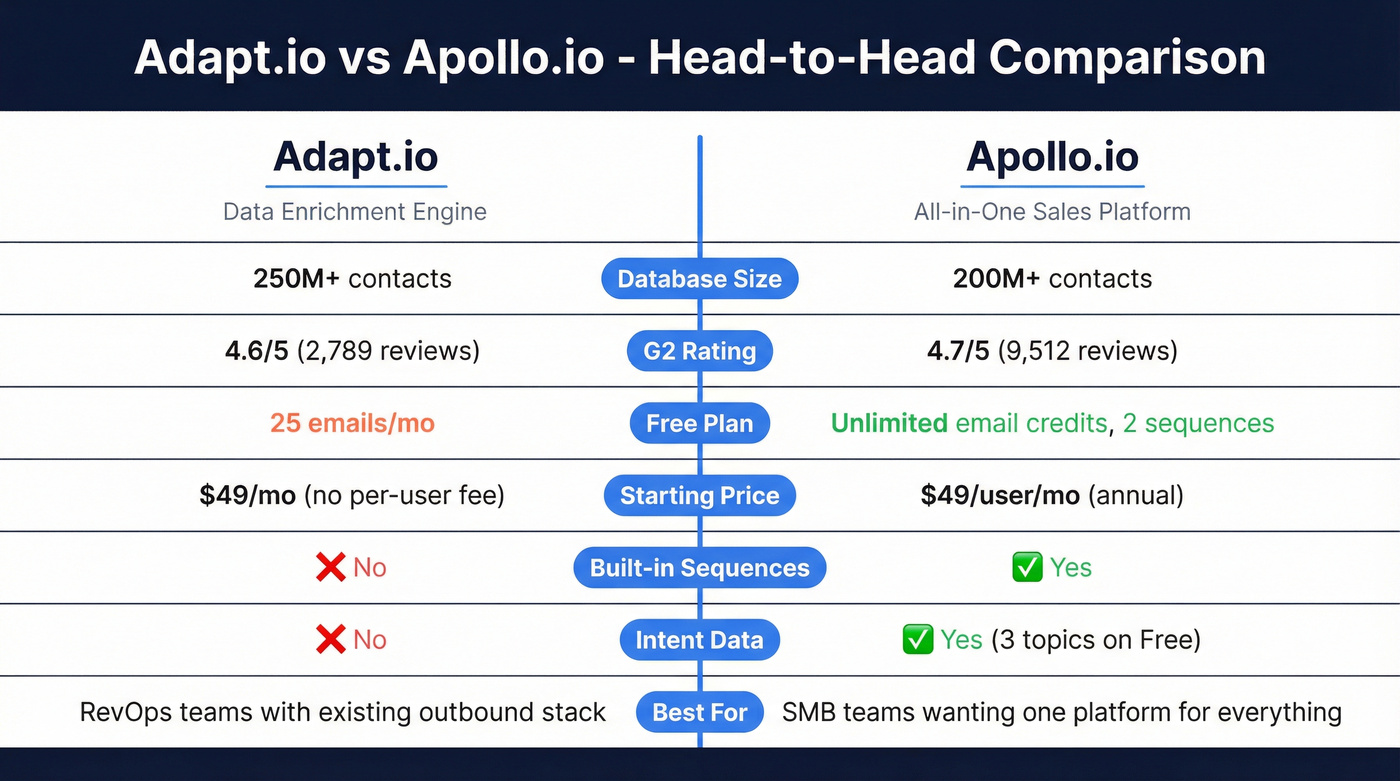
| Feature | Adapt.io | Apollo.io |
|---|---|---|
| G2 Rating | 4.6/5 (2,789 reviews) | 4.7/5 (9,512 reviews) |
| Database Size | 250M+ contacts | 200M+ contacts |
| Primary Use Case | Data enrichment | Sales engagement |
| Free Plan | 25 emails/mo | Unlimited email credits (fair use), 2 sequences |
| Starting Price | $49/mo | $49/user/mo (annual) |
| Key Integrations | Salesforce, HubSpot, Zoho | Salesforce, HubSpot |
| Chrome extension | Yes | Yes |
| Built-in Sequences | No | Yes |
| Intent Data | No | Buying intent (3-topic limit on Free) |
Adapt.io - Data Enrichment Done Simply
Adapt's strength is focus. It's a data sourcing tool with 250M+ contacts, 5M+ refreshed daily, and a Chrome extension that reviewers consistently praise for ease of use. The platform pulls from SEC filings, social media, SMTP validation, and website crawling, with AI-enabled assembly and both real-time and periodic data hygiene checks. If you already run sequences in Outreach or Salesloft and just need clean contact data piped in, Adapt does that job without the bloat of a full engagement platform.

Use this if you're a RevOps team that needs enrichment via API, CSV, or CRM sync and you've already got your outbound stack sorted.
Skip this if you need sequences, a dialer, or any kind of outreach execution. Adapt doesn't do that. You'll need to pair it with a separate tool.
The most-cited complaint across Adapt's reviews is the credit system. The free plan's 25 emails per month is essentially a demo - barely enough to evaluate the data quality. The Starter plan at $49/mo gives you 500 email credits and 500 enrichment credits, and if you're actively prospecting, that runs dry within a week. You'll either upgrade fast or feel constantly throttled.

Adapt's 25 free credits barely let you test the data. Apollo's exports bounce at 10-15%. Prospeo gives you 75 free verified emails at 98% accuracy with a 7-day refresh cycle - so you're not paying credits for contacts who changed jobs last month.
Stop burning credits on stale data. Verify the difference yourself.
Apollo.io - The All-in-One That Almost Delivers
Apollo is the obvious starting point for most SMB outbound teams. The free tier is genuinely generous: unlimited email credits under fair use, two active sequences, 5 mobile credits per month, and 10 export credits per month. Paid plans add calling features on higher tiers, AI-assisted email writing, and deeper CRM integrations.
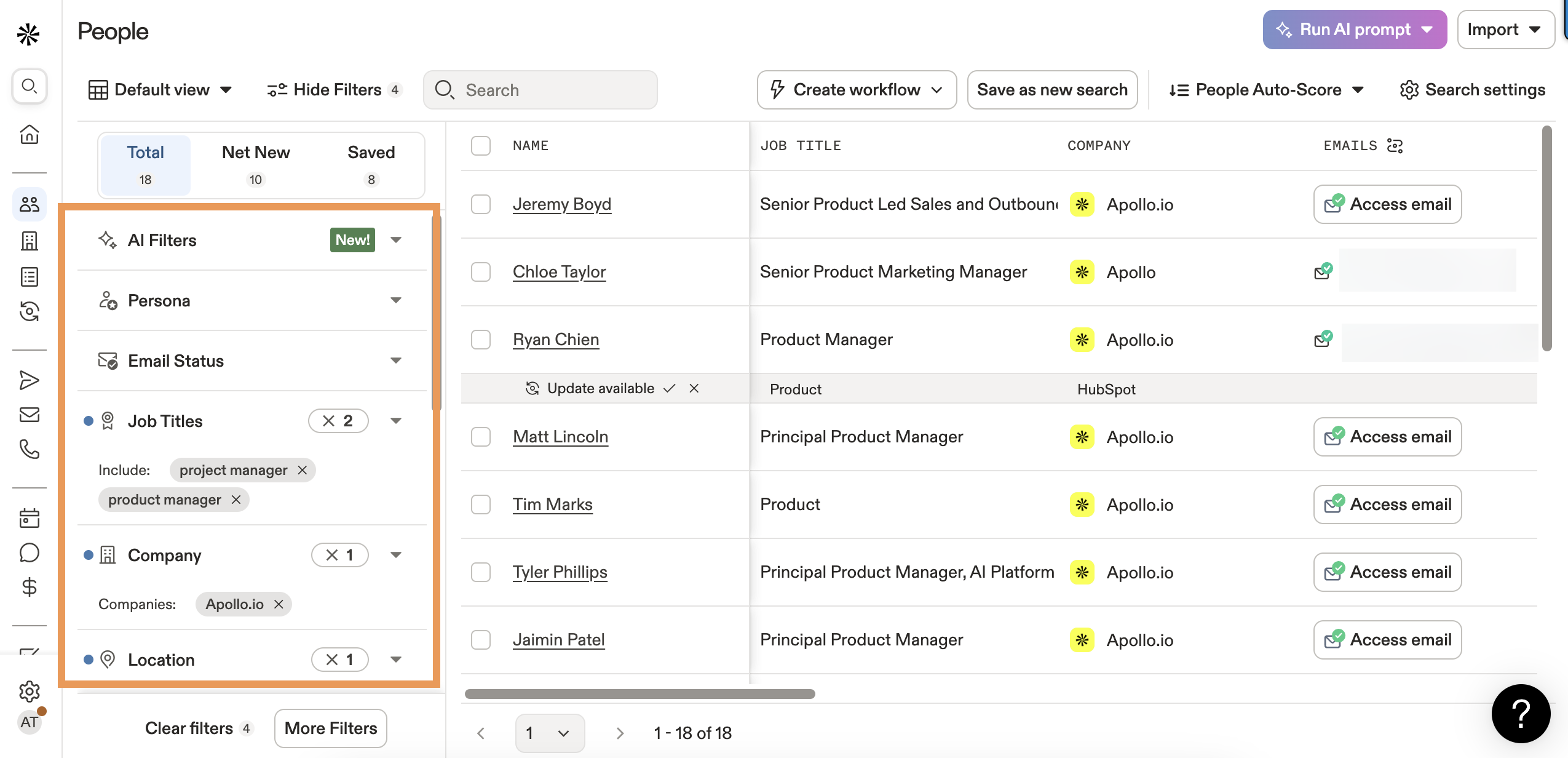
Use this if you want one platform for list building, sequencing, and calling. Apollo's breadth is hard to beat under $100/user/month.
Here's the thing, though. "Inaccurate Data" has 503 mentions as a con-topic on G2 - that's not a fringe complaint, it's a pattern. Practitioners on r/coldemail put email accuracy around 85-90%, which sounds workable until you realize that means 10-15% hard bounces on every export. Phone numbers are hit or miss.
The other problem worth flagging: Apollo's lists are overused. Everyone uses Apollo. The obvious searches - VP of Sales at SaaS companies with 50-200 employees - have been hammered to death. You need creative filtering to find prospects who haven't already been emailed by three other SDRs this week.
Pricing Breakdown
Adapt.io Pricing
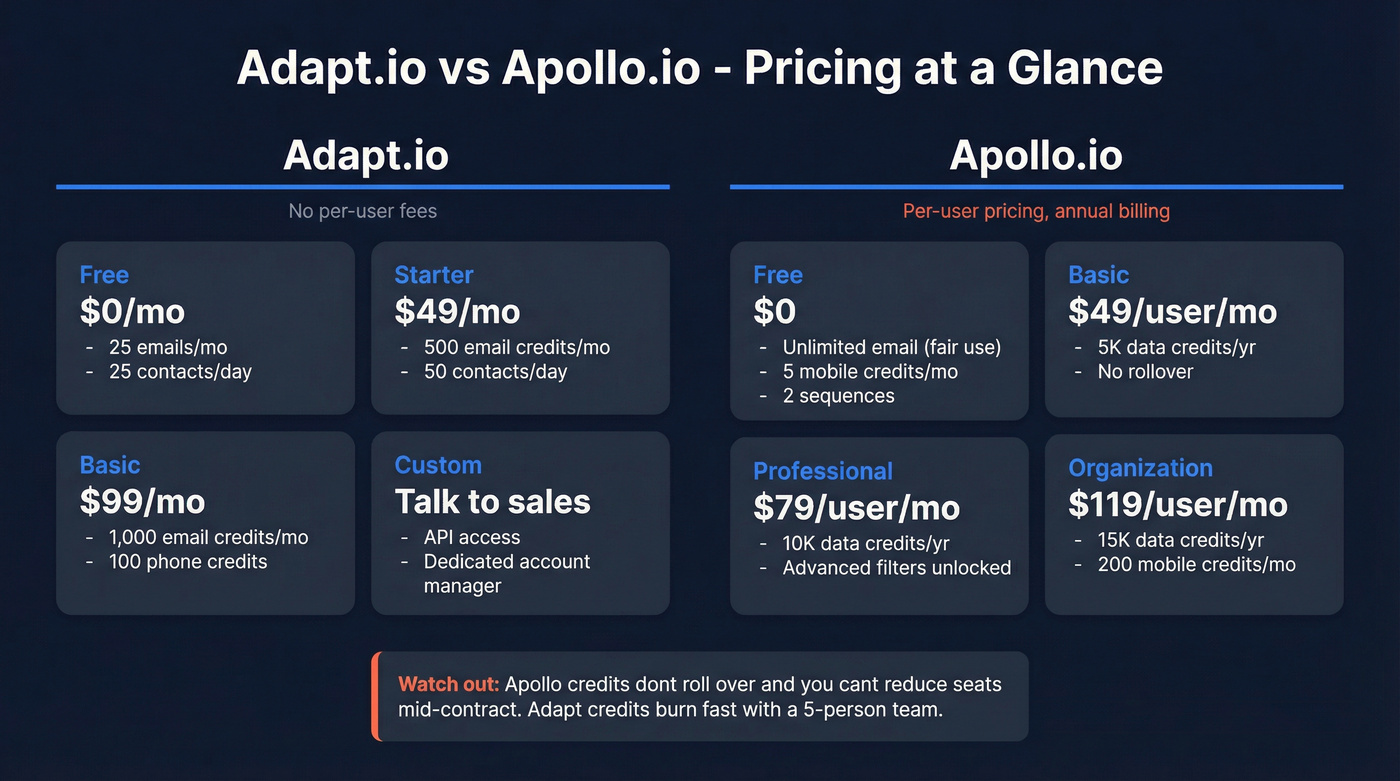
| Plan | Price | Email Credits | Key Limits |
|---|---|---|---|
| Free | $0/mo | 25/mo | 25 contacts/day |
| Starter | $49/mo | 500/mo | 50 contacts/day |
| Basic | $99/mo | 1,000/mo | 100 contacts/day, 100 phone credits |
| Custom | Talk to sales | Custom | API, dedicated AM |
Apollo.io Pricing
| Plan | Annual | Monthly | Key Credits |
|---|---|---|---|
| Free | $0 | $0 | Unlimited email (fair use), 5 mobile/mo, 10 export/mo, 2 sequences |
| Basic | $49/user/mo | $59/user/mo | 5K data credits/yr |
| Professional | $79/user/mo | $99/user/mo | 10K data credits/yr |
| Organization | $119/user/mo | $149/user/mo | 15K data credits/yr, 200 mobile/mo |
Apollo credits don't roll over, and you can't reduce seats mid-contract - only at the end of your billing term. Overage credits run $0.20 each with a 250-credit minimum purchase. Most advanced filters teams actually want - technographics, hiring signals, funding data - are gated on Professional at $79/user/month on an annual commitment.
Adapt has no per-user fees, which is nice, but those credit caps mean a five-person team burns through the Basic plan's 1,000 credits in days.
Let's be honest: if your average deal size is under $10k, you probably don't need either tool's paid plan. Apollo's free tier plus a dedicated verification layer will outperform a $99/month Adapt plan for most early-stage teams.
The Real Problem - Data Accuracy
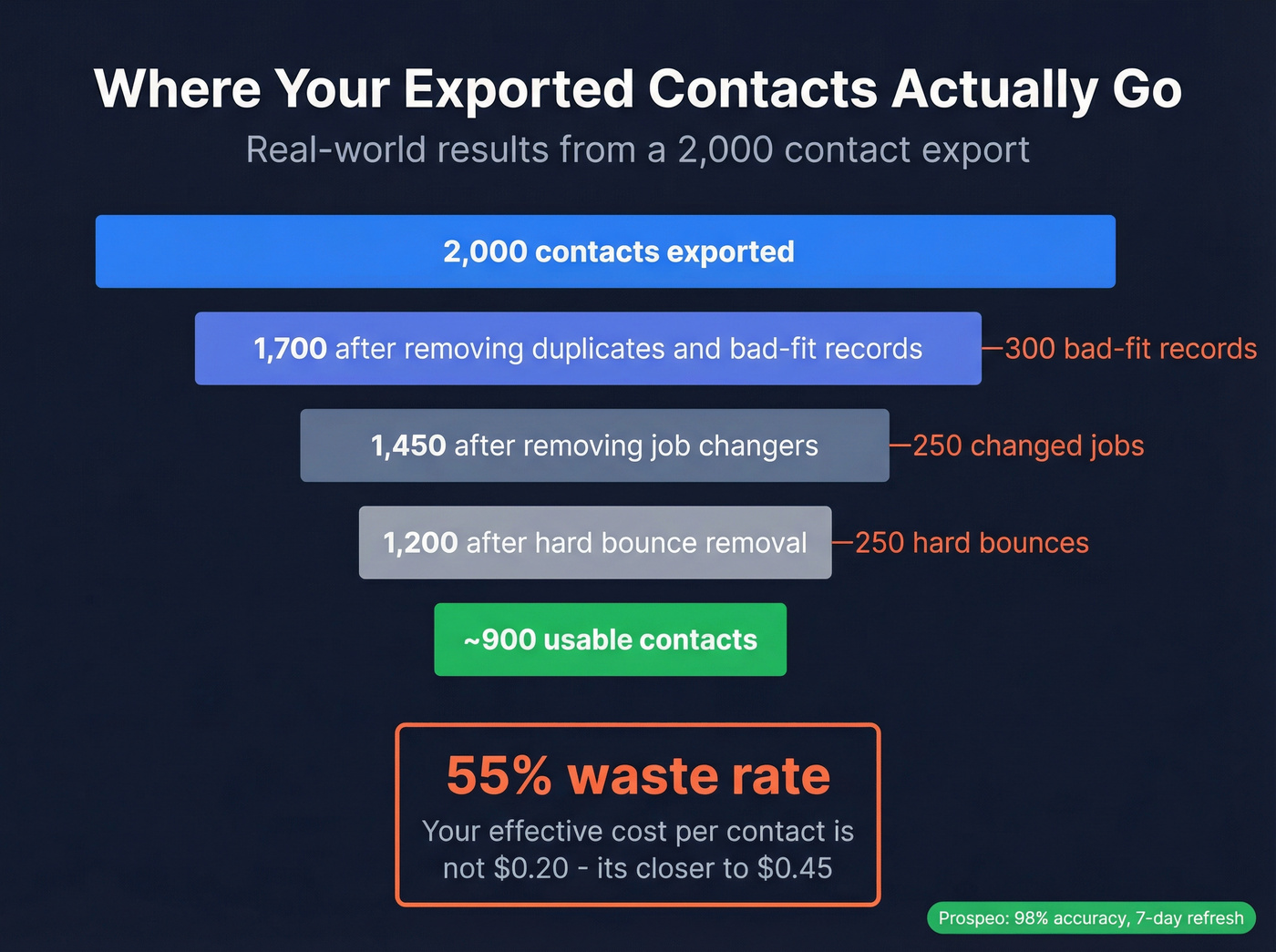
Here's what actually happens in production. One practitioner described exporting 2,000 "verified" contacts and ending up with only around 900 usable ones - a 55% waste rate once hard bounces, job changes, and bad-fit records were accounted for. Your effective cost per usable contact isn't $0.20. It's closer to $0.45.

We've seen this pattern repeatedly across both platforms. Most teams still run a separate verification step to stay under 5% bounce rates, and that's the gap most people don't realize exists until they've already burned a sending domain. Domain reputation damage takes weeks to recover from - ask anyone who's had to warm up a replacement domain from scratch while their pipeline stalls.
Prospeo's 5-step verification process, including catch-all handling, spam-trap removal, and honeypot filtering, exists specifically because platforms like Adapt and Apollo ship contacts that haven't been reverified in weeks. With a 7-day data refresh cycle versus the 4-6 week industry average, the data stays current enough that you're not paying credits for contacts who changed jobs last month.
Which One to Pick
You need a data enrichment tool with API access: Adapt.io. It's focused, credit-based, and integrates cleanly into existing stacks. Just budget for higher tiers than you think you'll need.
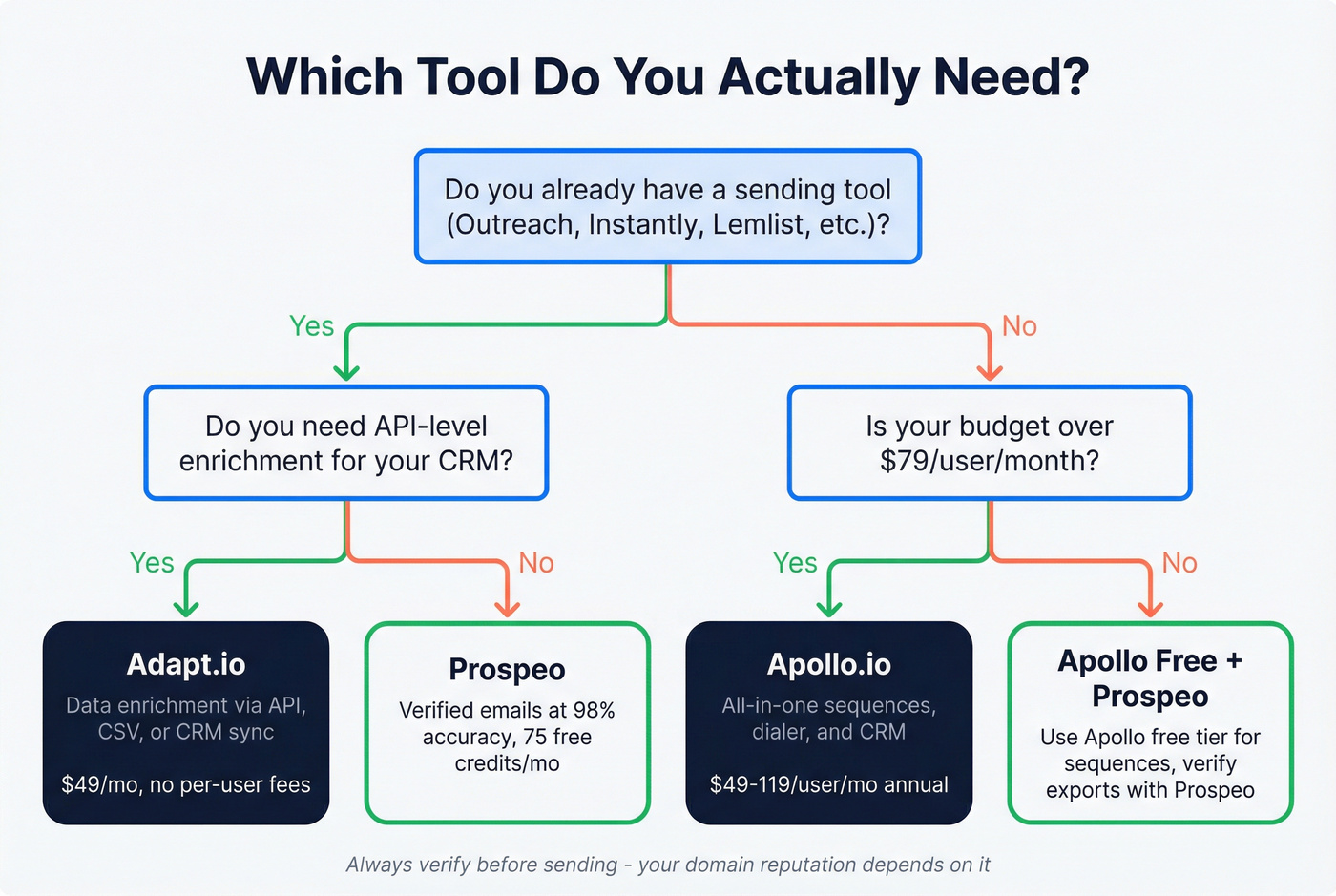
You need an all-in-one outbound platform: Apollo.io. The free tier alone is worth testing. Accept that you'll need to verify exports separately and get creative with your filters.
Comparing Adapt.io vs Apollo.io is really comparing a database to a CRM - they serve different stages of the workflow. The smarter question is which combination gets your team sending faster without wrecking deliverability.
That 55% waste rate on exported contacts? It disappears when data goes through 5-step verification with catch-all handling, spam-trap removal, and honeypot filtering. Prospeo delivers 98% email accuracy at $0.01/lead - 90% cheaper than what you'd pay after Apollo's bounce losses.
Your domain reputation is worth more than a cheap export. Protect it.
FAQ
Is Adapt.io or Apollo.io better for cold email?
Apollo is better for cold email because it includes built-in sequences, a dialer, and email tracking. Adapt is purely a data sourcing tool - you'd need a separate sending platform like Outreach, Instantly, or Lemlist to actually run campaigns.
Can you use Adapt.io and Apollo.io together?
Yes, and some teams do exactly that - Adapt for enrichment, Apollo for execution. Just verify emails through a dedicated accuracy tool before sending. Layering unverified data from two sources doubles your bounce risk.
Which tool has more accurate email data?
Neither consistently stays under 5% bounce rates without re-verification. Apollo has 503 "Inaccurate Data" mentions across user reviews, and Adapt users report occasional incorrect emails too. For raw deliverability, Prospeo's 98% accuracy with weekly refresh outperforms both platforms' native verification - in our testing, bounce rates stayed under 4% consistently.
What's a good free alternative to both tools?
Prospeo's free tier includes 75 email credits and 100 Chrome extension credits per month - more than Adapt's 25 free emails and with higher verified accuracy than Apollo's free plan. For teams running fewer than 100 lookups monthly, it covers prospecting without paying anything.