AI Outreach vs Manual Outreach: What the Real Numbers Say
SalesMind's comparison of AI messaging vs manual outreach claims an 85% response rate. That's not a benchmark - it's a fantasy number designed to sell software. Instantly's 2026 data puts the average cold email reply rate at 3.43%. The gap between vendor marketing and operational reality has never been wider, and it's costing teams real money when they build strategy around the wrong numbers.
The Short Version
- AI outreach isn't better or worse - it's a different tool for a different job. The real variable is data quality, not which approach you pick.
- Hybrid wins. AI for research, sequencing, and follow-ups. Humans for first-touch to high-value prospects. 45% of high-performing teams already work this way.
- Before debating approaches, fix your contact data. A hand-typed email to a verified inbox beats an AI masterpiece sent to a dead address every time.
What the Benchmarks Actually Show
Every vendor blog throws around reply rates like confetti. Let's anchor to real numbers.
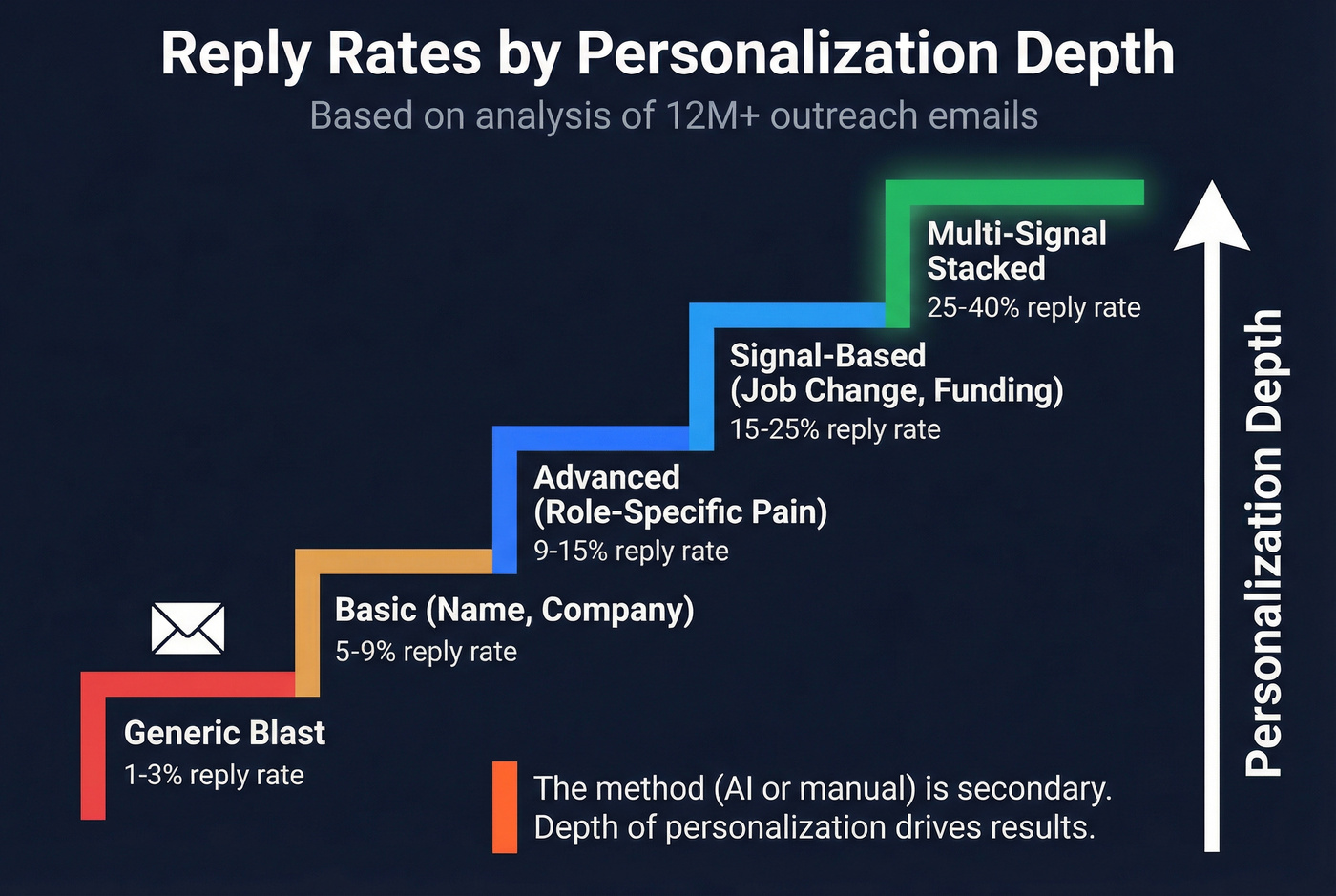
A Backlinko analysis of 12 million outreach emails found that 8.5% receive any reply at all. Belkins' B2B study found something more revealing: campaigns sent to 500+ recipients averaged a 2.1% response rate, while campaigns targeting 50 or fewer recipients hit 5.8%. Nearly 3x the reply rate - just by sending fewer, better-targeted emails.
The personalization depth ladder tells the rest of the story:
| Personalization Level | Typical Reply Rate |
|---|---|
| None (generic blast) | 1-3% |
| Basic (name, company) | 5-9% |
| Advanced (role-specific pain) | 9-15% |
| Signal-based (job change, funding) | 15-25% |
| Multi-signal stacked | 25-40% |
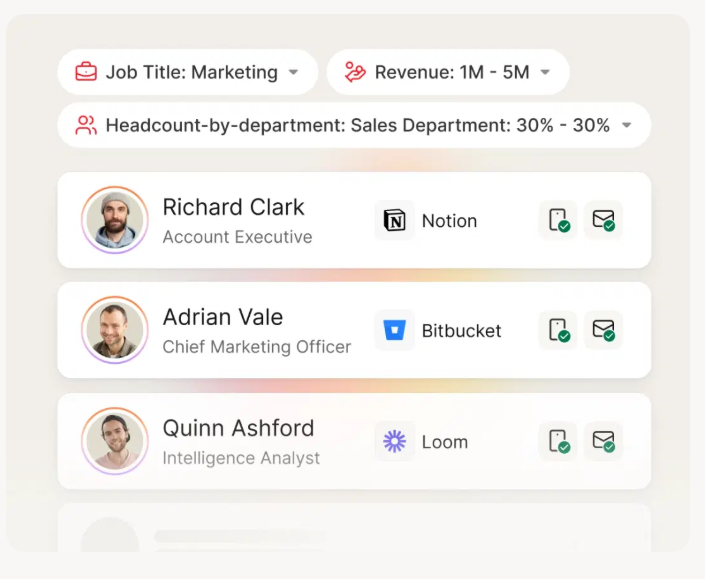
The takeaway isn't that automated or handcrafted is better. Personalization depth drives results. The method you use to achieve that depth is secondary. A skilled SDR writing 30 signal-based emails will crush an AI blasting 2,000 generic ones every single time.
Side-by-Side Comparison
Here are the two approaches with realistic numbers, not vendor fantasies.
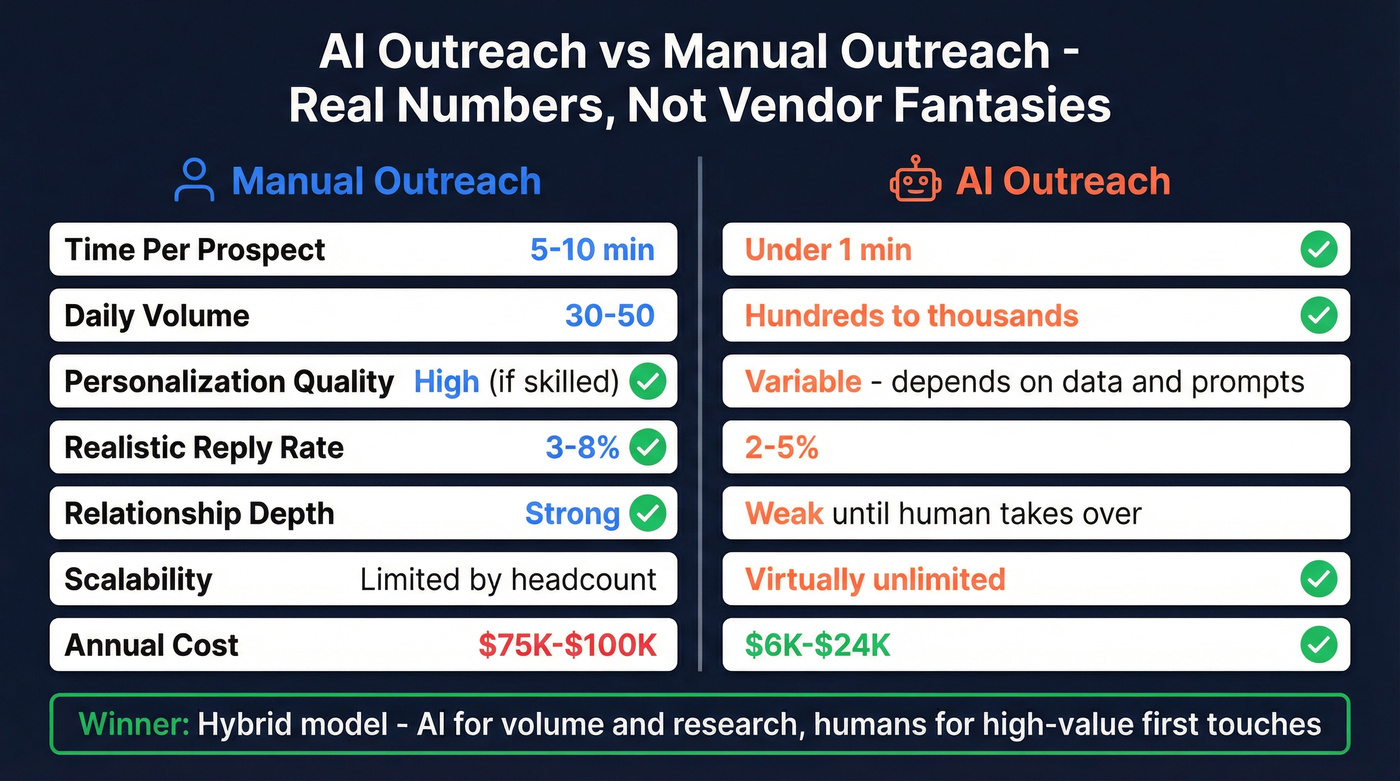
| Factor | Manual Outreach | AI Outreach |
|---|---|---|
| Time per prospect | 5-10 minutes | Under 1 minute |
| Daily volume | 30-50 prospects | Hundreds to thousands |
| Personalization quality | High (if skilled) | Variable - depends on data and prompts |
| Reply rate (realistic) | 3-8% (well-targeted) | 2-5% (typical) |
| Relationship depth | Strong | Weak until a human takes over |
| Scalability | Limited by headcount | Virtually unlimited |
| Annual cost | $75K-$100K (loaded SDR) | $6K-$24K (platform) |
| Ramp time | 2-3 months (new hire) | 3-6 months to ROI with clean data; 6-9 if building from scratch |
SalesMind claims manual outreach hits 15-25% response rates and AI hits 15-40%. We've never seen those numbers in production. A well-targeted manual campaign lands in the 3-8% range, and AI campaigns typically run 2-5% unless you're stacking multiple personalization signals on a tight list.
Here's the thing: AI's real advantage isn't reply rate. It's throughput. Forrester found AI can increase sales productivity up to 66% when used correctly. The key phrase is "when used correctly" - and most teams aren't there yet. If your average contract value sits below $10K, you probably don't need a human crafting every first touch. If you're closing six-figure deals, you probably can't afford not to.

Signal-based personalization drives 15-25% reply rates - but only if your emails actually land. Prospeo's 98% email accuracy and 7-day data refresh mean every AI sequence and every hand-crafted message hits a real inbox, not a dead address.
Stop debating AI vs manual. Start fixing the data underneath both.
Where AI Outreach Goes Wrong
The most common failure pattern we see is teams treating AI as a replacement for human judgment rather than an extension of it. They buy an AI SDR platform, point it at a list, and expect magic. What they get is volume without relevance.
Personalized messages achieve 32.7% higher response rates than generic outreach. But AI "personalization" often means inserting a company name and a recent press mention into a template. Prospects smell this instantly. The result is spray-and-pray at scale - which doesn't just waste money, it damages your brand and burns your domain.
For enterprise accounts, AI-generated first touches usually underperform hand-written ones unless you put real work into targeting, QA, and signal selection. Most AI SDR tools need months of tuning before they produce anything worth sending.
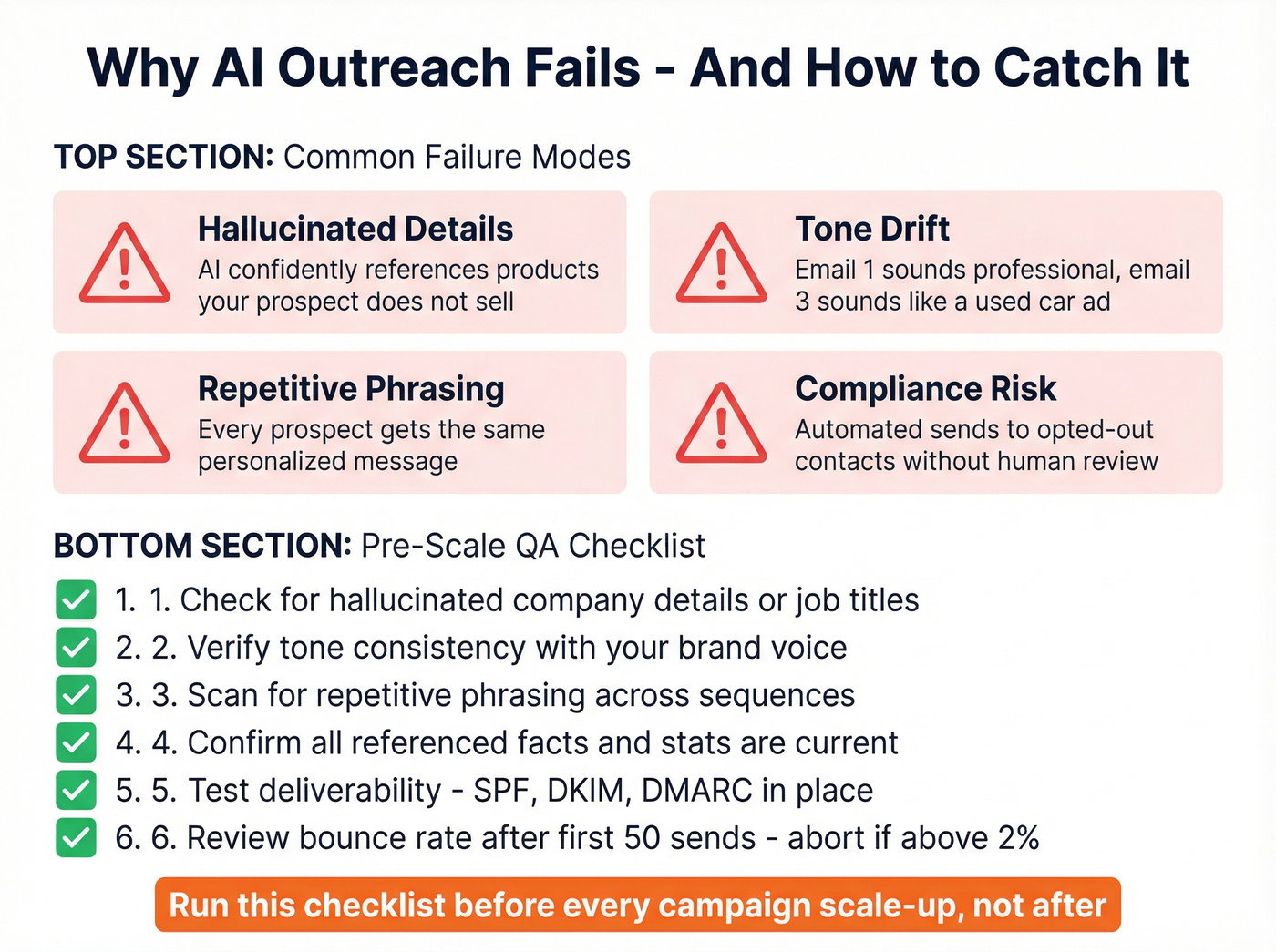
The failure modes that keep showing up: hallucinated company details where AI confidently references a product your prospect doesn't sell, tone drift across sequences where email one sounds professional and email three sounds like a used car ad, and repetitive phrasing that makes it obvious every prospect got the same "personalized" message. There's also a compliance risk most teams ignore - automated systems can easily send to opted-out contacts without human oversight, creating real GDPR and CAN-SPAM exposure.
Before you scale any AI outreach, run this QA checklist:
- Check for hallucinated company details or job titles
- Verify tone consistency with your brand voice
- Scan for repetitive phrasing across sequences
- Confirm all referenced facts and stats are current
- Test deliverability before scaling - SPF, DKIM, DMARC in place
- Review bounce rate after first 50 sends and abort if it's above 2%
The Real Cost Comparison
The headline math is compelling: $98K/year for a human SDR versus $28K/year for an AI platform. But headline math is incomplete.
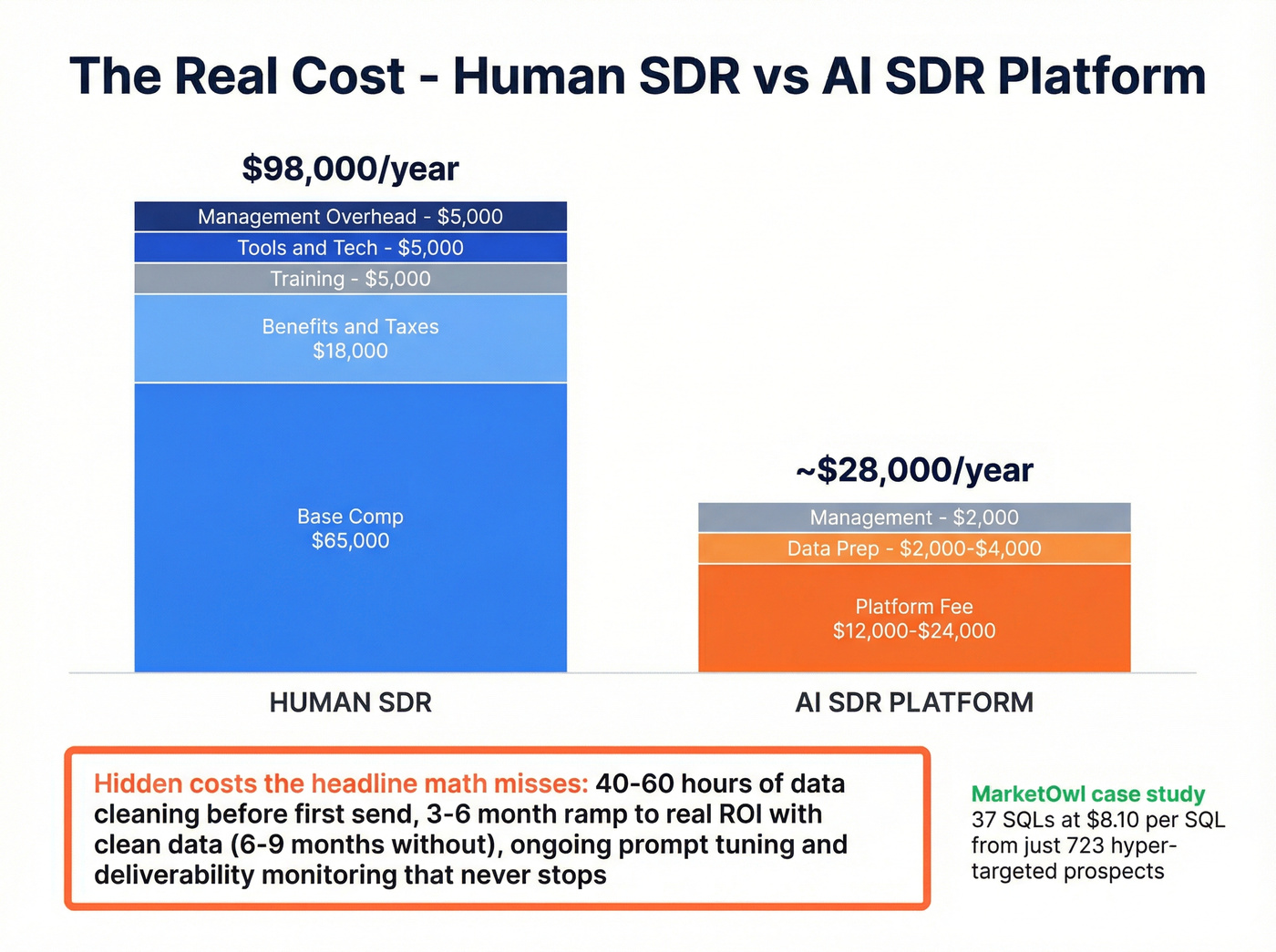
| Line Item | Human SDR | AI SDR Platform |
|---|---|---|
| Base comp / platform fee | $65,000 | $12,000-$24,000 |
| Benefits and taxes | $18,000 | - |
| Training and onboarding | $5,000 | $2,000-$4,000 (data prep) |
| Tools and tech stack | $5,000 | Included |
| Management overhead | $5,000 | $2,000 |
| Total | ~$98,000 | ~$28,000 |
That table is directionally useful, but it still doesn't show the real operational drag: the 40-60 hours of data cleaning, enriching, and segmenting before your AI SDR sends a single email. Or the 3-6 month ramp to real ROI with clean data, stretching to 6-9 months if you're building from scratch. Or the ongoing prompt tuning, list management, and deliverability monitoring that never stops.
One case study grounds the economics nicely. A MarketOwl campaign targeting 723 hyper-specific prospects generated 37 SQLs at $8.10 per SQL with a 5.1% positive reply rate. Strong unit economics - but notice the list was 723 prospects, not 72,000. The Belkins inverse-volume finding shows up again: smaller, targeted lists outperform blasts regardless of method.
The Hybrid Model That Works
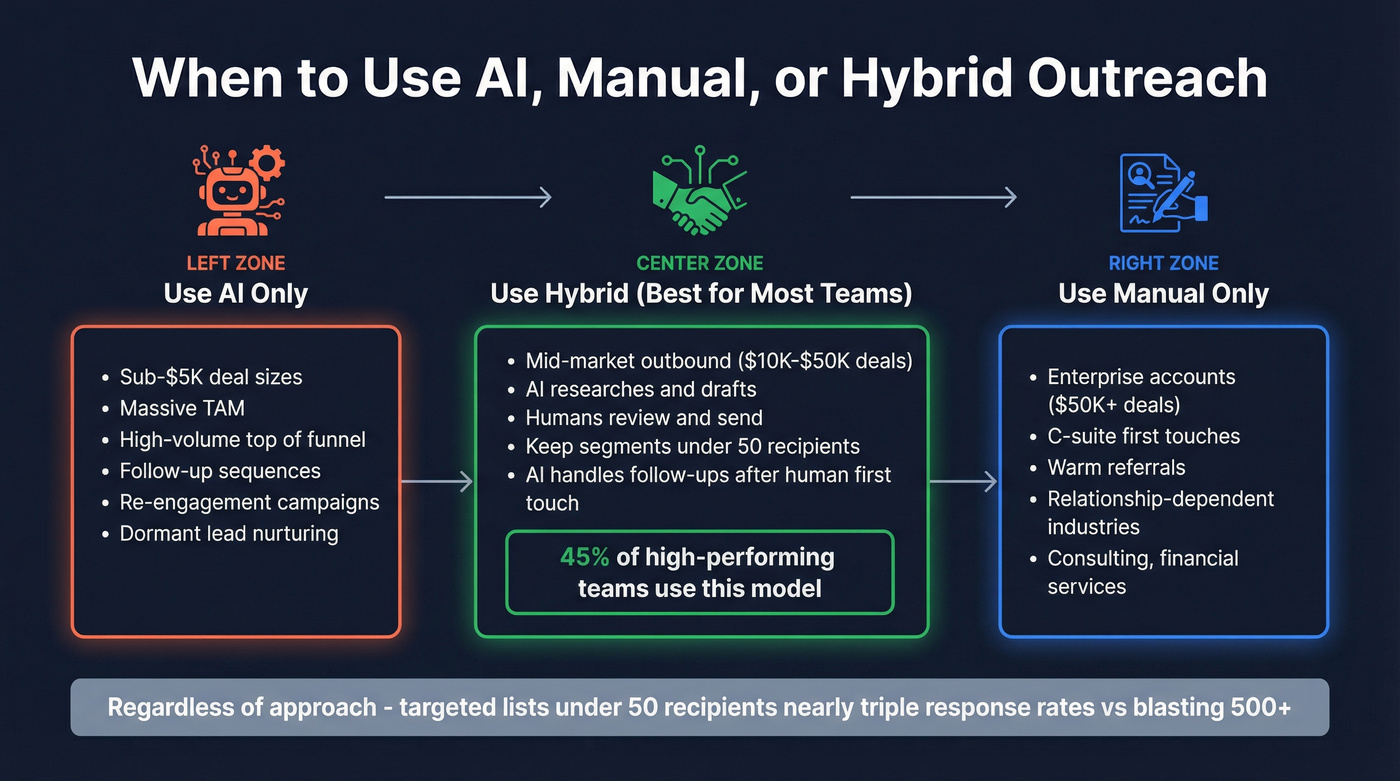
45% of high-performing sales teams have already adopted hybrid human-AI SDR models. They aren't debating AI vs manual. They're using both.
LivePerson cut research time from 20 minutes per prospect to 2 minutes after implementing AI prospecting, and saw a 35% lift in engagement rates. That's the hybrid model in action: AI does the research and drafting, humans do the reviewing and relationship-building. Outreach's data backs this up - deals closed within 50 days show a 47% win rate versus 20% for longer cycles, and AI-assisted research compresses that timeline significantly.
Here's a concrete decision framework:
Use AI for high-volume top-of-funnel, follow-up sequences, research and data gathering, or re-engagement campaigns targeting dormant leads.
Use manual for enterprise accounts with $50K+ deal sizes, warm referrals, relationship-dependent industries like consulting or financial services, or first-touch to C-suite executives.
Use both for mid-market outbound where AI researches and drafts while humans review and send. Even in a hybrid model, keep your targeted lists under 50 recipients per campaign segment - the Belkins data shows that nearly triples your response rate compared to blasting 500+.
Skip the hybrid approach only if you're running a pure transactional play with sub-$5K deal sizes and massive TAM. In that case, go full AI and invest the savings in email sending infrastructure.
Data Quality Decides Everything
Look, neither approach works if your emails bounce. And the deliverability bar keeps rising every year.
Google and Yahoo started enforcing bulk-sender authentication requirements in February 2024. Microsoft followed in May 2025. By late 2025, Gmail began outright rejecting non-compliant mail. The requirements are simple but non-negotiable: SPF, DKIM, and DMARC authentication; spam complaints under 0.3%; bounce rates under 2%; and one-click unsubscribe for marketing messages.
Spam filters don't penalize AI-written text specifically - deliverability is driven by authentication, complaint rates, and engagement. But repetitive, templated AI copy increases complaints, which tanks deliverability indirectly.
Whether you choose automated outreach, handcrafted sequences, or a hybrid, your results are capped by your data quality. Prospeo verifies emails in real time with 98% accuracy on a 7-day refresh cycle, so your list stays clean even as contacts change jobs. Meritt saw their bounce rate drop from 35% to under 4% after switching, and their pipeline tripled from $100K to $300K per week. That's not a marginal improvement - that's the difference between a functional outbound program and one that's slowly destroying its domain reputation.
Most articles comparing AI outreach vs manual outreach skip deliverability entirely, and it's the biggest blind spot in the conversation. You can optimize your copy, targeting, cadence, and follow-up timing - but if 15% of your emails bounce, none of it matters. Fix the data first. Everything else is optimization on top of a working foundation.
The hybrid model works when your foundation is clean. Prospeo delivers 143M+ verified emails at $0.01 each - with buyer intent signals across 15,000 topics so your AI tools and your SDRs target the right prospects from day one.
Build the targeted lists that make both AI and human outreach actually convert.
FAQ
Is AI cold email worth it for small deal sizes?
For teams closing deals under $10K, AI cold email generally makes sense - roughly $28K/year versus $98K for a loaded SDR. But factor in 40-60 hours of data prep and a 3-6 month ramp to real ROI, and savings are real but less dramatic than vendors claim. The best ROI comes from a hybrid model where AI handles volume while humans focus on high-value accounts.
What reply rate should I expect from cold outreach in 2026?
The average cold email reply rate is 3.43% per Instantly's 2026 benchmark, and Backlinko's 12-million-email study found 8.5% receive any reply. With signal-based personalization, 15-25% is achievable. Campaigns targeting under 50 recipients get 5.8% versus 2.1% for 500+ - volume kills rates regardless of method.
How do I prevent AI outreach from damaging my domain?
Authenticate everything - SPF, DKIM, DMARC are non-negotiable. Keep bounce rates under 2% and spam complaints under 0.3%. Start with 100-200 test sends before scaling. Most importantly, verify every email address before sending. Bad data is the fastest path to a blocklist, and no amount of copy optimization fixes a 15% bounce rate.