

The Assumptive Close: Psychology, Scripts, and When It Backfires
You're 45 minutes into a demo that's going perfectly. The prospect is nodding, asking implementation questions, leaning forward. Then you say, "So, would you like to move forward?" The energy drains from the room. They need to "think about it." You just killed your own deal - not because the product was wrong, but because you asked a question that invited hesitation into a conversation that didn't have any.
The assumptive close avoids that trap entirely. 61% of lost deals die from buyer indecision, not from price or product objections. Organizations with disciplined closing processes report 28% higher revenue growth, and this technique is a common part of that playbook. But most reps get it wrong. They memorize scripts without understanding the psychology, and they end up sounding pushy instead of confident.
It isn't about what you say. It's about whether you've earned the right to say it.
What Is the Assumptive Close?
The assumptive close is a technique where you communicate as if the buying decision is already made. Instead of asking "Would you like to proceed?", you shift the conversation to implementation details, timelines, and next steps. The core mechanism: you move the buyer from "Should we?" to "How do we?"
"Should we?" invites deliberation. "How do we?" invites collaboration.
You'll sometimes see "presumptive close" used interchangeably, but there's a meaningful distinction. A presumptive close assumes the sale is done and starts processing it - think of a car salesman who starts filling out paperwork before you've agreed. The assumptive close is subtler. It assumes the next step, not the signature. You're guiding momentum, not steamrolling consent. One builds trust; the other erodes it.
The Psychology Behind It
The reason this technique works - and the reason it sometimes spectacularly doesn't - comes down to a single psychological concept: sense of agency.
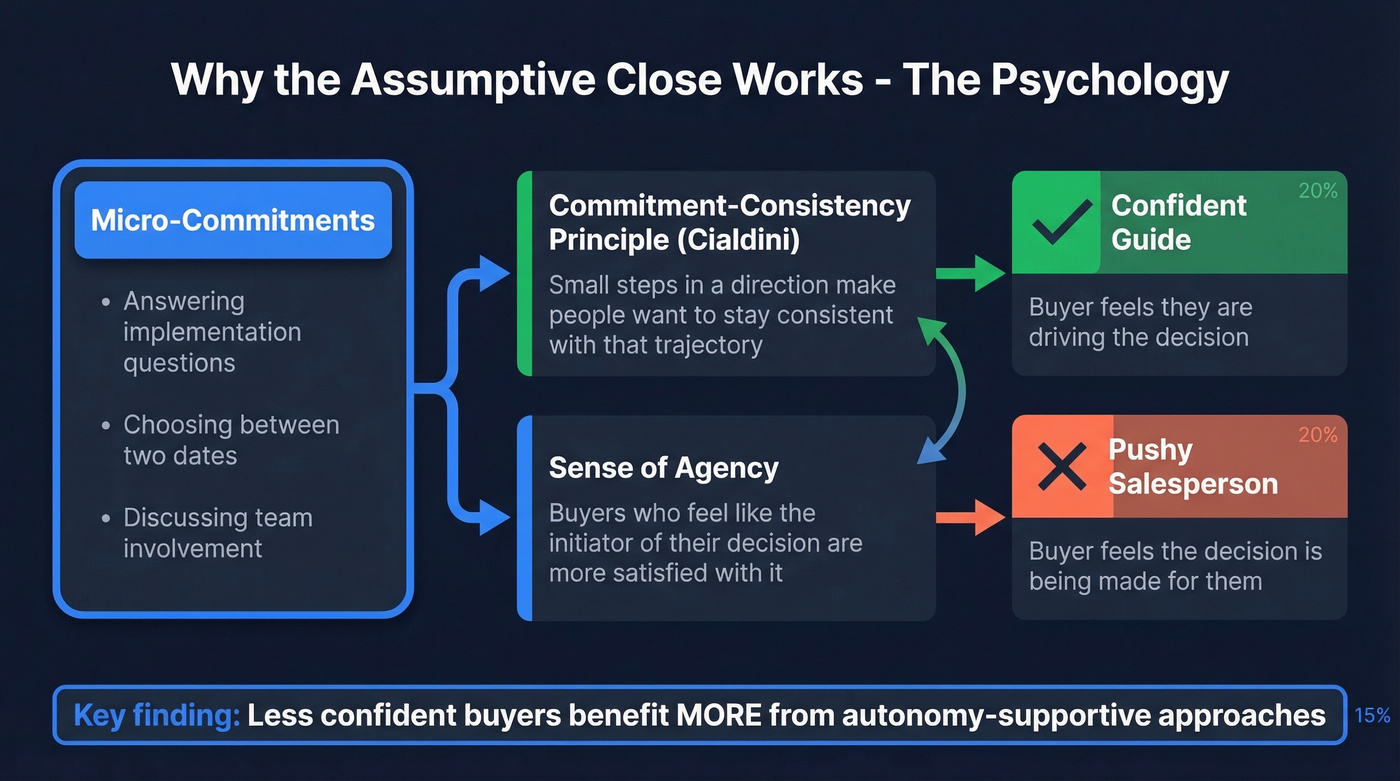
A 2025 study published in Psychology & Marketing ran five experiments across multiple retail contexts and found that autonomy-supportive selling techniques generate significantly more positive word-of-mouth than pressure-to-purchase tactics. When buyers feel like the initiator of their own decision, they're more satisfied with it. When they feel pushed, they resist.
This maps directly to Cialdini's commitment-consistency principle. Once someone takes a small step in a direction - answering an implementation question, choosing between two onboarding dates - they're psychologically inclined to stay consistent with that trajectory. The assumptive close works by creating these micro-commitments, not by forcing a macro-commitment.
Here's the nuance that matters: the study also found that self-efficacy moderates the effect. Buyers with lower confidence benefit more from autonomy-supportive approaches. Translation for sales: the less certain your prospect is, the more carefully you need to frame the close as their idea, not yours. High-confidence buyers can handle direct deal velocity. Uncertain buyers need to feel like they're driving.
The line between "confident guide" and "pushy salesperson" isn't about the words you use. It's about whether the buyer feels like they're making the decision or having it made for them.
Phrases That Move Deals Forward
The Language Swap Table
The fastest way to implement this technique is to audit your language for passive, permission-seeking phrasing and replace it with forward-moving alternatives. The right assumptive closing phrases eliminate yes/no gates and keep the conversation in motion.
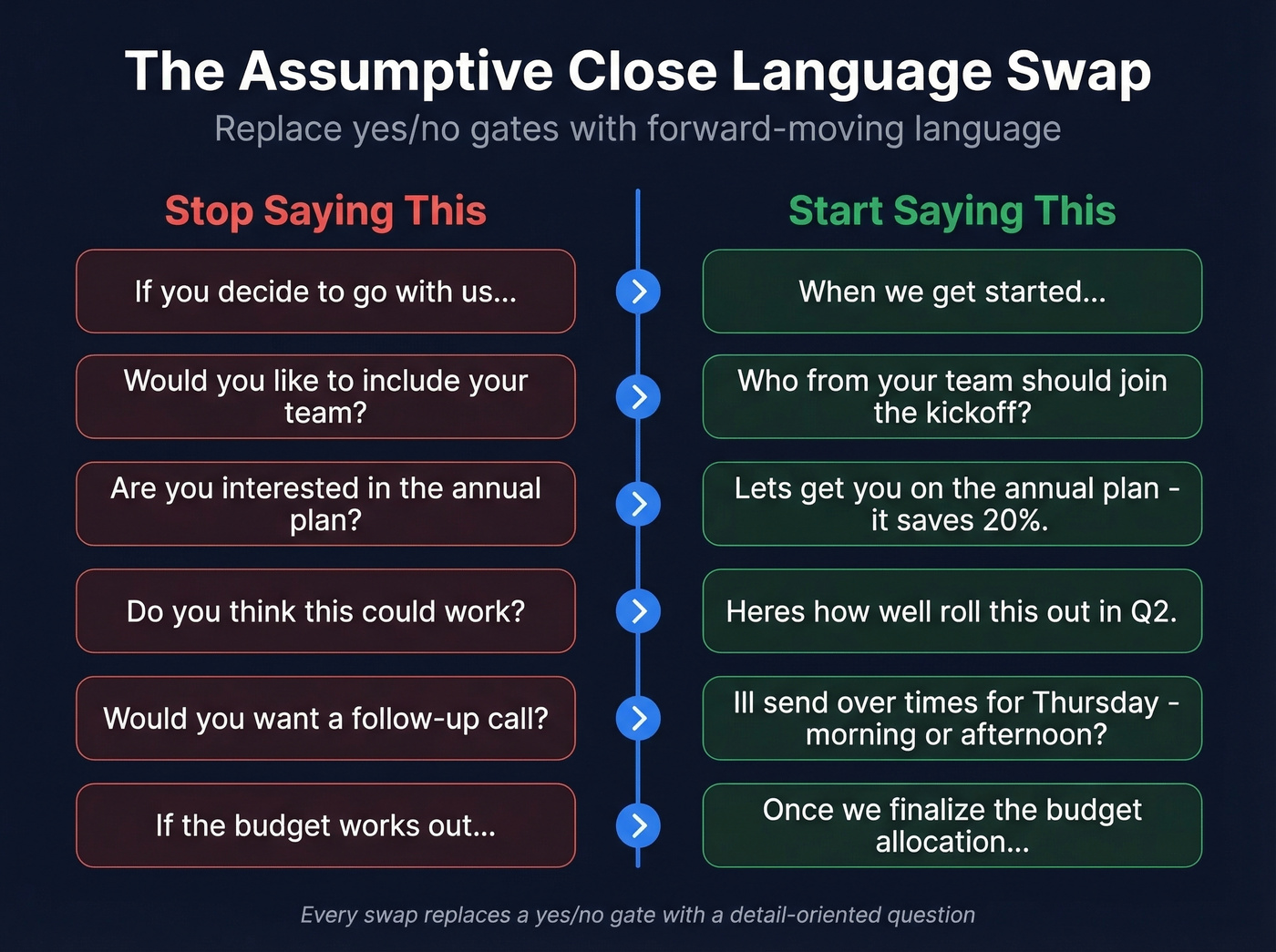
| Passive Phrasing | Assumptive Phrasing |
|---|---|
| "If you decide to go with us..." | "When we get started..." |
| "Would you like to include your team?" | "Who from your team should join the kickoff?" |
| "Are you interested in the annual plan?" | "Let's get you on the annual plan - it saves 20%." |
| "Do you think this could work?" | "Here's how we'll roll this out in Q2." |
| "Would you want a follow-up call?" | "I'll send over times for Thursday - morning or afternoon?" |
| "If the budget works out..." | "Once we finalize the budget allocation..." |
Every swap replaces a yes/no gate with a detail-oriented question or statement. "When" replaces "if." "Who" replaces "whether." You're not asking for permission to proceed - you're asking for input on how to proceed.
Why Word Choice Moves Numbers
Gong's analysis of sales calls found that reps who opened with "Did I catch you at a bad time?" were 40% less likely to book a meeting - a 0.9% success rate. Reps who opened with "How've you been?" saw 6.6x higher success rates. Stating the reason for calling lifted outcomes by 2.1x.
Those stats are about prospecting, not closing. But the principle is identical: language that creates openness and forward motion outperforms language that invites rejection. The assumptive close is this principle applied to the final stretch of the deal.

You can't assumptive-close a deal you never should have been in. Prospeo's 30+ search filters - including buyer intent, job changes, and headcount growth - put you in front of prospects who are already asking "how," not "why." 98% email accuracy means your follow-up actually reaches the person who was nodding in that demo.
Stop closing the wrong people. Start with the right data.
Assumptive Close Examples by Context
B2C Retail and Service
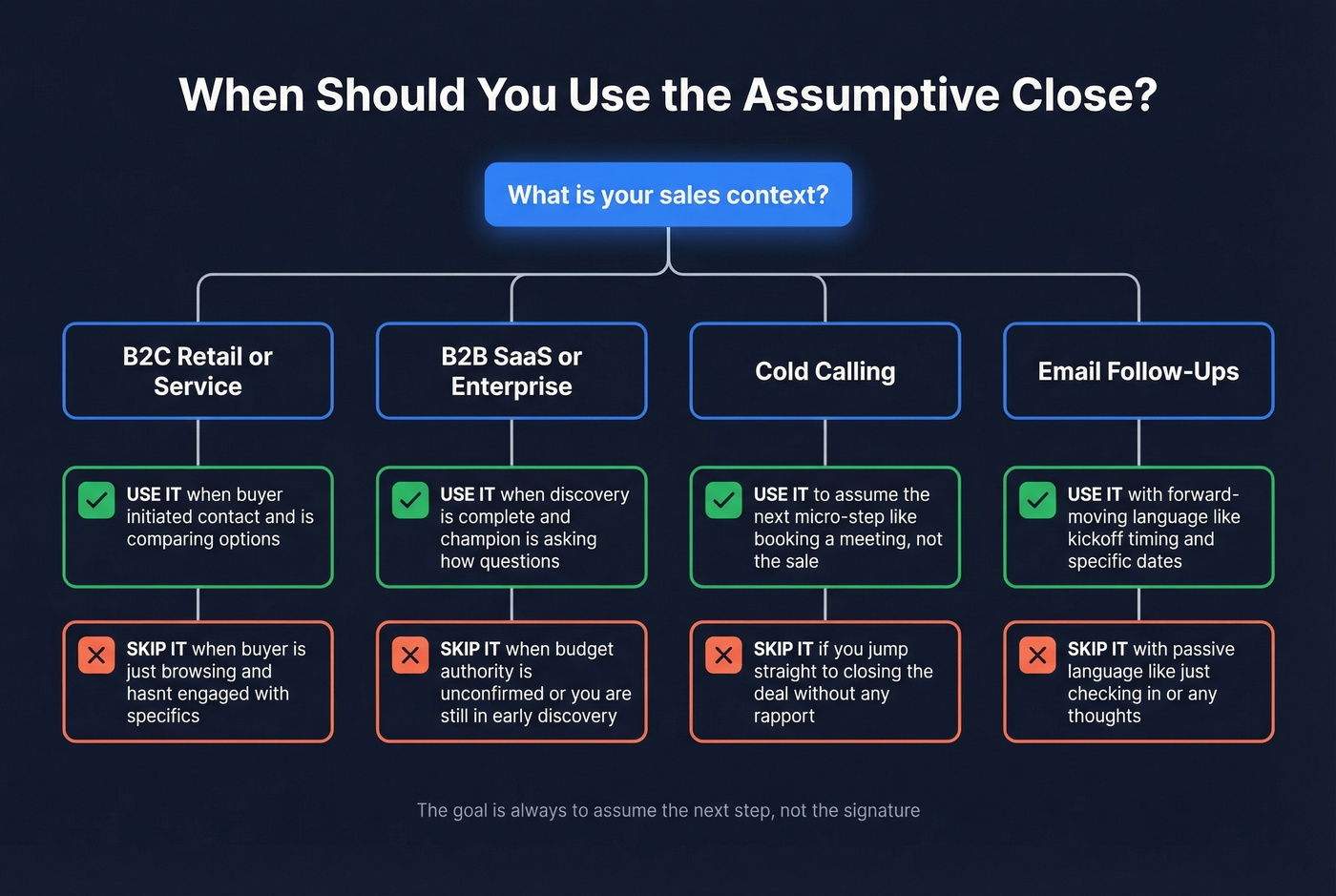
In high-intent retail environments - a customer walking into a phone store, a home services consultation - this approach is almost the default. The buyer showed up. They have intent. Your job is to channel it.
Example scripts:
- "Let's get you set up with the 256GB model. Do you want the case in black or navy?"
- "I'll schedule the installation for next Tuesday. Does morning or afternoon work better?"
Use this when the buyer initiated contact, has asked specific product questions, and is comparing options - not questioning whether to buy at all.
Skip this when the buyer is "just browsing" and hasn't engaged with specifics. Jumping to assumptive language here feels like the AT&T store rep who starts ringing you up before you've decided if you even want a new phone.
B2B SaaS and Enterprise
Enterprise deals play by different rules. You're not closing one person - you're navigating 6 to 10 decision-makers on average. The assumptive close in B2B isn't about assuming the signature. It's about assuming the next step - focusing on a go-live date rather than a yes/no decision.
Example scripts:
- "Who should be in the kickoff call once we finalize the SOW?"
- "Let's map out the integration timeline - does your team prefer a phased rollout or all-at-once?"
- "I'll draft the mutual action plan and send it over by Friday. What milestones matter most to your VP?"
Use this when you've completed discovery, the champion is engaged, and the prospect is asking "how" questions, not "why" questions. Skip it when you haven't confirmed budget authority, the economic buyer hasn't been involved, or you're still in early discovery. Assumptive language before qualification is the fastest way to get ghosted in enterprise sales.
Cold Calling
Cold calls are where the assumptive close technique requires the most finesse. You haven't built rapport yet, so you can't assume the sale - but you can assume the next micro-step. The goal isn't to close the deal; it's to close for the meeting.
Example scripts:
- "I'll keep this to two minutes. I'm reaching out because [specific pain]. Let's grab 15 minutes Thursday to see if it's worth exploring - morning or afternoon?"
- "Based on what I'm seeing with companies like yours, this is worth a quick conversation. I'll send a calendar link for next week - which day is lighter for you?"
This works because it skips the awkward "Would you be open to a meeting?" question that invites an easy no. You're proposing the meeting as a given and asking the prospect to choose the details.
Email Follow-Ups
Written channels are where assumptive framing gets underused. Most follow-up emails default to passive language: "Just checking in," "Wanted to see if you had any thoughts." These invite silence.
55% of replies come from follow-ups, not the initial email. And waiting three days between touches results in a 31% increase in reply rates. So your follow-up cadence matters - and so does the framing.
Assumptive follow-up template:
Subject: Kickoff timing
Hi [Name], I've penciled in a kickoff call for the week of [date]. I'll need 30 minutes with you and whoever owns [relevant function]. Does Tuesday or Wednesday work better?
Assumptive breakup template:
Subject: Should I close your file?
Hi [Name], I'll assume [pain point] isn't a priority right now and close out your file on our end. If that changes, I'm here - just reply and we'll pick up where we left off.
One thing that kills assumptive momentum before the prospect reads a word: bounced emails. We've seen teams lose entire sequences to bad data. Verify your list before you send - Prospeo handles bulk email verification at 98% accuracy, so your sequences actually land.
How It Compares to Other Techniques
Not every deal calls for the same close. Here's how the assumptive close stacks up.
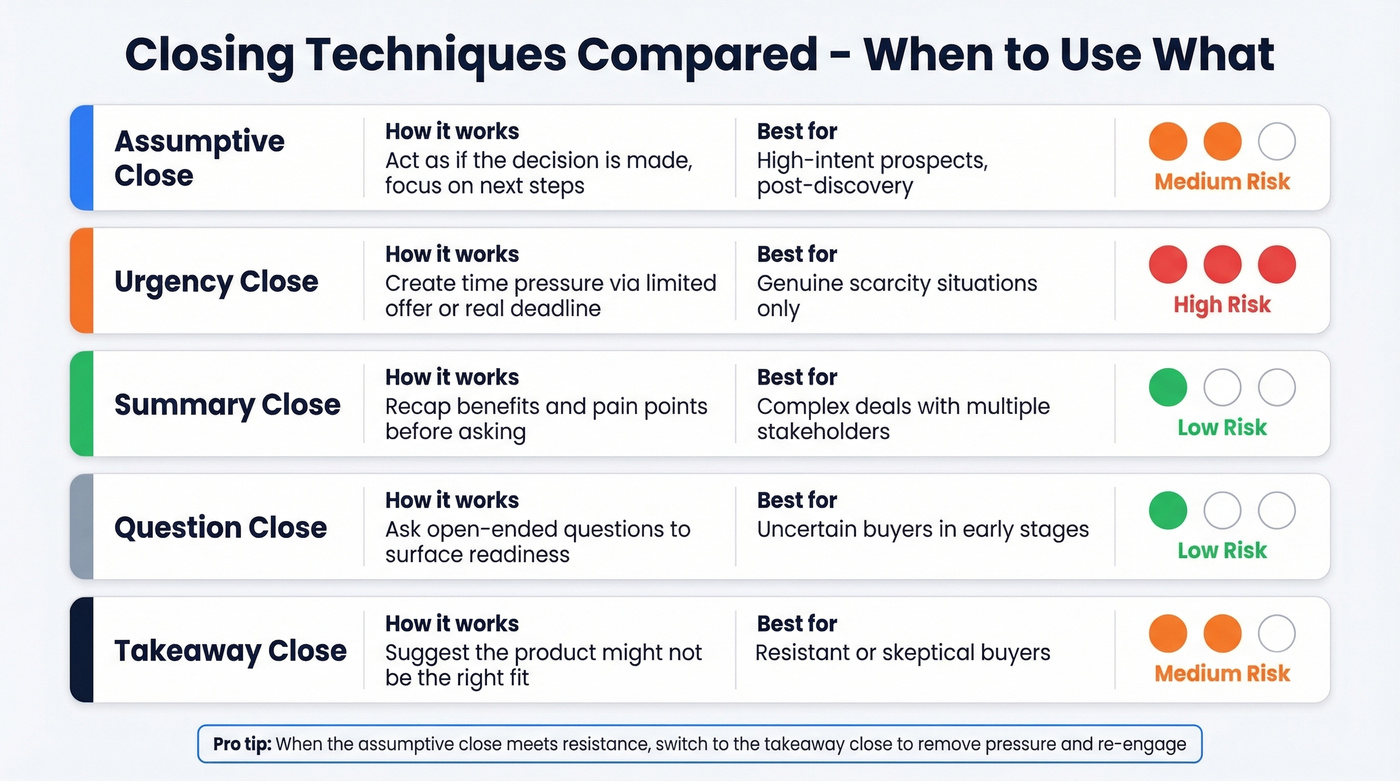
| Technique | How It Works | Best For | Risk Level |
|---|---|---|---|
| Assumptive | Act as if the decision is made; focus on next steps | High-intent, post-discovery | Medium - backfires if premature |
| Urgency | Create time pressure via limited offer or deadline | Genuine scarcity only | High - feels manipulative if fake |
| Summary | Recap benefits and pain points before asking | Complex deals, multiple stakeholders | Low - consultative by nature |
| Question | Ask open-ended questions to surface readiness | Uncertain buyers, early-stage | Low - but stalls momentum |
| Takeaway | Suggest the product might not be the right fit | Resistant or skeptical buyers | Medium - requires confidence |
When the assumptive close meets resistance, the takeaway close ("Maybe this isn't the right fit for you right now") re-engages the prospect by removing pressure. It's the natural complement - one creates momentum, the other creates space.
Let's be honest: the assumptive close gets treated like an advanced technique, but it's really just what good conversations sound like. If you've done proper discovery and the solution genuinely fits, not using it is the weird move. Asking "So, do you want to buy this?" after a prospect just spent 40 minutes telling you their problems is the conversational equivalent of asking your dinner date if they'd like to eat the food they just ordered.
When It Backfires
Three Ways It Fails
1. You use it before earning the right. This is the most common failure mode. A rep skips discovery, runs a surface-level demo, and then drops "So, who should I send the contract to?" The prospect feels bulldozed. Trust evaporates.
2. You use it with analytical or procurement-heavy buyers. Some buyers - especially in finance, legal, and enterprise procurement - process decisions methodically. Assumptive language doesn't create momentum for them; it triggers psychological reactance. They feel manipulated, and the research confirms it: pressure tactics make customers perceive salespeople as manipulative and reduce positive outcomes.
3. You sound scripted. Buyers in 2026 have read the same sales books you have. If your close sounds like a technique rather than a natural conversation, educated prospects will call it out - or worse, disengage silently. The consensus on r/sales is that buyers can smell a canned close from a mile away, and the best reps make it feel like a normal next step in the conversation, not a "move."
Recovery Playbook
When you feel the prospect pull back after an assumptive close attempt, don't double down. Here's the reset:
Acknowledge the pushback directly. "I got ahead of myself - let me back up." This disarms tension immediately and, counterintuitively, builds credibility.
Shift to a question close. "What would need to be true for this to make sense for your team?" Open-ended questions return control to the buyer.
Return to consultative mode. Revisit their pain points. Reconfirm what you heard in discovery. Show that you're listening, not just selling.
Use a permission-based transition. "Would it make sense to schedule a follow-up after you've reviewed the proposal with your team?" This respects their process while maintaining a next step.
I've watched reps rescue six-figure opportunities with a well-timed "I got ahead of myself." The recovery is often more powerful than the original close because it demonstrates exactly the kind of confidence and empathy that wins deals. Doubling down on assumptive language after a prospect has pulled back? That turns confidence into pressure, and there's no coming back from it.
The 2026 Pre-Close Checklist
Before you deploy the assumptive close, run through these six checkpoints. If you can't check at least five, you're not ready.
- Qualification confirmed. You know the pain, the budget range, and the timeline. No guessing. (If you need a framework, use MEDDIC.)
- You've listened more than you've talked. If you dominated the conversation, you haven't earned the right to assume anything.
- You're speaking to the decision-maker or an empowered champion. Assumptive language aimed at someone who can't say yes is wasted breath. (This is where understanding the economic buyer matters.)
- You've prepared for the top 2-3 objections. Common sales mistakes include failing to anticipate objections - nothing derails a close faster than an objection you didn't see coming. (See how to reduce sales objection rate.)
- Mutual agreement exists. The prospect has verbally confirmed that the solution addresses their problem. You're not assuming out of thin air.
- Your data is clean. Conviction starts with data quality. Six dead phone numbers in a row will shake anyone's confidence. Tools like Prospeo verify emails at 98% accuracy and surface direct mobile numbers refreshed every 7 days, so your pipeline infrastructure doesn't undercut your closing technique. (If you're building a stack, start with best contact management software.)
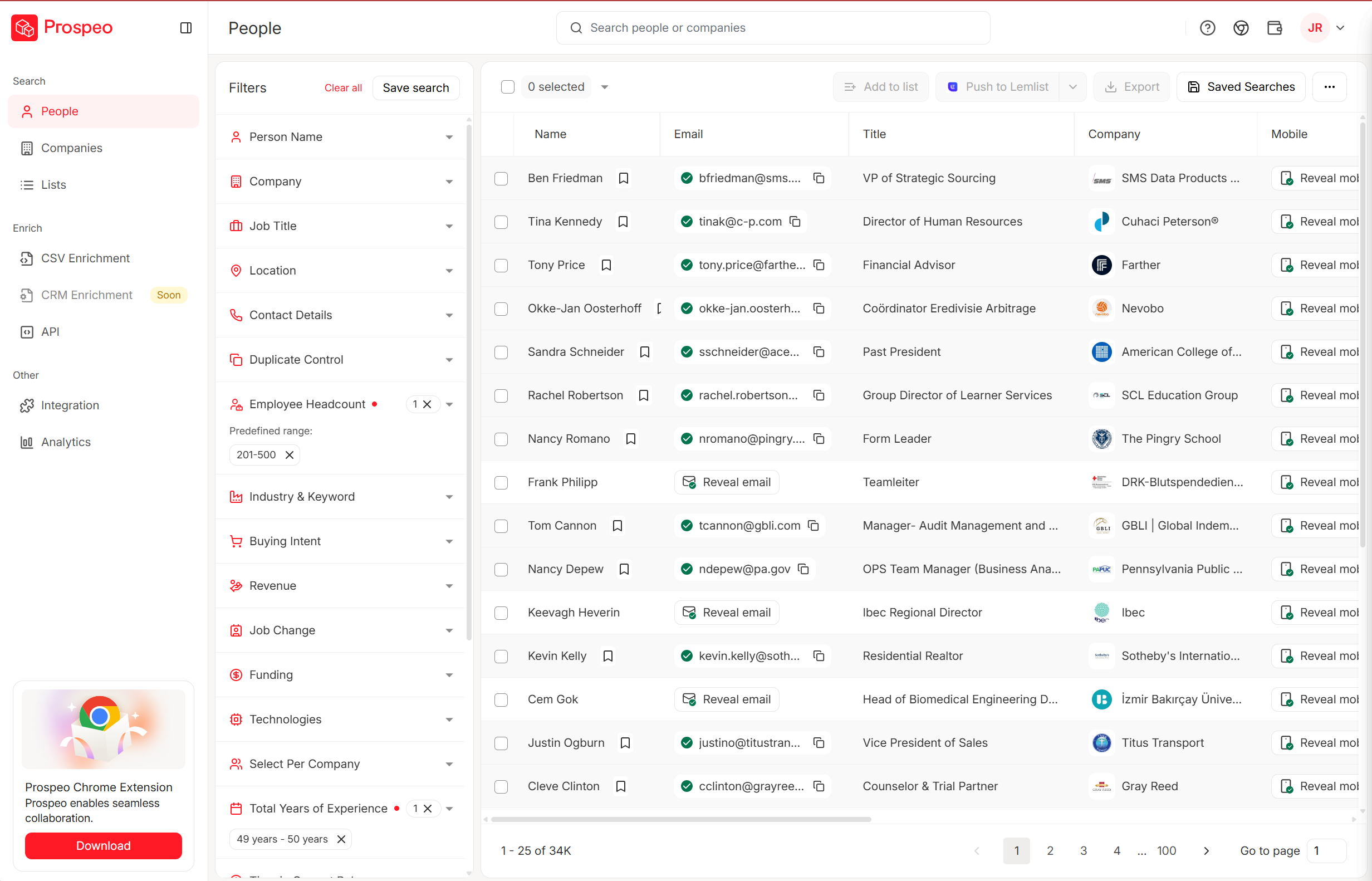
"I'll send over times for Thursday" only works if you have a direct line. Prospeo gives you 125M+ verified mobile numbers with a 30% pickup rate and verified emails at $0.01 each - so when you shift from "should we" to "how do we," you're talking to the actual decision-maker.
Assumptive closes need direct dials. Get them for $0.01 each.
FAQ
What's the difference between an assumptive close and a presumptive close?
The assumptive close assumes the next step - discussing timelines and logistics as if the buyer is moving forward. The presumptive close assumes the sale itself is done and starts processing it. Assuming the next step builds collaboration; assuming the sale feels aggressive if the buyer isn't fully committed.
Does the assumptive close work in B2B enterprise sales?
Yes, but you adapt it for longer sales cycles with 6-10 stakeholders. Assume the next step, not the contract. "Who should join the kickoff?" works. "I'll send the contract today" doesn't - not until you've navigated every decision-maker and procurement gate.
What are the best assumptive close questions?
The strongest questions steer toward implementation details: "Who from your team should join onboarding?", "Do you prefer a phased rollout or all-at-once?", and "Should I pencil in a go-live date for early next quarter?" Each treats the decision as made and invites the prospect to shape what happens next.
How do you recover when the assumptive close backfires?
Acknowledge it immediately: "I got ahead of myself." Then shift to open-ended questions that return control to the buyer: "What would need to be true for this to work?" The worst move is doubling down on assumptive language when a prospect has already pulled back - that turns confidence into pressure.
What tools help reps close with more confidence?
Clean contact data eliminates hesitation before you even reach the close. Verified emails and direct mobile numbers mean reps spend time closing instead of chasing dead leads. Pair good data with a CRM that tracks buyer engagement signals and you'll know exactly when a prospect is ready for forward-moving language.