Bombora vs Demandbase: Which Intent Data Tool Do You Actually Need?
You're about to commit $25K-$120K/year on intent data. That's not a rounding error. One of these tools gives you a data feed. The other gives you an entire account-based marketing platform. Pick wrong and you'll overpay for features you ignore - or underpay for signals you can't act on.
We've spent months watching teams wrestle with this exact decision, and the answer is less about which tool is "better" and more about what you already have in your stack.
30-Second Verdict
Choose Bombora if you already have an ABM platform and CRM - you just need a clean intent signal piped in.
Choose Demandbase if you need the whole stack: intent signals, account scoring, display ads, orchestration, and reporting in one UI.
Skip both if your real problem is acting on intent signals. Neither tells you who to email - only which account is surging.
How Each Tool Works
Bombora: The Co-op Model
Bombora runs a proprietary B2B Data Co-op of roughly 5,000 business websites sharing anonymized content consumption data. When a company's employees start reading heavily about "cloud security" or "ERP migration," Bombora's Company Surge model detects the spike above baseline and flags it.
The co-op model produces high-fidelity signals because data comes from direct publisher relationships, not ad-exchange bidstream data. The tradeoff is narrower coverage. Bombora tracks 14,000+ intent topics, English only, with weekly updates and no historical data. That said, Demandbase's own comparison table credits Bombora's co-op with 16.1B interactions per month - so "narrow" is relative.
Demandbase: Bidstream + First-Party
Demandbase takes a fundamentally different approach. Its native intent is bidstream-sourced - metadata generated every time an ad loads on a webpage. That third-party intent layer covers roughly 3 million sites, over 1 trillion interactions per month, 575,000+ topics, and 133 languages.
Bidstream is broader but noisier. You're inferring intent from ad-exchange signals rather than confirmed content consumption. Demandbase compensates by layering in first-party website behavior, CRM activity, and integrated partner intent from Bombora, G2, and TrustRadius - plus one year of historical data and weekly updates with real-time trending.
Feature-by-Feature Comparison
| Feature | Bombora | Demandbase |
|---|---|---|
| Sites monitored | ~5,000 (co-op) | ~3M (bidstream) |
| Intent topics | 14,000+ | 575,000+ |
| Languages | English only | 133 |
| Update frequency | Weekly | Weekly + real-time trending |
| Historical data | None | 1 year |
| Contact-level data | No | No |
| G2 rating | 4.4/5 (155 reviews) | 4.4/5 (1,916 reviews) |
The numbers look lopsided, but raw scale isn't everything. Bombora's co-op signals are higher-fidelity per interaction. Demandbase's breadth wins for international and niche-industry coverage. Neither provides contact-level data - a gap we'll come back to.
What You'll Actually Pay
The account-based orchestration market hit $1.2B in 2024 and is projected to reach $4.5B by 2033. That growth is why these tools cost what they do.
Bombora: The Vendr benchmark across 34 purchases puts the median contract at $24,750/year, with a low of $12,250 and a high of $80,525. Enterprise deployments with audience solutions and premium support run $100K-$300K/year.
Demandbase tiers more aggressively. Basic runs $18K-$24K/year, professional $45K-$65K, and enterprise $70K-$300K+. Onboarding fees hit around $29K, and extra seats cost $1,200-$3,000 per user/year. We've seen full implementations take closer to two months.
| Tool | Typical Annual Range |
|---|---|
| Bombora | $25K-$80K |
| Demandbase | $40K-$120K |
| 6sense | $35K-$150K+ |
Budget 15-25% above the quoted license for implementation, CRM integration, and topic configuration.

Bombora and Demandbase both cost $25K-$120K/year - and neither gives you a single verified email. Prospeo combines Bombora-powered intent data across 15,000 topics with 143M+ verified emails at 98% accuracy, so you go from account surge to decision-maker inbox without a second contract.
Turn intent signals into verified contacts for $0.01 per email.
Can You Use Both Together?
Yes, and many teams do. Demandbase offers a native Bombora integration that syncs Bombora intent topics weekly. Once connected, Bombora signals surface across account lists, journey stages, predictive scores, and ad campaigns inside Demandbase.
The catch: you need a separate paid Bombora license.
Plan roughly six weeks end-to-end. Demandbase recommends waiting at least a month after syncing Bombora topics before retraining predictive scores, because the models need time to learn the new signal layer. It's a powerful combination, but you're paying for two contracts.
What Users Say
Bombora strengths: Users consistently praise the intent signal quality for understanding where accounts sit in the buyer journey. The co-op data feels more trustworthy than bidstream alternatives.
Bombora friction: A common operational complaint on TrustRadius - exports. Intent data downloads as one massive worksheet, and account names don't cleanly match internal CRM records. If your data ops team can't do fuzzy matching, expect headaches.
Demandbase strengths: Strong ABM marketing fit and deep integrations earn consistent praise. Teams running full-funnel campaigns love having ads, scoring, and intent in one UI.
Demandbase friction: The engagement scoring system measures activity in "minutes," which doesn't intuitively map to what's actually being scored. The "highlighted accounts" section caps at six - frustrating for teams managing hundreds of targets.
Here's the thing: the recurring operational reality with both tools is the same. They're expensive, complex to operationalize, and you still need a separate contact database to actually send emails. That's why more teams are moving toward signal-based execution workflows - because account-level signals without contact-level activation create expensive noise.
The Gap Neither Tool Fills
Both Bombora and Demandbase tell you which accounts are surging. Neither tells you who to email.
You know Acme Corp is researching your category, but you don't have a verified email for the VP of Engineering driving the evaluation. We've watched teams spend $80K on intent data only to realize they need another $30K tool just to get contacts. That's a frustrating place to land after a six-figure commitment.
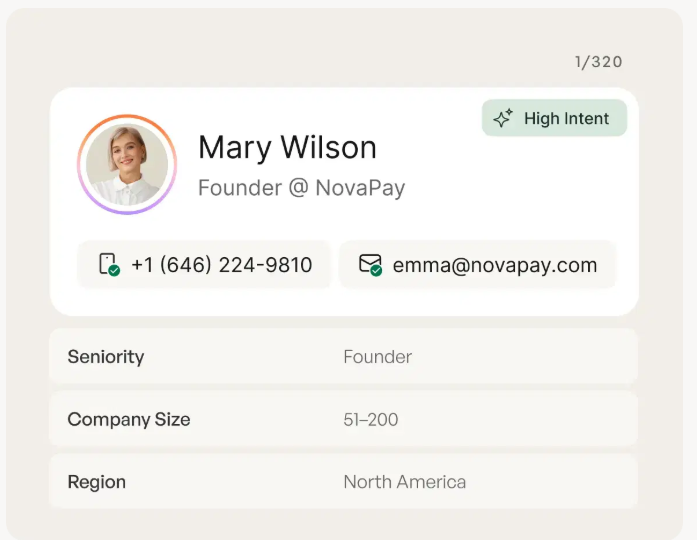
Prospeo bridges this gap directly - it layers Bombora-powered intent data across 15,000 topics on top of 300M+ verified professional profiles and 143M+ verified emails at 98% accuracy. You go from "this account is surging" to "here's the decision-maker's verified email" in one platform, self-serve, starting free.
Teams spend six figures on intent data, then realize they still can't email anyone. Prospeo layers Bombora intent across 300M+ profiles with 30+ filters - buyer intent, technographics, job changes, funding - so you act on surge signals the same day you see them. Self-serve, no contracts.
Skip the $30K contact database add-on. Prospeo has both built in.
When to Choose Which
Go with Bombora if you have an existing ABM platform and need a high-fidelity intent signal piped into it. Budget $25K-$80K/year.
Go with Demandbase if you need a full ABM stack - ads, orchestration, scoring, and intent - in one platform. Budget $40K-$120K+ and two months for implementation.
Layer both if budget allows and you want co-op + bidstream coverage inside Demandbase's orchestration engine.
Skip both for now if your team is under 10 reps and you don't have a defined ABM motion yet. Start with intent-enriched contact data through a tool like Prospeo, prove the workflow, then scale into a dedicated platform once you've outgrown it.
The Bombora vs Demandbase decision hinges on whether you need a standalone data feed or a full orchestration platform. Get that right and the rest follows.
FAQ
Is Bombora Part of Demandbase?
No. Bombora is an independent company. Demandbase offers a native integration that syncs Bombora topics weekly, but you need a separate paid license. Many teams layer both - it's a common setup, not a bundled product.
What's the Cheapest Way to Get Intent Data?
Bombora's median contract runs roughly $24,750/year per Vendr benchmarks. Demandbase starts around $18K-$24K but scales fast with onboarding and seats. Prospeo offers Bombora-powered intent across 15,000 topics with a free tier and credit-based pricing - the most accessible entry point for teams under $50K annual data budgets.
Can Intent Data Actually Drive Pipeline?
Yes, but only with activation. Demandbase attributed $3.5M in pipeline in one quarter using G2 Buyer Intent integration - including 12 opportunities from competitive takeout campaigns alone. Intent signals without verified contacts and a defined workflow just create expensive noise.
What's the Difference Between Co-op and Bidstream Intent?
Co-op intent (Bombora) tracks confirmed content consumption across publisher partners, producing fewer but higher-fidelity signals. Bidstream intent (Demandbase native) captures ad-exchange metadata across millions of sites - broader coverage but noisier. Most enterprise teams combine both for the best signal-to-noise ratio.