

How to Build Customer Relationships That Actually Last
Every article on building customer relationships says the same thing: communicate, personalize, be transparent. Great advice - if you're writing a greeting card. None of it comes with benchmarks, none of it distinguishes B2B from B2C, and none of it tells you how to measure whether your "relationship strategy" is actually working.
Here's what we've found after years of watching teams try to operationalize vague advice: the gap between "we value our customers" and "we can prove our relationships drive revenue" is enormous. Let's close it.
Three Priorities Before Anything Else
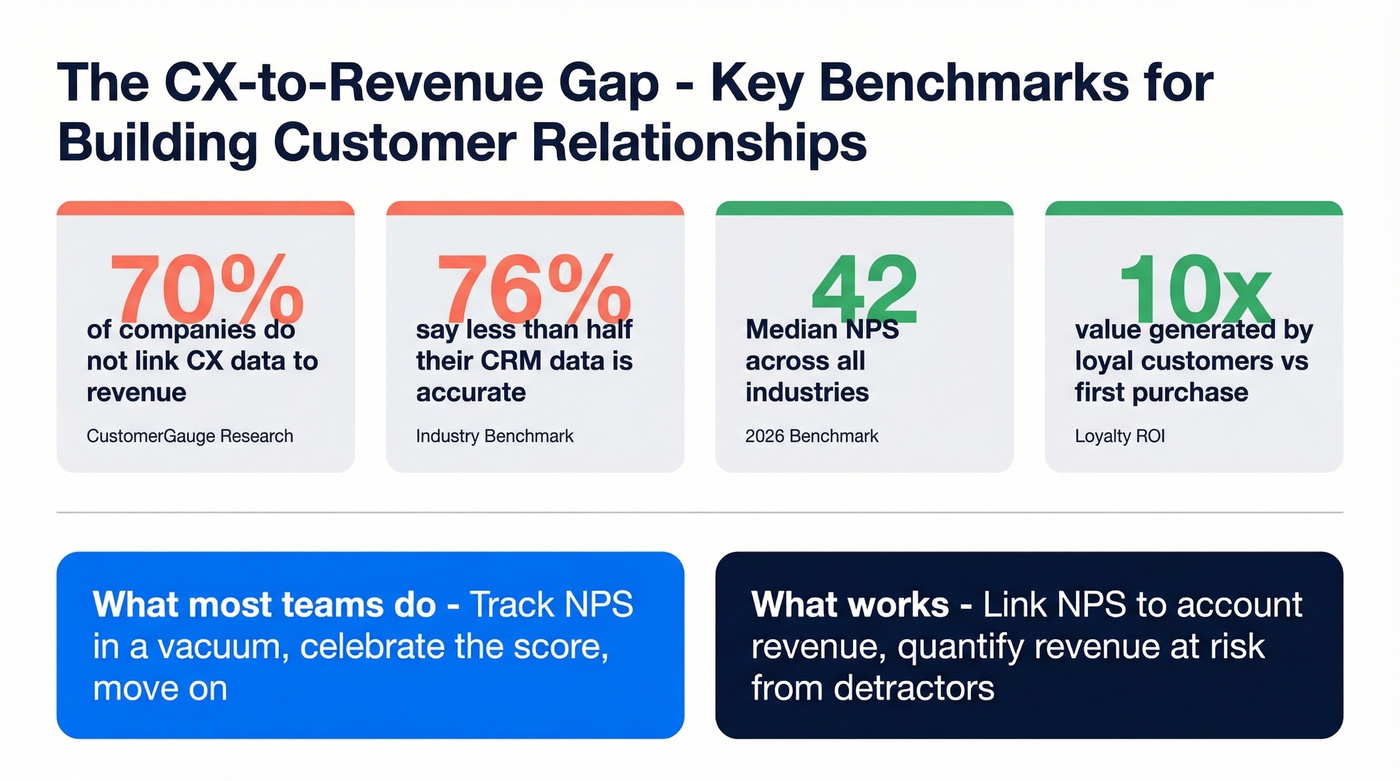
- Fix your data foundation. 76% of companies say less than half their CRM data is accurate. You can't personalize, segment, or retain customers when your records are wrong.
- Measure relationships and tie them to revenue. The median NPS across industries is 42. If you don't know your number - or can't connect it to account revenue - you're flying blind.
- Segment your strategy by B2B vs B2C. B2B median NPS is 38; B2C is 49. The tactics that work for an e-commerce brand won't work for an enterprise SaaS company.
Everything else is optimization on top of these three.
What Customer Relationships Actually Are
Customer relationships aren't customer service. That distinction matters more than most teams realize.
Customer service is reactive - someone has a problem, you fix it. Customer relationships are the strategic, ongoing effort to build trust, loyalty, and lifetime value across every interaction, not just support tickets. Think of it this way: customer service is the fire department. Customer relationships are the building code that prevents fires in the first place.
The transactional model treats each interaction as a standalone event. You sell, you deliver, you move on. The relationship-based model treats every touchpoint as a deposit in a trust account - follow-ups, personalization, proactive communication, and genuine investment in the customer's outcomes. Companies that operate transactionally compete on price. Companies that invest in relationship building compete on switching costs, referrals, and expansion revenue.
The Customer Relationship Lifecycle
Not every customer interaction carries the same weight. The lifecycle breaks into five stages - Reach, Acquisition, Conversion, Retention, Loyalty - each demanding different tactics, different metrics, and different investment.
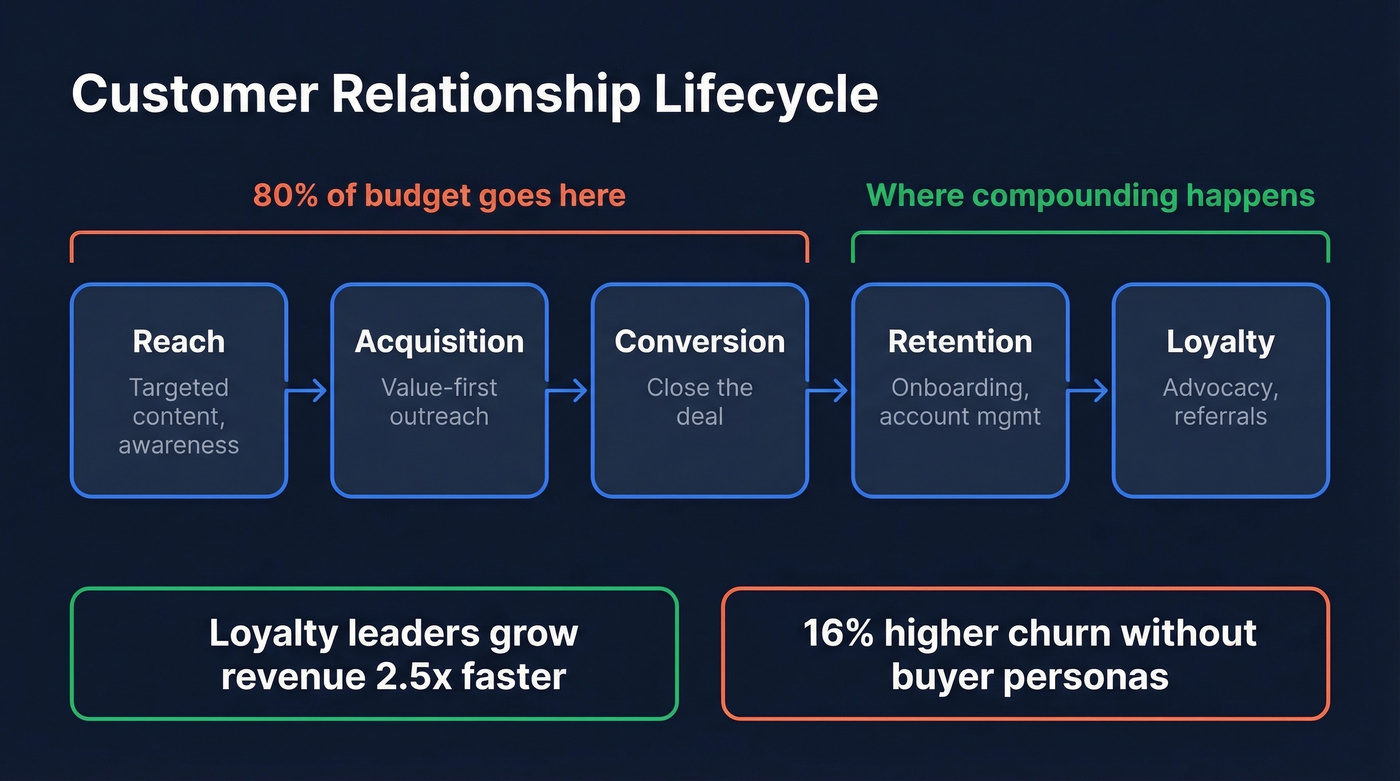
Reach is awareness: targeted content that gets you in front of the right people. Acquisition is engagement: value-first outreach that turns attention into a conversation. Conversion is the sale itself. Retention is keeping them: structured onboarding and proactive account management. Loyalty is turning them into advocates through referral programs, recognition, and co-creation.
Here's the problem we see over and over: companies pour 80% of their budget into the first three stages and starve the last two. That's backwards. Loyalty leaders grow revenue 2.5x faster than their peers and deliver 2-5x higher shareholder returns over a decade, while marketing without buyer personas can result in 16% higher churn. The math is clear - retention and loyalty are where the compounding happens.
If your team spends ten hours planning a launch campaign and zero hours designing a 90-day post-sale experience, you're leaving the most valuable stages unfunded.
B2B vs B2C: Why the Playbooks Differ
Most relationship-building advice treats all customers the same. That's a mistake.
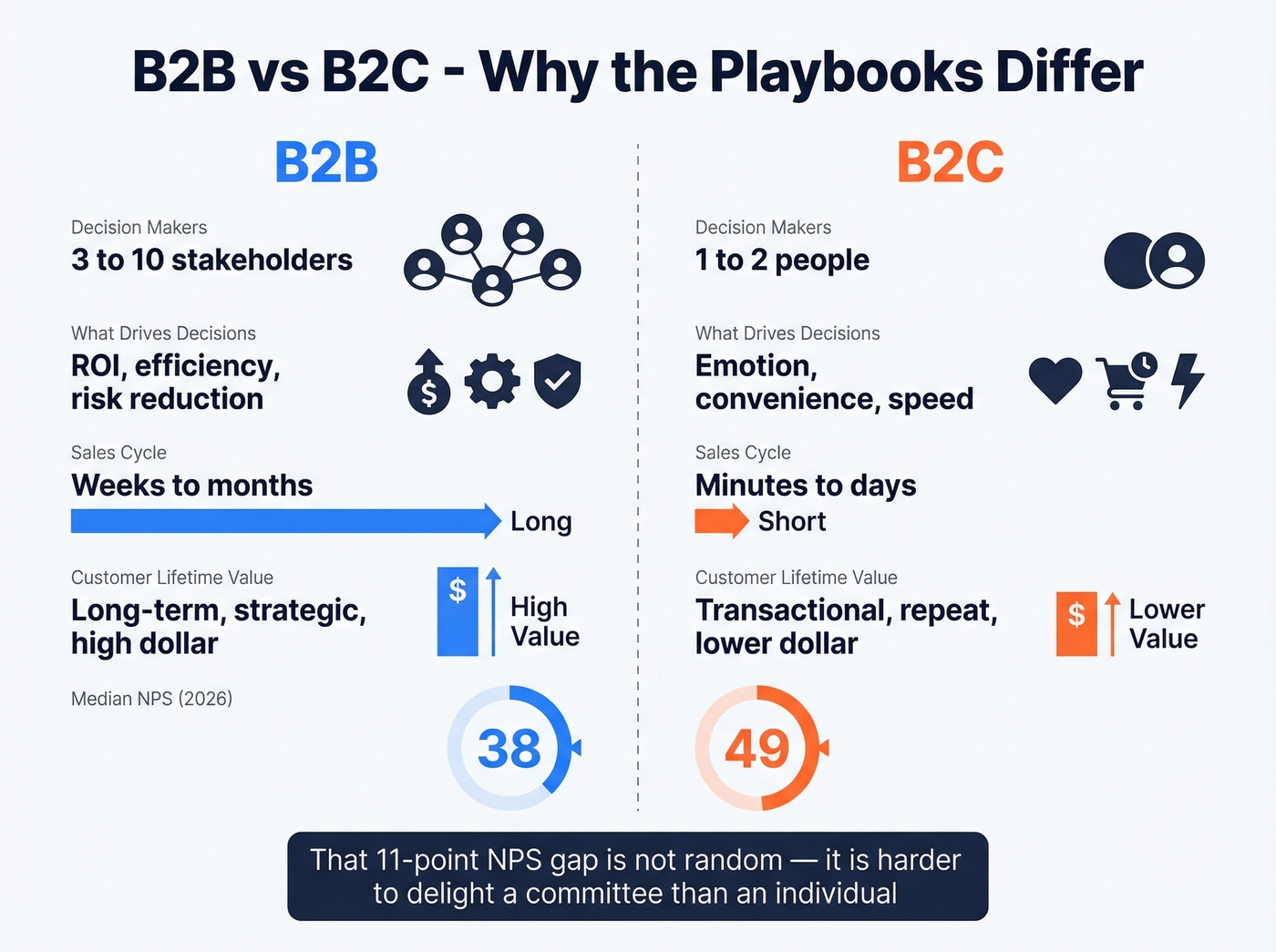
| Factor | B2B | B2C |
|---|---|---|
| Decision-makers | 3-10 stakeholders | Usually 1-2 |
| Emotional register | ROI, efficiency, risk | Emotion, convenience |
| Sales cycle | Weeks to months | Minutes to days |
| CLV dynamics | Long-term, strategic | Transactional, repeat |
| Median NPS (2026 data) | 38 | 49 |
That 11-point NPS gap isn't random. It's harder to delight a committee than an individual. In B2B, you're navigating procurement, finance, legal, and end users - each with different definitions of "good experience." In B2C, one person decides they're happy or they're not.
B2B relationships are also higher-stakes and longer-duration. A churned enterprise account can represent hundreds of thousands in annual revenue; a churned consumer might represent a single low-dollar purchase. B2B demands multi-threaded relationships across the buying committee, structured QBRs, and proactive value demonstration. B2C demands consistency, emotional resonance, and frictionless experiences at scale. Don't blend the playbooks.

76% of companies have inaccurate CRM data - and you just read why that kills personalization and retention. Prospeo enriches your CRM with 50+ data points per contact at a 92% match rate, refreshed every 7 days. That's the data foundation this article says you need before anything else.
Stop personalizing with bad data. Start with contacts you can trust.
The Five Promises of Personalization
Every competitor article says "personalize your outreach." None of them tell you what that actually means at scale. BCG's Personalization Index - built from studying 200 brands through mystery shopping across channels - offers a framework that's actually usable.
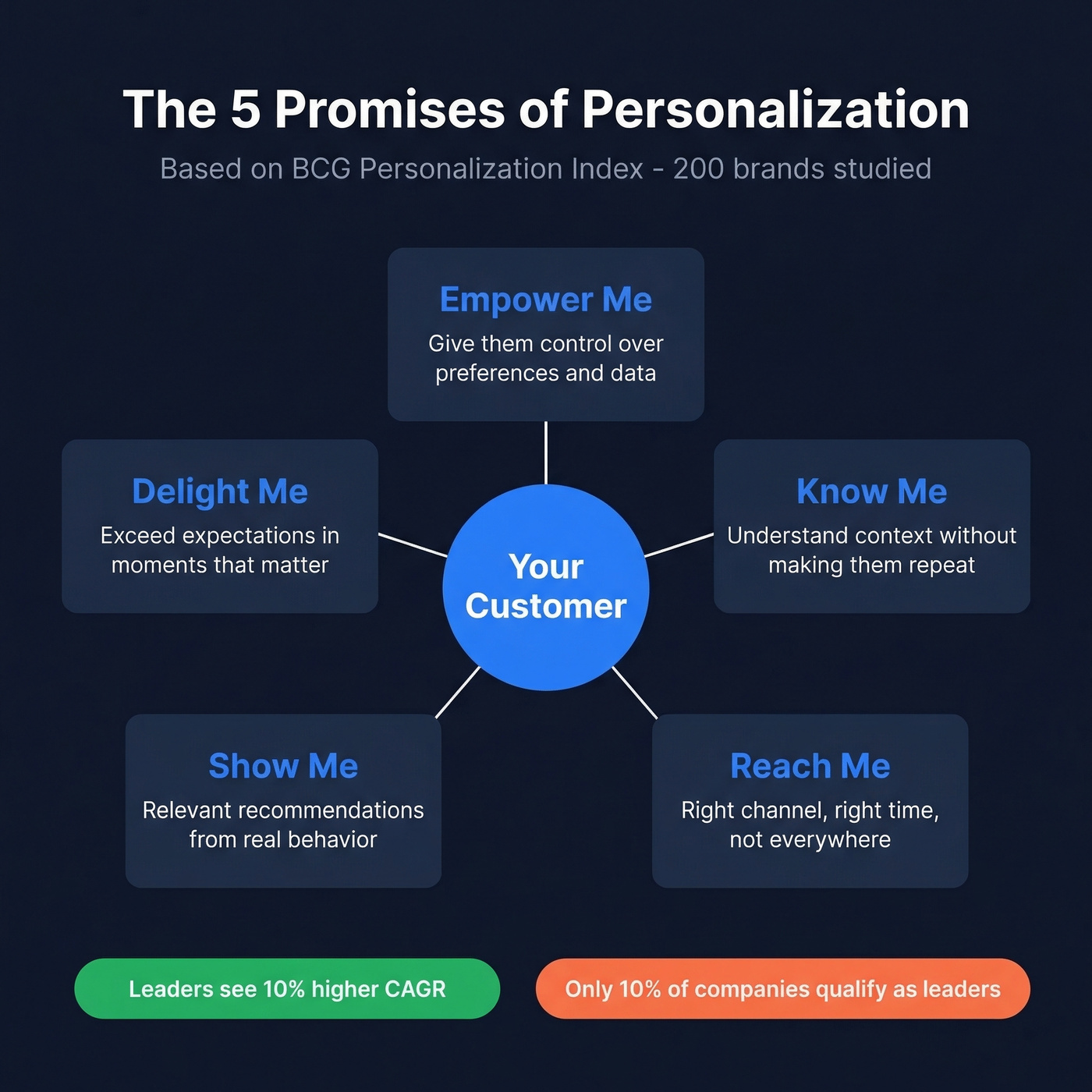
- Empower Me - give customers control over their experience. Let them set preferences, manage their data, choose their channels.
- Know Me - demonstrate that you understand their context, history, and needs without making them repeat themselves.
- Reach Me - show up in the right channel at the right time, not everywhere all the time.
- Show Me - surface relevant options and recommendations based on actual behavior, not demographic assumptions.
- Delight Me - exceed expectations in moments that matter. Surprise with value, not just discounts.
Personalization leaders achieve 10% higher CAGR than laggards. BCG estimates $2 trillion in value at stake over the next three years. Only 10% of companies qualify as leaders - meaning 90% of businesses are leaving money on the table, not because they don't want to personalize, but because they don't have a framework for doing it systematically.
Tactics That Drive Revenue
Frameworks are useful. Tactics pay the bills.
Set Expectations Early
The first month defines the entire relationship. If you overpromise during the sale and underdeliver in onboarding, you've already lost. The fix is simple but uncomfortable: set realistic expectations before the contract is signed, then over-deliver in the first 30 days.
A concrete goal: reduce first-response time to under 2 hours within 90 days of implementing a new onboarding process. Measurable, time-bound, and directly tied to relationship health.
Close the Feedback Loop
Collecting feedback and doing nothing with it is worse than never asking. Customers who take time to respond to a survey and see zero change feel more undervalued than customers who were never surveyed at all.
The fix isn't collecting more feedback - it's building a visible response process. When a customer flags an issue, acknowledge it, act on it, and tell them what changed. Target: close the loop on 100% of detractor feedback within 5 business days. Track it like you track revenue.
Personalize With Accurate Data
You can't personalize with bad data. Only 10% of companies are personalization leaders, and 76% have inaccurate CRM data. Those two stats are connected. Every "personalized" email that gets the recipient's title wrong or references a company they left six months ago starts the relationship with a credibility problem.
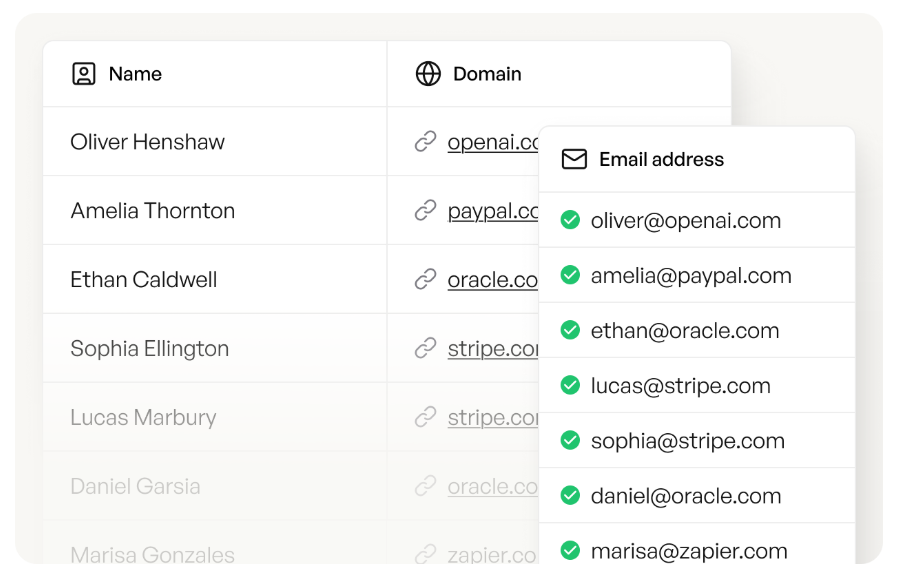
This is where data hygiene tools earn their keep. Prospeo, for example, refreshes contact data every 7 days and returns 50+ data points per contact, so your personalization is built on current information rather than stale records.
Tie CX Metrics to Revenue
CustomerGauge's research shows 70% of companies don't link their CX data to revenue. They track NPS in a vacuum, celebrate a score of 45, and have no idea whether that translates to retention, expansion, or referrals. Link NPS to account revenue data so you can quantify "revenue at risk" from detractors and "revenue to protect" from promoters. That turns a vanity metric into a board-level conversation.
Build Omnichannel Consistency
Over 70% of consumers use multiple channels during their purchasing decisions. Your customer might discover you on social, research you on your website, talk to sales over email, and get onboarded via video call. If the experience feels disjointed across those touchpoints - different messaging, different tone, different level of knowledge about their situation - trust erodes.
Consistency doesn't mean uniformity. It means every channel reflects the same understanding of who the customer is and what they need.
Reward Loyalty Deliberately
Loyal customers generate up to 10x the value of their first purchase. Yet most companies invest more in acquiring new customers than retaining existing ones. Deliberate loyalty programs - not just punch cards, but genuine recognition, early access, and preferential treatment - signal that you value the relationship beyond the transaction. For B2B, this might look like dedicated account management, priority support, or co-marketing opportunities. These are the investments that turn transactions into lasting client relationships.
Communicate Proactively
Service businesses consistently ask the same question: how do you turn one-off projects into ongoing partnerships? The answer is structured follow-up cadences. If you only reach out when you need something - a renewal, an upsell, a reference - customers notice. Proactive communication means sharing relevant insights, flagging potential issues before they escalate, and checking in without an agenda.
A word on over-engineering: If your average deal size is under $10K annually, you probably don't need a complex relationship strategy. You need a great product, fast support, and a quarterly check-in. Save the multi-threaded QBRs and executive sponsorship programs for accounts where the math justifies the investment. Most teams over-engineer relationship strategies for accounts that just want to be left alone with a working product.
Relationship Killers to Avoid
These patterns destroy trust faster than any strategy can build it. We've seen every one of them in the wild.
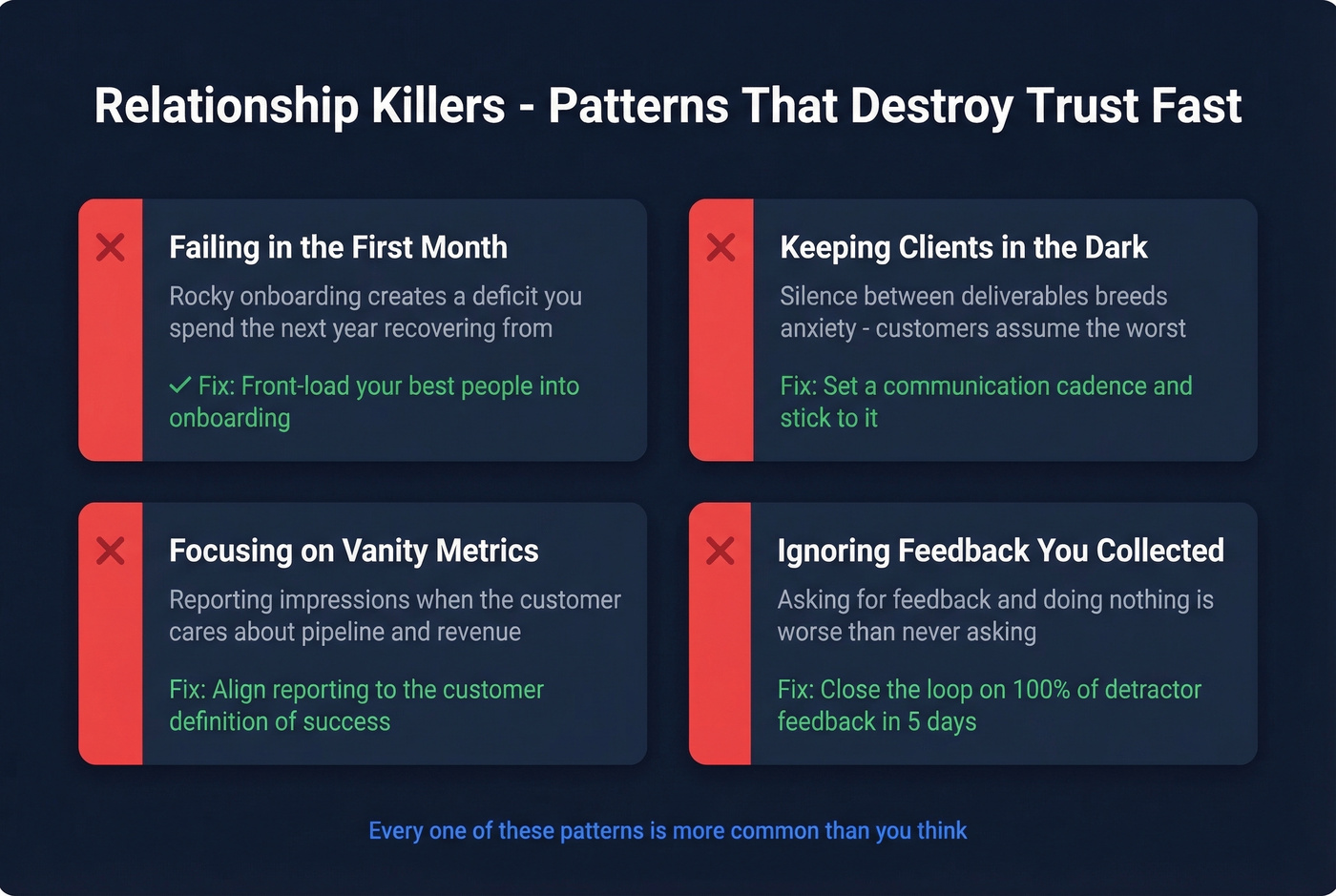
Failing in the first month. Onboarding sets the tone. A rocky first 30 days creates a deficit you'll spend the next year trying to recover from. Front-load your best people and clearest processes into onboarding.
Keeping clients in the dark. Silence between deliverables breeds anxiety and suspicion. Customers fill information vacuums with worst-case assumptions. Establish a communication cadence and stick to it, even when there's nothing dramatic to report.
Focusing on vanity metrics. Reporting impressions and clicks when the customer cares about pipeline and revenue is a fast path to churn. Align your reporting to the customer's definition of success, not yours.
Avoiding accountability. When something goes wrong - and it will - owning it immediately builds more trust than deflecting ever could. Acknowledge mistakes within 24 hours with a clear remediation plan.
Overpromising to close. Sales teams that stretch the truth to hit quota create a retention problem that CS teams inherit. Involve delivery teams in the sales process so expectations are grounded in reality.
Thinking short-term. Optimizing for this quarter's revenue at the expense of long-term customer loyalty is the most common and most expensive mistake. Measure customer health scores alongside revenue metrics and give them equal weight in planning.
How to Measure Customer Relationships
If you can't measure it, you can't improve it. Here are the benchmarks that matter in 2026.
NPS Benchmarks
Based on Survicate's 2025 report - 599 companies, 2,187 surveys, 5.4M+ responses:
| Industry | Median NPS |
|---|---|
| Manufacturing | 65 |
| Healthcare | 61 |
| Agency & Consulting | 59 |
| Retail & E-commerce | 55 |
| Overall median | 42 |
| B2B median | 38 |
| Software | 30 |
Retention Benchmarks
| Industry | Retention Rate |
|---|---|
| Media | 84% |
| Professional Services | 84% |
| Automotive | 83% |
| Insurance | 83% |
| Average (all industries) | 75% |
| Retail | 63% |
| Hospitality & Travel | 55% |
Beyond NPS and retention, track three more metrics. CLV measures lifetime revenue per customer - the ultimate relationship scorecard. CSAT measures satisfaction with specific interactions like post-support or post-onboarding touchpoints. CES measures how much effort the customer had to exert to get their issue resolved; lower effort correlates strongly with higher loyalty.
Look, if your NPS is below your industry median and you can't tell the CFO how much revenue is at risk from detractors, your measurement framework needs work. The "revenue at risk" concept - linking NPS scores to actual account revenue - is what separates measurement from vanity tracking.
The Tech Stack for 2026
91% of companies with 10+ employees use a CRM. Average CRM ROI is about $8.71 per $1 invested. CRM adoption is associated with retention improvements up to 27% and CLV improvements up to 30%. Those numbers sound great until you remember the data quality problem: 76% of companies say less than half their CRM data is accurate. A CRM full of bad data automates mistakes.
The 2026 stack is shifting in three directions. First, agentic AI - systems that don't just surface insights but independently optimize for outcomes like CSAT and sales revenue. Second, outcome-based pricing - Zendesk introduced a model where customers pay for issues resolved autonomously by AI, not per seat. Third, composable CRM - the backlash against feature-bloated suites is pushing vendors to offer smaller, licensable components instead of monolithic platforms.
For the stack itself, here's what we'd recommend by company stage:
CRM: HubSpot for teams under 50 employees (free CRM tier, paid from ~$20/mo). Salesforce for enterprise ($25-$500+/user/mo depending on edition).
Feedback: Survicate for NPS and CSAT (free tier, paid from ~$99/mo).
Data quality: This is where most stacks fall apart. Prospeo's B2B database covers 300M+ professional profiles with 98% email accuracy, refreshed every 7 days compared to the 6-week industry average. CRM enrichment returns 50+ data points per contact at a 92% API match rate. The free tier gives you 75 emails + 100 Chrome extension credits per month to start cleaning your pipeline.
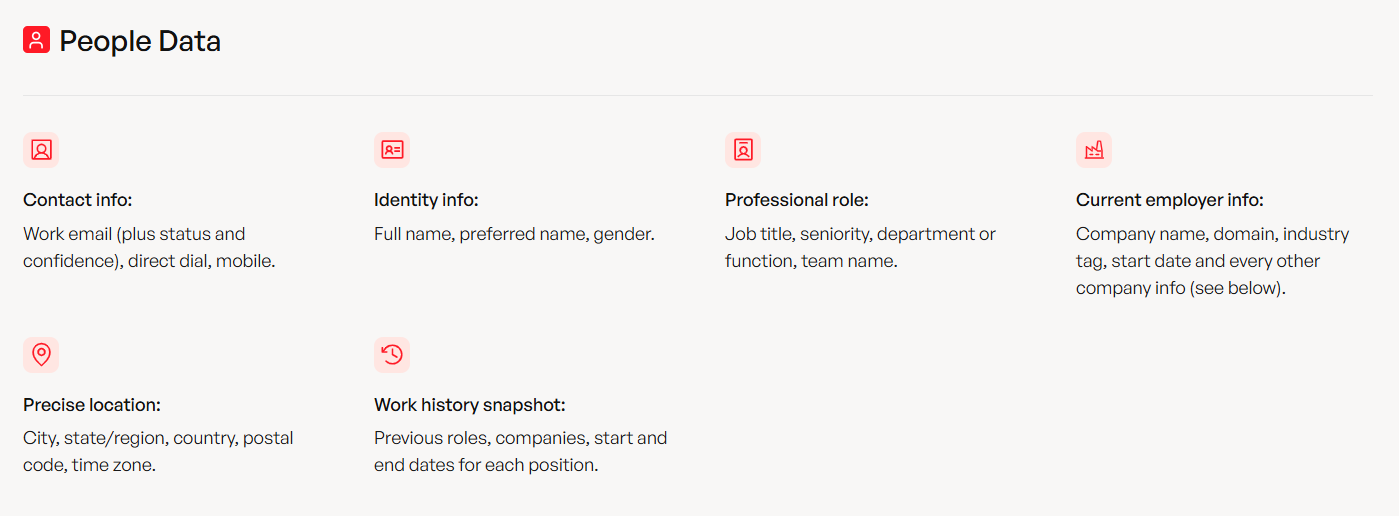
Building multi-threaded B2B relationships means reaching every stakeholder on the buying committee - not just the one email you found. Prospeo gives you 98% accurate emails and 125M+ verified mobile numbers across 300M+ professional profiles, so you can connect with procurement, finance, and end users alike.
Reach the full buying committee, not just one contact.
FAQ
What's the difference between customer relationships and customer service?
Customer service is reactive problem-solving. Customer relationships are the strategic, ongoing effort to build trust, loyalty, and lifetime value across every touchpoint. Service is one component of the relationship, but the relationship also includes proactive communication, personalization, and long-term value creation.
How do you measure relationship quality?
Track NPS (median benchmark: 42), customer retention rate (industry average: 75%), CLV, CSAT, and CES. The critical step most companies skip: link these metrics to account revenue so you can quantify "revenue at risk" from detractors and prioritize action accordingly.
Why is B2B relationship-building harder than B2C?
B2B involves 3-10 stakeholders, consensus-driven decisions, and months-long sales cycles. The median B2B NPS is 38 vs 49 for B2C - an 11-point gap reflecting the complexity of satisfying committees rather than individuals. Multi-threaded engagement across the entire buying committee is essential.
How does data quality affect customer relationships?
76% of companies report less than half their CRM data is accurate. Bad data means wrong names, titles, and companies - every "personalized" outreach built on stale records starts with a credibility problem. Weekly data refreshes and multi-step verification processes close that gap so your personalization actually lands.
What's the biggest mistake companies make?
Collecting feedback and doing nothing with it. Customers who respond to surveys and see zero change feel more undervalued than those who were never asked. The fix: build a visible response process that closes the loop on 100% of detractor feedback within 5 business days.