

Business Development Reps: What the Job Actually Looks Like in 2026
You just accepted a BDR offer. You're about to become one of the thousands of business development reps who learn the hard way that the recruiter's pitch and the actual job are two different things. The recruiter said "OTE of $85K," your friends in tech sales said "you'll be an AE in a year," and the job description made it sound like strategic relationship-building. Then you show up on day one, get handed a list of 200 accounts, and learn that 57.3% of reps actually hit quota. That $85K suddenly feels more like $65K-$75K in realistic take-home.
The gap between the BDR pitch and the BDR reality is where most new reps get blindsided. Let's close that gap.
What You Need (Quick Version)
How much will I actually make? Median OTE sits at $85K, but with only 57% of reps hitting quota, plan on $65K-$75K realistic take-home in year one. Top performers clear $130K+.
What does the day look like? 40-50 calls, 10-40 emails, 2-3 hours of research, and a target of 12-15 meetings booked per month at baseline. It's a grind with a system, not just a grind.
How long until promotion? 12-18 months to AE if you hit 90%+ quota for two consecutive quarters. Post-pandemic, the average has stretched to 15-16 months. It's not automatic.
What Is a BDR?
A business development representative is the front end of the B2B sales engine. You don't close deals. You open them. The primary function is outbound prospecting - researching accounts, finding the right contacts, reaching out through calls, emails, and social touches, and booking qualified meetings for account executives to run.
BDRs typically report to a sales development manager or VP of Sales Development, sitting between marketing and the closing team. You're the bridge. The BLS tracks roughly 1.6 million jobs in a closely related sales occupation in the US (wholesale and manufacturing sales representatives), with about 142,100 openings per year driven primarily by replacement needs. Some companies also use BDRs for partnership development and market expansion beyond pure sales prospecting, though outbound pipeline generation remains the core.
The job exists because AEs are expensive. Paying a $200K+ AE to cold-call is a terrible use of resources. BDRs solve that math problem.
BDR vs SDR vs AE
Here's the textbook distinction: BDRs handle outbound prospecting, SDRs handle inbound lead qualification, and AEs close deals. In practice, most companies use the titles interchangeably. A practitioner at Juniper Square put it well - role definitions vary wildly by company, and what matters is whether you're working inbound or outbound leads, not what's printed on your business card.
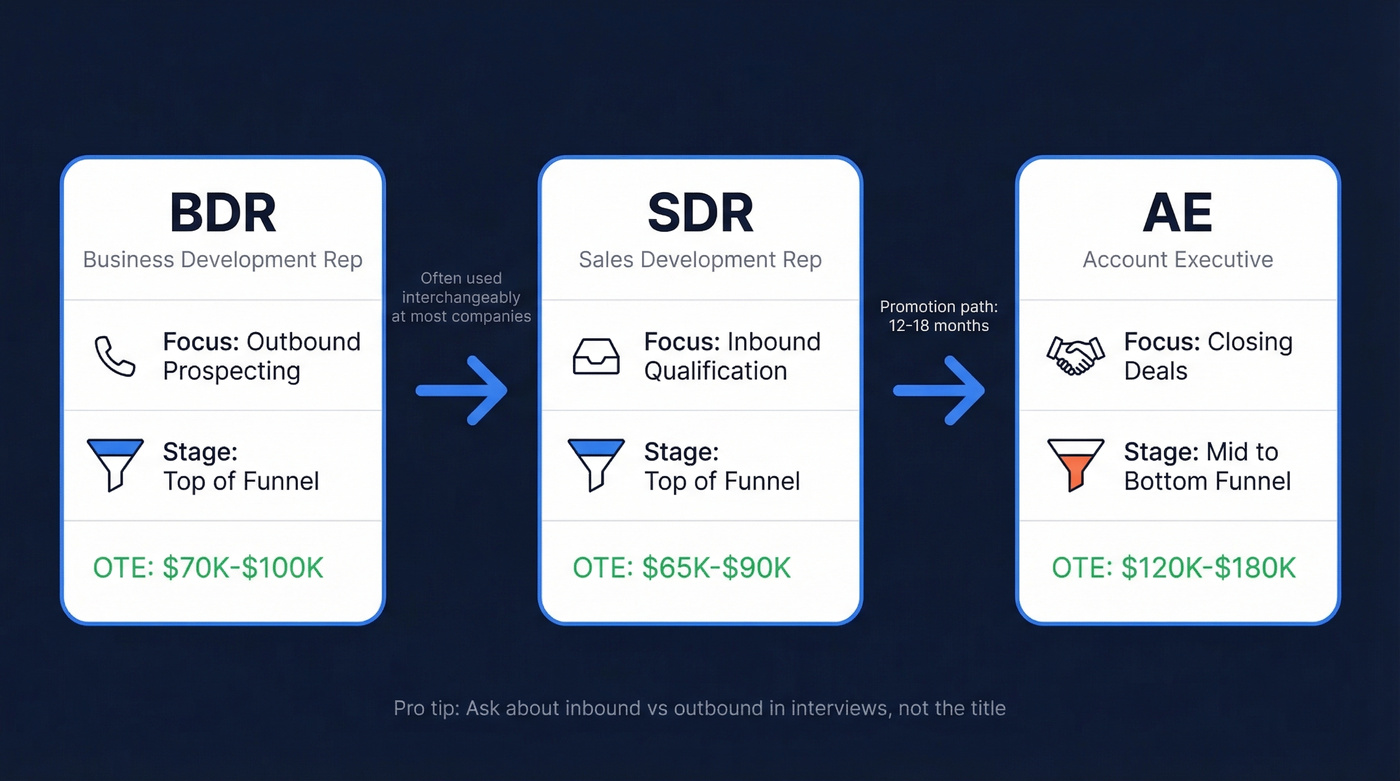
| Role | Focus | Pipeline Stage | Typical Comp |
|---|---|---|---|
| BDR | Outbound prospecting | Top of funnel | $70K-$100K OTE |
| SDR | Inbound qualification | Top of funnel | $65K-$90K OTE |
| AE | Closing deals | Mid-bottom funnel | $120K-$180K OTE |
When you're interviewing, ignore the title. Ask two questions: "Am I sourcing my own leads or working inbound?" and "What's the meeting quota?" Those answers tell you more than any job title ever will.
What the Day Actually Looks Like
It's 3pm on a Tuesday. You've made 38 dials, sent 22 emails, left 11 voicemails, and booked one meeting. Your connect rate is running around 6%, which means for every 60 dials you're getting maybe 3-4 live conversations. Of those, roughly one converts to a scheduled meeting.
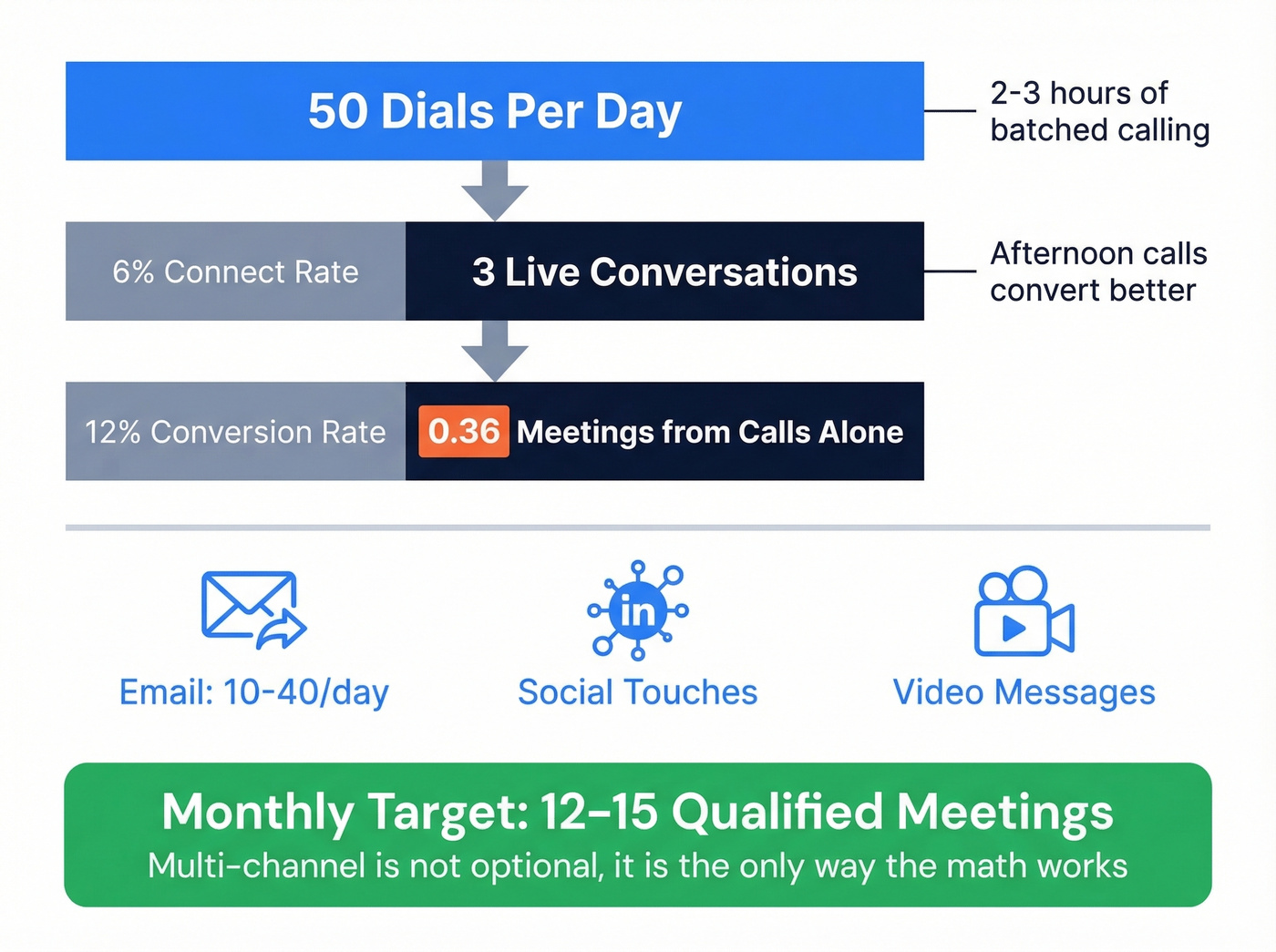
The standard activity benchmarks break down like this: 40-50 calls per day, 10-40 emails per day, and 80-100 total activities per day across all channels. Connect rates hover at 5-8%, and conversation-to-meeting conversion runs 10-15%. On a typical day:
- 50 dials x 6% connect rate = ~3 live conversations
- 3 conversations x 12% conversion = ~0.36 meetings
That's less than one meeting per day from calls alone. Multi-channel matters - emails, social touches, and video all supplement the phone. A strong outbound rep books 12-15 qualified meetings per month, which means you need every channel working.
The remaining hours split into 2-3 hours of account research, 30-60 minutes of CRM admin, and whatever team meetings or coaching sessions your manager schedules. We've found the best reps front-load research in the morning and batch their dials in the afternoon when prospects are more likely to pick up.
BDR Salary & Compensation
Base, OTE, and Pay Mix
| Level | Base | OTE | Pay Mix |
|---|---|---|---|
| Entry (0-1 yr) | ~$48K-$55K | $70K-$75K | 70/30 |
| Mid (1-3 yrs) | ~$55K-$65K | $80K-$90K | 65/35 |
| Senior (3-5 yrs) | ~$60K-$75K | $90K-$100K+ | 60/40 |
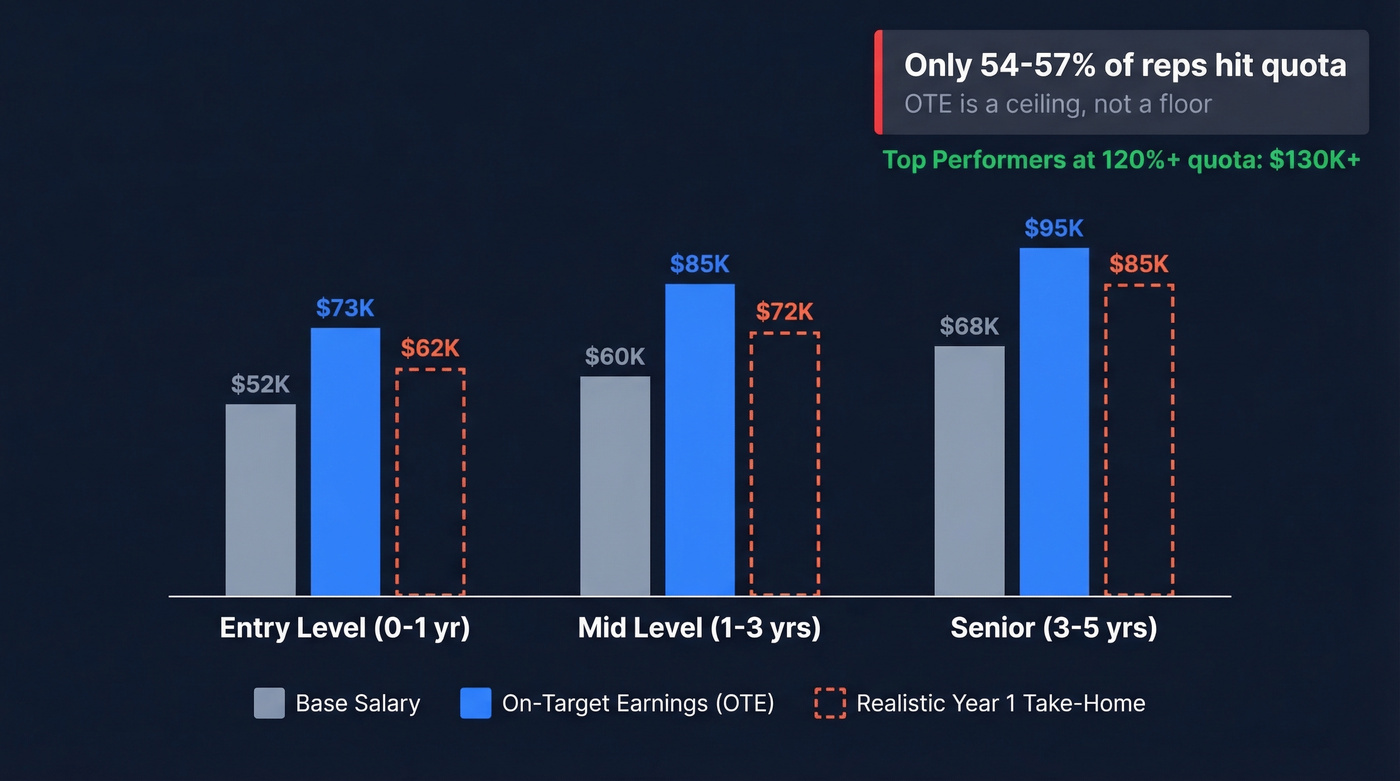
The national benchmark puts median base at about $55,000 with median OTE around $83,000, while RepVue-based 2026 data pegs the median at $60,000 base and $85,000 OTE. Top performers - the ones consistently at 120%+ quota - clear $130K+. But here's the number that matters most: only 54-57% of reps hit quota. OTE is a ceiling, not a floor.
How Commission Works
Most BDR comp plans fall into one of three models:
- Activity-based: $150-$200 per qualified meeting or demo booked. Simple, predictable, but caps your upside.
- Opportunity-based: ~$200 per sales-accepted opportunity. Slightly higher bar - the AE has to agree the meeting was qualified.
- Revenue-based: 1-4% of closed contract value. Higher upside, but you're dependent on the AE closing and the deal cycle length.
In our experience, opportunity-based models produce the best outcomes for both reps and companies because they reward quality, not just volume.
Location Matters More Than You Think
| City | Annual Salary |
|---|---|
| San Jose | $108,524 |
| San Francisco | $108,091 |
| Washington, DC | $96,070 |
| New York City | $78,410 |
| Los Angeles | $74,050 |
| Seattle | $73,598 |
| Remote (national) | $66,616 |
| National Average | $59,559 |
These numbers from ZipRecruiter and SalesBread's analysis blend base and variable comp, so treat them as directional rather than precise OTE figures. The takeaway: Bay Area and DC pay significantly more, but cost of living eats most of that delta. Remote roles have compressed salaries toward the national average.
Post-pandemic comp growth has been flat. The 2023-2024 tech layoffs slowed hiring, and 2025 was a slow recovery. Don't expect the 2021 salary inflation to return.

You're making 50 dials a day with a 6% connect rate. Every bad email and wrong number shrinks your pipeline. Prospeo gives BDRs 98% verified emails and 125M+ direct dials with a 30% pickup rate - so more of those 80-100 daily activities actually convert to booked meetings.
Stop burning activity hours on dead contacts. Get data that connects.
Performance Benchmarks & KPIs
These are baselines, not aspirational targets. If you're hitting these numbers consistently, you're performing at standard.
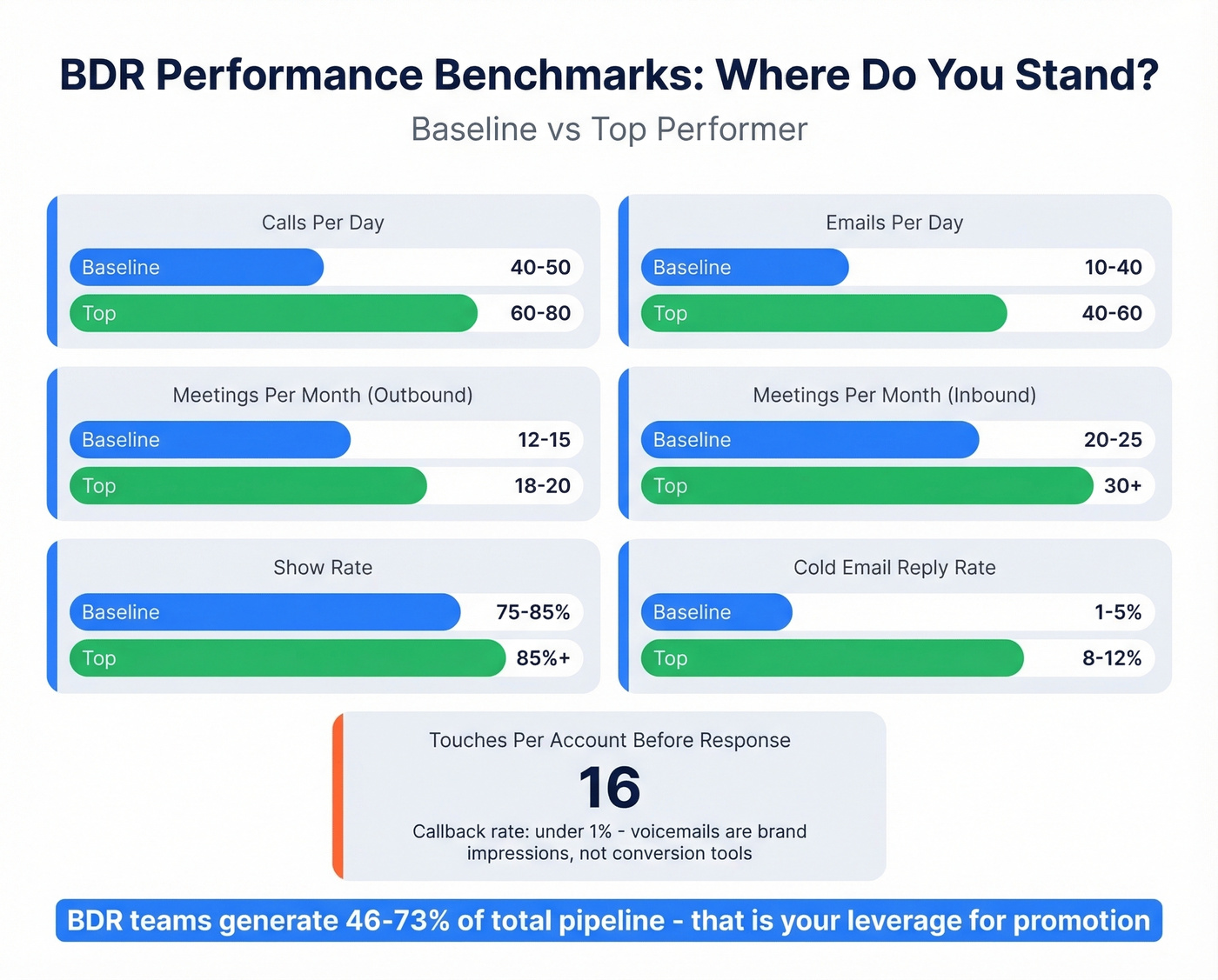
| Metric | Baseline | Top Performer |
|---|---|---|
| Calls/day | 40-50 | 60-80 |
| Emails/day | 10-40 | 40-60 |
| Meetings/month (outbound) | 12-15 | 18-20 |
| Meetings/month (inbound) | 20-25 | 30+ |
| Show rate | 75-85% | 85%+ |
| Cold email reply rate | 1-5% | 8-12% |
| Pipeline contribution | 46-73% | - |
A few numbers that don't show up in most guides: you'll work roughly 16 touches per account before getting a response, manage 75-125 accounts at any given time, and face callback rates under 1% per Gartner's data. Voicemails are brand impressions, not conversion tools.
The pipeline contribution stat is the one that matters for your career. SDR/BDR teams generate 46-73% of total pipeline depending on the company's ACV and go-to-market motion. That's your leverage in promotion conversations - you're not a cost center, you're the engine.
The BDR Prospecting Playbook
Building a Multi-Channel Cadence
The best-performing cadences run 10-14 touches over about 30 days. Not 5 touches. Not 30. The sweet spot is enough persistence to break through without becoming a nuisance.
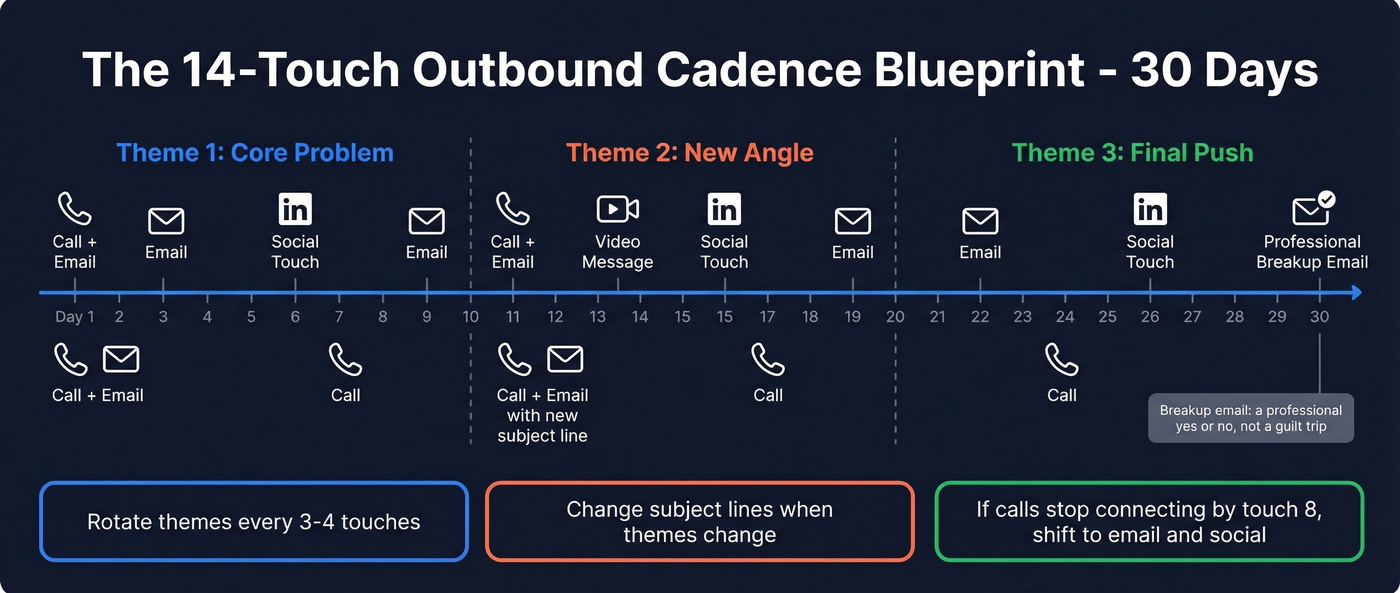
Structure it in themes. Each theme focuses on one problem or angle - don't try to sell everything at once. Rotate themes every 3-4 touches, change your subject line when the theme changes, and phase out channels as returns diminish. If your calls aren't connecting by touch 8, shift that energy to email and social for the remaining touches.
The breakup email at the end should be a professional "yes or no," not a guilt trip. Gimmicky breakup emails damage your brand and rarely convert.
Data Quality Is the Foundation
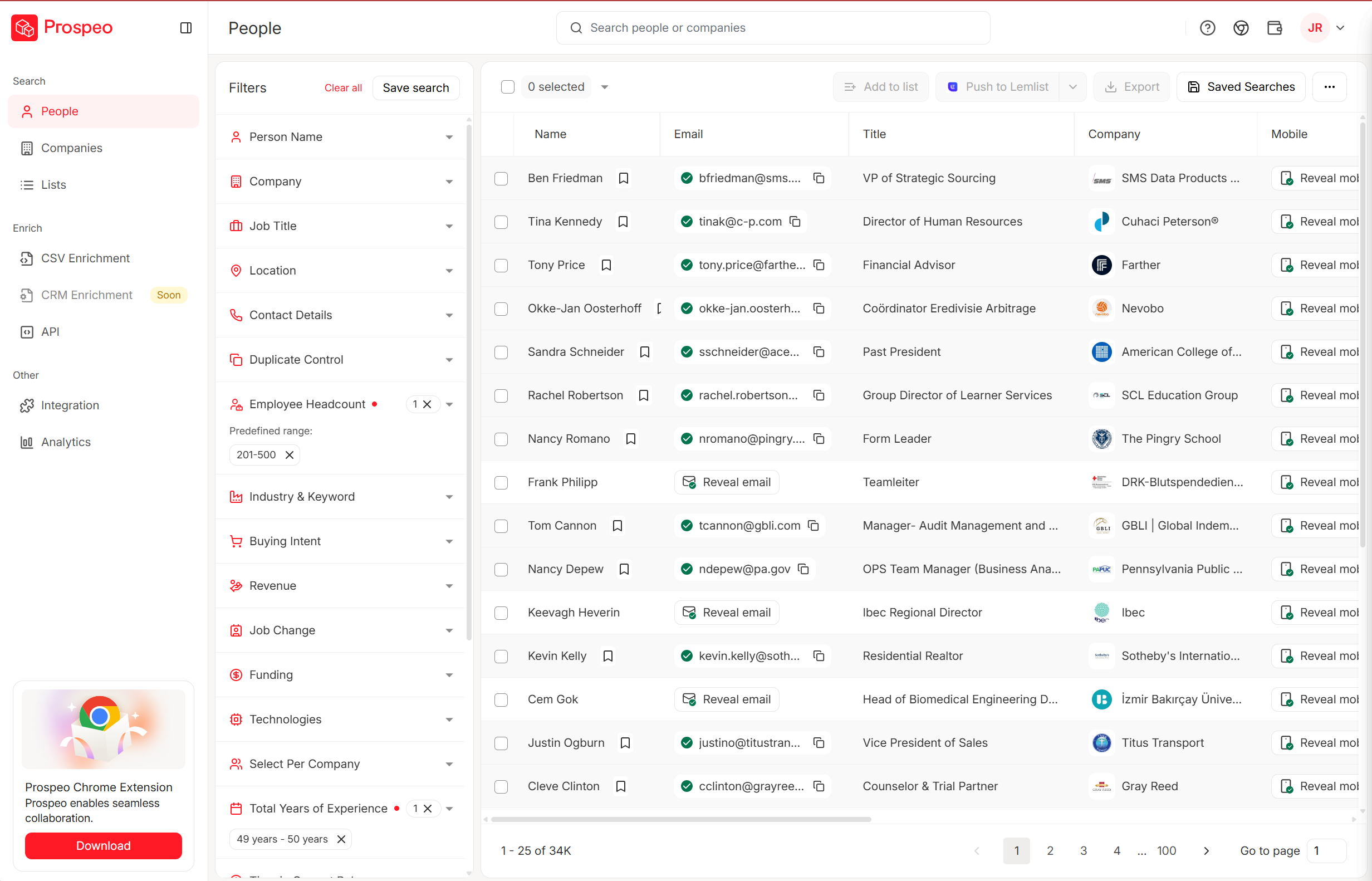
Here's the thing: you can optimize your cadence structure all day long. None of it matters if a third of your emails bounce or your phone numbers connect to the wrong person. Bad data is the silent killer of BDR productivity, and it's the problem most reps don't even realize they have until their domain reputation is already trashed.
One outbound team we've worked with cut their bounce rate from 35% to under 4% after switching to verified contacts. That's not a marginal improvement - that's the difference between a functioning outbound motion and one that's burning your sender reputation. Prospeo's 98% email accuracy across 143M+ verified emails and 125M+ verified mobile numbers delivering a 30% pickup rate exist to fix exactly this gap, with a 7-day data refresh cycle so you're not calling someone who changed jobs six weeks ago.
The BDR Tech Stack
You don't need 12 tools. You need three things working well: a CRM, a sequencer, and verified contact data. Everything else is a nice-to-have until those three are dialed in.
| Category | Recommended Tools | Price Range |
|---|---|---|
| CRM | HubSpot, Salesforce | Free-$300/user/mo |
| Sequencing | Outreach, Salesloft | ~$100-$150/user/mo |
| Data/Enrichment | Prospeo, Apollo | $0-$99/user/mo |
| Dialer | Orum, Nooks | ~$100-$200/user/mo |
| Intent Data | Bombora | ~$25K+/yr standalone |
| Conversation Intel | Gong, Chorus | ~$100-$150/user/mo |
If your deal sizes are under $15K, skip the $40K/year data platform. A self-serve tool with verified data, a free CRM, and a sequencer will get you 80% of the results at 10% of the cost. Save the enterprise stack for when your pipeline justifies it.
Start with HubSpot's free CRM, a sequencing tool, and a free data tier. You can run a legitimate outbound operation for under $150/month per rep. Scale from there as pipeline grows.
Skills That Actually Get You Promoted
The "top BDR skills" lists you'll find online always lead with "communication skills" and "time management." Those are table stakes, not differentiators. Here's what separates reps who get promoted from reps who plateau.
Research and account intelligence is the real skill. Understanding a prospect's tech stack, recent funding, competitive situation, and organizational pain before you pick up the phone turns a cold call into a warm conversation. The consensus on r/techsales is clear: "spray and pray" dialing without strategy is dead in mature markets.
Qualification frameworks like BANT and MEDDIC aren't just for AEs. BDRs who can qualify during a discovery call - identifying budget authority, decision process, and timeline in a 10-minute conversation - book meetings that actually convert. That's the difference between a meeting booked and a meeting held. Pair this with CRM discipline (logging activities, updating deal stages, maintaining clean data) and you become visible to leadership in a way that lazy reps never do.
Resilience matters, but not in the "just keep dialing" sense. The 100-dials-a-day culture produces burnout, not pipeline. Strategy beats volume every time. The reps who last are the ones who maintain strategic discipline after 40 straight voicemails, not the ones who just dial faster.
BDR Career Path & Promotion
The AE Path
The standard trajectory is BDR to AE in 12-18 months. The promotion benchmark most managers use: hit 90%+ quota for two consecutive quarters. High performers sometimes make the jump in 10-12 months, but post-pandemic the average has stretched to 15-16 months.
AE comp is the carrot. Mid-market AEs typically earn $60K-$80K base with $120K-$180K OTE. That's a meaningful jump from BDR numbers, and it's why most reps treat the role as a stepping stone rather than a destination.
Alternative Paths
Not every BDR wants to close deals, and that's fine.
Customer Success (15-20 month transition, $80K-$110K total comp) is a natural fit for reps who excel at relationship-building. RevOps (18-24 months, $90K-$130K total comp) suits analytically-minded reps who geek out on process optimization. Marketing and demand gen are also legitimate paths, especially for BDRs who've developed strong copywriting instincts from writing hundreds of cold emails.
These aren't consolation prizes. A senior RevOps leader at a growth-stage company can out-earn most AEs.
SDR Purgatory Is Real
Promotion isn't guaranteed. Reddit practitioners are blunt about this - the SDR-to-AE path is far less automatic than the thought leaders on social media suggest. Success depends heavily on product-market fit, territory assignment, and internal politics.
The harsh truth from r/techsales: if most of the team is missing quota, that's a company problem, not a you problem. Staying in a BDR role for 3-5 years leads to wage stagnation. The BLS projects just 1% growth for related sales occupations - demand is driven by replacement openings (about 142K per year), not expansion.
Questions to Ask Before You Accept
Before you sign any offer, get answers to these five questions. They'll tell you whether the role is a launchpad or a dead end:
- What percentage of the current team hit quota last quarter?
- How many BDRs were promoted to AE in the last 12 months?
- Am I sourcing my own leads or working inbound?
- What's the monthly meeting quota, and what tools do I get to hit it?
- What does the typical ramp period look like, and is quota adjusted during ramp?
If the hiring manager dodges question one or two, that's your answer.
How AI Is Changing the Role
AI won't replace business development reps. But reps who use AI will replace those who don't.
A Bain Capital Ventures analysis estimates BDRs historically spend upwards of an hour daily prepping targeting lists and talk tracks - AI compresses that to minutes. That's an extra hour of actual selling time every day.
What AI fails at: relationship-building, nuanced discovery conversations, contextual judgment, and anything involving complex or high-ACV sales cycles. One cautionary example from the Bain piece - an AI outbound system mistakenly emailed existing customers as cold prospects "from the CEO." Automation without context doesn't just waste time; it actively damages relationships.
The modern BDR stack looks something like this: Clay for enrichment, a sequencing tool for execution, and a CRM as the system of record. AI pre-preps the lists and suggests messaging angles. The human reviews, personalizes, and handles the live conversations. That division of labor is where the role is heading - less data entry, more strategic selling.
Teams that layer AI into their workflow don't reduce headcount. They increase output per rep. The BDR role isn't disappearing - it's getting more strategic and less manual.
The math is brutal: 57% of BDRs miss quota. The reps who don't are the ones spending 2-3 hours on research with data that's actually current. Prospeo refreshes 300M+ profiles every 7 days - not every 6 weeks - so your account lists aren't stale before you even pick up the phone.
Hit quota with data refreshed weekly, not monthly. Starting at $0.01 per email.
FAQ
Is BDR an entry-level role?
Yes - it's the most common entry point into B2B tech sales. Most companies don't require prior sales experience, though a bachelor's degree is typically preferred. Expect 2-4 weeks of structured onboarding before you start prospecting independently.
What's the difference between a BDR and an SDR?
BDRs handle outbound prospecting while SDRs qualify inbound leads, but most companies use the titles interchangeably. During interviews, ask whether the role is inbound or outbound - that distinction matters far more than the title on the offer letter.
How long does it take to get promoted from BDR to AE?
12-18 months on average, though post-pandemic the median has stretched to 15-16 months. The strongest promotion case: hitting 90%+ quota for two consecutive quarters. High performers at fast-growing companies sometimes make the jump in 10-12 months.
What tools do BDRs need for prospecting?
At minimum: a CRM like HubSpot or Salesforce, a sequencing tool like Outreach or Salesloft, and a data provider with verified contacts. A free CRM plus a free data tier gets you started for under $150/month - add a dialer and intent data as pipeline grows.
How much do business development reps make in 2026?
Median OTE is $83K-$85K, but only 54-57% of reps hit full quota - realistic first-year take-home is $65K-$75K. Bay Area and DC roles pay $96K-$108K, while remote positions average around $67K. Top performers clearing 120%+ quota earn $130K or more.