

Buying Signals Data: Which Signals Actually Predict Purchases, What They Cost, and How to Use Them
91% of B2B marketers use intent data to prioritize accounts. Only 24% report exceptional ROI. That's a brutal gap. You're paying tens of thousands a year for dashboards full of "surging" accounts, and your SDRs still can't tell you which 20 companies to call this week. The problem isn't the data - it's knowing which signals matter, what they actually cost, and how to turn anonymous account activity into booked meetings with buying signals data you can operationalize.
We've spent months testing intent platforms and digging through practitioner data to figure out what separates signal from noise. Here's what we found: a 1M-purchase analysis shows AI tool adoption (+46%) and headcount growth (+38%) crush job postings (+7%) and compliance signals (0%). Vendor pricing ranges from $0 to $300,000+/year. And the scoring model below - with decay windows, tiered SLAs, and pipeline math - shows exactly what signal-driven outreach produces when you get it right.
What Counts as Buying Signals?
Buying signals data is any observable event, behavior, or data point indicating a company is moving toward a purchase. The signals break into four categories.
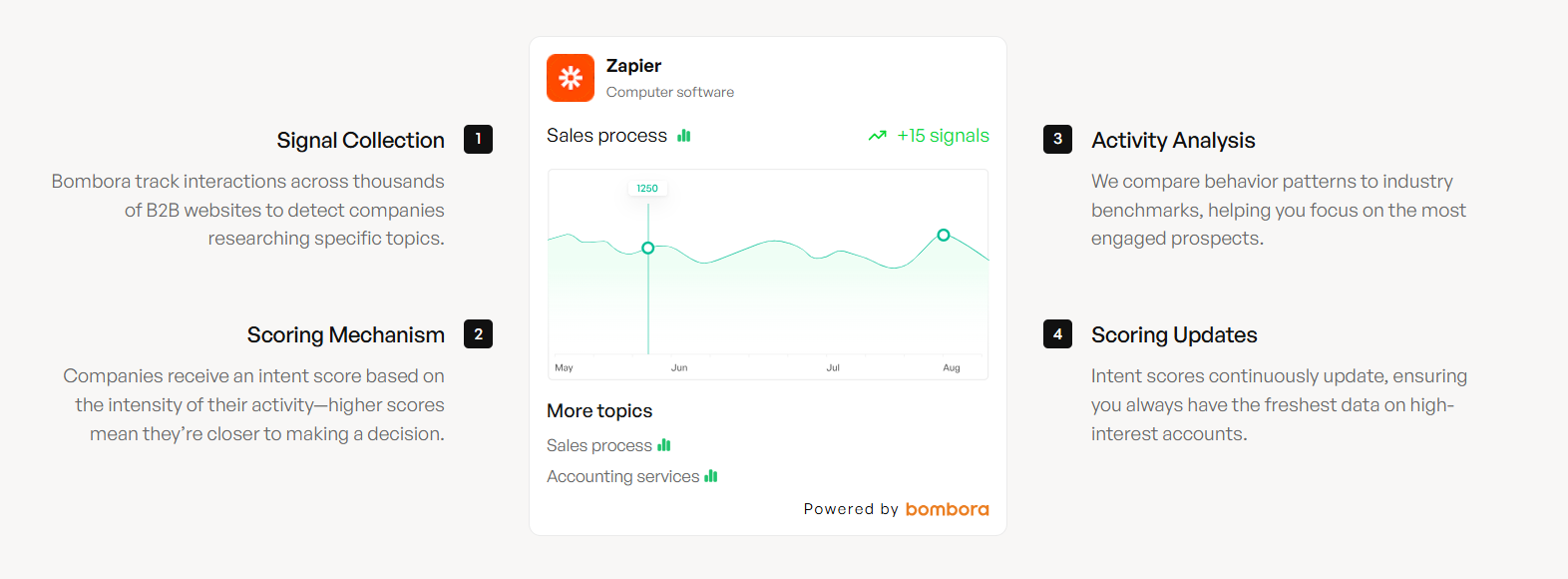
First-party signals come from your own properties - website visits, content downloads, demo requests. They're high-fidelity but narrow; they only capture the sliver of buyers who've already found you. Second-party signals come from partner platforms monetizing their audience data, like G2 or TrustRadius review activity. Third-party signals are aggregated from publisher networks, tracking topic-level research across thousands of sites. Derived intent layers AI on top of multiple sources to predict buying readiness - powerful but a black box.
Why does this matter? Buyers complete about 70% of their journey before they ever talk to sales. By the time someone fills out your demo form, they've already ranked their preferred vendors. Signals let you show up during that invisible research phase - not after it. The entire game is capturing intent early enough to influence the shortlist.
Which Signals Predict Purchases?
Most "signals" don't predict anything. That's not opinion - it's what the numbers show.
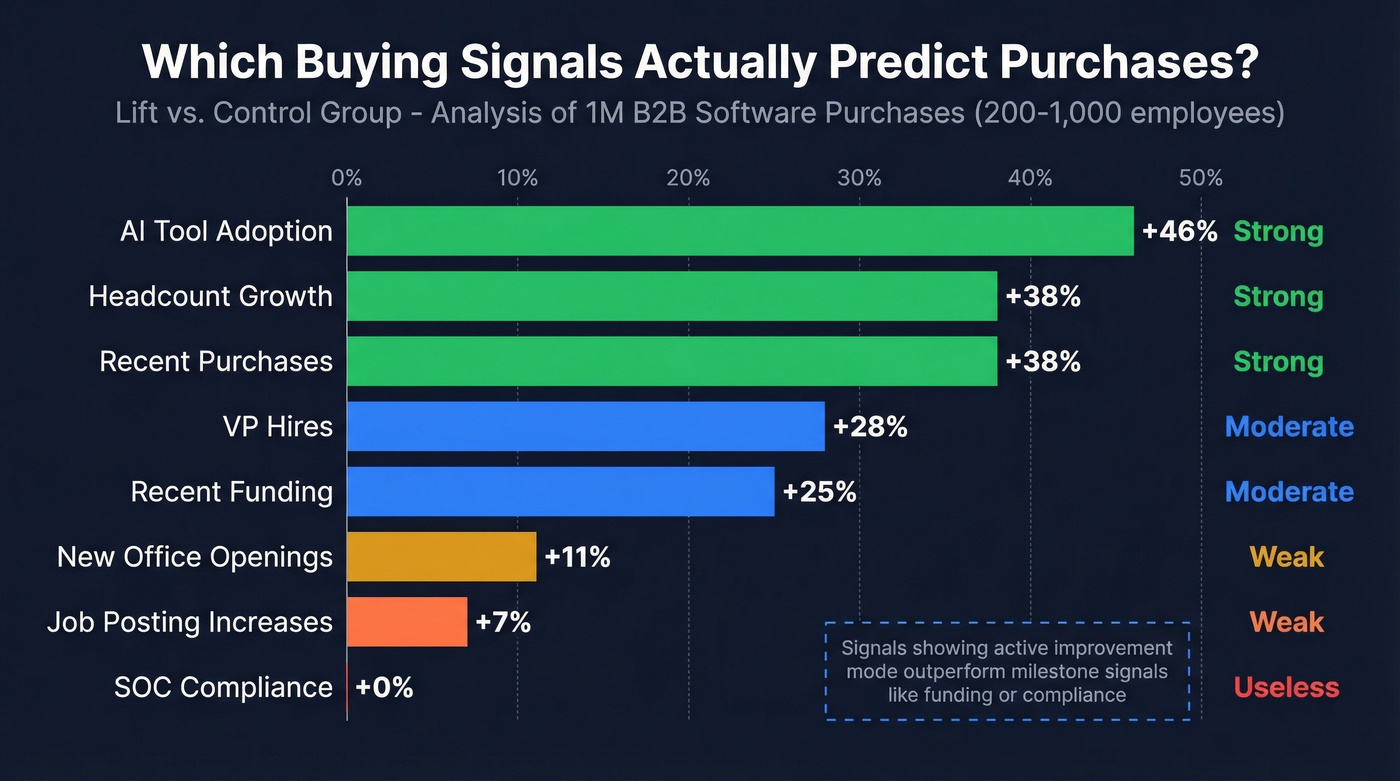
A practitioner analysis of 1 million B2B software purchases across companies with 200-1,000 employees measured which indicators actually correlated with buying behavior versus a control group:
| Signal | Lift vs. Control | Strength |
|---|---|---|
| AI tool adoption | +46% | Strong |
| Headcount growth | +38% | Strong |
| Recent purchases | +38% | Strong |
| VP hires | +28% | Moderate |
| Recent funding | +25% | Moderate |
| New office openings | +11% | Weak |
| Job posting increases | +7% | Weak |
| SOC compliance | 0% | Useless |
The pattern is clear: signals showing a company is actively improving its stack outperform milestone signals like funding or new offices. We call this the "improvement mode" framework - companies buying new tools, growing headcount, and hiring senior leaders are in active build mode. They're spending money right now.
Here's the thing: job postings are one of the most commonly tracked indicators in the industry, and they're nearly worthless as a near-term buying signal. SOC compliance announcements - a signal several vendors prominently feature - showed zero correlation with purchases. If your provider is weighting these heavily, skip the dashboard and start questioning the methodology. You're chasing noise instead of surfacing accounts that can realistically close this quarter.

Headcount growth and tech stack changes are the signals that matter. Prospeo tracks 15,000 Bombora intent topics and pairs them with 30+ filters - including headcount growth, technographics, and job changes - so you reach accounts in active build mode with 98% accurate emails.
Turn buying signals into booked meetings for $0.01 per verified email.
Scoring Signals Without Overengineering
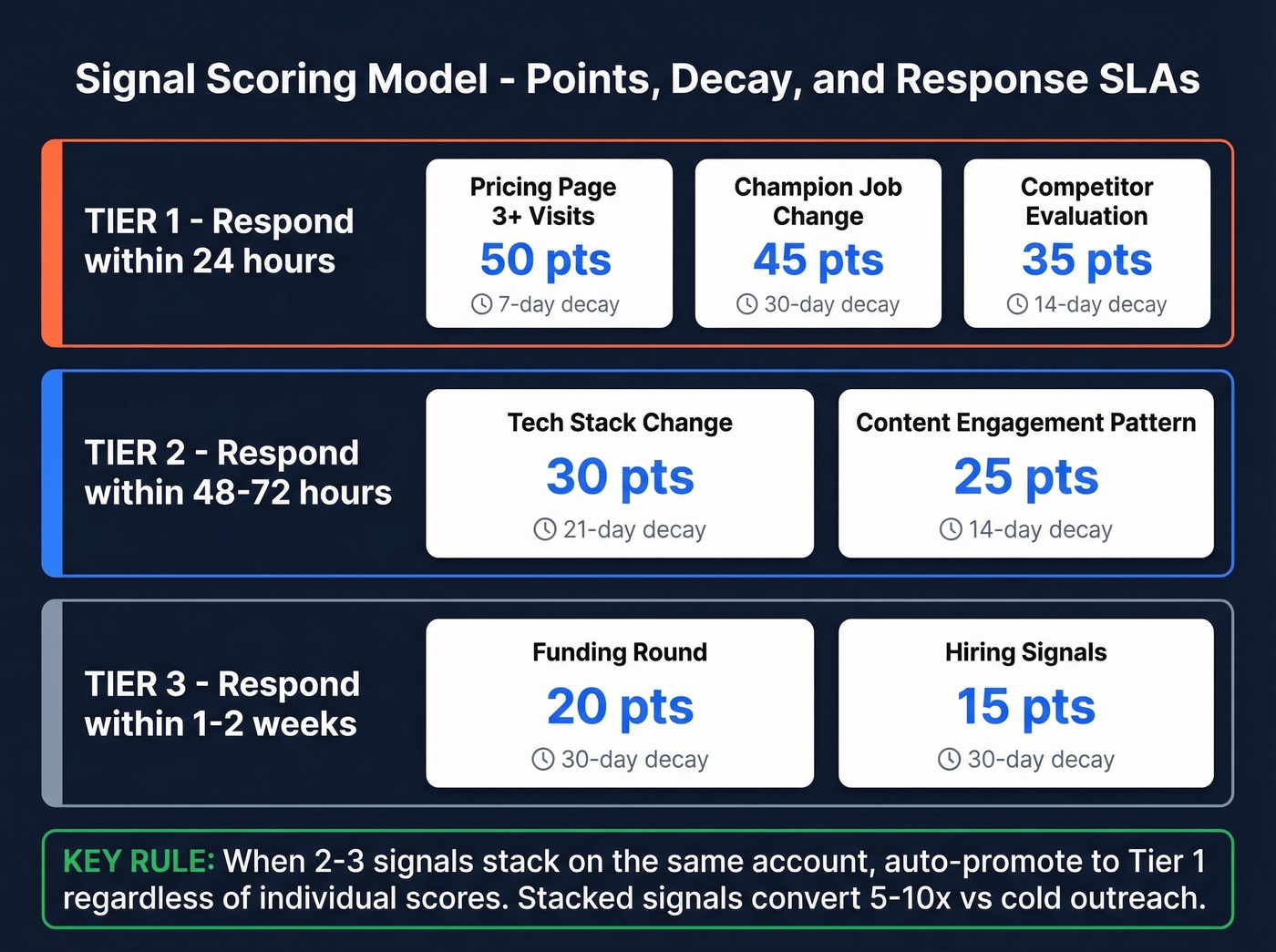
Raw events aren't actionable until you score them and assign response timelines:
| Signal | Points | Decay Window | SLA Tier |
|---|---|---|---|
| Pricing page 3+ visits | 50 | 7 days | Tier 1 (24hr) |
| Champion job change | 45 | 30 days | Tier 1 (24hr) |
| Competitor evaluation | 35 | 14 days | Tier 1 (24hr) |
| Tech stack change | 30 | 21 days | Tier 2 (48-72hr) |
| Content engagement pattern | 25 | 14 days | Tier 2 (48-72hr) |
| Funding round | 20 | 30 days | Tier 3 (1-2 weeks) |
| Hiring signals | 15 | 30 days | Tier 3 (1-2 weeks) |
Decay windows matter as much as points. A pricing page visit from three weeks ago is stale - that buyer has probably already shortlisted vendors. A champion job change stays warm for a month because new VPs typically evaluate their stack in the first 60-90 days.
Stacked signals convert at 5-10x the rate of cold outreach. When two or three indicators fire on the same account - headcount growth plus a tech stack change plus content engagement - that account jumps to Tier 1 regardless of individual signal scores. This is where intent becomes valuable: not as a single trigger, but as a composite score that separates real buying activity from background noise. For context, cold email reply rates sit at 1-3% and cold call connect rates around 4.8%; warm outbound converts 3-5x higher.
Let's run the pipeline math. Ten reps working 50 accounts each, acting on 3 Tier 1 signals per week with a 25% reply rate, produces 30+ qualified conversations per month. At 20% opportunity conversion, that's roughly 6 new opportunities monthly - from signal-driven outreach alone.
Buying Signals Data Pricing
The intent data market spans from free to $300,000+/year. Forrester's Q1 2025 Wave named 6sense, Bombora, Demandbase, Intentsify, and Informa TechTarget as leaders - but leadership status doesn't correlate with value for mid-market teams. The market is consolidating fast: HG Insights acquired TrustRadius, HubSpot absorbed Clearbit into Breeze Intelligence, and AI agents are starting to replace static dashboards.
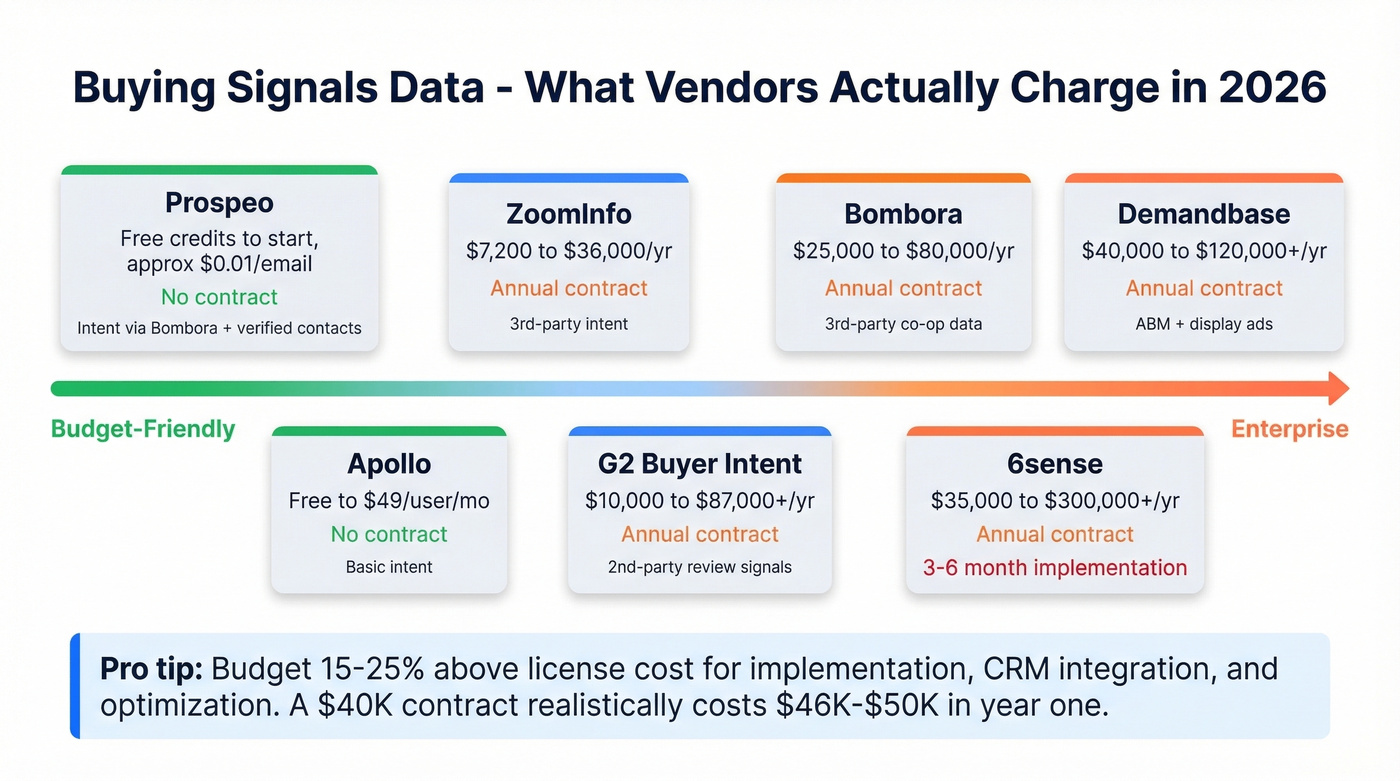
Here's what the major vendors actually charge:
| Vendor | Price Range | Intent Type | Contract | Best For |
|---|---|---|---|---|
| Prospeo | Free-credit-based (~$0.01/email) | 3rd-party via Bombora (15K topics) | No | SMB/mid-market needing intent + verified contacts |
| Apollo | Free-$49/user/mo | Basic intent | No | Budget-friendly starting point |
| ZoomInfo | $7,200-$36,000/yr | 3rd-party | Annual | Mid-market teams already on ZoomInfo |
| G2 Buyer Intent | $10,000-$87,000+/yr | 2nd-party via reviews | Annual | High-fidelity review signals |
| Bombora | $25,000-$80,000/yr | 3rd-party co-op | Annual | Enterprise pure intent feed |
| 6sense | $35,000-$300,000+/yr | 3rd-party + derived | Annual | Enterprise ABM with predictive scoring |
| Demandbase | $40,000-$120,000/yr | 3rd-party + derived | Annual | Enterprise ABM + display advertising |
Budget 15-25% above the license cost for hidden expenses: implementation, topic configuration, CRM integration, and ongoing optimization. A $40,000 Demandbase contract realistically costs $46,000-$50,000 in year one. 6sense typically requires 3-6 months of implementation before you see value. Most vendors lock you into annual commitments - month-to-month options are rare outside Apollo and Prospeo.
If your average contract value is below mid-five-figures, you almost certainly don't need a $40K+ intent platform. Self-serve tools with intent bundled into contact-level data have closed the gap for SMB and mid-market teams. Save the enterprise spend for when you have the ops team to actually operationalize it. We've seen too many teams buy 6sense or Demandbase, spend six months on implementation, and still route leads manually because nobody built the workflows.
The Last-Mile Problem: Account Intent to Meetings
Here's where most intent investments break down. You identified 200 in-market accounts last quarter. You booked meetings with 11.
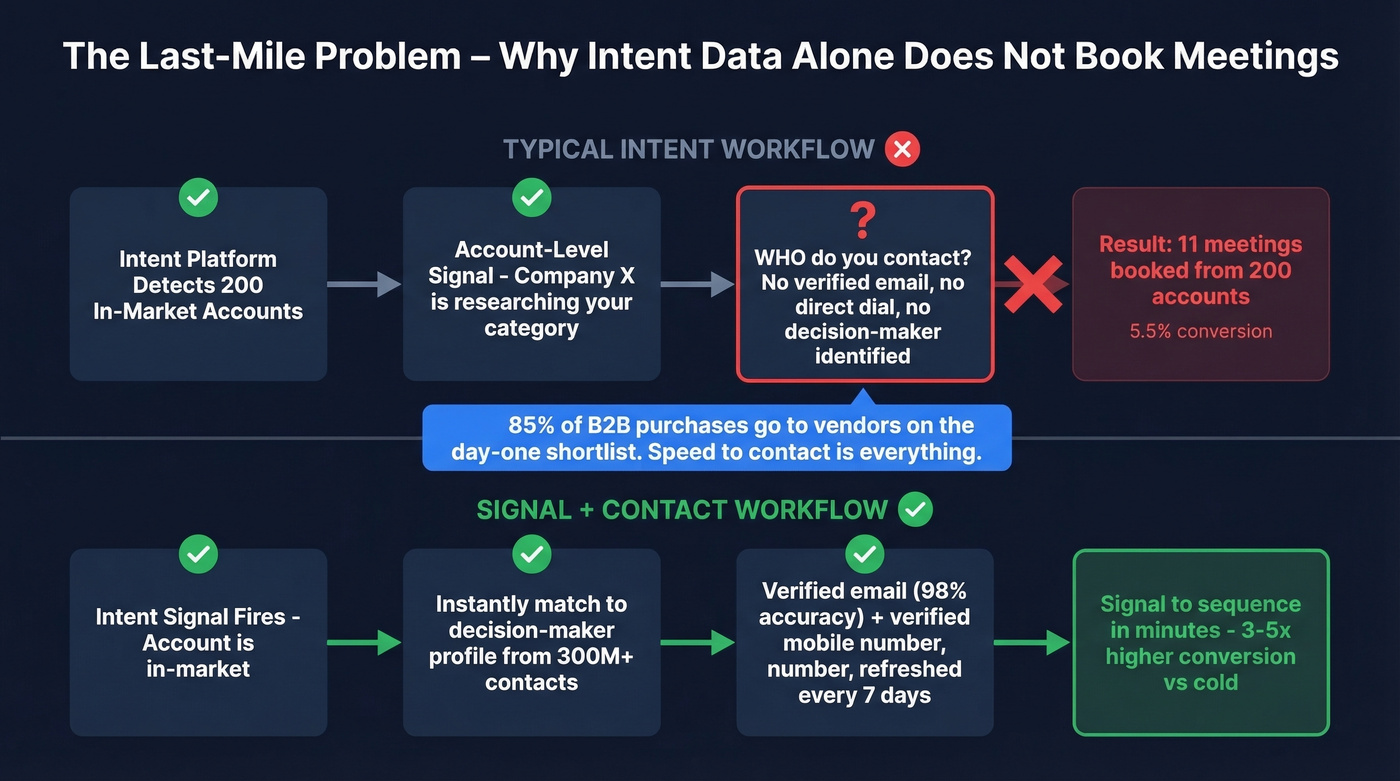
The gap isn't detection - it's reaching the actual decision-maker. Account-level intent tells you which companies are researching your category. It doesn't give you the decision-maker's verified email or direct dial. That's a half-finished product. And if you're not reaching the right person fast enough, you won't make the day-one shortlist - where 85% of B2B purchases ultimately go. Having "warm accounts" is meaningless if you can't connect it to a real person with a verified phone number.
Prospeo solves this by pairing intent data across 15,000 Bombora topics with 300M+ professional profiles, 143M+ verified emails at 98% accuracy, and 125M+ verified mobile numbers refreshed every 7 days. You go from "this account is researching our category" to "here's the decision-maker's verified email and mobile" in seconds. No annual contracts, no six-month implementation - just self-serve access that integrates natively with Outreach, Salesloft, Lemlist, Instantly, and others so you move from signal to sequence in minutes.
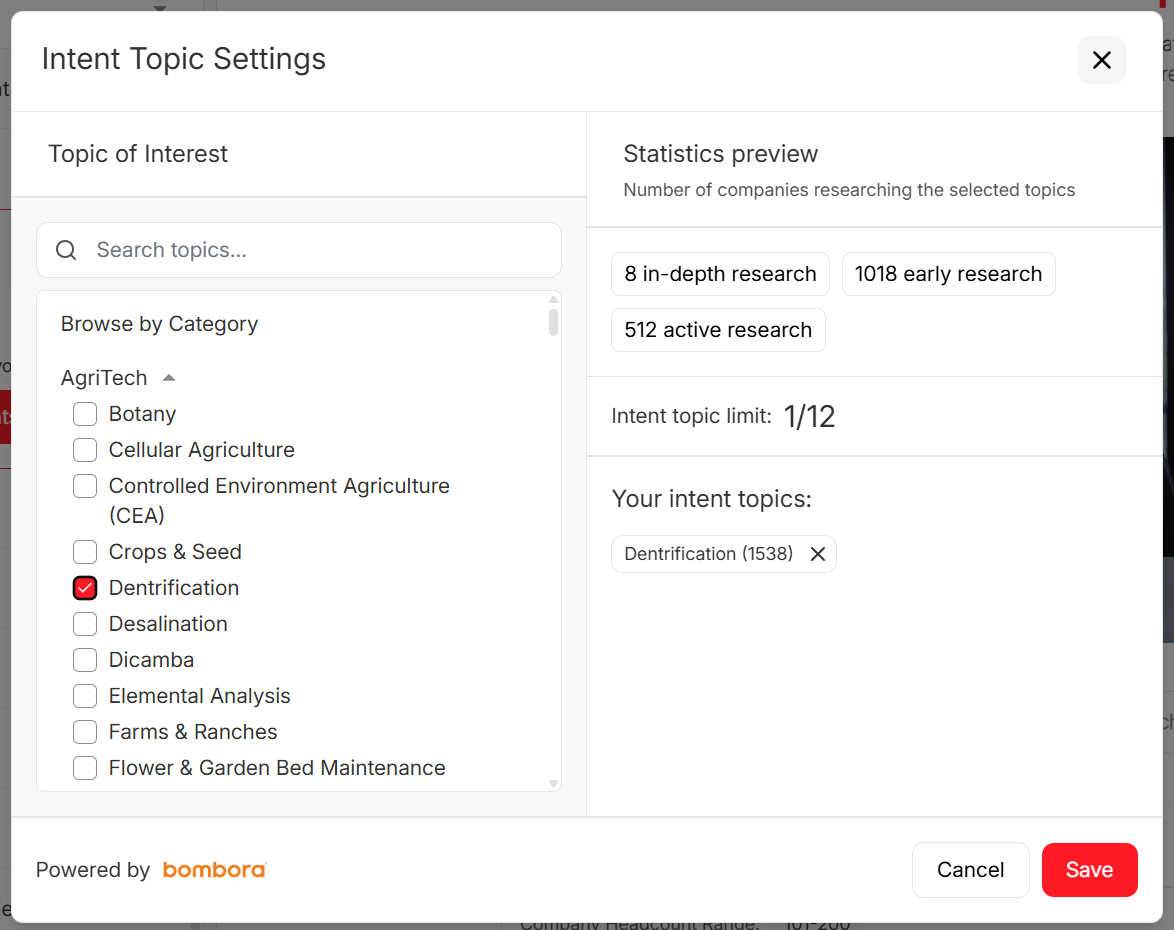
Most intent platforms charge $25K-$300K/year and lock you into annual contracts before you see a single result. Prospeo gives you Bombora-powered intent data, 125M+ verified mobiles, and contact-level accuracy - credit-based, no contracts, cancel anytime.
Stop paying enterprise prices to chase signals that don't convert.
FAQ
What's the difference between intent data and buying signals?
Intent data is the digital research behavior - topic and content consumption - that suggests category interest. Buying signals include intent plus operational triggers like tech stack changes, job changes, and pricing-page behavior. In our experience, teams get the best results when they score both together and enforce a 7-30 day decay window so stale activity doesn't outrank fresh demand.
How accurate is third-party intent data?
Third-party intent is broad but noisy, so treat it as a prioritization layer - not a "call this person now" instruction. You'll see better outcomes when you combine at least 2 sources (third-party topic surges + first-party site behavior, for example) and only promote accounts to Tier 1 when 2-3 signals stack within 14 days.
Can small teams use intent without enterprise budgets?
Absolutely. Most small teams should start with a self-serve workflow and a tight SLA instead of a six-figure platform. Apollo's free tier includes basic intent, and tools like Prospeo start free while pairing Bombora-powered topics with verified contacts, so you can go from "in-market account" to outreach-ready leads without an annual contract. Skip the enterprise platforms until you have the headcount to run them properly.
What to Do Next
If you want buying signals data to produce meetings - not just dashboards - focus on "improvement mode" indicators: stack changes, headcount growth, recent purchases. Apply decay windows. Only escalate when multiple signals stack. Then solve the last mile: route the account to verified decision-maker contact data fast enough to hit the shortlist. Speed beats "perfect" intent every time.