

Cognism vs Definitive Healthcare: A Head-to-Head Comparison
Healthcare contact data rots fast. Between turnover, M&A, and constant org reshuffles, a 25-35% annual decay rate is a very real planning problem, not a fun fact.
Now add the reality that enterprise health system deals often involve 12-15 stakeholders across clinical, IT, finance, procurement, and security. If your data tool can't map the org and get you to the right humans, you're not "building pipeline" - you're donating time to voicemail.
Here's the thing: Cognism and Definitive Healthcare (DH) solve different problems. Pick the wrong one and you'll light five figures on fire before anyone admits it.
30-second verdict
Pick Definitive Healthcare if you sell into US providers and need facility intelligence: IDNs, affiliations, NPI-linked provider records, claims, and healthcare-specific filters.
Pick Cognism if you need a general B2B prospecting engine (especially in EMEA), buying signals, and verified mobile numbers for outbound into healthcare-adjacent orgs.
Let's be honest: most teams that win in healthcare end up running two layers - one for healthcare org intelligence, and one for contact verification and deliverability. We've watched teams burn an entire quarter trying to force a single platform to do both.
Side-by-side comparison
| Feature | Definitive Healthcare | Cognism | Winner |
|---|---|---|---|
| Best for | US healthcare org + provider intelligence | General B2B prospecting, strong in EMEA | DH (healthcare depth) |
| Database size | 3M+ HCPs, 310K+ orgs | 400M+ B2B profiles | Cognism (volume) |
| NPI / taxonomy / claims | Yes | No | DH |
| Geographic strength | US + Canada | EMEA + global | Cognism |
| G2 rating | 3.9/5 (42 reviews) | 4.5/5 (1,318 reviews) | Cognism |
| Typical annual cost (est.) | ~$25K-$60K (small team); higher with modules/API | ~$15K-$25K+ | Cognism (lower entry) |
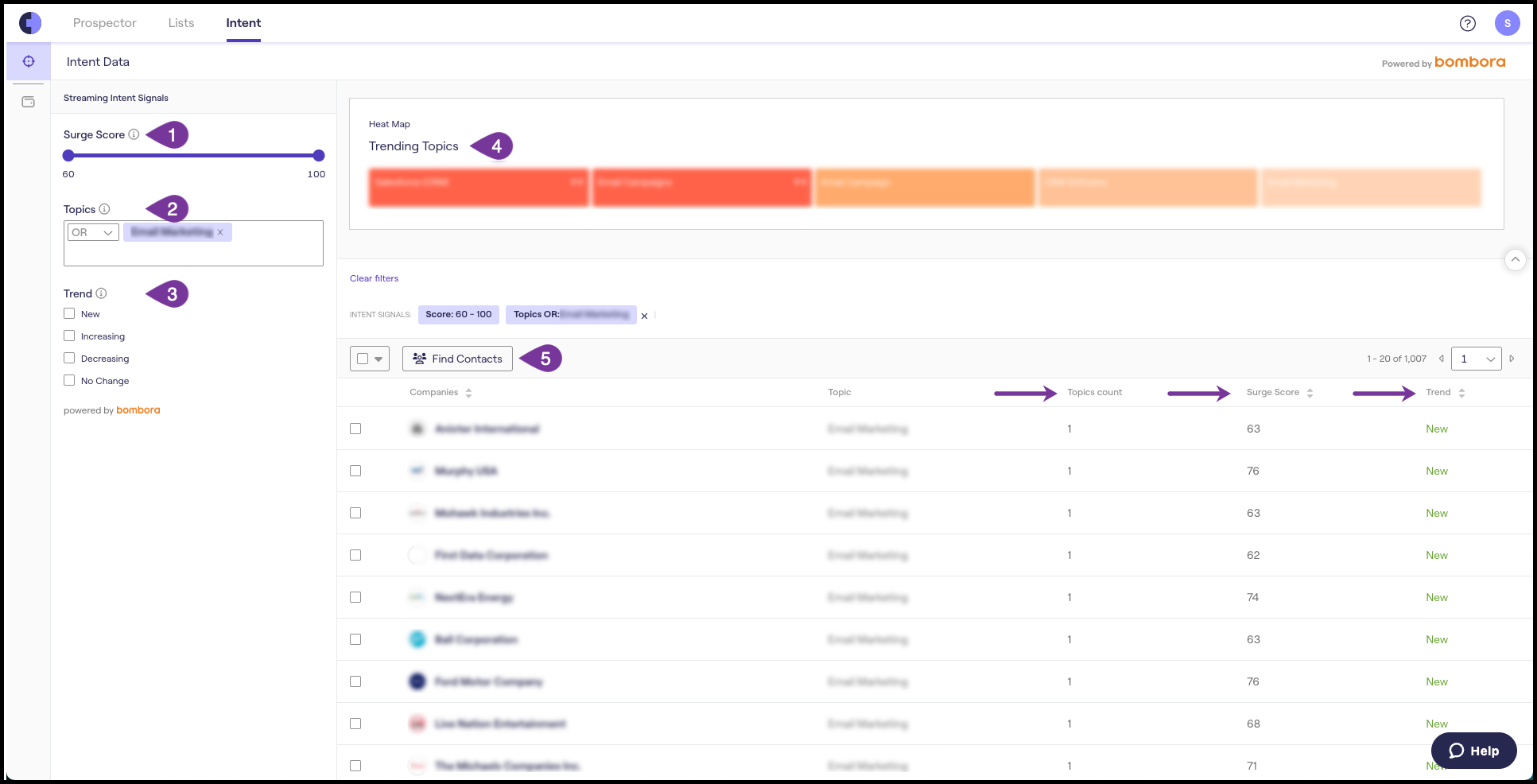
| Intent data | Not a core strength | Bombora intent (up to 12 topics on some plans) | Cognism |
| Verified mobiles | Not a core strength | Verified mobile numbers + "Diamond" data | Cognism |
| CRM integrations | Common complaint in reviews | Salesforce, HubSpot | Cognism |
| Data refresh | Not public | Not public | Tie (ask in sales cycle) |
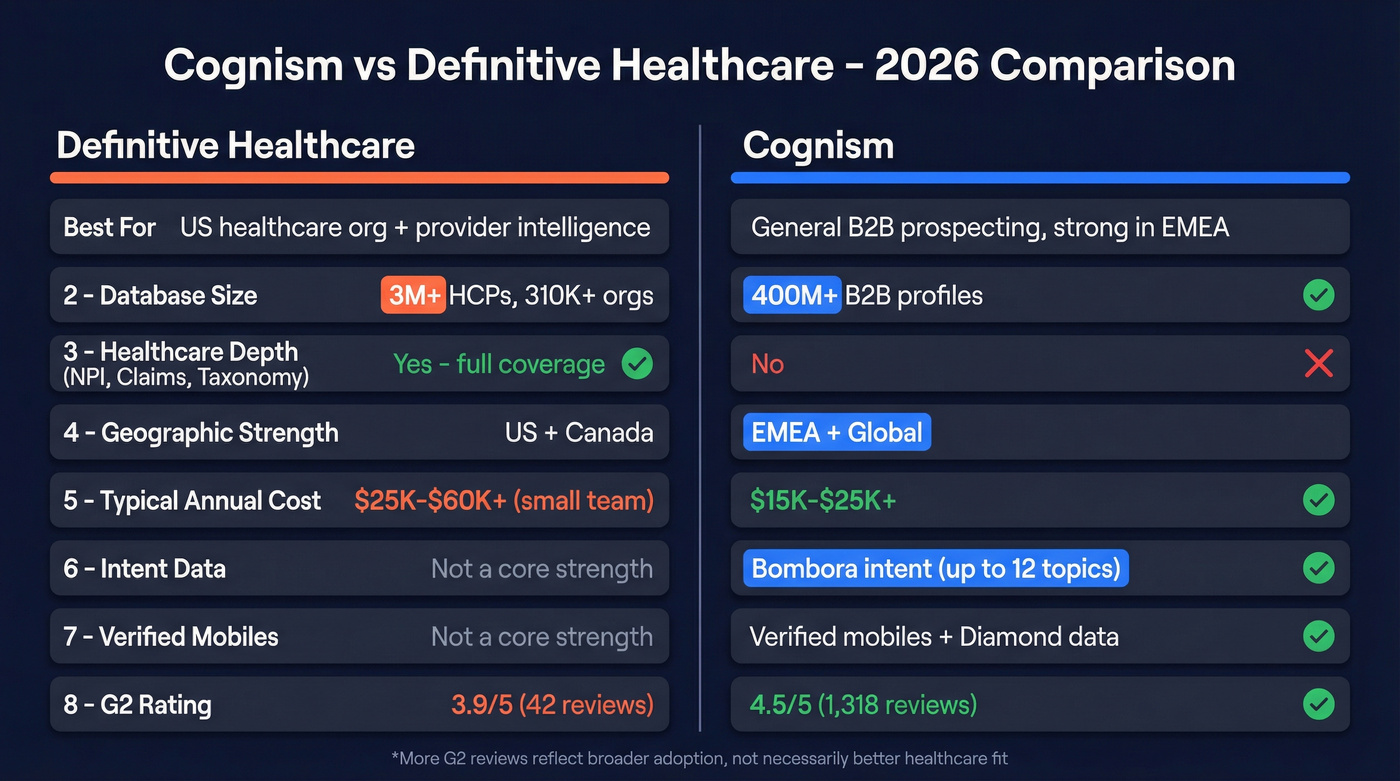
Cognism has far more reviews on G2. That mostly tells you adoption is broader across industries, not that it's automatically the better healthcare pick.
Where Definitive Healthcare wins (and where it doesn't)
Definitive Healthcare is built for healthcare operators and sellers who need to understand the system behind the system: facilities, affiliations, service lines, and patient/claims signals that actually correlate with budget and buying behavior.
If you need to filter US hospitals by bed count, find every orthopedic surgeon affiliated with a specific IDN, or segment by claims volume, DH is in its element. Their View Suite coverage includes 9,500 hospitals and IDNs, 3M+ healthcare professionals, 123,000 physician groups, 12.51B commercial medical claims, and about 28B prescription claims. General B2B databases don't come close to that kind of healthcare-native structure.
Now the part that frustrates people: DH isn't widely loved as an outbound contact source. The most common complaint in reviews is contact accuracy (wrong or non-direct phone numbers), and that pain gets worse when you're trying to run high-volume calling or sequences. Support speed also comes up more than it should for a platform at this price point.
One scenario we see a lot: a team buys DH to sell into hospitals, exports 500 "decision-maker" contacts, loads them into a sequencer, and two weeks later the SDR manager is staring at a pile of bounces and switchboard numbers. The targeting was right. The contact layer wasn't.
Use DH when the account list and org mapping are the hard part.
Skip DH when your main goal is "give me direct dials and emails I can hit today."
For a quick sanity check on sentiment, Reddit threads in healthcare sales communities consistently warn that DH is great for facility intelligence but rough for outbound contact accuracy. That's not scientific, but it's a pattern.
Helpful references:
- https://www.definitivehc.com/ (product and coverage details)
- https://www.g2.com/products/definitive-healthcare/reviews (user reviews)

DH nails org intelligence but fumbles contact accuracy. Cognism covers EMEA but lacks healthcare depth. Prospeo fills the gap: 98% verified emails, 125M+ direct mobiles with a 30% pickup rate, and a 7-day data refresh cycle - so the contacts you export actually connect.
Stop donating time to voicemail. Verify every contact before you dial.
Where Cognism wins (and where it doesn't)
Cognism is a classic outbound engine: big database, strong European coverage, and a product designed around prospecting workflows. It typically shows up in teams that need to move fast across many accounts, especially outside North America where some US-first databases get shaky.
Cognism's packaging is usually described as Grow and Elevate, with Elevate adding buying signals like Bombora intent (often capped at 12 topics on that plan) plus enhanced mobile coverage. If you're selling health IT into NHS trusts, DACH hospital groups, or EU-based medtech and services firms, Cognism's GDPR-first posture and EMEA depth are the reason it makes the shortlist.
The tradeoff is simple: Cognism isn't a healthcare intelligence platform. There's no NPI verification, no taxonomy code filtering, and no facility-level fields like bed count, service line, or payer mix. So for US provider targeting, it can feel like trying to do surgery with boxing gloves.
Look, this is where teams get stubborn. They already have Cognism, so they try to make it "do healthcare." We get it - budgets are real. But if your ICP is US providers, you end up building spreadsheets to recreate what DH already models, and you still don't get claims or affiliation context.
Use Cognism when outbound speed, EMEA coverage, and mobile reach matter.
Skip Cognism when you need healthcare-native segmentation and provider/facility intelligence.
Helpful references:
- https://www.cognism.com/ (product overview)
- https://www.g2.com/products/cognism/reviews (user reviews)
Pricing in 2026 (what teams actually pay)
Pricing moves, contracts vary, and both vendors negotiate. Still, you can get into the right ballpark.
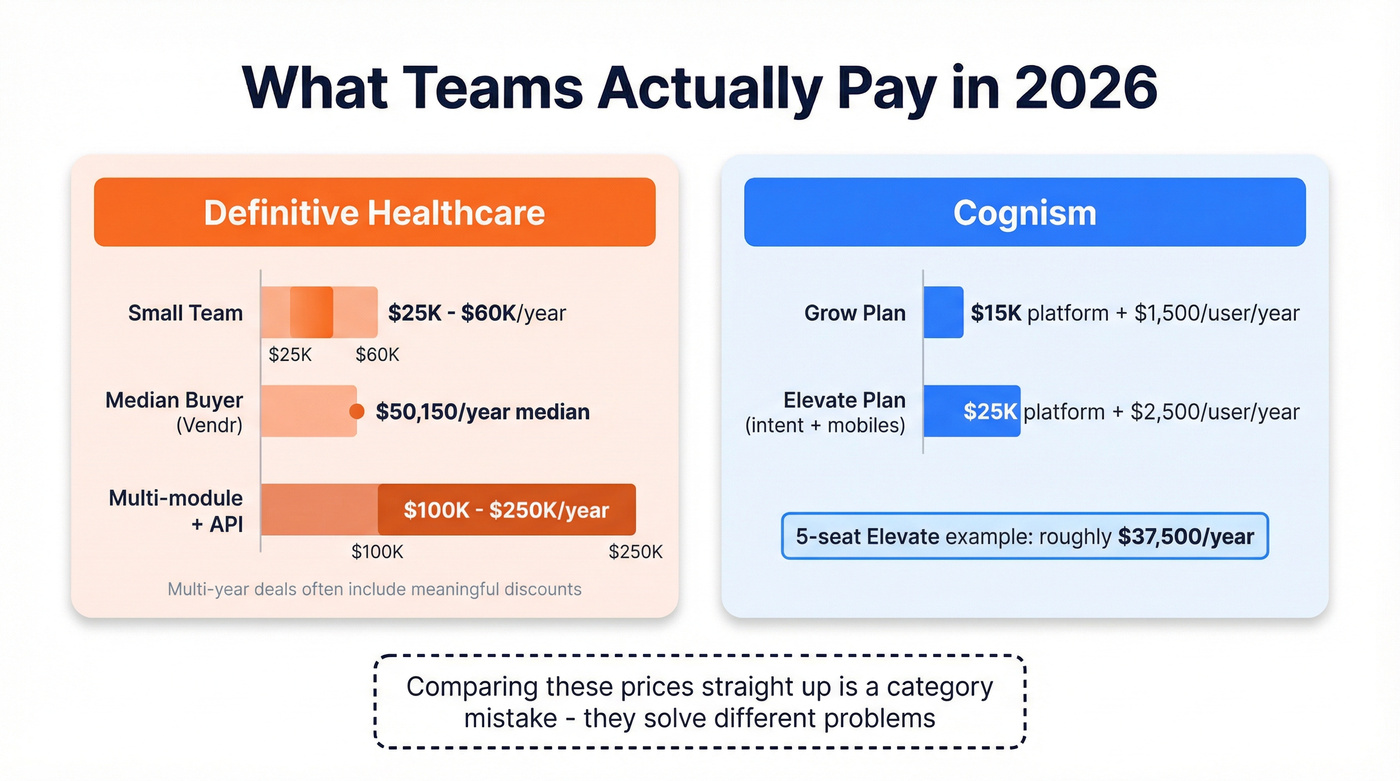
For Definitive Healthcare, Vendr benchmarks put the median buyer around $50,150/year. In practice, we've seen small teams land in the $25K-$60K/year range, while broader deployments (multiple modules, more seats, API access) climb into $100K-$250K. Multi-year deals often come with meaningful discounts, but you're still in "budget line item" territory.
For Cognism, third-party estimates commonly peg Grow around $15K for the platform plus about $1,500/user/year. Elevate (intent + stronger mobile coverage) is often quoted around $25K platform plus $2,500/user/year, putting a 5-seat Elevate deal near $37,500/year.
Comparing DH and Cognism pricing straight up is a category mistake. It's like comparing a hospital EHR to a CRM: both matter, but they don't replace each other.
Helpful reference:
Which one should you buy?
Here's a practical way to decide without overthinking it.
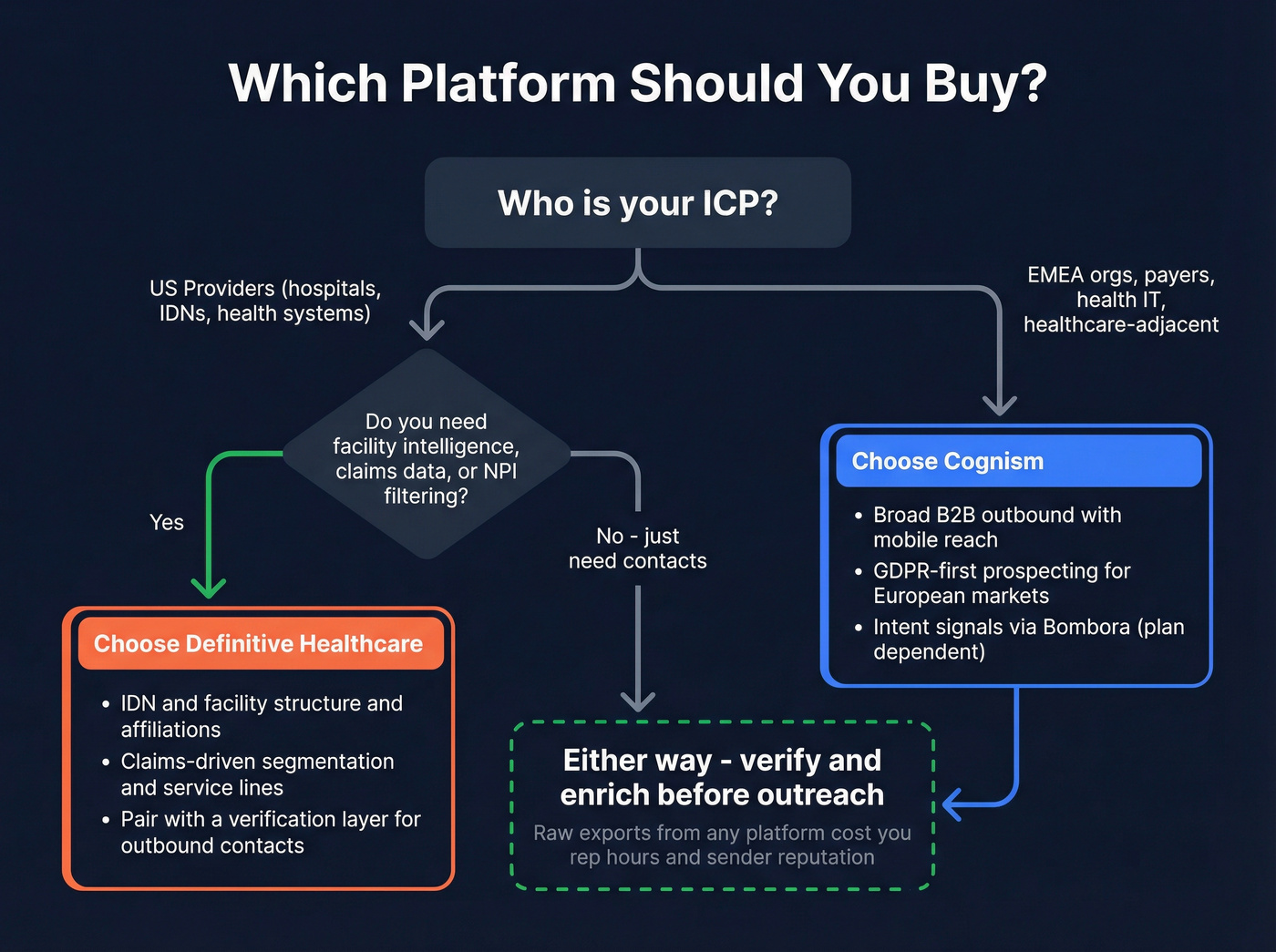
Choose Definitive Healthcare if:
- Your ICP is US providers and you need IDN/facility structure, affiliations, and healthcare-specific filters
- Your reps sell by understanding service lines, claims, and where patients actually flow
- You already have a separate system for email/phone verification or you're willing to add one
Choose Cognism if:
- You're doing broad B2B outbound into healthcare-adjacent companies, payers, services, or EMEA provider orgs
- You care about mobile reach and prospecting workflows more than healthcare-native fields
- You want intent signals in the same platform (plan-dependent)
And yes, sometimes the right answer is "both," but not in the way vendors pitch it. Use one for targeting, then clean what you export before it hits your dialer or sequencer.
Closing the contact accuracy gap (the part nobody budgets for)
Both platforms have accuracy complaints in the wild. DH users regularly call out wrong or non-direct phone numbers. Cognism users also mention outdated contacts and uneven mobile availability. If you're running outbound sequences off raw exports, you're paying reps to do data QA with their time and your sender reputation.
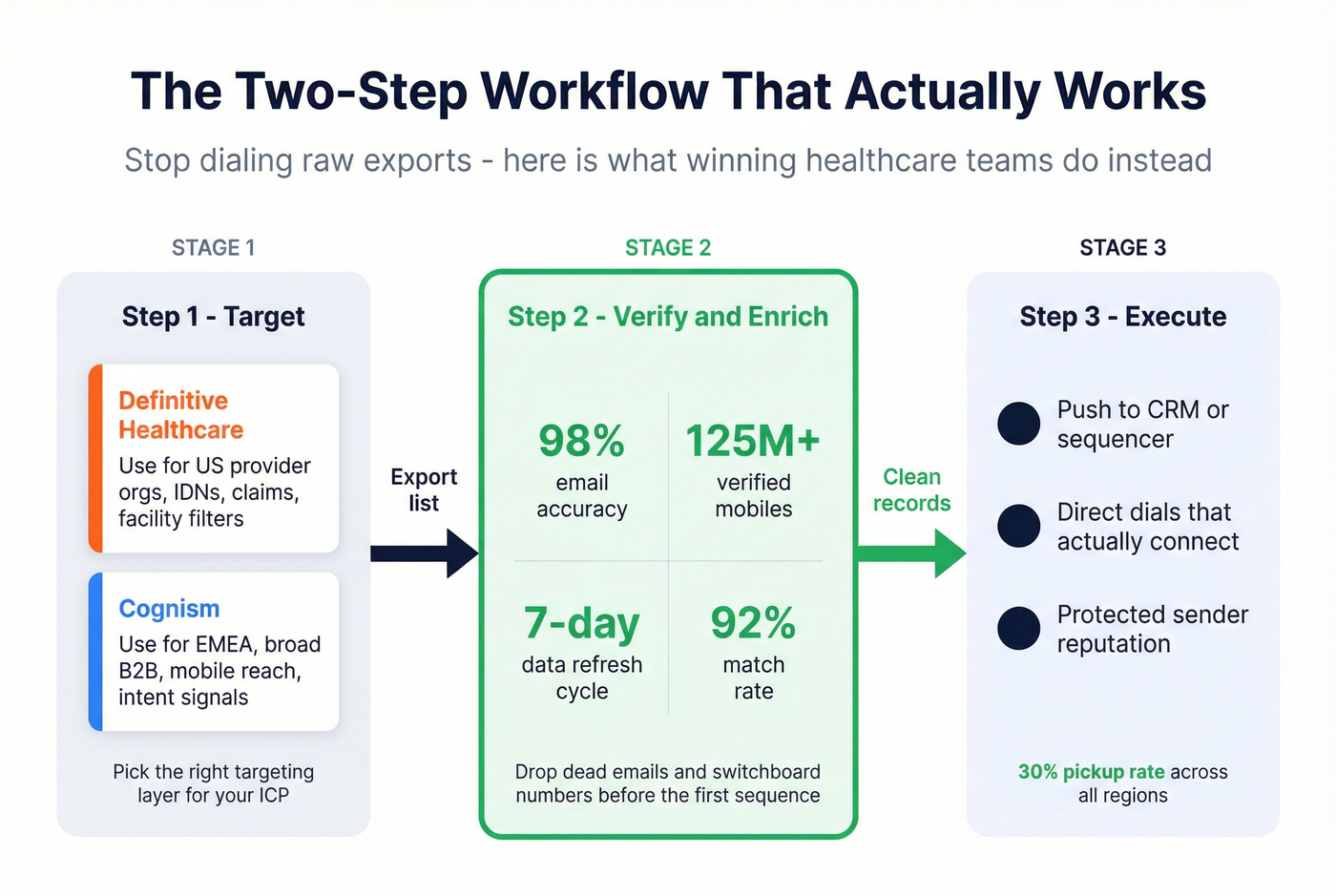
Our team uses a two-step workflow: pick the right targeting layer (DH or Cognism), then verify and enrich before outreach. Tools like Prospeo are built for that second step: verification, enrichment, and freshness.
Prospeo gives you 98% email accuracy, 143M+ verified emails, and 125M+ verified mobile numbers with a 30% pickup rate across all regions. Records refresh every 7 days (the industry average is about 6 weeks), which is exactly why it catches stale contacts that looked fine when you exported them. And if you're moving data between systems, the enrichment API returns 50+ data points per contact with a 92% match rate.
A quick, real-world scenario: an SDR exports a DH list of cardiology decision-makers at 200+ bed hospitals, runs it through verification, and immediately drops the dead emails and switchboard numbers before the first sequence goes out. That one extra step is boring. It's also the difference between "our deliverability tanked" and "we booked meetings."
If you're seeing bounce spikes, start with email deliverability fundamentals before you scale volume.

Teams spending $25K-$60K on DH still need a second layer for deliverable emails and direct dials. Prospeo gives you 98% email accuracy at ~$0.01/lead - no annual contract, no sales call required. Layer it on top of any healthcare intelligence platform.
Add the contact accuracy layer your healthcare stack is missing.
FAQ
Can Cognism replace Definitive Healthcare for healthcare sales?
No. Cognism doesn't have NPI verification, taxonomy filtering, or facility-level intelligence like bed counts, claims volume, and IDN affiliations. They're complementary: DH for healthcare org intelligence, Cognism for broader outbound coverage.
Is Definitive Healthcare worth ~$50K/year?
If you need facility intelligence and claims-driven segmentation, yes - it's hard to replicate. If your main need is accurate outbound contacts, it's a tougher buy at that price unless you pair it with a verification/enrichment layer.
How do we fix bad phone numbers from either platform?
Don't dial raw exports. Verify and enrich first, then push clean records into your dialer/CRM. That one habit saves rep hours, protects deliverability, and stops the "this list is trash" spiral before it starts.
Which platform is better for EMEA healthcare prospecting?
Cognism. Definitive Healthcare's strength is North American provider intelligence, while Cognism is built for GDPR-first prospecting and tends to perform better across EMEA for direct contact coverage.