

Cold Call Voicemail Strategies: What 300M Calls Prove
You blocked three hours for cold calls. You dialed 80 numbers. Fifty-two percent went to voicemail, 17% were disconnected, and you connected with maybe 25 people. That's the reality - roughly 80% of B2B calls hit voicemail before you get a chance to pitch, which means cold call voicemail strategies aren't optional. They're the majority of your outbound output.
The Short Version
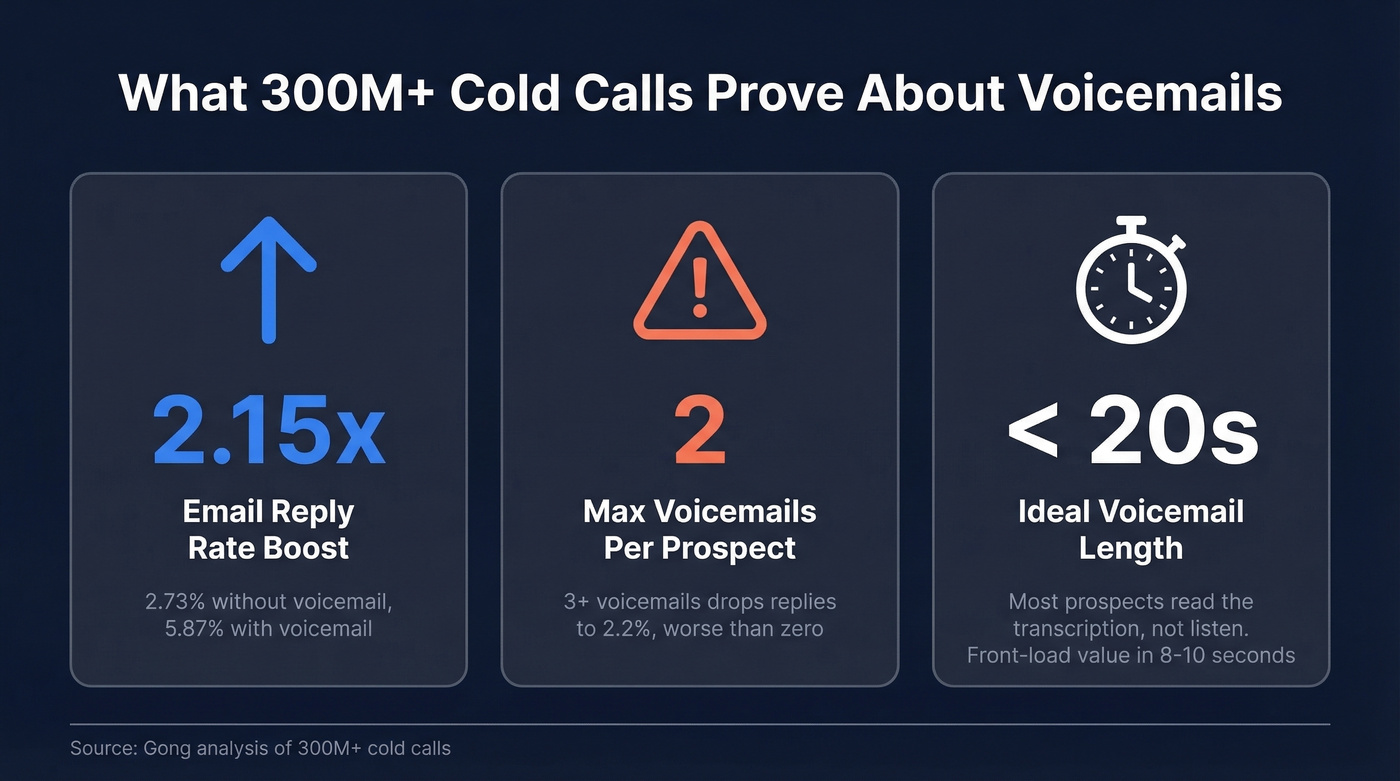
- Voicemails double email reply rates. Gong's analysis of 300M+ cold calls found voicemails bumped email reply rates from 2.73% to 5.87%. Leave them to prime your email, not to get callbacks.
- Max two voicemails per prospect. Three or more drops your email reply rate to 2.2% - worse than leaving none.
- Keep it under 20 seconds. Most prospects read the transcription instead of listening. Front-load value in the first 8-10 seconds.
Stop Optimizing for Callbacks
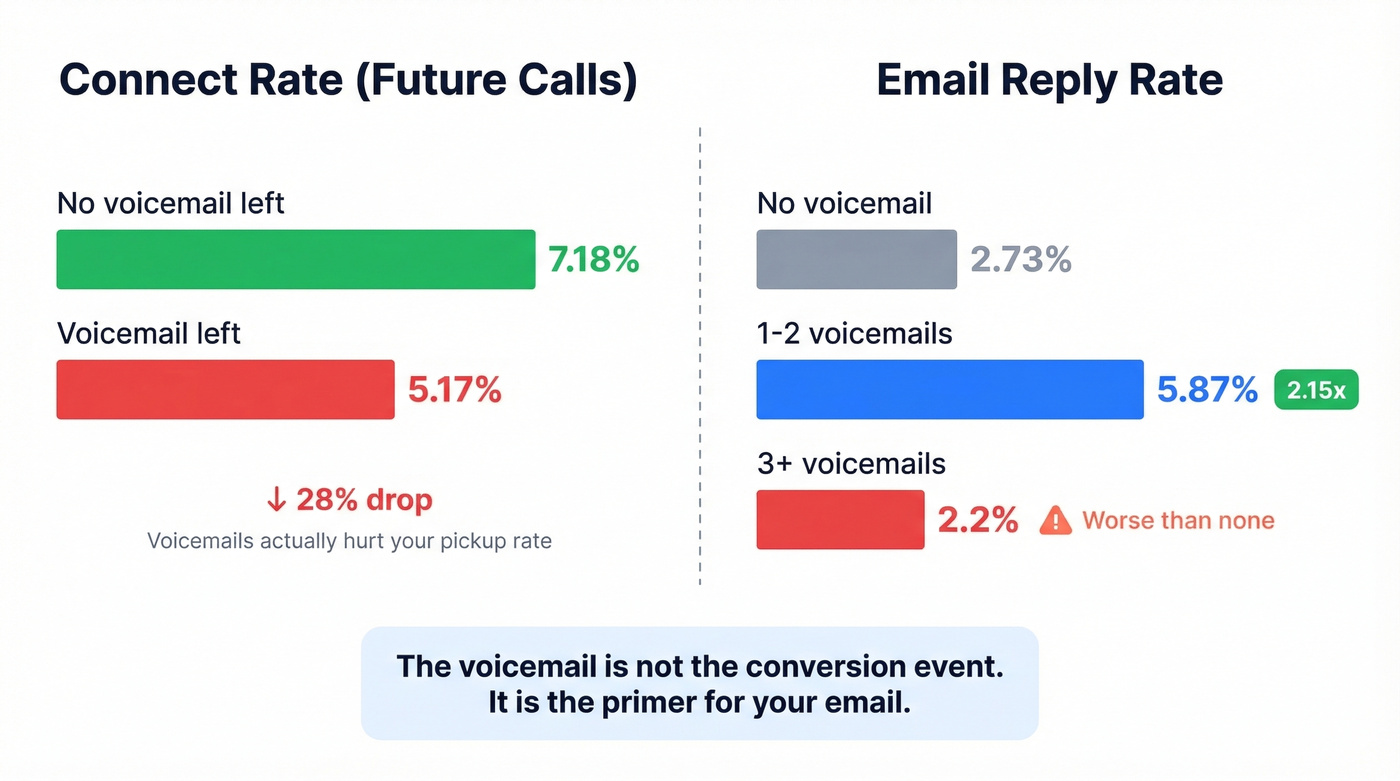
Here's the thing most reps get wrong: voicemails actually hurt your connect rate. The 300M-call dataset shows prospects who received voicemails connected on future calls at 5.17%, compared to 7.18% for those who never got one. That's a 28% drop.
So why leave them at all?
Because email reply rates more than doubled - from 2.73% to 5.87% - when reps left voicemails before sending an email. The voicemail isn't the conversion event. It's the primer that makes your email feel familiar instead of cold. But there's a cliff: at three or more voicemails, email reply rates crater to 2.2%. Two is the ceiling. Every voicemail after that actively damages your sequence, and if you're chasing a higher callback rate, the data says you're optimizing for the wrong metric entirely.
Your Voicemail Is Being Read, Not Heard
Apple's Live Voicemail (iOS 17+) transcribes messages in real time. Most Android phones and carriers offer similar transcription and call-screening features. Decision-makers skim the text and decide in seconds whether to engage.
This changes everything about how you record. Speak clearly and at a measured pace - mumbling kills you in transcription. Spell out your company name if it's unusual. Front-load your value in the first 8-10 seconds, because that's the part people actually see. Think of it less like leaving a message and more like writing a push notification that happens to have audio attached.

The double-tap only works if the number is live. Prospeo's 125M+ verified mobile numbers refresh every 7 days - not every 6 weeks - so your voicemails land on active lines and your follow-up emails hit real inboxes at 98% accuracy.
Stop leaving voicemails on disconnected numbers. Fix the data first.
Three Scripts That Work
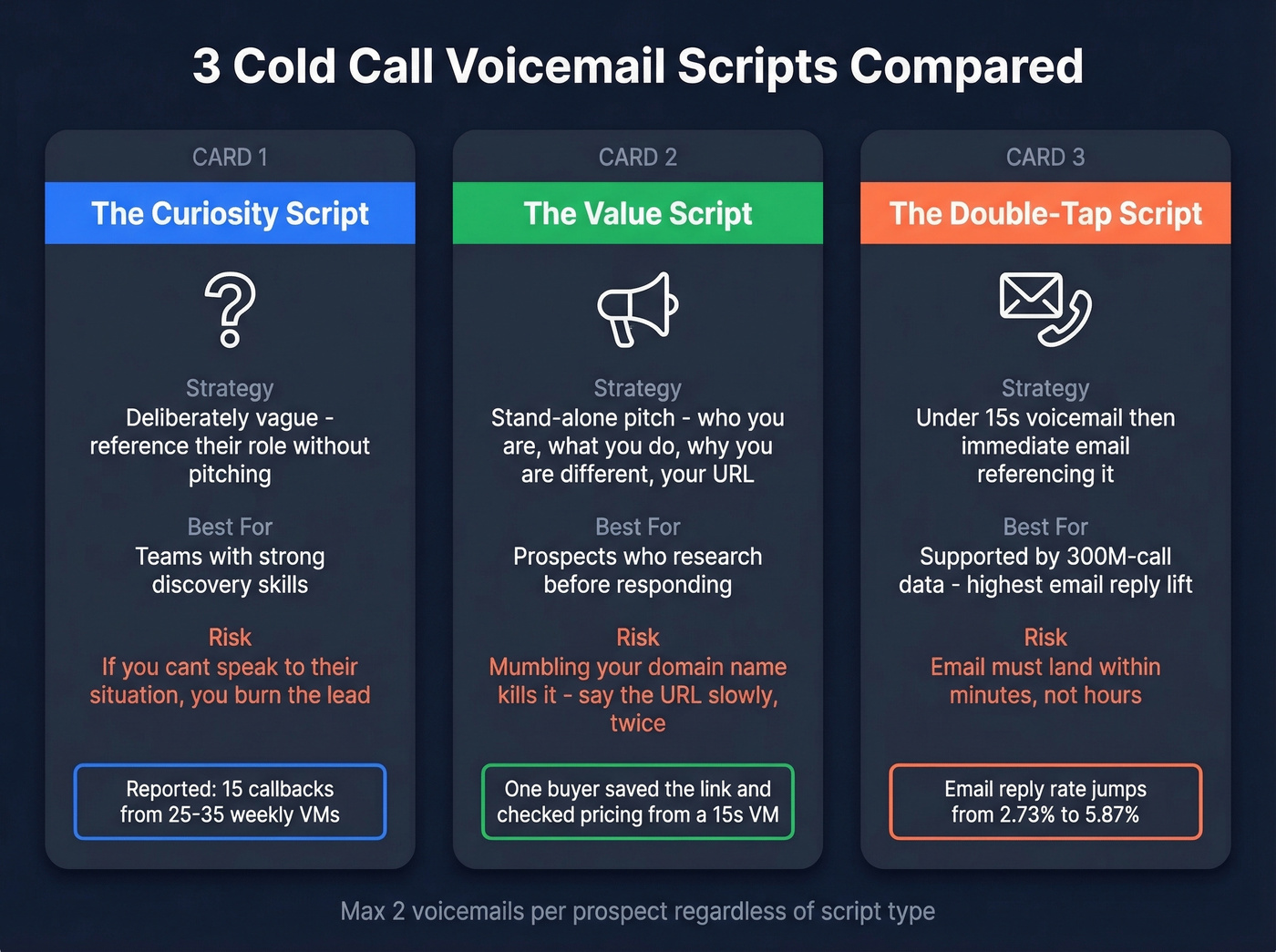
The Curiosity Script
Deliberately vague - you reference the prospect's role without pitching.
"Hi [Name], this is [You] at [Company]. I'm calling regarding your oversight of the [department] team - I had a quick question. My number is..."
One SDR on r/sales described leaving 25-35 of these weekly and getting roughly 15 callbacks, converting 3-5. The catch: if they call back and you can't speak to their situation, you've burned the lead. Skip this one if your team doesn't have strong discovery skills on the fly.
The Value Script
This one stands alone - no email follow-up required.
A buyer on Reddit described the "perfect" cold voicemail: who the caller was, what they did, why they were different, their website, and their number. The buyer visited the site, checked pricing, and saved the link - all from a roughly 15-second message. One detail from that same thread: the recipient said the rep mumbled the domain name, forcing them to search for it manually. Speak the URL slowly. Twice if you can fit it.
The Double-Tap Script
This is the play the 300M-call study supports most directly. Leave a voicemail under 15 seconds, then immediately send an email referencing it:
"Just left you a quick voicemail - here's what I mentioned."
The voicemail creates name recognition; the email delivers the pitch. We've found this works best when the email lands within minutes of the voicemail, not hours. (If you need copy, steal a few sales follow-up templates and adapt them to your call notes.)
Building a Multi-Touch Cadence
A solid voicemail strategy treats messages as a supporting channel, not the main event. Your outbound cadence should run 8-12 touchpoints across phone, email, and social, with voicemails as exactly one or two of those touches:
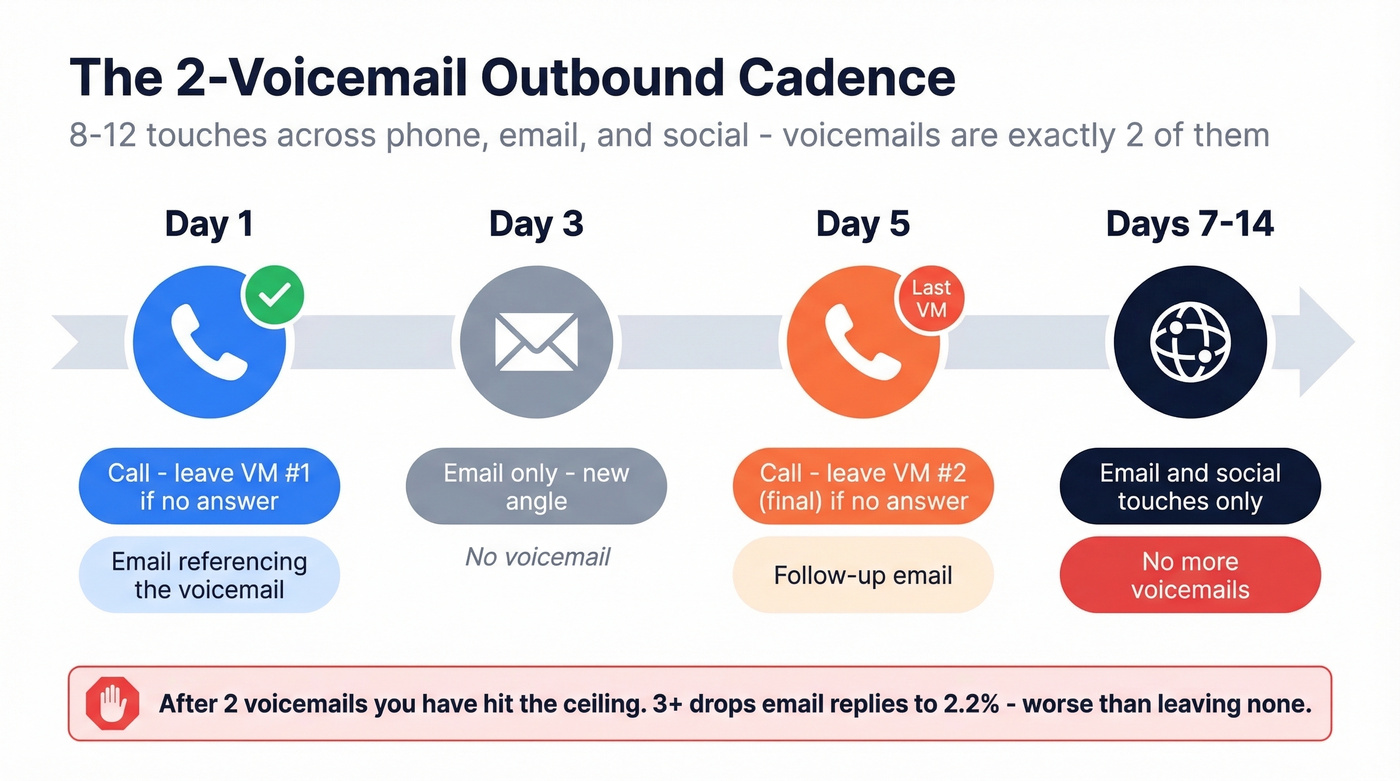
- Day 1: Call (leave voicemail if no answer) then email referencing the voicemail
- Day 3: Email only, new angle
- Day 5: Call (second and final voicemail if no answer) then follow-up email
- Days 7-14: Email and social only - no more voicemails
After two voicemails, you've hit the ceiling. Let the other channels carry the rest of the sequence. If you're rebuilding the whole motion, start with a simple cold calling system and layer voicemail in as a support touch.
Why Calls Go Straight to Voicemail
If your pickup rate tanks, the problem is probably your data or your number reputation - not your script. One SDR on r/sales described a 3% pickup rate on 60-100 daily dials, with performance cratering after an initial strong run. Sound familiar?
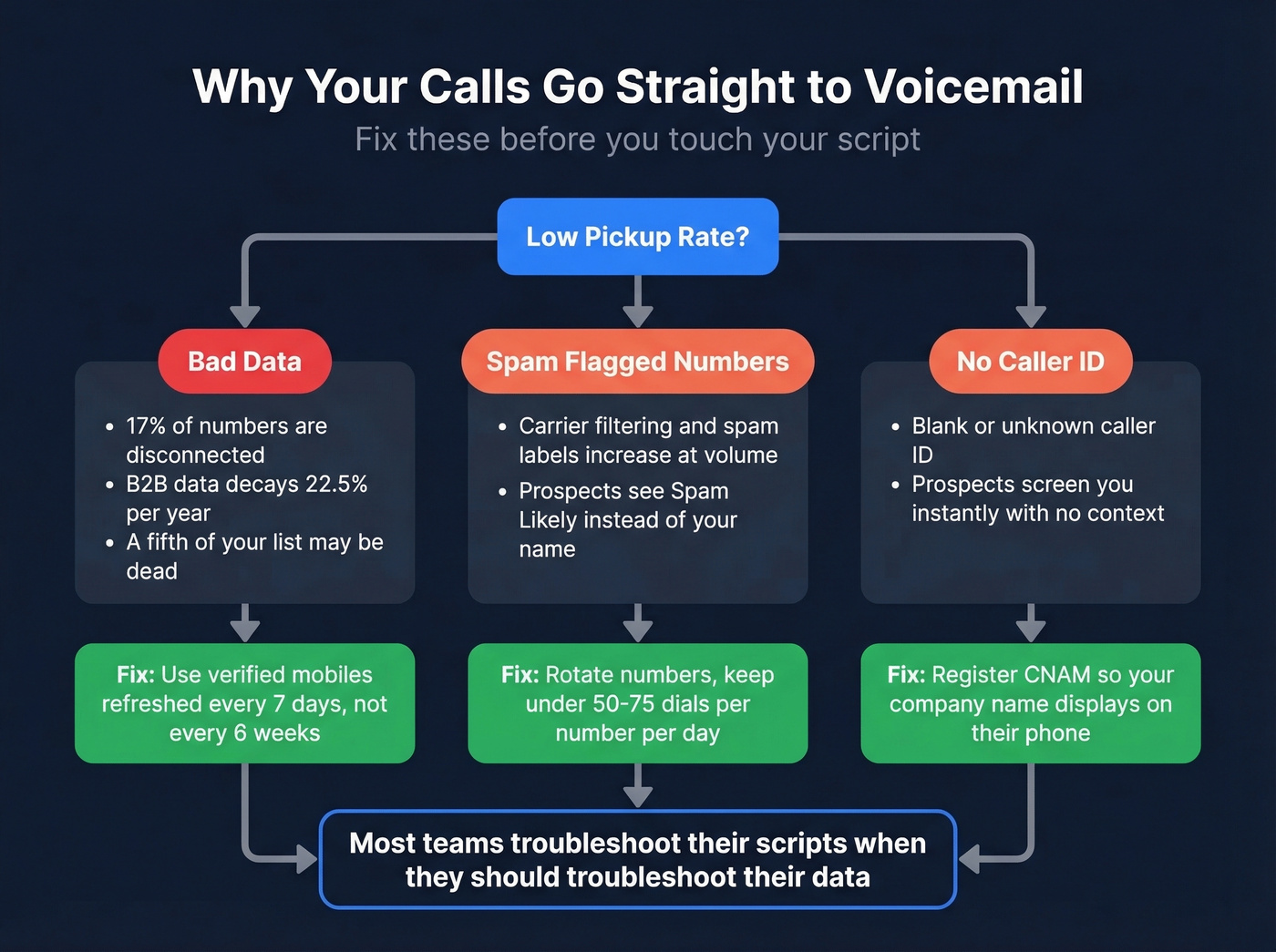
Carrier filtering and spam labeling become a real problem at volume. Rotate numbers and keep daily volume under 50-75 dials per number. Bad data is the silent killer - CallHippo's research found 17% of numbers were disconnected, and B2B contact data decays roughly 22.5% per year. If a fifth of your list is dead, no cadence saves you. And without caller ID context, prospects screen you instantly - register your CNAM so your company name displays.
Let's be honest: most teams troubleshoot their scripts when they should be troubleshooting their data. We've seen teams recover pickup rates overnight just by cleaning their list. Prospeo refreshes its 125M+ verified mobile numbers on a 7-day cycle and delivers a 30% pickup rate - worth verifying your numbers before you touch your voicemail script. If you're auditing your stack, compare options in our guide to data enrichment services.
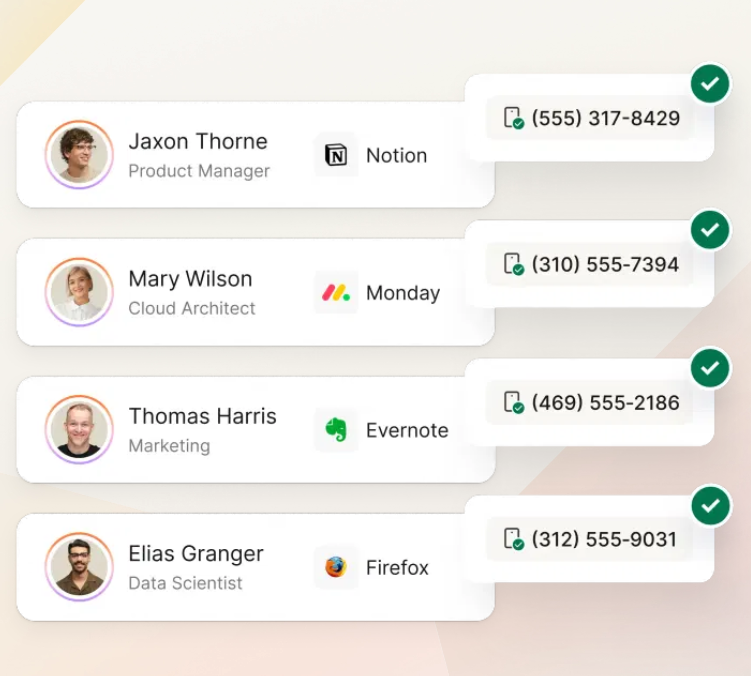
You saw the stat: 17% of numbers are disconnected and B2B data decays 22.5% per year. Prospeo delivers a 30% pickup rate across 125M+ verified mobiles at $0.01/lead - so your two voicemails actually reach the prospect instead of a dead line.
Two voicemails is the ceiling. Make both of them count.
TCPA Compliance in 2026
TCPA enforcement has gotten meaningfully scarier. Litigation surged 95% versus the prior year. The FCC classified AI-generated voices as "prerecorded" under TCPA in February 2024, so using AI voice clones for voicemail drops requires prior express written consent. Ringless voicemail gets the same treatment. The Supreme Court's June 2025 McLaughlin v. McKesson ruling means district courts aren't bound by FCC interpretations in civil TCPA cases, so expect more variability by jurisdiction.
If you're doing manual, one-at-a-time voicemails to business prospects, you're in relatively safe territory. The moment you automate with drops or AI voices, talk to legal counsel first. If you're considering other channels instead, read up on cold texting before you add SMS to the mix.
FAQ
How long should a cold call voicemail be?
Under 20 seconds. Front-load your value in the first 8-10 seconds, since most recipients read the AI transcription rather than listen. After 20 seconds, completion rates drop sharply.
How many voicemails should you leave one prospect?
Two, maximum. Gong's 300M-call study found three or more voicemails dropped email reply rates to 2.2% - worse than the 2.73% baseline of leaving none at all.
Should you use voicemail drops for cold outreach?
The FCC treats ringless voicemail as a prerecorded message requiring prior express written consent. Without it, you risk TCPA violations and fines up to $1,500 per call. Manual, live voicemails to business lines remain the safest approach.
How do you improve pickup rates on cold dials?
Start with your data. If 17-20% of your numbers are disconnected, no script fixes that. Use a provider with verified mobile numbers refreshed frequently, then rotate caller IDs and register CNAM so prospects see a real company name instead of a blank number.