

Cold Calling Stats: 40+ Data Points Every Sales Team Needs in 2026
You just finished a 200-dial day and booked exactly one meeting. Your manager says the benchmark is 2-3%. You're sitting at 0.5%. Are you terrible at this, or is the benchmark wrong?
Probably the benchmark. An SDR on r/sales reported 180-200 dials per day with a 5-8% connect rate and roughly one meeting per 200 calls. That's the floor reality for SaaS cold calling without an auto dialer. The polished "2-3% success rate" you see everywhere is an average across 200,000+ calls, and averages hide everything that matters.
Here's what we've found after digging through the actual data: your conversion rate depends on industry, deal size, and - more than anything else - data quality. The single "2%" number is nearly useless without that context.
Success Rates in 2026
Cold calling is getting better, not worse. The Cognism/WHAM 2026 report analyzed over 200,000 calls and found the industry average success rate climbed from 2.3% in 2025 to 2.7% in 2026. That's a meaningful jump in a channel most people assumed was dying.
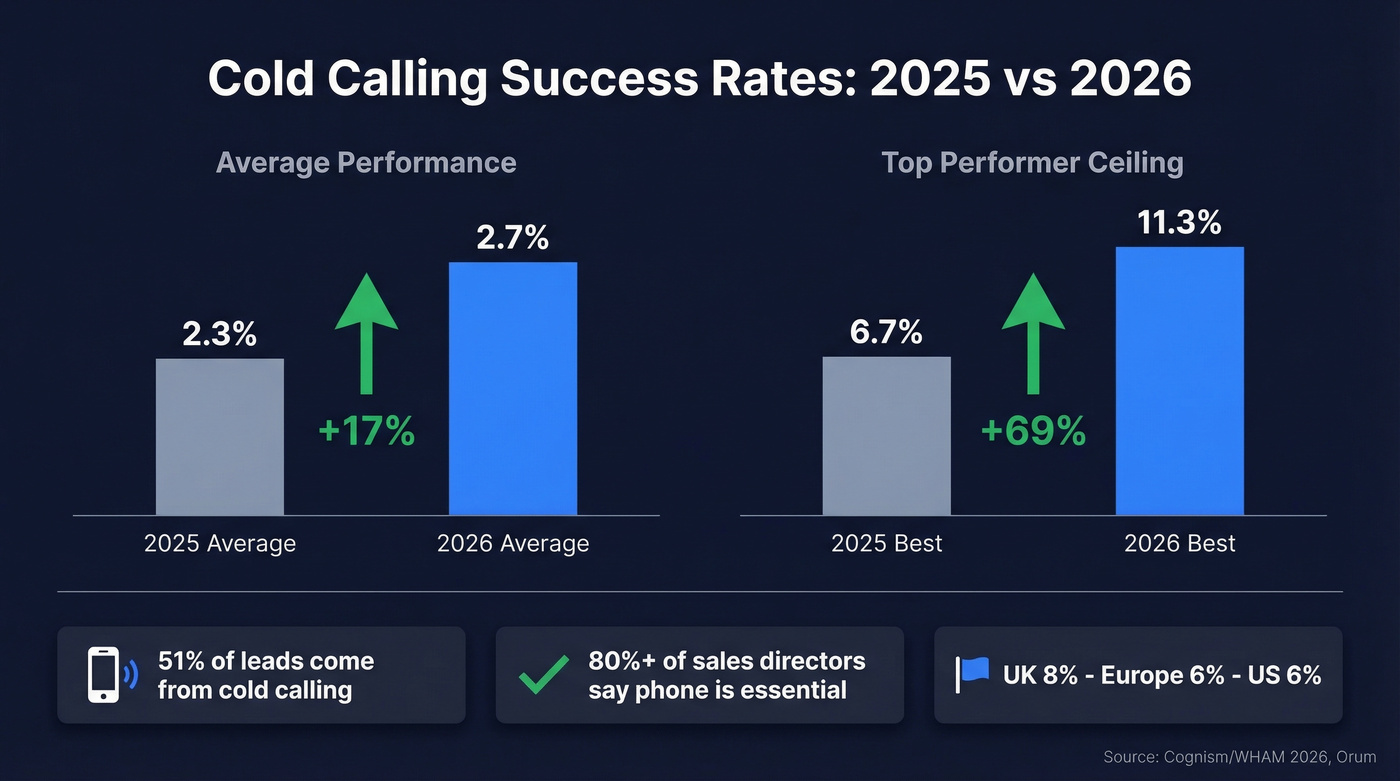
More interesting is the ceiling. The Cognism team hit an 11.3% success rate in 2026, up from 6.7% the prior year. That gap between 2.7% and 11.3% tells you everything about optimization - the average is mediocre, but data-optimized teams pull numbers that would make most SDR managers weep.
The "cold calling is dead" crowd needs to reckon with two data points from Orum's State of Sales Development report: 51% of leads come from cold calling, and over 80% of sales directors say the phone is essential to their pipeline. Cold calling isn't dying. Lazy cold calling is.
Regional data showed UK teams at 8%, Europe at 6%, and the US at 6%. The US number surprises people, but American prospects get hammered with more outbound volume, which drags connect rates down.
Conversion Rate by Industry
Most roundups give you one number. That's useless if you're selling janitorial services versus enterprise software.
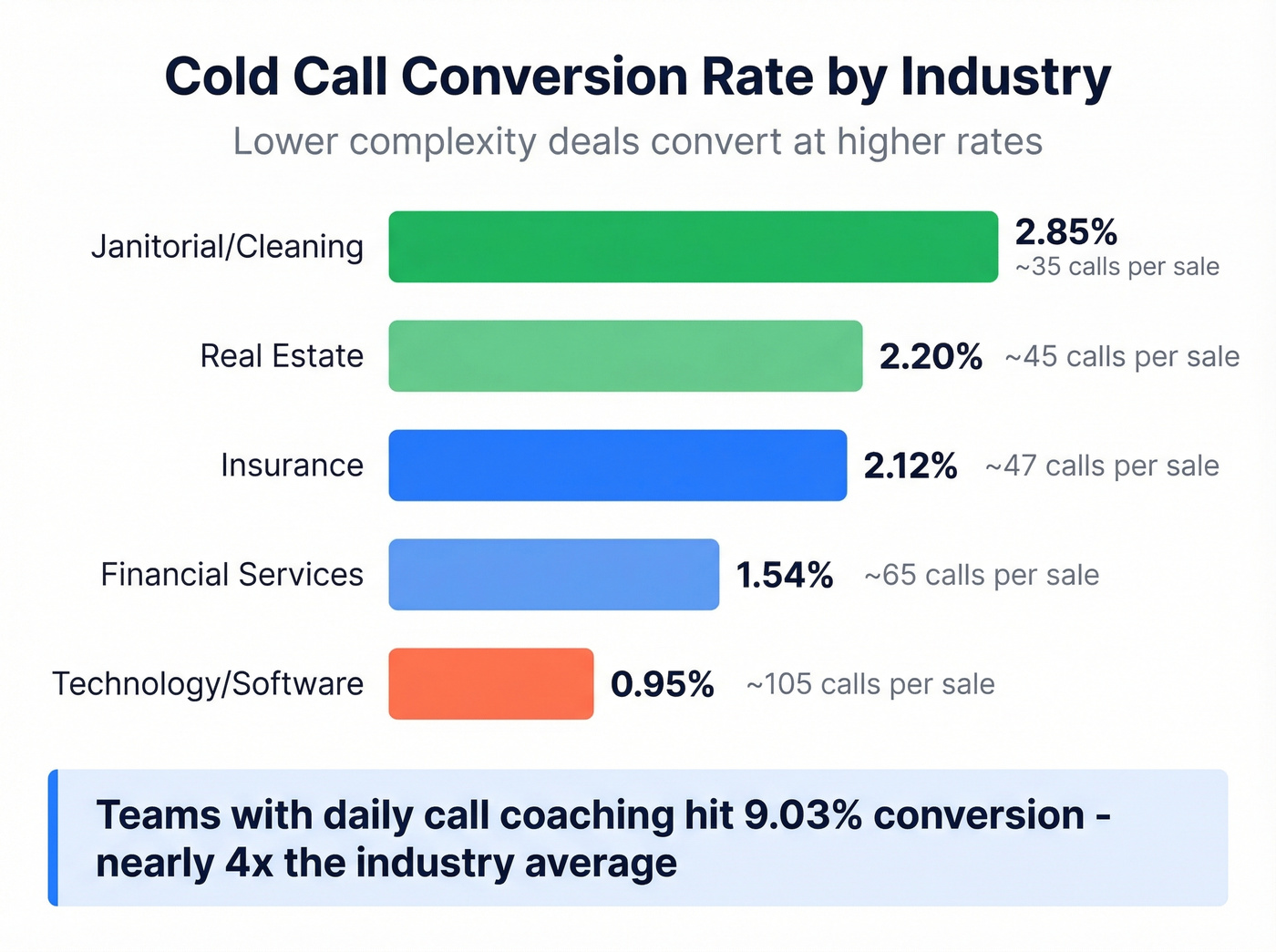
| Industry | Conversion Rate | Calls Per Sale |
|---|---|---|
| Technology/Software | 0.95% | ~105 |
| Financial Services | 1.54% | ~65 |
| Insurance | 2.12% | ~47 |
| Real Estate | 2.20% | ~45 |
| Janitorial/Cleaning | 2.85% | ~35 |
Data from Focus Digital's conversion rate analysis. The methodology isn't fully transparent, so treat these as directional rather than gospel. But the pattern is clear: lower-complexity, lower-ticket services convert at higher rates. If you're selling enterprise software and comparing yourself to a 2.85% benchmark, you're measuring against the wrong yardstick.
One more number worth pinning to your wall: teams with daily call coaching hit an estimated 9.03% conversion rate - nearly 4x the industry average. Coaching frequency matters more than script perfection.
Conversion Rate by Deal Size
Deal size is the hidden variable most benchmarking articles ignore entirely.
| Deal Size | Conversion Rate |
|---|---|
| $500-$10k | 2.64% |
| $1M-$5M | 1.16% |
| $5M-$10M | 0.88% |
This makes intuitive sense. A $5M deal involves more stakeholders, longer cycles, and higher scrutiny. Your cold call isn't closing that deal - it's opening a door. Measuring "conversion rate" the same way across deal sizes is comparing apples to aircraft carriers.
If your average contract value sits in the low four figures, you probably don't need a 50-seat SDR floor. A small team with verified mobile numbers and tight timing will outperform a large team dialing from a stale list every single time.
Connect Rate and Attempt Benchmarks
The 2026 data shows a dramatic improvement in efficiency. It now takes an average of 1.55 calls to reach a prospect, down from 2.9 in 2025. That's nearly half the effort per connection.
The cadence math still matters, though. 93% of conversations happen by the 3rd call attempt. By the 5th attempt, you've hit 98%. Going beyond five attempts on the same prospect has almost zero marginal return - persistence matters, but only up to a point. The probability of reaching someone via callback sits at 26.85%.
Best Time and Day to Call
The 10-11 AM slot is the top-performing window in the Cognism/WHAM dataset. Prospects are settled into their day but haven't hit the afternoon wall. The 4-5 PM window works as a strong secondary.
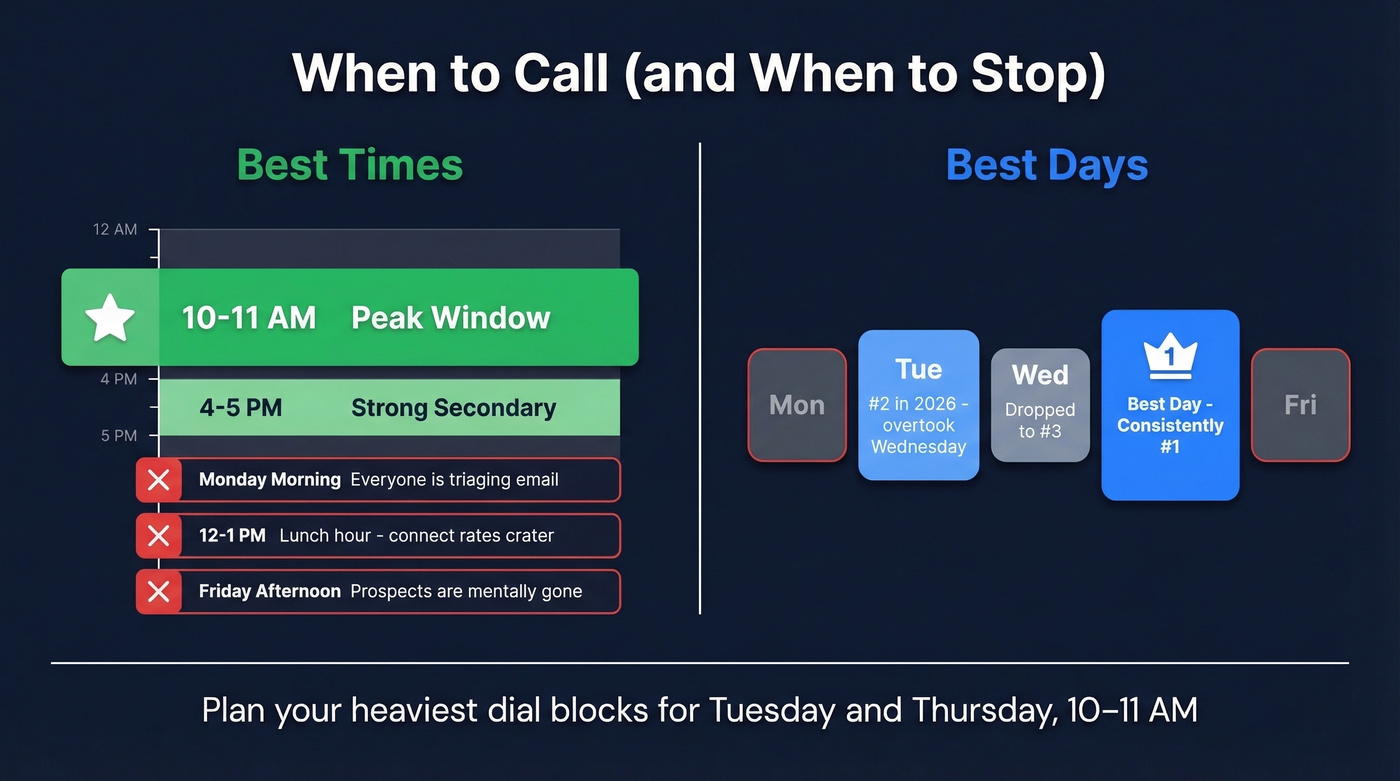
Thursday remains the best day of the week, consistently. Tuesday overtook Wednesday in 2026 for connect rates - a shift worth noting if you're planning weekly dial blocks.
Avoid Monday mornings (everyone's triaging their inbox), Friday afternoons (your prospect is mentally gone), and the 12-1 PM lunch hour where connect rates crater.
Duration and Conversation Benchmarks
Average cold call duration runs 93 seconds, up from 83 seconds in the prior reporting period. Longer calls correlate with better outcomes - successful calls tend to run roughly 2x the average duration.
The conversation success rate sits at 65.6%, meaning about two-thirds of actual conversations (not dials - conversations) lead to a meaningful next step. The problem isn't what happens when you get someone on the phone. It's getting them on the phone in the first place.
Here's a counterintuitive finding: Gong's data shows top performers actually talk 55% of the time on cold calls, contradicting the common "listen twice as much" advice. Cold calls aren't discovery calls. You need to earn the right to ask questions first, which means delivering a compelling reason to stay on the line before you start probing. Keep monologues short, but don't be afraid to lead.
Opener and Script Data
What works:
Open with "How've you been?" - Gong data shows this phrase correlates with a 6.6x higher success rate. It sounds casual, but it works because it breaks the cold call pattern. State the "reason for my call" early - this phrase drives a 2.1x improvement. Prospects want to know why you're calling within the first 10 seconds. And spend 2-3 minutes on pre-call research. Know the company, the prospect's role, and one relevant trigger.
What doesn't:
"Did I catch you at a bad time?" tanks success rates by roughly 40%. You're giving the prospect an easy exit before you've said anything of value. Generic openers like "I'm calling from [company], we help companies like yours..." signal "cold call" immediately and trigger the hang-up reflex. Reading from a script word-for-word? Prospects can hear it. Use a framework, not a screenplay.

The gap between a 2.7% and 11.3% cold call success rate isn't script quality - it's data quality. Prospeo gives your team 125M+ verified mobile numbers with a 30% pickup rate, refreshed every 7 days. That means direct dials that actually connect, not switchboards and voicemail purgatory.
Stop burning dials on dead numbers. Start connecting to real buyers.
Follow-Up Stats
80% of sales require five or more follow-up touches. Most reps give up after two. That gap is where deals die quietly.
The Bridge Group's daily dial distribution paints a picture of effort variance: 30% of reps make 50+ dials per day, 25% make 30-49, and 20% make just 20-39. The top performers aren't necessarily better on the phone - they're just making more calls and sticking with prospects longer than their peers who quit after the second voicemail.
Cold Calling vs Cold Email
We analyzed 26.5M data points - 16.5M emails and 10M calls - and the economics are tighter than most people expect.
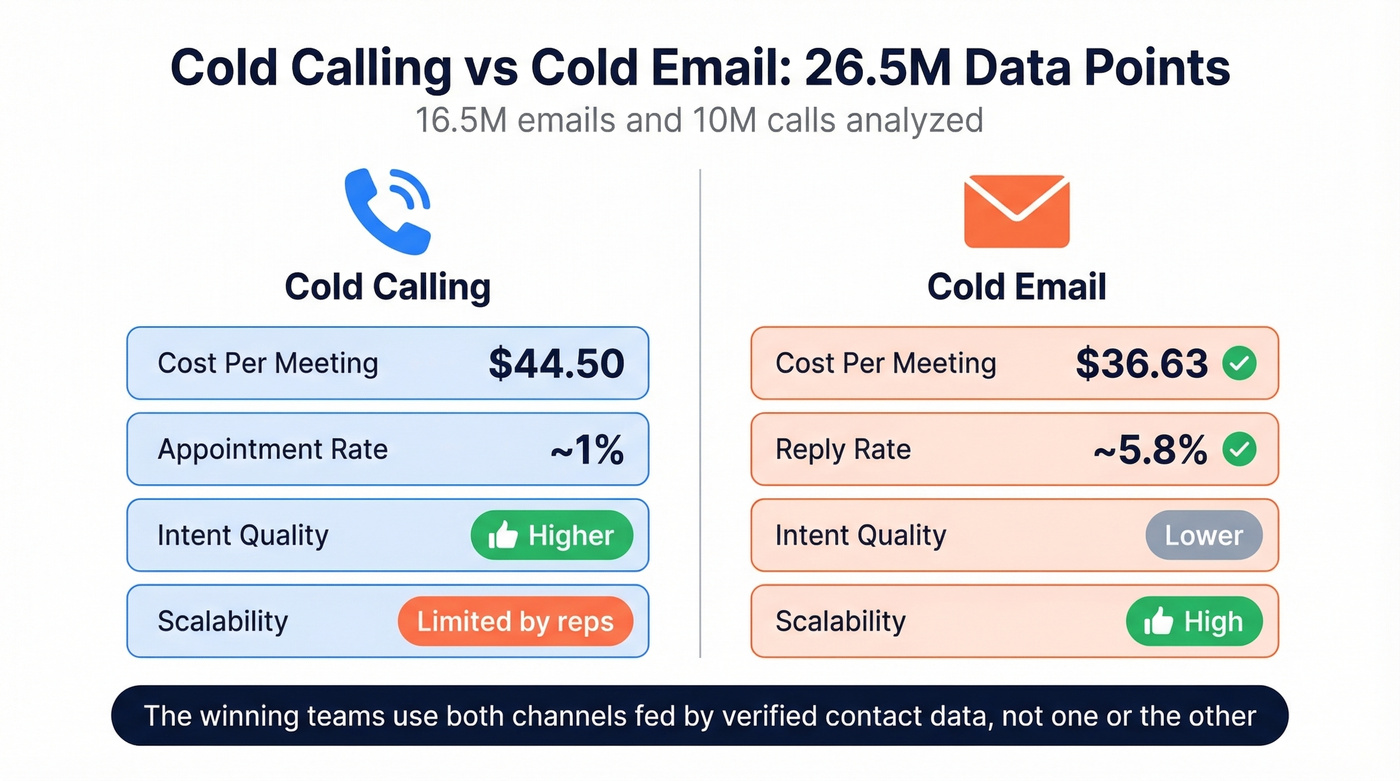
| Metric | Cold Calling | Cold Email |
|---|---|---|
| Cost Per Meeting | ~$44.50 | ~$36.63 |
| Response/Appt Rate | ~1% (appt) | ~5.8% (reply) |
| Intent Quality | Higher | Lower |
| Scalability | Limited by reps | High |
Cold email is cheaper per meeting and scales better. Cold calling produces higher-intent conversations and works better for complex, high-ACV deals. The either/or framing is a false choice - the teams winning are the ones with verified contact data feeding both channels, not the ones debating which channel to pick.
The Data Quality Problem
Look, this is the part of the article we wish more people paid attention to.
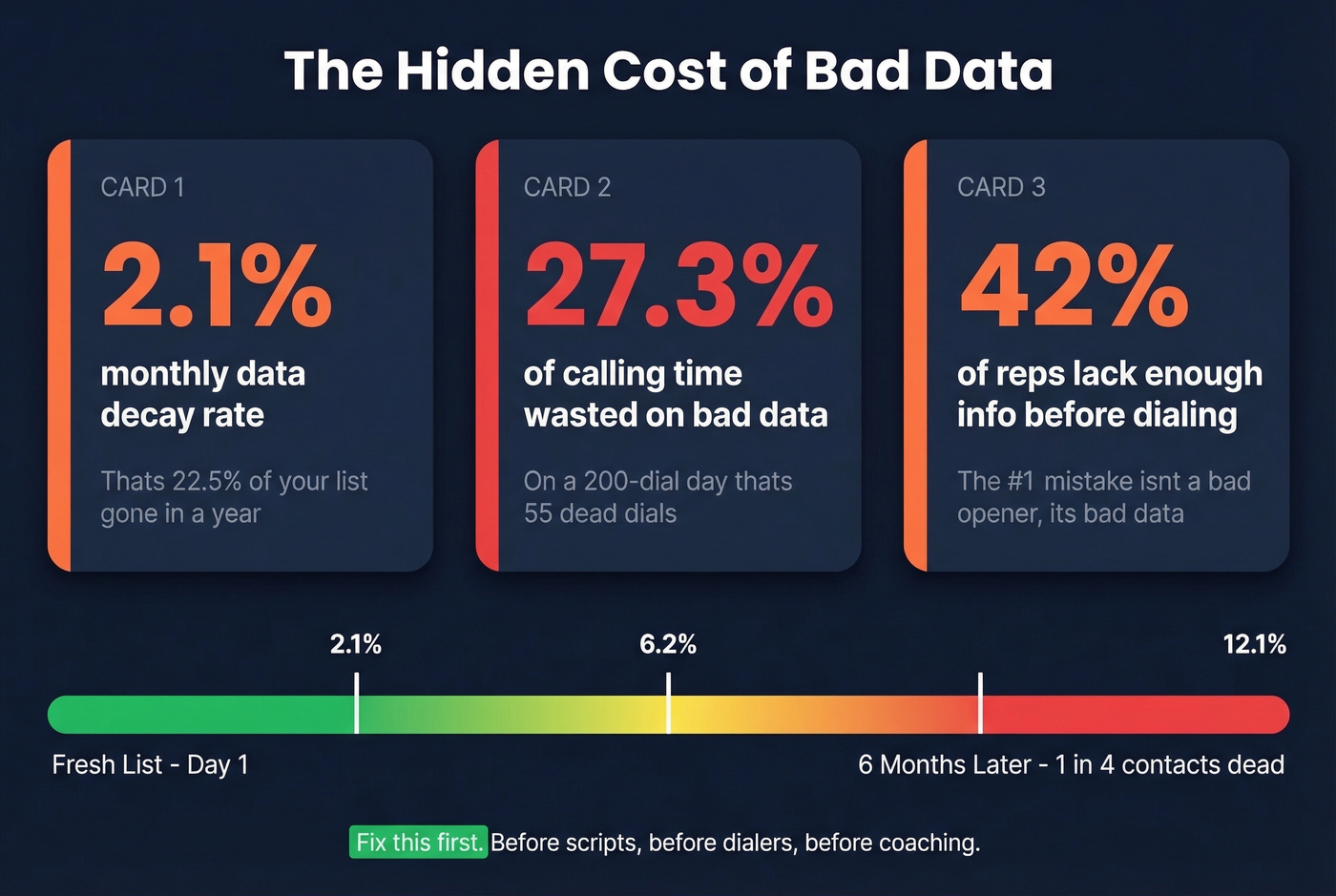
B2B contact data decays at 2.1% per month - roughly 22.5% per year. People change jobs, get promoted, switch companies. That "fresh" list you bought six months ago? Nearly a quarter of it is dead.
Reps lose 27.3% of their calling time to bad contact data. On a 200-dial day, that's 55 dials to disconnected numbers, wrong people, or outdated direct lines. You're not just wasting time - you're burning caller ID reputation on dead numbers, which tanks your connect rate on the good numbers too.
A HubSpot survey found 42% of reps say they don't have enough information before dialing. The #1 cold calling mistake isn't a bad opener - it's bad data. No amount of benchmarking helps a team dialing wrong numbers all day.
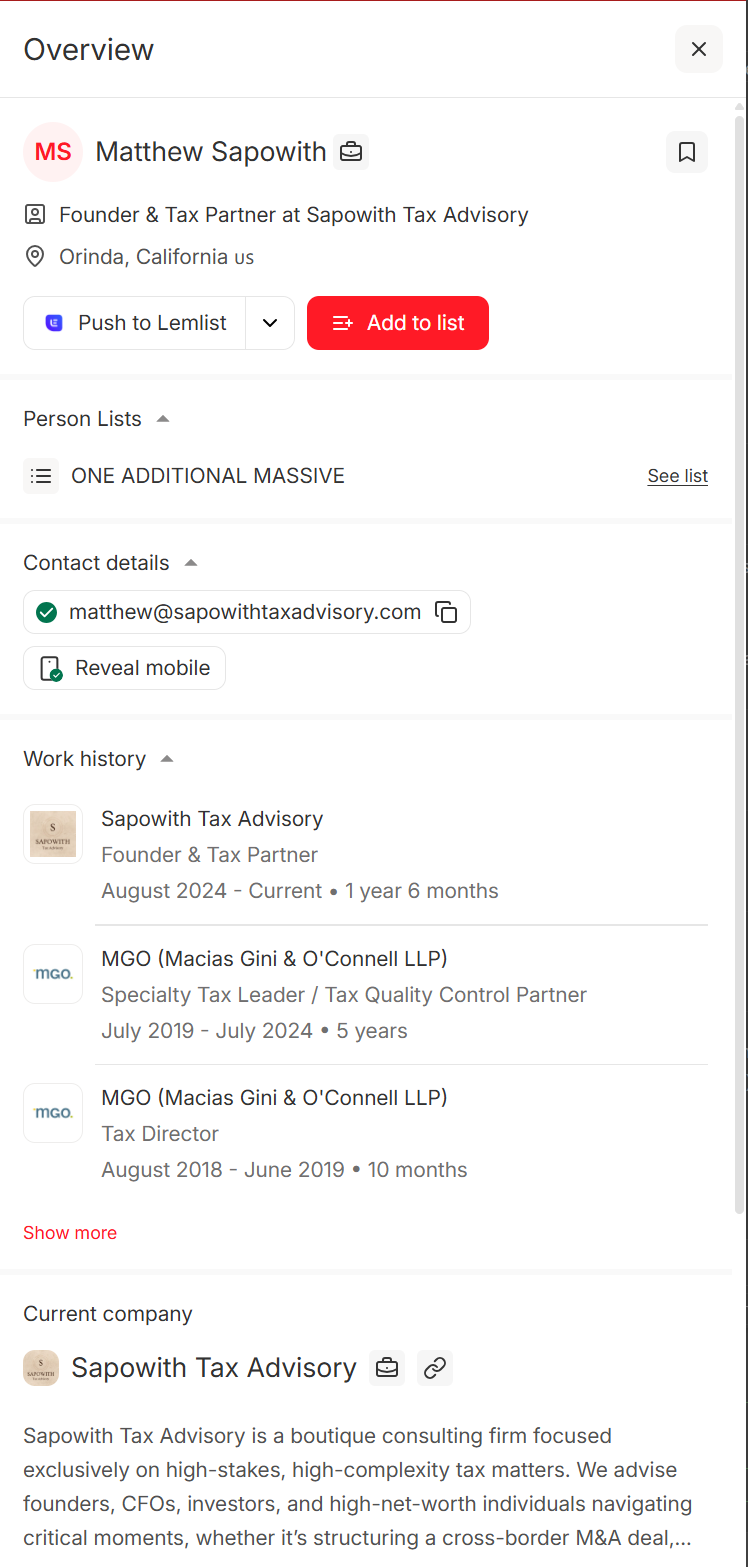
Before you optimize your opener or buy a parallel dialer, verify your list. Prospeo's database covers 300M+ professional profiles with 143M+ verified emails (98% accuracy) and 125M+ verified mobile numbers that deliver a 30% pickup rate. Data refreshes every 7 days, compared to the 6-week industry average. We've seen teams cut their dials-per-meeting in half just by switching to verified mobile numbers.
It takes 1.55 calls to reach a prospect - if you're dialing the right number. Stale data turns that into 5+ attempts and zero conversations. Prospeo's verified mobiles are refreshed weekly, not every 6 weeks like competitors. At $0.10 per mobile number, one connected call pays for thousands of lookups.
Cut your dials-per-connect in half with numbers that actually pick up.
AI and Cold Calling in 2026
AI dialers aren't just parallel dialers with a rebrand. The real shift is happening in three areas: pre-call signal prioritization (AI decides who to call and when), live call copilots (real-time battlecards and objection handling), and post-call automation (summaries, CRM updates, next-step scheduling).
Post-call admin consumes up to 20% of a rep's day. AI dialers reclaim that time entirely. Pre-call research that used to take 45 minutes can now be compressed to 15 seconds with AI-powered prospect briefings, and teams using AI-directed outbound report 3-5x more live connections because the system optimizes timing and prospect prioritization automatically.
Koncert projects that AI will direct 70% of outbound activity in 2026. The bigger risk is spam labeling - without caller ID reputation management, connect rates drop 40-70%. AI gives you more dials, but if those dials get flagged as spam, you're worse off than before.
What Cold Calling Actually Costs
Whether you're building in-house or outsourcing, here's what the market looks like.
| Cost Category | Range |
|---|---|
| Per Appointment | $75-$300 |
| Hourly (US) | $35-$75/hr |
| Hourly (Offshore) | $15-$25/hr |
| Monthly Retainer | $3k-$15k/mo |
| Dialer Software | $100-$300/seat/mo |
| In-House Cost/Meeting | ~$44.50 |
| Data Verification | ~$0.01/email |
The in-house cost per meeting (~$44.50) comes from our 26.5M data point analysis. Outsourced appointments run $75-$300 depending on qualification criteria and vertical. The hidden line item most teams miss is data - bad numbers don't just waste rep time, they inflate every cost metric in this table.
FAQ
Is cold calling dead in 2026?
No. Success rates climbed from 2.3% to 2.7% year-over-year, data-optimized teams hit 11.3%, and over 80% of sales directors say the phone is essential. The channel rewards teams that invest in data quality and call timing over raw volume.
How many cold calls to book a meeting?
On average, roughly 209 dials per booked meeting based on a 1% appointment rate across 10M calls. Top teams with verified mobile data cut this significantly - some report one meeting per 50-80 dials when they're working with numbers that actually connect.
What's a good cold call conversion rate?
Tech averages 0.95%, real estate 2.20%, cleaning services 2.85%. For enterprise deals above $1M, expect under 1.2%. The single "2%" benchmark is misleading without industry and deal-size context.
What's the best time to cold call?
10-11 AM is the top window, with 4-5 PM as a strong secondary. Thursday is the best day overall. Tuesday overtook Wednesday in 2026 for connect rates. Avoid Monday mornings and Friday afternoons.
How do I improve my connect rate?
Start with data quality - eliminate the 27% of calling time typically lost to bad contact data by using verified mobile numbers refreshed weekly. Then optimize your timing to the 10-11 AM window, keep your opener under 10 seconds, and commit to at least five attempts per prospect.