

Best Contact Enrichment Tools in 2026: Real Pricing, Real Accuracy
Every enrichment tool claims 90%+ accuracy. Practitioners consistently report 60-70% valid emails from a single provider. Your domain reputation pays the difference.
B2B contact data decays roughly 30% per year - people change jobs, companies rebrand, emails go stale. Deliverability best practice demands you keep bounces under 2%, and the data enrichment market is projected to hit $4.58B by 2030 because most of that growth is teams scrambling to close this gap. Here's the thing: the right contact enrichment tools matter more than the size of your database.
Our Top Picks
| Tool | Best For | Starting Price |
|---|---|---|
| Prospeo | Email accuracy & data freshness | Free; ~$0.01/email |
| Clay | Waterfall orchestration | Free; $185/mo paid |
| Apollo.io | Budget-friendly starter | Free; $59/user/mo |
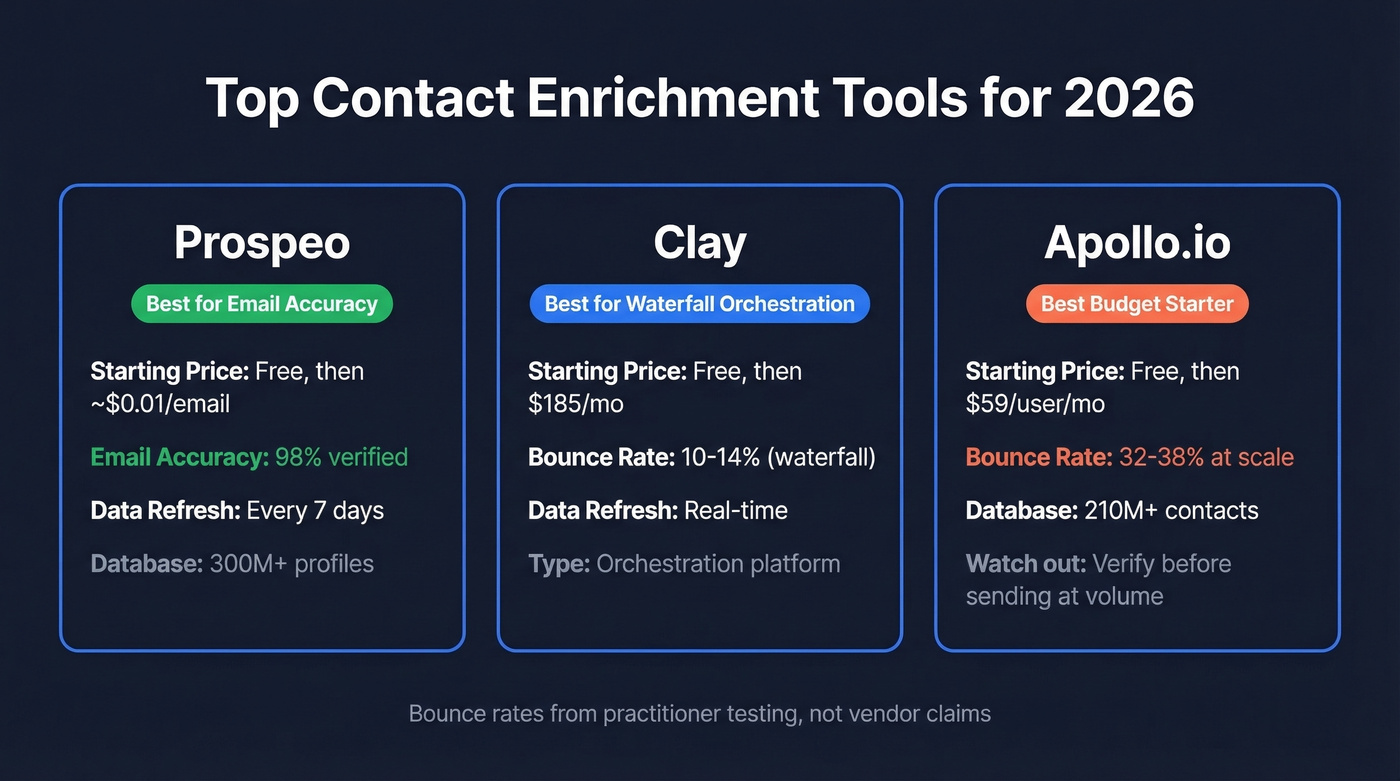
The 9 Best Tools Compared
Prospeo
Prospeo is the enrichment tool we'd hand to any team that's been burned by bounced emails. The database covers 300M+ professional profiles with 143M+ verified emails and 125M+ verified mobile numbers, and every record runs through a 5-step verification process that handles catch-all domains, removes spam traps, and filters honeypots - delivering 98% email accuracy in production, not just on a marketing page.
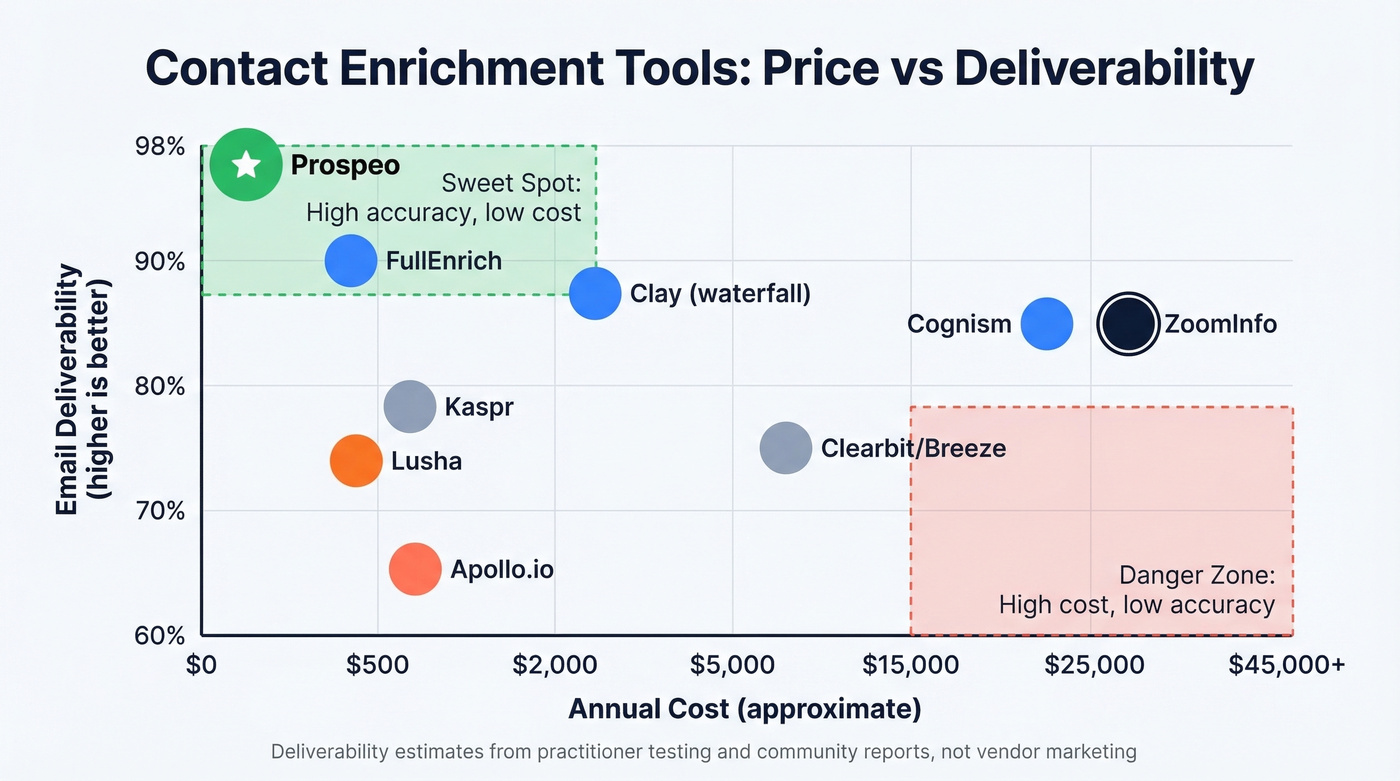
What separates Prospeo from the pack is a 7-day data refresh cycle. Most providers refresh every 4-6 weeks. When a prospect changed roles two weeks ago, that gap wrecks your deliverability. The 30+ search filters include buyer intent powered by 15,000 Bombora topics, technographics, job changes, and headcount growth signals.
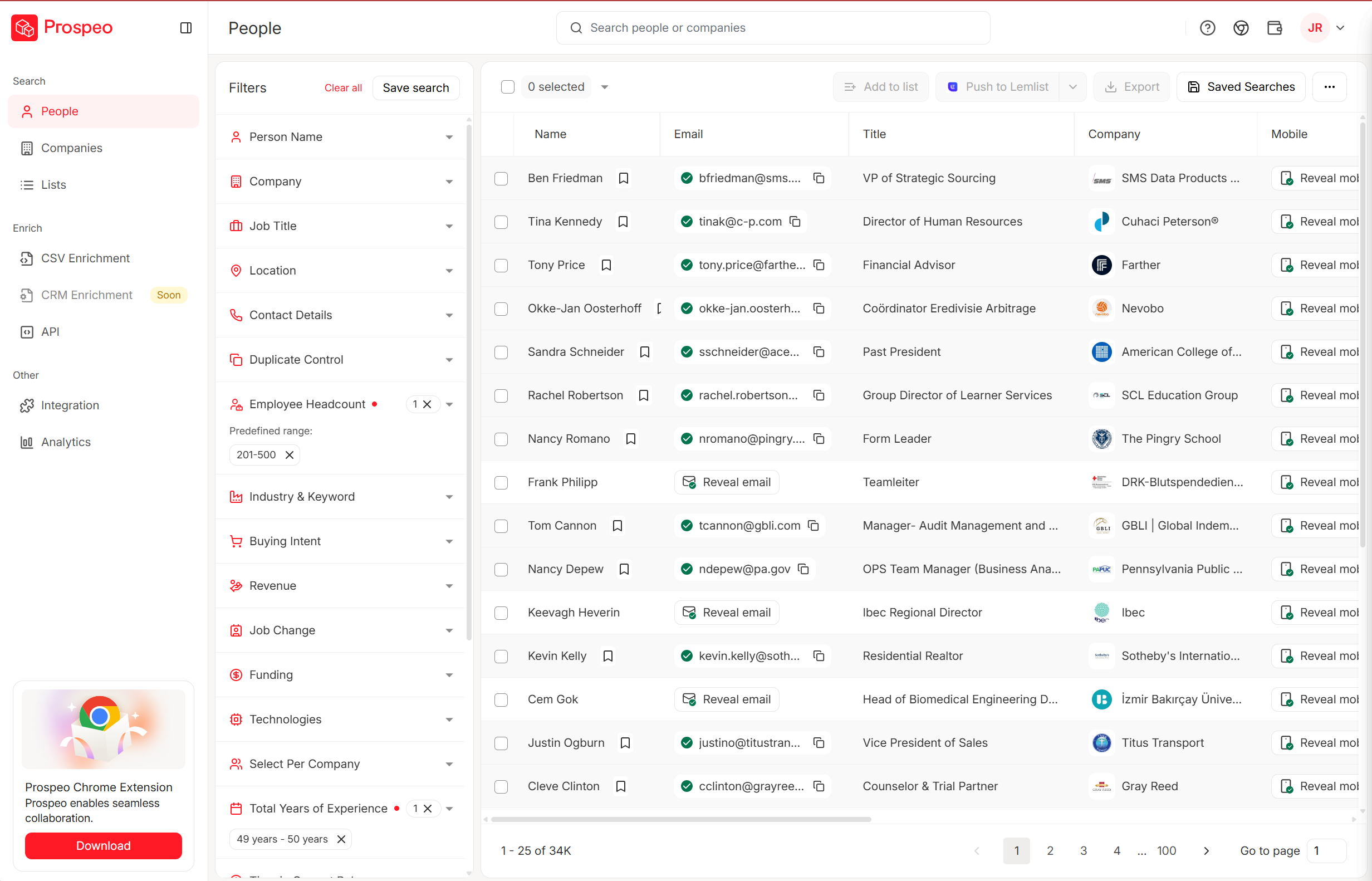
Pricing is transparent and self-serve: ~$0.01 per email, a free tier with 75 emails and 100 Chrome extension credits per month, no contracts. Snyk cut their bounce rate from 35-40% down to under 5% after switching, and their AE-sourced pipeline jumped 180%. Stack Optimize built to $1M ARR while keeping client deliverability above 94% and bounces under 3%.
Best for: teams that need verified data without enterprise pricing or annual lock-in.
Clay
Forget what Clay costs for a second - the March 2026 pricing overhaul changed everything. Tiers now run Free (100 credits), Launch at $185/mo, and Growth at $495/mo. CRM integrations dropped from the old $800/mo Pro tier down to Growth. You're not charged for failed lookups, only when data is actually found.
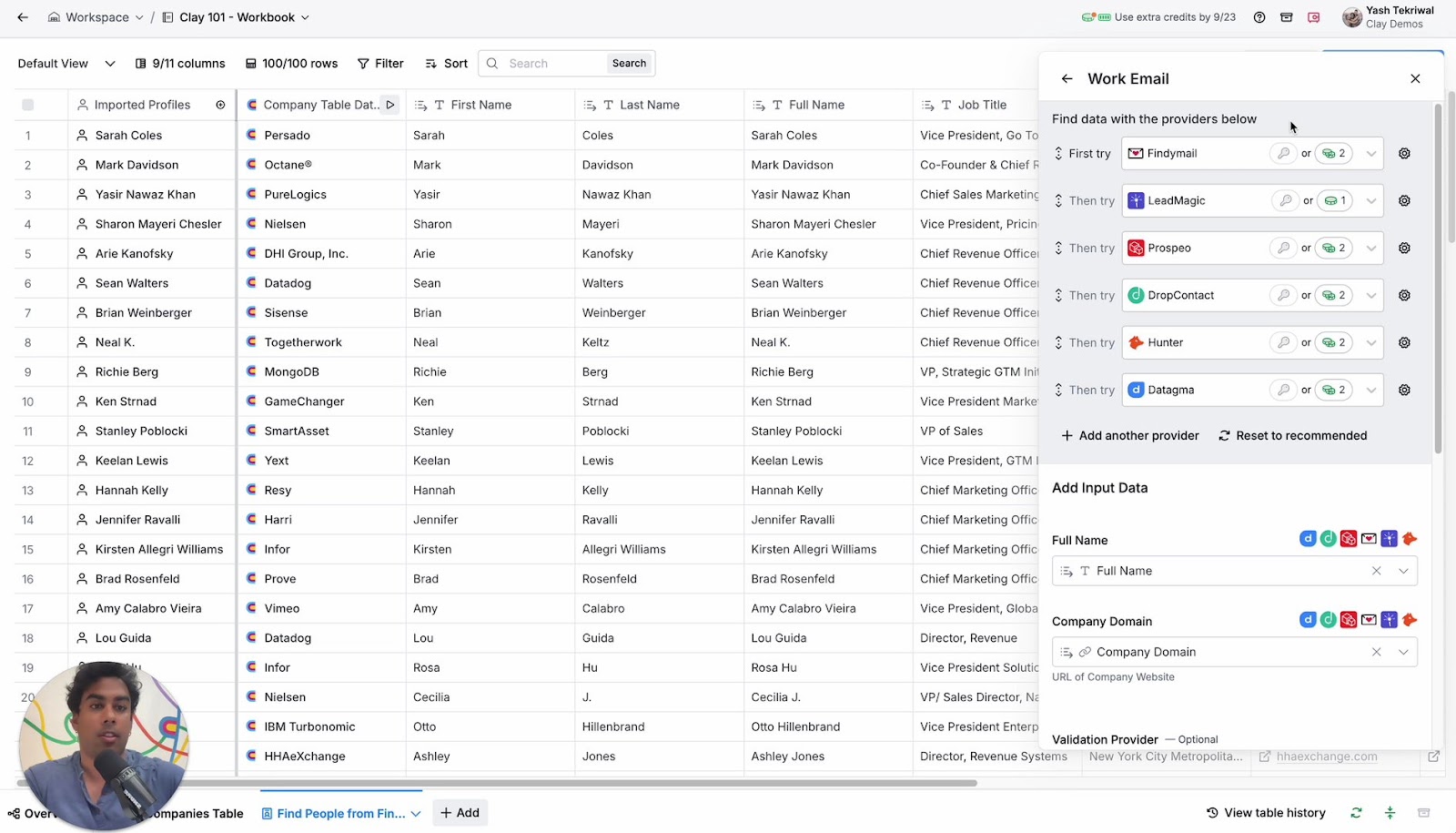
Clay isn't a data provider. It's an orchestration platform that stacks multiple enrichment providers in a waterfall sequence: query Provider A first, if it misses, automatically try B, then C. In practitioner testing on Reddit, this waterfall approach produced ~10-14% bounce rates versus 30%+ from any single provider. The catch: Clay requires provider subscriptions underneath, so budget accordingly. We've seen teams underestimate this by 2-3x.
Apollo.io
If your bounce rates are under control at low volume, Apollo is fine. The free tier is genuinely generous, the database covers 210M+ contacts, and paid plans run $59/user/mo (Basic), $99 (Professional), or $149 (Organization).
The problem shows up at scale. Users on r/coldemail report bounce rates of 32-38% when running larger campaigns, and the HubSpot community echoes this - "accuracy wasn't great once we scaled." The move is to pair Apollo with a dedicated verification layer before anything hits your sequences. Skip this if you're sending 5,000+ emails/month without that safety net.
ZoomInfo
The enterprise default. ZoomInfo bundles contacts, intent data, org charts, and technographics into one platform - and charges accordingly. Typical annual costs: Professional $15k-$18k, Advanced $22k-$28k, Elite $35k-$45k+. Add-ons push past $50k, and expect 10-20% renewal increases with annual contracts only.
Look, ZoomInfo is still the most complete all-in-one GTM platform. But most teams don't need all-in-one. If your average deal size sits below $15k, you're almost certainly overpaying for modules you'll never activate - the #1 complaint on Reddit and in HubSpot forums. We've talked to teams paying $40k/year who use maybe 30% of the platform.
Cognism
The pick for EU-focused teams that need GDPR-first enrichment with mobile-verified data. Diamond Data focuses on phone-verified mobile numbers, and Cognism beats ZoomInfo on EMEA coverage. Pricing is quote-based, but Vendr benchmarks show Grow at ~$22,500/year for 5 users and Elevate at ~$37,500/year.
Skip this if your ICP is primarily North American - you'll get better US depth elsewhere.
FullEnrich
FullEnrich runs cascade enrichment similar to Clay's waterfall, but packaged as a single tool. It checks Hunter, Datagma, Clearbit, ContactOut, and others sequentially, charging only when it finds a valid result. Users report jumping from ~65% valid emails with Apollo/Lusha to around 90% with FullEnrich's cascade. Pricing starts around ~$29/mo. The tradeoff: its database is smaller than enterprise providers, so coverage on niche verticals can be thinner.
Lusha
Direct dials and emails from a browser extension. Free tier available, Pro from $36/user/mo. Credits run out fast at scale, and in practitioner testing bounce sat around 22-28%. Decent for quick lookups on a handful of prospects, but not built for volume campaigns.
Clearbit / Breeze Intelligence
Now HubSpot-native enrichment. Firmographic and technographic data via credit packs running $30-$700/mo, but requires an existing HubSpot subscription. If your stack already runs on HubSpot, it's a natural add. Otherwise, skip it entirely.
Kaspr
Strong for EU prospecting, pulling data from professional profiles. Free plan available, paid from $49/user/mo. Coverage narrows quickly outside European markets - treat this as a regional supplement, not a primary enrichment source.

You just read that single-provider enrichment delivers 60-70% valid emails. Prospeo's 5-step verification - with catch-all handling, spam-trap removal, and honeypot filtering - hits 98% email accuracy at $0.01/email. No contracts, no sales calls.
Stop paying for bounced emails. Start enriching with data you can trust.
Full Comparison Table
| Tool | Starting Price | Deliverability* | Best For | Refresh |
|---|---|---|---|---|
| Prospeo | Free; ~$0.01/email | 98% verified | Accuracy + freshness | 7 days |
| Clay | Free; $185/mo | ~10-14% bounce (waterfall) | Waterfall orchestration | Real-time |
| Apollo.io | Free; $59/user/mo | ~32-38% bounce at scale | Budget outbound | Varies |
| ZoomInfo | ~$15k-$45k+/yr | Strong enterprise coverage | Enterprise GTM suite | Varies |
| Cognism | ~$22.5k/yr (5 users) | Strong EU mobiles | GDPR-first teams | Varies |
| FullEnrich | ~$29/mo | ~90% (cascade) | Pay-for-success | Real-time |
| Lusha | Free; $36/user/mo | ~22-28% bounce | Quick lookups | Varies |
| Clearbit/Breeze | $30-$700/mo | Firmographic focus | HubSpot-native | Varies |
| Kaspr | Free; $49/user/mo | Strong in EU | EU prospecting | Varies |
*Bounce-rate figures come from practitioner testing and community threads, not vendor claims.
Why Waterfall Enrichment Wins
No single enrichment provider covers every contact. Individual provider match rates run 35-52% in comparative studies. Stack multiple providers in a waterfall sequence, and that jumps to 85-93%.
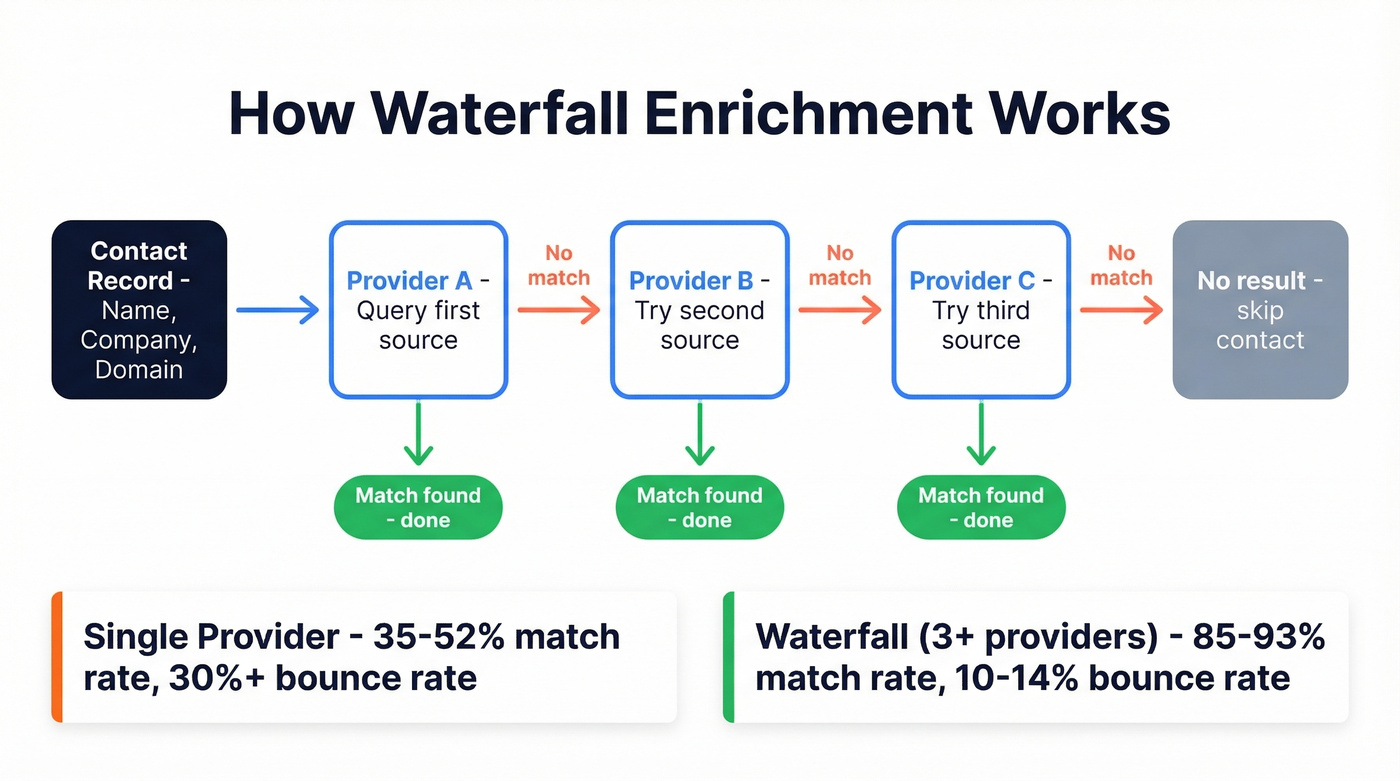
The bounce-rate delta is dramatic: 30%+ from a single source versus 10-14% from a well-built waterfall. We've tested this ourselves, and the difference isn't subtle - it's the difference between a healthy sending domain and one that's flagged within weeks. Phone data is even more fragile, with a benchmark across 9 providers finding accuracy ranging from 63% to 91% and coverage from 26% to 92%.
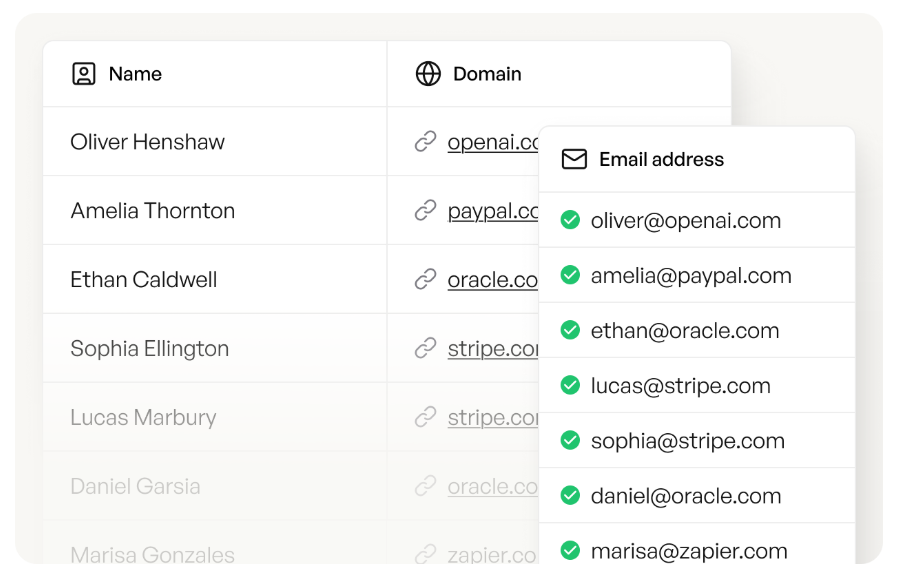
If you're building a technical team, API-first enrichment layers let you wire this logic directly into your pipeline. Either way, the practical takeaway is the same: combine sources and verify before sending. The consensus on r/sales is pretty clear - anyone relying on a single data source in 2026 is leaving pipeline on the table.
Data decays 30% per year, but most enrichment tools refresh every 4-6 weeks. Prospeo refreshes every 7 days across 300M+ profiles. Snyk cut bounces from 35% to under 5% and grew AE-sourced pipeline 180%.
Enrich your contacts with the freshest B2B data on the market.
How to Choose the Right Tool
Pick based on three criteria, in this order:
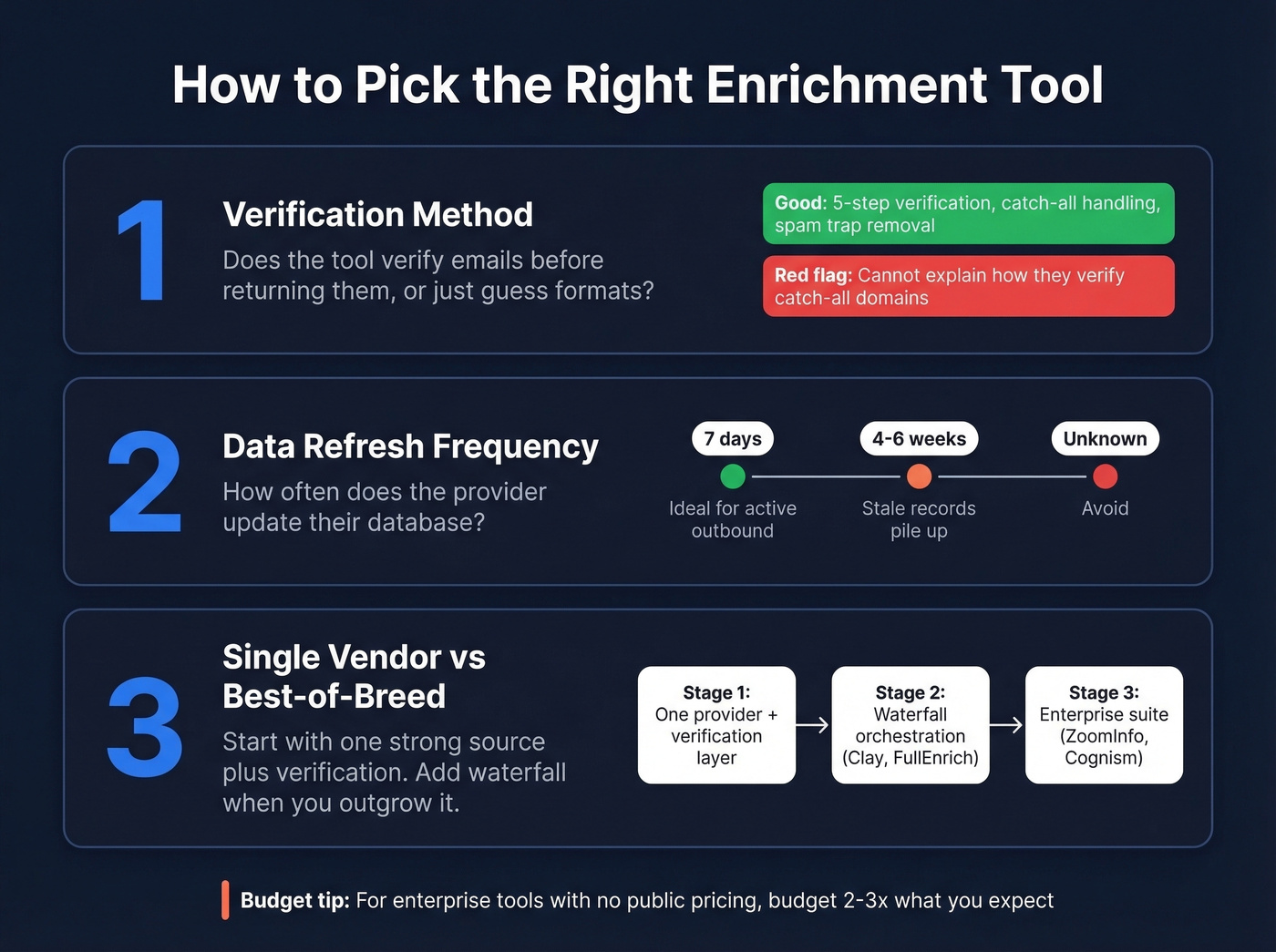
Verification method. Does the tool verify emails before returning them, or just guess formats? A 5-step verification process beats pattern matching every time. If the provider can't explain how they verify catch-all domains, that's a red flag.
Data refresh frequency. A 7-day refresh cycle catches job changes before they tank your deliverability. A 6-week cycle doesn't. Re-enrich active pipeline contacts every 30 days, nurture lists every 90 days.
Single vendor vs. best-of-breed. Start with one strong data source plus a verification layer. Add a waterfall orchestrator only when you've outgrown single-provider coverage. For teams evaluating enterprise tools where you can't see pricing without a sales call, budget 2-3x what you expect - we've seen this play out too many times to sugarcoat it.
FAQ
What is contact enrichment?
Contact enrichment appends missing data - emails, phone numbers, firmographics, technographics, intent signals - to existing records using third-party databases. The goal is complete, accurate CRM records that sales teams can act on without chasing dead emails and disconnected numbers.
How accurate are enrichment tools really?
Single-provider tools deliver 60-70% valid emails in practitioner testing, despite marketing claims of 90%+. Waterfall enrichment pushes accuracy to 85-93%. Always verify before sending - your domain reputation isn't worth the gamble.
Why does data freshness matter for outbound?
B2B contact data decays ~30% annually. If your enrichment provider refreshes every 6 weeks, stale records pile up fast - bounces spike, domain reputation drops, and reply rates crater. A 7-day refresh cycle catches job changes before they damage deliverability.
What's a good free option for small teams?
Prospeo's free tier includes 75 verified emails and 100 Chrome extension credits monthly with full verification - enough for early-stage prospecting. Apollo also offers a generous free plan, though you'll want a separate verification step before sending at any real volume.