

Cross Selling vs Upselling: 2026 Data & Benchmarks
Every guide gives you the McDonald's "fries with that" example and calls it a day. You already know what cross-selling and upselling are. The real question is which strategy converts better, by how much, and why most programs fail before they generate a dollar of incremental revenue.
91% of sales pros upsell and 87% cross-sell, yet the two strategies together drive just 21% of company revenue on average. That gap between adoption and impact is where the real story lives.
The Short Version
- Upselling converts higher - 27.6% in SaaS vs 18.7% in ecommerce. If you're choosing one to implement first, start here.
- Order bumps are the highest-converting mechanism at 37.8% conversion. Implement these before you build anything else.
- Both strategies fail without accurate customer data. Fix your CRM first, then design offers. A personalized upsell with clean data beats a generic cross-sell every time.
What Is Upselling?
Upselling is getting a customer to buy a more expensive version of what they're already buying. The SaaS upgrade from Basic to Pro. The info product bundle that adds coaching calls to a self-paced course. The hotel room upgrade at check-in.
The reason it works so well comes down to timing and intent - the customer has already decided to buy, and you're just shifting them up the value ladder. Companies are 60-70% more likely to sell to an existing customer compared to a 5-20% probability with a new prospect. Upselling capitalizes on that gap directly because you aren't introducing a new product category. You're enhancing a decision that's already been made.
What Is Cross-Selling?
Cross-selling is recommending complementary products alongside or after a purchase. A commonly cited industry figure is that recommendations and cross-sells drive around 35% of Amazon's revenue. McDonald's "would you like fries with that?" is the offline version.
Here's the thing: cross-selling introduces an entirely new product category, and that requires more customer intelligence. You need to know what the customer already owns, what they're likely to need next, and when to make the offer. Get it wrong and you're recommending products the customer already has. Get it right and you're expanding wallet share across your entire catalog.
Key Differences at a Glance
| Dimension | Upselling | Cross-Selling |
|---|---|---|
| Goal | Higher spend, same category | Broader spend, new category |
| Timing | During purchase decision | During or post-purchase |
| Complexity | Lower - same product line | Higher - needs purchase history |
| Margin impact | Higher per transaction | Spreads across catalog |
| Customer benefit | Better version of what they want | Complementary value |
| Risk level | Lower when upgrade is within ~25% of base price | Medium - irrelevance kills trust |
| Typical conversion | 27-31% (SaaS/info products) | 11-15% (post-purchase/email offers) |
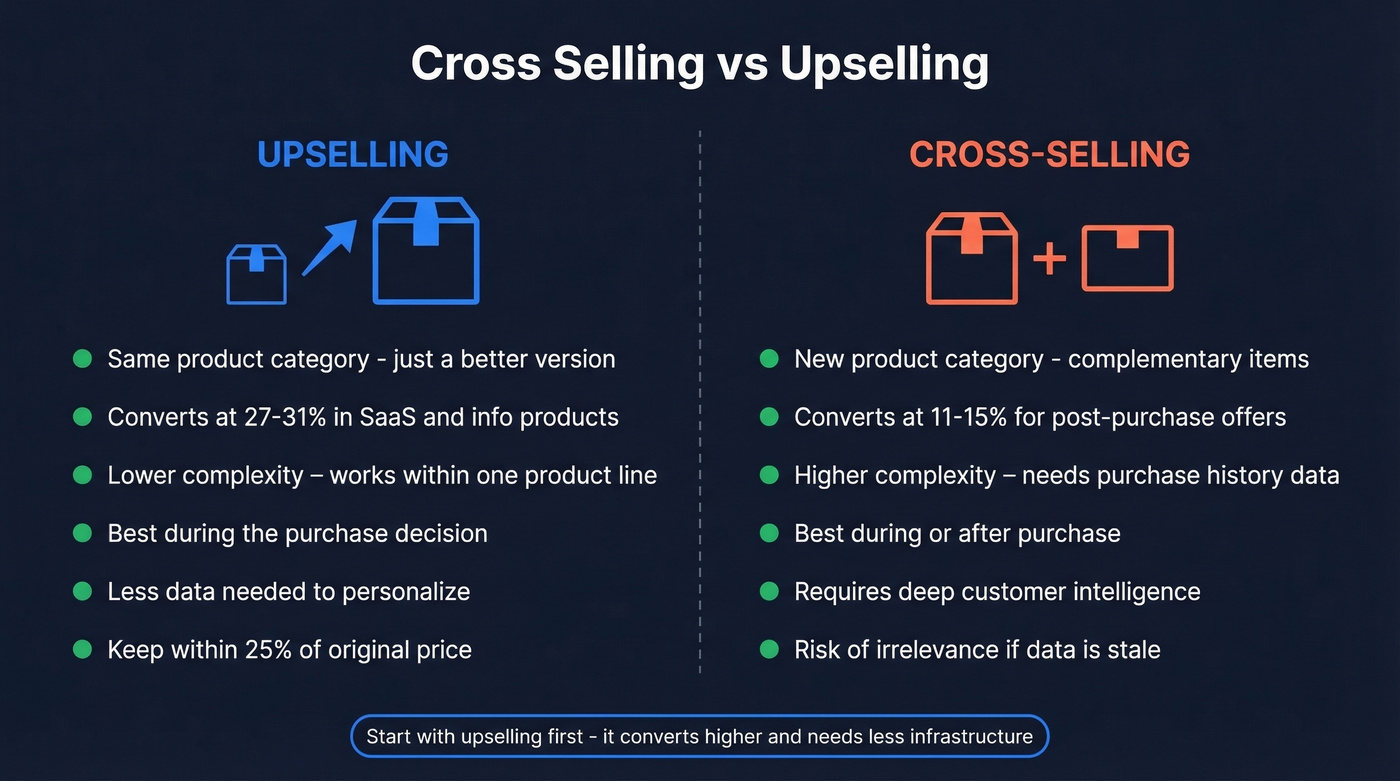
The difference between cross-selling and upselling comes down to structural complexity. Upselling is simpler because you're working within a single product line, so recommendation logic is straightforward. Cross-selling demands more data, more segmentation, and a deeper understanding of what the customer actually needs beyond what they came for.

Cross-selling demands deep customer intelligence - purchase history, tech stack, growth signals. Prospeo enriches your CRM with 50+ data points per contact at a 92% match rate, so your expansion offers hit the right person with the right context.
Stop guessing which customers are ready to buy more.
2026 Conversion Benchmarks
Let's get into the numbers. A study across 1,847 digital businesses provides the most granular breakdown we've found.
By Industry
| Industry | Avg Conversion | Top Quartile |
|---|---|---|
| SaaS & Software | 27.6% | 42.3% |
| Ecommerce (physical) | 18.7% | 29.4% |
| Information products | 31.2% | 47.8% |
For context, the average B2B website conversion rate is 2.9%. A 27.6% upsell conversion rate represents a fundamentally different motion - you aren't convincing someone to buy. You're convincing someone who's already buying to buy better.
Information products lead because the marginal cost of delivering a higher tier is near zero - adding a bonus module to a course costs nothing. SaaS follows the same logic with tiered feature gates. Physical ecommerce lags because upgrades often mean real cost increases in materials and shipping.
By Mechanism
| Mechanism | Avg Conversion |
|---|---|
| Order bumps | 37.8% |
| One-time offers (OTO) | 23.4% |
| Post-purchase upsells | 14.6% |
| Email sequence upsells | 11.3% |
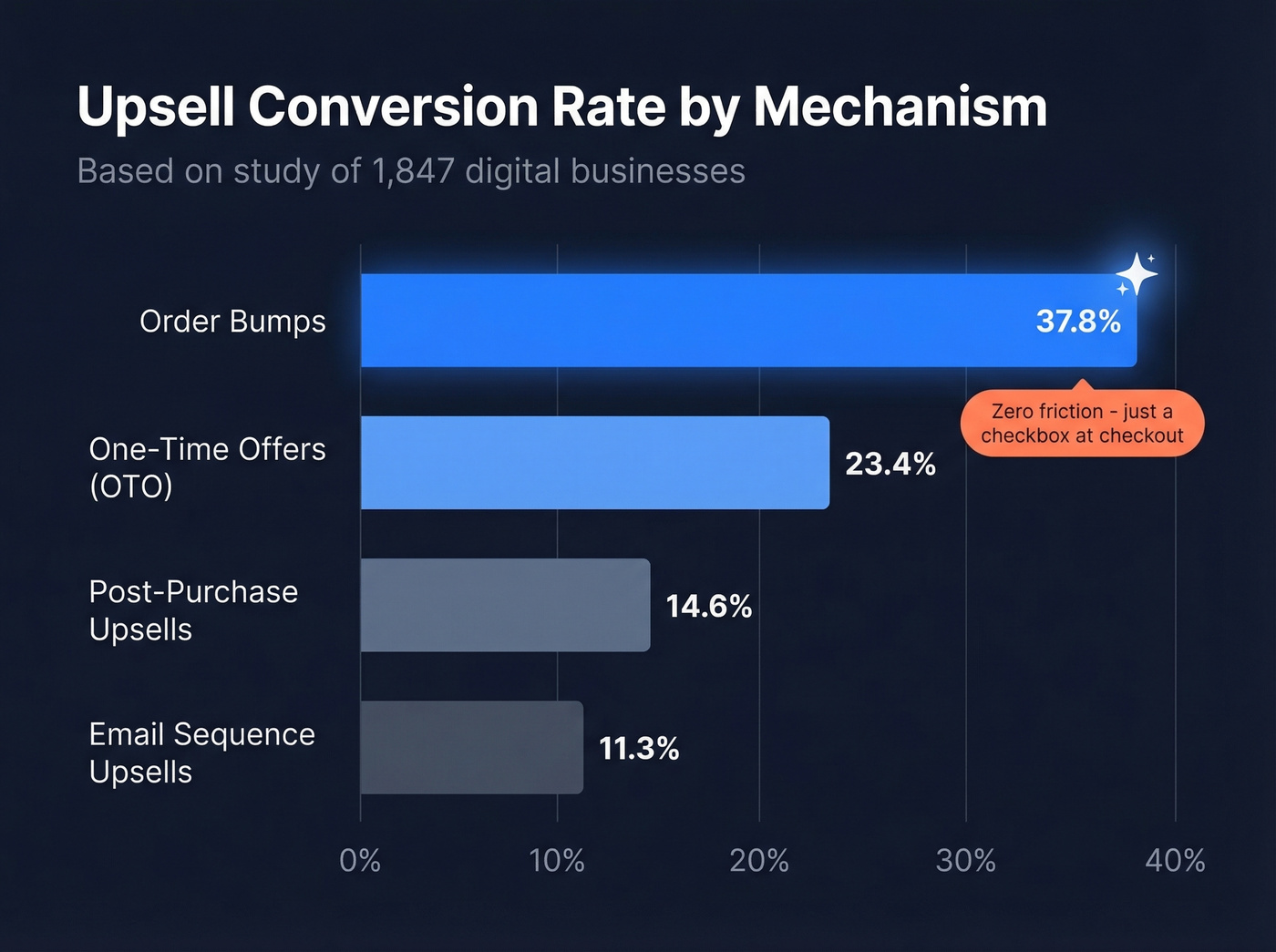
Order bumps dominate because they require zero additional friction - a single checkbox at checkout. If you haven't implemented order bumps yet, stop reading and go do that first. The ROI per engineering hour is unmatched.
Device and Seasonality
Desktop converts at 28.9% versus mobile's 18.7% - a 54% gap. Mobile checkout flows are still clunky enough that adding upsell steps creates meaningful friction. If your traffic is majority mobile, keep upsell flows to a single step maximum.
Seasonality matters too. Black Friday week hits 42.1% upsell conversion; Cyber Monday follows at 39.8%. Buyers in deal-hunting mode are primed to say yes to "get more for slightly more." Build your best upsell and cross-sell campaigns around these windows. The pricing sweet spot sits at $51-$100, where upsells show 16.2% conversion and a 31.4% revenue lift - push above that range and conversion drops sharply.
When to Upsell vs Cross-Sell
Look, if your deal sizes sit below five figures, you probably don't need a sophisticated cross-sell engine at all. Nail upselling first. It's cheaper to build, converts higher, and doesn't require the data infrastructure that cross-selling demands. We've watched teams try to do both simultaneously and end up doing neither well.
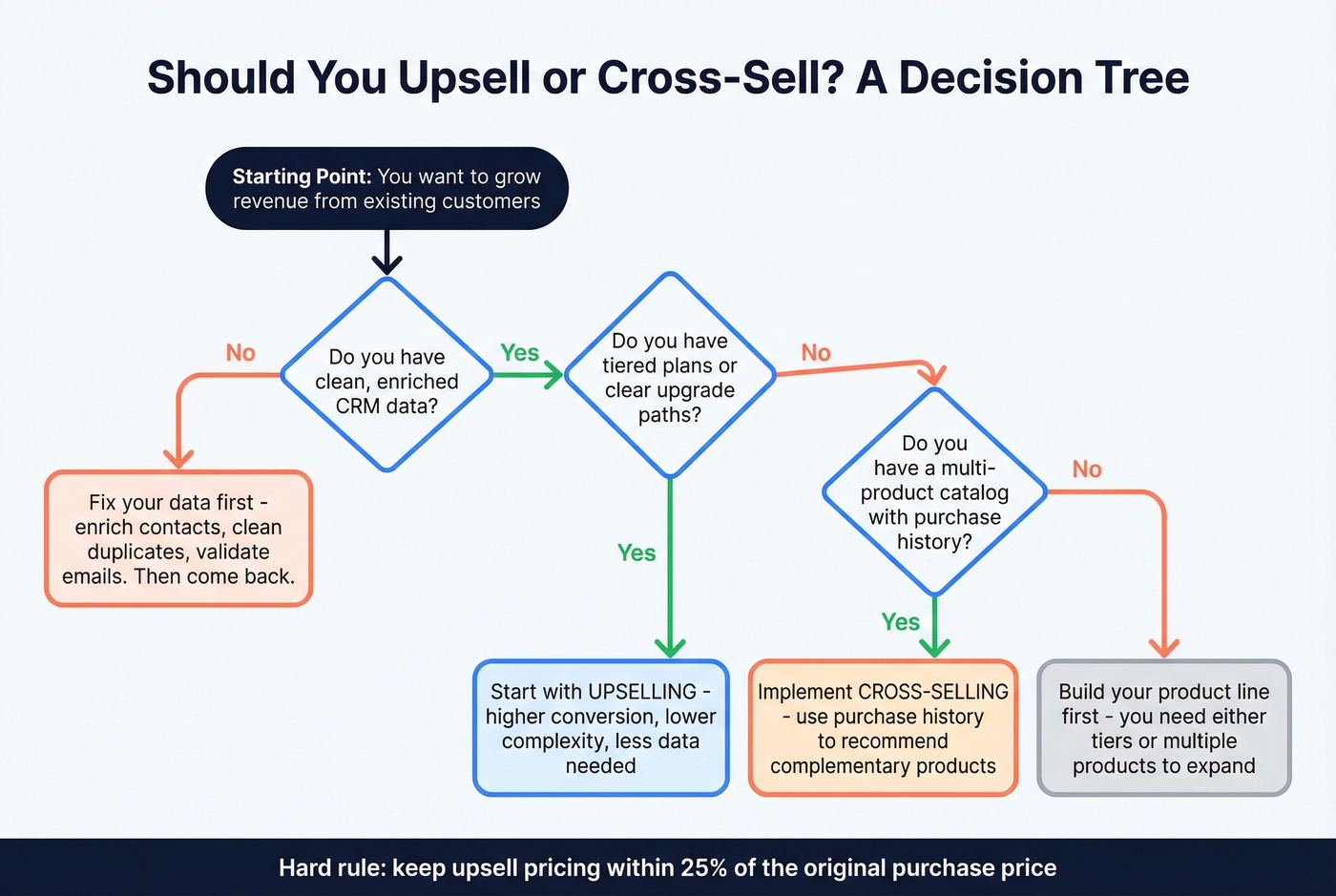
| Scenario | Product Type | Lifecycle Stage | Recommendation |
|---|---|---|---|
| Tiered plans, clear upgrades | SaaS / Info products | Mid-purchase | Upsell |
| Multi-product catalog | Ecommerce / SaaS | Post-purchase | Cross-sell |
| Thin CRM data | Any | Any | Upsell (less data needed) |
| Strong purchase history | Any | Retention / Expansion | Cross-sell |
| NRR below 100% | SaaS | Renewal window | Both |
In SaaS specifically, expansion revenue now accounts for 35% of ARR, with top-tier companies hitting 110%+ net revenue retention. That expansion comes from both upsells and cross-sells. If your NRR is below 100%, you don't have a growth problem - you have an expansion problem, and mastering both motions together is what separates companies that compound revenue from those that plateau.
One hard guardrail: the 25% pricing rule. Keep your upsell within 25% of the original purchase price. A $100 product gets a $125 upsell, not a $200 one. Cross that line and you trigger sticker shock that kills conversion and trust simultaneously.
Why Most Programs Fail
You don't have a cross-selling problem. You have a data problem.
We've seen this pattern repeatedly: a team launches a cross-sell campaign and a chunk of recipients already own the product being recommended. The most common complaint in sales communities isn't "too many offers" - it's "offers for products I already own." That's not a strategy failure. That's a CRM hygiene failure.
As Patricia Camden from EY Americas put it: "Upselling only helps the business when it helps the customer maintain confidence and control." Irrelevant offers signal that you're focused on the sale, not the customer. Trust breaks fast.
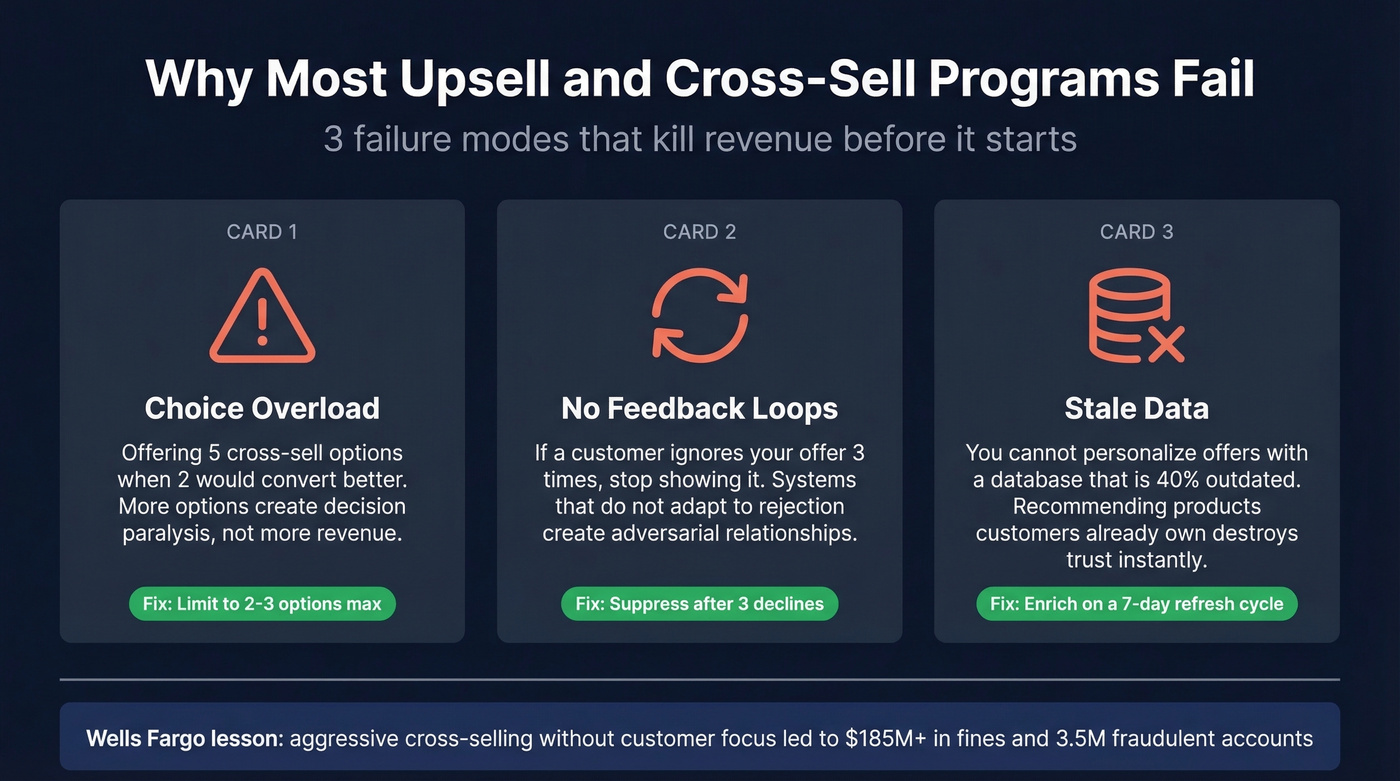
The consequences aren't hypothetical. Wells Fargo's aggressive cross-selling culture led to over $185 million in fines, 3.5 million+ fraudulent accounts, 5,300+ employee terminations, and $2.8 million in customer refunds. That's the extreme end, but the underlying dynamic - pushing products customers don't need - exists on a spectrum. Every irrelevant recommendation erodes trust incrementally.
Three failure modes to watch for:
Choice overload. Offering five cross-sell options when two would convert better. Limit to 2-3 maximum. More options create decision paralysis, not more revenue.
No feedback loops. If a customer ignores your upsell offer three times, stop showing it. Systems that don't adapt to rejection signals create an adversarial relationship where customers tune out entirely and start evaluating competitors.
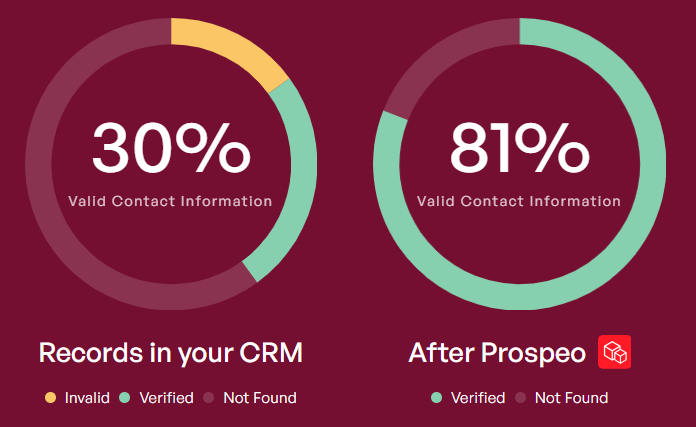
Stale data. You can't personalize offers with a database that's 40% outdated. Tools like Prospeo can enrich your CRM with 50+ data points per contact on a 7-day refresh cycle, so your segments actually reflect reality instead of last quarter's snapshot.
How to Measure Success
Whether you're running a combined upsell and cross-sell program or a standalone initiative, five KPIs separate teams that generate incremental revenue from teams that just annoy their customers.
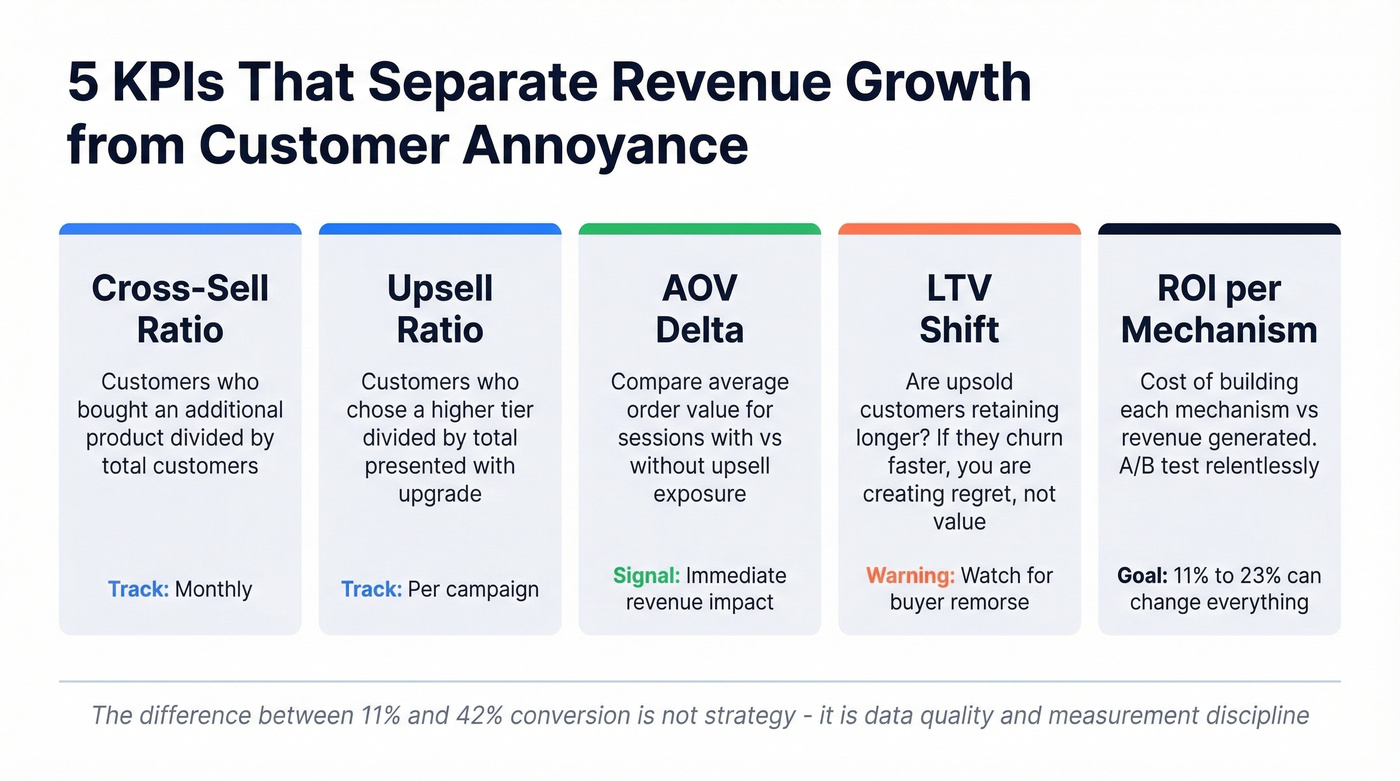
Cross-sell ratio - customers who bought an additional product divided by total customers. Track this monthly. If it's flat, your recommendations aren't resonating.
Upsell ratio - customers who chose a higher-tier option divided by total customers presented with an upgrade. This tells you whether your upgrade path is compelling or just visible.
AOV (Average Order Value) is the most immediate signal. Compare AOV for sessions with upsell/cross-sell exposure versus without. The delta is your program's direct revenue impact.
LTV shift is the long game. Are customers who accept upsells retaining longer? If upsold customers churn faster, your upsell is creating buyer's remorse, not value.
ROI per mechanism compares the cost of building and maintaining each mechanism against the revenue it generates. A/B test relentlessly. The difference between an 11% and 23% conversion rate on a single upsell flow can completely change the economics of your funnel.
If you want a tighter measurement layer, start with funnel metrics and then map improvements to sales conversion rate changes over time.
The article is clear: both motions fail without accurate data. Prospeo's 7-day refresh cycle and 98% email accuracy mean your upsell and cross-sell campaigns reach real buyers - not bounced addresses that tank your domain reputation.
Clean data is the difference between 11% and 42% conversion.
FAQ
Is upselling or cross-selling more profitable?
Upselling converts higher (27.6% in SaaS) and carries better margins since you're selling within the same product category. Cross-selling drives broader basket value but demands more customer intelligence. For most teams, upselling delivers faster ROI - start there unless you've got strong purchase history data to power cross-sell recommendations.
What's the practical difference between the two?
An upsell moves a customer to a premium version of what they already want; a cross-sell introduces an entirely new complementary product. Upselling requires less data and converts at higher rates. Cross-selling expands wallet share but needs purchase history to personalize effectively.
What's a good upsell conversion rate?
Averages range from 18-31% by vertical: SaaS 27.6%, ecommerce 18.7%, information products 31.2%. Top-quartile performers hit 42-48%. Order bumps convert at 37.8%, making them the highest-performing mechanism available.
How do you cross-sell without annoying customers?
Limit offers to 2-3 relevant options, time them after the purchase decision, and use purchase history to personalize. If your CRM data is stale, enrich it first - irrelevance is what makes offers feel pushy, and no amount of clever copywriting fixes a bad recommendation.
What's the 25% pricing rule for upsells?
Keep your upsell price within 25% of the original purchase. A $100 product should have an upsell no higher than $125. The $51-$100 range hits a sweet spot of 16.2% conversion and 31.4% revenue lift. Beyond that threshold, sticker shock tanks both conversion and trust.