

Customer Profile vs Buyer Persona: What's the Difference and Why It Matters
Companies that align sales and marketing around shared definitions see 38% higher win rates and 36% higher customer retention. Yet most teams can't clearly explain the difference between a customer profile and a buyer persona - and the confusion costs them pipeline. The persona deck gets built, presented once, and quietly gathers dust in a shared drive nobody opens.
The Short Version
- Customer profile (ICP) = the company you should sell to. Firmographics, revenue, tech stack, buying signals.
- Buyer persona = the person inside that company who makes or influences the purchase decision. Role, goals, pain points, objections.
- Sequence: ICP first, persona second. Always.
You need both. The ICP picks the right accounts. The persona shapes how you talk to the humans inside them. Most teams skip the ICP or build the persona first, then wonder why outbound falls flat. Get the order right and everything downstream - targeting, messaging, content - gets sharper.
What Is a Customer Profile (ICP)?
A customer profile - usually called an ideal customer profile or ICP - describes the company most likely to buy your product, get value from it, and stick around. It's not a person. It's an account-level filter.
Building one forces you to move past gut feelings and define exactly which accounts deserve your team's time. Think of it in four buckets: firmographics like industry, headcount, revenue, and geography; challenges and goals the business is trying to solve; tech stack, meaning what tools they already use; and behaviors around how they buy, budget cycles, and procurement complexity. These four attribute categories give you a concrete, testable profile rather than a vague wish list.
Here's what a filled-in ICP actually looks like:
Example ICP: B2B SaaS company in North America, 50+ employees, $30M+ ARR, sells primarily to SMBs. Uses HubSpot or Salesforce CRM. Currently scaling outbound and hiring SDRs. Budget authority sits with VP Sales or CRO.
That's specific enough to filter a database. If your ICP reads like a paragraph anyone could've written about any company, it's too vague. You'll also hear the term "customer avatar" - it's typically used interchangeably with buyer persona, especially in B2C and coaching contexts.
What Is a Buyer Persona?
A buyer persona describes the individual inside your ICP who can decide or influence the purchase. Where the ICP is about the company, the persona is about the human - their role, their KPIs, what keeps them up at night, and how they evaluate vendors.
Key fields worth capturing: job title and department, jobs-to-be-done, KPIs they're measured on, pain points, common objections, buying committee role, and where they sit in the buying journey. Adding discovery channels and trigger events matters too, especially for content mapping.
A practical approach: pull 15-25 real contacts per title from your CRM, review closed deals, and average the patterns into your buyer profile.
Example Persona - "VP Marketing at a mid-market SaaS company": KPIs include marketing ROI, attribution accuracy, and budget utilization. Biggest challenge: justifying martech spend to the CFO. Evaluates tools based on integration depth and time-to-value. Reads industry newsletters and peer communities, not cold emails.
Here's a heuristic we've found surprisingly reliable: the 350-employee rule. For companies under roughly 350 employees, executives are your viable contacts. Once you cross that threshold, middle managers often have more influence over tool selection than the C-suite does. That changes your persona entirely.
ICP vs Persona: Side-by-Side
| Dimension | Customer Profile (ICP) | Buyer Persona |
|---|---|---|
| Scope | Company / account | Individual person |
| Data type | Firmographic | Psychographic + behavioral |
| Primary use | Account qualification, lead scoring | Messaging, content mapping |
| Owner | RevOps / marketing | Marketing / sales enablement |
| Update cadence | Quarterly | Semi-annually |
| How many? | 1-2 per segment | 1-3 per ICP |
Two sides of the same coin. The ICP tells you which accounts to pursue. The persona tells you what to say when you get there.

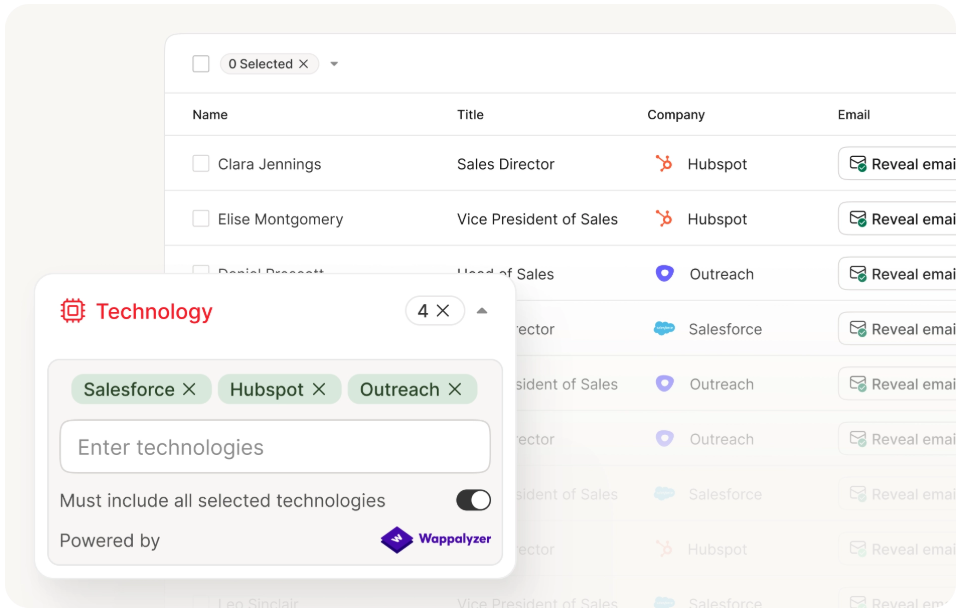
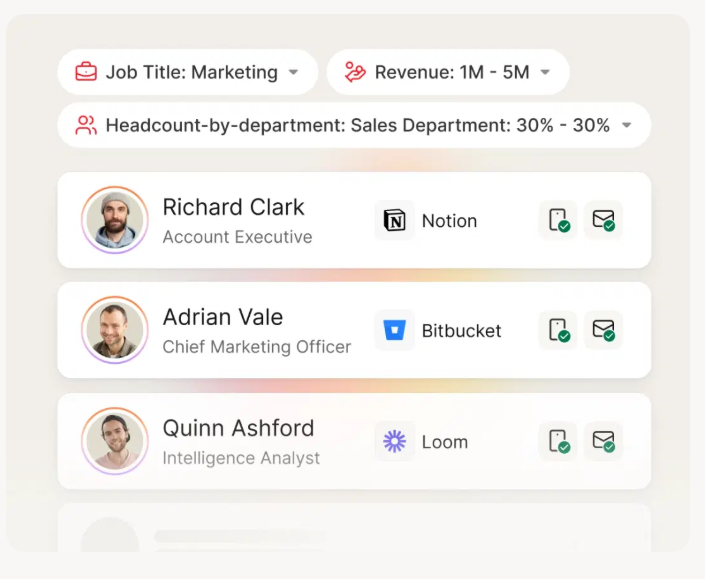
Your ICP defines the company. Your persona defines the person. Prospeo finds both - with 30+ filters covering firmographics, technographics, buyer intent, headcount growth, and department size to match your ICP, plus 300M+ verified contacts to reach the exact persona inside each account.
Stop profiling in theory. Start prospecting with 98% accurate data.
The Hierarchy: Audience, ICP, Persona
There's a layer above both that often gets overlooked. The Product Marketing Alliance frames it as a strategic funnel: target audience to ICP to persona.
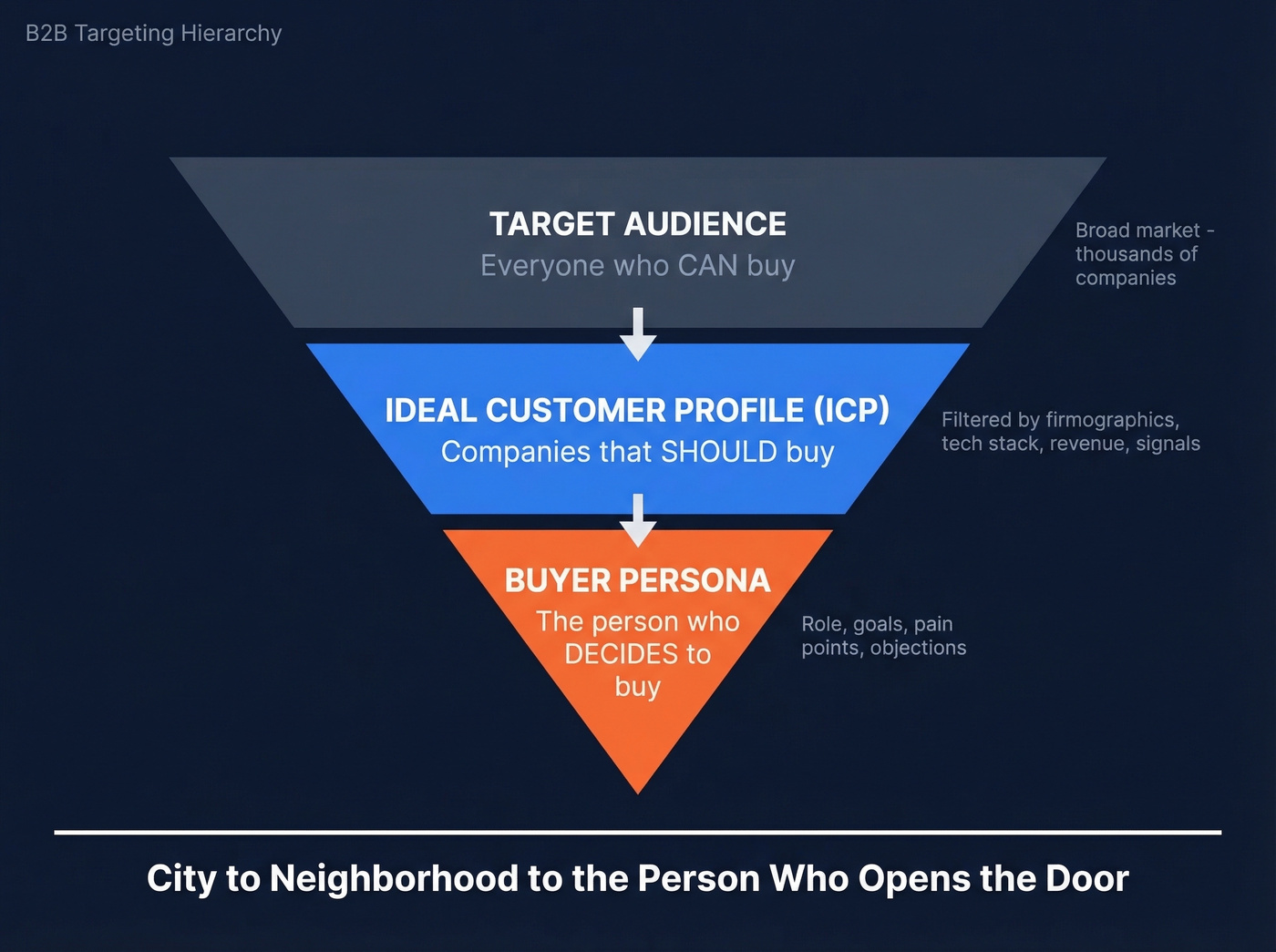
Your target audience is everyone who can buy. Your ICP narrows that to who should buy. Your persona identifies who inside those companies makes the decision. Think of it like a city, then a neighborhood, then the person who opens the door. Most teams skip straight to the door without picking the right neighborhood, then burn cycles on accounts that were never going to close.
This hierarchy is especially critical in account-based marketing, where a misaligned ICP wastes entire campaigns - not just individual emails.
Why Most ICPs and Personas Fail
In our experience, four mistakes kill the majority of ICP and persona work before it ever reaches a sales rep.
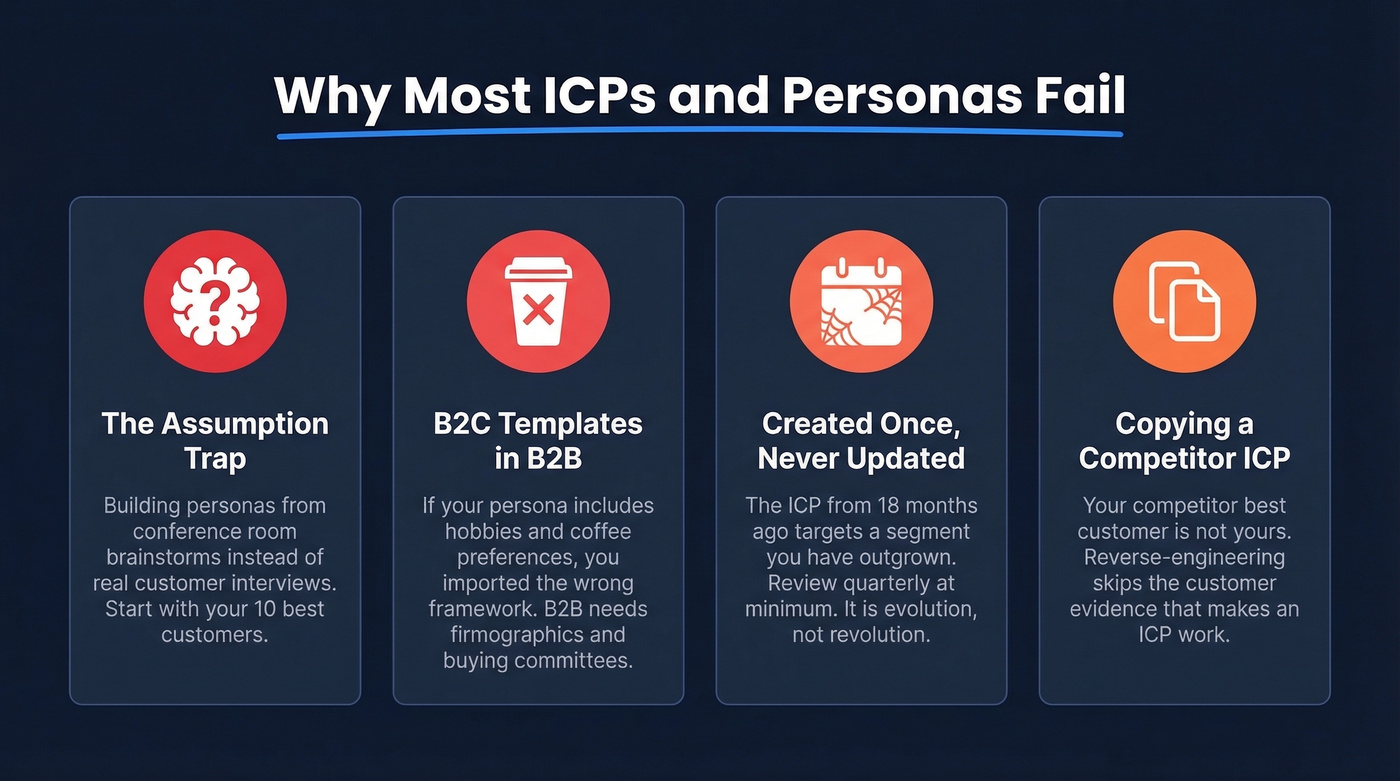
The assumption trap. Teams sit in a conference room, brainstorm who they think their ideal customer is, and package guesses as insights. Fictional personas turn into fictional customers. The fix: start with your 10 best existing customers. Interview them. Pattern-match from reality, not imagination - most of your gold is right beneath your noses.
B2C templates in B2B. If your persona includes coffee preferences and hobbies, you've imported a framework that doesn't help a B2B sales team. B2B needs firmographics, buying committee structure, and procurement triggers. Skip the lifestyle fluff.
Created once, never updated. Markets shift. Your product evolves. We've seen this pattern dozens of times - the ICP from 18 months ago targets a segment the company has since outgrown. Don't think of defining your ICP as a revolution; it's evolution. Review quarterly at minimum.
Copying a competitor's ICP. Your competitor's best customer isn't yours. You don't jump across the field of opportunity - you carve a path through it. Reverse-engineering someone else's targeting skips the customer evidence that makes an ICP actually work. The consensus on r/sales echoes this: teams that copy competitor playbooks without validating against their own closed-won data almost always underperform.
When Jobs-to-Be-Done Beats a Persona
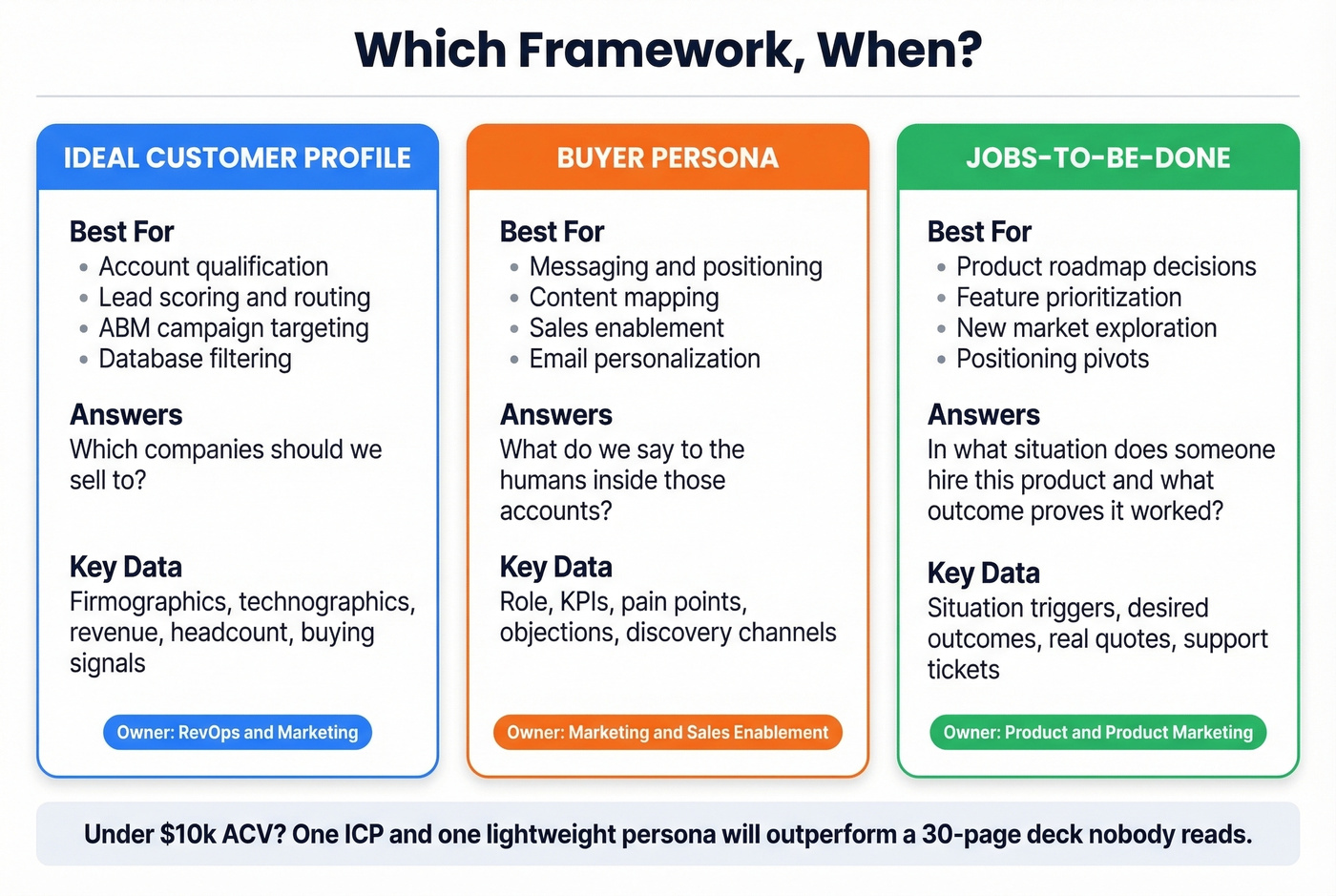
Not every decision needs a persona. For product roadmap decisions, jobs-to-be-done (JTBD) is often more useful. JTBD answers "in what situation does someone hire this product, why, and what outcome proves it worked?" That's more actionable than a demographic sketch when you're deciding what to build next.
The chain that keeps personas grounded: Persona to Jobs to Evidence. Tie every persona to specific jobs, then anchor each job in real quotes, support tickets, and metrics. This prevents persona discussions from drifting into fiction.
The practical split: use JTBD for product decisions, lightweight buyer profiles for communication and content. Only 44% of marketers use buyer personas at all, and ITSMA research shows personalization can reduce marketing and sales costs by 10-20%.
Let's be honest: if your average deal size is under $10k, you probably don't need three detailed personas. One ICP and one lightweight persona will outperform a 30-page persona deck that nobody reads. Complexity is the enemy of execution.
From Document to Execution
Here's the thing - the gap between "I have an ICP document" and "I have a list of real contacts who match it" is where most teams stall. The ICP sits in a slide deck. The SDRs still prospect by gut. Nothing changes.
For teams running ABM, layering intent data on top of firmographic filters means you're not just finding the right accounts - you're finding the ones actively researching solutions right now.
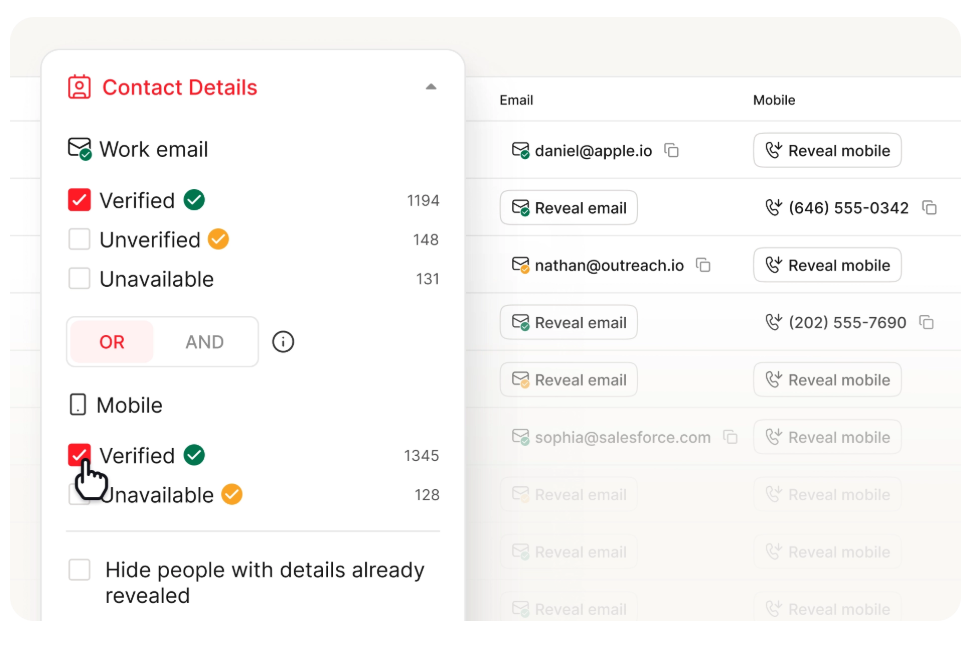
An ICP without contact data is just a strategy doc. Prospeo turns your customer profile into a live pipeline - filter by industry, revenue, tech stack, and hiring signals, then pull verified emails and direct dials for every persona at those accounts. 83% enrichment match rate, refreshed every 7 days.
Turn your ICP and personas into real conversations for $0.01 per email.
FAQ
Is an ICP the same as a buyer persona?
No. An ICP describes the company you should target - firmographics like industry, revenue, and headcount. A buyer persona describes the individual who makes or influences the purchase - their role, goals, and objections. They're complementary, not interchangeable, and keeping them aligned is what drives real pipeline.
Should I build my ICP or persona first?
Always start with the ICP. Pick the right accounts before you worry about individual messaging. Personas without an ICP target people at companies that'll never buy. Build your ideal customer profile from your 10-25 best existing accounts, then layer personas on top.
How many buyer personas do I need?
One to three per ICP segment is the sweet spot for most B2B teams. Beyond that, you're speculating rather than building from closed-deal evidence. Skip this advice if you're in enterprise sales with genuinely distinct buying committees across segments - then you might need four or five, but validate each one against real deals.
What tools help turn an ICP into a real prospect list?
Any B2B data platform with firmographic and technographic filters will work. Prospeo, ZoomInfo, and Apollo all let you apply ICP criteria against large contact databases. The differences come down to data freshness, accuracy, and pricing - weekly refresh cycles and verified emails matter more than raw database size when your domain reputation is on the line.