

Data Enrichment for Lead Generation: What Works, What Doesn't, and What It Costs
You exported 2,000 leads on Monday. By Friday, 600 had stale emails, wrong titles, or disconnected phones. B2B contact data decays at roughly 2.1% per month - a quarter of your database turns to garbage within a year. Data enrichment for lead generation is how you stop bleeding pipeline to bad records.
Here's what actually works, what costs what, and where most teams get it wrong.
What Is Lead Enrichment?
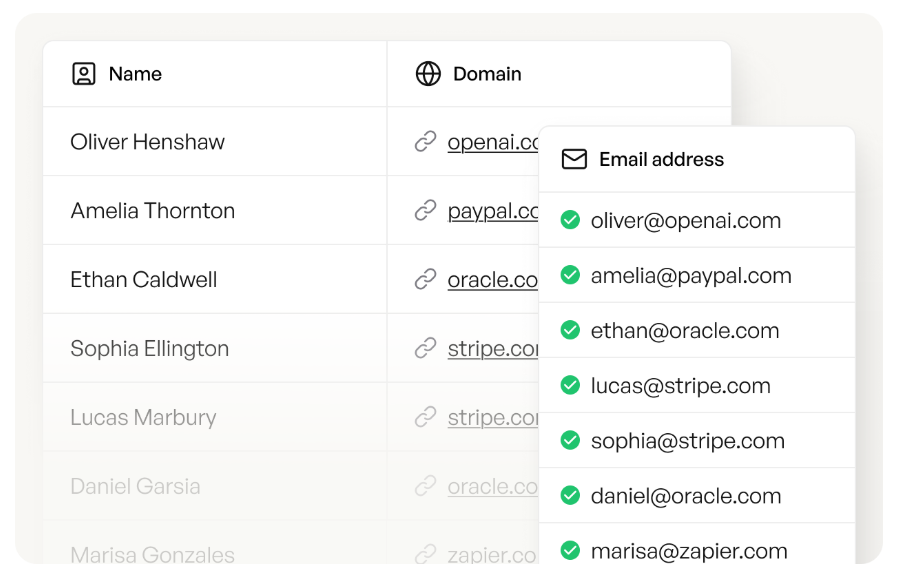
Data enrichment appends verified emails, phone numbers, firmographics, technographics, and intent signals to your existing CRM records. It's not data cleansing - cleansing removes duplicates and fixes formatting, while enrichment adds net-new information that makes a lead actionable.
Think of it this way: cleansing takes a messy spreadsheet and makes it tidy. Enrichment takes a name and company and turns it into a complete prospect profile with title, department, tech stack, funding stage, and buying intent. A single enrichment can return 50+ data points per contact, which is the difference between "John at Acme" and a fully qualified prospect your SDR can actually work.
Why Enrichment Isn't Optional in 2026
The data enrichment market hit $2.37B in 2023 and is growing at 10.1% CAGR through 2030. That growth is a direct response to how expensive bad data has become.
Poor data quality costs companies roughly 12% of revenue - across US businesses, that adds up to $3.1 trillion in waste. At the rep level, 27.3% of selling time gets burned on bad contact data: wrong numbers, bounced emails, outdated titles. That's more than a full day per week per rep spent chasing ghosts.
The conversion numbers tell the rest of the story. Enriched leads convert 20-30% better, and companies running deep enrichment see a 47% increase in qualified lead conversion rates alongside a 15% reduction in customer acquisition cost. 96% of B2B companies now consider lead enrichment vital to their pipeline. The math isn't subtle.
The Data Decay Problem
Static lists decay at ~2.1% per month. Over a year, that's 25-30% of your B2B contacts going stale through job changes, company restructures, and email migrations.
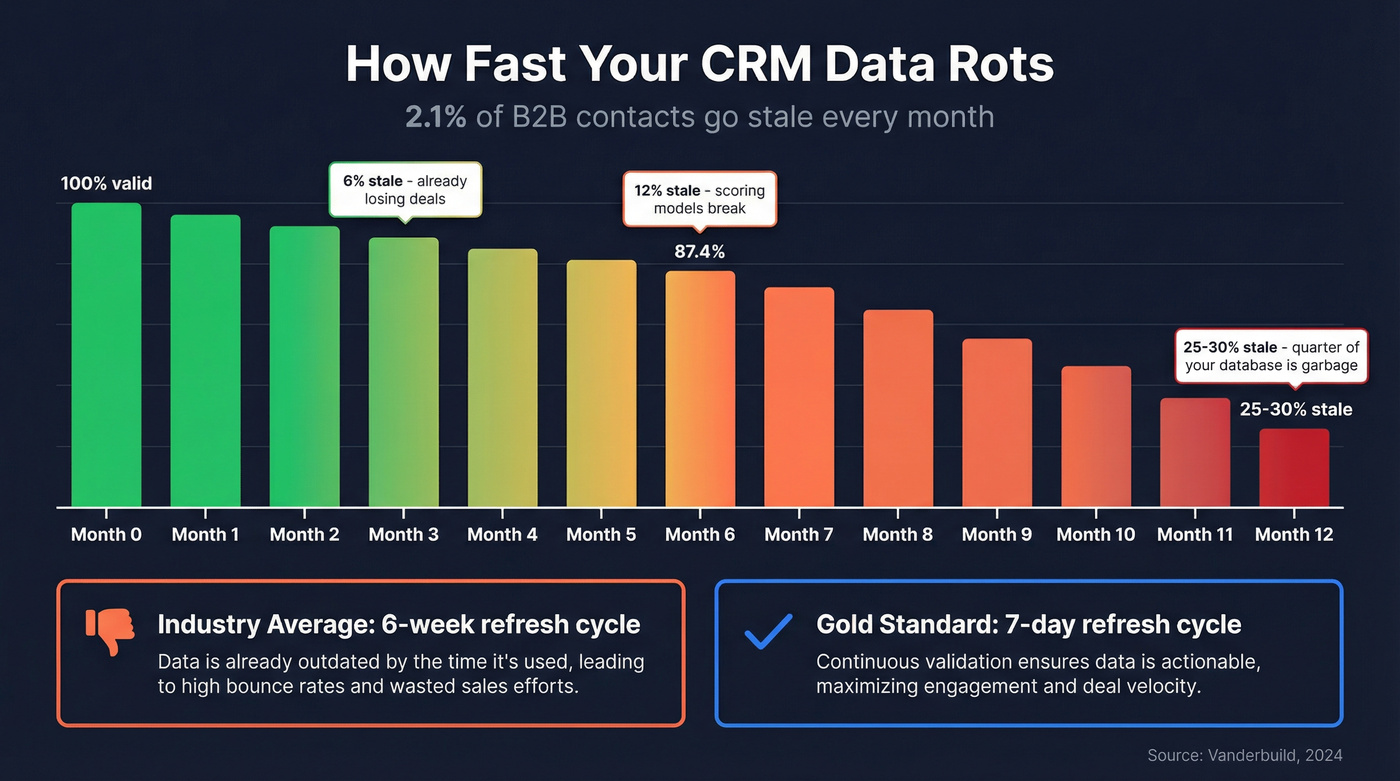
This is why one-time enrichment fails. You can run a massive CRM cleanup in Q1, feel great about your data, and watch it rot through Q2 and Q3. After three months, roughly 6% of your records are already wrong. The gold standard is a 7-day refresh cycle, compared to the 6-week industry average most providers operate on. That difference compounds fast when you're running outbound sequences where a single bounced email can torch your domain reputation.

Your CRM loses 25% of its contacts every year to data decay. Prospeo's 7-day refresh cycle keeps every record current - not the 6-week lag you get from other providers. With 50+ data points per enrichment and an 83% match rate, one source replaces your entire waterfall stack.
Stop bleeding pipeline to stale data. Enrich 75 leads free today.
Single-Source vs. Waterfall Enrichment
Here's the core tension in enrichment strategy. A single data provider typically returns a 40-50% match rate. Run 800 prospects through one tool and you'll get roughly 312 enriched - leaving nearly 500 contacts with gaps.
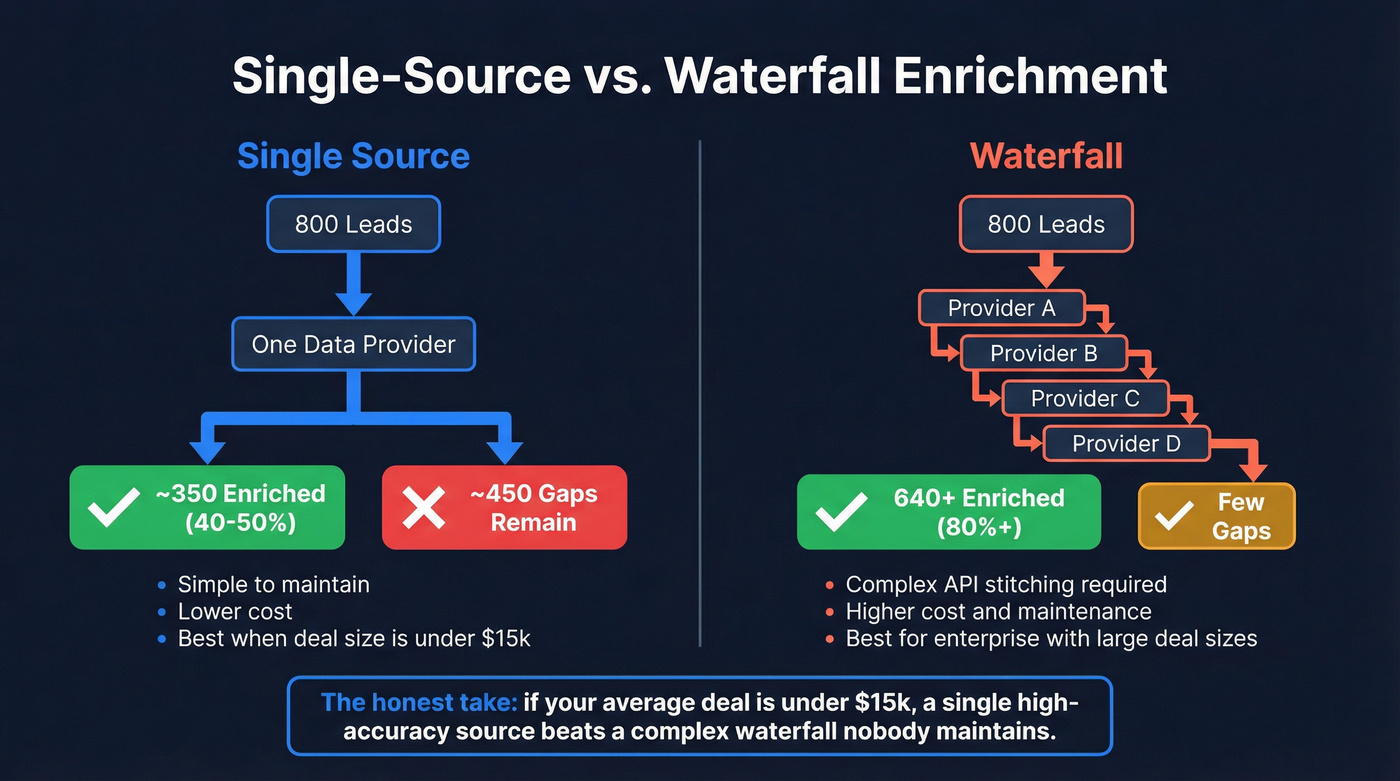
Waterfall enrichment solves this by routing records sequentially through multiple providers until every field is filled. The result: 80%+ discovery rates and a 40% average coverage boost. But it comes with real complexity. You're stitching together multiple APIs, managing credit consumption across vendors, and building deduplication logic to prevent conflicting data.
Let's be honest: if your average deal size is under $15k, you probably don't need a waterfall setup. A single high-accuracy source plus good CRM hygiene will outperform a complex multi-provider stack that nobody on your team maintains.
5 Enrichment Plays That Move Pipeline
Auto-Enrich Inbound Form Fills
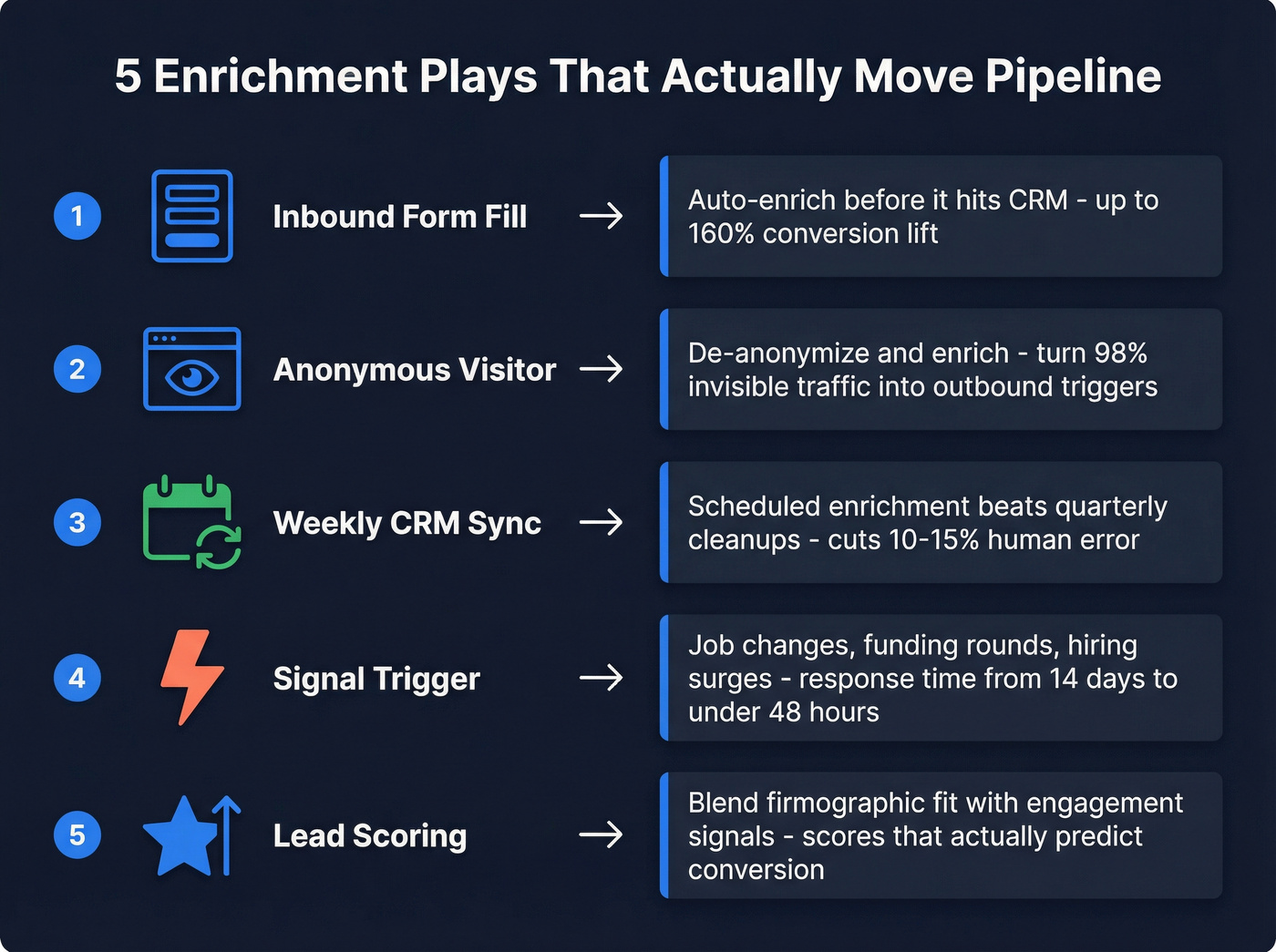
Only 3% of website visitors fill out a form. When someone does, you need to squeeze every drop of value from that conversion. Auto-enrichment appends job title, company size, tech stack, and seniority before the record even hits your CRM - some HubSpot customers report up to 160% conversion lift from shortening forms and enriching automatically behind the scenes. Speed-to-lead matters here. The faster enrichment fires, the faster your SDR gets a complete profile to act on.
Identify Anonymous Visitors
98% of corporate website visitors remain anonymous. Visitor identification tools can de-anonymize a portion of that traffic, and when you pipe those identified accounts into an enrichment workflow, you've got a trigger for outbound based on actual buying behavior - not a cold list.
Weekly CRM Cleanup
Scheduled enrichment beats heroic quarterly cleanups every time. Upload your CRM export, enrich it with 50+ data points per contact, and sync back via native Salesforce or HubSpot integration. Manual enrichment carries a 10-15% human error rate. Automation removes most of it.
Signal-Triggered Outbound
Job changes, funding rounds, hiring surges, and tech stack changes are all enrichment triggers. When a VP of Sales starts at a new company, that's a warm signal - but only if your enrichment workflow catches it and delivers a verified email and direct dial within days, not weeks. We've seen teams cut their response time from 14 days to under 48 hours just by automating this one workflow.
Enrichment-Powered Lead Scoring
Raw lead scores based on form fills and page views are incomplete. Blend firmographic fit data - industry, headcount, tech stack, funding stage - with engagement signals, and you get a scoring model that actually predicts conversion. Enrichment is what makes the fit side of that equation possible.
Best Tools for Data Enrichment and Lead Generation
Prospeo
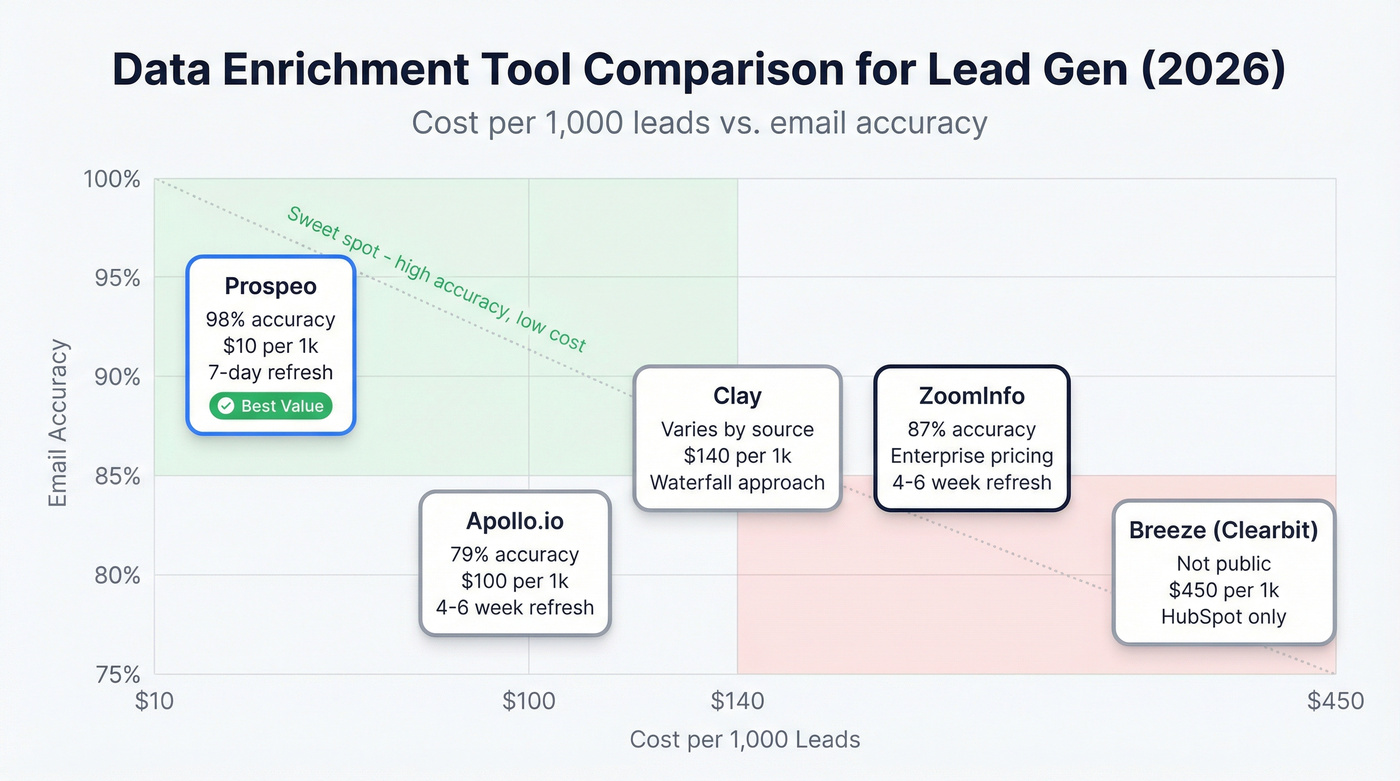
Prospeo makes waterfall unnecessary for most teams. The database covers 300M+ professional profiles with 98% email accuracy and a 7-day refresh cycle. Every enrichment returns 50+ data points, and the 83% match rate means you're getting contact data back on the vast majority of records without stitching together multiple providers. Mobile numbers are where it pulls ahead of everyone: 125M+ verified numbers with a 30% pickup rate across all regions. At ~$0.01 per lead, it's 90% cheaper than ZoomInfo with higher accuracy. The free tier gives you 75 verified emails per month - no credit card, no contract.
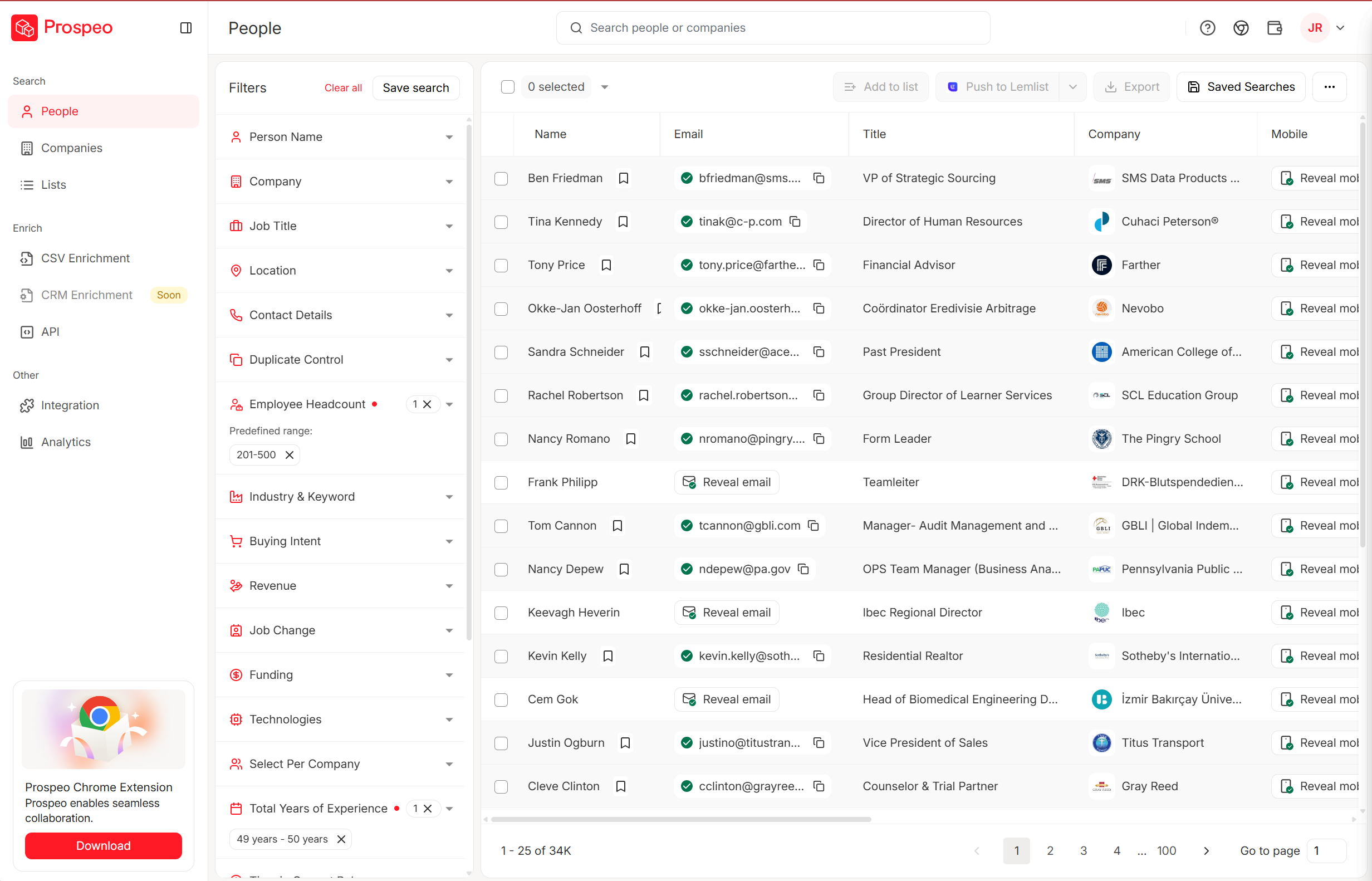
Bad contact data burns 27% of your reps' selling time. Prospeo returns 98% accurate emails and 125M+ verified mobile numbers with a 30% pickup rate - at $0.01 per lead. That's 90% cheaper than ZoomInfo with higher accuracy and weekly-refreshed data.
Give your SDRs enriched profiles instead of dead ends.
Apollo.io
Use this if you're an SMB team that needs a free starting point with built-in sequencing. Apollo's 275M+ contact database and $0 entry price make it the default recommendation on r/sales for teams with zero budget.
Skip this if accuracy is your top priority. Apollo's email accuracy runs around 79% - workable for low-volume outreach, but at scale, that miss rate burns through sender reputation fast. Paid plans start at $49/mo for Basic and $99/mo for Professional, with enrichments running ~$100 per 1,000 contacts. The bundled sequencer is the real draw - find, enrich, and email from one platform.
Clay
Who it's for: RevOps teams who think in API calls.
Clay aggregates 150+ data providers into waterfall workflows, routing records through multiple sources until every field is filled. In hands-on testing, Clay returned 76% verified emails on an SMB-focused dataset. Pricing runs $149-$800/mo depending on volume, roughly $140 per 1,000 enrichments. Unlimited users on all plans. It's powerful, but the learning curve is steep - expect a week or two of setup before you're running smoothly.
ZoomInfo
The Rolls-Royce of B2B data - and priced like one. Most teams need a Toyota. ZoomInfo's 500M+ contacts, org charts, and intent signals represent the deepest data set in the market, but at $25K-$100K+/year with mandatory sales calls and annual contracts, you're paying for capabilities most teams never activate. The data is good, the price is brutal, and the contract structure is a common complaint on Reddit.
Breeze Intelligence (Clearbit)
Now a HubSpot add-on. Starts at $45/mo for 100 credits, scaling to ~$450 for 1,000. Great if you're all-in on HubSpot. Limiting if you're not - the data doesn't travel well outside that ecosystem.
Tool Comparison
| Tool | Email Accuracy | Refresh Cycle | Cost/1k Leads | Best For |
|---|---|---|---|---|
| Prospeo | 98% | 7 days | ~$10 | Accuracy + value |
| Apollo | ~79% | 4-6 weeks | ~$100 | Free tier / SMBs |
| Clay | Varies by source | Varies | ~$140 | RevOps / waterfall |
| ZoomInfo | ~87% | 4-6 weeks | Not public (enterprise) | Enterprise budgets |
| Breeze | Not public | Not public | ~$450 | HubSpot-native teams |
Why Most Enrichment Projects Fail
The #1 failure mode we see: treating enrichment as a one-time cleanup instead of continuous infrastructure. You run a big enrichment project in Q1, declare victory, and watch the data decay through Q2. By Q3, you're back where you started.
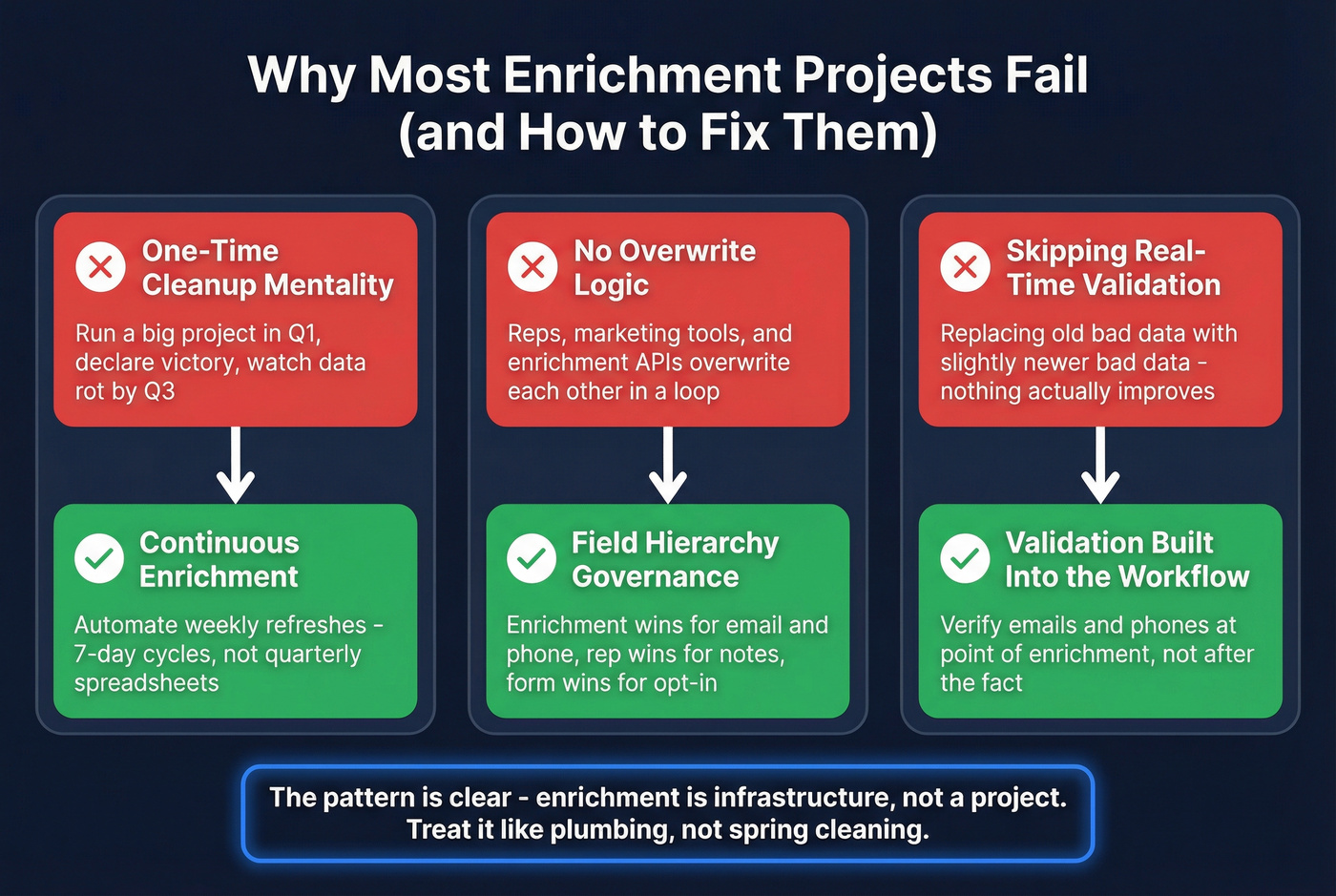
The second killer is overwrite logic - or the lack of it. Without a clear field hierarchy defining which source wins when data conflicts, reps, marketing automation, and enrichment tools end up overwriting each other in a loop. You need governance: enrichment tool beats sales rep input for email/phone fields, rep beats enrichment for relationship notes, marketing form beats both for opt-in status.
Look, if you're replacing old bad data with slightly newer bad data because you skipped real-time validation, you haven't solved anything. The fix is automated, continuous enrichment with validation built in - not a quarterly spreadsheet exercise.
Our recommendation for rollout: start with a 30-day pilot on one segment, expand to full CRM enrichment in months two and three, then optimize scoring and routing by month four. One of our customers, Snyk, went from a 35-40% bounce rate to under 5% following this phased approach - and saw AE-sourced pipeline jump 180%.
FAQ
How does enrichment improve lead conversion rates?
Enriched leads include verified contact info and firmographic fit data, so reps reach the right people faster. Companies report 20-47% conversion lifts depending on enrichment depth and how quickly enriched records reach the sales team.
How often should you re-enrich your CRM?
Weekly is the new standard. B2B data decays at 2.1% per month - a 90-day-old list has ~6% stale records. Consistent re-enrichment keeps your pipeline accurate and prevents reps from wasting hours on outdated contacts.
What's a good enrichment match rate?
Single-source tools typically return 40-50%. Waterfall setups hit 80%+. Prospeo reaches 83% from a single source, approaching waterfall results without multi-provider complexity or extra API management.
Is data enrichment GDPR compliant?
It can be, if your provider sources data from compliant channels, enforces opt-outs, and offers DPAs. Always verify compliance documentation before uploading EU contact lists.
Can I start enriching leads for free?
Yes. Apollo offers a free tier with limited credits. Prospeo gives 75 verified emails per month free - no credit card required. Both are enough to test enrichment workflows before committing budget.
