

Most Digital Sales Transformations Fail. Here's How to Be in the 30% That Don't.
A RevOps lead we know ran a digital sales transformation last year. Six figures on a new platform, three months of implementation, a launch day with branded swag. Within 90 days, half the team was back in spreadsheets and the internal champion had left for another company. The pilot died quietly. Nobody wrote a postmortem.
That story isn't unusual - it's the norm. Roughly 70% of digital transformation initiatives miss their objectives, and sales orgs aren't immune. The pattern on Reddit is brutally consistent: companies buy flashy software, skip the foundational work, run a small pilot, and watch it stall when priorities shift. Practitioners call it "pilot purgatory." The real problem isn't technology. It's people, data, and the willingness to change how work actually gets done.
The Short Version
Sales transformation fails when you skip the boring stuff - executive sponsorship, data hygiene, process mapping - and jump straight to AI. Fix your data foundation first, pick 3-4 tools your team will actually use, and run a 90-day pilot with measurable KPIs. The rest of this guide shows you exactly how.
What Digital Sales Transformation Actually Means
It isn't "we bought Salesforce" or "we added a chatbot." It's rebuilding how your sales organization finds, engages, and closes buyers - using technology, data, and AI as the foundation rather than a bolt-on.
The core shift isn't digitizing your existing process. It's rebuilding around how buyers actually buy, not how your org chart says they should. Buying a CRM and calling it done is digitization, not transformation. Digitization automates what you already do. Transformation changes what you do - moving from product-centric pitching to buyer-centric digital selling where reps add value at the moments that matter. That means rethinking the process itself, not layering software on broken workflows.
Your Buyers Already Transformed
Your buyers didn't wait for you. A Gartner survey of 646 B2B buyers found that 67% prefer a rep-free buying experience. Not "would tolerate" - prefer. And 45% of those buyers used AI during a recent purchase, meaning they're researching, comparing, and shortlisting before your SDR even gets a shot.
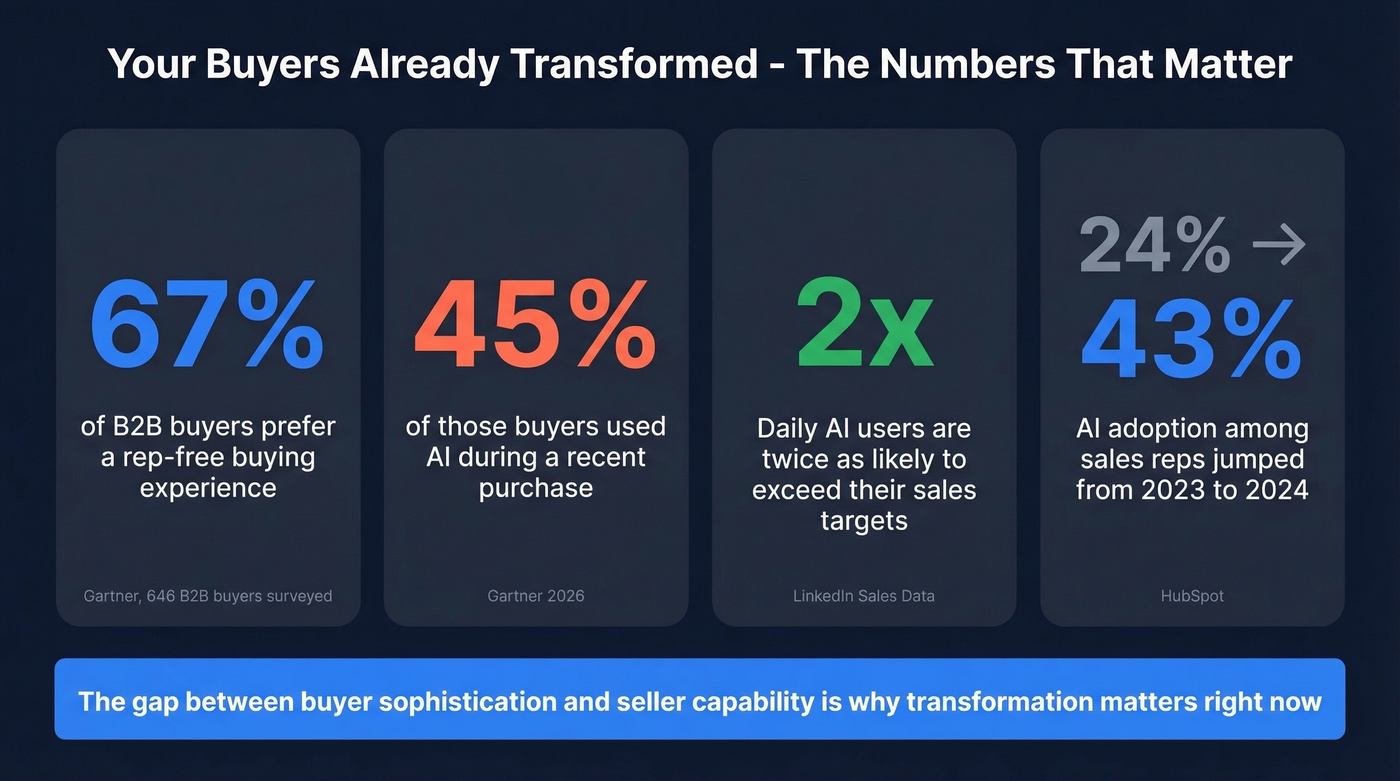
The seller side is catching up unevenly. HubSpot data puts AI adoption among sales reps at 24% in 2023 and 43% in 2024. LinkedIn data puts [daily AI usage](https://news.linkedin.com/2025/the-roi-of-ai - new-research-on-how-ai-is-transforming-b2b-sales) at 56% of sales professionals - and those daily users are 2x as likely to exceed their targets.
The gap between buyer sophistication and seller capability is the whole reason transformation matters right now. Gartner's same study found that confident buyers are twice as likely to report a high-quality deal. If your sales process doesn't help buyers feel confident through relevant content, fast responses, and accurate data, you're losing to competitors who do. The enablement direction is clear: move beyond static content and build modular, agent-ready content that AI tools can serve dynamically inside the workflow.
Three Killers That Sink Transformations
Three failure modes account for the vast majority of stalled transformations. If you recognize any of these, fix them before buying another tool.
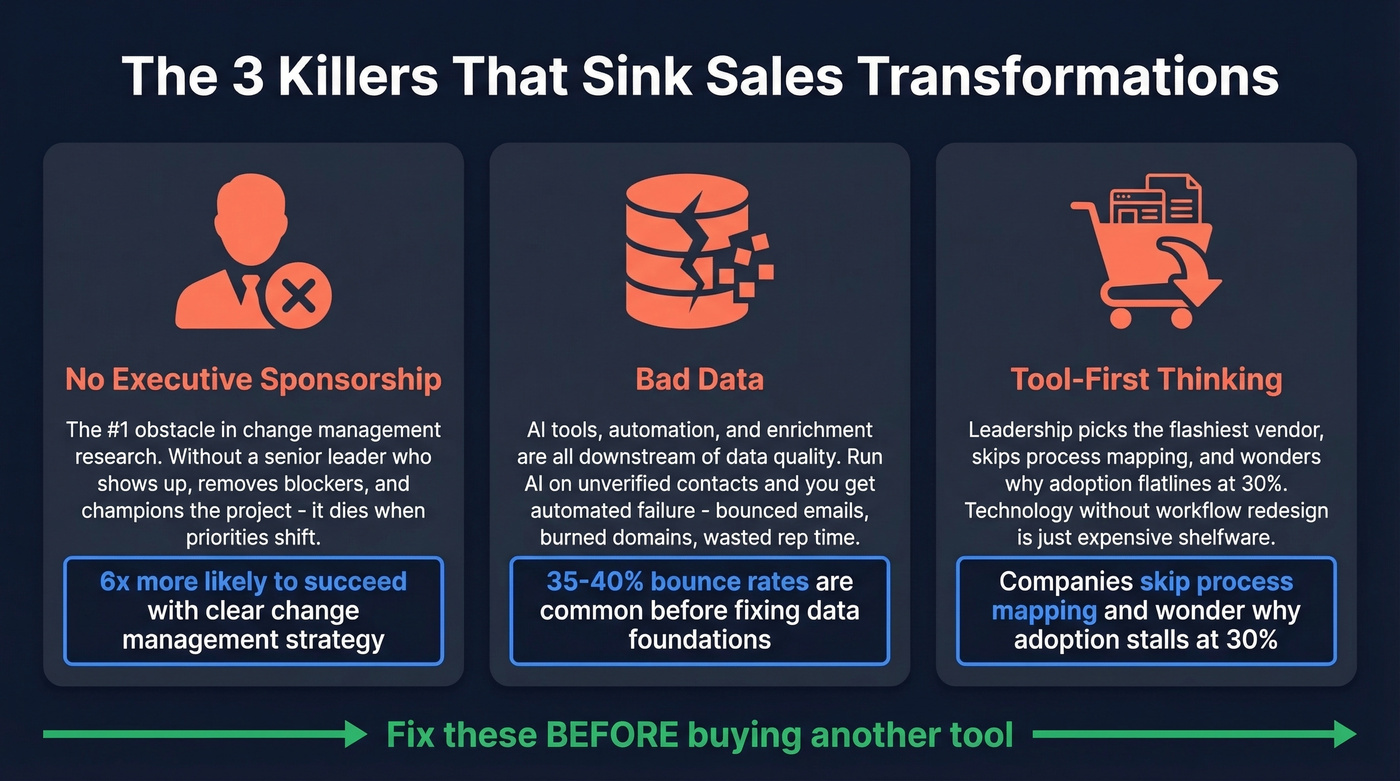
Killer #1: No executive sponsorship. This is the single largest obstacle Prosci identifies in their benchmarking research. Organizations with a clear change management strategy are 6x more likely to achieve their goals. Without a senior leader who actively sponsors the initiative - not just signs the PO, but shows up in team meetings and removes blockers - transformation dies the moment competing priorities shift.
Killer #2: Bad data. Your AI tools, automation sequences, and enrichment workflows are all downstream of data quality. Run AI on unverified contact data and you get automated failure: bounced emails at scale, wasted rep time, and burned sender domains. If you're diagnosing deliverability issues, start with bounce rate benchmarks and root causes. CIO.com documented a Mercedes dealer that built a technically sound inventory system nobody used because the underlying data didn't match how the team actually worked.
Killer #3: Tool-first thinking. One Reddit thread describes a ~$100M company that bought a TMS nobody asked for. This was a company still running critical workflows on paper, with data six hours stale from manual handoffs - and leadership's answer was a TMS nobody asked for. They ignored a simpler RFID proposal with a sub-one-year payback. The pattern is depressingly common: leadership picks the flashiest vendor, skips process mapping, and wonders why adoption flatlines at 30%.
Sales Transformation Maturity Model
Before you build a roadmap, you need to know your starting point. Here's a five-stage maturity model adapted from Prosci's framework and Asana's digital maturity benchmarks, mapped to sales organizations.
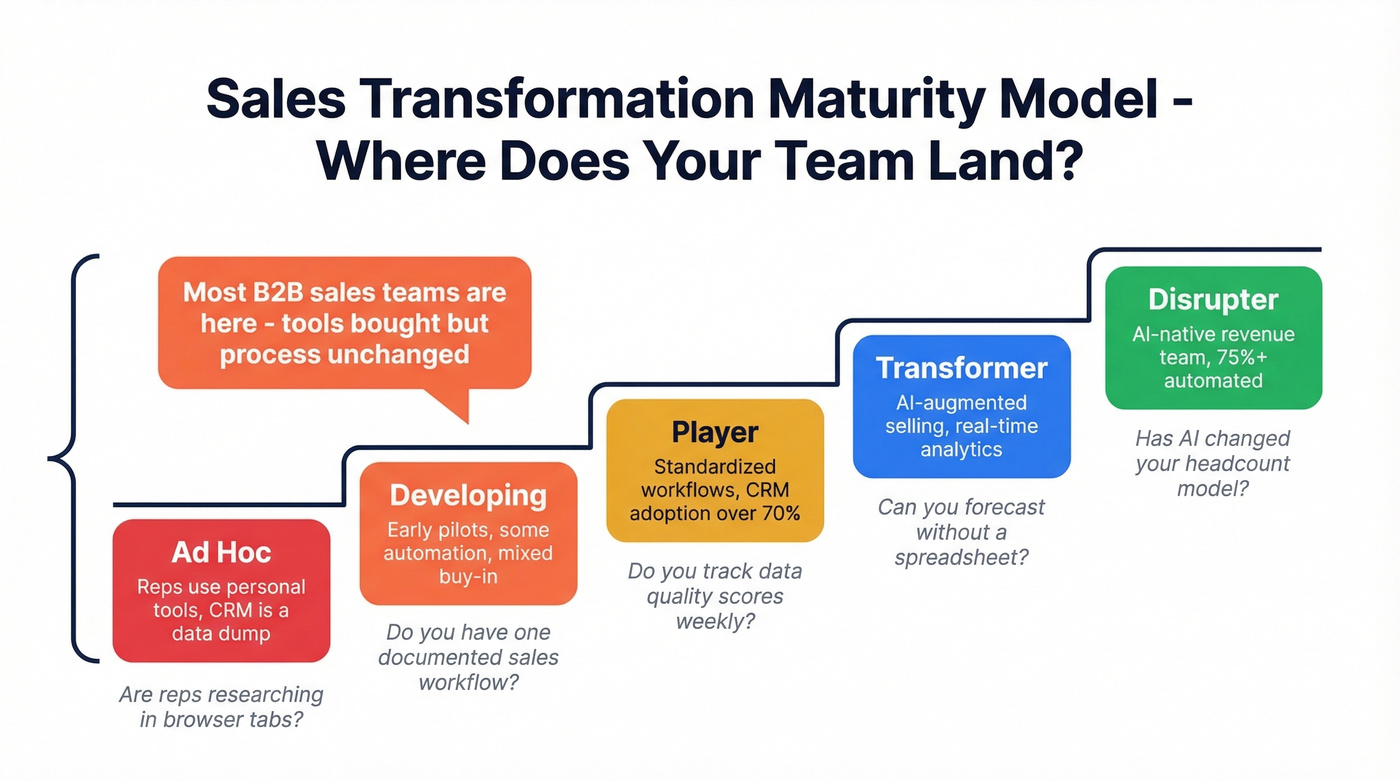
| Stage | Label | Sales Characteristics | Diagnostic Question |
|---|---|---|---|
| 1 | Ad Hoc | Reps use personal tools; CRM is a data dump | Are reps researching prospects in browser tabs? |
| 2 | Developing | Early pilots; some automation; mixed buy-in | Do you have at least one documented sales workflow? |
| 3 | Player | Standardized workflows; CRM adoption >70% | Do you track a shared data quality score weekly? |
| 4 | Transformer | AI-augmented selling; real-time analytics | Can your team forecast pipeline without a spreadsheet? |
| 5 | Disrupter | AI-native revenue team; >75% automated | Has AI changed your headcount model? |
Most B2B sales teams we've worked with land between Stage 1 and Stage 2 - they've bought tools but haven't changed how reps actually sell. If your CRM data is more than 30 days stale and reps are still manually researching prospects, you're in Stage 1 regardless of what's on your tech stack slide.

Bad data is the #2 killer of sales transformations. Prospeo's 5-step verification and 7-day refresh cycle mean your AI tools, automation sequences, and enrichment workflows run on 98% accurate emails - not stale records that burn domains and waste rep time.
Stop automating failure. Start with data that's verified weekly.
Technologies Driving the Shift
Deloitte's AI maturity model maps adoption into four levels that translate cleanly to sales.
| Level | Label | Sales Example |
|---|---|---|
| 1 | Basic Automation | Auto-logging CRM activities |
| 2 | Agent-Based | AI SDRs handling initial outreach |
| 3 | Process Reimagination | AI pipeline mgmt replaces forecasting |
| 4 | Org Redesign | AI-native teams, new headcount model |
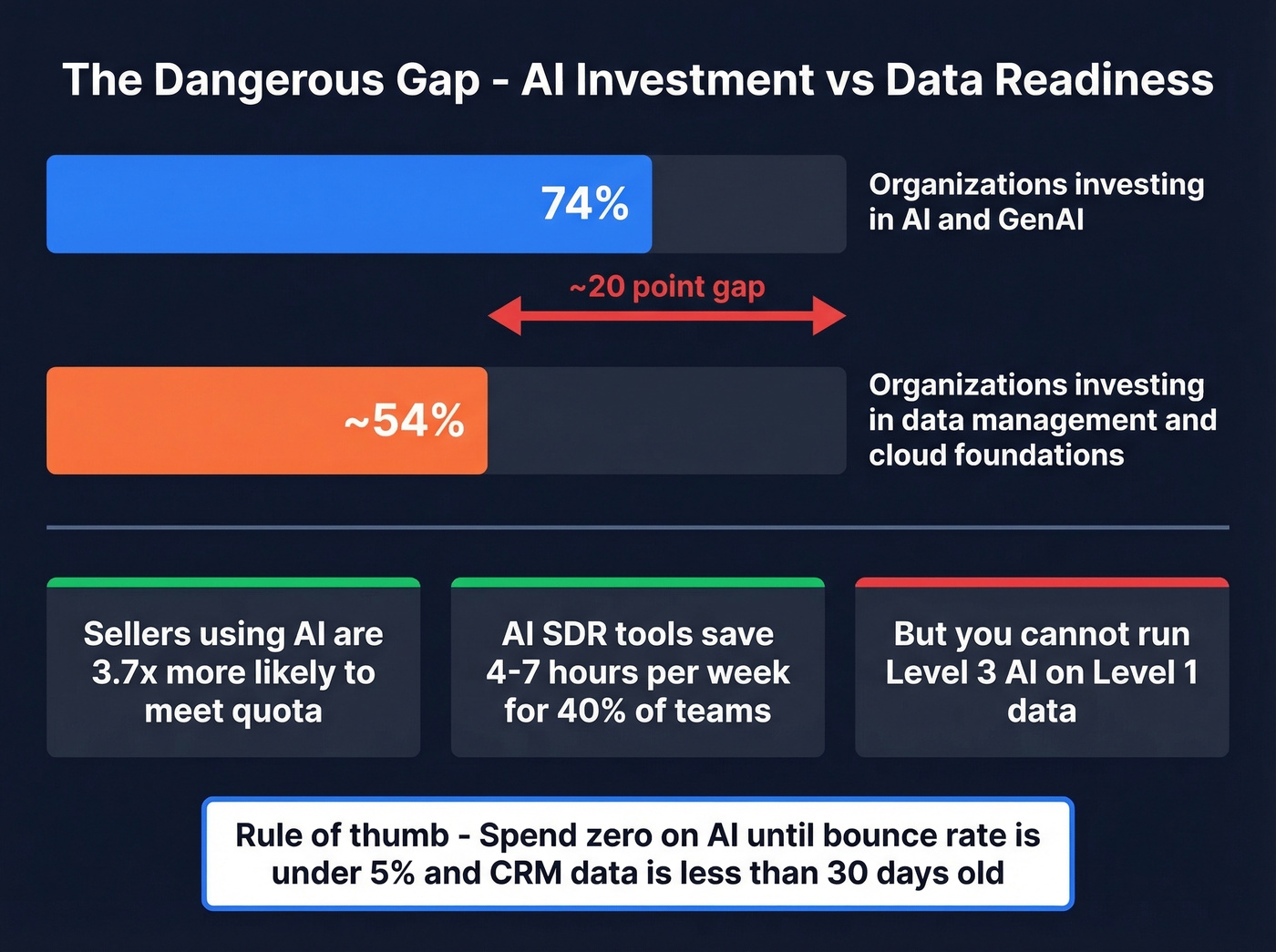
Most sales teams are stuck at Level 1. The jump from Level 2 to Level 3 is where the real ROI lives - sellers partnering with AI are 3.7x more likely to meet quota, but only if the underlying data is clean enough for AI to work with. Outreach reports that 40% of teams using AI SDR tools save 4-7 hours per week, with research time dropping from 20 minutes to 2 minutes per prospect.
Conversation intelligence is the clearest quick win for sales enablement: teams using it close deals 11 days faster on average, with a 10 percentage point win-rate improvement on deals over $50K. Beyond deal acceleration, conversation intelligence gives managers specific coaching moments - which drives retention, since coached reps stay 20-30% longer than those who only receive periodic reviews.
Here's the thing: 74% of organizations are investing in AI and GenAI, but that investment runs roughly 20 percentage points ahead of spending on data management and cloud foundations. Most teams should spend zero additional dollars on AI until their bounce rate is under 5% and their CRM data is less than 30 days old. You can't run Level 3 AI on Level 1 data.
Building Your Tech Stack
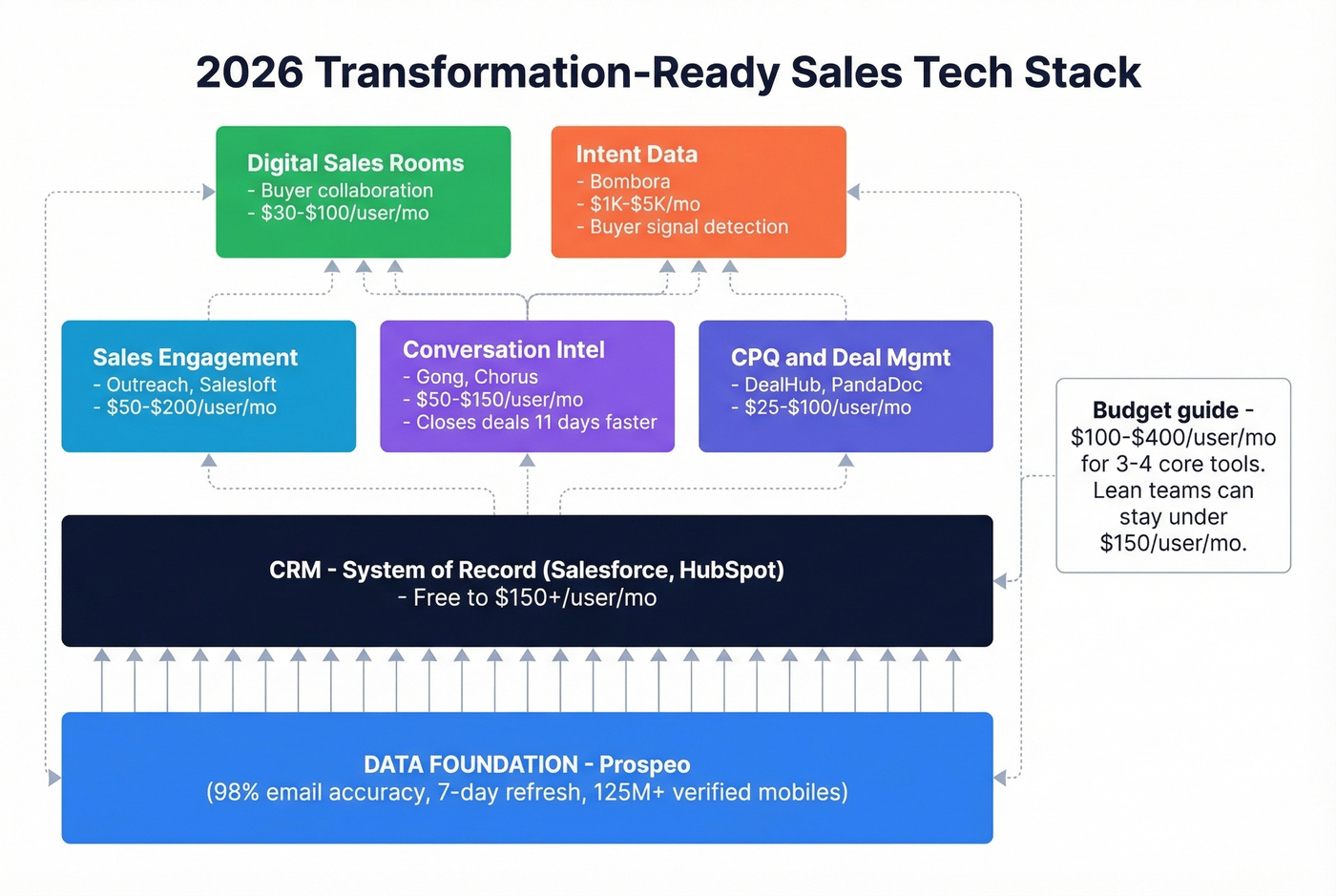
A transformation-ready tech stack doesn't need 15 tools. It needs 3-4 that work together, plus clean data flowing through all of them. Here's what the stack looks like in 2026.
| Category | Example Tools | Budget Range | Role |
|---|---|---|---|
| CRM | Salesforce, HubSpot | Free-$150+/user/mo | System of record |
| B2B Data | Prospeo | Free-~$0.01/email | Data foundation |
| Sales Engagement | Outreach, Salesloft | $50-$200/user/mo | Outreach execution |
| Conversation Intel | Gong, Chorus | $50-$150/user/mo | Coaching + insights |
| CPQ / Deal Mgmt | DealHub, PandaDoc | $25-$100/user/mo | Quote-to-close |
| Digital Sales Rooms | DealHub, Aligned | $30-$100/user/mo | Buyer collaboration |
| Intent Data | Bombora (standalone) | $1K-$5K/mo standalone | Buyer signal detection |
Expect to spend $100-$400/user/month across 3-4 core tools for your revenue operations stack. Enterprise teams with intent data and conversation intelligence push higher; lean teams running HubSpot's free CRM with a verified data layer and a sequencer can stay under $150/user/month.
The data layer is the foundation everything else depends on. A 7-day data refresh cycle - compared to the six-week industry average - is the difference between reaching someone at their current company versus their last one. Prospeo delivers 98% email accuracy and 125M+ verified mobile numbers with a 30% pickup rate, integrating natively with Salesforce, HubSpot, Outreach, Salesloft, Smartlead, Instantly, Lemlist, Clay, Zapier, and Make.
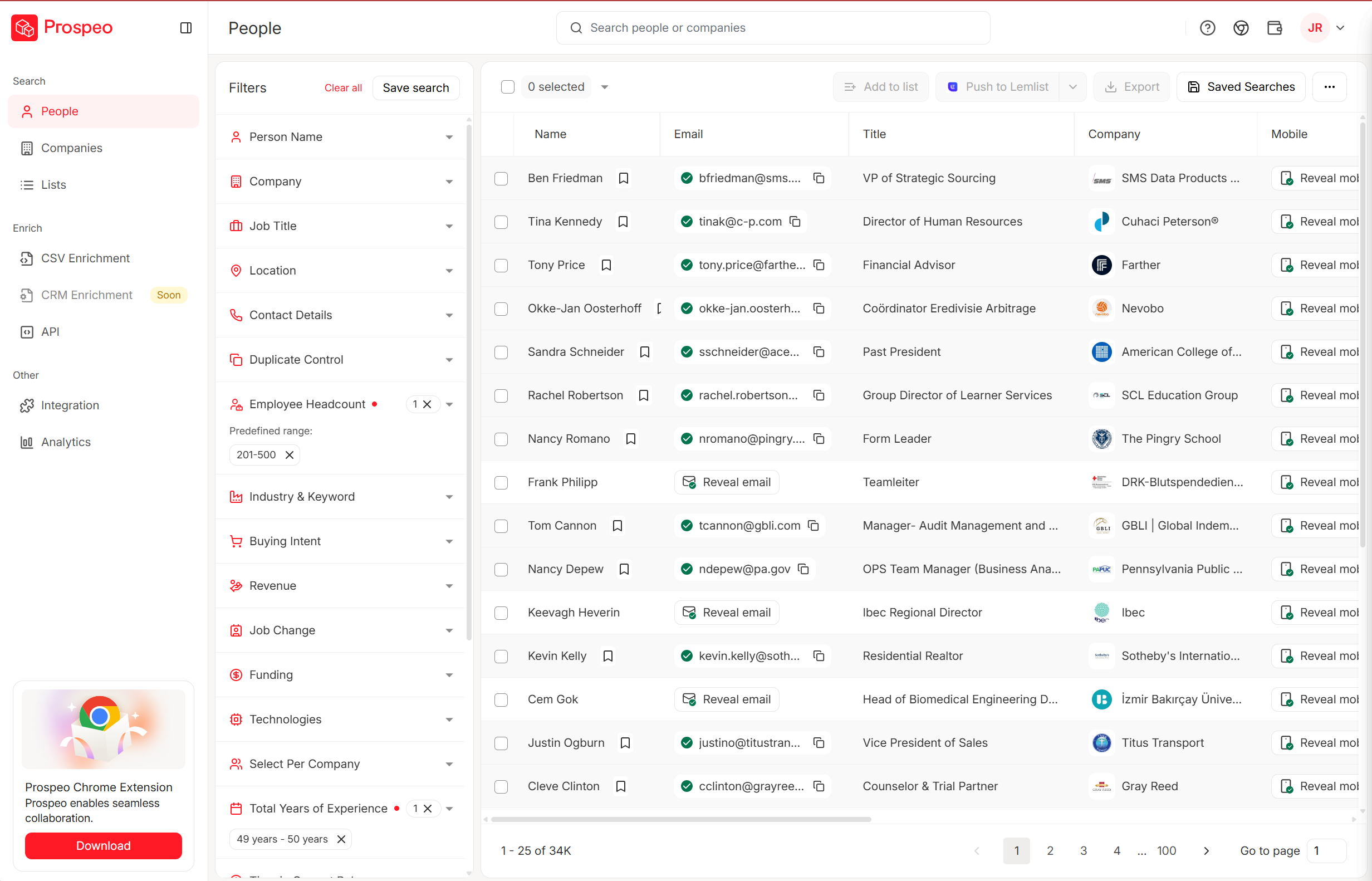
The proof point that sticks with us: Snyk's 50-person AE team was running bounce rates of 35-40% before switching their data layer. After the switch, bounces dropped under 5%, AE-sourced pipeline jumped 180%, and they were generating 200+ new opportunities per month. That's what data quality does for transformation outcomes.
Skip this step if you want - but don't forget compliance. GDPR, data residency requirements, and industry-specific regulations shape what data you can collect and how you can use it. Build this into your process mapping, not as an afterthought.
Change Management Playbook
In our experience, technology is maybe 30% of a successful transformation. The rest is change management - and most sales leaders underinvest here dramatically.
Prosci's research shows employees want business-level messages ("why we're doing this") from senior executives, and personal "what's in it for me" messages from their direct managers. Design both tracks before you launch anything.
- Secure an executive sponsor who'll show up, not just sign off
- Map current-state processes before introducing new tools
- Design a phased rollout - don't flip the switch for 200 reps at once
- Build reinforcement into the first 90 days (training retention drops to 20% after one month without it)
- Define "done" with specific metrics, not vibes
- Create a feedback loop so reps can flag what's broken without three layers of management
Let's be honest: if your executive sponsor can't articulate why this transformation matters in two sentences, you don't have sponsorship. You have a signature on a budget request.
KPIs That Actually Matter
Track leading indicators weekly and lagging indicators monthly. Most teams only measure lagging metrics and wonder why they can't course-correct.
| Type | Metric | Benchmark |
|---|---|---|
| Leading | Data quality score | <5% bounce rate |
| Leading | Tool adoption rate | >80% weekly active |
| Leading | Rep time on selling | Target 40%+ (from ~25%) |
| Lagging | Win rate | <50 days: 47% vs >50 days: 20% |
| Lagging | Pipeline velocity | Track monthly; 3-6 month lag |
| Lagging | CAC | Should decrease as automation scales |
That win-rate benchmark deserves attention: deals closed within 50 days show a 47% win rate versus 20% for deals that drag past 50 days. If your transformation isn't compressing cycle times, something's wrong upstream - usually data quality or rep enablement.
Set realistic time-to-value expectations: 6-18 months for core CRM and process standardization, 3-9 months for targeted AI pilots. Anyone promising transformation in 30 days is selling you something.
Your 90-Day Quick Start
Weeks 1-2: Assess and audit. Score yourself against the maturity model above. Audit your CRM data - what percentage of contacts have verified emails? Current job titles? How many records are older than 90 days?
Weeks 3-4: Align and define. Secure your executive sponsor. Define exactly three KPIs you'll track. Get written commitment from sales leadership on the pilot scope.
Month 2: Fix the data foundation. Clean your CRM of duplicates and stale records. Enrich your existing contacts with verified data - look for enrichment that returns 50+ data points per contact at a 90%+ match rate. Establish a refresh cadence so the data stays clean. If you’re evaluating vendors, start with a shortlist of data enrichment options.
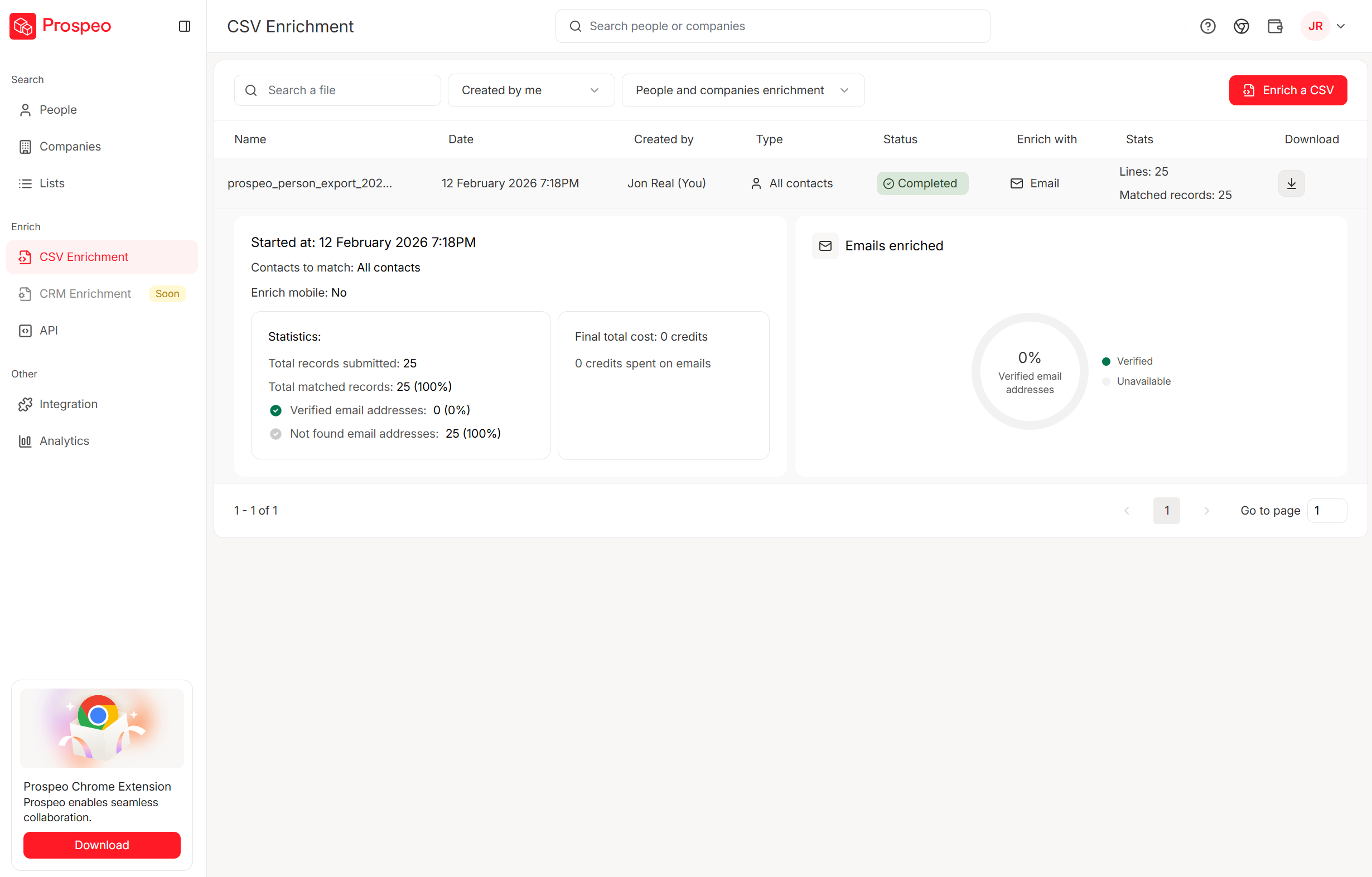
Month 3: Launch your first AI pilot. Pick one high-impact use case - conversation intelligence is the safest bet for fast, measurable ROI. Train the team, set a 30-day review checkpoint, and measure against your three KPIs.
Don't try to transform everything at once. One successful pilot with clear metrics creates the internal proof you need to expand. That's how digital sales transformation actually sticks - not with a big bang, but with compounding wins. If you want a rep-friendly rollout, borrow a 30-60-90 day plan structure for adoption.
Stuck between Stage 1 and Stage 2? Your CRM data is probably weeks stale and reps are manually researching prospects. Prospeo enriches your CRM with 50+ data points per contact at a 92% match rate - refreshed every 7 days, not every 6 weeks.
Move from Ad Hoc to Transformer without a six-figure platform bet.
FAQ
How long does a digital sales transformation take?
Core CRM and process standardization takes 6-18 months. Targeted AI pilots show measurable results in 3-9 months, depending on your starting maturity level and the strength of executive sponsorship.
What's the biggest reason sales transformations fail?
Lack of executive sponsorship. Prosci's research shows organizations with a clear change management strategy are 6x more likely to hit their transformation goals. Without active leadership, initiatives stall within one quarter.
Do I need to replace my CRM?
Almost never. Fix data quality and adoption first - if fewer than 70% of reps log activities consistently, the problem is process and data hygiene, not your CRM platform.
How do I fix bad sales data before automating?
Audit for duplicates and stale records, then enrich with a verified data platform on a weekly refresh cycle. Prospeo's enrichment returns 50+ data points per contact at a 92% match rate. Data quality is a continuous process, not a one-time project.
What's the first AI tool a sales team should adopt?
Conversation intelligence. It delivers 11 days faster close times and a 10-point win-rate improvement on deals over $50K, with minimal process change required from reps.