

The Drip Campaign Strategy Most Guides Won't Give You
The gap between good and great drip campaigns is enormous. Top 10% email workflows generate $16.96 revenue per recipient versus $1.94 for the average - an 8x multiplier. With email marketing returning $36 for every $1 spent, your drip campaign strategy matters more than most teams realize.
Quick clarification most guides skip: drip campaigns are schedule-based (Day 0, Day 2, Day 5). Nurture campaigns are behavior-triggered - someone opens an email, and that triggers the next step. The best sequences blend both. Everything below shows you how.
What You Need (Quick Version)
- 3-7 emails over 7-21 days. Not 12-email marathons that train people to ignore you.
- Segment by behavior, not demographics. What someone clicked matters more than their job title.
- Follow the Day 0/2/5/7/14 cadence below - it maps cleanly to buyer-journey stages.
- Validate your list before launch. Bad data kills deliverability before your copy gets a chance.
- Pick a tool that matches your use case. Marketing drip and cold outreach are different animals.
The Day-by-Day Drip Email Schedule
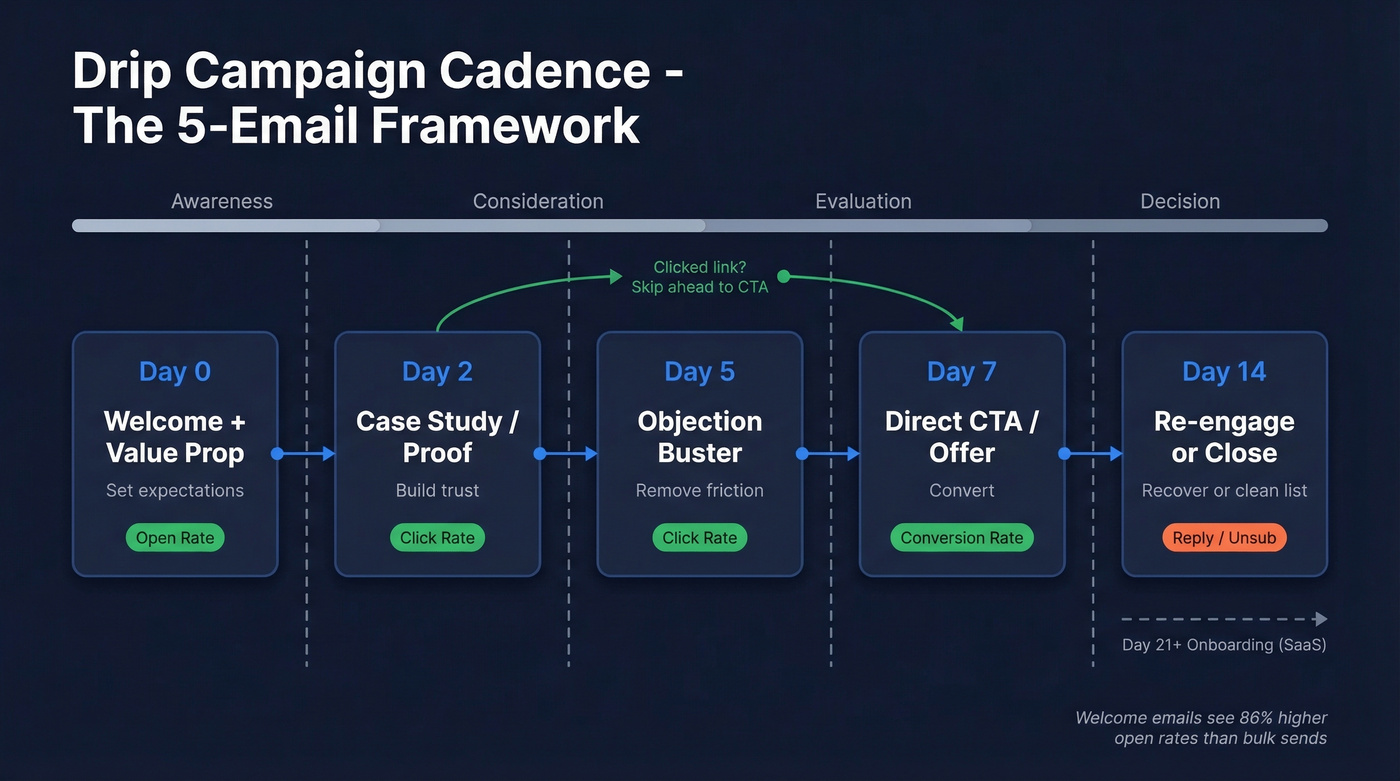
Most drip guides hand you vague advice about "nurturing." Here's a cadence you can actually run, mapped to the buyer journey: Awareness on Day 0, Consideration on Days 2-5, Evaluation on Days 5-7, Decision on Days 7-14.
| Day | Email Focus | Goal | Key Metric |
|---|---|---|---|
| 0 | Welcome + value prop | Set expectations | Open rate |
| 2 | Case study / proof | Build trust | Click rate |
| 5 | Objection buster | Remove friction | Click rate |
| 7 | Direct CTA / offer | Convert | Conversion rate |
| 14 | Re-engage or close | Recover or clean | Reply / unsub |
Day 0 fires immediately - welcome emails see 86% higher open rates and 196% higher click rates than bulk sends. Days 2 and 5 build the case while interest is warm. Day 7 is where you ask for the conversion. Day 14 is cleanup: re-engage or remove contacts so they don't drag down your sender reputation. For SaaS products, tack on a Day 21+ onboarding sequence after conversion.
Add branching logic where you can. If someone clicks your Day 2 case study link, skip the objection buster and move them straight to the CTA. If they don't open Day 5, send a different subject line 48 hours later. A/B test the delays - 1 day vs. 3 days between emails will shift conversion rates. These small timing tweaks are among the most overlooked drip email tips, yet they consistently move the needle more than subject line changes alone.
2026 Benchmarks Worth Knowing
You can't optimize what you don't measure against.
| Metric | All Industries | E-commerce | SaaS | Non-profits |
|---|---|---|---|---|
| Open rate | 43.46% | 32.67% | 39.31% | 52.38% |
| Click rate | 2.09% | 1.07% | 1.15% | 2.90% |
| CTOR | 6.81% | - | - | - |
| Unsub rate | 0.22% | - | - | - |
MailerLite benchmarks, 3.6M campaigns, Dec 2024-Nov 2025. Apple Mail Privacy Protection inflates open rates.
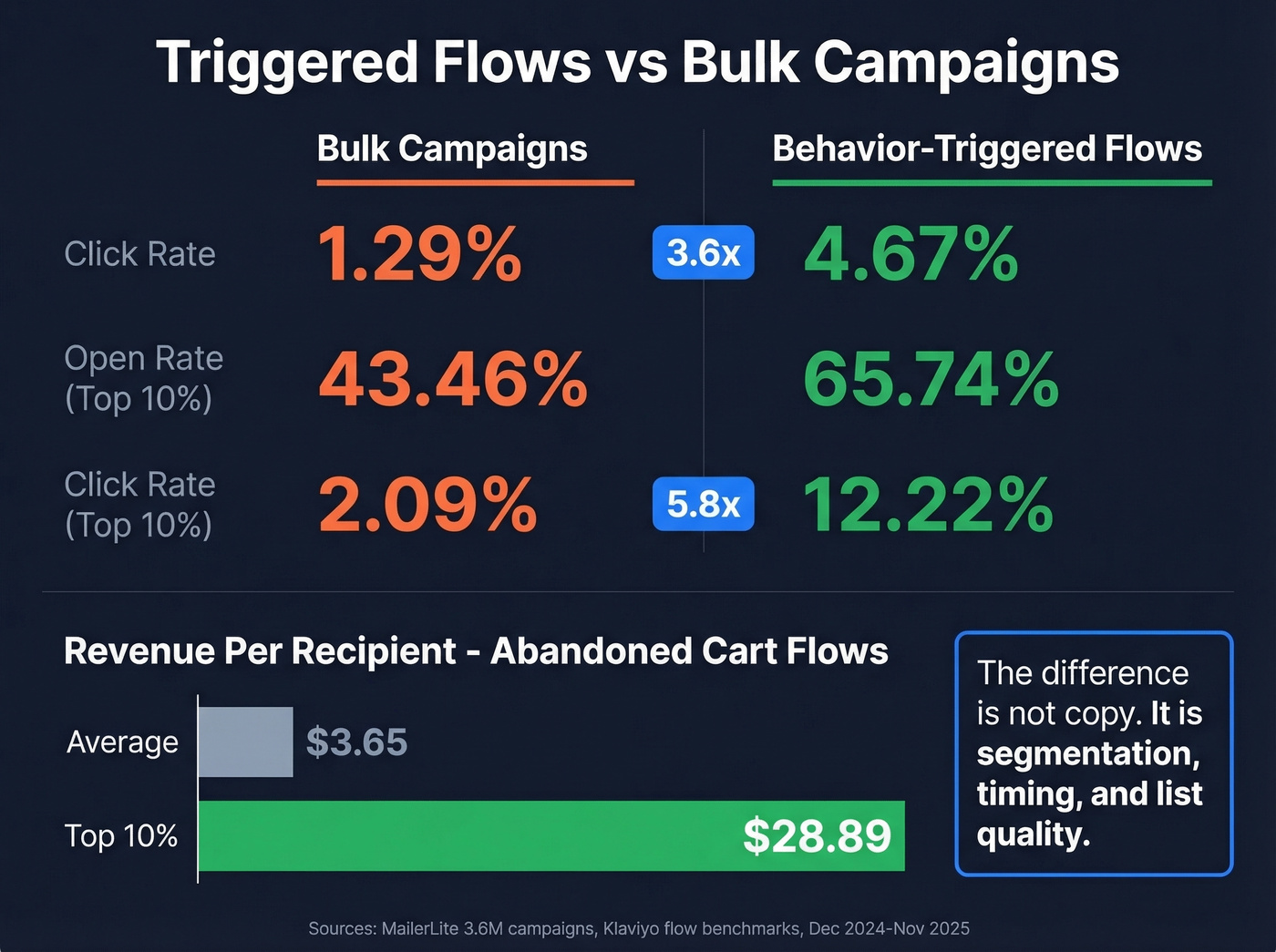
Behavior-triggered flows generate 4.67% click rates vs 1.29% for bulk campaigns. Top 10% automated flows hit 65.74% open rates and 12.22% click rates. The revenue-per-recipient gap is staggering: abandoned cart flows generate $28.89 per recipient for top performers versus $3.65 average, per Klaviyo's flow benchmarks. The difference isn't copy. It's segmentation, timing, and list quality.

The 8x revenue gap between top and average drip campaigns? It starts with list quality. Prospeo delivers 98% verified emails on a 7-day refresh cycle, so every contact in your drip sequence is real, current, and reachable. No bounces dragging down your sender reputation.
Stop dripping into the void. Start with emails that actually land.
Segment Before You Drip
Segmented campaigns generate 760% more revenue than generic blasts. Personalized subject lines alone lift open rates by 26% . Yet most teams still segment by "industry" and call it a day.
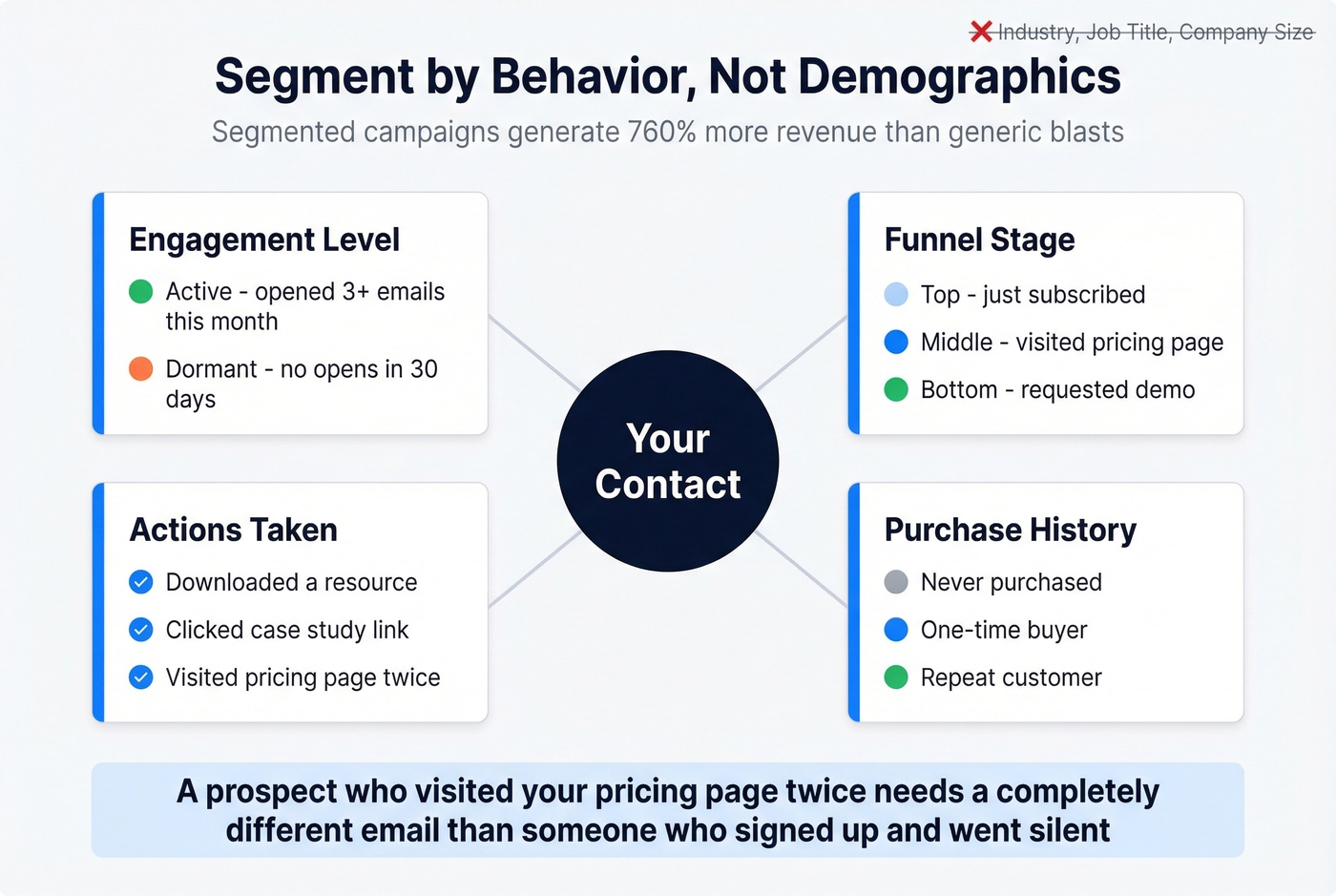
Here's the thing: behavior beats demographics every time. The dimensions that actually move numbers are engagement level (active vs. dormant), purchase or conversion history, funnel stage, and specific actions taken - downloading a resource, visiting the pricing page, opening the last three emails. Tag these events in your automation platform and use them as flow triggers. A prospect who visited your pricing page twice this week needs a fundamentally different email than someone who signed up and went silent, and treating them the same is one of the most expensive mistakes we see teams make. Getting segmentation right is the foundation of any effective drip sequence.
The B2B Cold Outreach Playbook
Cold drip campaigns play by different rules than marketing automation. We've seen teams with brilliant messaging land in spam because they skipped the technical foundation, and in our experience, the infrastructure matters twice as much as the copy.
If your average deal size is under $5K, you probably don't need a complex 8-email cold sequence. Three well-timed, well-targeted emails to verified contacts will outperform a longer sequence sent to a messy list. Every single time.
Start with the deliverability checklist:
- Buy 2-3 secondary domains ($10-15 each) - never cold email from your primary domain
- Set up Google Workspace ($6/mo per account) with SPF/DKIM/DMARC configured
- Warm up for 14-21 days before sending a single cold email
- Validate every email address before it enters a sequence
- Start at 10 emails/day per account, ramp to a 50/day cap
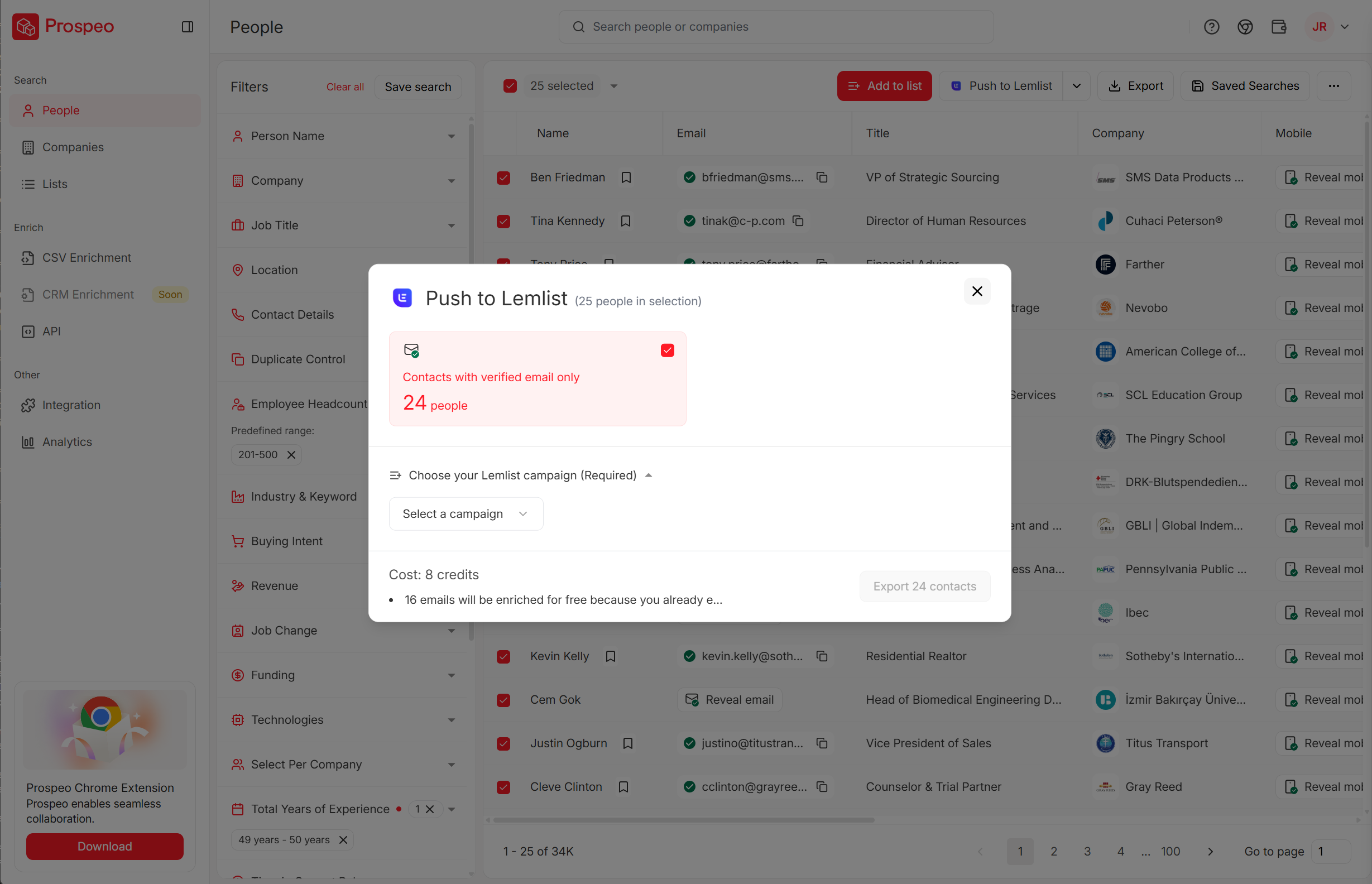
That validation step is non-negotiable. One practitioner on r/coldemail reported deliverability jumping from 60% to 92% after adding email verification to their workflow. Prospeo's email finder returns 98% accurate emails with real-time verification built in, and it plugs directly into Instantly, Smartlead, and Lemlist so validated contacts flow straight into your sending tool.
For the actual sequence, follow a Day 1/4/8/14 cadence with 4-7 days between touches. B2B cold benchmarks run 40-60% open rates, 3-8% reply rates, and 0.5-2% meeting booking rates. Remember: 80% of meetings come from follow-ups 2-4, not the first email. Don't sleep on win-back sequences either - re-engaging churned prospects at 3 or 6 months is one of the highest-ROI drips you can run.
Best Drip Campaign Tools
| Tool | Starting Price | Free Tier | Best For |
|---|---|---|---|
| Prospeo | ~$0.01/email | 75 emails + 100 extension credits/mo | Cold drip data + verification |
| ActiveCampaign | $15/mo | No | Deep automation + CRM |
| Brevo | $9/mo | 300 emails/day | Budget multichannel |
| MailerLite | $10/mo | 500 contacts | Simple and affordable |
| Klaviyo | $20/mo | Limited | Ecommerce (Shopify) |
| Mailchimp | $13/mo | 500 contacts | Beginners, small lists |
| Omnisend | $16/mo | Limited | Ecommerce + SMS |
| Instantly | ~$30/mo | No | Cold email + warmup |
ActiveCampaign wins on power, though the learning curve is steep and pricing ramps fast with contacts. Brevo wins on value - the consensus on r/MarketingAutomation backs this up. For ecommerce flows, Klaviyo is the answer, full stop (just know the editor feels dated). For B2B cold outreach, pair Prospeo for data with Instantly for sending - teams that separate their data tool from their sending tool consistently get better results than all-in-one platforms.
Skip Mailchimp if you need anything beyond basic newsletters. Its automation builder hasn't kept pace, and you'll outgrow it fast.
Mistakes That Kill Drip Campaigns
Let's be honest - most drip campaigns fail for boring, preventable reasons. Not bad copy. Bad plumbing.
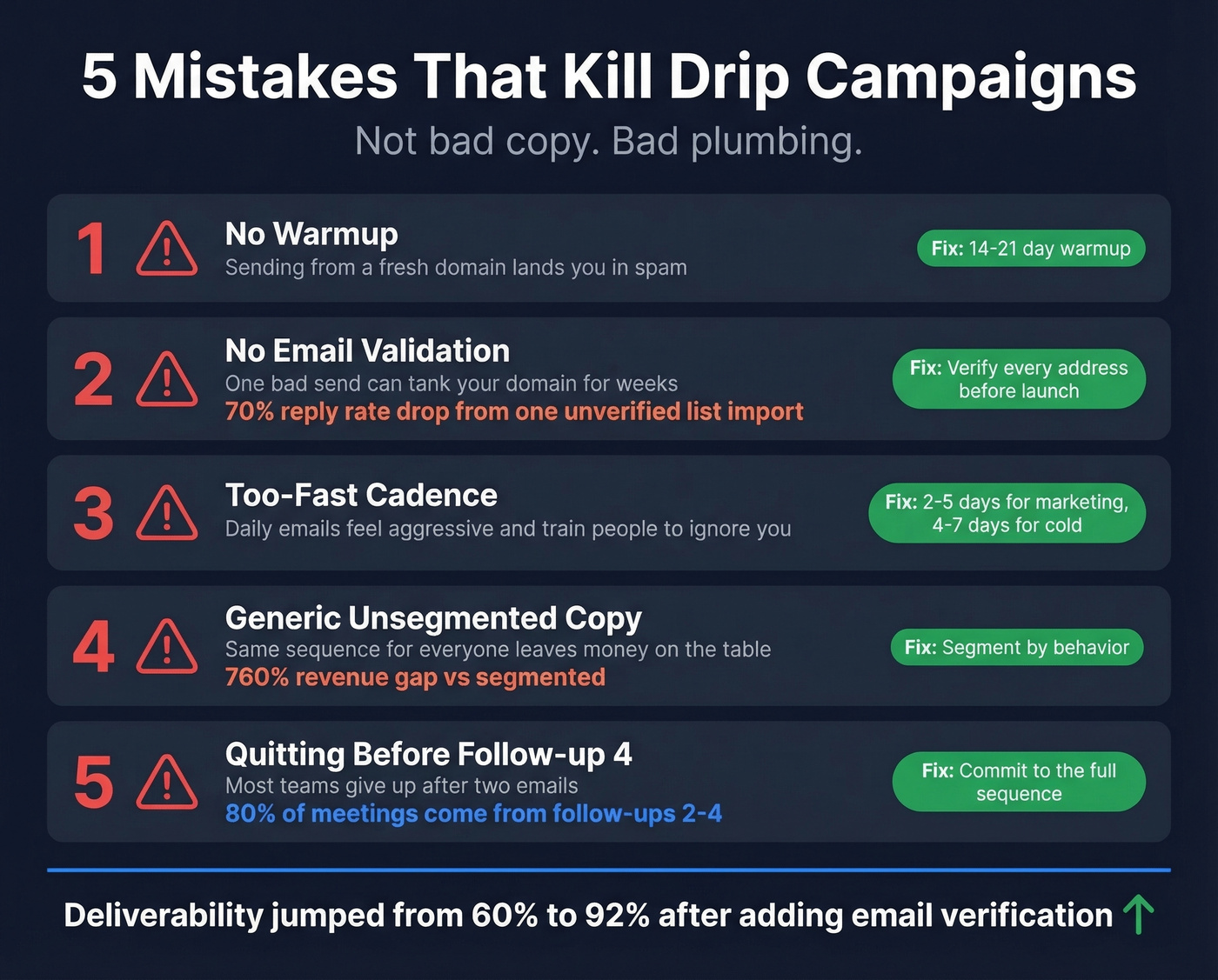
- No warmup. Sending cold emails from a fresh domain is the fastest way to land in spam. Budget 14-21 days before your first real send.
- No email validation. Verify every address before every launch. One bad send can tank your domain for weeks. We watched a client's reply rate drop 70% overnight because they imported an unverified list from a trade show - it took three weeks to recover.
- Too-fast cadence. Emailing daily feels aggressive. Space touches 2-5 days apart for marketing drips, 4-7 days for cold.
- Generic, unsegmented copy. If everyone gets the same sequence, you're leaving 760% revenue on the table.
- Quitting before follow-up 4. 80% of meetings come from follow-ups 2-4. Most teams give up after two emails. Don't be most teams.
You just built a cold drip cadence with perfect timing and sharp copy. Now send it to contacts that exist. Prospeo's real-time email verification plugs directly into Instantly, Smartlead, and Lemlist - validated contacts flow straight into your sequences at $0.01 per email.
Go from 60% deliverability to 92% before your first drip fires.
FAQ
How many emails should a drip campaign have?
Three to seven emails over 7-21 days works best. Start with five using the Day 0/2/5/7/14 framework above, then A/B test adding or removing touches based on your click and conversion rates.
What's a good open rate for drip emails?
Automated drip flows average 48.57% open rates; top 10% hit 65.74%. If you're below 30%, fix deliverability and list hygiene before tweaking subject lines - bad data is the usual culprit, not your writing.
Do I need a separate domain for cold email drips?
Yes. Always. Cold outreach from your primary domain risks sender reputation for all company email. Buy 2-3 secondary domains at $10-15 each, configure SPF/DKIM/DMARC, and warm them for 14-21 days before sending.
What's a good free tool for building a cold drip list?
Prospeo offers 75 free verified emails and 100 Chrome extension credits per month - enough to test a cold sequence on a small segment. Pair it with a free-tier sender like MailerLite (500 contacts) or Brevo (300 emails/day) to run your first campaign at zero cost.