

Easy Email Verification vs ZoomInfo: Budget Verifier or Enterprise Platform?
Comparing Easy Email Verification to ZoomInfo is like comparing a spell-checker to Microsoft Word. One cleans a list you already have. The other builds the list, layers on buying signals, and charges you $15K+ a year for the privilege. The real question isn't which is "better" - it's whether you need either one at all.
30-Second Verdict
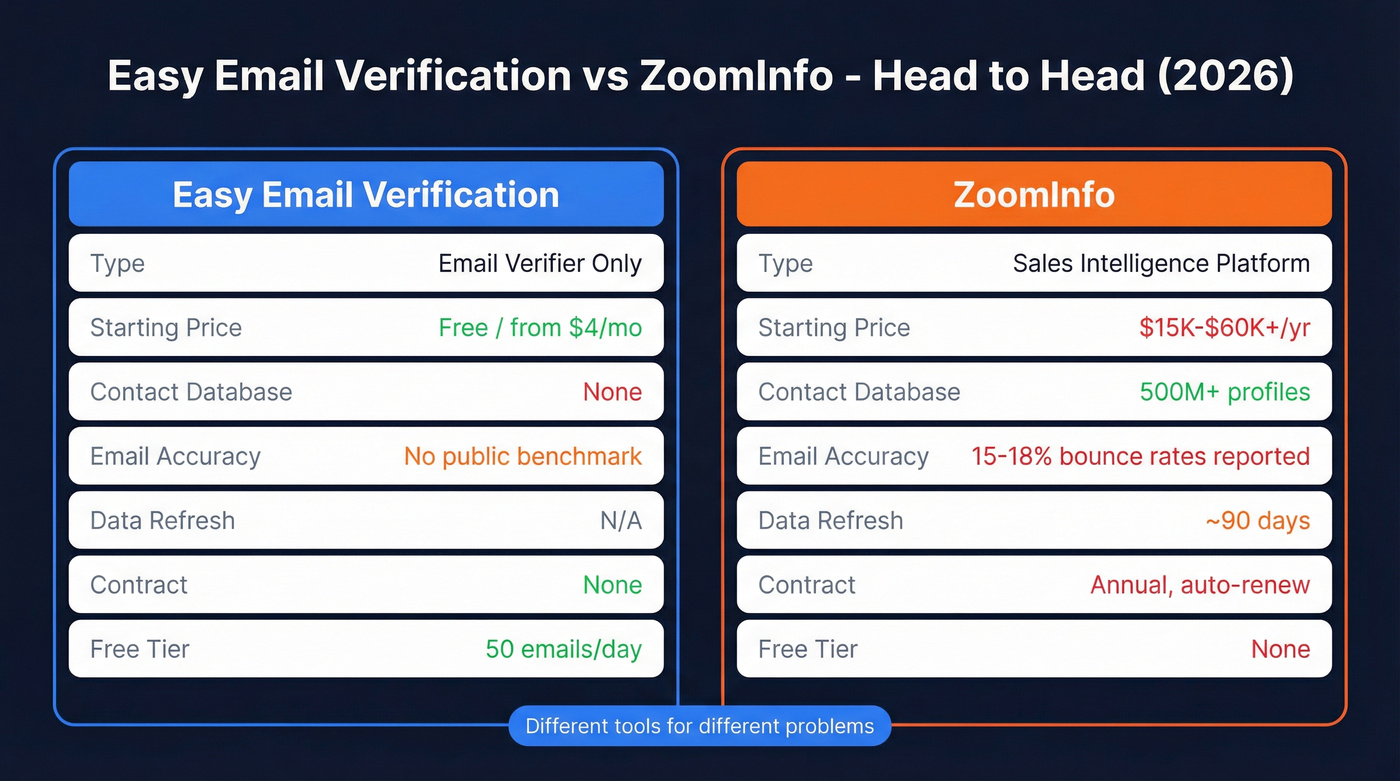
Easy Email Verification wins if you just need a cheap list cleaner. The free tier gives you 50 emails/day, and entry pricing starts as low as $4/month for small volumes.
ZoomInfo wins if you need a full sales intelligence platform and your budget can absorb $15K-$60K+/year.
Feature Comparison
| Feature | Easy Email Verification | ZoomInfo | Prospeo |
|---|---|---|---|
| Type | Email verifier | Sales intelligence platform | B2B data platform |
| Pricing | Free / from $4/mo / deliverability plans from $49/mo | $15K-$60K+/yr | Free / ~$0.01/email |
| Database | None (verifier only) | 500M+ contact profiles | 300M+ profiles |
| Email accuracy | No public benchmark | Varies - users report 15-18% bounce rates | 98% verified |
| Data refresh | N/A | ~90 days | 7 days |
| Deliverability tools | IP warmup, DMARC monitoring, blacklist monitoring, inbox placement testing | NeverBounce add-on (~$3K) | Built-in 5-step verification |
| Free tier | 50 emails/day | None | 75 emails/mo |
| Contract | None | Annual, auto-renew | None |
What Easy Email Verification Offers
Use this if you've got an existing list that needs cleaning on a tight budget. The free tier gives you 50 verifications per day - enough for a solo founder running small campaigns.
On the low end, pricing starts around $4/month for 500 emails. Want the full deliverability toolkit? Subscription tiers jump to $49/month (Basic), $99/month (Advanced), $249/month (Premium), and $499/month (Enterprise). The tool checks format, domain, MX records, and SMTP responses in real time, and it's GDPR compliant with a REST API. Beyond verification, there's IP warmup, DMARC monitoring, blacklist monitoring, and inbox placement testing. Integrations include ActiveCampaign and Zapier.
Here's the catch: Easy Email Verification has no major G2 presence, no independent accuracy testing, and essentially zero Reddit discussion. In our research, it didn't show up in any threads recommending or criticizing it. That silence isn't necessarily damning, but it's worth weighing.
Email verification accuracy is harder to prove than vendors suggest. Hunter's own benchmark - which they acknowledge may favor their tool - tested 15 verifiers and found the top accuracy score was just 70%. No verifier is perfect, and the ones that can't prove their numbers deserve extra scrutiny.
If you're comparing verifiers specifically, see our roundup of Bouncer alternatives.

No verifier catches everything - Hunter's own benchmark tops out at 70%. Prospeo skips the verify-after-export step entirely. Every email passes a 5-step verification process before it reaches you, refreshed every 7 days - not 90. That's 98% accuracy at ~$0.01/email.
Stop cleaning bad data. Start with data that's already clean.
What ZoomInfo Gets Right (and Wrong)
ZoomInfo isn't really an email verification tool. It's an enterprise sales intelligence platform that happens to include email data, and that distinction matters more than most buyers realize.
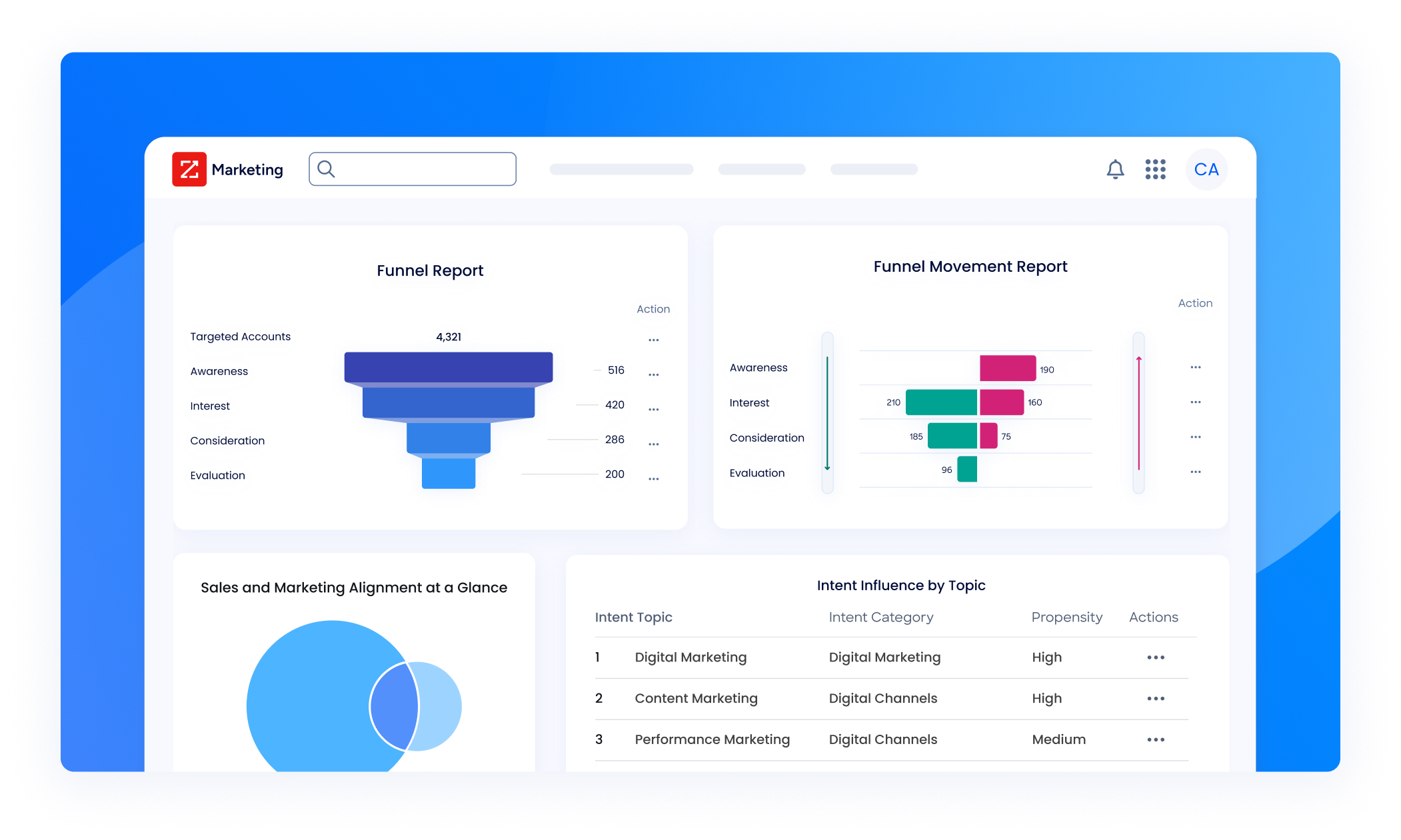
The platform sits on 500M contact profiles and 100M company profiles. It's designed for enrichment and workflows through deep integrations, and it carries a 4.5/5 rating on G2 across 9,000+ reviews. For enterprise sales orgs that need intent signals, org charts, and technographic data, nothing else matches its breadth.
But the email data? That's where things get rough. ZoomInfo's update cycle runs about 90 days. One Reddit user reported 15-18% bounce rates using ZoomInfo for local business outreach, blaming pattern-guessed emails that didn't match real inboxes. We've seen this pattern repeatedly - teams export thousands of contacts, skip verification, and torch their sender reputation in a single campaign. Deliverability experts at Suped explicitly recommend running ZoomInfo exports through an external verifier 24-48 hours before sending.
And the pricing stings. Professional starts around $15K/year. Advanced typically lands around $24K-$30K/year. Add NeverBounce verification, extra credits, and seats, and real-world costs hit $30K-$60K+. Renewal increases of 10-20% are common. Data destroy clauses mean you might need to delete ZoomInfo-sourced contacts if you cancel.
Let's be honest: ZoomInfo is still the best all-in-one enterprise sales platform. But most teams paying for it don't use half the features. They just need accurate emails and phone numbers, and they're spending $30K+ a year for the privilege of still needing a separate verifier on top.
Verifier vs. Data Platform: The Real Question
Comparing a standalone verifier to ZoomInfo head-to-head doesn't work because they solve fundamentally different problems. One cleans emails you already found. The other finds the emails in the first place.
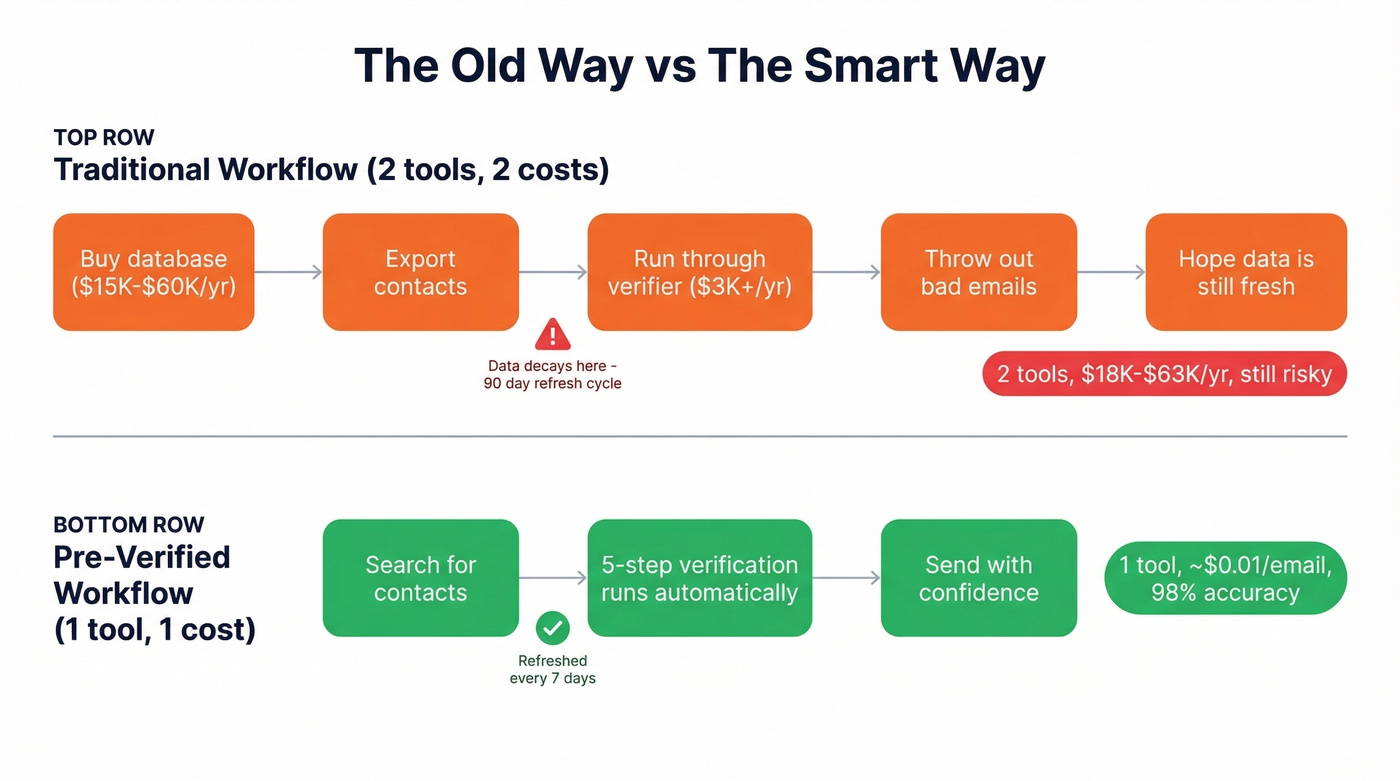
Both approaches share a "buy data, then verify data" workflow that's increasingly outdated. You pay for a database, export contacts, run them through a verifier, throw out the bad ones, and hope the good ones are still accurate by the time your sequence fires. That's two tools, two costs, and a gap where data decays between steps.
Best practice is to verify 24-48 hours before sending. But if your data source refreshes every 90 days, you're fighting entropy the entire time.
The smarter play is data that arrives pre-verified.
Why Pre-Verified Data Eliminates the Debate

At roughly $0.01 per email with a free tier of 75 emails and 100 Chrome extension credits per month, there's no contract and no sales call required. You're not paying $15K+ for a platform and then another ~$3K for verification on top.
If you're building lists from scratch, compare options in our guide to sales prospecting databases.
You're comparing a $4/mo verifier to a $30K/yr platform - but both workflows still require you to verify before sending. Prospeo gives you 300M+ profiles with built-in verification, intent data, and direct dials. No separate tools. No annual contracts.
One platform, one cost, zero bounce rate surprises.
When to Use Each
Easy Email Verification fits if you already have lists and just need a budget cleaner. You're spending under $50/mo and volume is low. It does one thing, and for the price, that's fine.
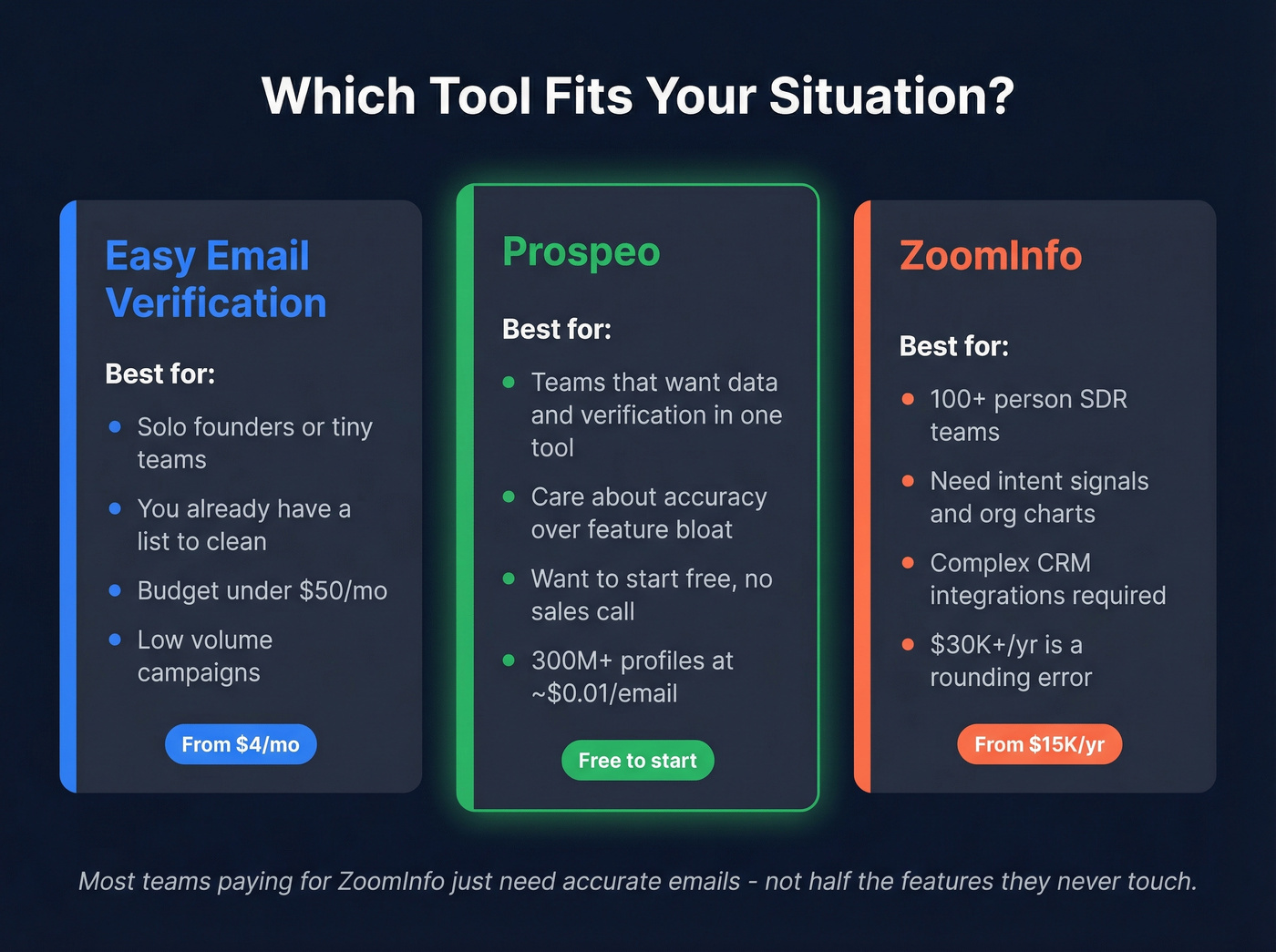
ZoomInfo makes sense for enterprise sales orgs that need buying signals, enrichment workflows, and deep CRM integrations - and where $30K+/year is a rounding error in the tech stack budget. If you're running a 100-person SDR team with complex territory mapping, this is still the platform to beat.
For everyone else? Pre-verified emails without a separate verifier. You care about data accuracy more than feature bloat, and you'd rather start free than negotiate an annual contract.
FAQ
What's the difference between Easy Email Verification and ZoomInfo?
Easy Email Verification is a standalone list cleaner with a free tier of 50 emails/day and entry pricing from $4/month. ZoomInfo is an enterprise sales intelligence platform providing contact data, intent signals, and enrichment workflows for $15K-$60K+/year. They solve entirely different problems - one verifies emails you already have, the other sources them.
Do I still need a verifier if I use ZoomInfo?
Yes. ZoomInfo's ~90-day update cycle means contact data decays before you send. Deliverability experts recommend verifying ZoomInfo exports 24-48 hours before launching campaigns to catch stale emails and spam traps. Budget an extra $3K/year for NeverBounce or a third-party tool.
Can a single tool replace both a verifier and a data provider?
Platforms with built-in verification on short refresh cycles deliver contacts that are already clean. Prospeo refreshes every 7 days with 5-step verification - Snyk cut bounce rates from 35-40% to under 5% this way, eliminating the separate verification step entirely.