

How to Find the Domain of an Email Address: Every Method Explained
"How do I find the domain of an email address?" sounds like a simple question. It isn't. Depending on what you actually need, the answer is either a one-line formula, a DNS lookup, or a full-blown prospecting tool - and most guides only cover one of those. We're covering all three.
What "Domain" Actually Means
Every email address splits at the @ sign. Everything before it is the local-part (the mailbox identifier), and everything after is the domain (the mail server). In jane@acme.com, the domain is acme.com. Per RFC 5321, the local-part caps at 64 characters and the domain at 255. When you hit send, your mail server queries the domain's MX records to figure out where to route the message.
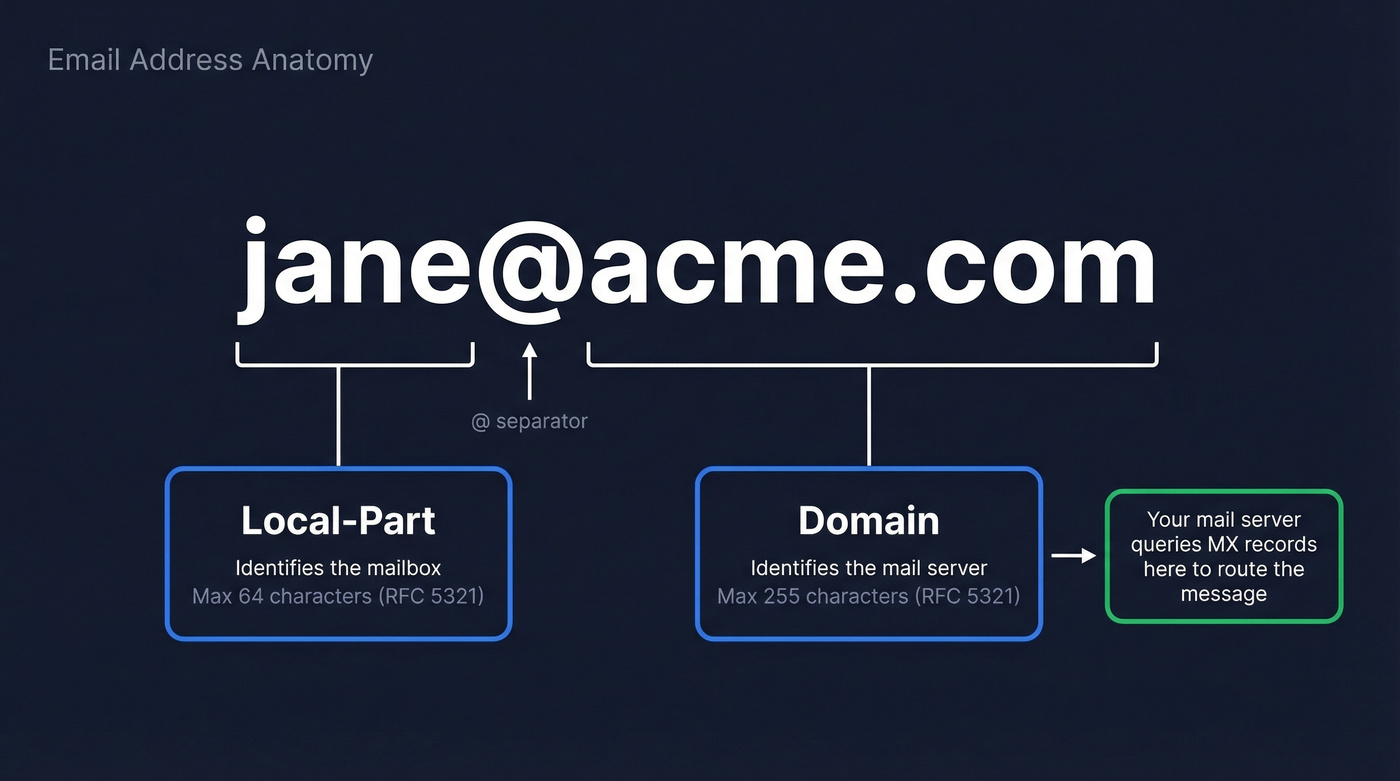
That's the anatomy. Now let's get to the practical stuff.
Pick Your Path
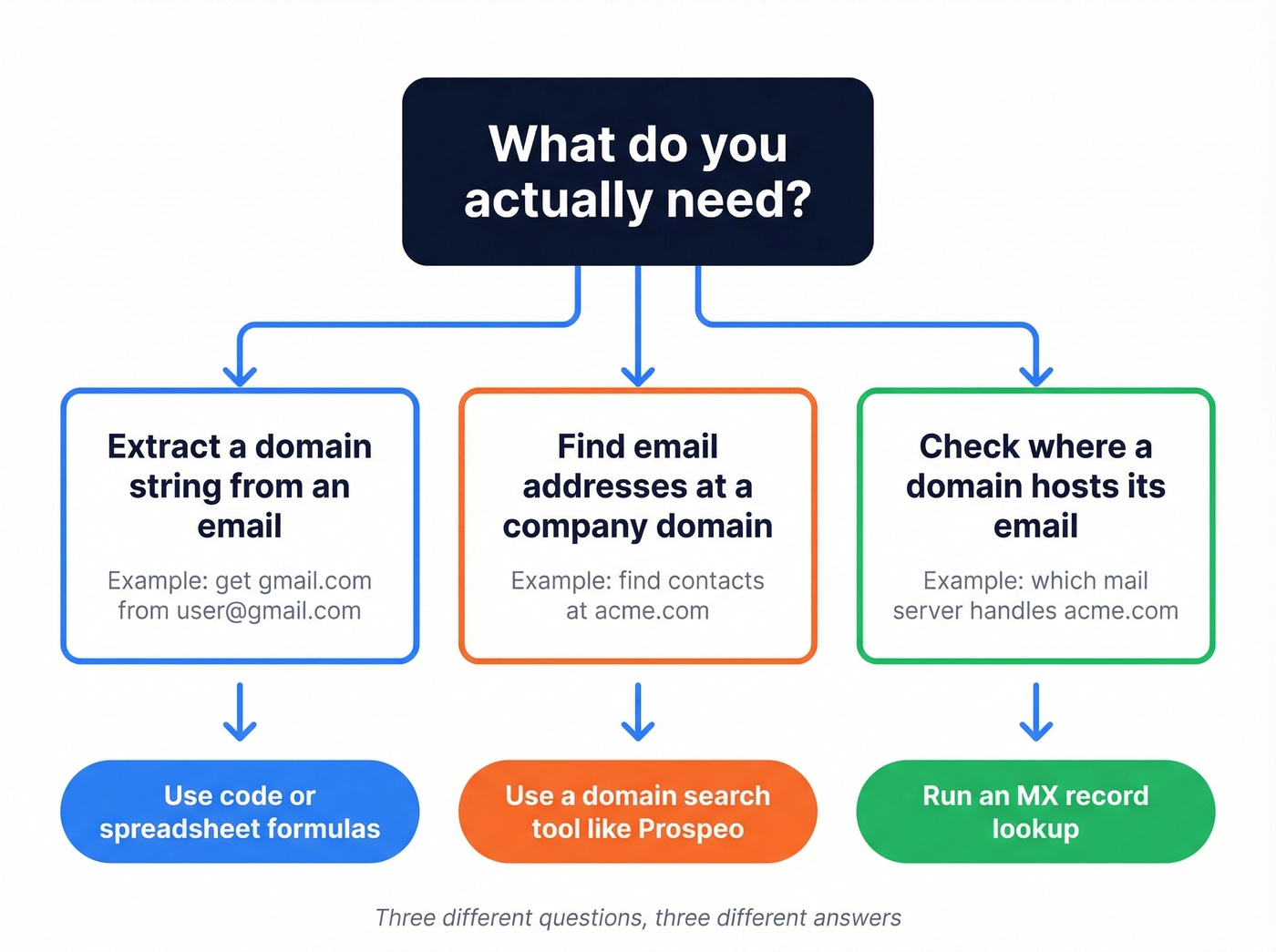
- Need to extract "gmail.com" from an email string? Jump to the code/formula section below.
- Need to find email addresses at a company domain? Skip ahead to the tools section.
- Need to check where a domain's email is hosted? Head to the MX lookup section.
Extract the Domain from an Email String
Excel & Google Sheets
If you're on Microsoft 365 or Google Sheets, TEXTAFTER is the cleanest option:
=TEXTAFTER(A1, "@")
On older Excel versions without TEXTAFTER, the classic fallback stacks three functions:
=RIGHT(A1, LEN(A1) - FIND("@", A1))
TEXTAFTER is just less painful to read. Either works.
Python
domain = [email.split('@')[1]](https://docs.python.org/3.6/library/stdtypes.html)
For messy data where you want a regex safety net:
domain = re.search(r'@([a-zA-Z0-9.-]+)', email).group(1)
JavaScript & PHP
const domain = email.split('@')[1];
$domain = substr($email, strpos($email, '@') + 1);
SQL (MySQL & PostgreSQL)
-- MySQL
SELECT [SUBSTRING_INDEX](https://dev.mysql.com/doc/refman/9.6/en/string-functions.html)(email, '@', -1) AS domain FROM contacts;
-- PostgreSQL
SELECT [split_part](https://www.postgresql.org/docs/9.1/functions-string.html)(email, '@', 2) AS domain FROM contacts;
Edge Cases Worth Knowing
Always TRIM() your input first. Trailing whitespace silently breaks every method above, and you won't get an error - you'll just get wrong output. Also validate that the string actually contains @ before splitting, or you'll get the entire string back instead of a domain. We've seen entire CRM exports corrupted by this one oversight.

Extracting domains from email strings is step one. The real challenge is going the other direction - turning a company domain into verified contact emails. Prospeo returns up to 50 verified emails per domain search, each run through 5-step verification that catches spam traps and honeypots. 98% accuracy means your sender reputation stays intact.
Get 75 verified emails free this month - no credit card, no sales call.
Find Email Addresses at a Company Domain
Now the reverse problem: you have a domain and need the people behind it. This is the question that comes up constantly in r/sales and cold email communities - bulk domain-to-email workflows without CRM bloat.
Free Manual Methods
Google operators still work surprisingly well. Try "@acme.com" in quotes to surface indexed pages containing that domain's email addresses, or use site:acme.com "email" "contact" to find contact pages directly. For a specific person, guess the pattern - firstname.lastname@, first@, flastname@ are the most common formats.
But here's the thing: never send to a guessed address without verifying it first. One bad guess tanks your sender reputation, and recovering from that is a months-long headache.
Tools That Do It at Scale
For anything beyond a handful of lookups, you need a dedicated domain search tool. Prospeo's domain search returns up to 50 verified emails per credit with 98% accuracy, running each address through a 5-step verification process that handles catch-all domains, spam traps, and honeypots. The free tier gives you 75 emails per month - no credit card required.
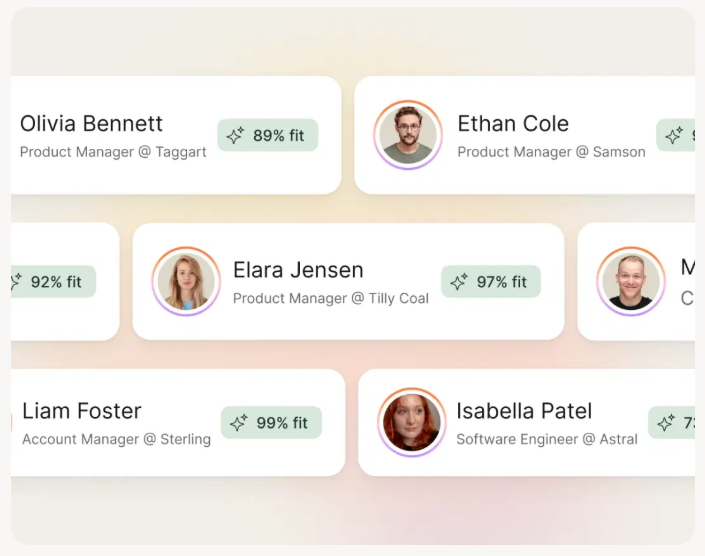
Hunter's Starter plan runs $34/mo billed annually. Apollo starts at $59/mo, and independent benchmarks put Apollo around 91% accuracy.
Let's be honest about something we've learned from running our own outbound: chaining multiple sources through a waterfall enrichment workflow yields roughly 30% more emails than relying on any single provider. No one tool covers every domain well. If your outbound volume justifies it, use two.
| Feature | Prospeo | Hunter | Apollo |
|---|---|---|---|
| Free tier | 75 emails/mo | 50 searches/mo | Free tier available |
| Paid from | ~$0.01/email | $34/mo | $59/mo |
| Credits per domain search | 1 credit (up to 50 emails) | 1 credit per email found | Bundled into plan |
| Verification | Built-in, 5-step | Built-in | Built-in |
| Accuracy | 98% | ~90-95% | ~91% |
Nearly 28% of B2B emails are invalid or risky, and guessed addresses without verification are the fastest way to torch your domain reputation. Prospeo refreshes its 143M+ verified emails every 7 days - not the 6-week industry average - so the contacts you pull are current when you actually hit send.
Stop sending to dead inboxes. Verify before you wreck your domain.
Look Up Where Email Is Hosted
If you need to know which mail server handles a domain's email - say, for email deliverability troubleshooting or verifying a prospect's email infrastructure - run an MX lookup:
nslookup -q=mx acme.com
This returns the domain's mail exchange records in priority order. For a web-based alternative, MXToolbox does the same thing and checks each MX record's IP against 105 DNS-based blacklists. That blacklist check is genuinely useful when you're diagnosing why emails to a specific domain keep bouncing. For domain ownership info, a WHOIS lookup fills in the gaps.
Skip this section entirely if you're just trying to extract a domain string or find contact emails. MX lookups are a different animal.
Verify Before You Send
ZeroBounce's 2025 email quality report found that nearly 28% of all emails checked were invalid or risky - up from around 22% two years prior. B2B addresses decay fast. People change jobs, companies rebrand, domains expire.
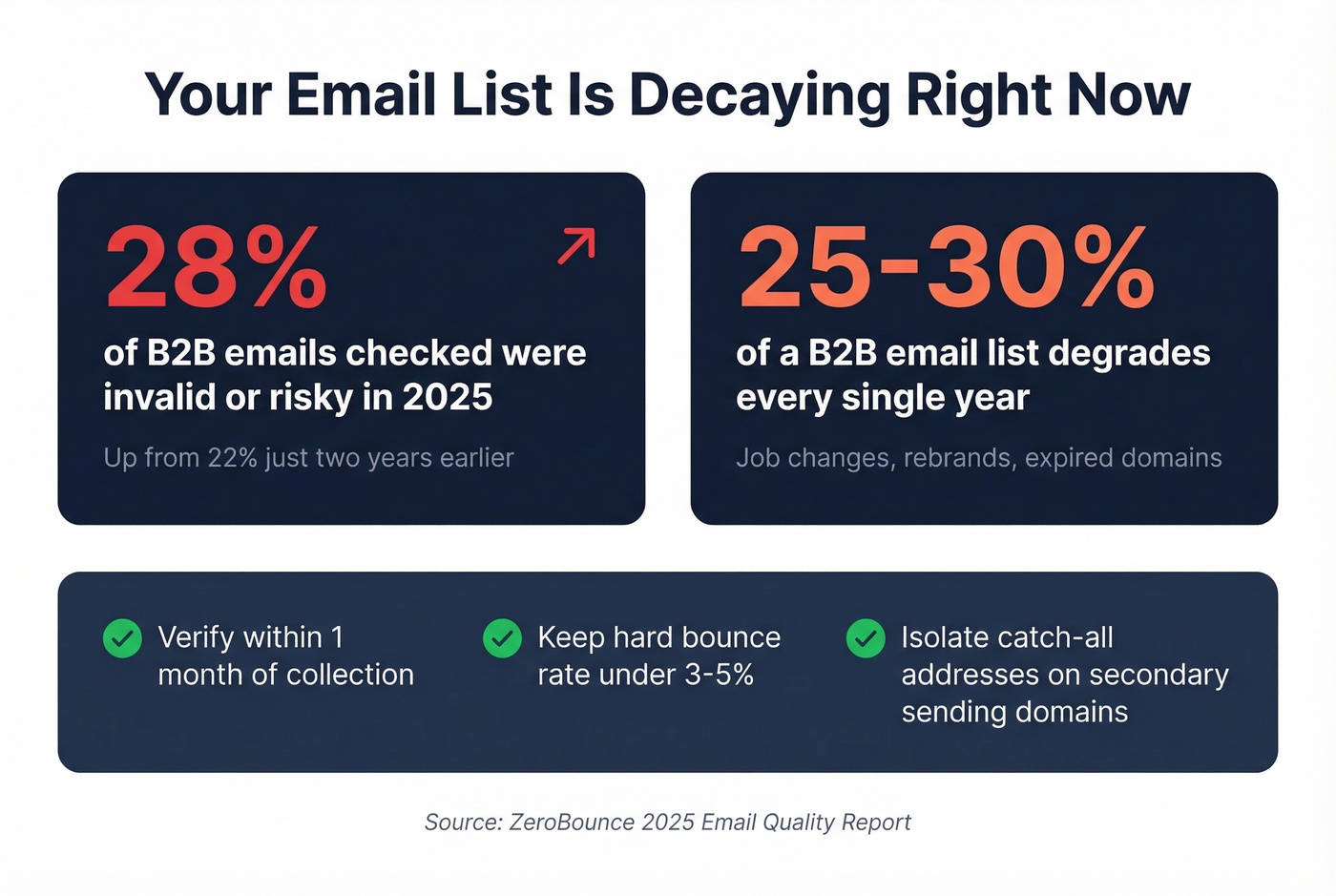
Verify your list within a month of collection and keep hard bounce rates under 3-5%. Separate risky addresses - catch-all domains, graylisted mailboxes - onto secondary sending domains so they don't drag down your primary domain's reputation. I've watched teams nuke a perfectly good domain by mixing unverified catch-all addresses into their main sending flow. Don't be that team.
If you're trying to keep bounce rates down, start with email bounce rate basics and then tighten your sender reputation controls.
FAQ
What's the difference between the local-part and the domain?
The local-part is everything before the @ and identifies the mailbox. The domain is everything after @ and identifies the mail server. In jane@acme.com, jane is the local-part and acme.com is the domain. RFC 5321 limits the local-part to 64 characters and the domain to 255.
Can I find all emails at a domain for free?
Google operators like "@domain.com" surface publicly indexed addresses, and checking company contact pages works for small lists. Prospeo's free tier covers 75 verified emails per month; Hunter offers 50 free searches. Neither covers an entire large organization, but for most prospecting needs they're more than enough without a paid plan.
How often do B2B email addresses go stale?
Roughly 25-30% of a B2B email list degrades per year due to job changes, company restructuring, and domain migrations. Verify close to when you actually send - a massive list built months in advance is already rotting by the time you use it.