

How to Get Customers for Your Online Business - A Stage-by-Stage Playbook
You launched three months ago. You've posted every day, spent $500 on ads, and have 11 customers. The problem isn't effort - it's sequence. Traffic doesn't equal customers: 10,000 visitors who don't trust you convert worse than 100 who do. Customer acquisition costs rose 40-60% between 2023 and 2025, and that trend hasn't reversed, so throwing money at ads without a plan burns faster than ever.
We've watched dozens of founders blow through their first ad budget in a week with nothing to show for it. This playbook breaks acquisition into stages with real CAC benchmarks and break-even timelines so you know exactly where to focus at each phase.
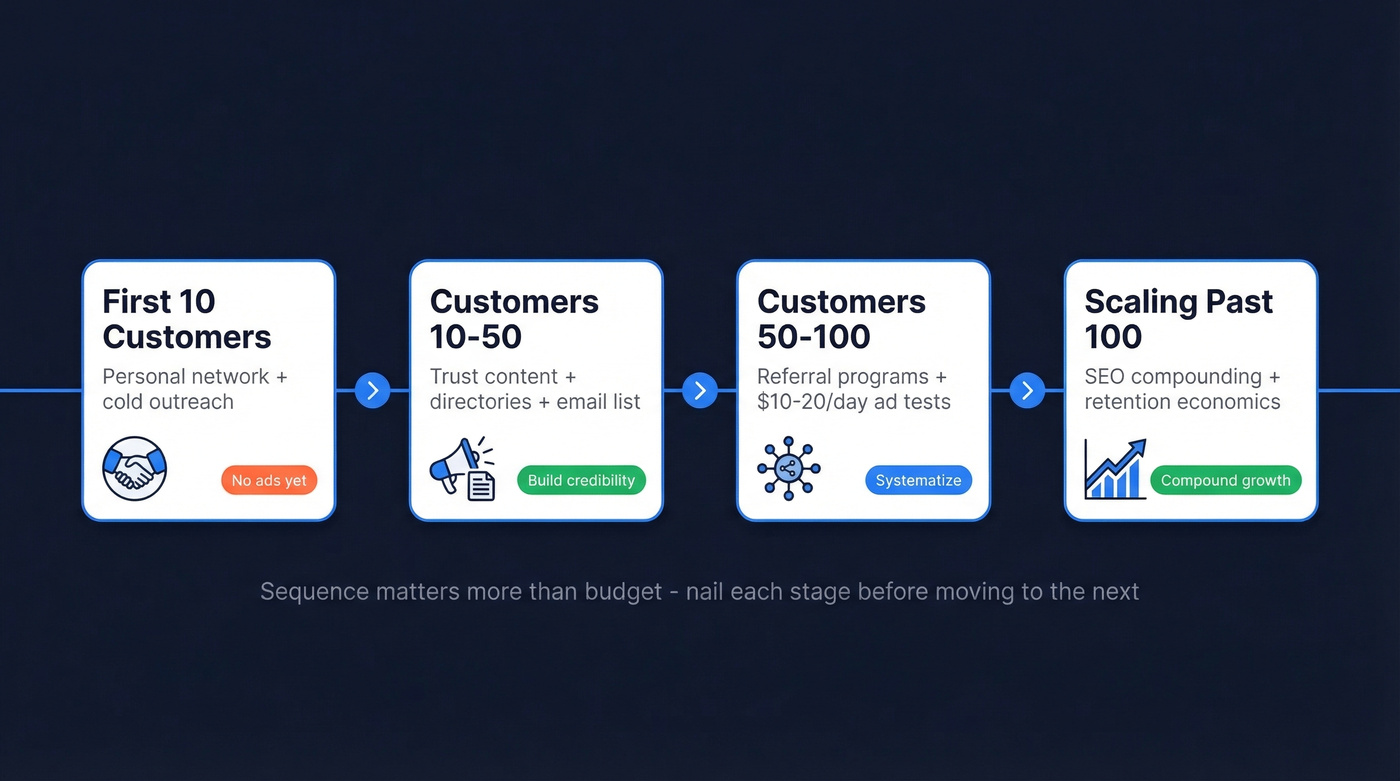
The Quick Version
- First 10 customers: Personal network + cold outreach. Don't touch ads yet.
- 10-50 customers: Content that builds trust + directory listings + start an email list.
- 50-100 customers: Referral programs + small-budget ad tests at $10-20/day.
- Scaling past 100: SEO compounding + retention economics doing the heavy lifting.
What Acquisition Actually Costs
Know your number before you pick a channel. Most ecommerce stores convert around 2-3% of visitors, so 1,000 visitors yields roughly 20-30 customers. That's why channel quality matters more than raw traffic volume.
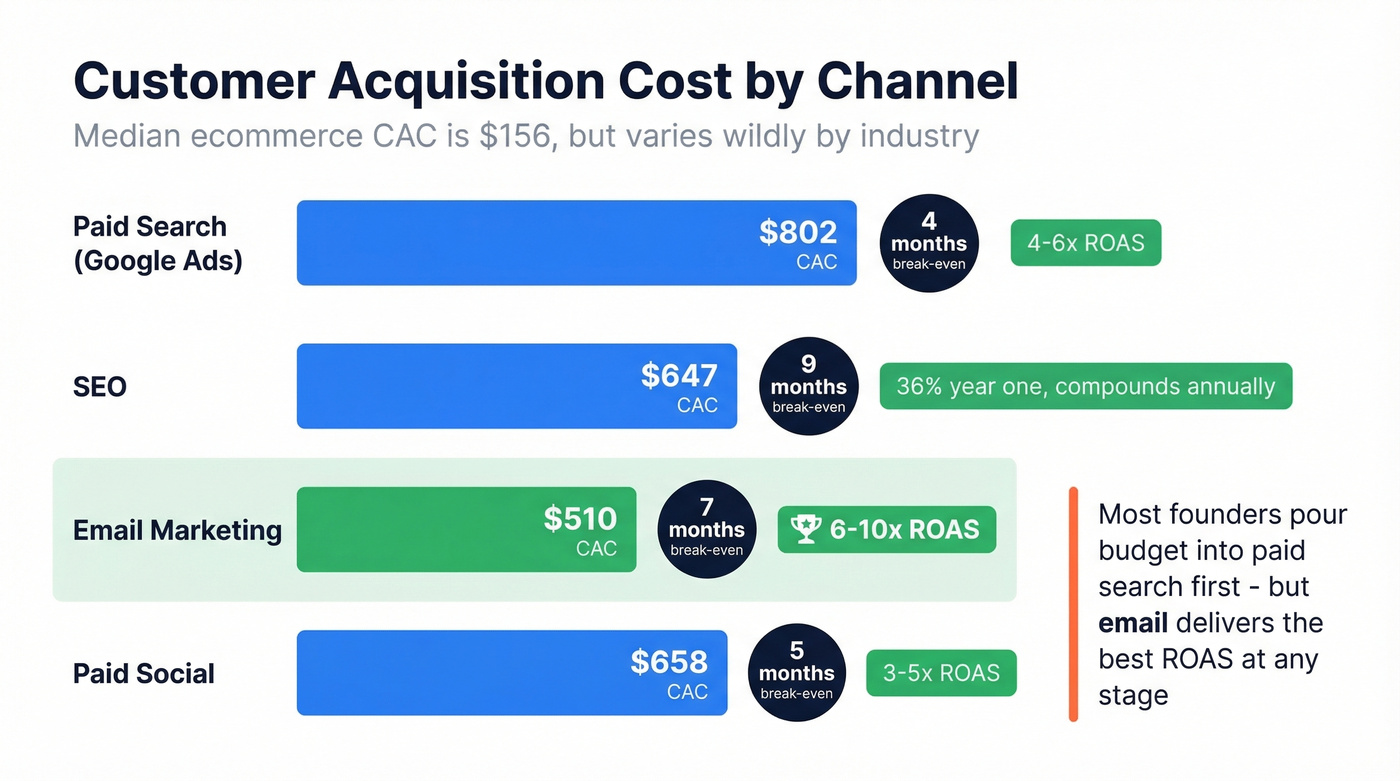
| Channel | Break-Even | Avg CAC | Avg ROI / ROAS |
|---|---|---|---|
| Paid search (Google Ads) | ~4 months | $802 | 4-6x |
| SEO | ~9 months | $647 | 36% year-one, compounds annually |
| ~7 months | $510 | 6-10x | |
| Paid social | ~5 months | $658 | 3-5x |
Paid search bridges the gap while SEO ramps. Email delivers the highest ROAS at any stage. SEO compounds long-term. Paid social wins when you need fast testing and tight audience targeting.
The median ecommerce CAC sits at $156, but that average hides massive variation - consumer electronics can run $750 per customer while marketplace sellers average $72. For SaaS, expect B2B CAC around $273 and B2C around $166. Here's the thing: email marketing delivers the best ROAS at 6-10x, yet most early-stage founders pour their budget into paid search first. That's backwards.
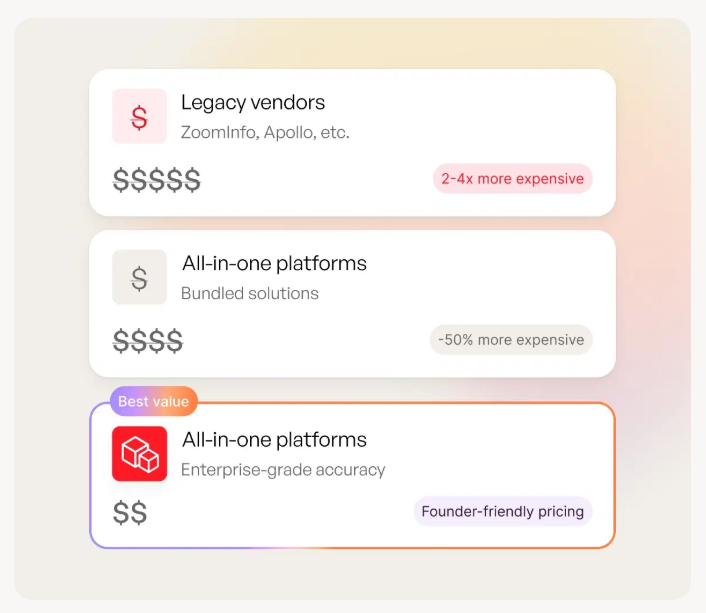

Cold outreach only works when your emails actually land. Prospeo delivers 98% email accuracy with a 5-step verification process, so your first outreach campaigns hit real inboxes - not bounces that torch your domain reputation before you even get started.
Stop guessing at email addresses. Start conversations that convert.
Attracting Your First 100 Customers, Stage by Stage
First 10 Customers - Outreach, Not Ads
Your first 10 customers shouldn't come from ads. They should come from conversations.
Ask your personal network for introductions - not purchases. Participate in niche communities on Reddit, Discord, and industry forums where your buyers already hang out. Send highly researched cold emails where every message shows you understand the recipient's specific problem, not a generic pitch blasted to 500 people. The consensus on r/Entrepreneur is pretty clear: founders who do things that don't scale early on build stronger businesses than those who try to automate from day one.
The biggest mistake we see at this stage is spending on paid ads before 10 people genuinely love your product. One founder shared on Simply Business that their entire ad budget vanished in under a week with almost no sales. Ads amplify what's already working. They don't create product-market fit.
To build your outreach list without guessing at email addresses, tools like Prospeo give you 75 free verified emails per month - enough to validate whether cold outreach works for your business before spending a dollar on anything else.
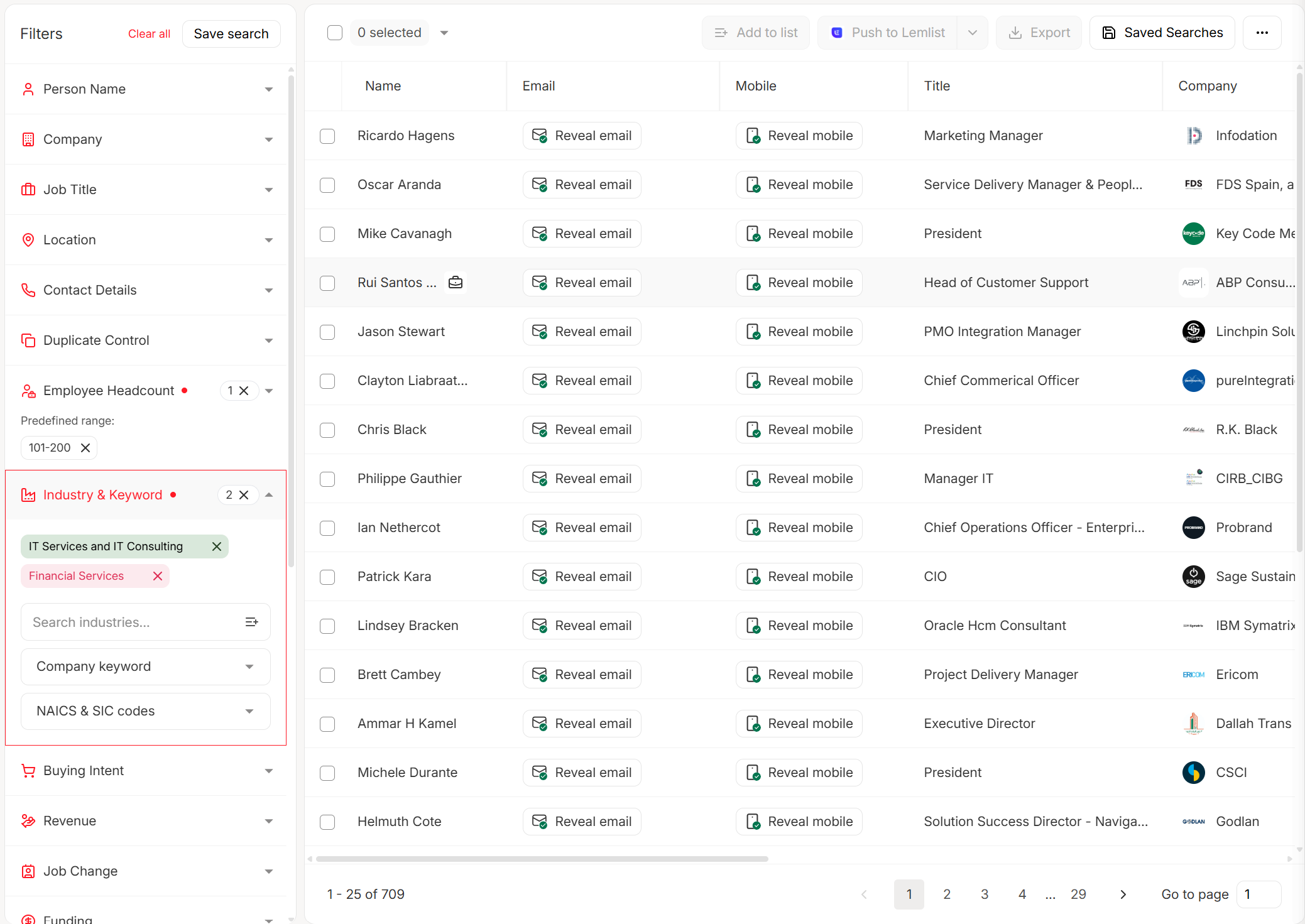
Scaling past 100 customers means your CAC has to drop. Prospeo gives you verified contact data at $0.01 per email - 90% cheaper than legacy providers - so you can run outbound at scale without blowing your acquisition budget on bad data.
Cut your outreach costs before your next ad dollar goes to waste.
10 to 50 Customers - Build Trust Signals
Once you've got 10 customers who genuinely value what you sell, shift to credibility. Publish content using a framework like REAL - Relationships, Education, Amusement, Lead Magnets. Don't optimize for SEO rankings yet; give prospects a reason to trust you. Over 70% of consumers say trusting a brand matters more today than it used to, and that number keeps climbing. One small business went from $1,500/month to $10,000+/month in a single quarter by focusing almost entirely on trust-building content rather than paid channels.
List your product on directories and marketplaces - Product Hunt, Amazon, Etsy, or whatever fits your category. Collect testimonials from your first 10 customers and put them everywhere: homepage, product pages, checkout flow, even your email signature. Make sure your product pages actually convert before you drive more traffic. Clear photos, transparent shipping and returns, and mobile-optimized checkout are table stakes. Start building an email list with a tool like Mailchimp or Klaviyo, even if it's just a simple signup form. Email will become your highest-ROAS channel, but only if you start collecting addresses now.
50 to 100 Customers - Systematize Growth
By 50 customers, you know which messages resonate and which channels convert. Now systematize.
Build a lightweight referral program - even a simple "give $10, get $10" structure works. Referral programs produce some of the lowest CAC in the market, around $150 for B2B SaaS. Pursue partnerships with adjacent businesses too. If you sell project management software, partner with a time-tracking tool for a joint webinar or shared content piece.
Then start small-budget ad tests: $10-20/day on Google Ads, $5-10/day on Meta. Test one platform at a time and consider retargeting visitors who didn't convert the first time - it's almost always cheaper than cold acquisition. If your first-sale cost exceeds 3x your product margin, pause and A/B test your landing pages before scaling spend.
Let's be honest about something most marketing advice glosses over: if your average order value is under $50, you probably can't afford paid acquisition at all until your sales funnel math works. Focus on organic and referral channels instead. Paid ads are a luxury for businesses with proven retention, not a starting point.
Retention Is Your Cheapest Growth Lever
Acquiring a new customer costs 5-25x more than retaining one, and a 5% improvement in retention can lift profits 25-95%. The probability of selling to an existing customer runs 60-70%, compared to just 5-20% for a new prospect. Existing customers are also 50% more likely to try a new product and spend 31% more on average.
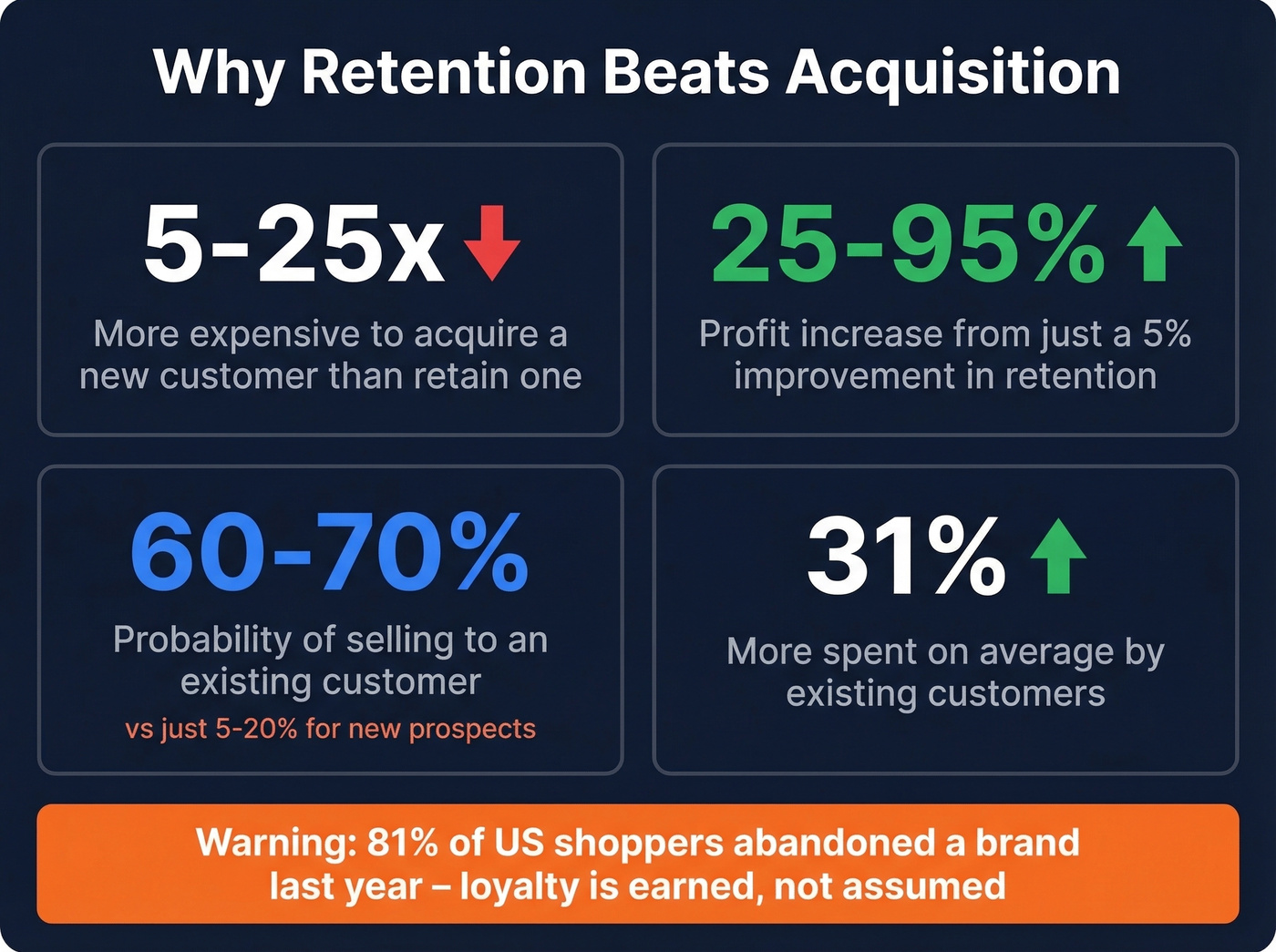
Don't take loyalty for granted. 81% of U.S. shoppers have abandoned brands in the last year. The number-one reason consumers stay loyal is a loyalty program at 41%, ahead of high-quality products at 33% and far ahead of customer service at 8%. In our experience, founders who invest in retention before scaling ads see 2-3x better unit economics within six months. Skip this if you're still under 50 customers - retention optimization matters less when you're still finding product-market fit.
Email Compliance You Can't Skip
Before you send a single marketing email, know that CAN-SPAM violations carry penalties of up to $53,088 per email. Five non-negotiable requirements:
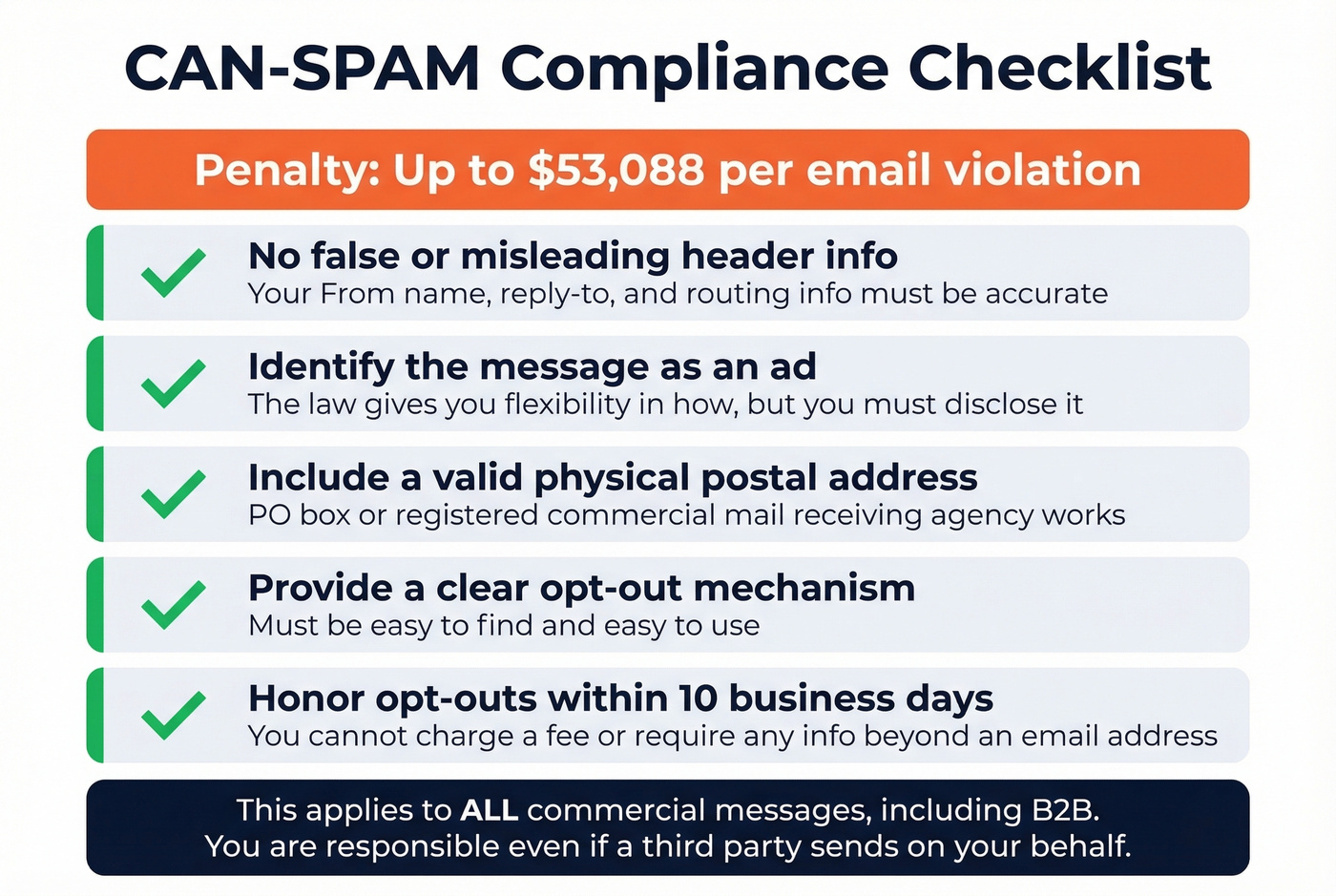
- No false or misleading header information
- Identify the message as an ad
- Include a valid physical postal address
- Provide a clear opt-out mechanism
- Honor opt-out requests within 10 business days
This applies to all commercial messages, including B2B. You're responsible even if a third party sends on your behalf. I've seen founders assume their email platform handles compliance automatically - it doesn't.
FAQ
How much should I spend on ads to start?
Don't spend on ads until at least 10 customers love your product. Then test with $10-20/day on one platform. The median ecommerce CAC is $156 - if your first-sale cost exceeds 3x your product margin, pause and optimize your funnel before scaling further.
What's a good customer acquisition cost?
Ecommerce median is $156; B2B SaaS averages $273. The benchmark that actually matters is your customer lifetime value to CAC ratio, which should be at least 3:1. If you're spending $300 to acquire a customer worth $200, you've got a math problem, not a marketing problem.
Do I need a big budget to get customers online?
No. Your first 50 customers should come almost entirely from free channels - personal outreach, community participation, content, and directory listings. Budget matters less than sequence: nail your conversion rate and retention before you pay for traffic.