

How to Make an Email List in 2026 (With Real Data)
There are 4.5 billion email users worldwide, and email marketing returns roughly $42 for every $1 spent. No algorithm change can tank your reach overnight. No platform can revoke your access to your own subscribers. That's the pitch, and it's true - but most guides on how to make an email list stop at "add a popup and wait." We won't.
This guide covers the numbers, tools, and strategies that actually move the needle, including the B2B prospecting side that almost everyone ignores.
Two Kinds of Email Lists
"How to make an email list" means two very different things depending on who's asking. If you just need a contact group in Gmail or Outlook to email a handful of people at once, that's a five-minute settings task - Google and Microsoft both have straightforward guides for it.
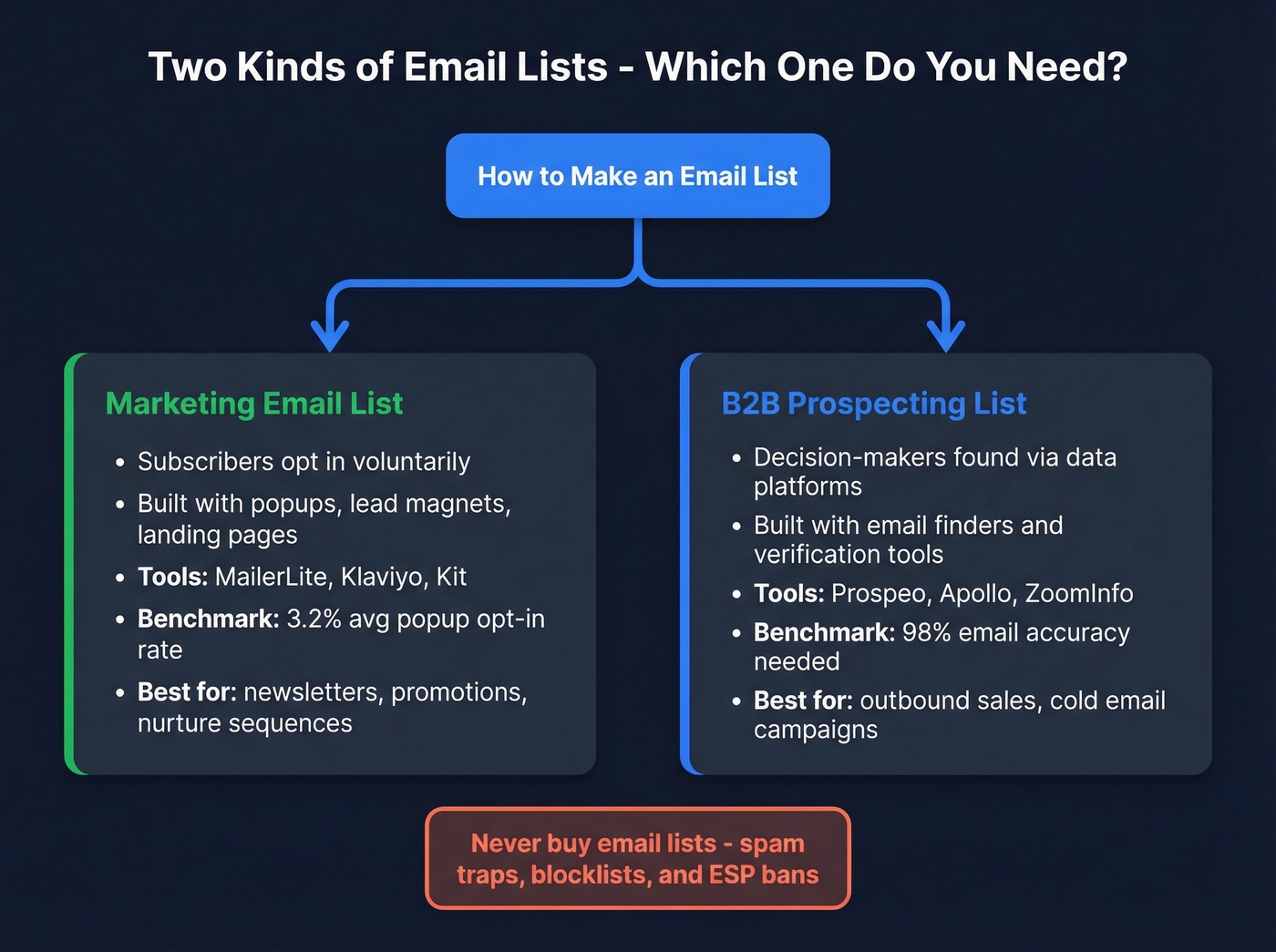
This guide covers the other kind: building a marketing email list of subscribers who've opted in to hear from you, or building a B2B prospecting list of decision-makers you need to reach outbound. The tools, strategies, and benchmarks are completely different for each.
What You Need (Quick Version)
For a marketing email list: Pick an ESP - MailerLite for beginners, Klaviyo for ecommerce, Kit for creators. Create an opt-in form. Offer a lead magnet worth exchanging an email for. Quizzes convert at 30-50%, while a generic "subscribe to our newsletter" sits below 1%. Set up a welcome series. That's the whole playbook. Everything else is optimization.
For a B2B prospecting list: Opt-in forms won't help you here. A VP of Engineering isn't filling out your popup. You need a data platform to find and verify business emails by role, company size, and industry - then push verified contacts into your sequencer.
The 2026 benchmark to know: average popup opt-in rate is 3.2%. The top 10% of forms hit 8.5%+. Your lead magnet matters far more than your form design.
Why an Email List Is Worth Building
Pat Flynn built his Smart Passive Income email list to 200,000+ subscribers. A single broadcast email generated over $60,000 in affiliate earnings. He's attributed more than $1 million in total revenue directly to that list.
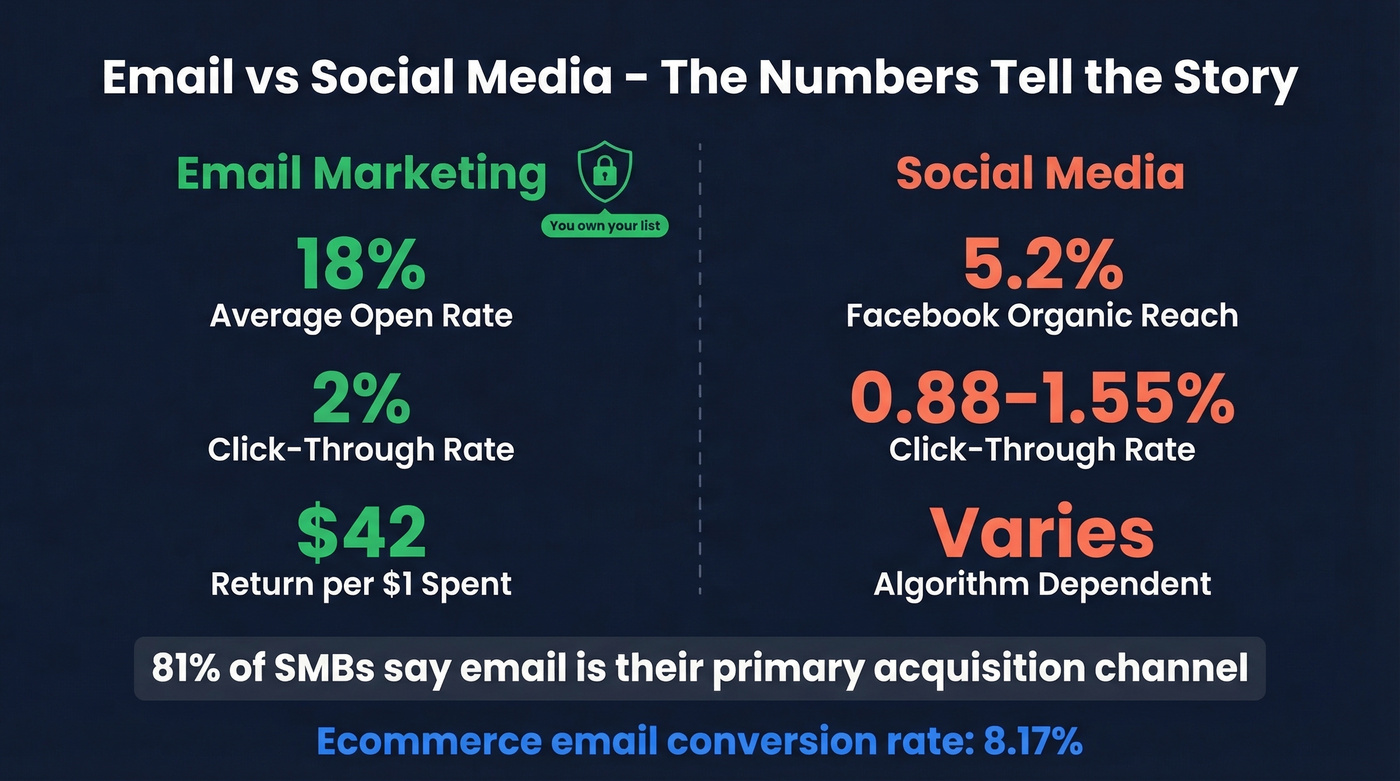
81% of SMBs cite email as their primary customer acquisition channel, and the comparison to social media isn't close. Email averages an 18% open rate versus Facebook's 5.2% organic reach. Email CTR runs around 2%; social CTR sits at 0.88-1.55%. And here's the part that matters most: you own your email list. Meta can change the algorithm tomorrow. Google can tank your organic traffic with a core update. Your subscriber list doesn't care.
Ecommerce email marketing conversion averages around 8.17%. If you're running a business without an email list, you're leaving one of the most reliable revenue channels on the table.
Never Buy an Email List
Don't buy email lists. Don't rent them. Don't scrape them. The answer is no. It's always no.
Twilio's deliverability team puts it bluntly: purchased lists contain spam traps, invalid mailboxes, and people who never asked to hear from you. The consequences cascade fast - poor engagement tanks your sender reputation, ISPs start filtering your messages, your ESP flags your account, and you end up on blocklists that are far easier to get on than to get off.
Major ESPs prohibit purchased lists in their terms of service. Get caught, and they'll shut your account down. The $200 you saved on "10,000 verified contacts" will cost you months of deliverability recovery.
Choose Your Email Service Provider
Your ESP is the foundation. Pick wrong and you'll migrate in six months, which is a miserable process.
| Tool | Free Tier | Paid From |
|---|---|---|
| Brevo | 300 emails/day, 500 contacts | $9/mo |
| MailerLite | 1,000 sends/mo, 500 contacts | $10/mo |
| Mailchimp | 1,000 emails/mo, 500 contacts | $13/mo |
| Omnisend | 500 emails/mo, 250 contacts | $16/mo |
| GetResponse | 2,500 emails/mo, 500 contacts | $19/mo |
| HubSpot | 2,000 emails/mo, 1,000 contacts | $20/mo |
| Klaviyo | 500 emails/mo, 250 contacts | $30/mo |
If you're building a B2B prospecting list rather than a marketing subscriber list, skip ahead to the B2B section - the tooling is completely different.
MailerLite is the best starting point for most people. Clean UI, unlimited emails on paid plans, and a generous free tier. It does what you need without overwhelming you with features you won't touch for a year.
Klaviyo is the pick for ecommerce. Its Shopify integration is best-in-class, and the SMS capabilities mean you can run email and text from one platform. It's pricier, but ecommerce margins justify it.
Kit (formerly ConvertKit) wins for creators and course sellers. The tagging system and visual automations make it easy to segment subscribers by interest without building complex workflows.
Let's be honest about Mailchimp: it's the default choice, not the best choice. Its free tier - 500 contacts, 1,000 sends - is one of the most restrictive in the market. People pick it because they've heard of it, not because they've compared it. We've seen teams outgrow Mailchimp's free plan within weeks and then face an awkward migration.
Opt-In Forms That Convert
Popups work. Stop apologizing for using them.
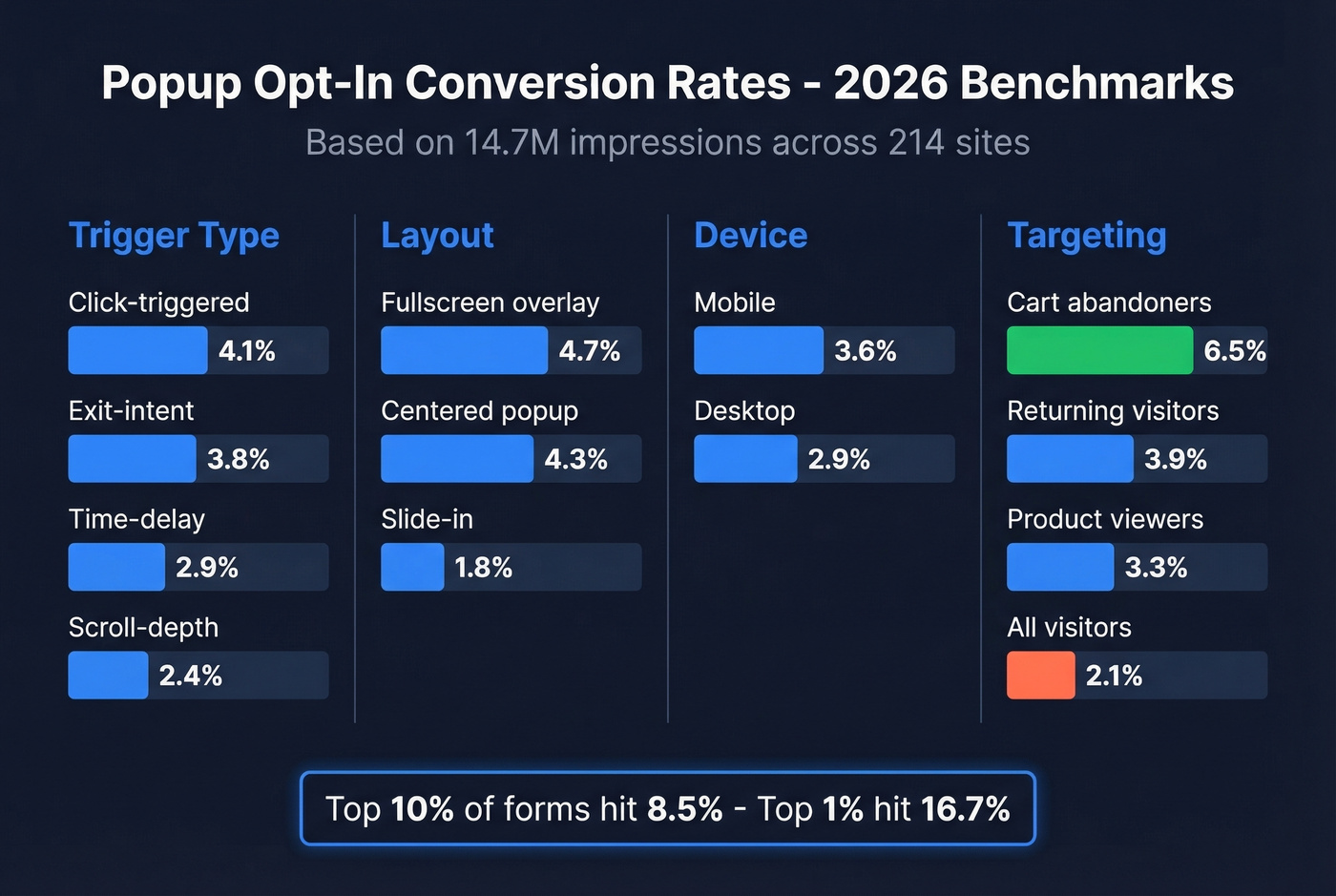
The data is clear: across 875 widgets, 214 sites, and 14.7 million impressions, the average popup opt-in rate is 3.2%. The top 10% hit 8.5%. The top 1% hit 16.7%. But not all popups are created equal - the trigger, layout, device, and targeting all matter enormously.
| Factor | Type | Avg CR |
|---|---|---|
| Trigger | Click-triggered | 4.1% |
| Exit-intent | 3.8% | |
| Time-delay (5-10s) | 2.9% | |
| Scroll-depth (50%) | 2.4% | |
| Layout | Fullscreen overlay | 4.7% |
| Centered popup | 4.3% | |
| Slide-in | 1.8% | |
| Device | Mobile | 3.6% |
| Desktop | 2.9% | |
| Targeting | Cart abandoners | 6.5% |
| Returning visitors | 3.9% | |
| Product viewers | 3.3% | |
| All visitors | 2.1% |
Mobile actually converts higher than desktop (3.6% vs 2.9%), likely because fullscreen takeovers dominate the mobile experience. Returning visitors convert about 2x better than showing the popup to everyone (3.9% vs 2.1%) - so don't blast the same generic popup at all traffic.
Gamified formats are the sleeper hit. Spin-to-win popups convert at 7-9%, nearly double the average centered popup. They feel gimmicky, but the numbers don't lie. If you're in ecommerce or DTC, test one before dismissing it.
Industry benchmarks vary widely: fashion leads at 4.8%, beauty at 4.4%, travel at 3.9%, food and beverage at 3.6%, and SaaS at 1.8%. For SaaS teams, don't panic about a 2% opt-in rate - that's actually above average for your vertical.
Seasonality is a lever most people ignore. BFCM drives a 65% uplift in opt-in rates. Christmas adds 42%. Even Valentine's Day bumps conversions 28%. Time your biggest list-building pushes around these windows and you'll capture subscribers at a fraction of the normal cost.
The difference between a 2.1% conversion rate targeting all visitors with a slide-in and a 6.5% rate targeting cart abandoners with a fullscreen overlay is 3x the list growth from the same traffic. Form optimization isn't a nice-to-have - it's the highest-leverage thing you can do after choosing a good lead magnet.

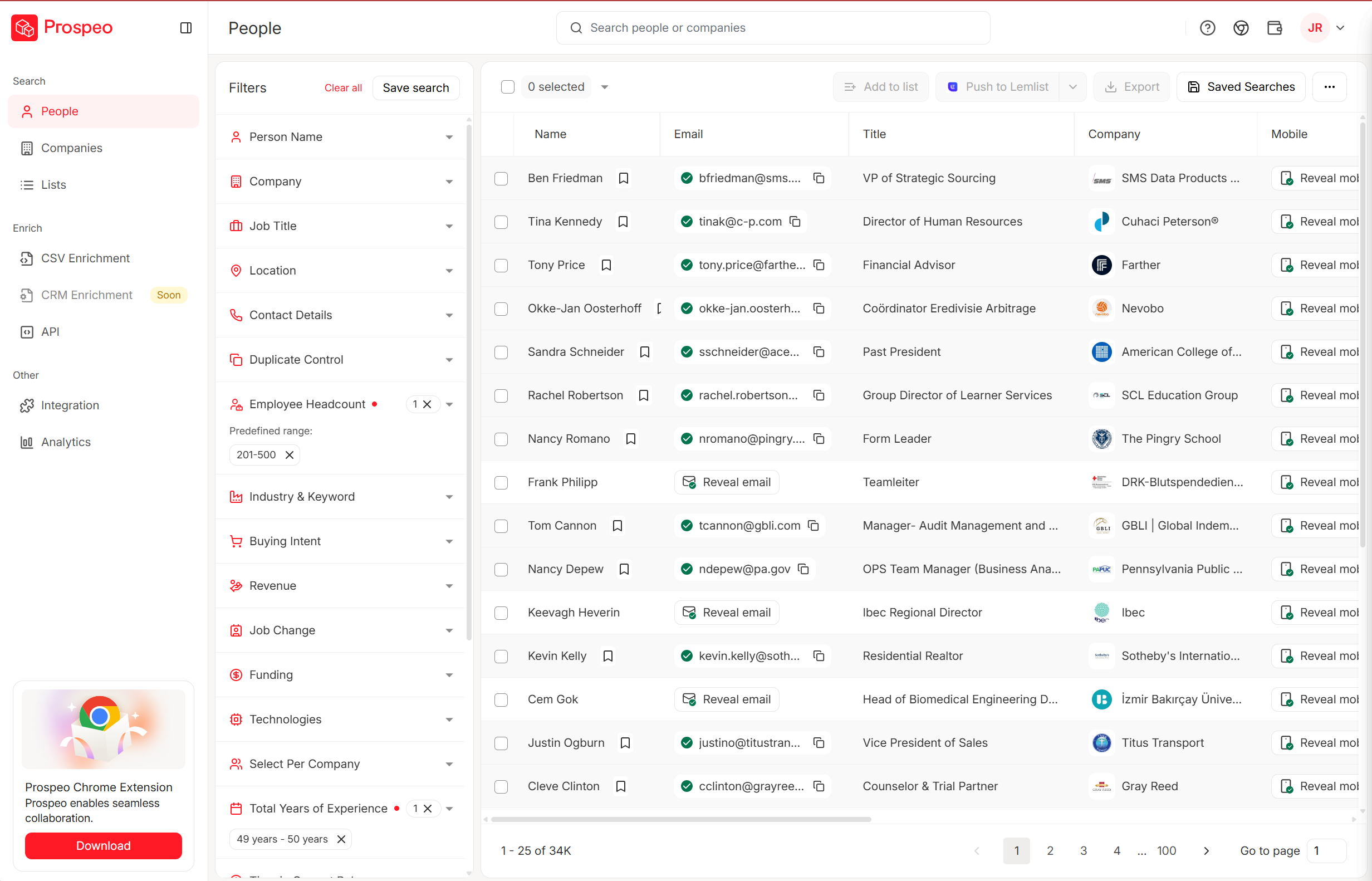
Opt-in forms won't reach the VP you need to close. Prospeo gives you 300M+ professional profiles with 98% email accuracy - filtered by job title, company size, intent signals, and 30+ other criteria. Build a verified B2B email list in minutes, not months.
Skip the popup. Get verified emails for $0.01 each.
Lead Magnets That Convert
Your lead magnet matters more than your form design. A quiz converts at 30-50%. A generic "subscribe to our newsletter" converts at under 1%. That's not a marginal difference - it's the difference between building a real email list and wasting your traffic.
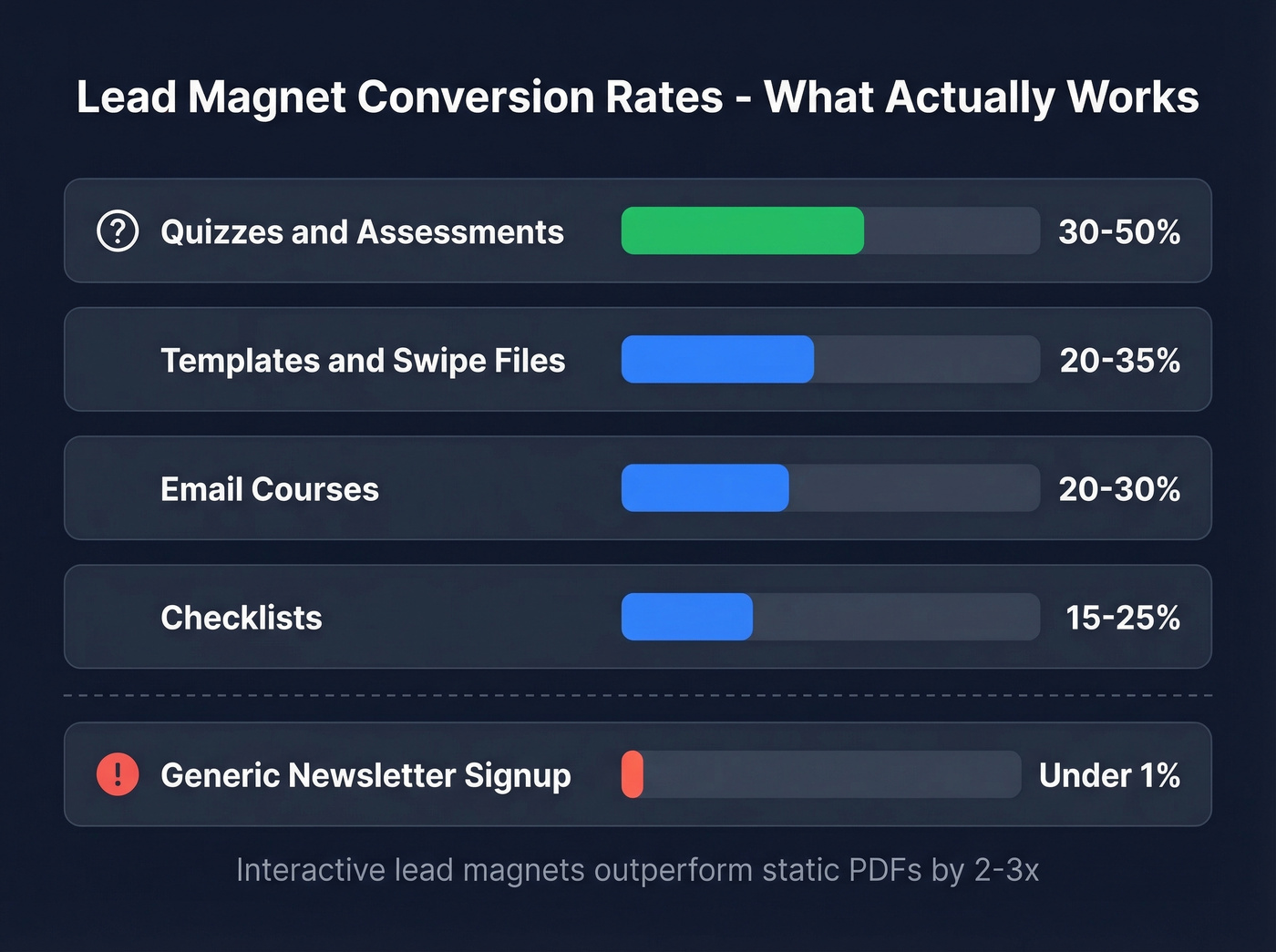
We've tested quizzes against static PDFs across multiple campaigns, and the gap is real every time. Here's what works, ranked by conversion rate:
Quizzes and assessments (30-50%). "What's your marketing maturity score?" or "Which skincare routine fits your skin type?" Interactive formats crush static ones because they promise a personalized result. People will trade their email for something that feels tailored to them.
Templates and swipe files (20-35%). "Our exact cold email templates that book 12 meetings/week" or "The budget spreadsheet we use to plan product launches." Templates work because they save time immediately - no reading required, just download and use.
Email courses (20-30%). "5 days to better Facebook ads" or "A 7-day crash course on SEO fundamentals." These are underrated. They build trust over multiple touchpoints and naturally lead into a welcome series. The perceived value of a "course" is higher than a PDF, even if the content is similar.
Checklists (15-25%). Quick, scannable, and immediately actionable. Not as high-converting as quizzes, but far easier to create.
Interactive lead magnets outperform static PDFs by 2-3x. If you're still offering a generic ebook as your opt-in incentive, you're actively losing subscribers to competitors who aren't. Build a quiz first. Optimize later.
Set Up Your Welcome Series
The welcome series is the most underinvested part of most email programs. Welcome emails get 4x higher open rates and 5x higher click-through rates than regular campaigns, and 74% of new subscribers expect one immediately after signing up. If you're not sending a welcome series, you're wasting the moment when a subscriber is most engaged with your brand.
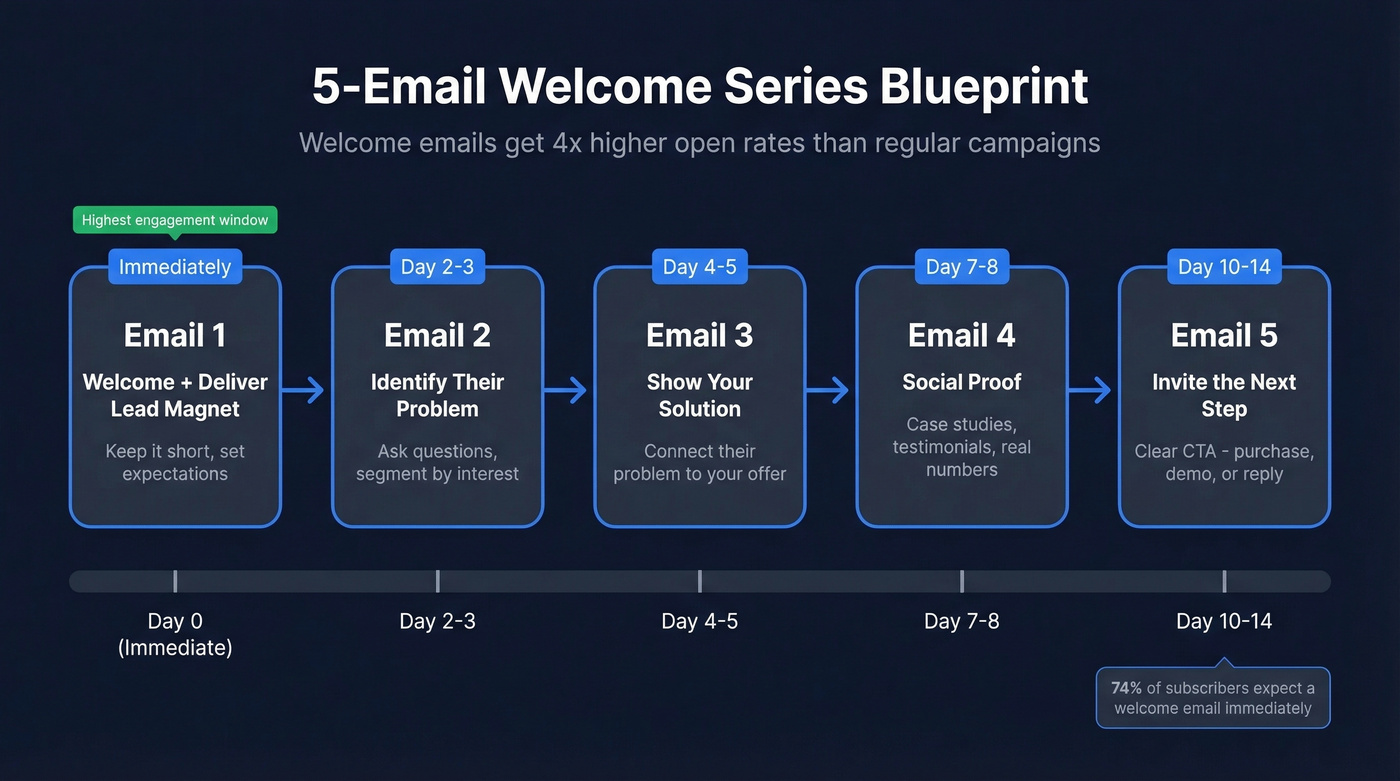
Don't cram everything into one email. A 5-email sequence spread over 7-14 days works far better:
Email 1 (immediately): Welcome + deliver the lead magnet. Keep it short. Thank them, give them what they signed up for, and set expectations for what's coming next.
Email 2 (Day 2-3): Identify their problem or goal. Ask a question, run a quick survey, or segment them based on what they clicked. This email is about listening, not selling.
Email 3 (Day 4-5): Show how your product or content solves their specific problem. Connect the dots between what they told you in Email 2 and what you offer.
Email 4 (Day 7-8): Social proof. Share a case study, testimonial, or concrete result. Numbers beat vague praise - "increased revenue 40%" is more persuasive than "really helped our business."
Email 5 (Day 10-14): Invite the next step. A purchase, a demo booking, a consultation, or even just replying to the email. Make the ask clear and specific.
In our experience, the first email's timing matters more than its design. Send Email 1 immediately - not an hour later, not the next morning. Then space the remaining four across 7-14 days. Too fast and you'll overwhelm new subscribers. Too slow and they'll forget who you are.
List Hygiene and Deliverability
A big list with bad data is worse than a small list with clean data. Deliverability is the unsexy foundation that makes everything else work.
Start with authentication. SPF, DKIM, and DMARC aren't optional - they're the minimum infrastructure your domain needs to land in inboxes instead of spam folders. If you haven't set these up, stop reading and do it now. Your ESP's documentation will walk you through it.
Remove inactive contacts after 90-120 days of zero engagement. It feels counterintuitive to shrink your list, but inactive subscribers actively hurt your sender reputation. ISPs watch your engagement rates. Low opens and zero clicks signal "this sender isn't wanted," and that affects deliverability for your entire list - not just the dead weight.
Suppress bounces immediately. Hard bounces should be removed after the first occurrence. Soft bounces get a few more chances, but if an address bounces three times in a row, cut it.
Verify emails at the point of collection. Running verification before emails enter your list prevents bad addresses from ever touching your sender reputation. For B2B lists especially, tools like Prospeo run a 5-step verification process - including catch-all handling, spam-trap removal, and honeypot filtering - at 98% accuracy, which keeps your bounce rate well under the 2% threshold that ISPs start flagging.
Segmented messages convert 6-10x higher than generic blasts. Even basic segmentation - by signup source, lead magnet downloaded, or engagement level - dramatically improves both deliverability and revenue.
If you're sending from a new domain or IP, warm up gradually. Sending 10,000 emails on day one from a cold domain is the fastest path to getting blocked. Start with your most engaged subscribers and scale volume over 2-4 weeks.
How to Build a B2B Prospecting List
Here's the section that every other guide on building an email list skips entirely.
If you're in B2B sales, opt-in forms aren't your primary list-building tool. A VP of Sales at a Series B company isn't filling out your popup form. Neither is the Head of Engineering at an enterprise account. You need to go find them.
The outbound workflow is straightforward: identify target accounts by industry, company size, and tech stack. Find verified business emails for the right decision-makers. Verify before sending. Push to your sequencer. The consensus on r/sales is that data quality is the single biggest variable in outbound performance - bad emails don't just bounce, they poison your domain reputation for the emails that would have landed.
Prospeo covers 300M+ professional profiles searchable by 30+ filters including role, department, funding stage, headcount growth, and buyer intent. Every record refreshes on a 7-day cycle, which matters because stale data is the #1 reason outbound campaigns bounce. Pricing is credit-based at roughly $0.01 per email, with a free tier of 75 verified emails per month. No contracts, no sales calls required.
Here's a strong opinion: if your average deal size is under $5,000, you probably don't need a prospecting database at all. Inbound and referrals will carry you. But the moment deals get larger and you're selling to specific roles at specific companies, outbound becomes the fastest path to pipeline - and clean data is the difference between booking meetings and burning your domain.
The key concept is segmentation before outreach. Don't blast 5,000 generic emails. Build targeted lists by role and company profile, write messaging specific to each segment, and verify every address before it touches your sending infrastructure. Spray-and-pray is the fastest way to torch deliverability.
Bought lists destroy deliverability. Prospeo's 5-step verification process - with spam-trap removal, catch-all handling, and a 7-day data refresh - keeps bounce rates under 4%. That's how teams like Snyk prospect with 50 AEs without burning a single domain.
Clean data, zero blocklists. Start with 75 free verified emails.
GDPR vs CAN-SPAM vs CASL
Compliance isn't optional. GDPR enforcement has hit roughly EUR 5.88 billion across 2,245 actions. Spain alone has issued 1,021 fines totaling EUR 120.7 million. These aren't theoretical risks.
| GDPR | CASL | CAN-SPAM | |
|---|---|---|---|
| Consent | Explicit opt-in | Opt-in (express/implied) | Opt-out |
| Unsubscribe | Without undue delay | 10 business days | 10 business days |
| ID Required | Data controller + DPO | Sender ID + contact info | Accurate headers + address |
| Max Penalty | EUR 20M or 4% turnover | $10M CAD/violation | $50K USD/email |
CAN-SPAM is the most permissive - you can email anyone until they unsubscribe, as long as you include a physical address and honor opt-outs within 10 business days. GDPR is the strictest - you need explicit opt-in before sending anything, and pre-checked boxes don't count.
If you're emailing anyone in the EU, GDPR applies regardless of where your company is based. It's extraterritorial. A startup in Austin emailing prospects in Berlin needs to comply.
For most teams, the safest approach is to default to the strictest standard. Use double opt-in for marketing lists. Include a physical address in every email. Honor unsubscribes immediately, not in 10 days. It's less work than tracking which regulation applies to which subscriber.
Mistakes That Kill Your List
No segmentation. Blasting your entire list with the same message is a 2010 tactic. It drives higher unsubscribes, more spam complaints, and measurably worse deliverability. Even splitting by "engaged in last 30 days" vs "hasn't opened in 90 days" makes a meaningful difference.
Over-automation without personalization. Automation is powerful, but "Hi {first_name}, based on your interest in {product_category}" isn't personalization - it's a mail merge. If your "personalized" recommendations are irrelevant, they're worse than no recommendation at all.
Poor mobile optimization. More than half your subscribers will open on a phone. Tiny text, broken layouts, and CTAs you can't tap without zooming are list killers. Test every email on mobile before sending.
Bad frequency discipline. Too many emails and subscribers mark you as spam. Too few and they forget who you are. There's no universal right answer, but I've watched teams agonize over subject lines while sending five emails a week to a list that wanted one. Cadence matters more than any clever tactic.
Skipping email verification. Every bounced email damages your sender reputation. Enough bounces and ISPs start filtering all your messages - even to subscribers who want them. Verify at collection, verify before campaigns, and verify again after 90 days of inactivity.
FAQ
How long does it take to build an email list?
At 1,000 monthly visitors and a 3.2% opt-in rate, expect about 32 new subscribers per month. The fastest lever is your lead magnet - switching from a generic newsletter signup to a quiz can 5x your conversion rate overnight. Higher traffic or better targeting accelerates growth proportionally.
Is double opt-in better than single?
Double opt-in produces a cleaner list with higher engagement and fewer spam complaints, though it grows 20-30% slower. For GDPR-regulated audiences, it's effectively required. For everyone else, the quality tradeoff is still worth it - fewer bounces and better inbox placement long-term.
What's a good list growth rate?
Healthy lists grow 2-5% per month relative to current size. If you're losing more subscribers than you're gaining, fix your content or sending frequency before adding more opt-in forms. A net-negative growth rate signals a content or deliverability problem, not a traffic problem.
Can I use Gmail for marketing emails?
Not at scale. Gmail caps daily sends and offers zero segmentation, automation, or compliance tooling. Use an ESP even with fewer than 100 subscribers - free tiers from MailerLite or Brevo handle verification, automation, and compliance from day one.
What's the best free tool for B2B email lists?
Prospeo offers 75 verified emails per month on its free tier with full 5-step verification and 98% accuracy. Hunter gives 25 searches/month but caps enrichment. For teams running real outbound campaigns, Prospeo's free plan provides more usable credits and higher data quality out of the box.