

Kitt AI vs ZoomInfo (2026): Which One Fits Your Outbound Team?
You're comparing a scalpel to a Swiss Army knife. Weighing Kitt AI against ZoomInfo means understanding a fundamental difference: Kitt AI finds and verifies emails with surgical precision, while ZoomInfo is a full GTM platform with a database, intent signals, and a price tag that makes finance teams sweat. The fact that people compare them at all tells you something important - outbound teams care more about deliverability than feature counts.
They should. Practitioners on r/coldemail regularly report 15-18% bounce rates when databases rely on pattern-guessed emails. One user dropped from 18% bounce to 2.4% - and saw reply rates jump from 1.2% to 4.8% - simply by switching to verified-first sourcing. That's not a marginal improvement. That's the difference between a campaign that works and one that torches your domain.
Why This Comparison Exists
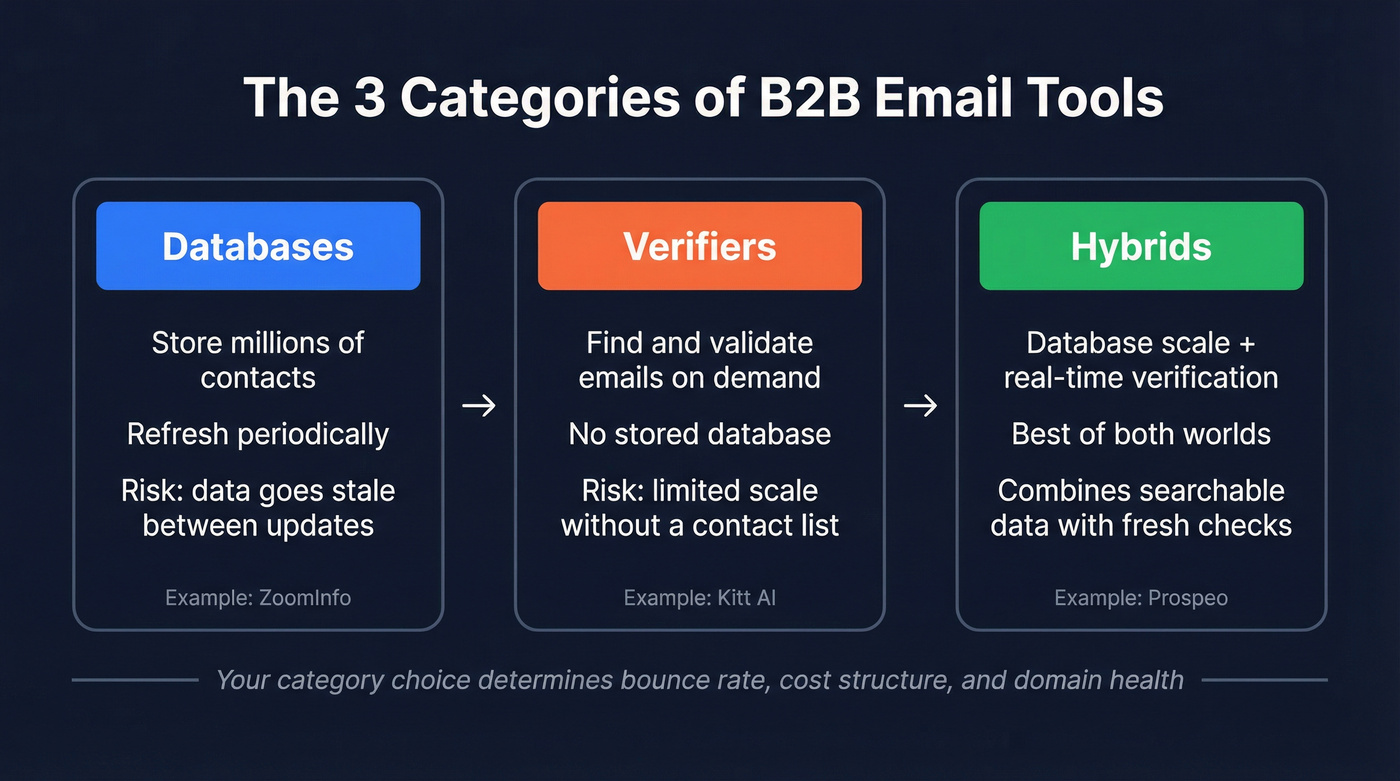
B2B email tools fall into three camps: databases like ZoomInfo that store millions of contacts and refresh them periodically, verifiers like Kitt AI that find and validate emails on demand, and hybrids that combine database scale with real-time verification. Most teams don't realize they're choosing a category, not just a tool. That choice determines your bounce rate, your cost structure, and whether your domain survives the first 10,000 sends.
30-Second Verdict
- Choose Kitt AI if you need lightweight email finding and verification, you're budget-constrained, and you don't need intent data. The vendor-claimed <0.1% bounce rate is compelling, though independent reviews to back it up are scarce.
- Choose ZoomInfo if you're an enterprise team running multi-channel outbound with ABM and intent signals. A Reddit user reported being quoted ~$24,000 for just 2 seats - budget accordingly.
- Skip both if you want enterprise-scale data with verified accuracy and no annual contract. Prospeo delivers 300M+ profiles, 98% email accuracy, and a 7-day refresh cycle at ~$0.01/email. Free tier included.
What Kitt AI Is
Kitt AI is a specialist email finder and verifier built for growth teams who care about one thing: deliverability. It doesn't try to be a CRM, an intent platform, or a workflow engine. The tool finds 80% of B2B email addresses and verifies them using checks beyond standard SMTP - including enterprise identity server verification to handle catch-all domains and detect job changes. Results come 2-5x faster than guess-and-check tools, according to the company, with a bounce rate under 0.1%.
You get API access with batch verification, a Chrome extension, CSV upload, and integrations with Salesforce, HubSpot, and Clay. There's a free-forever plan for individual users. Here's the thing: independent reviews are almost nonexistent - no meaningful G2 or Capterra footprint - so treat the <0.1% bounce figure as unverified until you've run your own test. We've seen plenty of tools make bold accuracy claims that don't hold up at scale.
What ZoomInfo Is
ZoomInfo is the default enterprise sales intelligence platform, and it earns that position through sheer breadth: database, intent data, segmentation, and workflow tooling. It's what large sales orgs standardize on when they want everything under one roof.
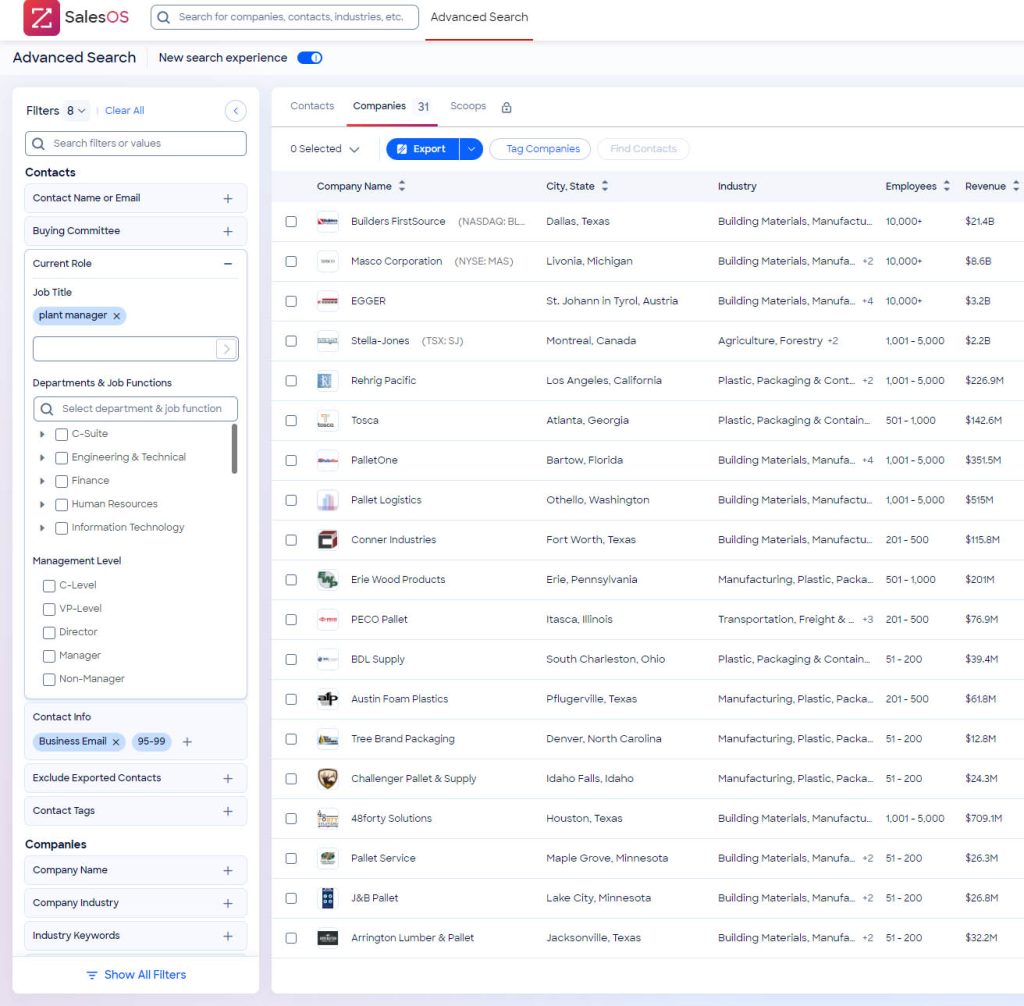
On G2, ZoomInfo holds a 4.5/5 rating from over 9,000 reviews. But the cons tell a different story. "Inaccurate Data" and "Outdated Data" each appear 232 times across those reviews. That's not a rounding error - it's a systemic pattern that shows up in nearly every critical review thread we've read. Best for larger enterprise teams running ABM and multi-channel sequences. Skip it if you only need verified emails or if annual contracts give you hives.

Kitt AI claims sub-0.1% bounce but has no independent proof. ZoomInfo's own reviews flag "Inaccurate Data" 232 times. Prospeo delivers 98% verified email accuracy across 143M+ addresses using 5-step verification with catch-all resolution, spam-trap removal, and honeypot filtering - refreshed every 7 days, not periodically.
Stop gambling on unverified claims. Test 98% accuracy with 75 free emails.
Head-to-Head Comparison
| Kitt AI | ZoomInfo | |
|---|---|---|
| Best for | Email finding/verifying | Enterprise GTM |
| Best team size | Solo / small team | Larger enterprise teams |
| Data source | Email discovery engine | Proprietary database |
| Email finding | 80% of B2B emails | Full database export |
| Validation | Identity server + SMTP | NeverBounce-based (score 0-100) |
| Catch-all | Enterprise catch-all resolution | Flags catch-all; limited resolution |
| Freshness | On-demand (no database) | Periodic (not real-time) |
| Pricing model | Pay-per-verification | Annual contract + credits |
| Contract | None | Annual (often 2-year minimum) |
| Typical cost | ~$0.005/email found | $15k-$45k+/year |
| Integrations | API, Salesforce, HubSpot, Clay | Many native integrations |
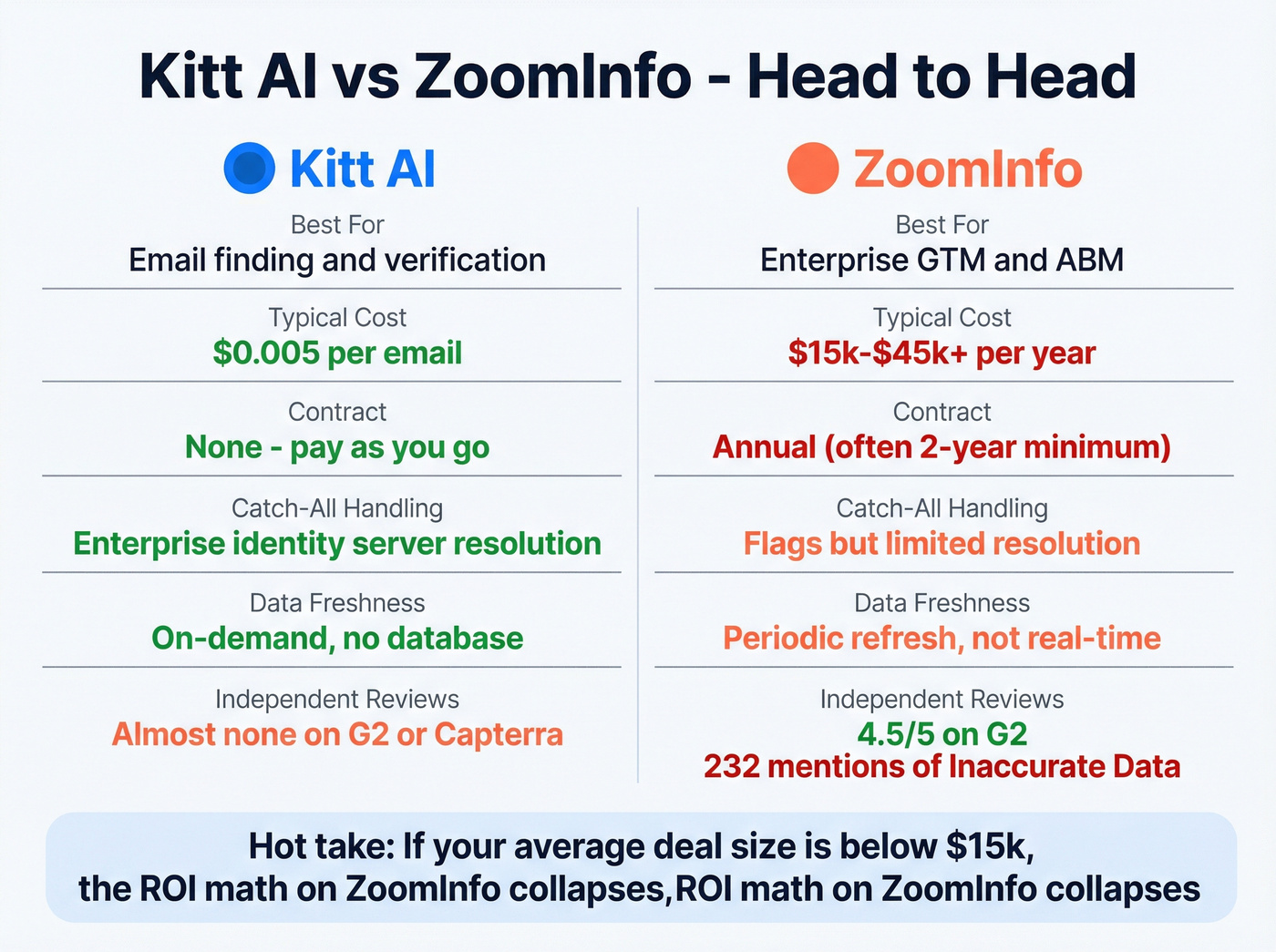
Hot take: If your average deal size sits below $15k, you almost certainly don't need ZoomInfo. The ROI math collapses when your contract costs more than the deals it's supposed to generate.
Email Accuracy Breakdown
ZoomInfo uses NeverBounce under the hood. Every email gets a status - Valid, Invalid, Catch-All, or Unknown - plus a confidence score from 0 to 100. Filtering for 99+ scores dramatically shrinks your usable contact pool. Worse, verification isn't real-time. Someone who changed jobs last month still shows as "valid." Catch-all domains, which cover a huge chunk of enterprise email, get flagged and remain risky to send to.
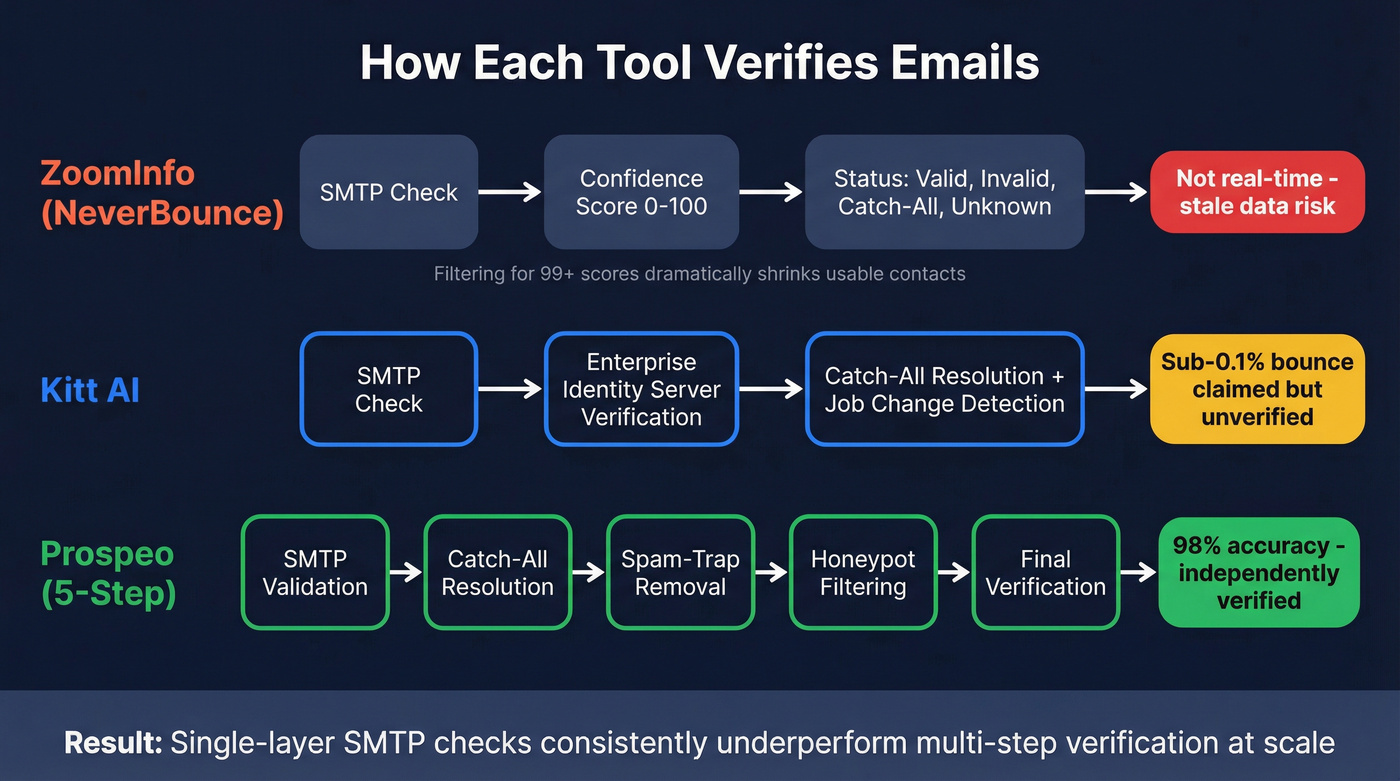
Kitt AI takes a different approach, checking against enterprise identity servers to verify catch-all addresses and detect job changes. The vendor-claimed sub-0.1% bounce rate is extraordinary, and without independent benchmarks, it stays unverified. But the methodology - going beyond SMTP - is sound.
In our testing across multiple tools, we've found that 5-step verification with catch-all resolution, spam-trap removal, and honeypot filtering consistently outperforms single-layer SMTP checks. That's the approach Prospeo uses to hit 98% email accuracy across 143M+ verified addresses.
What It Actually Costs
ZoomInfo's pricing is custom, but real benchmarks exist. Tropic procurement data shows list prices of ~$15k (Professional+), ~$30k (Advanced+), and ~$36k (Elite+) per year - with 30-65% negotiation discounts possible. Cognism's analysis puts typical annual costs at $15k-$18k for Professional, $22k-$28k for Advanced, and $35k-$45k+ for Elite. Add-ons stack fast: $2,500 per additional user, $9,995 for Global Data, credits at $0.20-$0.60 each. Renewals come with a 10-20% uplift. A mid-market ZoomInfo contract with intent data easily hits $25k-$40k/year.
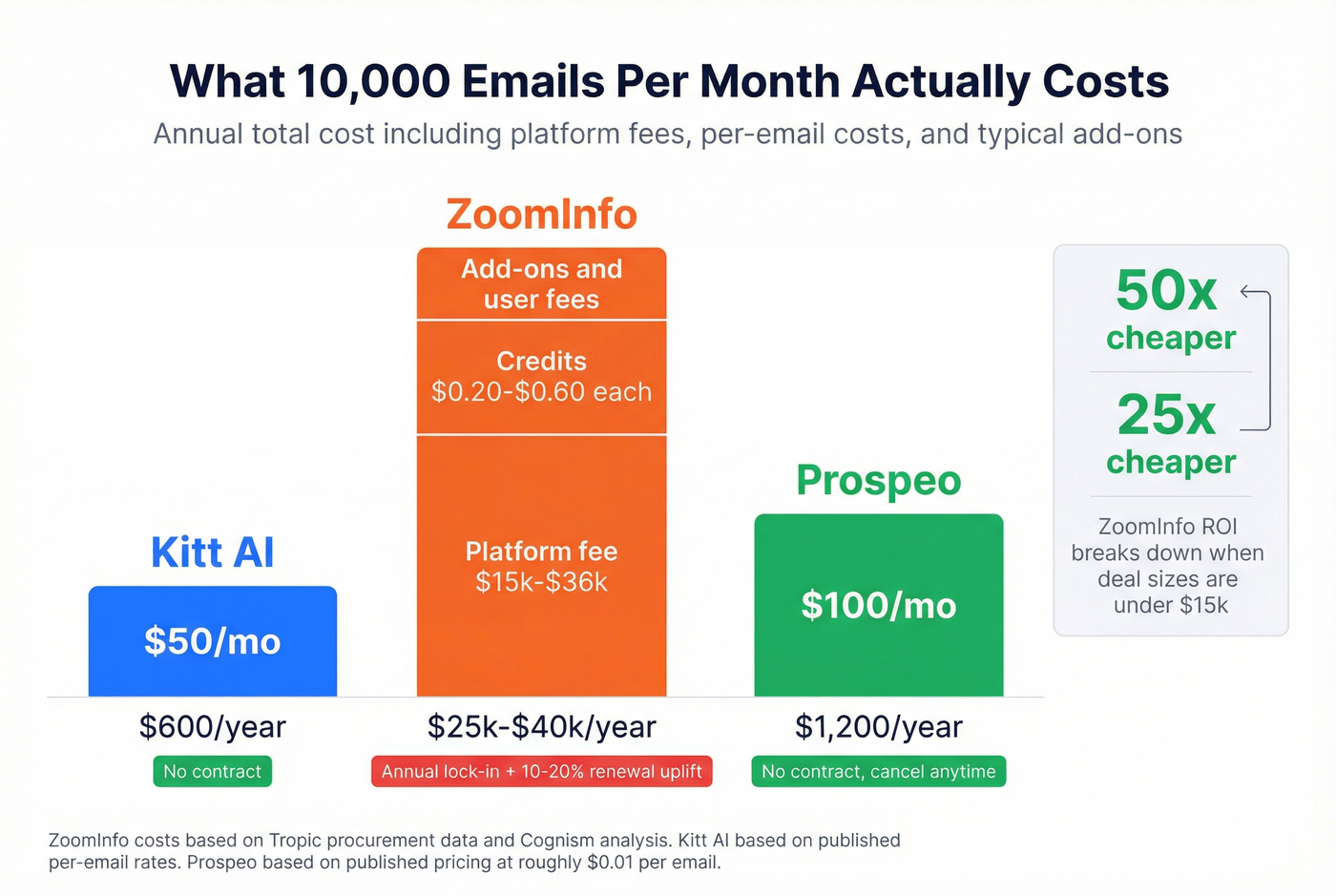
Kitt AI's economics are completely different. Verification runs ~$0.0015/email, found emails cost ~$0.005 each, and additional users are $5/month. The free-forever plan covers individual users. For a team sending 10,000 emails a month, that's roughly $50 on Kitt AI versus $2,000+ on ZoomInfo credits alone - before you even count the platform fee.
Which One to Choose
You need enterprise multi-channel + intent: ZoomInfo. Nothing else matches its breadth for large sales orgs running ABM and intent-triggered sequences. Budget $25k+ and negotiate hard.
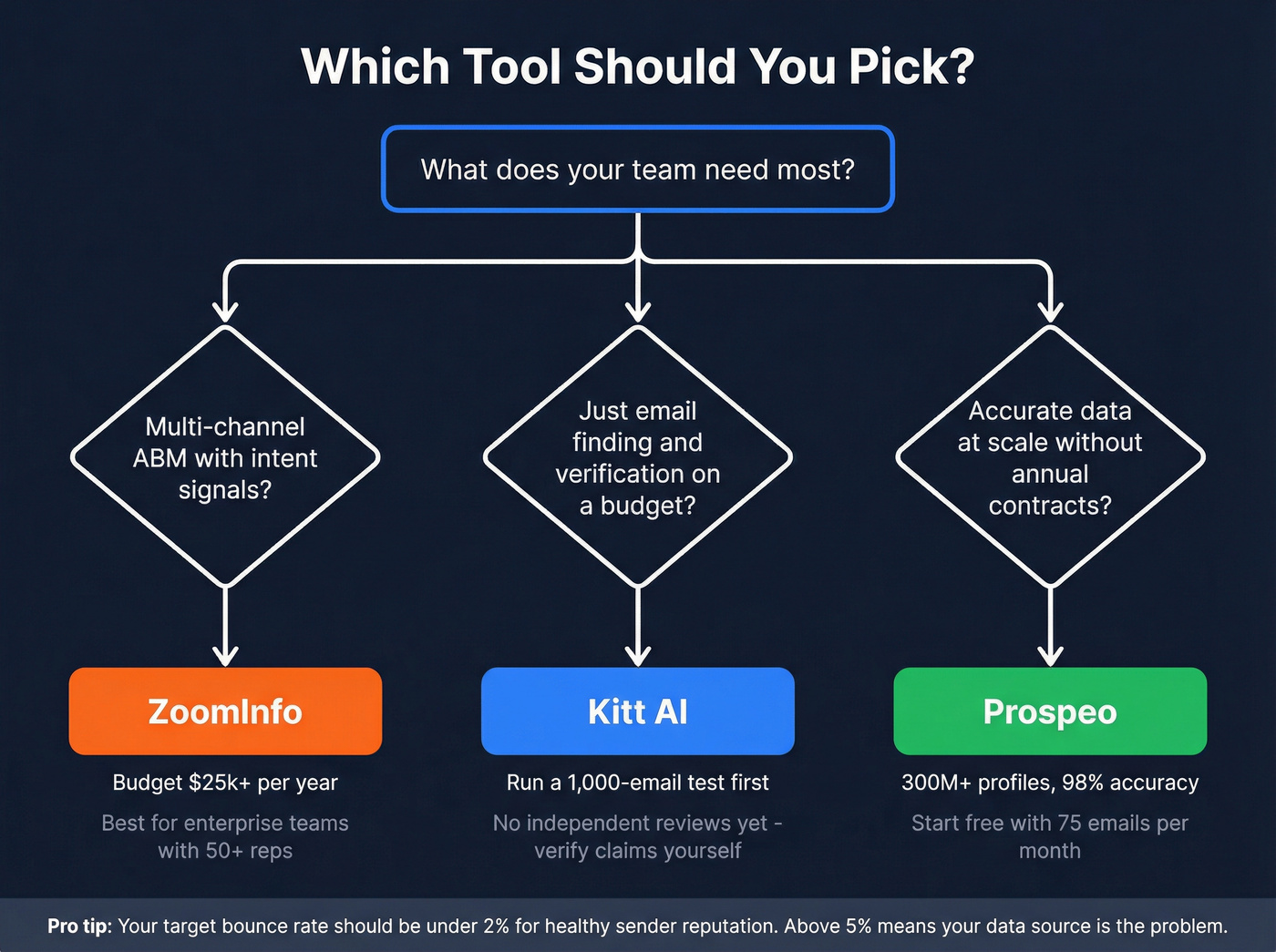
You need budget-friendly email verification: Kitt AI. The per-email economics are hard to beat. Run a 1,000-email test before committing - the lack of independent reviews means you're trusting vendor claims until you see your own bounce data. Target sub-5% bounce as your minimum acceptable threshold. (If you need a deeper benchmark breakdown, see our Email Bounce Rate guide.)
You need fresh, accurate data at scale without contracts: Neither fully solves this. ZoomInfo's data goes stale between refreshes, and Kitt AI doesn't offer a searchable database. You need a hybrid approach.
A Better Third Option
Let's be honest - most teams comparing Kitt AI and ZoomInfo are really looking for accurate emails at a reasonable price, with enough database depth to actually build targeted lists. Prospeo bridges that gap: 300M+ profiles, 98% email accuracy, and a 7-day refresh cycle, all without annual contracts.
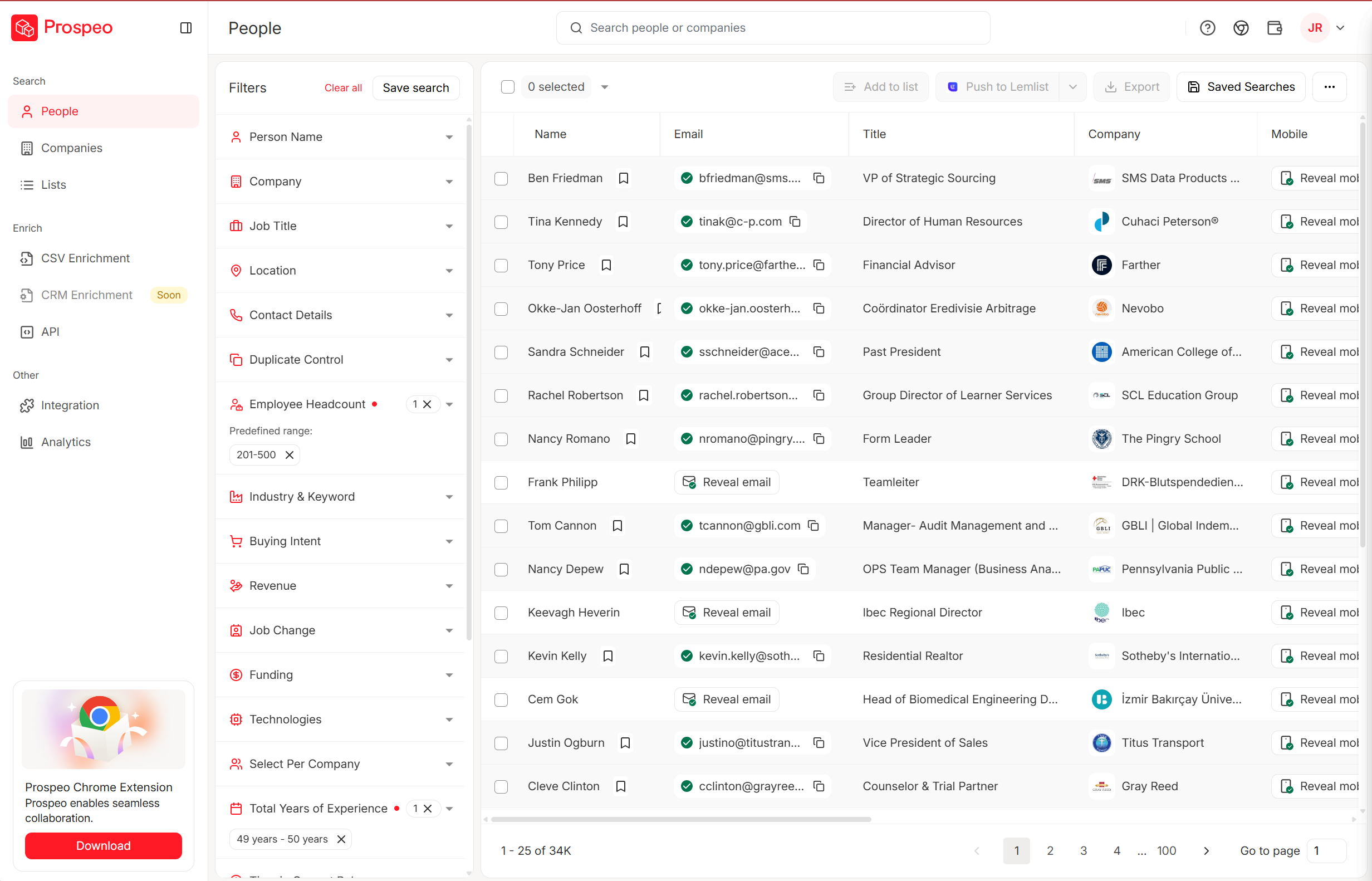
Search across 30+ filters including buyer intent powered by Bombora, technographics, job changes, and funding signals. Snyk's 50 AEs cut bounce rates from 35-40% to under 5% after switching, generating 200+ new opportunities per month. Pricing starts free - 75 emails and 100 extension credits per month. Paid plans run ~$0.01/email with self-serve onboarding and no sales calls required. (If you're building lists end-to-end, pair this with a tighter lead generation workflow and a clear Ideal Customer Profile.)
ZoomInfo costs $25k-$40k/year with annual lock-ins. Kitt AI is cheap but unproven at scale. Prospeo gives you 300M+ profiles, intent data, and verified mobiles at ~$0.01/email - no contract, cancel anytime. Teams book 26% more meetings than ZoomInfo and 35% more than Apollo.
Enterprise data without the enterprise contract. See why 15,000+ companies switched.
FAQ
Is Kitt AI a real ZoomInfo alternative?
They're different categories. Kitt AI is a specialist email verifier; ZoomInfo is a full sales intelligence platform. If you only need email finding and verification, Kitt AI competes on price at ~$0.005/email. If you need a searchable database and intent signals, you're shopping in ZoomInfo's category - or looking at a hybrid like Prospeo that combines both starting free.
Why do ZoomInfo emails still bounce?
ZoomInfo's NeverBounce checks aren't real-time. Contacts who change jobs between refresh cycles still show as "valid," and catch-all domains get flagged but remain risky. G2 reviewers cite "Inaccurate Data" and "Outdated Data" 232 times each - a systemic pattern, not an edge case.
What's a good bounce rate for cold email in 2026?
Under 2% is the target for healthy sender reputation. Anything above 5% damages deliverability and risks domain blacklisting. If you're consistently above that threshold, your data source is the problem - not your copy or sending cadence.
Can I test Kitt AI before committing?
Yes. Kitt AI offers a free-forever plan for individual users, so you can run a batch test before scaling. We'd recommend verifying at least 1,000 emails and comparing bounce rates against your current tool before making any decisions.