

Line2 vs RingCentral: The Honest Comparison Nobody Else Will Give You
ZDNET calls RingCentral the "best overall VoIP" and Line2 the "best for beginners." That's generous to both. The Line2 vs RingCentral debate isn't really a debate - one's a ~$16/month second phone line, the other's a full UCaaS platform used by 400,000+ businesses. But people compare them constantly, so let's do it honestly.
The 30-second verdict: Line2 wins for solopreneurs who need a cheap second number and can tolerate reliability hiccups. RingCentral wins for teams that need a full-featured phone system with admin controls and add-ons - if you budget for boosters and read the contract carefully. Skip both if your team texts clients heavily.
Pricing Breakdown
Line2's pricing page shows "starting at" toggles of $9.99/month billed monthly or $7.99/month billed yearly, but the named plans most people actually buy are Starter, Growth, and Business at higher published rates. Here's the clean comparison.
The Combined View
| Line2 Starter | Line2 Growth | Line2 Business | RC Core | RC Advanced | RC Ultra | |
|---|---|---|---|---|---|---|
| Monthly | $15.99/mo | $20.99/mo | $25.99/mo | $30/user/mo | $35/user/mo | $45/user/mo |
| Annual | $13.75/mo | $17.66/mo | $21.83/mo | $20/user/mo | $25/user/mo | $35/user/mo |
| SMS | Unlimited* | Unlimited* | Unlimited* | 25/user/mo | 100/user/mo | 200/user/mo |
| Auto-attendant | ✗ | ✓ | ✓ | ✓ | ✓ | ✓ |
| Call recording | ✗ | ✗ | ✓ | ✗ | ✓ | ✓ |
| Toll-free minutes | N/A | N/A | N/A | 100 pooled | 1,000 | 10,000 |
| Integrations | Minimal | Minimal | Minimal | Broad | Broad | Broad |
| Best for | Solo second line | Solo + auto-attendant | Solo + recording | Small teams (budget) | Teams needing more capacity | Higher-volume teams |
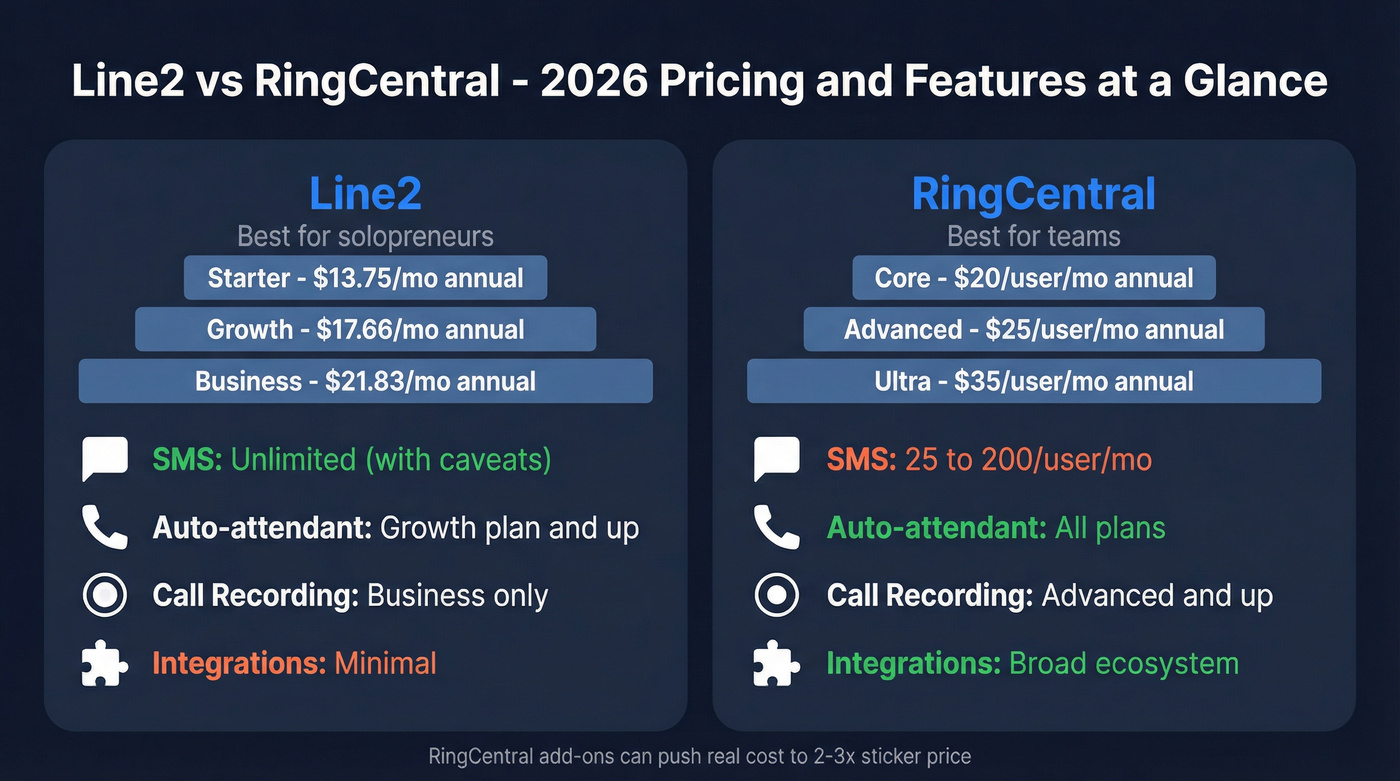
*Line2 "Unlimited" is subject to overages per its Terms of Service. Reliability is another story entirely.
The RingCentral Add-On Trap
RingCentral's base price is misleading. The pricing page also lists paid boosters that many teams end up needing: Business SMS Booster ($25), Call Queues Booster ($35), AI Receptionist (starts at $39), and AI Conversation Expert (starts at $60).
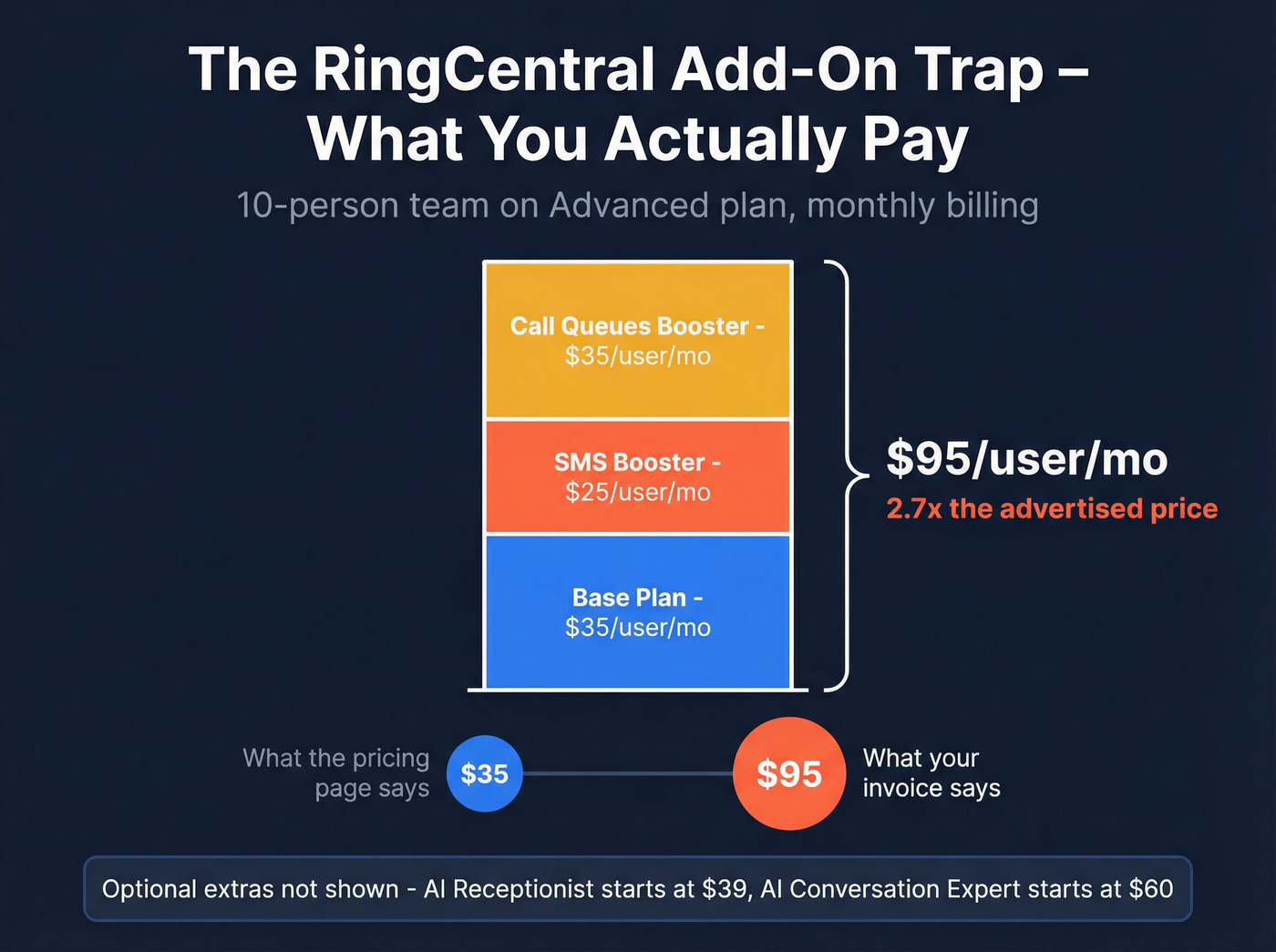
Do the math on a 10-person team on Advanced with SMS and call queue boosters: $35 + $25 + $35 = $95/user/month at monthly rates. That's nearly 3x the advertised per-user cost, and we've seen teams get blindsided by this when the first real invoice lands. Budget 2-3x the sticker price if you know you'll need boosters.
The SMS Problem
RingCentral Core gives you 25 texts per user per month. Twenty-five. If you're texting prospects with any regularity, you'll blow through that in a day. Advanced bumps it to 100, Ultra to 200 - still not enough for texting-heavy workflows.
Line2 offers "unlimited" texting on paper, but G2 reviewers flag glitchy delivery and a one-photo-per-text limitation. Trustpilot reviews describe messages not arriving unless you sign out and back in.
A thread on r/sysadmin captures it well: a 4-person team needing a shared business number tried both RingCentral and Nextiva and called both "horribly unreliable" for shared SMS. If texting is core to your business, neither tool is the answer.
Here's the thing: most teams comparing these two platforms are solving the wrong problem. Their real bottleneck isn't the phone system - it's having verified numbers worth dialing in the first place. We've watched teams spend weeks agonizing over VoIP selection, then load their dialer with garbage data and wonder why connect rates sit in the single digits.
If you're building outbound motion from scratch, start with the list: cold call list quality matters more than the dialer brand.
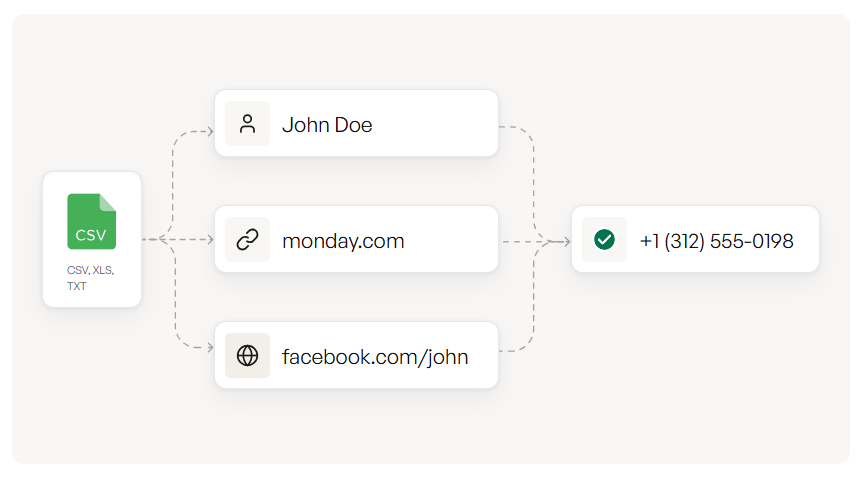

You're comparing phone systems, but the real connect-rate killer is bad data. Teams using Prospeo's 125M+ verified mobile numbers hit a 30% pickup rate - that's 3x what most dialers see with unverified lists. At $0.10 per mobile, you pay only when a number is found.
Stop dialing dead numbers. Start with data that picks up.
What Real Users Say
Line2: 2.7 out of 5 Across the Board
Line2 carries a 2.7/5 on Trustpilot from 760 reviews - that's a lot of unhappy customers. Recurring themes: messages not received, app freezing, and customer service with long wait times. The pattern holds on G2 at 2.7/5 from 14 reviews.
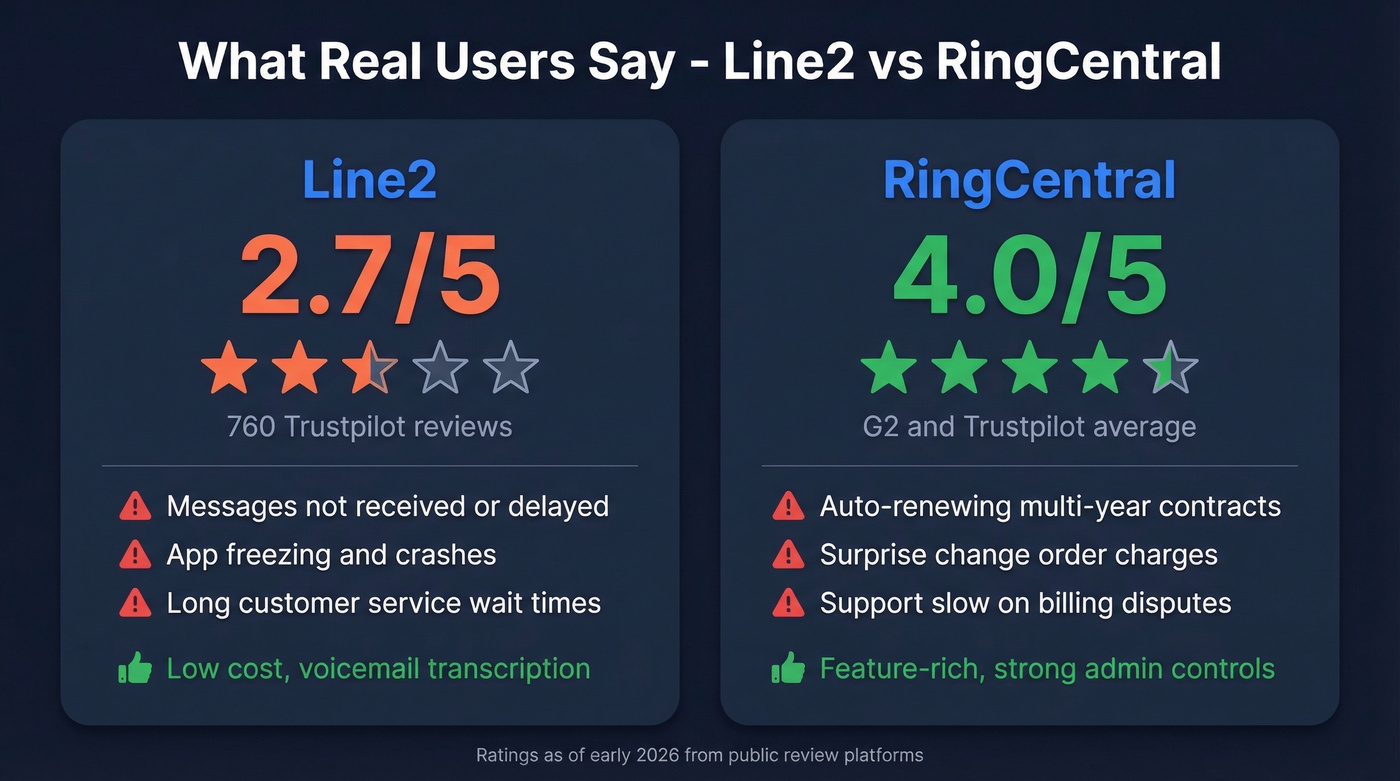
One Reddit user in the medical field reported noticeably worse call quality compared to standard cellular when calling an interpreter - the kind of gap that matters in professional settings. The positive reviews? People appreciate the low cost and voicemail transcription. But "it works most of the time" is a low bar for business communications.
RingCentral: Great Features, Brutal Contracts
RingCentral's feature set is genuinely impressive - even detractors admit that. The contract and billing complaints, though, are brutal.
One r/sysadmin user reported a 2-year contract that auto-renewed for the entire term without proactive renewal contact. Another described recurring "change order" charges with no signed change order - and support didn't respond to emailed screenshots. In our experience, the teams that struggle most with RingCentral aren't unhappy with the product itself. They're blindsided by the billing. Read every line of that contract before you sign, and set a calendar reminder 90 days before renewal.
If you're running a team, this is where basic account planning and vendor management saves you.
Who Should Pick What
Use Line2 if you're a solopreneur who needs a second number for under $20/month, don't need integrations or call recording, and can live with occasional hiccups. The Starter plan at $13.75/month annual is hard to beat on price. Skip it if reliability matters for your day-to-day operations.
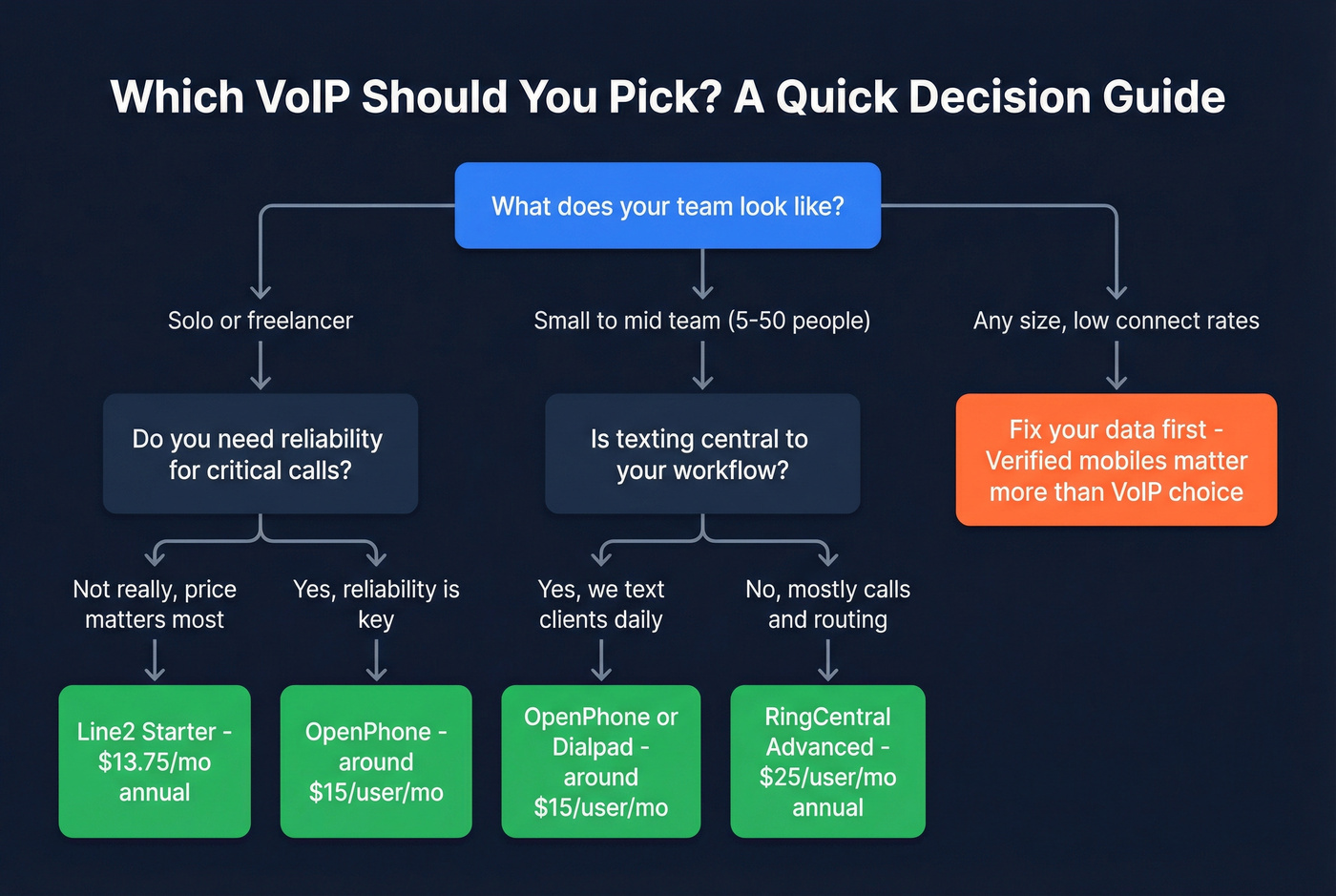
Use RingCentral if you're a team that needs call routing, integrations, and a real admin console. Go with Advanced ($25/user/month annual) as the minimum - Core's SMS limits make it a non-starter for most modern teams. Skip it if you can't stomach multi-year contracts or unpredictable add-on costs.
If you're evaluating calling tools specifically, compare options in our guide to dialers and the best sales dialers for outbound teams.
Use neither if texting is central to your workflow. OpenPhone (~$15/user/month) and Dialpad (~$15/user/month) are built around messaging-first workflows with shared inboxes that actually work. For a broader feature comparison, G2's head-to-head page is a decent starting point.
And if the real bottleneck is finding the right people to call - not the phone system - pair whichever VoIP you pick with Prospeo's 125M+ verified mobile numbers. There's a free tier, no contracts, and a 30% pickup rate that makes your dialer actually useful. (If you need a process, start with find phone numbers and then tighten your ICP targeting.)
Whether you pick Line2 or RingCentral, single-digit connect rates mean your VoIP choice barely matters. Prospeo gives you 125M+ verified mobiles refreshed every 7 days - not the 6-week-old data other providers recycle. Pair it with 98% accurate emails for multichannel outreach.
Fix the pipeline before you fix the phone system.
FAQ
Is Line2 reliable enough for business use?
Line2 scores 2.7/5 on Trustpilot across 760 reviews, with consistent complaints about missed messages and app crashes. It's fine for a low-stakes second line. Risky for mission-critical communications.
Does RingCentral have hidden fees?
Yes. Business SMS Booster ($25), Call Queues Booster ($35), AI Receptionist (starts at $39), and AI Conversation Expert (starts at $60) are all paid add-ons. Factor in auto-renewal risk and budget 2-3x the advertised per-user cost.
What's the best cheap VoIP for a small business in 2026?
Line2 Starter ($13.75/month annual) for a solo second line. OpenPhone (~$15/user/month) for texting-heavy teams. RingCentral Advanced ($25/user/month annual) for a full UCaaS setup with admin controls.
How do I improve connect rates regardless of which VoIP I choose?
Your phone system only matters if you're dialing verified numbers. Prospeo's mobile finder covers 125M+ verified direct dials with a 30% pickup rate - pair it with any VoIP to see connect rates climb from single digits to 20%+ without switching platforms.