

Mailstand vs Apollo.io: What to Know (and Use) in 2026
Mailstand was sunset in late 2025. If you're comparing Mailstand vs Apollo.io, you're either a former user figuring out what comes next or wondering why the name keeps popping up in old tool roundups. Let's sort this out quickly.
30-second verdict: Mailstand was a lightweight inbox rotation and sequencing tool. Apollo.io is a full-stack sales intelligence platform with a 210M+ contact database, a dialer, and CRM workflows. These aren't the same category. If you need to rotate inboxes and send sequences, pair a dedicated sender like Instantly or QuickMail with a verified data layer like Prospeo. Skip Apollo unless you actually need the database and engagement suite together.
What Was Mailstand?
Mailstand let you merge multiple mailboxes into a single campaign - connect up to 3, 5, or 10 sending accounts depending on your plan, and it rotated across them automatically. For agencies running high-volume cold email, that was the entire product. Users liked the simplicity and near-real-time Google Sheets sync.
Reliability was another story. Mailstand's lone G2 review gave it 3.0/5, citing campaigns that "wouldn't start" and contact uploads that hung indefinitely. Pricing ran roughly $12-$95/mo month-to-month, with an Unlimited plan that required contacting sales - affordable, but the reliability matched the price tag.
Here's the thing: with Google and Microsoft now enforcing strict authentication and the 100-email-per-inbox ceiling firmly in place, Mailstand would've been a deliverability liability even if it had survived.
What Is Apollo.io?
Apollo is a sales intelligence platform built around a 210M+ contact database, with sequences, a dialer, intent signals, and CRM integrations baked in.
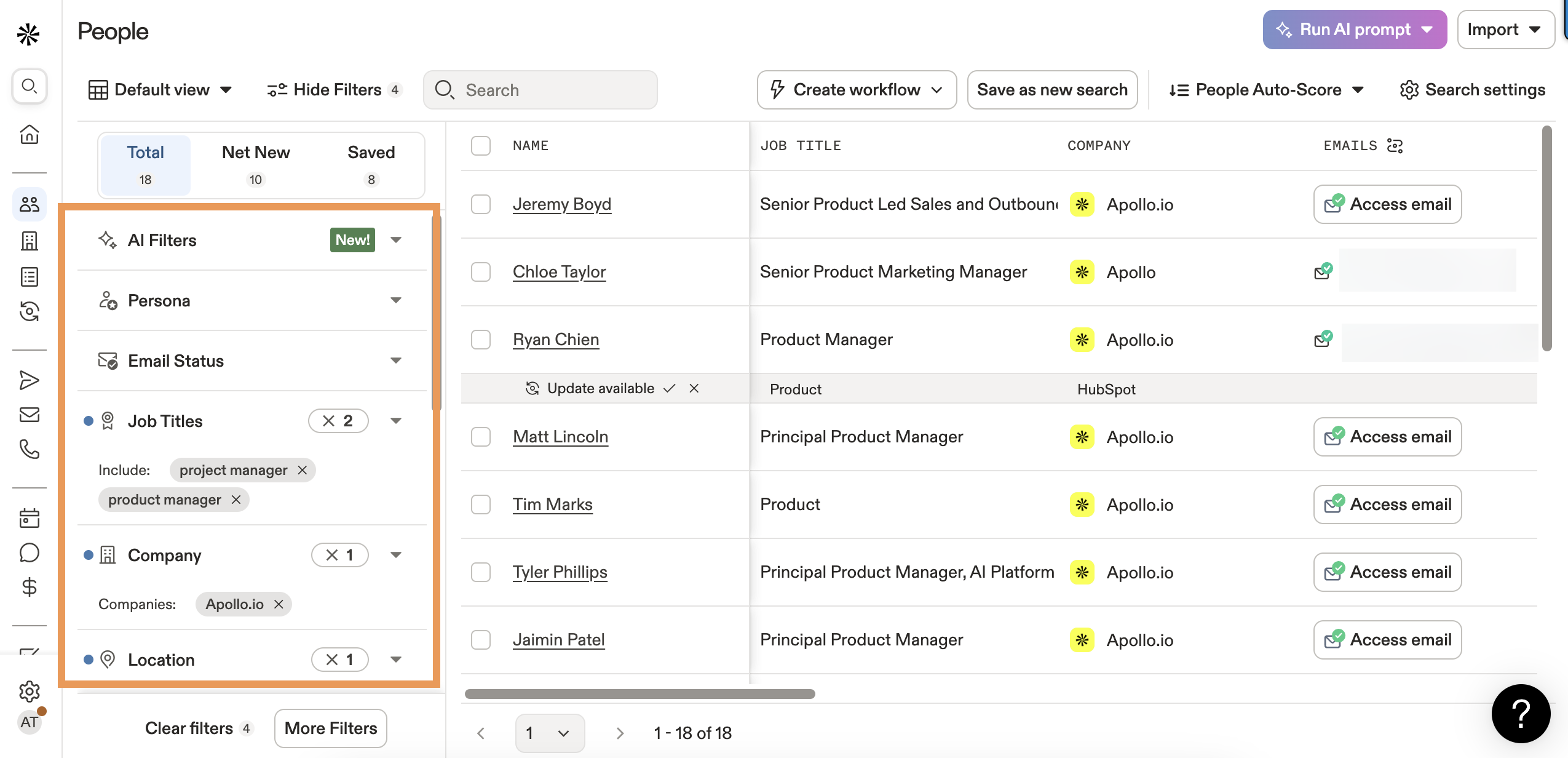
Strengths: Massive contact database, built-in dialer, generous free tier for testing.
Weaknesses: The credit system burns through faster than most teams expect - credits don't roll over between billing cycles. There's no email warmup. No inbox rotation. Multiple users on the same account can run into IP overlap issues that hurt email deliverability. And community discussions on r/sales regularly flag Apollo lists leading to prospect fatigue because so many teams pull from the same database.
Pricing: Free (limited), $49/user/mo (Basic), $79/user/mo (Professional), $119/user/mo (Organization, 3-seat minimum).

Apollo's 210M+ database means nothing if emails bounce. Prospeo delivers 98% email accuracy across 300M+ profiles, refreshed every 7 days - not every 6 weeks. Teams using Prospeo book 35% more meetings than Apollo users.
Replace Apollo's stale data with contacts that actually connect.
Side-by-Side Comparison
This is an apples-to-oranges comparison. Mailstand was a screwdriver. Apollo is a toolbox. But since people search this matchup, here's the breakdown:
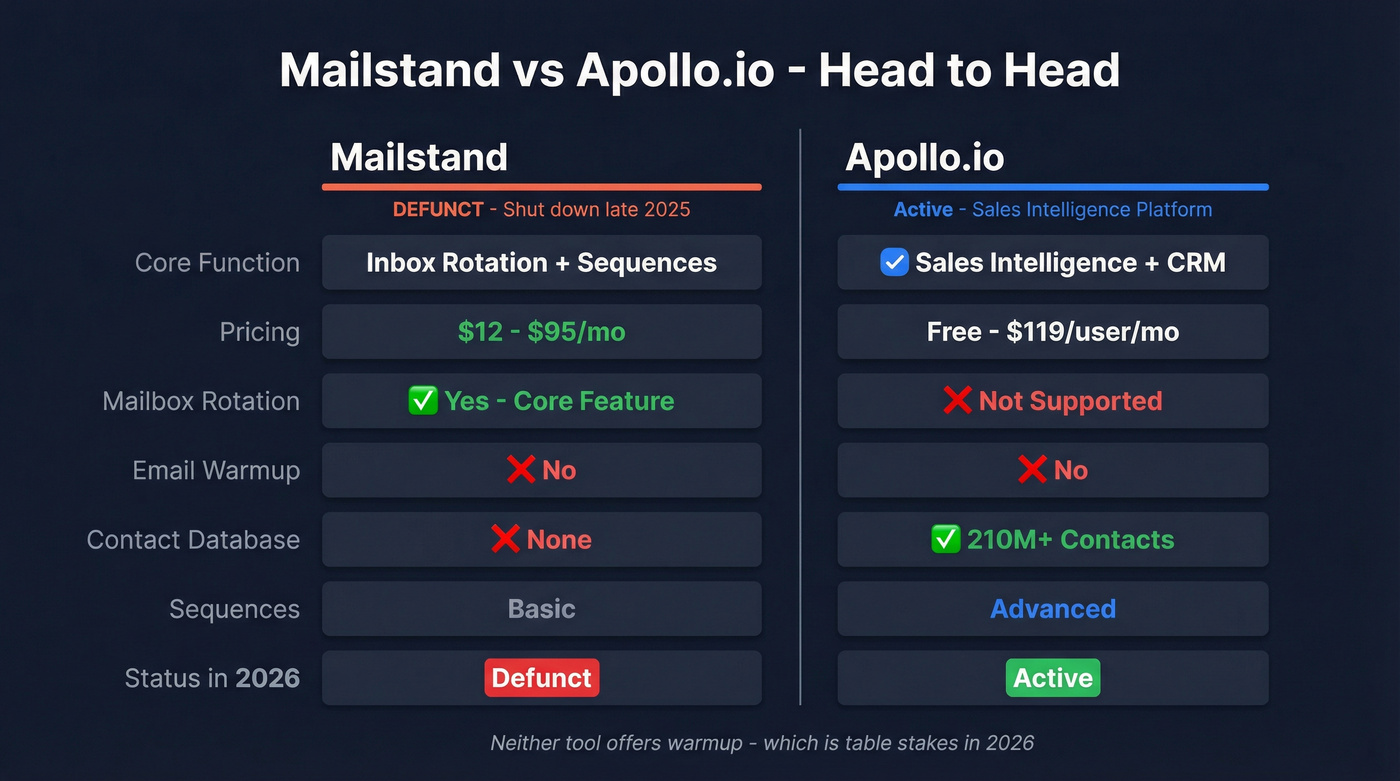
| Feature | Mailstand | Apollo.io | Edge |
|---|---|---|---|
| Core function | Inbox rotation + sequences | Sales intelligence + CRM | Apollo (broader) |
| Pricing | ~$12-$95/mo | Free-$119/user/mo | Mailstand (simpler) |
| Mailbox rotation | Yes - core feature | Not supported | Mailstand |
| Email warmup | No | No | Neither |
| Contact database | No | 210M+ contacts | Apollo |
| Sequences | Basic | Advanced | Apollo |
| Status (2026) | Defunct | Active | Apollo |
Apollo wins on data and workflow breadth. Mailstand won on the one thing it did. Neither offered warmup - which is table stakes in 2026.
Should You Switch to Apollo?
Only if your problem has changed.
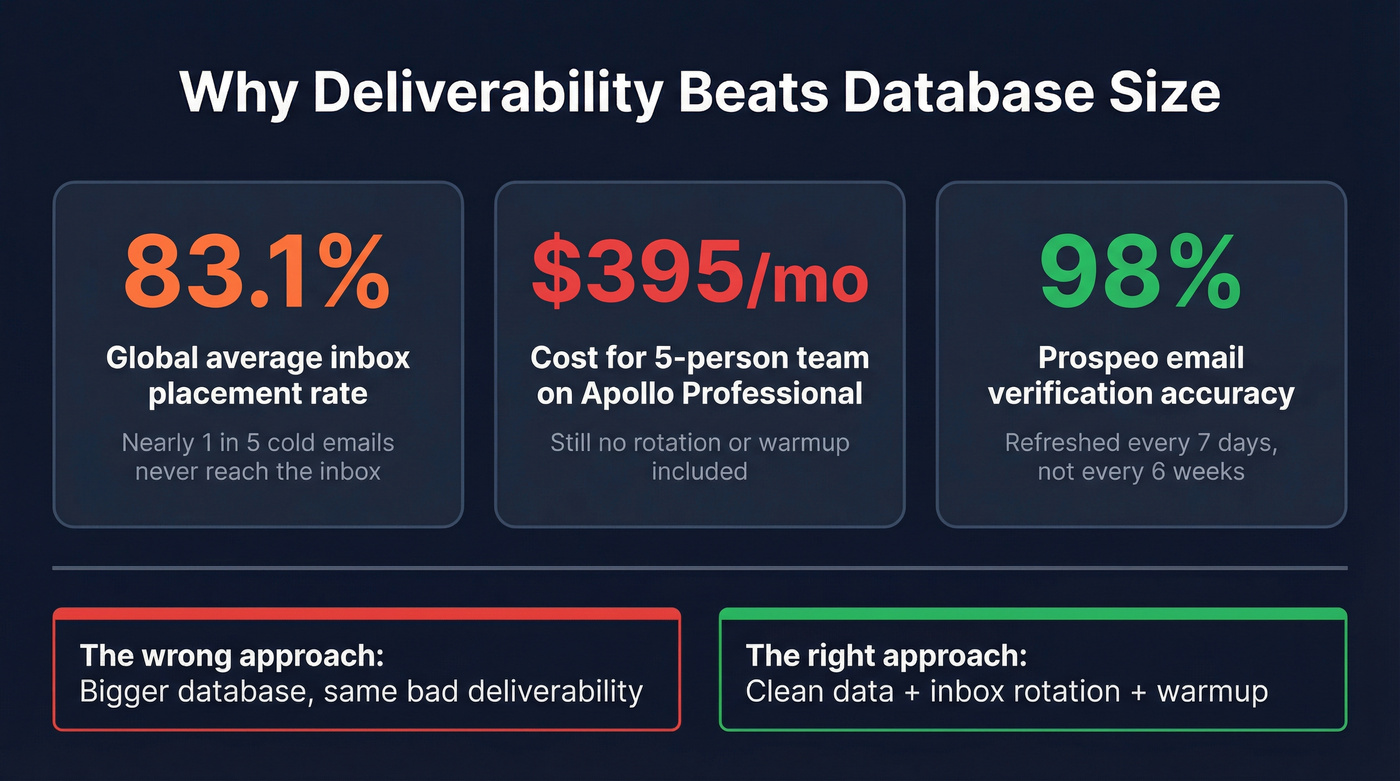
If you used Mailstand for inbox rotation and sending, Apollo doesn't replace that capability at all. A 5-person team on Apollo Professional runs ~$395/mo, and you still won't get rotation or warmup. That's a lot of money for a gap you'll need to fill with another tool anyway.
We've talked to enough former Mailstand users to have a strong opinion here: most teams researching this comparison don't need Apollo. If your average deal size is under $15k and your motion is cold email, you need great deliverability infrastructure and clean data - not a 210M-record database where every SDR on the planet is pulling the same leads. The 83.1% global average inbox placement rate means nearly 1 in 5 cold emails never reach the inbox. Rotation and data quality fix that. A bigger database doesn't.
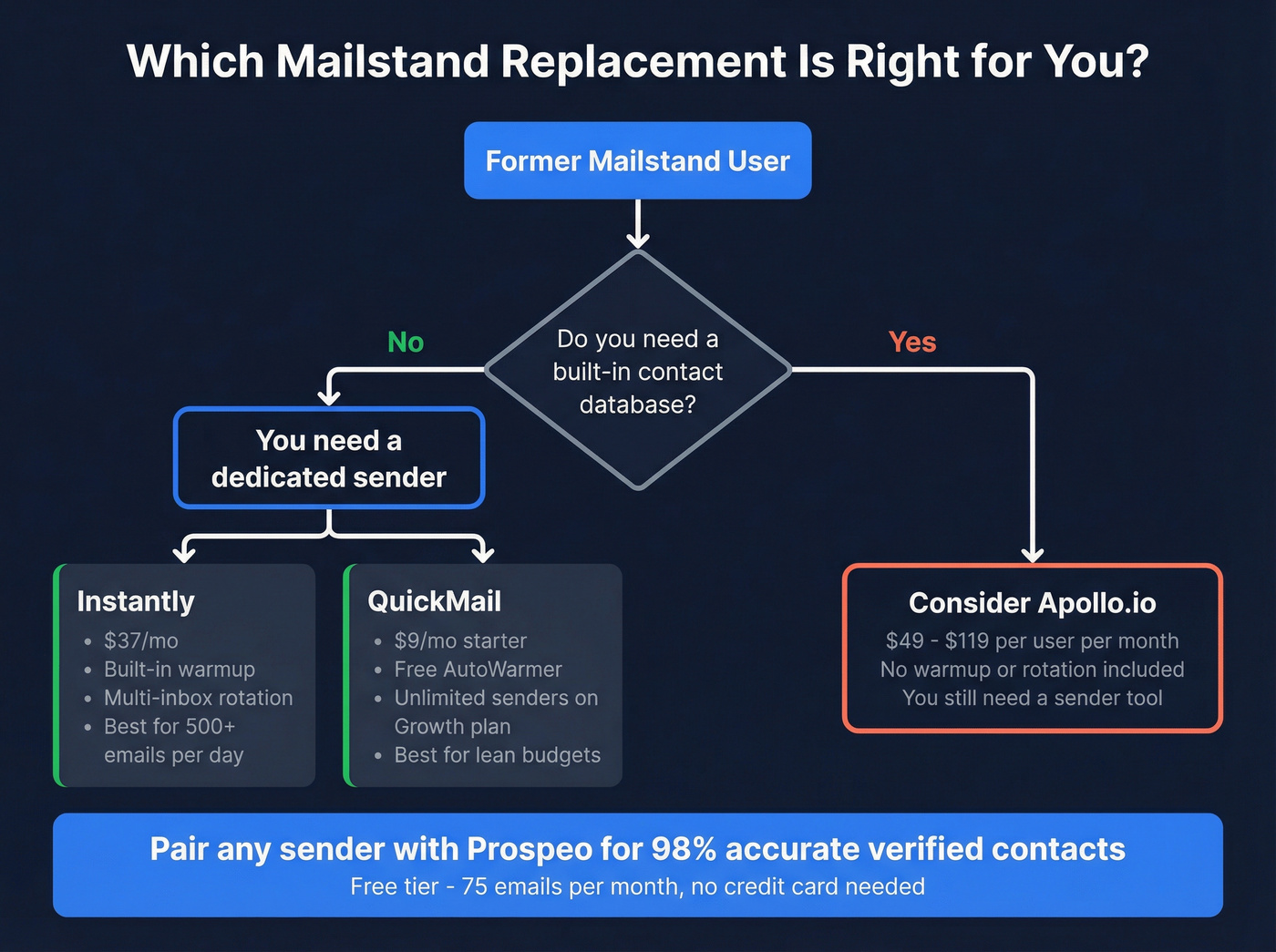
The best results we've seen come from splitting the problem in two: a dedicated sender for rotation and warmup, plus a separate data tool for verified contacts.
What to Use Instead
Instantly
The most popular Mailstand-style replacement. Instantly starts at $37/mo with warmup and multi-inbox rotation built in. Connect your inboxes, configure rotation, and the platform handles deliverability automatically. You won't get a built-in contact database - Instantly is a sending engine, not a data platform - so you'll need to source contacts separately. For teams doing 500+ emails/day across multiple inboxes, this is the default choice in 2026 and the tool we'd recommend first for anyone coming from Mailstand's workflow.
QuickMail
The closest thing to Mailstand's original model. QuickMail supports unlimited email senders with automatic rotation. Starter is $9/mo for one sender, Growth is $99/mo for unlimited senders, and every plan includes a free AutoWarmer. The 14-day free trial lets you test rotation before committing. If budget is tight and you're running a lean operation, start here.
Prospeo for Verified Data
Your sending tool is only as good as your data. Mailstand users often loaded stale lists and torched domain reputation without realizing it - the tool had zero verification built in.
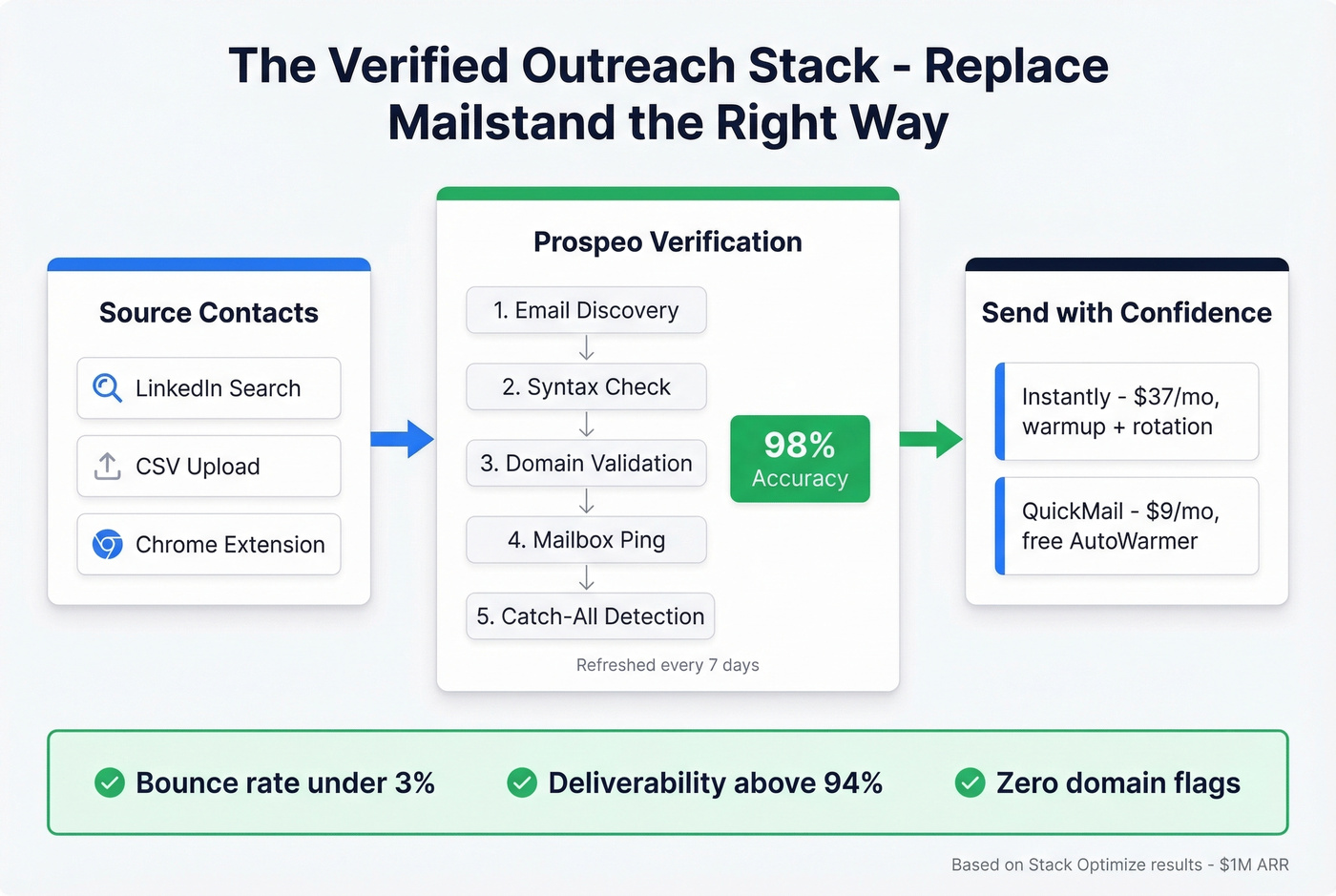
Prospeo's database covers 300M+ professional profiles with 143M+ verified emails at 98% accuracy, refreshed on a 7-day cycle versus the 6-week industry average. The workflow is straightforward: search or upload a CSV, verify in bulk, push clean contacts into Instantly or QuickMail via native integrations. One agency we work with, Stack Optimize, built to $1M ARR while keeping client deliverability above 94% and bounce rates under 3% - zero domain flags across all clients. That kind of result starts with data quality, not sending volume.
Free tier gives you 75 emails and 100 Chrome extension credits monthly, enough to test before committing a dollar.

Smartlead
Smartlead starts at $39/mo with rotation capabilities similar to Instantly. It's more agency-focused, with client management features baked in. Skip this if you're a solo operator or small team - you'll pay for features you won't use.
Former Mailstand users burned domains with unverified lists. Don't repeat that mistake. Prospeo's 5-step verification and 7-day refresh cycle keep bounce rates under 3% - Stack Optimize built to $1M ARR with zero domain flags using this exact workflow.
Pair Instantly or QuickMail with Prospeo and never torch a domain again.
FAQ
Is Mailstand still available?
No. Mailstand was sunset in late 2025. Its website and platform are no longer operational. Export any remaining data and migrate to a dedicated sender like Instantly ($37/mo) or QuickMail ($9/mo).
Does Apollo.io include email warmup or inbox rotation?
No to both. Apollo focuses on data and sequences, not deliverability infrastructure. You'll need a dedicated sender like Instantly or QuickMail for warmup and rotation - alongside Apollo or instead of it.
What's the cheapest way to replicate Mailstand's mailbox rotation?
QuickMail Starter at $9/mo for one sender with free AutoWarmer, or Instantly at $37/mo for warmup plus multi-inbox rotation. Pair either with Prospeo's free tier (75 verified emails/month) to avoid loading bad data that kills domain reputation.