

Phone Sales Call Scripts: 10 Data-Backed Examples + the Complete Call Flow
A RevOps lead we know ran 800 dials last month and booked two meetings. His colleague - same team, same product, same list - booked 18. The difference was structure: how the first 30 seconds played out, how objections got handled, and whether the numbers actually rang. Good phone sales call script examples aren't about memorizing lines. They're about internalizing a flow that works every time.
True enterprise playbook scripts from major companies rarely go public. What works is data-backed frameworks from practitioners who've made thousands of dials. That's what follows.
The Numbers Before You Dial
Gong Labs analyzed [300M+ cold calls](https://www.gong.io/blog/the-best-and-worst-cold-call-openers-backed-by-data-from-300m-calls). Average reps connect on 5.4% of dials. Top-quartile reps hit 13.3% - that's 8 dials per conversation versus 19 for everyone else.
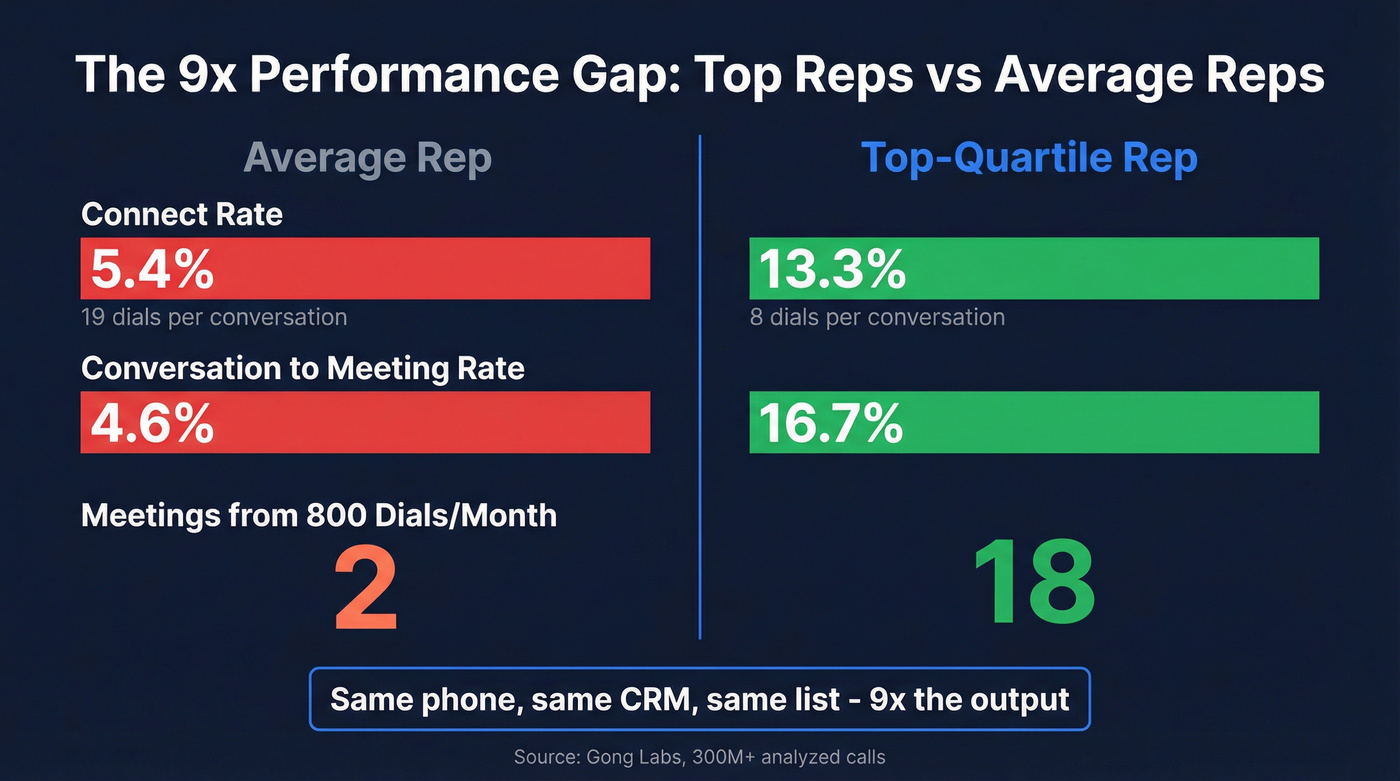
The conversion gap is wider. Top reps turn 16.7% of conversations into meetings; average reps manage 4.6%. At 800 dials a month, that's 18 meetings versus 2. Same phone, same CRM, 9x the output.
Cognism puts the [average cold-calling success rate](https://www.cognism.com/cold-calling-report-2025) at 2.3%, with 8 attempts needed to reach a prospect. Here's a stat most people miss: cold calling nearly doubles email reply rates (3.44% vs 1.81%) even without a live connect. The dial itself primes the inbox.
Anatomy of a Sales Call Script
Most successful calls follow six steps. The words change; the structure doesn't.
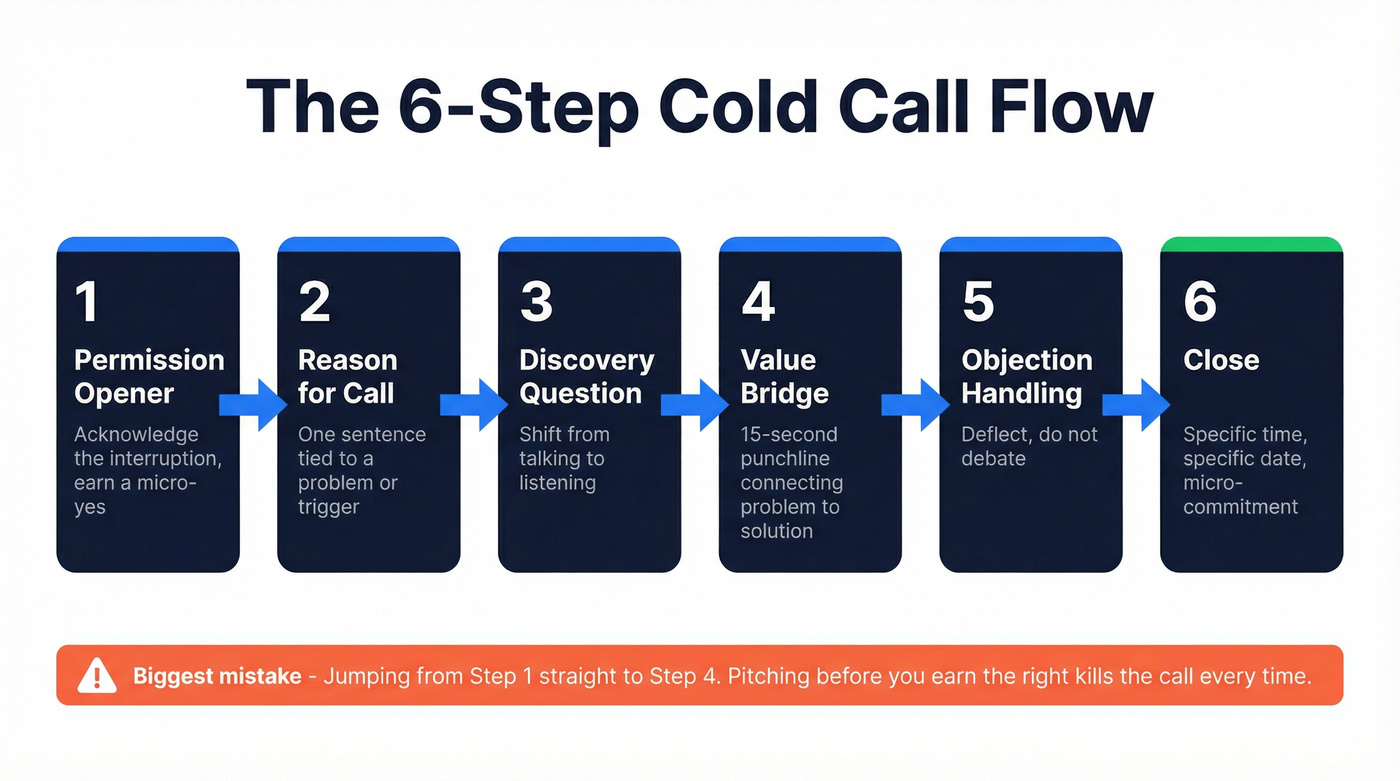
- Permission opener - acknowledge the interruption, earn a micro-yes
- Reason for call - one sentence tied to a specific problem or trigger
- Discovery question - shift from talking to listening
- Value bridge - 15-second punchline connecting their problem to your solution
- Objection handling - deflect, don't debate
- Close - specific time, specific date, micro-commitment
The biggest mistake reps make? Jumping from step 1 straight to step 4. One HubSpot practitioner tracked 11,519 cold calls and 335 meetings - pitching before you've earned the right kills the call every time.
10 Proven Script Examples
1. Cold Call - Permission-Based Opener
This one shows up in nearly every top-performing cold caller's playbook. A practitioner on r/sales put it this way:
"Hi [first name], this is [your full name] calling from [company]. Appreciate I caught you out of the blue here - you got a minute?"
Speak almost uncomfortably slow. Smile - they can hear it. A permission-based opener reduces defensiveness by acknowledging the interruption and giving the prospect control. We've tested dozens of openers across our own outbound campaigns, and this style consistently outperforms anything that starts with "How are you today?"
2. Cold Call - Trigger-Event Opener
When you've got a specific trigger - funding round, new hire, product launch - lead with it:
"Hi [name], I saw [trigger]. How are you handling [related challenge] right now?"
[81% of decision-makers engage](https://www.marketingweek.com/availability-business-confidence-5-interesting-stats/) when outreach is tailored to their company. This works across B2B verticals where you can find a public signal.
3. Cold Call - Pattern Recognition Opener
"We've been seeing a pattern with [segment] teams where [specific problem] keeps coming up. Are you seeing that too?"
This positions you as someone who understands their world. The question at the end flips the call from monologue to conversation - and that flip is everything.
4. Warm Follow-Up Call
For prospects who've opened your emails two or more times:
"Hi [name], this is [your name] from [company]. I sent you something last week about [topic] - looked like it caught your eye. Is [problem] something your team's actively working on?"
They're warm. They just haven't replied yet.
5. Voicemail - First Attempt
Under 20 seconds. Curiosity over information:
"Hi [name], [your name] from [company]. Quick question about how you're handling [specific challenge]. My number is [number]. Talk soon."
Don't pitch. Don't explain your product. Leave a gap they want to close.
6. Voicemail - Second Attempt
"Hi [name], [your name] again. Left you a message Tuesday. We just helped [similar company] cut [metric] by [result]. Worth a 5-minute call? [number]."
Reference the first voicemail so they know you're persistent, not random.
7. Gatekeeper Navigation
Drop the authority play. Help-seeking works better:
"I'm hoping you might help me - I'm trying to connect with whoever handles [specific responsibility]. Could you point me in the right direction?"
Asking for help disarms gatekeepers. Mentioning the responsibility rather than a name you Googled sounds more natural and gets you transferred faster.
8. Referral-Based Call
"Hi [name], [referrer] suggested I reach out. They mentioned you handle [area]. I'd love 15 minutes to share what we did with their team - does [day] work?"
The referral does most of the work. Keep the ask small and specific.
9. Discovery / Qualification Call
This isn't a pitch call. It's a listening call:
"Before I walk through anything, I want to make sure this is relevant. Can you walk me through how you're currently handling [process]?"
The 300M-call dataset shows the optimal talk-to-listen ratio is 43/57. You should be listening more than half the call. Multi-threading matters too - engaging 2+ contacts at the same account boosts win rates by 130% on deals over $50K.
10. Breakup / Re-Engagement Call
For stalled prospects, try the tension-relief approach:
"Should I stop reaching out, or is [problem] something you're open to revisiting? I've got something new that's relevant - can I get 20 minutes Thursday at 2pm?"
Specific date, specific time, specific promise. Vague "let's find time" requests die in the inbox.
Let's be honest about something: tone matters more than the exact words. C-suite on a Friday afternoon? Casual and direct. IT manager mid-sprint? Respectful and brief. The script is the skeleton - tone is the muscle.

The gap between 2 meetings and 18 isn't just the script - it's whether the phone actually rings. Prospeo's 125M+ verified mobile numbers hit a 30% pickup rate, nearly 3x the industry average. Stop burning dials on switchboards and dead numbers.
Connect with decision-makers on their direct line, not the front desk.
Objection Handling Scripts
Most reps either fold instantly or try to bulldoze through the objection head-on. Both fail. The deflect framework keeps the conversation moving without confrontation.
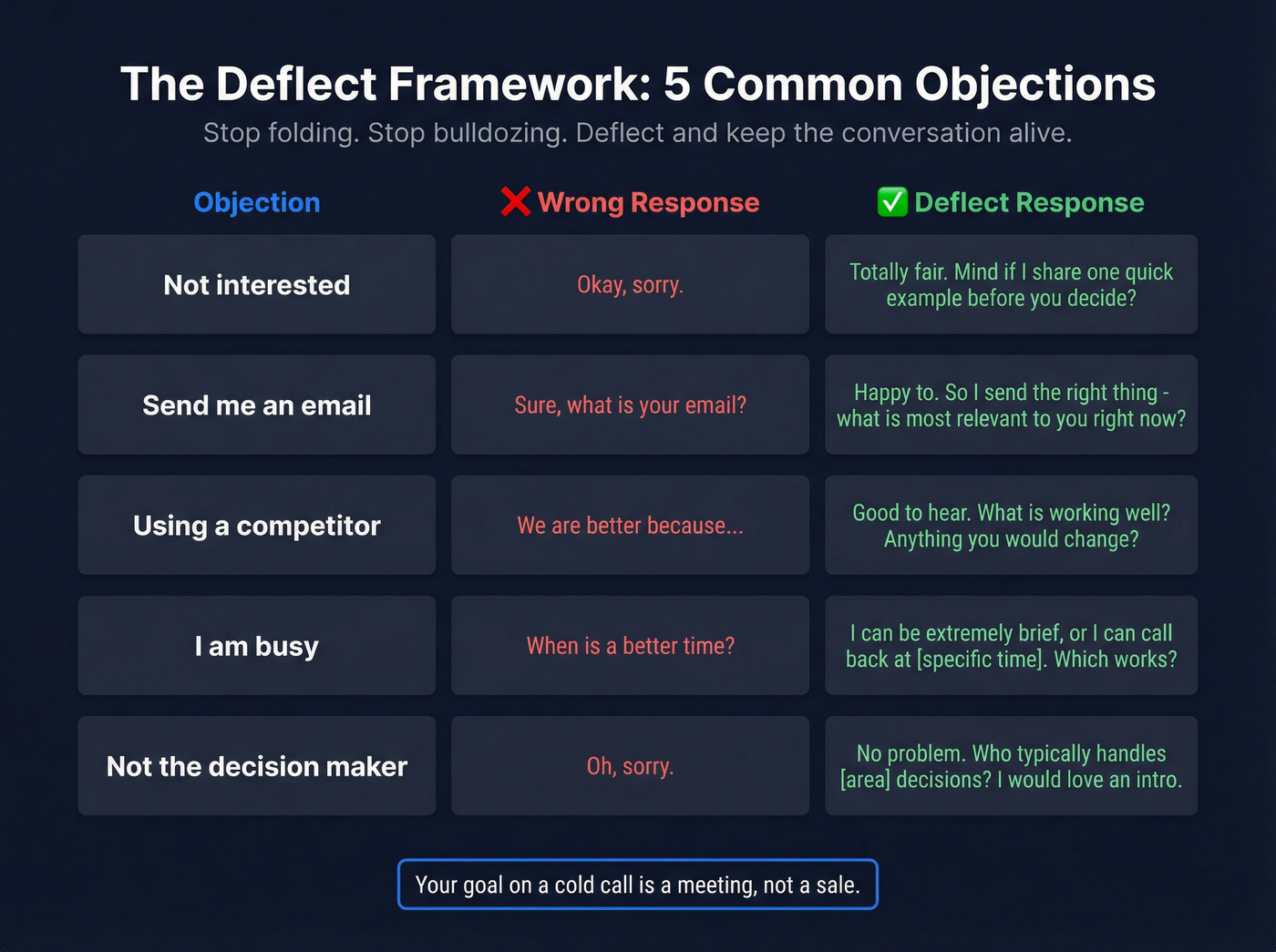
"Not interested"
Wrong: "Okay, sorry." Deflect: "Totally fair. Mind if I share one quick example before you decide?"
"Send me an email"
Wrong: "Sure, what's your email?" Deflect: "Happy to. So I send the right thing - what's most relevant to you right now?"
"Using a competitor"
Wrong: "We're better because..." Deflect: "Good to hear. What's working well? Anything you'd change?"
"I'm busy"
Wrong: "When's a better time?" Deflect: "I can be extremely brief, or I can call back at [specific time]. Which works?"
"Not the decision maker"
Wrong: "Oh, sorry." Deflect: "No problem. Who typically handles [area] decisions? I'd love an intro."
Your goal on a cold call is a meeting, not a sale. "No budget" is a valid reason not to buy - it's not a valid reason to refuse a 15-minute conversation.
Mistakes That Kill Your Calls
Pitching too early. You haven't earned the right. Open with context, ask a smart question, then pitch - in that order.
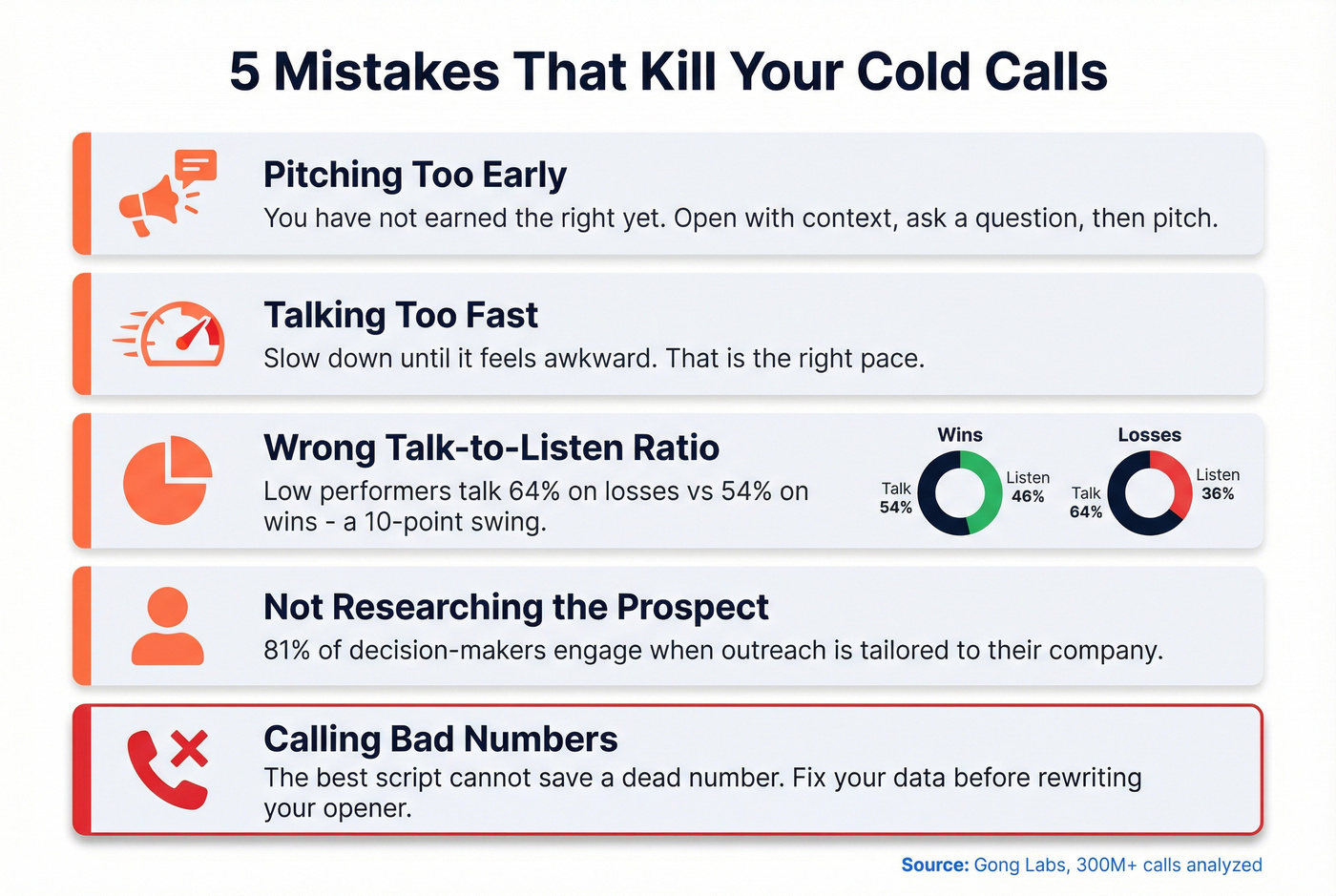
Talking too fast. Nerves make reps speed up. Slow down until it feels awkward. That's the right pace.
Wrong talk-to-listen ratio. Low performers talk 54% on wins but 64% on losses - a 10-point swing that signals they're pitching instead of listening.
Not researching the prospect. Generic calls get generic brush-offs. 81% of decision-makers engage when outreach is tailored to their company and context. Even 90 seconds on their profile before dialing changes the entire conversation.
Calling bad numbers. Here's the thing: the best script in the world can't save a dead number. In our experience, data quality is the single most underrated variable in outbound. We've seen teams double their connect rates just by switching to verified mobile data with a weekly refresh cycle - not by changing a single word in their scripts.
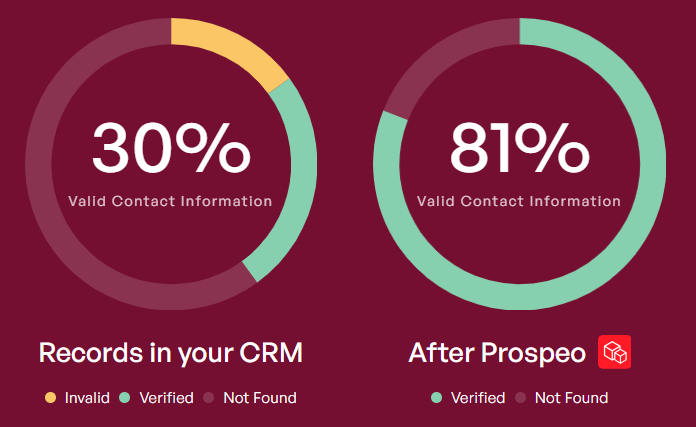
If your deal size is under $10K and your connect rate is below 10%, your problem isn't scripts - it's data. Fix the numbers you're dialing before you rewrite a single opener.
Trigger-event openers and warm follow-ups only work when you have accurate contact data behind them. Prospeo refreshes every record every 7 days and delivers 98% email accuracy - so your multi-channel sequences actually land.
Pair your best script with data that connects at $0.01 per lead.
2026 Compliance Checklist
Skip this section at your own risk. One TCPA class action can cost more than your entire outbound program generates in a year.
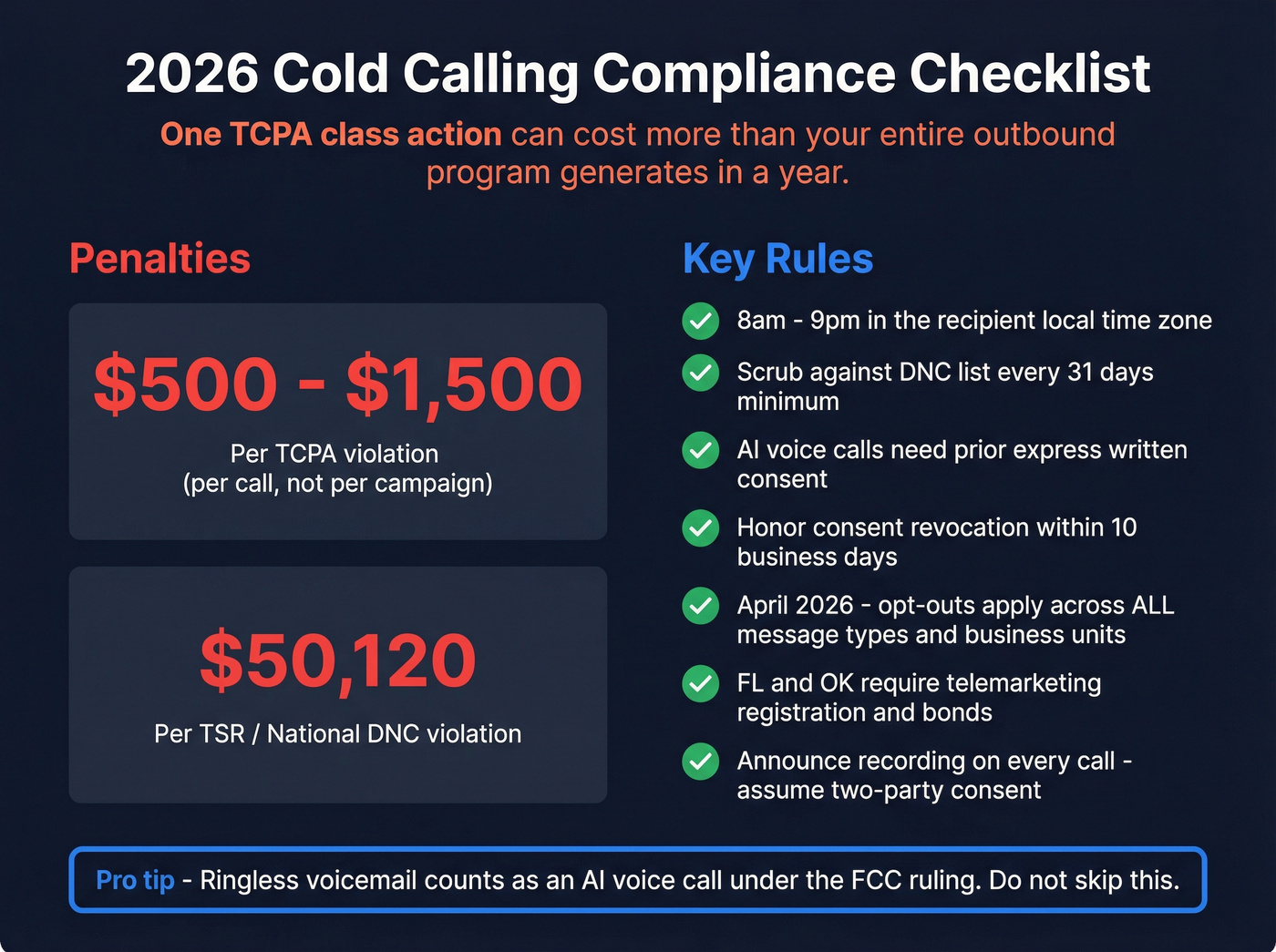
- TCPA penalties: $500-$1,500 per violation. Per call, not per campaign.
- TSR / National DNC: up to $50,120 per violation.
- Calling hours: 8am-9pm recipient's local time.
- DNC scrub: every 31 days minimum.
- AI voice calls: FCC ruled that AI-generated voices require prior express written consent. Ringless voicemail counts.
- Consent revocation: consumers can revoke consent by any reasonable means. You have 10 business days to honor it.
- April 2026 opt-out expansion: opt-outs now apply across all message types and business units - not just the channel where consent was revoked.
- State registration: Florida and Oklahoma require telemarketing registration and bonds.
- Recording consent: assume two-party consent and announce recording. Simpler than memorizing state-by-state rules.
FAQ
What's a good cold call success rate?
Average reps connect on 5.4% of dials; top-quartile reps hit 13.3%. Top reps convert 16.7% of conversations to meetings. At 800 dials per month, that's 18 meetings versus 2 - the gap is technique and data quality, not volume.
Should I use a script word-for-word?
Internalize the structure, don't memorize the words. The six-step flow stays the same every time. The specific language adapts to each prospect's industry, role, and trigger event. Scripts are training wheels; the flow is the skill.
How do I get past gatekeepers?
Use a help-seeking approach rather than demanding to speak with someone by name. Ask to be pointed in the right direction and mention the specific responsibility you're calling about. Better yet, skip the gatekeeper entirely with verified direct dials so you reach decision-makers on their cell.
What's the ideal length for a cold call?
Top-performing cold calls that convert to meetings average 5-7 minutes. Spend the first 30 seconds earning permission, 60-90 seconds on discovery, and close with a specific meeting time. Calls under 2 minutes rarely build enough rapport; calls over 10 minutes usually mean you're pitching instead of booking.