

POC Point of Contact: What It Means in 2026
A sales engineer I know bombed an interview because the hiring manager kept saying "PoC" and meant a presales trial. He kept answering about the account's primary point of contact. They talked past each other for twenty minutes. Three letters, two completely different meanings, one awkward debrief.
That confusion around POC - point of contact - is more common than it should be. Let's clear it up and then get into the part that actually matters for revenue teams: how to find and verify the right contact in any target account.
Quick Definition
A POC (point of contact) is the designated person or department that serves as the primary communication link for a project, account, or inquiry.
POC also means "proof of concept" in B2B tech and "people of color" in social contexts. Spell it out on first use. Always.
Finding one: map the org chart by role, verify contact data with a B2B data platform, multi-thread across the buying committee, then reach out via direct channel.
What Does Point of Contact Mean in Business?
A point of contact is the individual or department that acts as the central coordinator for communication around a specific project, account, or customer relationship. Every question, update, and escalation flows through them so nothing gets lost in cross-functional noise.
Here's the distinction most glossary pages miss: a POC isn't the same as a touchpoint. A touchpoint is any interaction across the customer journey - a chatbot reply, a billing email, a support ticket. A POC is a person with ownership. Touchpoints are moments; POCs are accountable humans.
You'll also hear the term SPOC - single point of contact - where one designated person handles all communication for a given relationship. SPOCs work for small projects or simple accounts. For complex B2B deals with multiple stakeholders, relying on a single contact person is a risk we'll get into shortly.
The Disambiguation Problem
Three meanings, one acronym. This causes real problems.
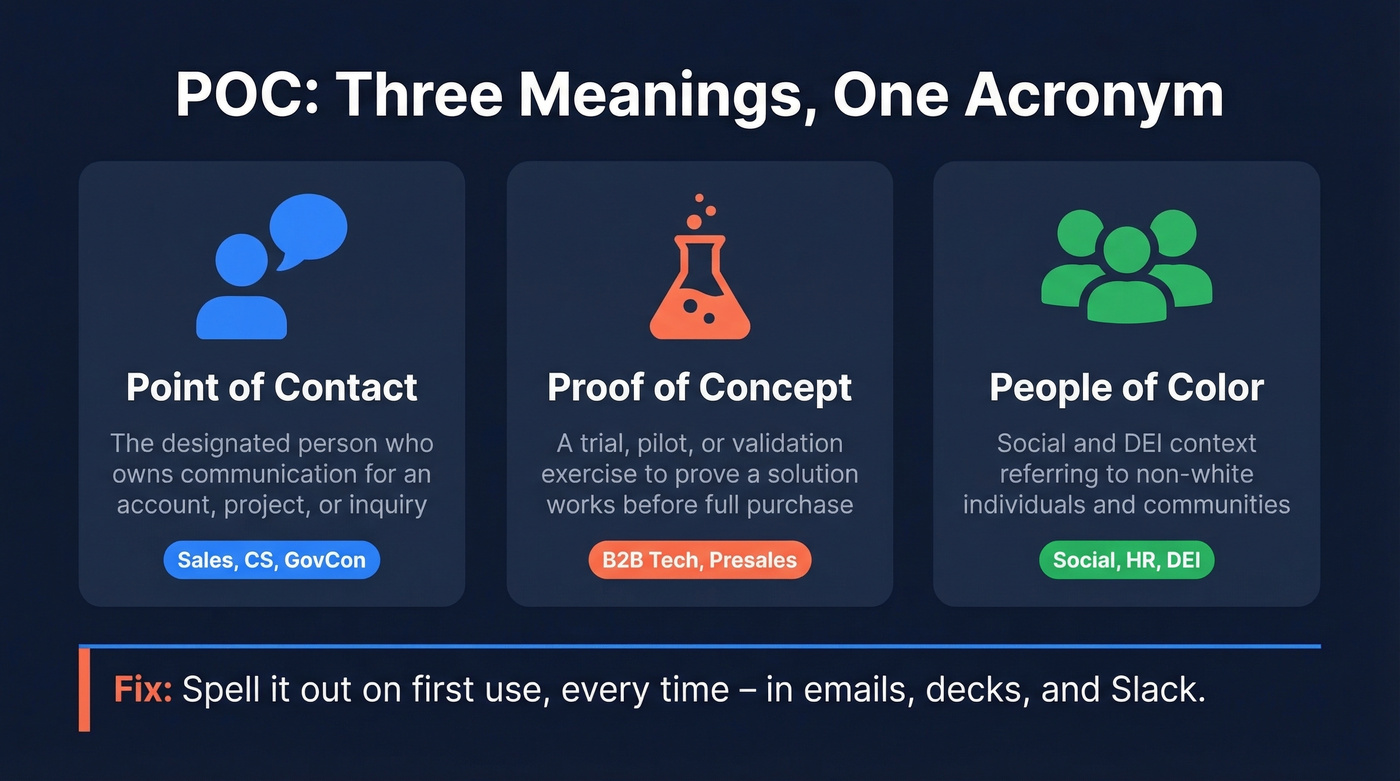
Point of contact is the common business usage - the person you call when you need something done on an account or project. Proof of concept is the B2B tech meaning - a trial, pilot, or validation exercise designed to prove a solution works before a full purchase. That sales engineer interview story from the intro? It happened because "PoC" meant a presales trial to one side and a contact person to the other. Same acronym, different lifecycle stages, total confusion.
People of color is the social and DEI context. A Reddit thread asked outright whether people should stop using "POC" for point of contact because of this collision. The concern is legitimate.
The fix is simple: spell it out on first use, every time, in emails, decks, and Slack. Don't assume your audience shares your default definition.
Why a Designated POC Matters
The numbers make this case on their own. 52% of customers switch to a competitor after a single negative experience. 70% expect anyone they interact with to have full context on their history. And 72% want immediate service.
A designated contact meets all three expectations by preserving context and speeding up resolution. When there's no clear owner, context gets lost between handoffs, response times balloon, and the customer feels like they're starting over every interaction - which is exactly the experience that drives churn. Customers are 2.4x more likely to stay when problems get solved quickly, and speed requires someone who already knows the account.
For B2B sales specifically, the POC is your thread into the deal. Lose that thread - because they changed roles, went on leave, or simply stopped responding - and the entire opportunity stalls.
POC vs Related Roles
| Role | Scope | Authority | When to Use |
|---|---|---|---|
| POC | Communication hub | Coordination, not decision | Default contact |
| Touchpoint | Single interaction | None | Journey mapping |
| Account Manager | Full relationship | Revenue ownership | Ongoing accounts |
| Project Manager | Deliverables + timeline | Execution authority | Active projects |
| Contracting Officer | Legal/procurement | Binding authority | Government deals |
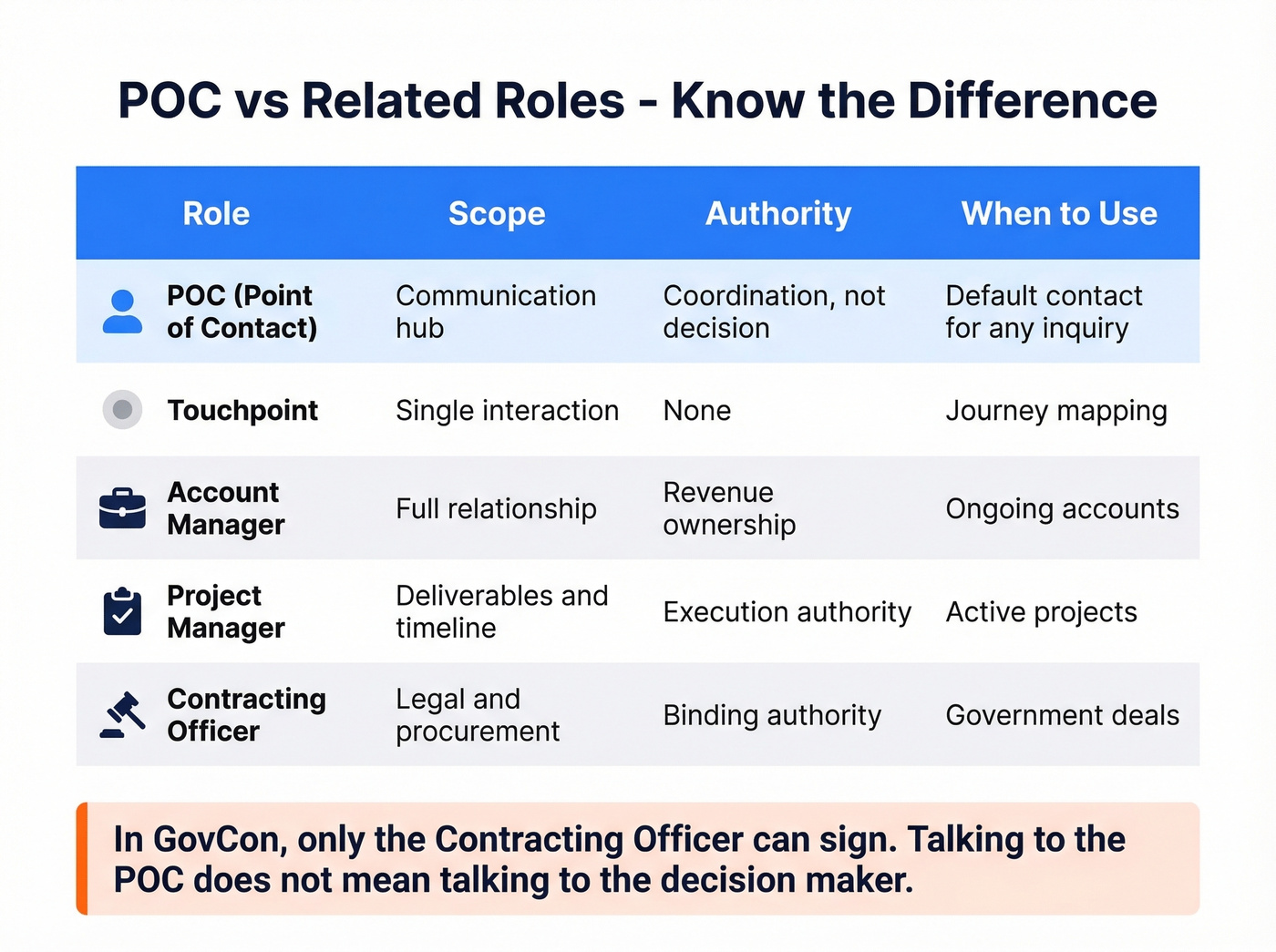
The government contracting distinction matters most. Per FAR 15.604, agencies must make points of contact available for unsolicited proposals - but only the cognizant contracting officer can actually bind the government. Talking to the designated contact doesn't mean you're talking to someone who can sign. In GovCon, confusing these roles wastes months.

Finding the right point of contact is step one. Verifying their data is step two. Prospeo gives you both - 300M+ professional profiles with 98% email accuracy and 125M+ verified mobile numbers, all refreshed every 7 days so your POC data never goes stale.
Stop chasing outdated contacts. Find verified POCs in seconds.
Types of POCs by Context
B2B sales - your champion or economic buyer inside the target account. This person advocates internally for your solution and shepherds the deal through procurement. They're the gatekeeper to the rest of the buying committee.
Customer success - the designated contact on the vendor side who owns the post-sale relationship, responsible for onboarding, adoption, and renewal conversations.
Government contracting - the agency-designated contact for vendor inquiries. Per FAR 15.604, agencies are required to make this information available for unsolicited proposals, though only the contracting officer can award.
Project management - the go-to person for status updates, blockers, and cross-team coordination on a specific initiative.
IT/support - the technical contact for escalations, integrations, or infrastructure questions. In enterprise deals, this is often a separate person from the business-side contact, and mixing them up slows everything down.
Real-World Examples
To make this concrete:
- SaaS deal: A VP of Engineering evaluates your platform and becomes the internal champion - they're the POC your AE communicates with throughout the sales cycle.
- Customer success: After close, a dedicated CSM is assigned as the vendor-side contact, owning onboarding calls and QBRs.
- Government: A program analyst listed on SAM.gov serves as the agency contact for RFI responses - but only the contracting officer can award.
- Project management: A cross-functional lead at a consulting firm coordinates between the client team and internal delivery. All status updates route through them.
- IT/support: A systems administrator at the buyer's org handles SSO configuration and API integration questions, separate from the business sponsor.
The title changes, the function changes, but the core job stays the same: own the communication thread so nothing falls through the cracks.
How to Find the Right POC
This is where most glossary articles stop being useful. Let's fix that.
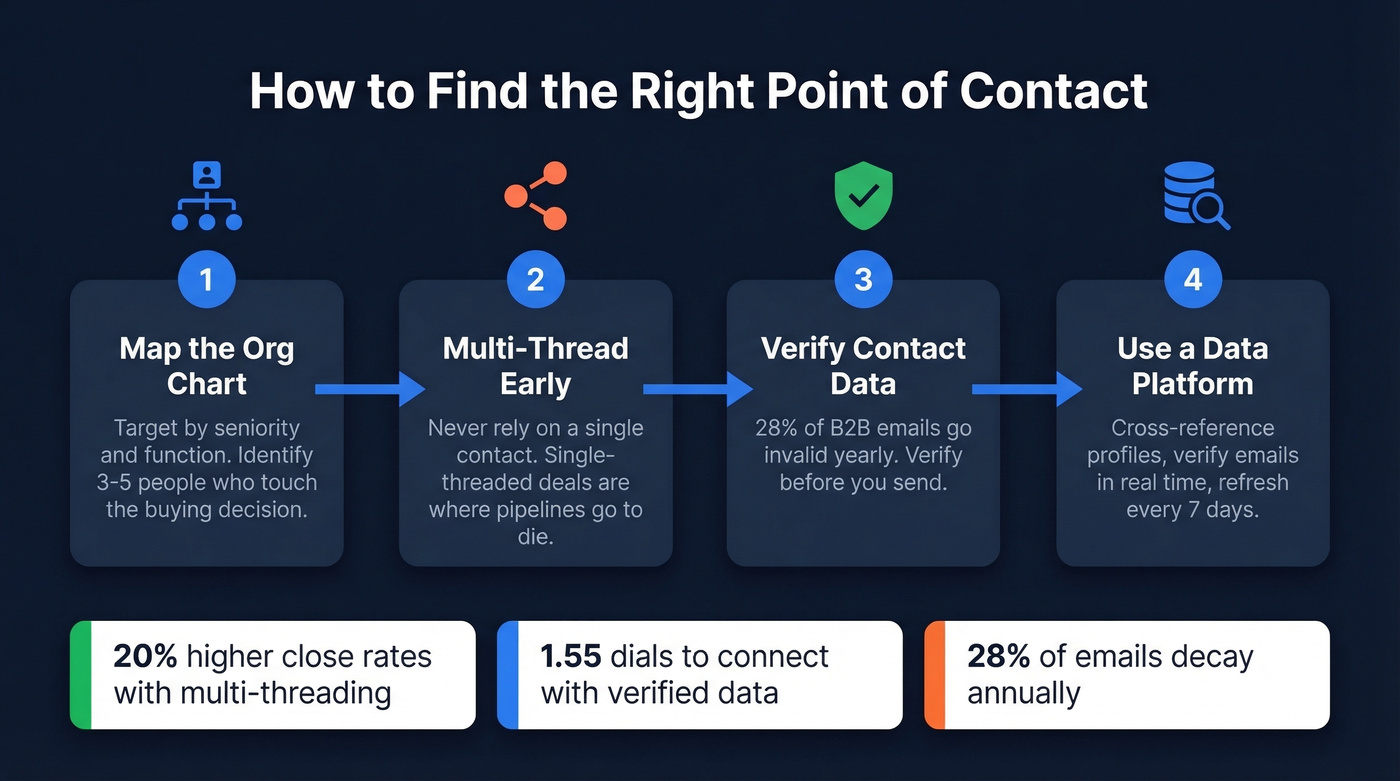
Map the Org Chart by Role
Target by seniority and function, not by name. List job titles, decision authority, and likely priorities for each role in a stakeholder map. The goal is to identify 3-5 people who touch the buying decision - account-based selling starts with knowing who's in the room before you walk in.
Multi-Thread from Day One
If your one contact updates their headline to "Open to Work," your deal dies. The consensus on r/sales is painfully consistent: single-threaded deals are where pipelines go to die. One POC leaves, and the opportunity goes dark overnight. Multichannel, multi-threaded outreach produces 20% higher close rates and 25% shorter sales cycles. We've watched single-threaded deals collapse in our own pipeline - don't let that happen to yours.
Verify Contact Data Before Outreach
About 28% of B2B emails go invalid every year due to job changes and role shifts. With verified direct dials, dials-to-connect drops to 1.55 - versus 8-18 dials without them. Industry average cold call success rate sits at 2.7%. Teams using verified direct dials report rates as high as 11.3%.
Use a B2B Data Platform
Once you've identified the right person by role, verify their contact info before you reach out. Prospeo cross-references 300M+ professional profiles and verifies emails in real time at 98% accuracy, so you're not burning sends on dead addresses. The 7-day data refresh cycle matters when roughly a third of your contact list decays every year. The free tier gives you 75 verified emails per month to start.
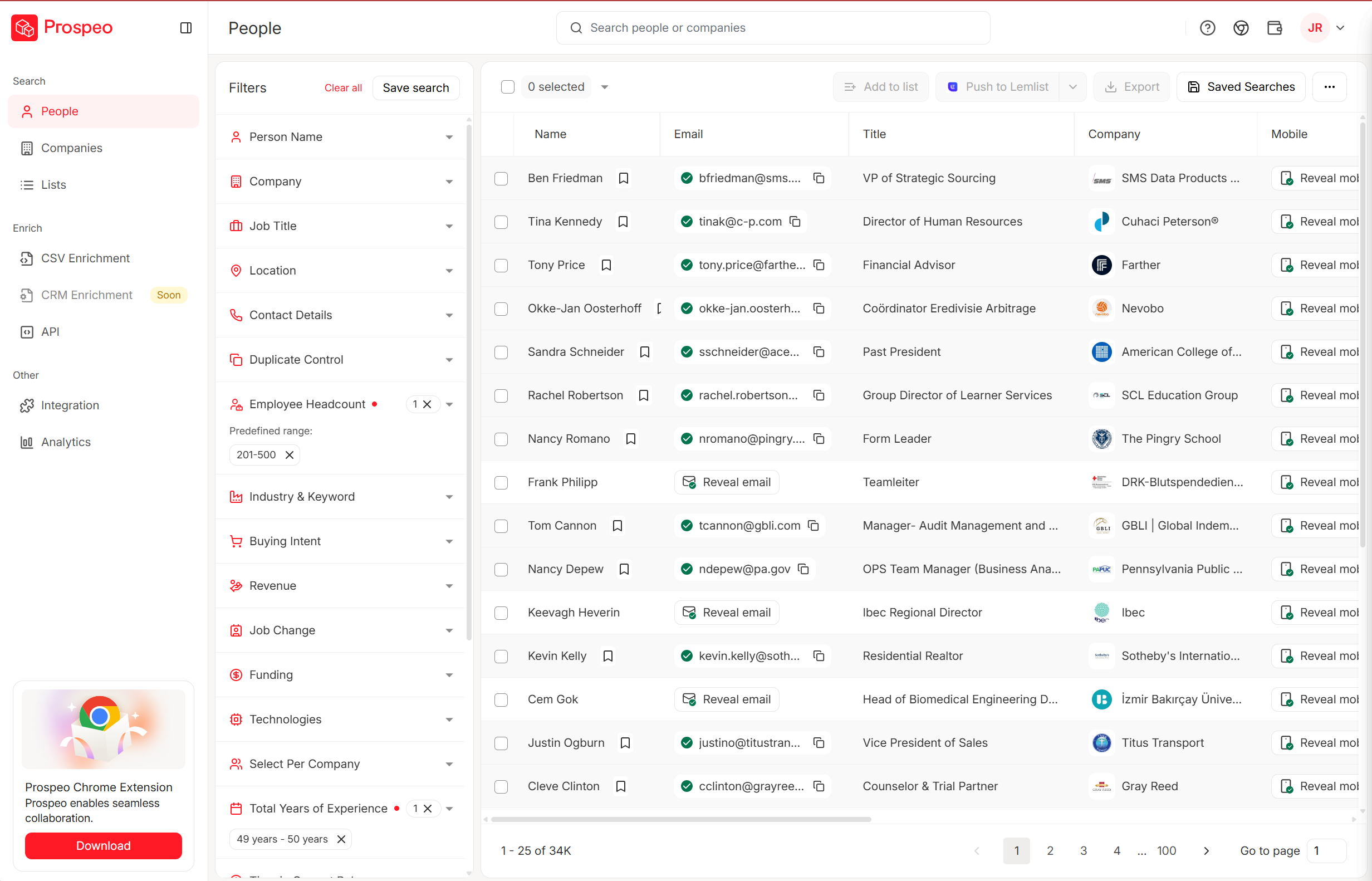
Multi-threading a buying committee means you need verified contact data for 3-5 stakeholders, not just one. Prospeo's 30+ search filters let you map entire org charts by seniority, department, and title - then deliver verified emails and direct dials at $0.01 per lead.
Map the full buying committee with data that actually connects.
POC Responsibilities Checklist
A POC without defined responsibilities is just a name in a CRM field.
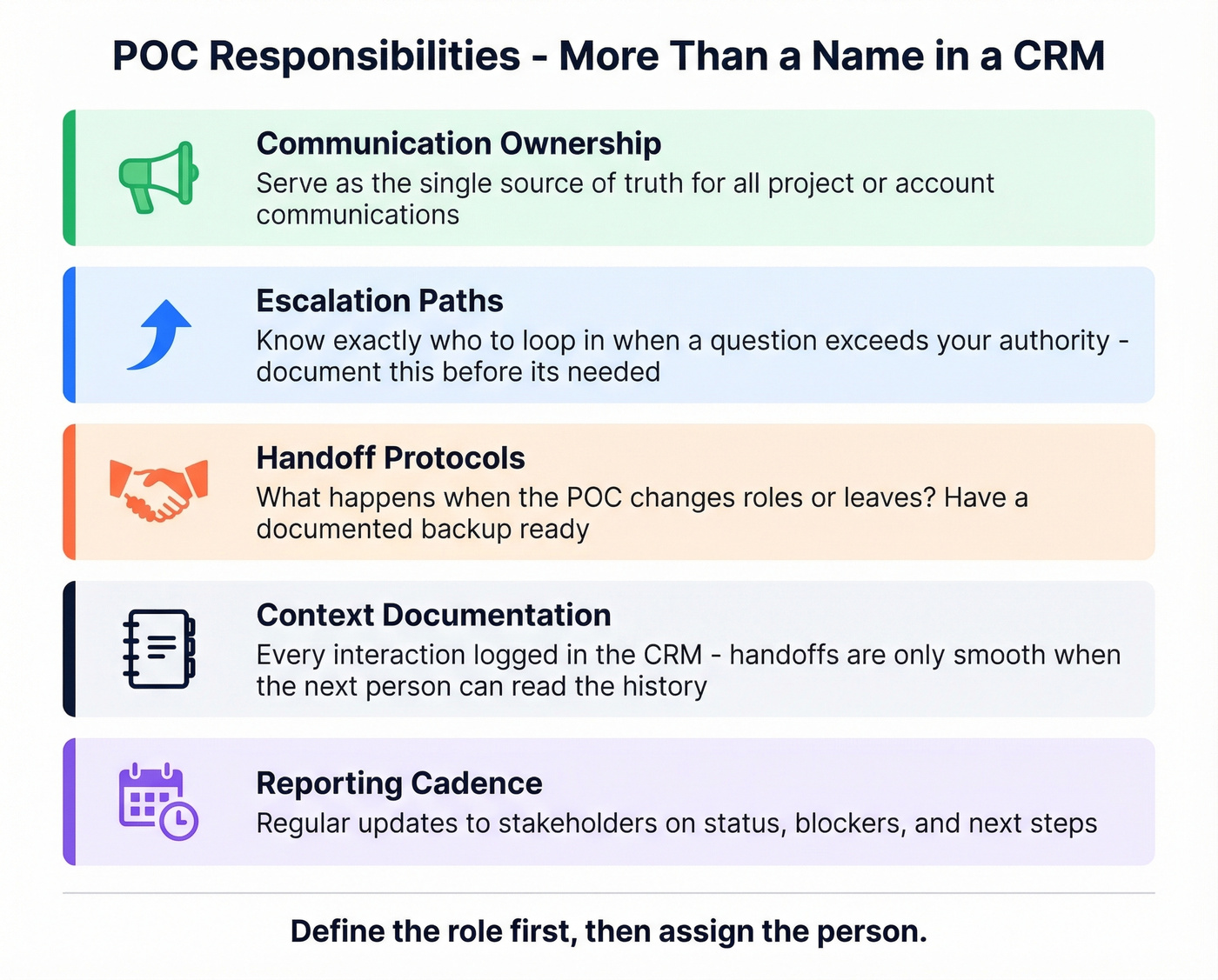
- Communication ownership - serve as the single source of truth for all project or account communications.
- Escalation paths - know exactly who to loop in when a question exceeds your authority. Document this before it's needed.
- Handoff protocols - what happens when the POC changes roles or leaves? Have a documented backup.
- Context documentation - every interaction logged in the CRM. Handoffs are only smooth when the next person can read the history.
- Reporting cadence - regular updates to stakeholders on status, blockers, and next steps.
One person can hold multiple POC roles across different projects, and one project can have multiple POCs across functions. Define the role first, then assign the person.
Managing POC Relationships
Re-verify quarterly at minimum. With 28% annual data decay, the email you confirmed six months ago might already bounce. I've seen teams lose entire pipelines because they didn't re-verify - don't learn this the hard way.
Go multichannel. Email alone isn't enough. Cold email reply rates dropped 15% between 2023 and 2024 in recent benchmarks, and the trend hasn't reversed. Combine email, phone, and async channels to reach your contact where they're most responsive.
Document everything. Every interaction should be logged so handoffs are clean. When a POC leaves and a new one steps in, the replacement shouldn't have to start from scratch - CRM notes, shared docs, recorded calls, whatever your stack supports.
Build a proactive handoff plan. Don't wait for a bounce notification to discover your contact left the company. Set up job change alerts and re-verify on a regular cadence. The teams that do this close deals; the teams that don't restart them.
Here's the thing: if your average deal size is under $15K, you probably don't need five-thread stakeholder mapping. But you absolutely need verified contact data for the one or two people who matter. Nail accuracy first, then add complexity.
FAQ
What does POC stand for?
POC stands for point of contact - the designated person for communication on a project or account. It also means proof of concept in B2B tech or people of color in social contexts. Always spell it out on first use to avoid confusion.
Is a POC the same as a decision-maker?
Not usually. A POC coordinates communication and routes information; a decision-maker holds budget authority and final sign-off. In enterprise deals with 6-10 stakeholders, they're almost always different people.
How many POCs should a B2B deal have?
At least 2-3 across the buying committee. Single-threaded deals die when one contact leaves. Multi-threaded outreach shortens sales cycles by up to 25% and increases close rates by 20%.
What's the difference between POC and SPOC?
SPOC (single point of contact) means one person handles all communication. It works for simple engagements but creates a single point of failure in complex deals - if that person leaves, context disappears with them.
How do I verify a POC's contact information?
Use a B2B data platform with real-time verification. Look for tools that check emails against multi-step verification processes and refresh records frequently - annual data decay of 28% means static lists go stale fast. Free tiers from platforms like Prospeo let you test verification quality before committing.