

The Best Sales AI Automation Tools in 2026 - And Why Most Teams Get It Wrong
A RevOps lead we know ran a three-tool bake-off last quarter. The "smartest" AI sequencer blasted 4,000 emails in 48 hours, torched the domain's sender reputation, and got the company blacklisted by Google Postmaster. The cheapest tool - paired with verified data - outperformed everything else by 3x on reply rate. The lesson wasn't about sales AI automation. It was about plumbing.
Here's the uncomfortable truth: sellers spend just 25-29% of their time actually selling. The rest is admin, data entry, research, and fighting with tools. The AI sales tools market hit $3B in 2025 and is growing at roughly 13% annually, and early adopters who redesign processes around AI are seeing 30%+ improvement in win rates. Yet most teams buy automation that makes the wrong things faster - creating what reps on r/sales call "white noise" at scale.
Our quick picks:
- Best all-in-one: Apollo.io - sequencing + CRM + data from $49/user/month (billed annually)
- Best for enterprise sequencing: Outreach - AI-powered cadences, Kaia conversation intelligence
- Best for enrichment workflows: Clay - waterfall enrichment from $149-$185/month
What "AI Sales Automation" Actually Means in 2026
The phrase has become a catch-all that means everything and nothing. There's a real distinction between traditional automation and AI agents, and most vendors blur it on purpose.
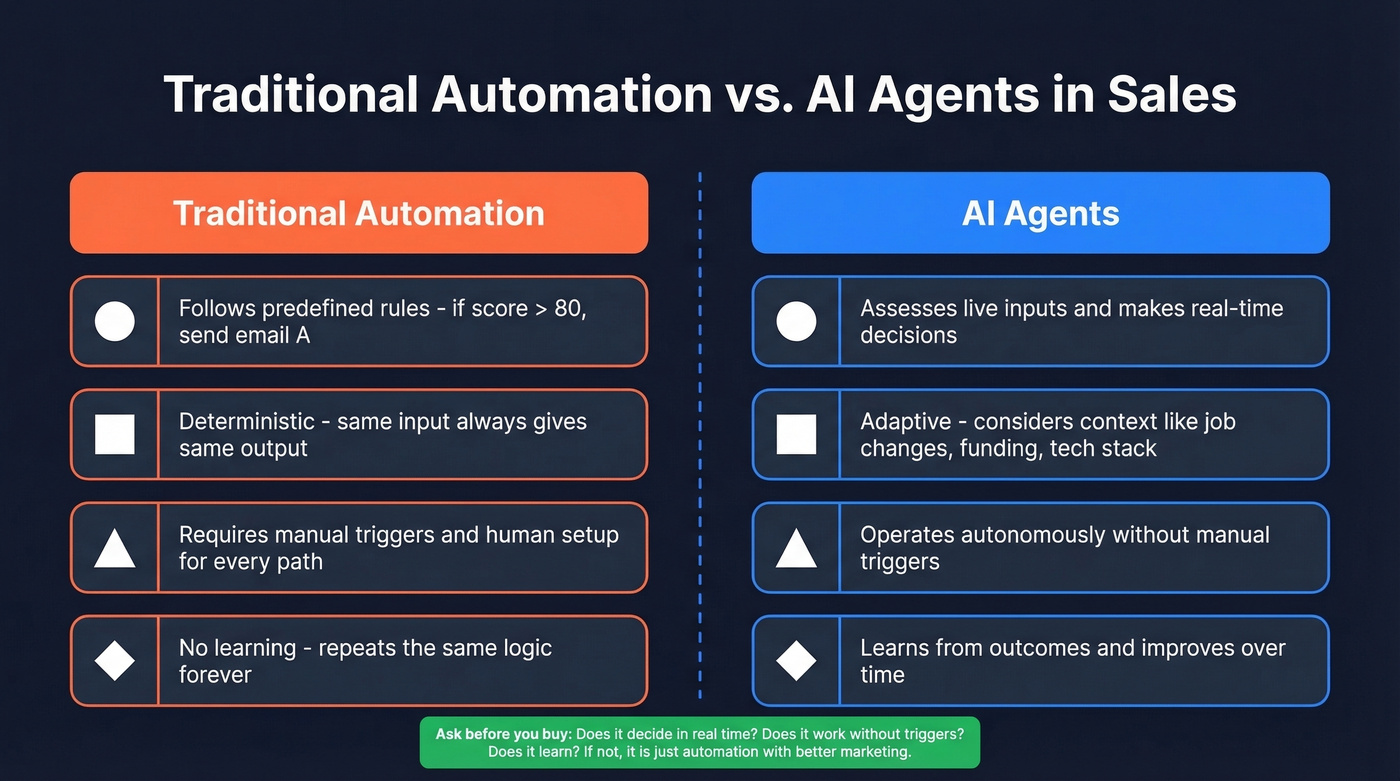
Traditional automation follows predefined rules. If lead scores above 80, send email A. If no reply in three days, send email B. It's deterministic - it doesn't think, adapt, or consider context. AI agents assess live inputs, make decisions, and take action autonomously. Think triaging inbound leads based on real-time signals, or personalizing outreach by synthesizing a prospect's recent job change, company funding round, and tech stack - without a human writing the prompt each time.
Gartner projects that by 2028, 33% of enterprise software apps will include agentic AI, with 15% of daily work decisions made autonomously. Most teams are still stuck in phase one - automating lead scoring, CRM updates, and email sequences without any real intelligence behind them. The teams that successfully automate workflows with AI share one trait: they fix their data layer before they touch sequencing or intelligence.
The "agent washing" problem is real. Before buying any tool that calls itself an AI agent, ask three questions: Does it make real-time decisions? Does it operate without manual triggers? Does it learn from outcomes? If the answer to all three is no, you're buying automation with a marketing upgrade.
Why Most AI-Driven Sales Automation Fails
The #1 complaint about AI automation in sales on Reddit? It creates "white noise." One enterprise rep described SDRs making 200 calls a day with zero connections, while sequence tools let teams blast thousands of emails with a click. With ChatGPT, everyone sounds exactly the same. Buyers are drowning.
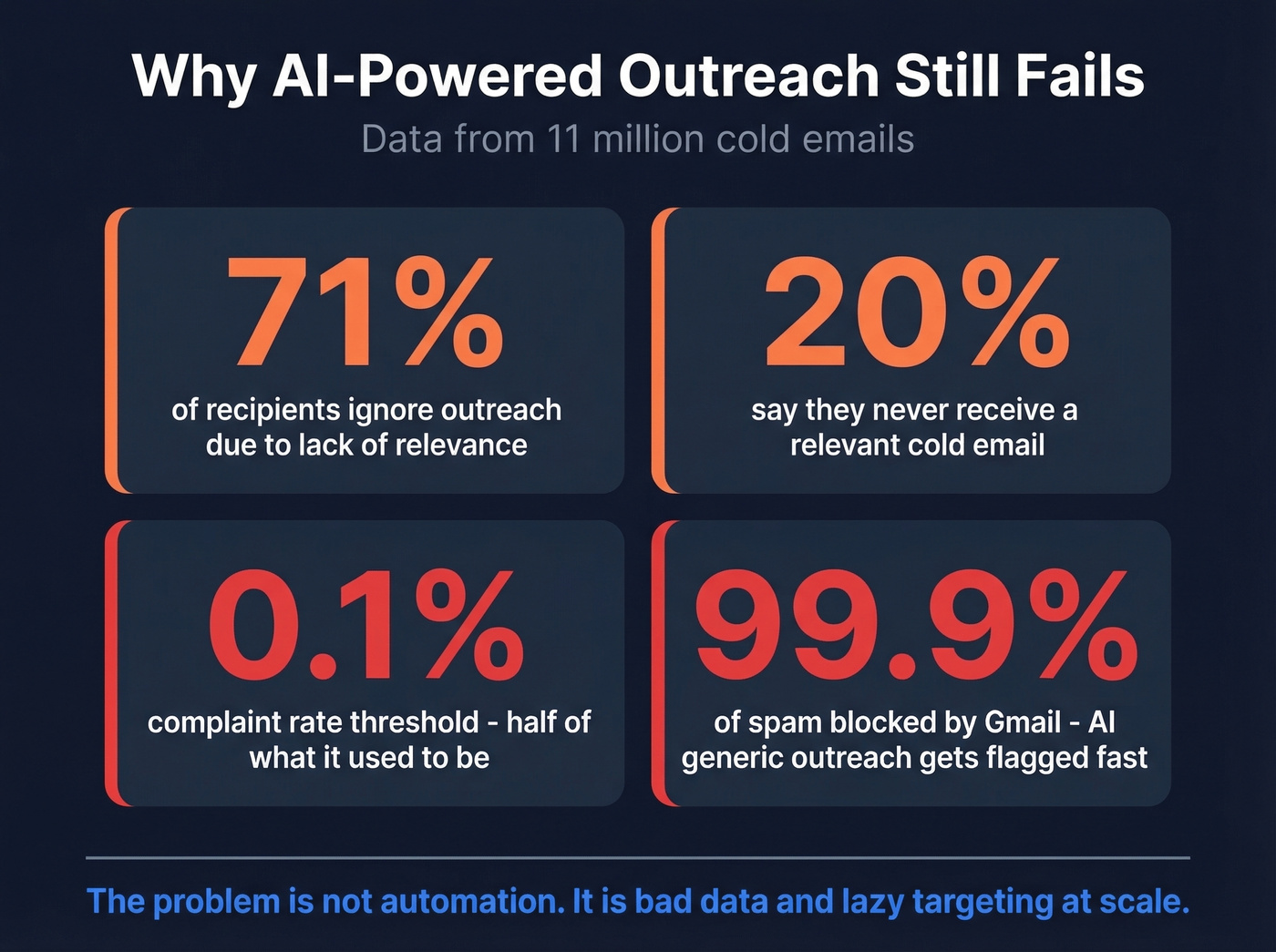
A study of 11 million cold emails found that 71% of recipients ignore outreach due to lack of relevance. Twenty percent said they never receive a relevant cold email. Reply rates drop sharply once your segmented list exceeds 100 people, and using more than five personalization variables actually backfires. Automation didn't cause this - bad data and lazy targeting did.
Then there's deliverability. Gmail blocks over 99.9% of spam. The complaint rate threshold is now 0.1% - half of what it used to be. SPF, DKIM, and DMARC authentication aren't optional; they're table stakes. AI-generated generic outreach gets flagged faster than ever. Every sequencing tool, every AI writer, every conversation intelligence platform is only as good as the contact data feeding it. Garbage in, garbage out - but at scale, garbage in means your domain gets blacklisted and your entire outbound motion stops.

Every AI sequencer, every agent, every automation workflow ends at the same bottleneck: bad contact data. Prospeo's 98% email accuracy and 7-day refresh cycle mean your AI tools actually reach real buyers - not bounced inboxes that torch your domain.
Stop automating garbage. Start with data that connects.
The 10 Best Sales AI Automation Tools for 2026
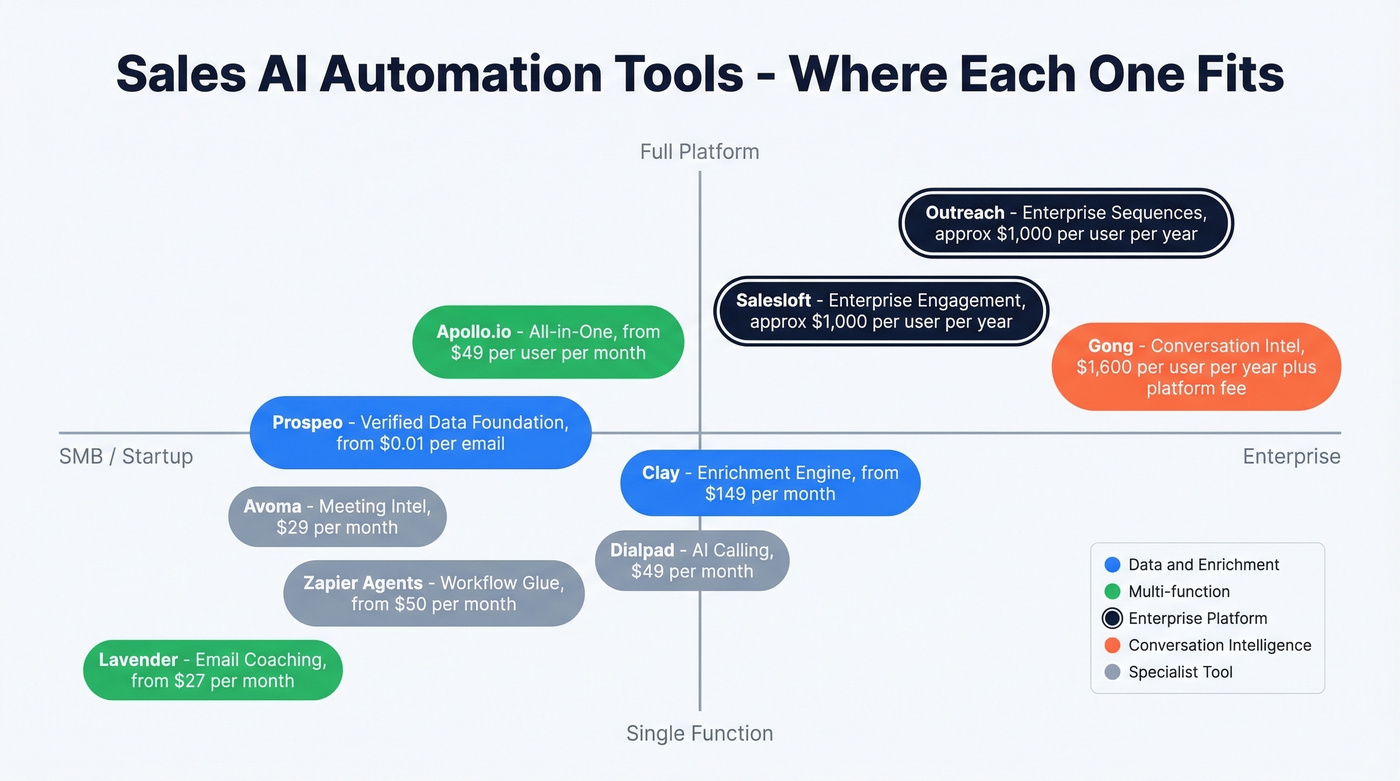
| Tool | Best For | Starting Price | G2 Rating |
|---|---|---|---|
| Apollo.io | All-in-one | Free; $49/user/mo (annual) | 4.7/5 (9,235) |
| Outreach | Enterprise sequences | ~$1,000/user/yr | 4.3/5 (3,511) |
| Clay | Enrichment workflows | Free; $149-$185/mo | - |
| Gong | Conversation intel | $1,600/user/yr + ~$50K platform fee | 4.8/5 (6,407) |
| Salesloft | Enterprise engagement | ~$1,000/user/yr | 4.5/5 (4,237) |
| Zapier Agents | Workflow glue | Free; $50/mo | - |
| Lavender | Email coaching | Free; $27/mo | - |
| Avoma | Meeting intelligence | $29/mo | - |
| Dialpad | AI-powered calling | $49/mo | - |
Prospeo - Verified Data That Makes Everything Else Work
Use this if: You need a data foundation that won't wreck your sender reputation. You're running outbound at scale and can't afford 20%+ bounce rates.
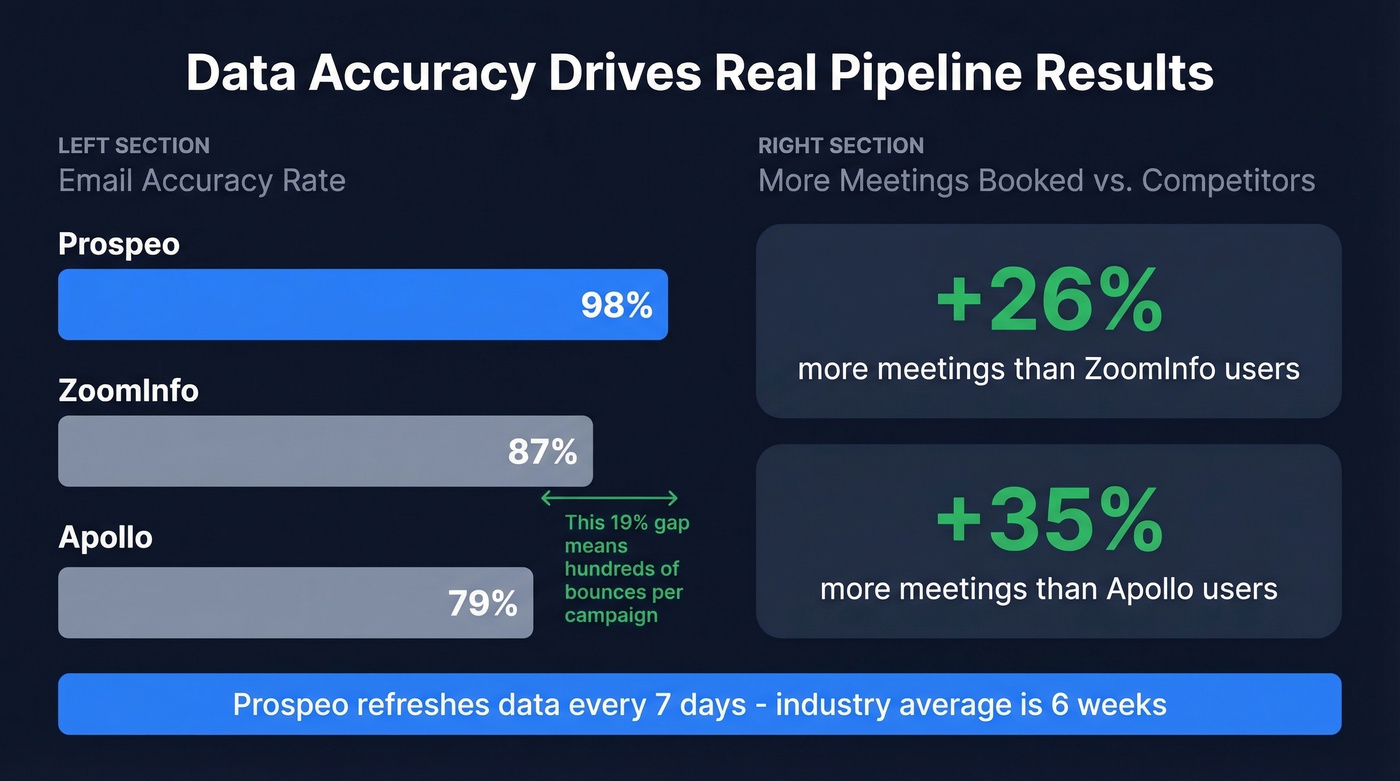
Prospeo's database covers 300M+ professional profiles, 143M+ verified emails, and 125M+ verified mobile numbers, all refreshed on a 7-day cycle. The industry average refresh is six weeks. That gap matters - stale data is the silent killer of outbound campaigns.

The accuracy numbers speak for themselves: 98% email accuracy versus 87% for ZoomInfo and 79% for Apollo. Mobile pickup rates hit 30% across all regions. Teams using Prospeo book 26% more meetings than ZoomInfo users and 35% more than Apollo users. Snyk's team saw bounce rates drop from 35-40% to under 5% after switching, with AE-sourced pipeline up 180%. The 30+ search filters include buyer intent powered by 15,000 Bombora topics, technographics, job changes, and headcount growth signals. The Chrome extension (40,000+ users) lets reps pull verified emails and direct dials from any website or CRM in one click.
Pricing is self-serve and transparent: free tier with 75 emails/month, paid plans at roughly $0.01 per email. No contracts, no sales calls required. For teams looking to layer intelligent automation on top of clean data, this is the foundation that makes downstream tools actually perform.
Apollo.io - Best All-in-One for Growing Teams
Use this if: You want sequencing, CRM, and data in a single platform and you're a team of 5-20 reps getting started with outbound. Apollo's free plan (100 credits/month) is the fastest way to test whether outbound works for your business.
Skip this if: You're sending more than a few thousand emails per month and can't tolerate a ~79% email accuracy rate. At scale, that 21% gap means hundreds of bounces per campaign.
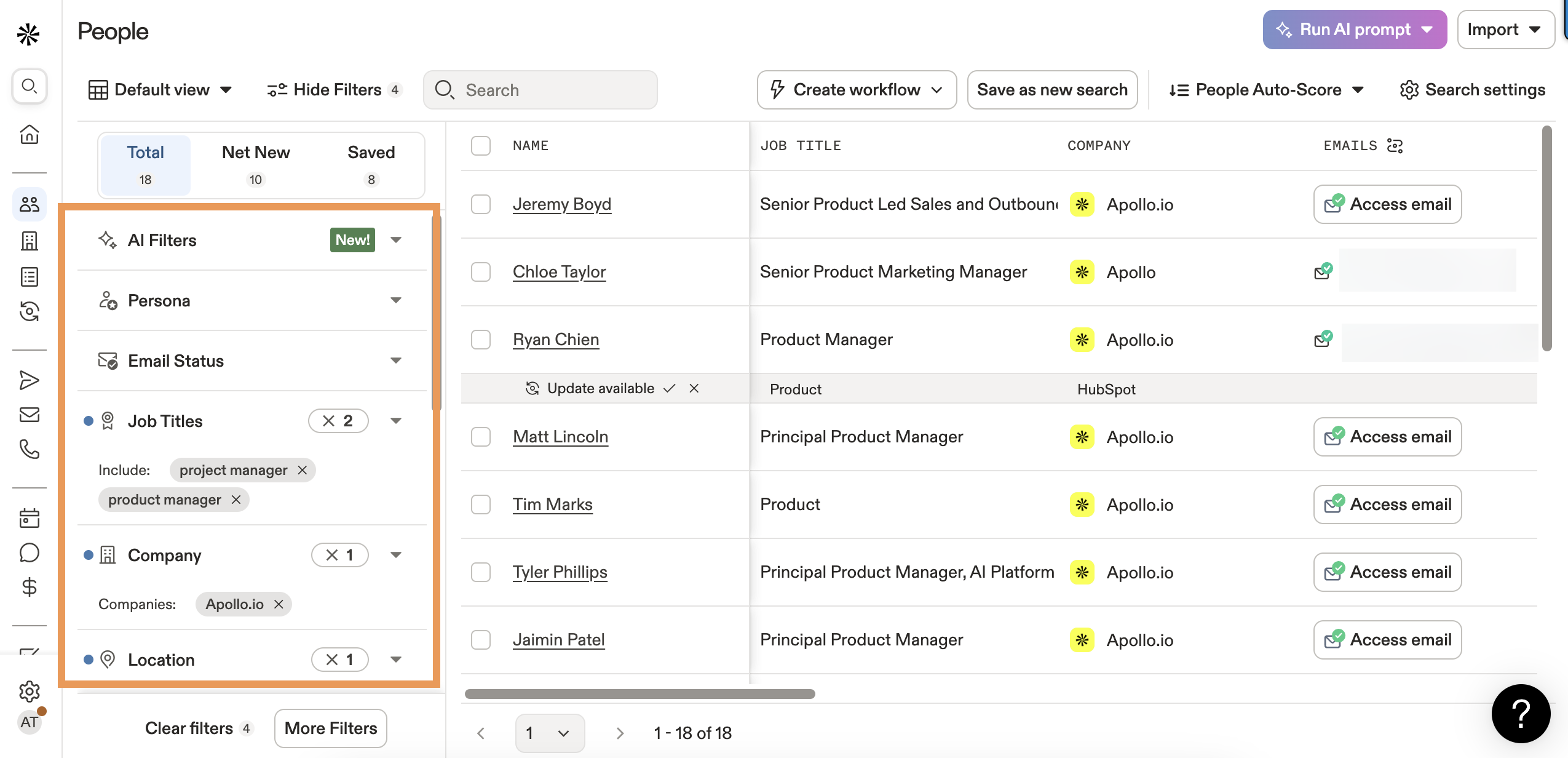
Apollo has earned its 4.7/5 on G2 across 9,235 reviews for a reason - it's genuinely good at getting small teams moving fast. The Basic plan runs $49/user/month (annual), Professional hits $79/user/month, and both include sequencing, a built-in dialer, and CRM integration. For a Series A company that needs one tool instead of four, Apollo is the obvious starting point. In our testing, Apollo's data accuracy holds up for campaigns under 1,000 contacts but starts showing cracks at higher volumes - that's when you layer a dedicated email verifier tool underneath.
Outreach - Enterprise Sequencing With AI Muscle
Outreach is the tool you graduate to when your team outgrows Apollo. With 20+ reps running complex, multi-touch cadences, the AI layer starts paying for itself. Deals close 11 days faster with Kaia conversation intelligence, and win rates improve by up to 10 points on deals over $50K.
The catch: Outreach doesn't publish pricing. Expect around $1,000/user/year via sales quote, which is frustrating for a 3-person startup trying to evaluate options quickly. Their AI tools cut research and personalization time by 90% according to platform data, and 45% of teams now run a hybrid AI-SDR model. G2 rating sits at 4.3/5 across 3,511 reviews - lower than Apollo, but the user base skews enterprise where expectations are higher and patience is thinner.
Clay - The Enrichment Engine
Clay's credit model is the first thing you need to understand. The platform splits costs into Data Credits (buying data from providers) and Actions (platform operations like enrichment steps, API calls, and CRM pushes). The no-result-no-charge policy means you only pay when enrichment actually returns data - but costs can spiral fast for high-volume teams without active credit management.
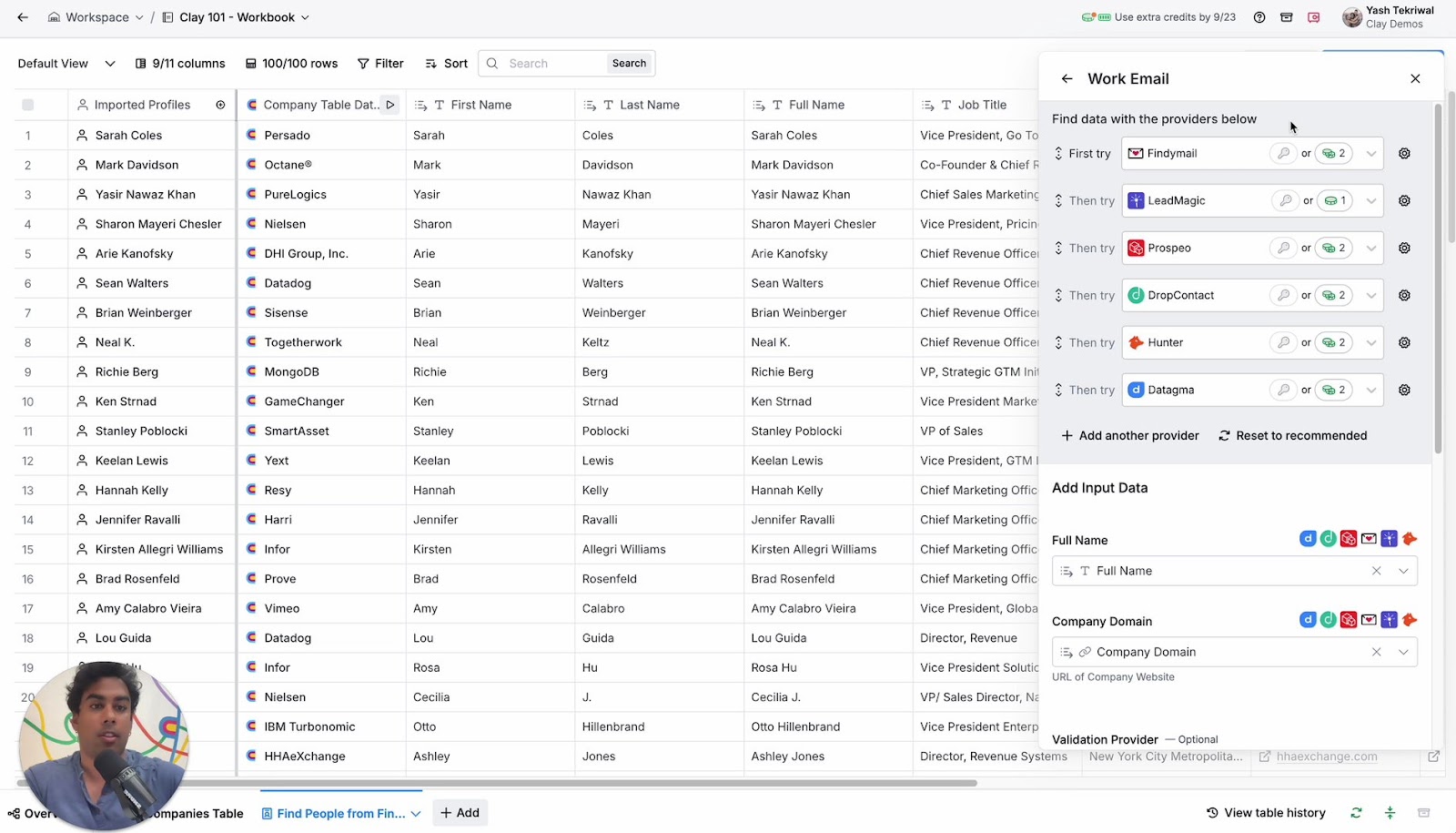
The Launch plan runs $185/month with 2,500 Data Credits and 15,000 Actions. Growth is $495/month with 40,000 Actions. Entry pricing starts from $149/month on lower tiers. This isn't a set-and-forget tool - it's a power tool for RevOps teams who want waterfall enrichment workflows that no single database can match. Teams building AI-optimized pipelines often use Clay as the enrichment layer that feeds cleaner, more complete records into their sequencing platform.
Gong - Conversation Intelligence for Big Deals
Let's do the math. Gong charges $1,600/user/year plus a ~$50,000 platform fee. A 10-person team is looking at $66K before add-ons. Forecast ($700/user/year) and Engage ($800/user/year) push it higher. Negotiated rates land around $1,000-$1,349/user, and expect 5-7% annual renewal increases.
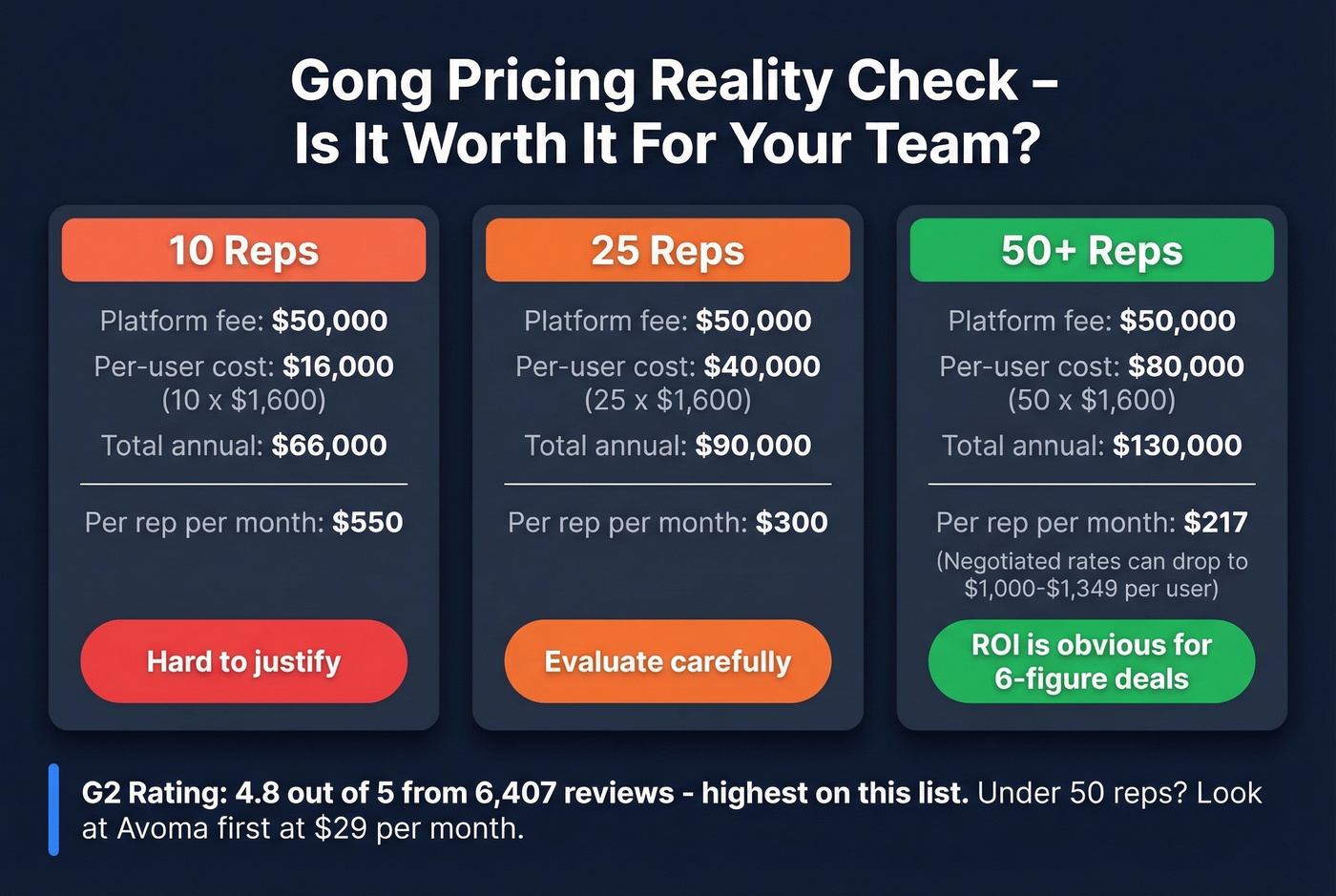
Is it worth it? Gong's 4.8/5 G2 rating across 6,407 reviews is the highest on this list. The consensus on r/sales mirrors the data: Gong is exceptional technology that's hard to justify under 50 reps. For teams closing six-figure deals, the ROI is obvious. For everyone else, look at Avoma first.
SalesLoft - Pick Your Enterprise Engagement Platform
Salesloft and Outreach are functionally similar at around $1,000/user/year, and choosing between them from scratch is one of the least productive debates in RevOps. Salesloft's G2 rating edges Outreach at 4.5/5 across 4,237 reviews. Its AI account agents - handling multi-step workflows across accounts with less manual configuration - are the differentiator in 2026. But the gap narrows with every release from both platforms. Pick based on which integrates better with your existing CRM and data stack, not on feature lists.
Zapier Agents - Workflow Glue With AI
Zapier Agents isn't a sales tool. It's the connective tissue between sales tools that don't natively talk to each other. The free plan gives you 400 activities/month, and Pro starts at $50/month. With agentic automation across 7,000+ apps, it's the best option for RevOps teams that need to pipe data between Clay, their data provider, Outreach, and a CRM without building custom integrations. Duct tape for your stack - not glamorous, but essential.
Lavender - AI Email Coaching
Lavender scores and rewrites emails in real time, helping reps who struggle with messaging rather than sequencing. Free plan available, paid from $27/month. It's a niche tool that pairs well with any sequencer.
Avoma - Budget Meeting Intelligence
Avoma runs from $29/month (Meeting Assistant) to $99/month (Revenue Intelligence) and covers recording, transcription, and coaching. It's the Gong alternative for teams that can't justify $50K+ in platform fees - and for most teams under 30 reps, it's genuinely good enough.
Dialpad - AI-Powered Calling
Dialpad starts at $49/month (Essentials) and goes to $170/month (Premium), with real-time call transcription and AI coaching built into the dialer. Best for phone-heavy teams that want conversation intelligence without bolting on a separate tool like Gong.
Mistakes That Kill Your Automation ROI

Automating everything at once. Start with one simple flow - new lead to welcome email to CRM entry. Multi-step workflows break in production. Get one flow bulletproof before adding complexity.
No human oversight. AI hallucinates. APIs break. Without confidence scores, monitoring alerts, and manual fallback triggers, errors compound silently until a prospect gets a nonsensical email or your CRM fills with garbage. We've seen teams discover months of bad data because nobody set up a single alert.
Ignoring data quality. Bad data at scale isn't just inefficient - it's destructive. Bounced emails damage sender reputation, wrong phone numbers waste rep time, and stale contacts create noise that buries real opportunities. If you need a deeper framework for fixing the data layer, start with data validation automation.
Over-personalizing with low-confidence data. Referencing a prospect's "recent promotion" when they haven't changed roles feels creepy at best and damages trust at worst. Only personalize with high-confidence signals. (More on this in our guide to AI email personalization.)
No success metrics defined upfront. Pick 2-3 KPIs before you launch any automation - reply rate, meetings booked, pipeline generated. Without them, you can't tell if the tool is working or just creating activity.
How to Build Your AI Sales Stack
Bain's research makes a critical point: the biggest gains come from process redesign, not from automating existing workflows. Don't just make your current broken process faster. Rethink which steps need to exist at all.
Here's our strong opinion on this: unified all-in-one platforms sound appealing, but most teams get better results from a focused stack where each layer excels at its job. We've seen teams buy Gong before they have enough pipeline to analyze - that's $50K spent on insights about deals that don't exist yet. Start at the bottom and work up. Clean data first, then sequencing, then intelligence. The best sales AI automation stacks follow this same progression - nail the data layer, prove outbound works, then invest in intelligence tools that have enough signal to be useful. If you're mapping your tooling end-to-end, use a RevOps tech stack blueprint to keep it lean.
| Budget | Data Layer | Outreach | Intelligence |
|---|---|---|---|
| $500-$2K/mo | Prospeo + Clay | Outreach or Salesloft | Gong or Avoma |
| $2K+/mo | Prospeo + Clay | Outreach or Salesloft | Gong + Zapier Agents |
If your average deal size is under $10K, you probably don't need Gong-level intelligence or Outreach-level sequencing. Apollo plus verified data will outperform a $100K stack with bad contacts every time. For more options, compare the best AI sales tools and the best outbound sales platforms before you commit.
Snyk dropped bounce rates from 35-40% to under 5% and grew AE-sourced pipeline 180%. Stack Optimize built a $1M agency with sub-3% bounce rates. The difference wasn't better AI - it was verified data at $0.01 per email with no contracts.
Your AI sales automation deserves a data layer that won't betray it.
FAQ
What is AI sales automation?
AI sales automation uses artificial intelligence to handle repetitive sales tasks - prospecting, sequencing, lead scoring, call analysis, and forecasting - so reps spend more time selling. At its most advanced, it goes beyond rule-based triggers to make real-time decisions about which prospects to contact, when, and through which channel.
How much does it cost?
Mid-market teams typically spend $200-$2,000/month across two to four tools. Entry points range from free tiers (Prospeo at 75 emails/month, Apollo at 100 credits/month) up to $50,000+/year for enterprise platforms like Gong. Start with a verified data source and one sequencer before scaling spend.
What's the difference between AI agents and traditional automation?
Automation follows predefined rules without context - if X, then Y. AI agents assess live inputs, adapt to conditions, and make decisions autonomously. By 2028, Gartner projects 15% of daily work decisions will be made by agents. Most tools marketed as "AI agents" today are still rule-based automation with better UX.
How do I avoid spam filters with automated outreach?
Authenticate your domain with SPF, DKIM, and DMARC. Keep complaint rates below 0.1%. Verify every email before sending - a 5-step verification process that catches spam traps and honeypots is non-negotiable at scale. Warm up new domains gradually and cap volume at 50 emails/day per inbox for the first 2-4 weeks.
What's the most important tool in an AI sales stack?
Your data source. Every sequencing tool and AI writer is only as good as the contact data feeding it. A 98%-accuracy database at $0.01/lead will outperform a $100K tech stack built on 79%-accuracy contacts. Start with verified data, then layer automation on top.