

Sales and Marketing Digital Transformation: The Practitioner's Playbook
Only 48% of digital initiatives meet or exceed their business outcome targets. That stat comes from a Gartner survey spanning 3,186 CIOs and tech executives plus 1,126 CxOs outside IT across 88 countries. A cohort Gartner calls "Digital Vanguards" hits 71% success rates by co-owning delivery across CIOs and business leaders. The gap between those two numbers is your sales and marketing digital transformation opportunity - and it's wider than most teams realize.
The Short Version
Map your processes before buying tools - spreadsheets before software. Fix your data before layering AI on top of it. Align sales and marketing under shared KPIs, not separate dashboards. That's it. The rest of this article is the how.
What This Transformation Actually Means
We're talking about unifying your revenue functions - sales, marketing, and customer success - through shared digital tools, clean data infrastructure, and AI organized around a single buyer journey. Generic digital transformation might mean moving your ERP to the cloud. This is narrower and harder: making two historically siloed teams operate as one revenue engine with shared definitions, shared data, and shared accountability.
Recent academic frameworks now treat organizational identity - not just technology - as a core dimension of transformation strategy. It changes who you are, not just what tools you use.
Why Most Transformations Fail
The 48% success rate isn't random. Failures cluster into five patterns.
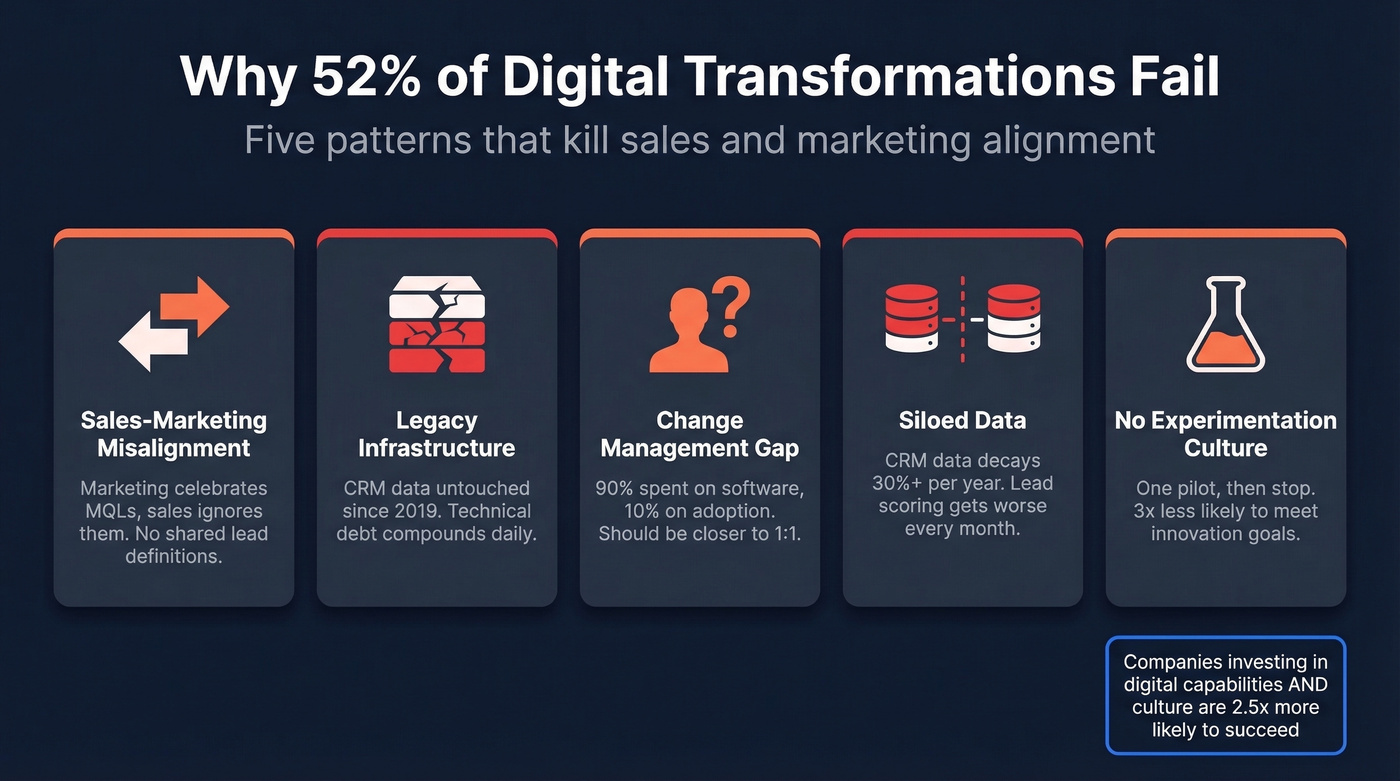
Sales-marketing misalignment. Marketing celebrates MQLs; sales ignores them. Without shared definitions of a qualified lead, every downstream system inherits that confusion. We've watched teams spend six figures on lead scoring models that nobody trusted because the two departments couldn't agree on what "qualified" meant.
Legacy infrastructure and technical debt. You can't build a modern buyer journey on a CRM that hasn't been cleaned since 2019. Period.
Underinvestment in change management. Organizations investing in both digital capabilities and culture are 2.5x more likely to succeed. Most teams spend 90% on software and 10% on adoption. That ratio should be closer to 1:1, and if you think that sounds expensive, consider the cost of a $250K platform nobody uses.
Siloed data. Ask any RevOps lead and they'll tell you: CRM data decays at 30%+ per year. Every month you delay enrichment, your lead scoring model gets worse. Microsoft's own AEs used to manually assemble data scattered across business units before they fixed this - and they're Microsoft.
Inability to scale experimentation. Teams run one pilot, declare victory or failure, and stop. Companies with agile experimentation frameworks are 3x more likely to meet innovation goals.
Here's the thing: most teams don't have a technology problem. They have a process problem wearing a technology costume. If you can't describe your lead handoff in three sentences, no software will save you.

Siloed, decaying CRM data kills 52% of digital transformations before they start. Prospeo enriches your CRM with 50+ data points per contact at a 92% match rate - refreshed every 7 days, not every 6 weeks. At $0.01 per verified email, Phase 2 doesn't need an enterprise budget.
Clean your data foundation before layering AI on top of it.
The Three-Phase Roadmap
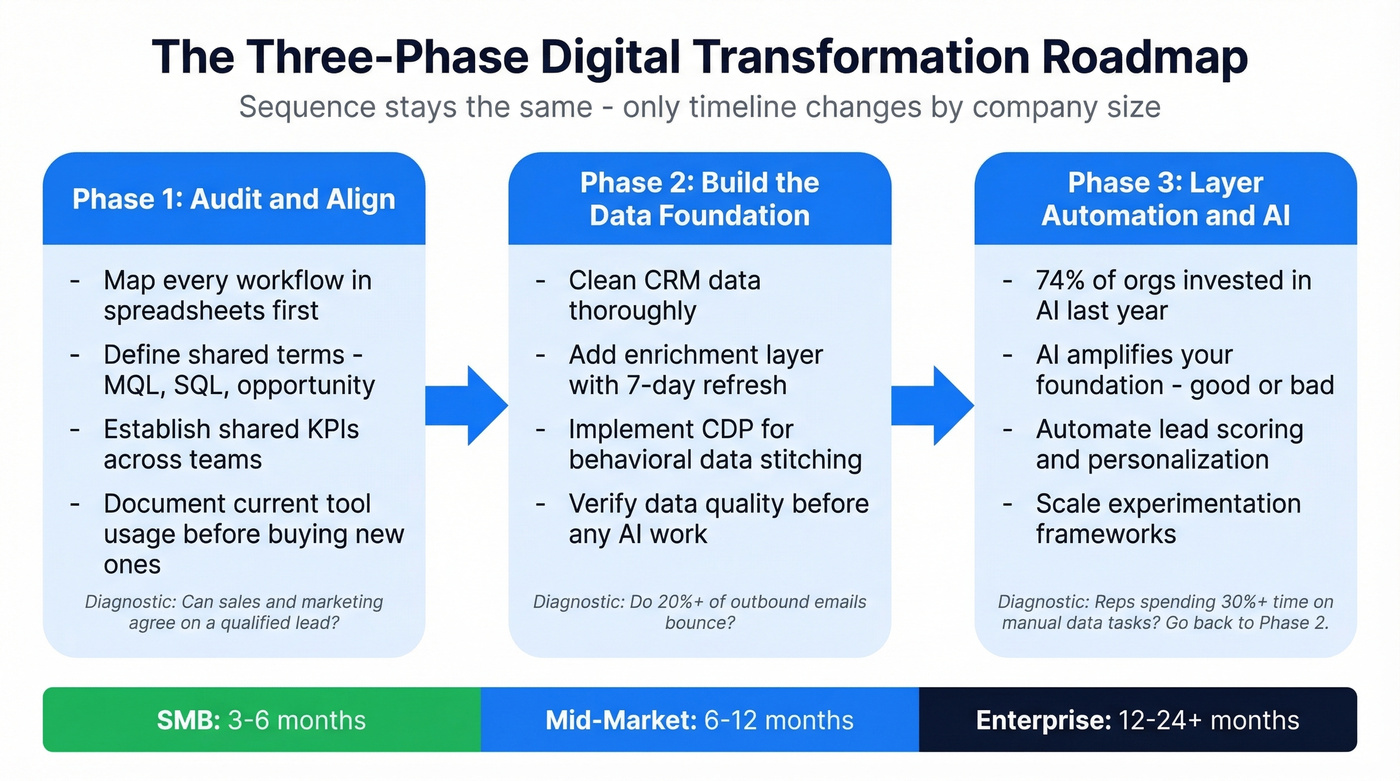
SMBs can move in 3-6 months, mid-market teams need 6-12 months, and enterprise transformations run 12-24+ months. The sequence doesn't change.
Phase 1: Audit and Align
Map every sales and marketing workflow in spreadsheets first. Define shared terms - what's an MQL, what's an SQL, when does an opportunity count. Establish shared KPIs. Schneider Electric's principle applies: maximum three entry points, with CRM as the backbone.
Skip buying any new tool before you've documented how your current ones are actually used. Seriously - 32% of B2B organizations aren't using the full capabilities of their existing stack. You probably already own half the solution.
Phase 2: Build the Data Foundation
Clean your CRM data. Add an enrichment layer that keeps contact records current. Implement a CDP for behavioral data stitching. The goal is a complete picture of buyer behavior - pages visited, emails opened, content downloaded - in a privacy-compliant architecture.
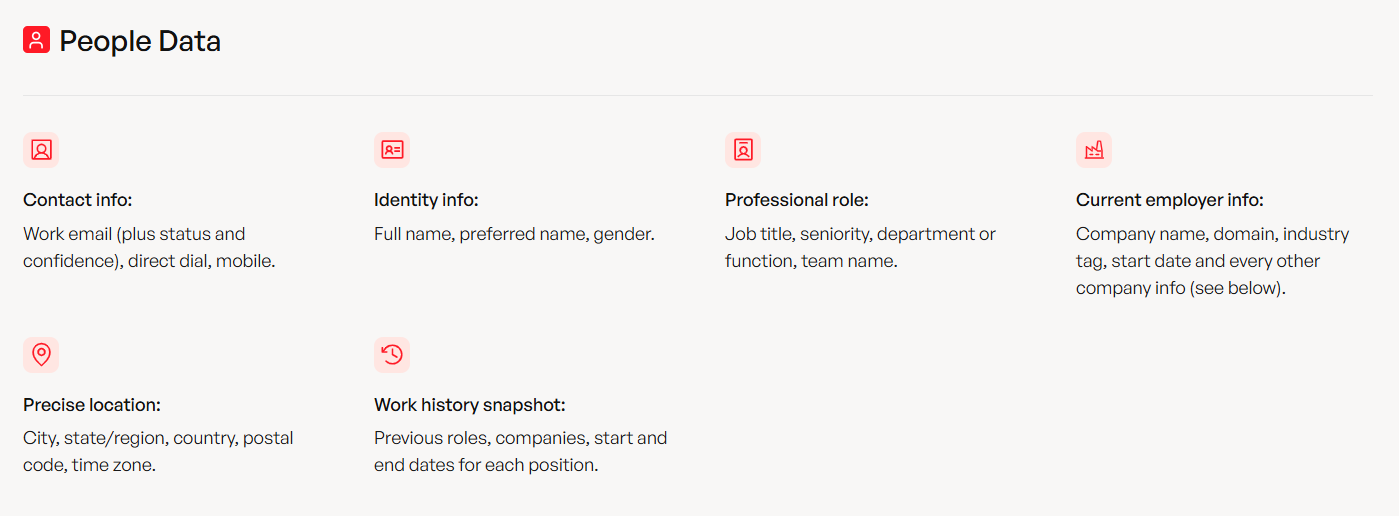
We've seen teams skip this step and spend six months debugging AI models trained on stale data. Clean data is the prerequisite that makes everything downstream work: lead scoring, personalization, AI. An enrichment platform with a 7-day refresh cycle keeps your CRM accurate without manual effort - and at roughly $0.01 per verified email, it doesn't require an enterprise budget to maintain data quality.
Don't jump straight to AI or automation without verifying your underlying data. Every AI model inherits whatever data quality you feed it.
Phase 3: Layer Automation and AI
74% of organizations invested in AI and generative AI over the past year. By 2030, 80% of CSOs will require AI-augmented plans to navigate sales disruptions. But AI amplifies whatever foundation you've built. If Phase 2 is solid, AI accelerates pipeline. If Phase 2 was skipped, AI accelerates bad decisions faster.
Which Phase Are You In?
Three diagnostic questions:
- Can your sales and marketing leaders agree on the definition of a qualified lead? No → Phase 1.
- Do more than 20% of your outbound emails bounce? Yes → Phase 2.
- Are your reps spending more than 30% of their time on manual data tasks? Yes → still Phase 2. Fix it before Phase 3.
Budget Benchmarks for 2026
According to Deloitte's survey data, tech budgets rose from 8% of revenue in 2024 to 14% in 2025, and could reach 32% by 2028 if the pace continues. Meanwhile, 61% of B2B teams cite cost as their top martech concern. The average B2B org runs 12-20 martech tools, but 92% keep their stack at 20 or fewer because complexity kills adoption. The problem isn't spending too much. It's spending on the wrong things.
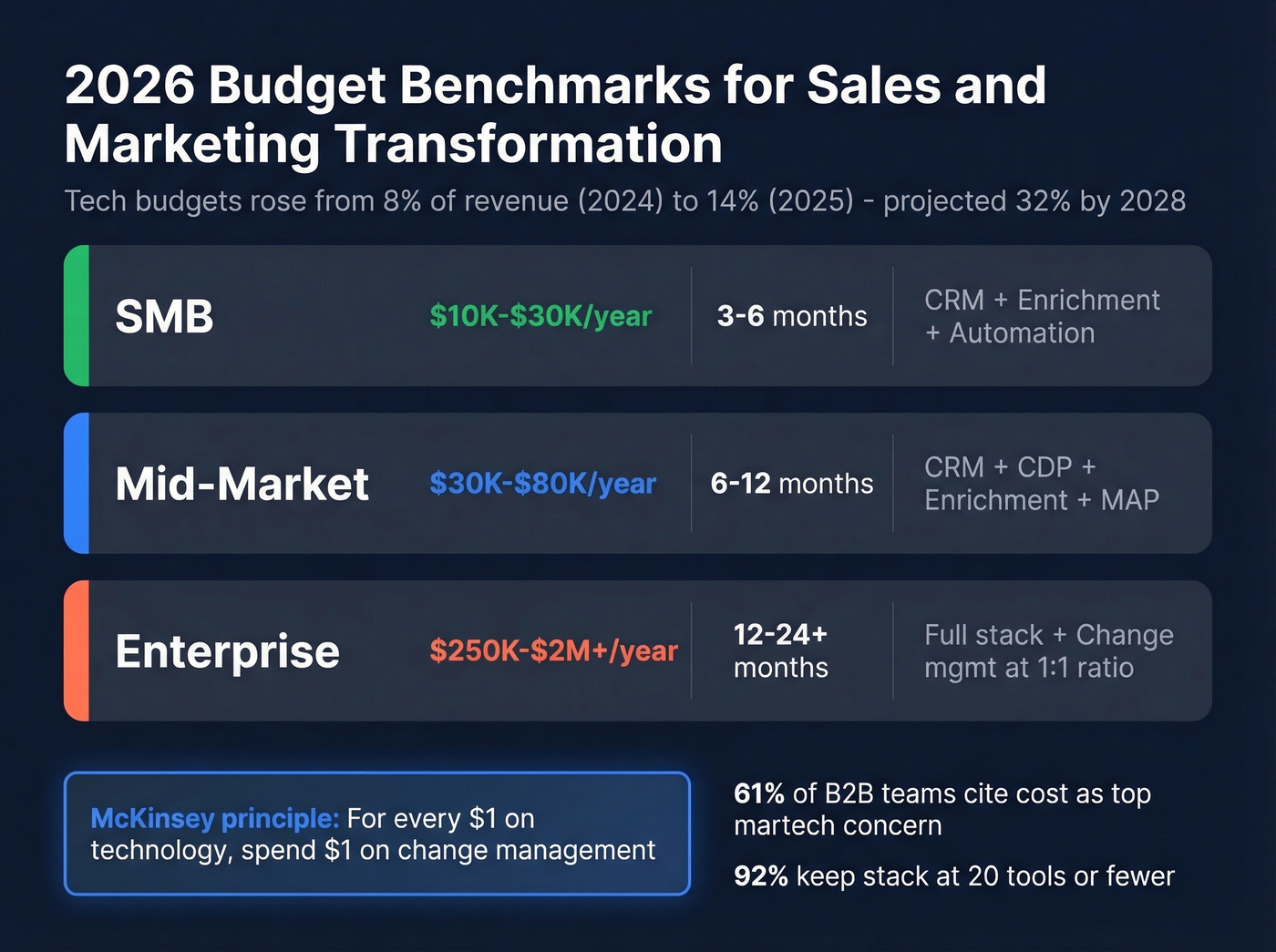
| Company Size | Stack Cost/Year | Timeline | Key Investment |
|---|---|---|---|
| SMB | $10K-$30K | 3-6 months | CRM + enrichment + automation |
| Mid-market | $30K-$80K | 6-12 months | CRM + CDP + enrichment + MAP |
| Enterprise | $250K-$2M+ | 12-24+ months | Full stack + change mgmt at 1:1 ratio |
McKinsey's principle holds: for every dollar spent on technology, spend a dollar on change management. Enterprise data platforms alone often run $50K-$500K+/year depending on seats and modules, before implementation services. Self-serve enrichment tools like Prospeo start free and scale on credits - useful for SMBs and mid-market teams that need accurate data without enterprise contracts.
How This Reshapes Day-to-Day Selling
The ROI conversation only makes sense once you understand how deeply these shifts change daily work. The digital transformation impact on sales goes beyond new dashboards - it rewrites how reps prospect, qualify, and close. Teams that complete Phase 2 typically see reps reclaim 8-12 hours per week previously spent on manual research and data entry, redirecting that time toward actual buyer conversations.
If you want a deeper view of what changes (and what doesn't), compare this roadmap to broader digital transformation sales initiatives and where they tend to break.
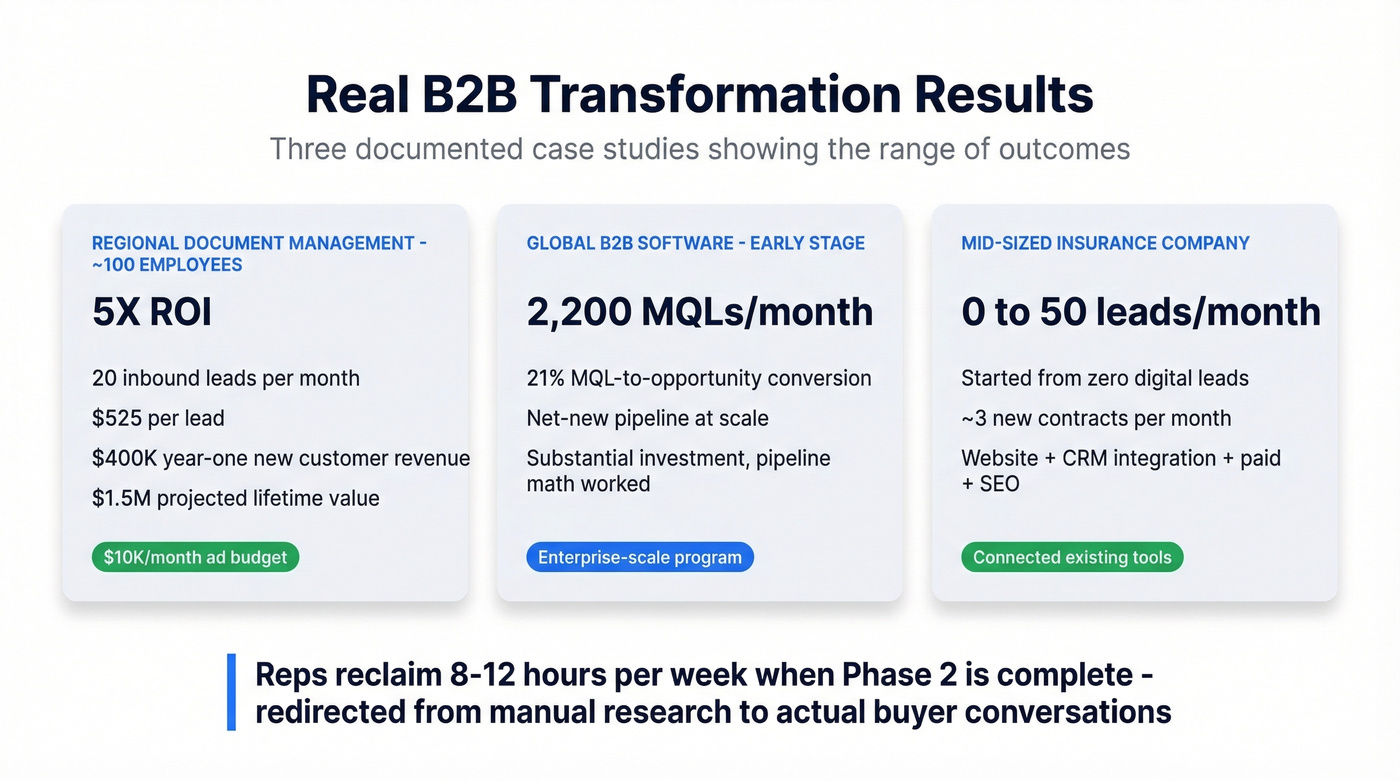
In our experience, the SMB pattern - modest budget, phased rollout - produces the most predictable returns. Three examples from documented B2B case studies illustrate the range:
A regional document management company with about 100 employees ran a phased digital program over 8 quarters. The result: 20 inbound leads per month, $525 per lead, $400K in year-one new customer revenue, and a projected $1.5M in lifetime value. That's 5X ROI on a $10K/month ad budget.
A global early-stage B2B software company went bigger: 2,200 net-new MQLs per month at peak, with a 21% MQL-to-opportunity conversion rate. The investment was substantial, but the pipeline math worked at scale.
Then there's the mid-sized insurance company that started from zero digital leads and hit 50 inbound leads per month converting to roughly 3 new contracts monthly after implementing a website, CRM integration, and paid/SEO strategy. Not every transformation requires enterprise budgets - sometimes the biggest gains come from simply connecting what you already have.

Your reps are spending 30%+ of their time on manual data tasks instead of selling. Prospeo's 300M+ verified profiles with 30+ search filters - including buyer intent and technographics - eliminate the busywork that stalls every sales and marketing transformation.
Stop transforming around bad data. Start with data that's already accurate.
FAQ
How long does a sales and marketing digital transformation take?
SMBs typically execute in 3-6 months, mid-market teams need 6-12 months, and enterprise runs 12-24+ months. Timeline depends on data quality, stack complexity, and how aligned sales and marketing already are on lead definitions and shared KPIs.
What's the biggest reason digital transformations fail?
Buying tools before mapping processes. Define workflows in spreadsheets first, then purchase technology to automate what already works. Let's be honest - the Reddit consensus on r/sales and r/revops backs this up too. Most post-mortems point to process gaps, not software limitations.
How do B2B technology sales changes affect transformation planning?
Buyers now complete up to 70% of their research before talking to a rep, so your digital infrastructure has to deliver the right content and data at every stage of that self-directed journey. Your roadmap needs to account for shifting buyer expectations - not just internal efficiency gains.
What tools should you invest in first?
Start with three: a CRM you'll actually use, a data enrichment layer that keeps contacts verified, and a CDP or integration tool that connects sales and marketing data. Schneider Electric's "maximum 3 entry points" principle keeps complexity manageable while you build momentum.