

Sales Enablement vs Product Marketing: What Each Owns in 2026
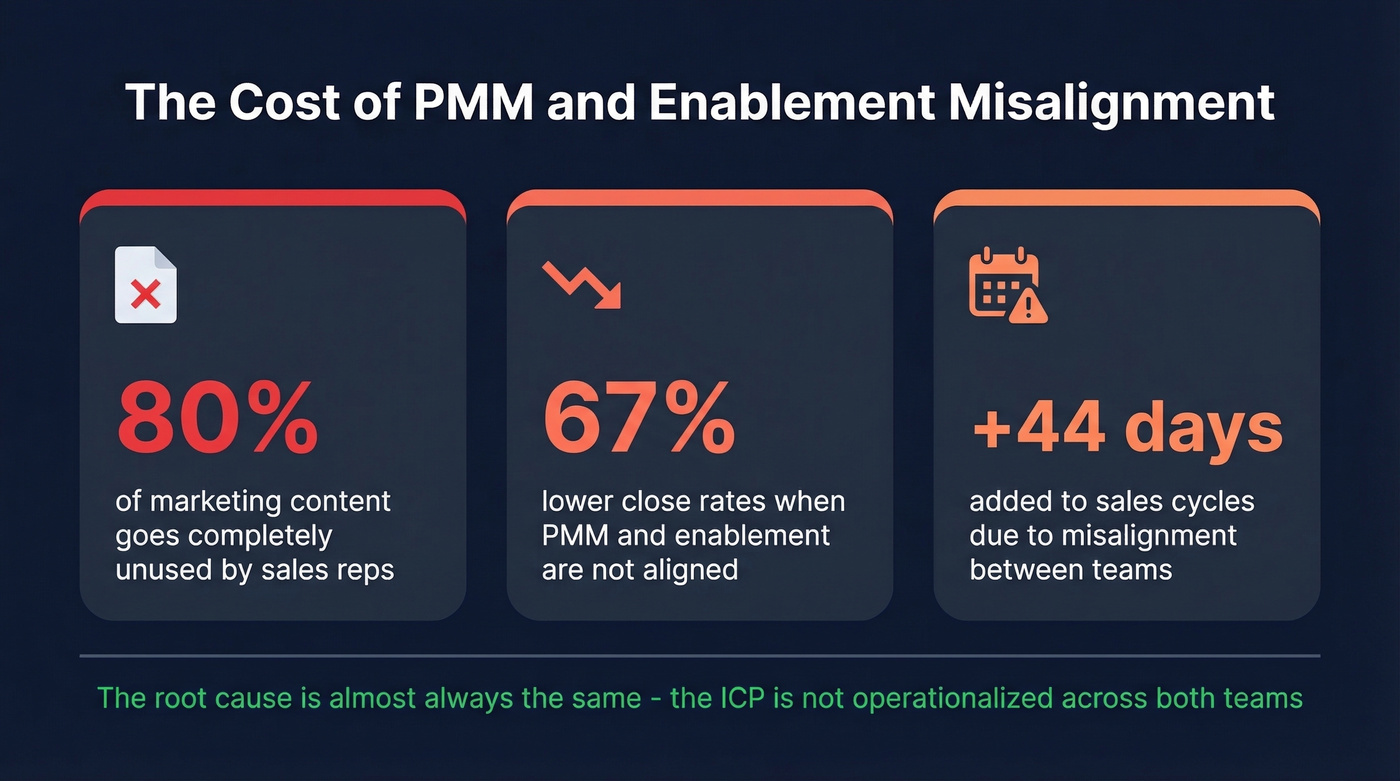
80% of marketing content goes unused by sales. That's not a rounding error - it's a structural failure between two functions that should be tightly coupled. One widely-circulated set of numbers from Saasfactor pegs the impact of misalignment at 67% lower close rates and sales cycles that run 44 days longer than they need to. Understanding the real split between sales enablement and product marketing is how you stop the bleeding.
The 60-Second Answer
Product marketing owns the narrative - positioning, messaging, competitive intel, launch strategy. Sales enablement owns the adoption - making sure reps actually use that narrative to win deals.
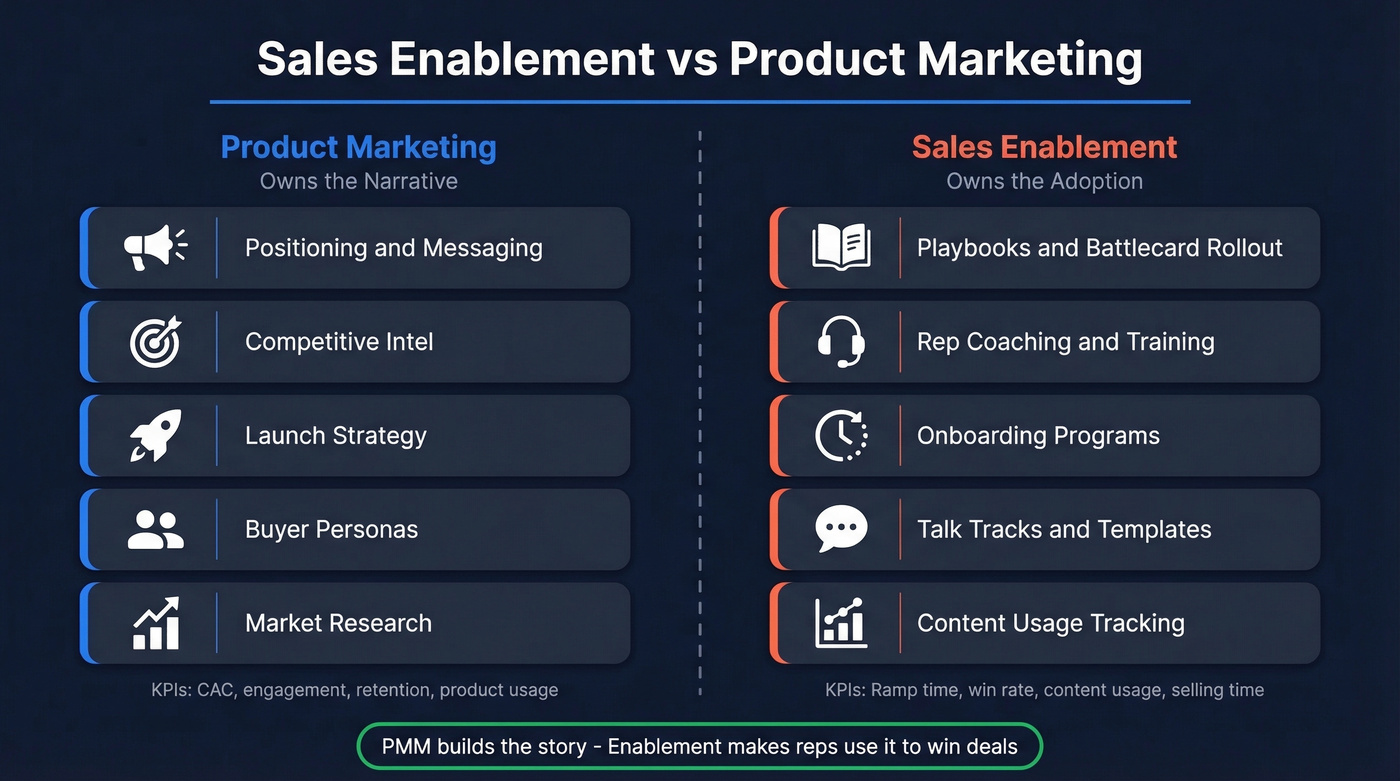
Both functions create content for sellers, but the intent differs. PMM builds the story: why your product wins, who it's for, how it's different. Enablement operationalizes it through playbooks, battlecards, coaching, and onboarding. This isn't a turf war. It's a division of labor, and when it breaks down, you get that 80% waste stat.
Key Differences Between the Two Functions
| Dimension | Product Marketing | Sales Enablement |
|---|---|---|
| Focus | Market + buyer | Rep + deal |
| Audience | Prospects, market | Internal sales team |
| Goal | Demand + positioning | Rep productivity |
| KPIs | CAC, engagement, product usage, retention | Ramp time, win rate, content usage |
| Deliverables | Messaging, launches, personas | Playbooks, battlecards, coaching |
| Common tools | HubSpot, Marketo, competitive intel platforms | Gong, Seismic, Highspot |
The KPI split is what actually matters day-to-day. PMM gets measured on whether campaigns generate pipeline and positioning resonates with the market. Enablement gets measured on whether reps execute - time to first deal, available selling time, sales confidence scores. We've seen teams waste months arguing over ownership when the KPI distinction would've settled it in five minutes.
Why Everyone Confuses Them
An analysis of the PMA State of Product Marketing 2023 survey found that sales enablement ranked as the fifth most common task PMMs perform - more common than personas or segmentation work. In early-stage companies, one PMM is doing everything, and the boundary dissolves fast.
Here's the thing: you know the overlap is a problem when your PMM keeps getting pulled into discovery calls, your enablement lead is asked to "own the launch," or nobody can say who updates the battlecard after a competitor ships a new feature. The debate isn't academic. It directly shapes how these teams spend their hours each week, and the consensus on r/ProductMarketing reflects real frustration - PMMs say enablement work crowds out their core positioning responsibilities until they're basically glorified content mills.
Who Creates What
| Asset | Primary Owner | Collaborator | Success Metric |
|---|---|---|---|
| Battlecards | PMM | Enablement | Usage rate + win rate |
| Case studies | PMM | Enablement | % deals influenced |
| Sales playbooks | Enablement | PMM | Ramp time |
| Talk tracks | Enablement | PMM | Call quality scores |
| Email templates | Enablement | PMM | Reply rate |
PMM owns the narrative layer. Enablement owns adoption and in-field usage. When a battlecard gets created but never opened in Highspot, that's usually an enablement failure - the rollout, the training, the reinforcement didn't happen. When the battlecard says the wrong thing about a competitor, that's a PMM failure. The distinction sounds simple, but in our experience, most orgs blur it until something breaks publicly during a deal review.

Misalignment between PMM and enablement costs you deals - but so does stale data. When reps can't reach the ICP contacts your playbooks target, win rates collapse regardless of messaging quality. Prospeo's 7-day data refresh and 98% email accuracy ensure the contacts in your sequences are real, current, and reachable.
Stop letting bad data sabotage both teams' work.
Who Owns Enablement by Stage
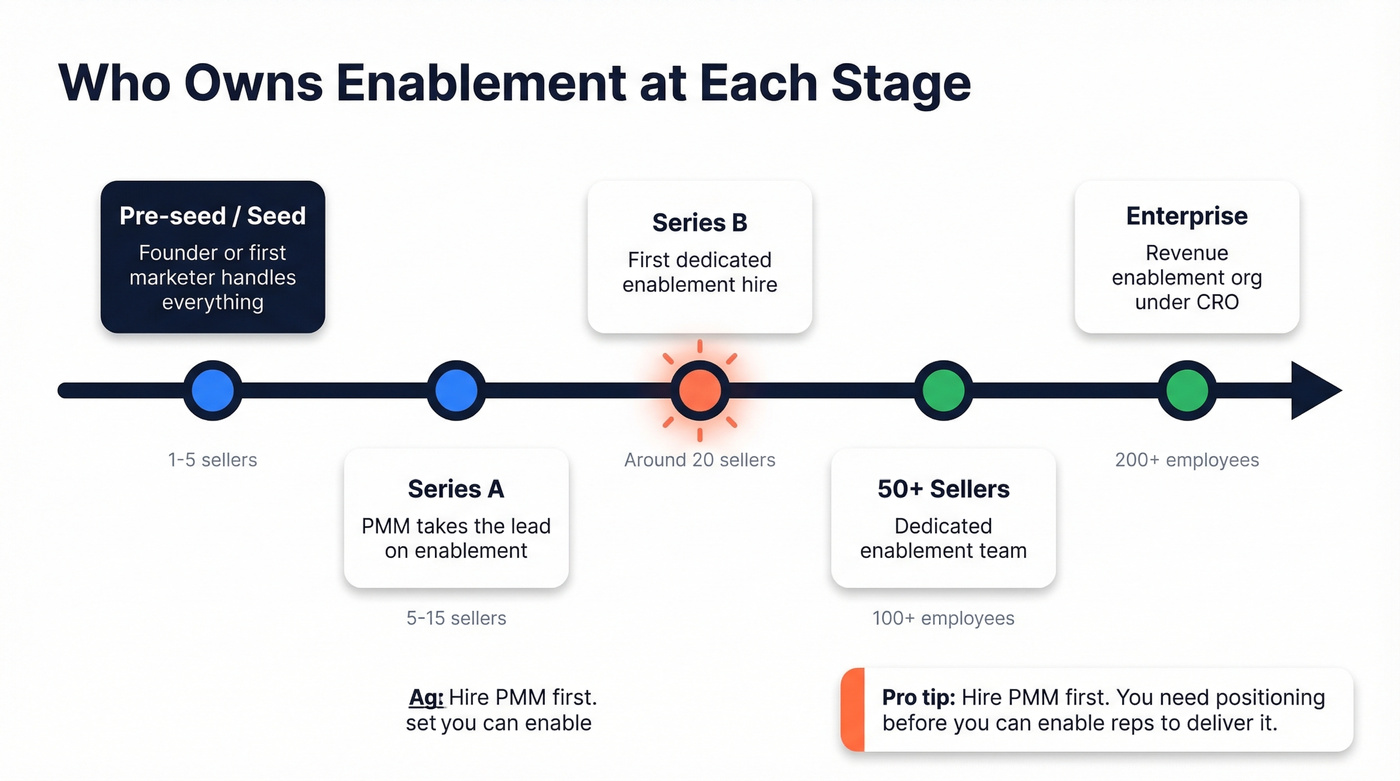
This is the question that trips up growing companies. Dock.us maps a useful progression that matches what we've seen across dozens of orgs:
| Stage | Who Owns Enablement |
|---|---|
| Pre-seed / Seed | Founder or first marketer |
| Series A | PMM takes the lead |
| Series B (~20 sellers) | First dedicated enablement hire |
| 50+ sellers | Dedicated enablement team |
| Enterprise | Revenue enablement org |
Hire PMM first. You need positioning and messaging before you can enable reps to deliver it. Your first dedicated enablement hire makes sense around 20 sellers and 100 employees. Most companies bring in enablement too late - by the time reps are improvising their own battlecards, you've already lost months of productivity.
Skip the dedicated enablement hire if your deal sizes sit below $15k and you have fewer than 15 reps. You don't need one yet. You need a PMM who's disciplined about documenting what works and building repeatable assets.
The Real Cost of Misalignment
When PMM and enablement aren't aligned, the damage compounds quickly and quietly. The 67% lower close-rate and 44-day cycle-length numbers get attention, but the root cause is almost always the same: the ICP isn't operationalized. Most organizations give lip service to their ideal customer profile but don't actually execute against it - PMM builds messaging for one persona while reps chase a different buyer entirely, and neither team realizes it until the quarter's already gone.
Alignment Rituals That Work
Alignment isn't a one-time offsite. It's recurring habits.
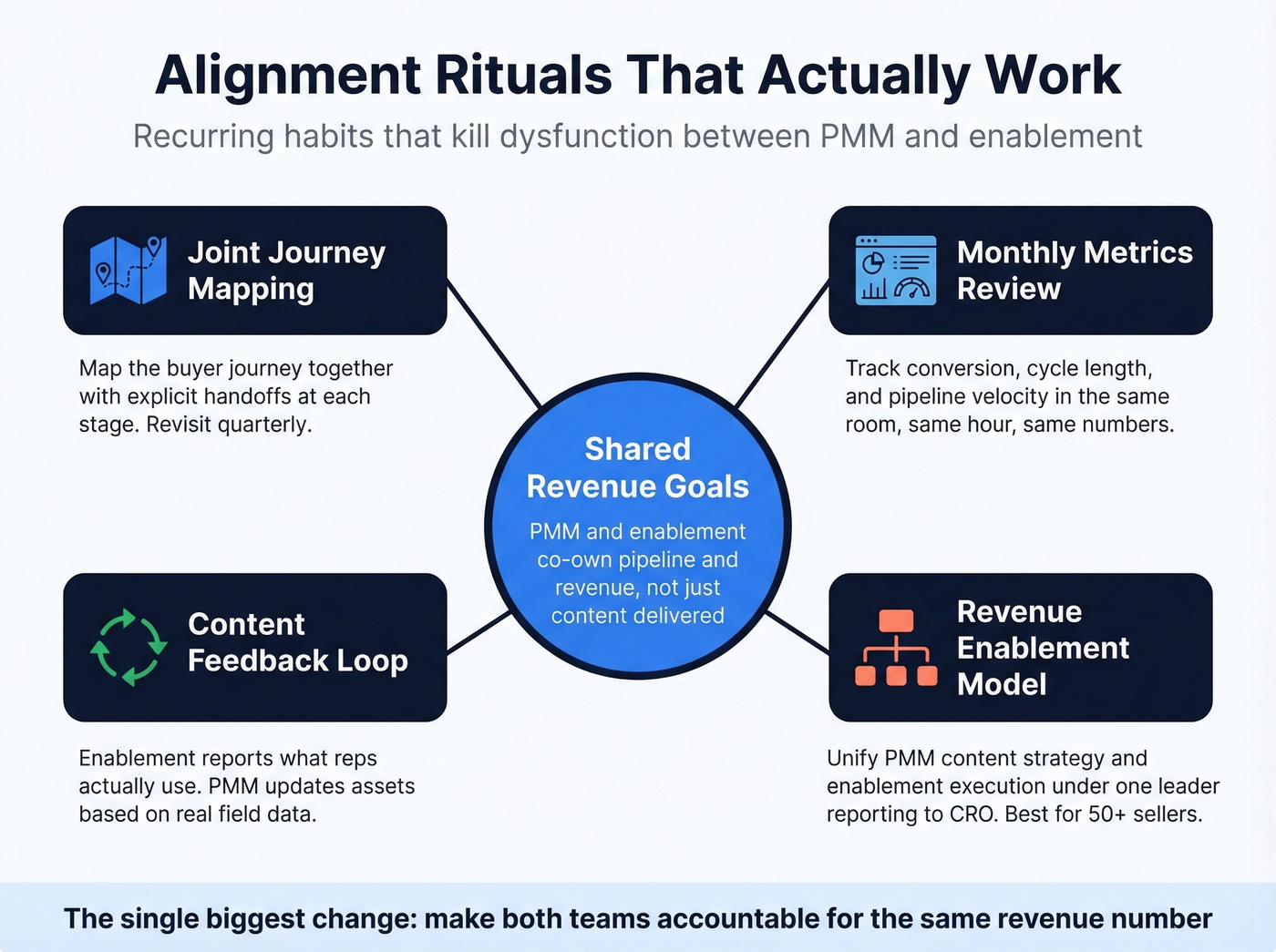
Shared revenue goals - PMM and enablement co-own pipeline generated and revenue closed, not just "content delivered." This single change kills more dysfunction than any reorg.
Joint journey mapping - map the buyer journey together with explicit handoffs at each stage, then revisit it quarterly because your buyers' behavior shifts faster than your internal docs.
Monthly metrics review - track lead conversion rates, cycle length, and pipeline velocity together in the same room. Not separate dashboards reviewed in separate meetings. The same room, the same hour, looking at the same numbers.
A trend gaining traction in 2026: "revenue enablement" as an umbrella function that unifies PMM content strategy and enablement execution under a single leader, typically reporting to a CRO. It closes the accountability gap when "messaging" and "adoption" live in different org charts. Gartner's research on revenue enablement supports this consolidation for companies past the 50-seller mark.
The Data Layer Both Teams Need
Let's be honest about a pattern we see repeatedly: PMM builds a killer campaign targeting VP-level buyers at mid-market SaaS companies. Enablement creates the playbook. Reps run the sequence. And a meaningful share of emails bounce because the contact data is stale.
Bad data undermines both functions simultaneously. PMM campaigns hit dead inboxes, so engagement metrics look terrible. Reps can't reach the ICP contacts enablement identified, so win rates drop. Nobody can tell if the messaging failed or the data failed - and that ambiguity poisons the PMM-enablement relationship because each team blames the other.
The fix is a shared data foundation both teams trust. Prospeo runs a 7-day refresh cycle on 300M+ professional profiles, compared to the 6-week industry average, so the contacts PMM targets and the lists enablement builds for reps stay current. The filter panel lets you narrow by job title, company size, intent topics, and technographics, then verify emails in bulk before exporting - which means both teams are working from the same clean, verified records instead of arguing over whose list is more accurate. (If you're pressure-testing your stack, compare options in our guide to data enrichment services.)
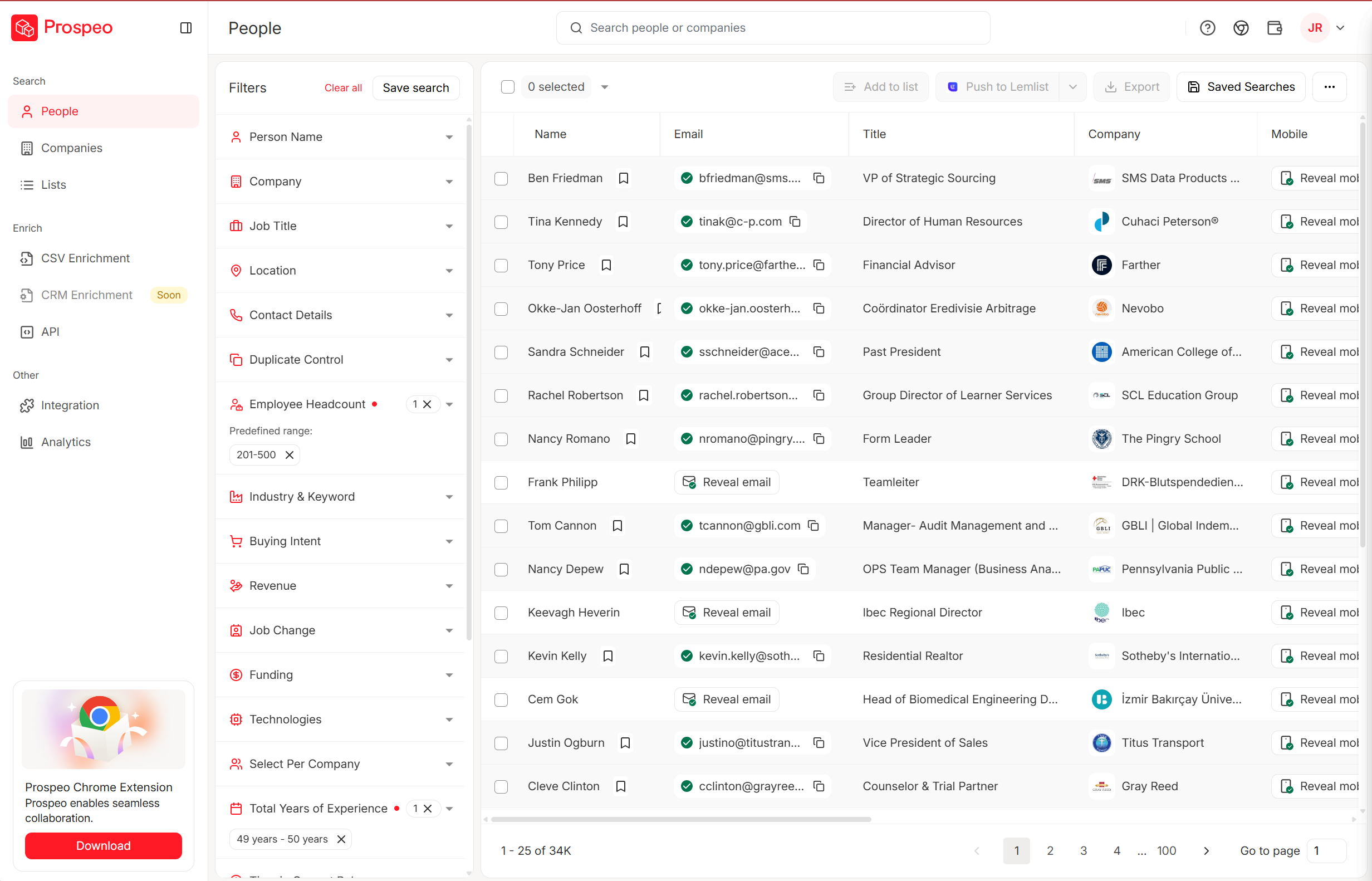
Your PMM nails the positioning. Enablement builds the playbook. Then emails bounce because the data is six weeks old. Prospeo refreshes 300M+ profiles every 7 days - not the 6-week industry average - so reps actually connect with the buyers both teams worked to identify.
Give your reps data as sharp as your messaging.
FAQ
Is sales enablement part of product marketing?
They're distinct functions that overlap on content creation. PMM owns messaging and competitive narrative; enablement owns how reps adopt and use it in deals. At companies with fewer than 20 sellers, PMM typically absorbs enablement work - but they carry different KPIs and should be separated once the sales team scales past that threshold.
Which should we hire first: PMM or enablement?
PMM. You need positioning and messaging before you can enable reps to deliver it. Most companies don't need a dedicated enablement hire until they reach roughly 20 sellers and 100 employees - before that, a strong PMM can cover both.
What tools help both teams stay aligned?
CRM platforms like Salesforce or HubSpot centralize account data. Content platforms like Seismic or Highspot track asset usage and surface adoption gaps. For the contact data layer, Prospeo keeps both teams working from verified, current records - 98% email accuracy with a 7-day refresh - so campaigns and outreach hit the same real people.
How does revenue enablement differ from sales enablement?
Revenue enablement expands the scope beyond sales reps to include customer success, solutions engineers, and channel partners. It typically reports to a CRO and unifies PMM content strategy with enablement execution under one org - eliminating the handoff gaps that cause misalignment between product marketing and enablement teams.