

The Best Sales Lead Tracking Software in 2026 (10 Picks)
A RevOps lead we know ran a pipeline audit last quarter and found that 40% of the "active" leads in their CRM had bounced emails, disconnected phones, or contacts who'd changed jobs months ago. Reps didn't trust the data, so they stopped logging activities. The CRM became a graveyard. That's not a tool problem - it's a data problem disguised as a tool problem, and it's why picking the right sales lead tracking software matters more than most teams realize.
80% of leads never convert, and bad data is a massive reason why.
The CRM market is racing toward $163B by 2030, but most teams still pick their lead management tools based on feature checklists and ignore the data quality underneath. Let's fix that.
Our Top Picks
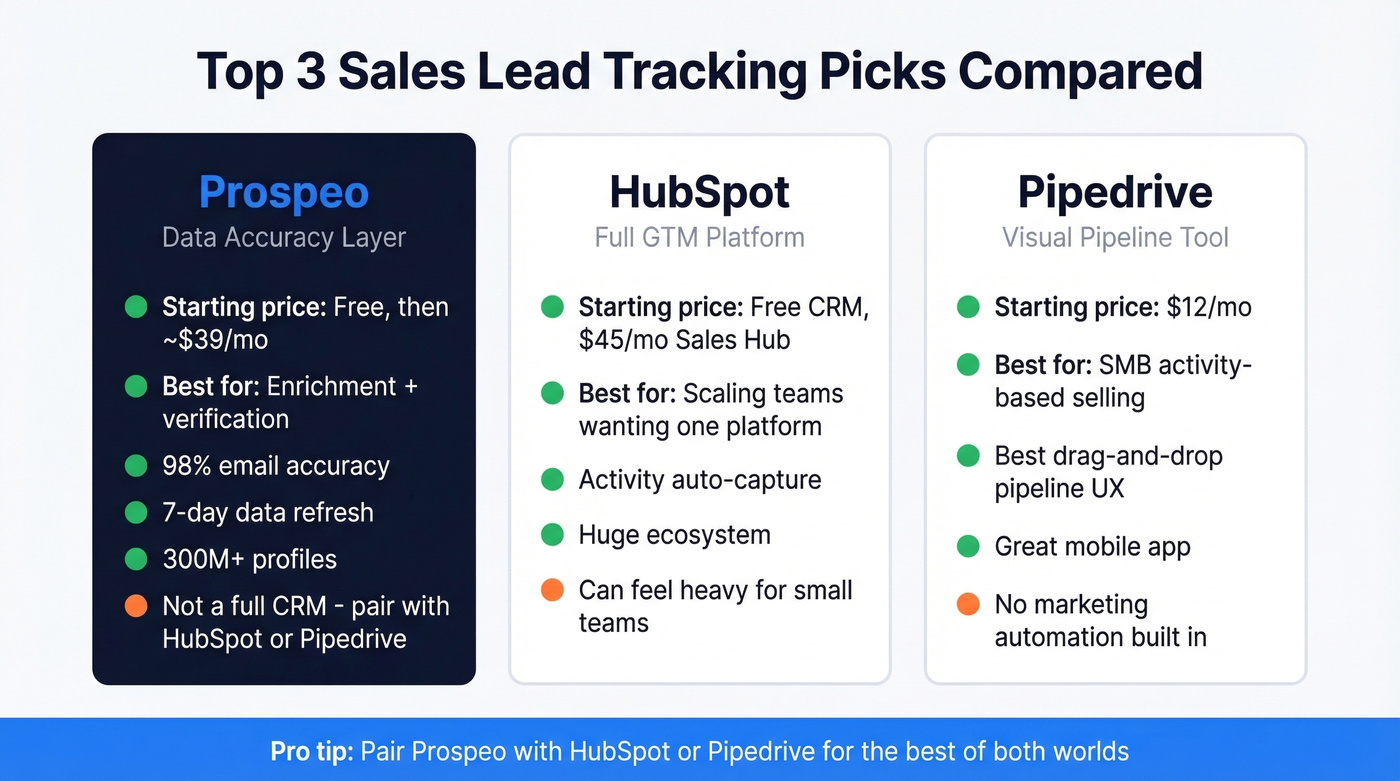
| Pick | Best For | Starting Price |
|---|---|---|
| Prospeo | Verified contact data + enrichment that keeps your CRM pipeline trustworthy | Free; paid from ~$39/mo |
| HubSpot | Free starting point with a broad platform to grow into | Free CRM; Sales Hub from $45/mo |
| Pipedrive | Simple, visual pipeline execution for SMB sales teams | From $12/mo |
Prospeo isn't a CRM - it's the data accuracy layer that sits underneath your CRM and keeps every lead record reachable. HubSpot is the safest free starting point. Pipedrive is the best pure pipeline tool for small teams that want to move fast without drowning in configuration.
What Lead Tracking Software Actually Does
Modern lead tracking is rarely a single tool. It's a stack: a CRM for pipeline management, an enrichment layer for contact accuracy, and often an automation layer for routing and follow-ups. The best setups automate the boring parts - logging emails, scheduling follow-ups, scoring engagement - so reps spend time selling instead of updating spreadsheets.
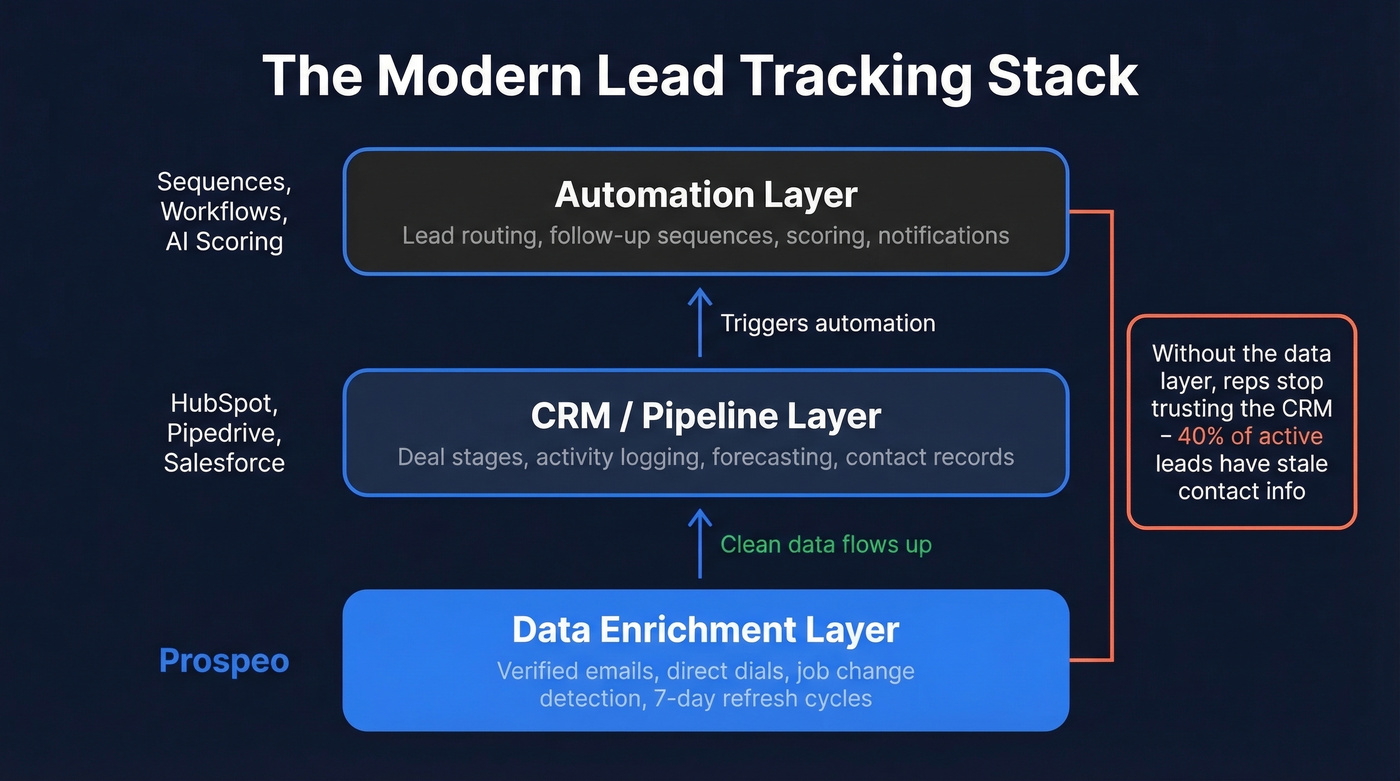
Here's the thing: a recurring theme on r/sales and other sales communities is that reps stop updating the CRM when they don't trust the data. That's not laziness. It's rational behavior. Fix the data, and adoption follows.
When you're evaluating your stack, these are the capabilities that actually matter:
- Pipeline visualization - can you see every deal stage at a glance?
- Activity auto-capture - does it log emails and calls without manual entry?
- Lead scoring - does it rank leads by likelihood to close? Companies using lead scoring see 138% ROI versus 78% without it.
- Follow-up automation - reminders and nudges at the right moment
- Source tracking - which channel produced each lead?
- Data accuracy - are the emails and phone numbers actually valid?
- Integration depth - does it connect to your sequencer, enrichment tools, and marketing stack?
That last point matters more than most teams realize. Following up within the first hour makes you roughly 7x more likely to qualify a lead. You can't follow up fast if the contact data is wrong.
Full Comparison Table
| Tool | Starting Price | Free Plan/Trial | Best For | Key Data/Tracking Feature |
|---|---|---|---|---|
| Prospeo ★ | Free; ~$39/mo | Yes (free tier) | Data accuracy + enrichment | 7-day data refresh |
| HubSpot ★ | Free; $45/mo | Yes (free CRM) | Broad GTM platform | Activity timeline |
| Pipedrive ★ | $12/mo | 14-day trial | SMB pipeline | Visual deal board |
| Freshsales | Free (3 users) | 21-day trial | Budget AI scoring | Freddy AI scoring |
| Salesforce | $25/user/mo | 30-day trial | Enterprise scale | Custom workflows |
| Zoho CRM | $7/mo (Bigin) | 15-day trial | Price-to-feature ratio | Zia AI assistant |
| Salesflare | $49/user/mo | 30-day trial | Minimal data entry | Email/calendar sync |
| Zendesk Sell | ~$19/user/mo | 14-day trial | Support-to-sales | Shared customer context |
| Less Annoying | $15/user/mo | 30-day trial | Simplicity | Flat pricing, all features |
| Keap | $129/mo | 14-day trial | Solopreneurs | Marketing automation |
★ = Our top picks

40% of "active" CRM leads have stale data. Prospeo refreshes every record on a 7-day cycle - not the 6-week industry average - so your pipeline stays reachable. At $0.01 per email with 98% accuracy, teams like Meritt cut bounce rates from 35% to under 4% and tripled pipeline.
Stop tracking leads you can't actually reach.
The 10 Best Tools Reviewed
Prospeo
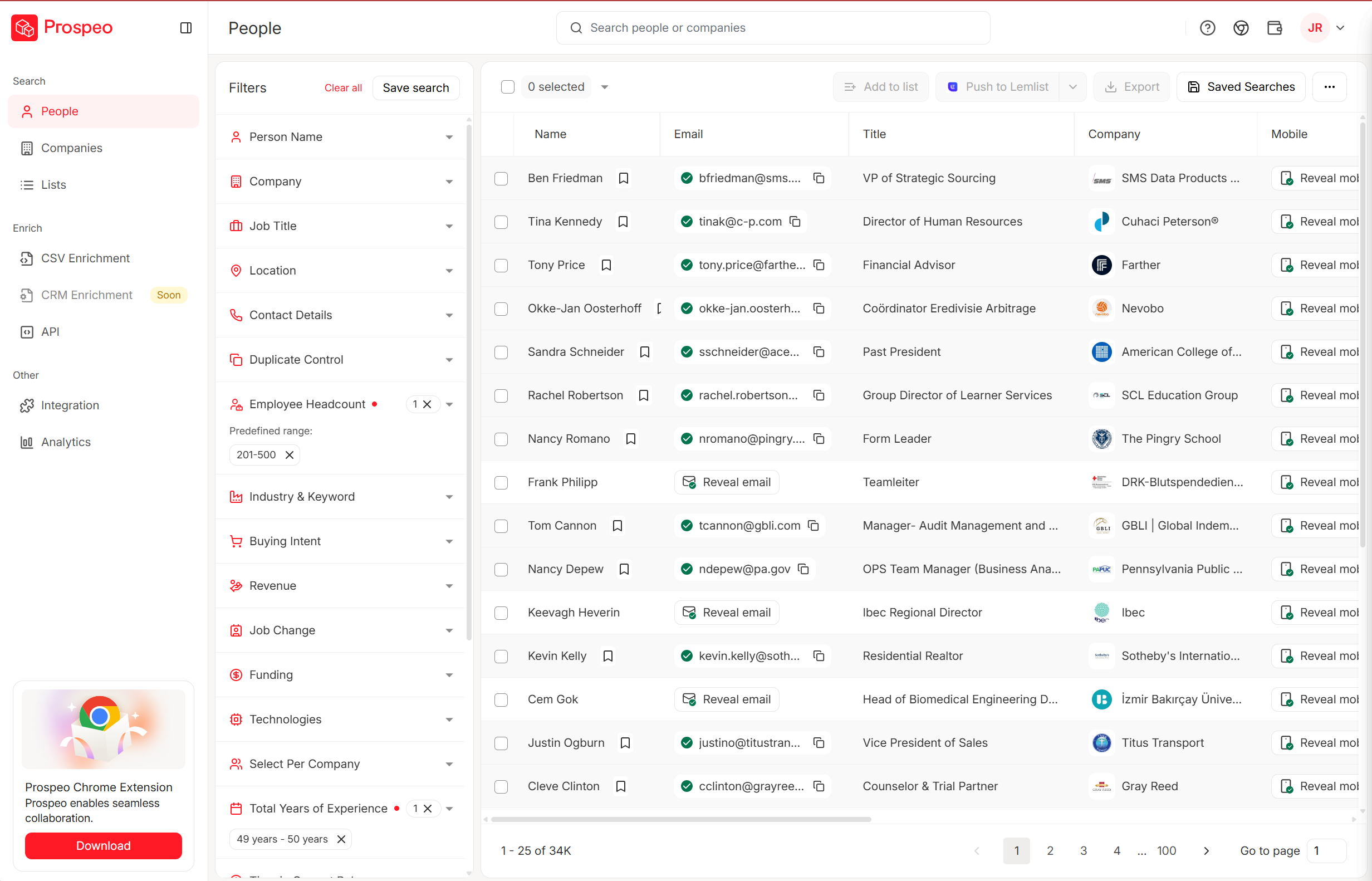
Use this if you're tired of your CRM being full of stale emails and disconnected numbers. Prospeo is the enrichment and verification engine that sits underneath your CRM and keeps lead data accurate. It covers 300M+ professional profiles with 143M+ verified emails at 98% accuracy and 125M+ verified mobile numbers that hit a 30% pickup rate.
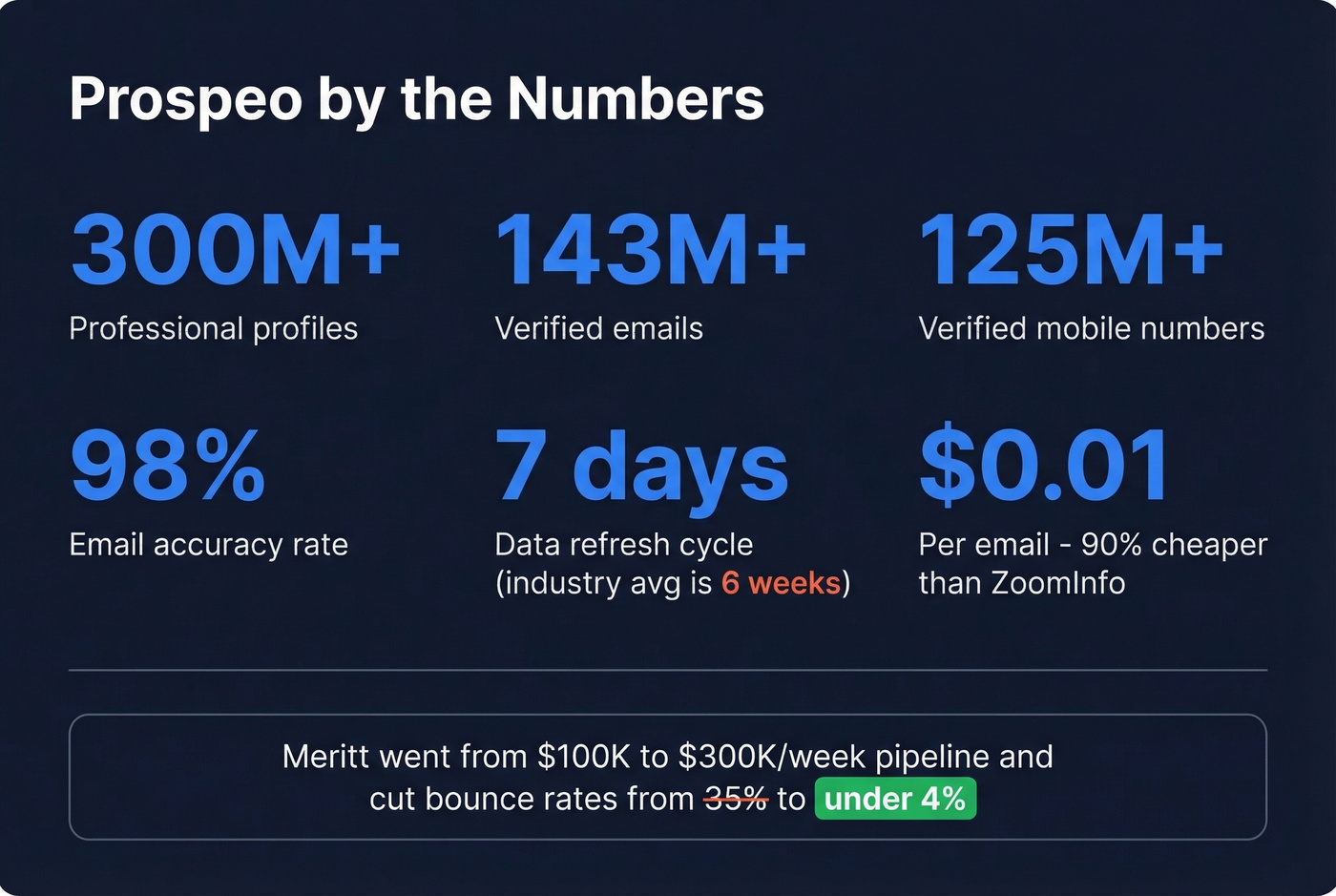
Every record refreshes on a 7-day cycle - the industry average is six weeks, which means most providers are handing you data that's already decaying by the time you get it. The enrichment match rate runs 83%, meaning most leads you push through come back with usable contact data. Native integrations with Salesforce, HubSpot, Smartlead, Instantly, Lemlist, Clay, Zapier, and Make mean you don't need to build custom plumbing. At roughly $0.01 per email, it's 90% cheaper than ZoomInfo for the data layer alone.
One of our favorite proof points: Meritt tripled their pipeline from $100K to $300K/week after switching, and their bounce rate dropped from 35% to under 4%.
Skip this if you need a full CRM with pipeline management - pair it with Pipedrive or HubSpot for the pipeline side.
HubSpot
Use this if you want free lead tracking software that can scale into a full GTM platform. HubSpot's free tier handles contact management, deal tracking, and basic activity logging without spending a dollar. The activity timeline auto-captures emails and meetings, so reps don't have to manually log every touchpoint.
The ecosystem is the real draw. Marketing Hub, Service Hub, and Operations Hub all connect natively, which means your lead data flows from first touch to closed-won without duct tape. Sales Hub starts at $45/mo when you need sequences, forecasting, and custom reporting. For teams that plan to grow past 10 reps and want everything under one roof, it's hard to beat.
Skip this if you're a 3-person team that just needs a pipeline board. HubSpot's breadth becomes overhead when you don't need most of it. Pipedrive will feel faster.
Pipedrive - Visual Pipeline Done Right
Use this if you want the cleanest pipeline UX in the category. We've tested dozens of pipeline interfaces, and Pipedrive's drag-and-drop board at $12/mo is still the best for activity-based selling - the philosophy that if reps do the right activities, deals close.
The mobile app is strong, which matters for field sales teams logging activities between meetings. As a lead tracking app, it handles on-the-go deal updates better than most competitors. Automations handle lead routing and follow-up reminders without needing a RevOps engineer to configure them.
Skip this if you need deep marketing automation or enterprise-grade reporting. Pipedrive is a sales tool, not a platform. That's a feature, not a bug.

Freshsales
$0 for up to 3 users. Paid tiers run $9/user/mo (Growth), $39 (Pro), and $59 (Enterprise), billed annually. The standout feature is Freddy AI, which scores leads based on engagement signals and demographic fit. At the Pro tier, you get territory management and multiple pipelines. For teams that want AI-assisted scoring without Salesforce pricing, Freshsales is the obvious pick.
Salesforce Sales Cloud
If your team has a dedicated admin and complex sales processes, nothing else matches Salesforce's flexibility. Starting at $25/user/mo, it earns PCMag's 4.5 Editors' Choice rating for its customization depth, AppExchange marketplace, and workflow automation. But the tradeoff is real: a 50-seat deployment with proper configuration, training, and integrations can easily run $100K+ in the first year. For teams under 20 reps, it's overkill.
Zoho CRM
Zoho delivers the best price-to-feature ratio in the CRM space. Bigin, Zoho's lightweight version, starts at $7/mo, and Zoho CRM proper starts around $14/user/mo. It also earned PCMag's 4.5 Editors' Choice, putting it in rare company alongside Salesforce. Zia, the AI assistant, handles lead scoring and anomaly detection at higher tiers. The broader Zoho ecosystem - Books, Desk, Campaigns - creates a mini-suite that competes with HubSpot's breadth at a fraction of the cost.
Salesflare
If your team's biggest complaint is "nobody updates the CRM," start here. Salesflare automatically pulls contact data from your email and calendar, logs interactions, and builds a timeline without reps lifting a finger. At $49/user/mo billed annually or $64 monthly, it's priced for small B2B teams that hate CRM busywork. The 30-day trial is one of the longest in this list.
Zendesk Sell
The right pick if your sales team works closely with a support team already on Zendesk. Shared customer context between sales and support reps is the differentiator. Starts at ~$19/user/mo.
Less Annoying CRM
$15/user/mo flat. No tiers, no upsells, all features included. Average setup time is about an hour. There aren't native iOS/Android apps - it's mobile-responsive in the browser - and integrations run through Zapier. For teams that want simplicity over power, it does exactly what it says on the tin.
Keap
Keap combines CRM with built-in marketing automation - email sequences, landing pages, appointment scheduling - starting at $129/month. It's expensive for what it is, but solopreneurs and coaches who want one tool for everything instead of stitching together five find it worth the consolidation.
Lead tracking software is useless when reps don't trust the data. Prospeo enriches your CRM with 50+ data points per contact at an 83% match rate - verified emails, direct dials, job changes, and intent signals. Native integrations with HubSpot, Salesforce, and every major sequencer mean zero manual plumbing.
Give your reps data worth logging into the CRM for.
Mistakes That Kill Lead Tracking
Most CRM failures aren't about picking the wrong tool. In our experience, the #1 reason adoption fails is stale data - not missing features.
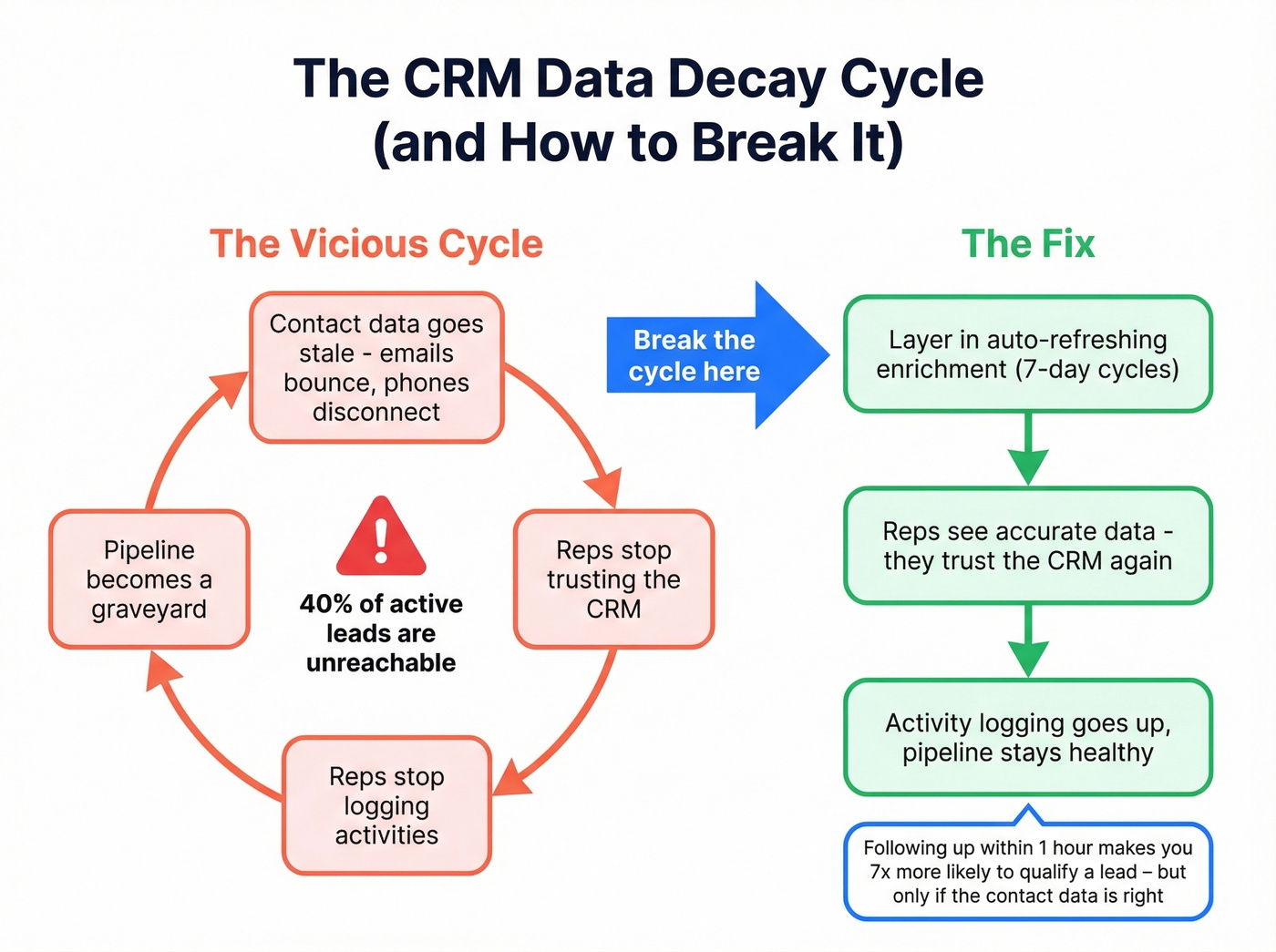
- Ignoring data quality - your CRM is full of stale emails and duplicates, so nobody trusts it. Layer in verified, auto-refreshed contact data and the trust problem disappears.
- Insufficient training - reps get a 30-minute demo and are expected to figure out the rest. Budget real onboarding time.
- Failing to integrate - if your CRM doesn't connect to your sequencer and enrichment tools, reps will work around it. Manual data entry breeds abandonment.
- Not customizing to your process - default pipeline stages rarely match how your team actually sells. Customize stages, fields, and automations before launch.
- Underestimating adoption resistance - get buy-in from 2-3 reps early, let them champion it, and roll out gradually.

KPIs Worth Tracking
Speed-to-lead is the single most important metric. Companies that follow up within the first hour are up to 7x more likely to qualify leads. Everything else is secondary, but these four round out the picture:
- Stage conversion rate - what percentage of leads move from one pipeline stage to the next? Drops reveal where your process breaks.
- Lead aging - how long do leads sit in each stage? Aging leads are dying leads.
- Source ROI - which channels produce leads that actually close?
- Rep response time - if one rep averages 4 hours and another averages 20 minutes, you've found a coaching opportunity.
Our Take
Look - if your average deal size is under $10K, you probably don't need a $25/user/mo CRM with enterprise workflows. Simple lead tracking tools with clean data underneath will outperform a bloated Salesforce instance where reps have stopped logging activities. We've seen it over and over. Spend the savings on data quality. That's where pipeline actually lives or dies.
FAQ
What's the difference between a CRM and lead tracking software?
A CRM stores contacts and manages relationships. Sales lead tracking software adds pipeline stages, activity logging, and source attribution on top. Most modern CRMs bundle both, but you still need a separate enrichment layer to keep contact records current and reachable.
Is free lead tracking software good enough?
Free CRMs like HubSpot and Freshsales handle basic pipeline management for teams under 5 reps. They fall short on enrichment and data freshness - where paid tools earn their cost by keeping bounce rates under 4%.
How do I keep lead data accurate over time?
Use a platform that refreshes records automatically. The average B2B database decays 30%+ per year, so manual updates can't keep pace. A 7-day refresh cycle is the gold standard; the industry average sits around six weeks.
What's the most important lead tracking metric?
Speed-to-lead. Companies that follow up within the first hour are up to 7x more likely to qualify leads. Accurate contact data is the prerequisite - you can't respond fast to a bounced email.
How many tools do I actually need?
Most teams need two: a CRM for pipeline management and an enrichment tool for contact accuracy. Add automation only when manual routing becomes a bottleneck - usually around 10+ reps.