Sales Prospecting Quality vs Quantity: Why the Debate Is Dead
It's 3pm on a Tuesday. Your VP of Sales pulls up the dashboard: 200 emails per rep per day, 1.2% reply rate, three meetings booked across the entire team. The sales prospecting quality vs quantity question always surfaces at moments like this - "Should we send more emails, or better emails?"
The honest answer is neither. Not until you fix the data feeding both strategies.
The Short Version
The quality-vs-quantity tradeoff collapsed. 54% of sales teams already use AI for personalized outbound, which means you can personalize at volume - but only if your data and deliverability are solid. Use the 3x3 method (three relevant points in three minutes per prospect) as your minimum viable personalization, then scale with cohort-based messaging instead of one-off artisanal emails. And before debating any strategy at all, fix your contact data. If roughly 17% of your emails never reach the inbox, nothing else matters.
2026 Outbound Benchmarks
Too many prospecting arguments happen in a vacuum - teams debating strategy without knowing what "normal" looks like.
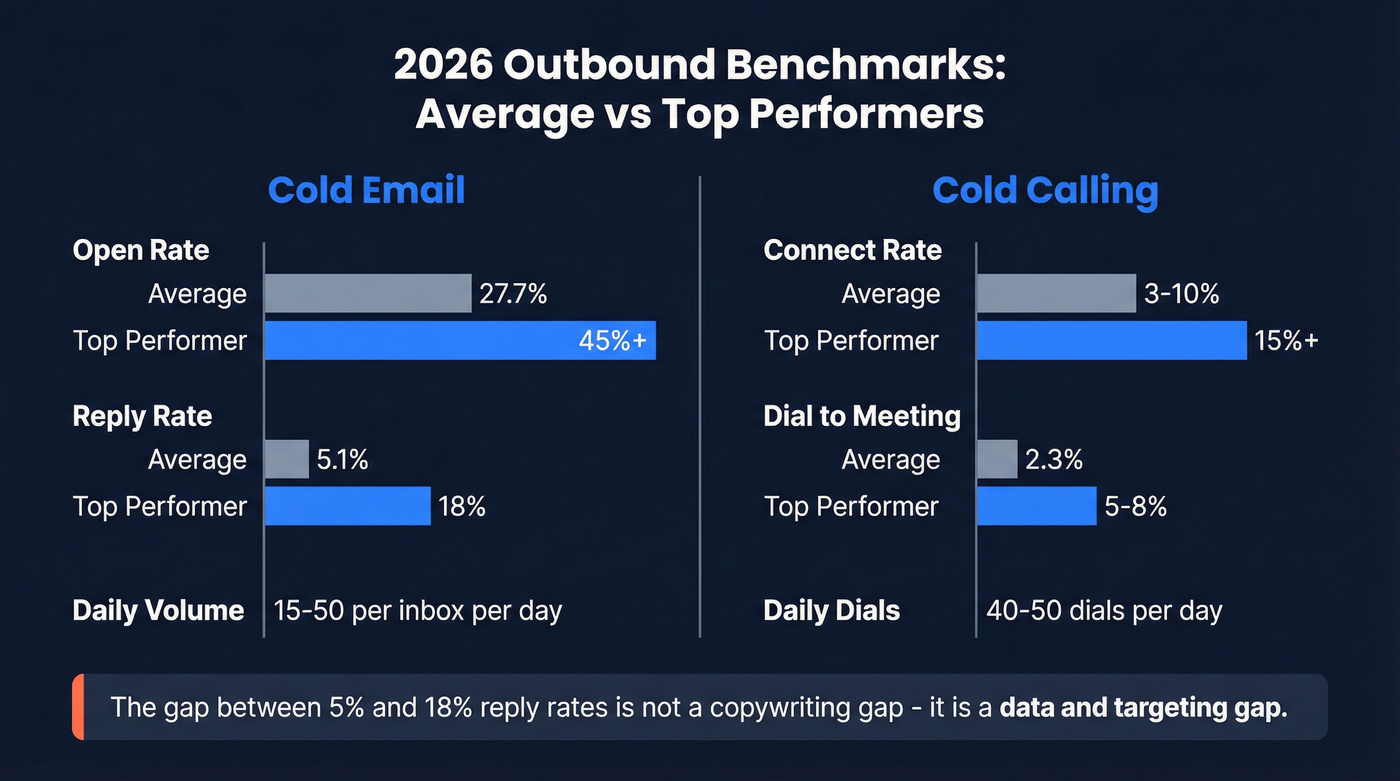
| Channel | Daily Activity | Open/Connect Rate | Reply/Meeting Rate | Top Performer Rate |
|---|---|---|---|---|
| Cold Email | 15-50/inbox/day | 27.7% open | 5.1% reply | Up to 18% |
| Cold Calling | 40-50 dials/day | 3-10% connect | 2.3-2.5% meeting | 5-8% |
A 27.7% open rate sounds decent until you realize 95% of cold emails fail to generate any reply. Part of the problem: roughly 17% of emails never reach the inbox at all. That 5.1% average reply rate gets dragged down by teams blasting unverified lists into the void.
Top performers hitting 18% reply rates aren't just writing better copy. They're sending to verified contacts, at the right companies, with messages that reference something specific. The gap between 5% and 18% isn't a copywriting gap - it's a data and targeting gap.
On the phones, 40-50 dials per day yields four to six quality conversations for a typical SDR. Calling during the 8-9am or 4-5pm windows lifts connect rates 40-70%, and the 2.3-2.5% dial-to-meeting conversion means roughly 40-45 dials to book one meeting. Top teams push that to 5-8%, mostly by calling the right people at the right time.
Let's be honest about what these benchmarks tell us. The spread between average and top performers is 3-4x, and it's not explained by volume differences. It's explained by targeting, data quality, and personalization.
Why Pure Volume Backfires
The "just send more" playbook has a ceiling, and it's lower than most teams think.
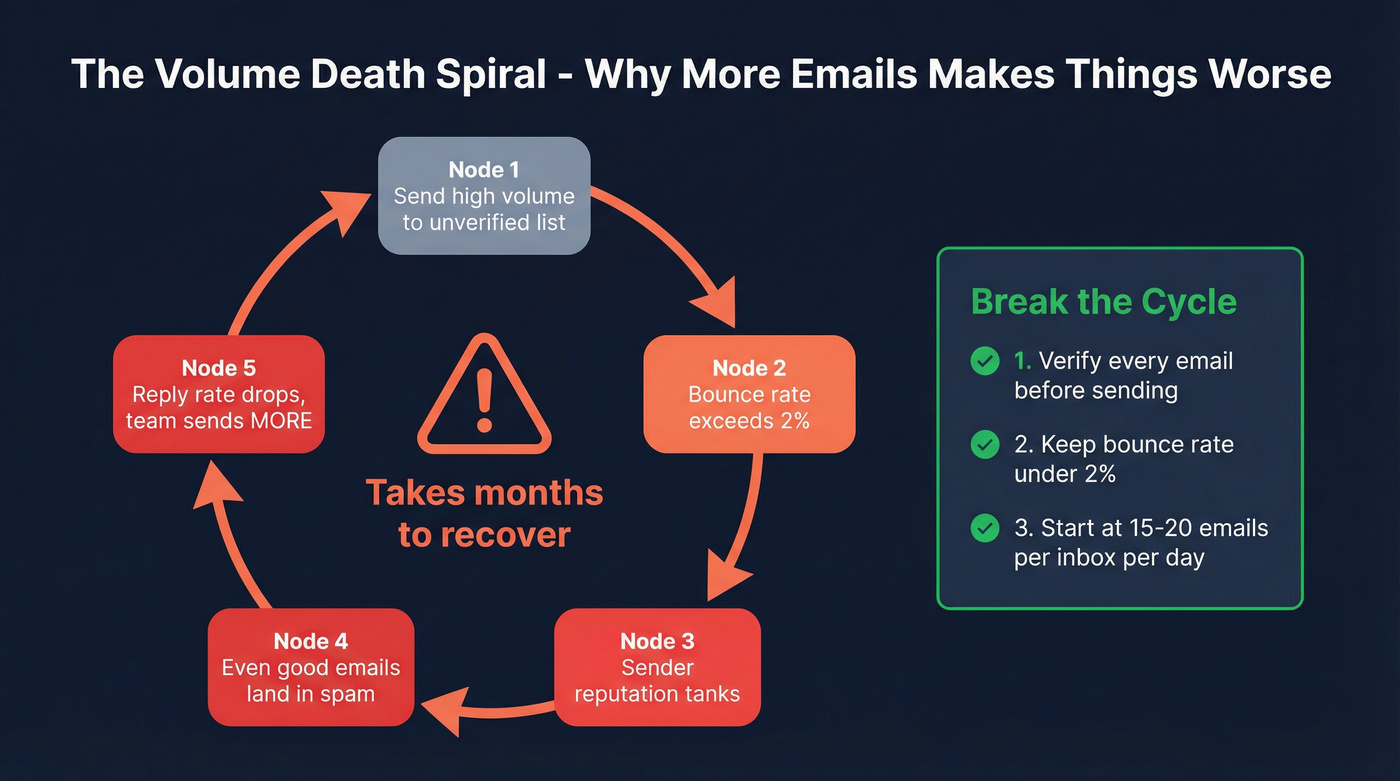
Deliverability creates hard physics constraints. Missing SPF, DKIM, or DMARC authentication can drop your deliverability by up to 30%. New domains need three to four weeks of warming before you can push any real volume, and the safe sending range is narrow: start around 15-20 emails per inbox per day, then scale steadily toward 20-50/day as reputation stabilizes. Scaling volume means scaling infrastructure, not just hitting "send" harder.
Then there's the compliance layer. GDPR penalties run up to EUR20M or 4% of global annual revenue, whichever is higher. Even if you're US-focused, email providers enforce their own thresholds: keep bounce rates under 2% and spam complaints under 0.01%, or watch your sender reputation crater.
Emails to large untargeted lists generate 67% fewer replies than smaller, targeted sends. Once your domain reputation tanks, it drags down everything you send - including replies to warm prospects. We've seen teams burn through three domains in a quarter because they prioritized volume over list hygiene. Rebuilding sender reputation takes months of consistent clean sending, and there's no shortcut.
Why Pure Quality Doesn't Scale Either
We watched a rep spend 20 minutes researching a single prospect - reading their blog posts, finding a mutual connection, crafting a deeply personal email. The response? "Thanks, not interested." Meanwhile, a colleague blasted 80 templated emails and booked two meetings before lunch.
The math is unforgiving. In one classic illustration, a high-volume approach and a high-personalization approach can both land two qualified meetings per day, even though the personalized version has much higher open and reply rates. The difference is time: deep personalization eats your entire day.
Going from generic outreach to basic personalization can double reply rates. But for most teams, the goal isn't "perfect" personalization - it's minimum viable personalization that still lets you run enough at-bats. The sweet spot isn't at either extreme. It's in the middle, and in 2026, technology has made that middle ground accessible to any team with clean data and a basic AI writing tool.

You just read that ~17% of cold emails never reach the inbox and that bad data is what separates a 5% reply rate from 18%. Prospeo's 5-step email verification delivers 98% accuracy, refreshed every 7 days - so your reps stop choosing between quality and quantity and start doing both on a foundation that actually delivers.
Stop debating strategy and start fixing the data underneath it.
Why the Tradeoff Collapsed
The quality-vs-quantity framing assumes a tradeoff that AI has largely eliminated.
Personalization yields 2x reply rates versus generic outreach - and 54% of teams now use AI to deliver that personalization at scale. 45% run a hybrid AI-SDR model where AI handles research and first drafts while humans review and refine. 22% of surveyed teams have fully replaced SDRs with AI agents. Still the minority, but a clear signal of where this is heading.
Speed matters enormously here. Opportunities closed within 50 days carry a 47% win rate, while deals dragging past that threshold drop to around 20%. It takes an average of 4.81 touches to get a response regardless of lead temperature, so velocity and follow-up discipline beat perfection every time.
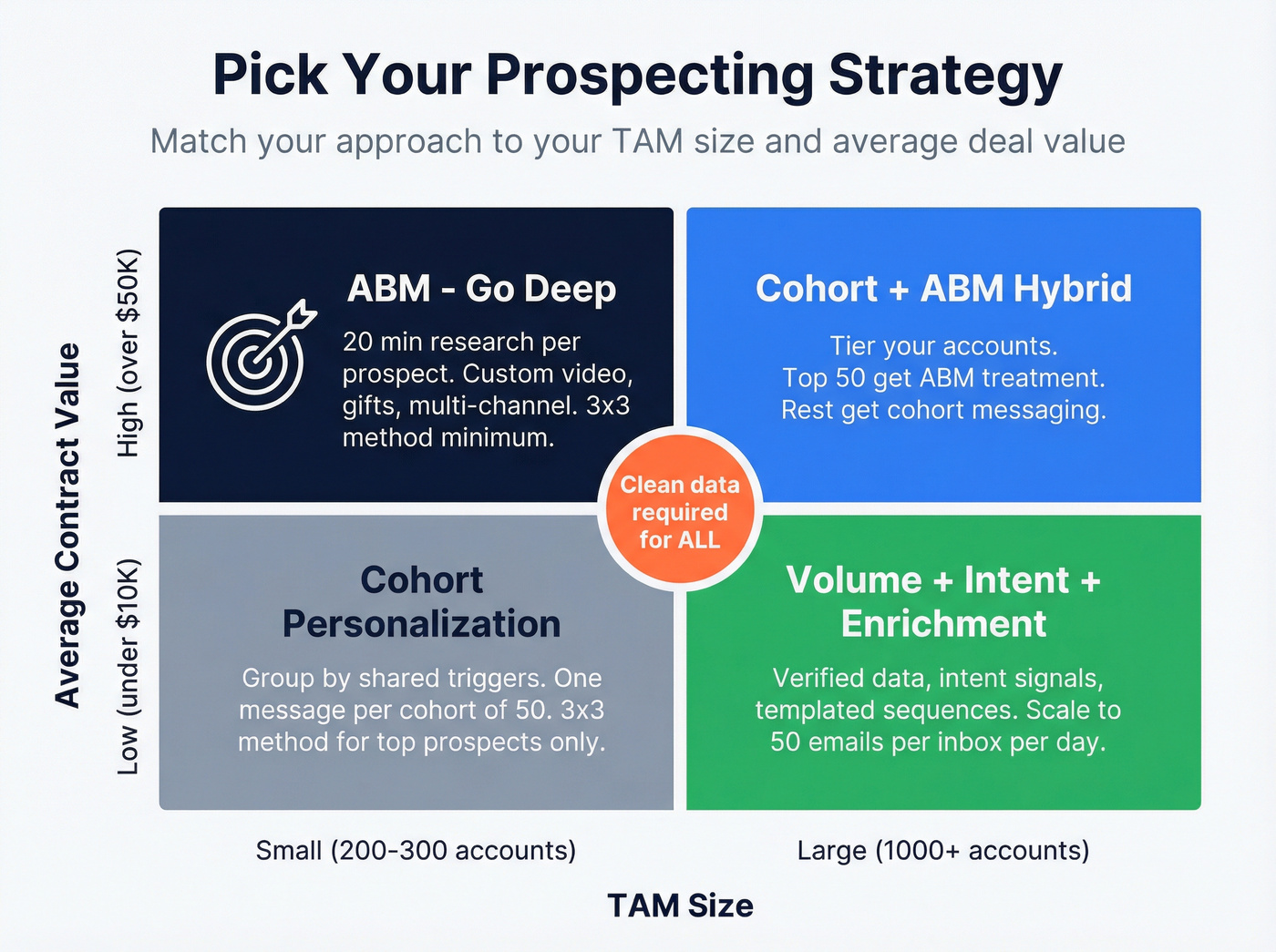
If your average deal size is under $10K, you almost certainly don't need deep personalization. Cohort-based messaging with verified data will outperform a team of researchers crafting bespoke emails. Save the ABM playbook for six-figure deals.
The debate isn't about choosing a side anymore. It's about whether you have the data infrastructure to do both. Teams with verified contacts, clean CRM data, and intent signals can personalize at volume. Teams without those foundations are stuck choosing between two losing strategies.
The Practical Framework
The 3x3 Method
Before you send a single email, spend three minutes finding three relevant things about the prospect: one about their role, one about their company, one personal. That's it.
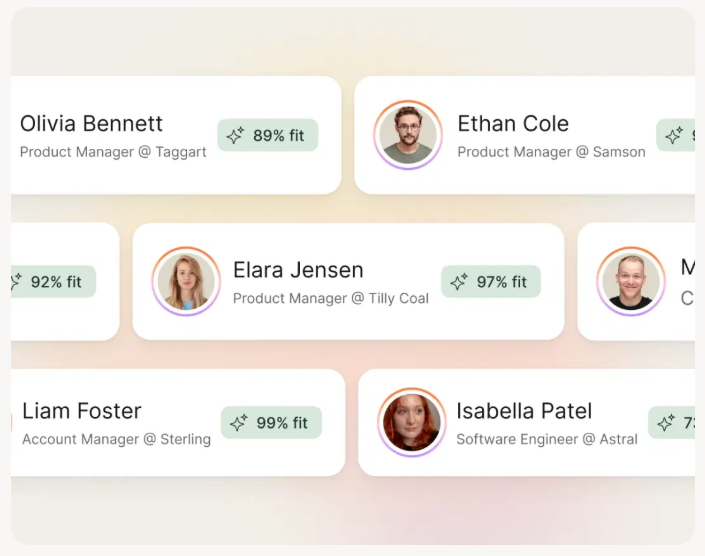
Check their professional profile for role context - a recent job change or a specific responsibility. Scan company news feeds and press releases for the company angle, like a funding round, a new product launch, or a hiring surge. Then skim their public posts or podcast appearances for the personal hook that separates your email from the dozens of others in their inbox.
If you can't find three relevant things in three minutes, your ICP is wrong or your data is garbage. Skip that prospect. Move on.
Cohort-Based Personalization
For scale, group prospects who share a common trigger and write one high-context message per group. Think "founders hiring their first sales lead" or "RevOps managers at Series B SaaS companies running HubSpot." Each cohort gets a message that feels personal because it references their specific situation, even though you wrote it once for 50 people.
| TAM Size | ACV | Recommended Strategy |
|---|---|---|
| Low (200-300 accounts) | >$50K | ABM - go deep |
| High | <$10K | Volume + intent + enrichment |
| Mid-large | Mixed | Cohort-based personalization |
The consensus on r/sales is that starting with high volume and qualifying down works - but only if your data is clean enough that the volume phase doesn't destroy your domain reputation before you get to the qualifying phase. Verify your list before you send. Multi-touch sequences of three to five emails over two weeks double reply rates compared to single-touch sends, so build follow-up into every cohort campaign. 48% of reps never send a second message. Don't be one of them.
Measuring Your Balance
Pipeline velocity is the single metric that captures whether your balance is working:
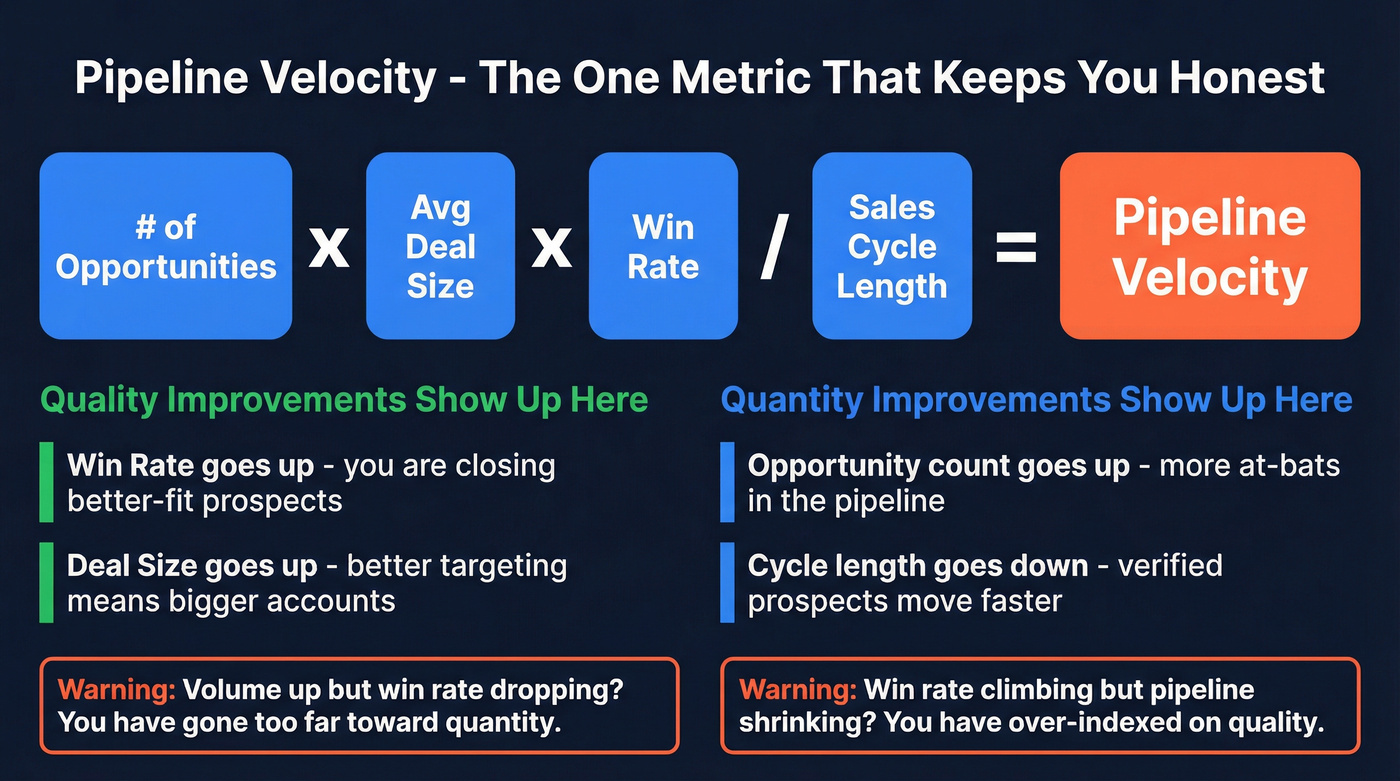
Pipeline Velocity = (# Opportunities x Avg Deal Size x Win Rate) / Sales Cycle Length
Quality improvements show up in win rate and deal size - you're closing better-fit prospects at higher values. Quantity improvements show up in opportunity count. Both should shorten cycle length, because verified, well-targeted prospects move faster through your funnel.
If you're increasing volume but win rate is dropping, you've gone too far toward quantity. If win rate is climbing but pipeline is shrinking, you've over-indexed on quality. The formula keeps you honest.
The Data Foundation Nobody Talks About
Every article on this topic eventually lands on "personalize more" or "send smarter." Almost none address the prerequisite that makes either strategy work: contact data accuracy.
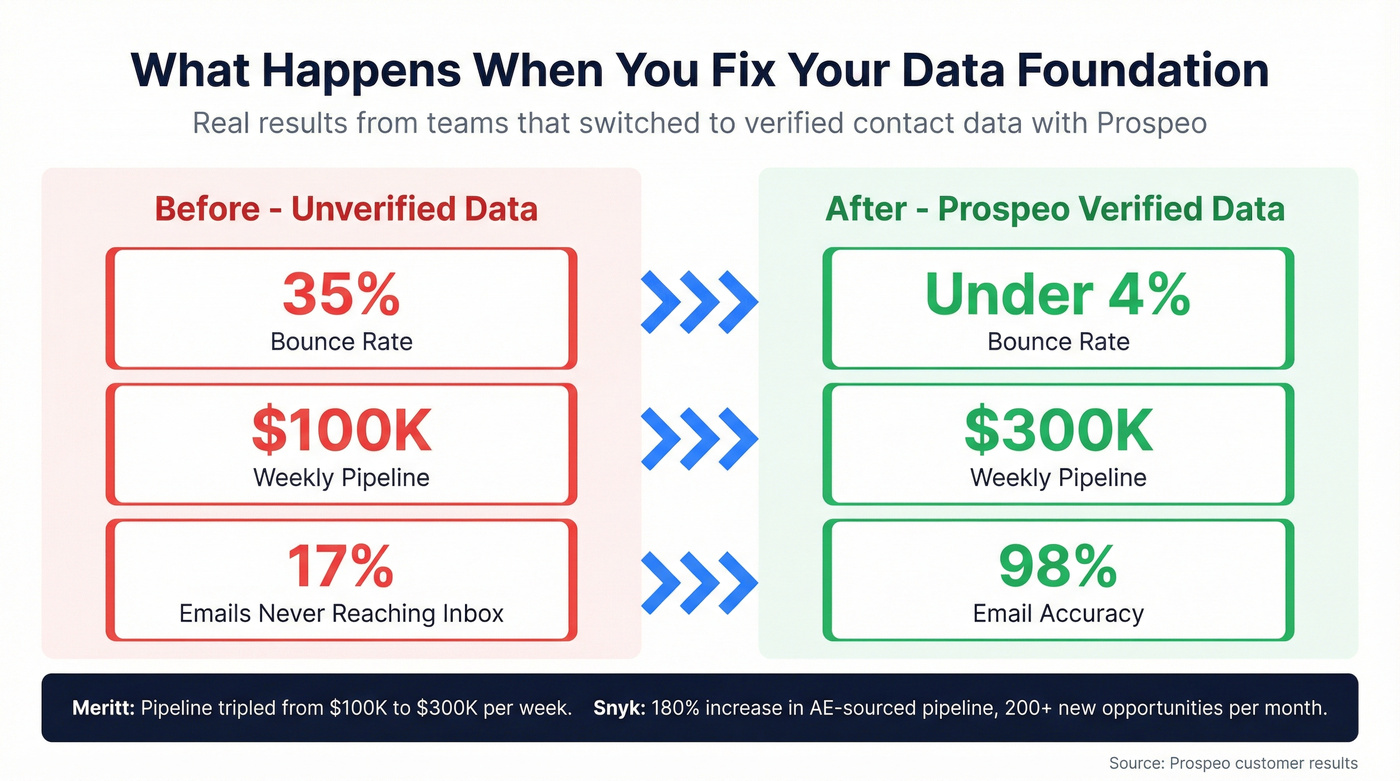
Here's what bad data actually costs you. High bounce rates don't just waste those emails - they destroy your sender reputation, which tanks deliverability for every email you send afterward. Your carefully personalized message to the perfect prospect? It's landing in spam because the unverified addresses you emailed yesterday flagged your domain. This is the frustrating part: teams invest weeks optimizing subject lines and copy, then undermine all of it by sending to a list that's 30% invalid.
Prospeo addresses this at the foundation level with 98% email accuracy across 300M+ professional profiles and a 7-day data refresh cycle compared to the six-week industry average. Every record goes through a 5-step verification process with catch-all handling, spam-trap removal, and honeypot filtering. The results speak for themselves: Meritt went from a 35% bounce rate to under 4%, and their pipeline tripled from $100K to $300K per week. At Snyk, 50 AEs saw their bounce rate drop from 35-40% to under 5%, and AE-sourced pipeline jumped 180% - over 200 new opportunities per month.
The single best investment in your outbound program isn't a better template or a new dialer. It's verified contact data. Fix the foundation, and the sales prospecting quality vs quantity debate disappears - because both strategies actually work when your emails reach real inboxes.
Cohort-based personalization only works when your contact data, intent signals, and firmographics are clean. Prospeo gives you 30+ filters - buyer intent, job changes, headcount growth, technographics - across 300M+ verified profiles at $0.01 per email. That's the infrastructure that makes quality at scale real.
Build targeted cohorts with verified data in minutes, not hours.
FAQ
Is quality or quantity more important in B2B prospecting?
Neither wins alone in 2026. AI-powered personalization at scale outperforms both pure strategies - 54% of sales teams already combine the two. Focus on verified data plus cohort-based messaging to get high reply rates and sufficient volume without choosing between them.
How many cold emails should an SDR send per day?
Start at 15-20 per inbox per day, scaling toward 20-50 as deliverability stabilizes. More important than total volume: verification to keep bounce rate under 2%, follow-up discipline since 48% of reps never send a second email, and personalization for a 2x reply rate lift. Scale by adding inboxes and domains, not by blasting more from one account.
How do I improve reply rates without sacrificing volume?
Start with verified contact data to eliminate bounces that waste effort and domain reputation. Then use the 3x3 method for minimum viable personalization and cohort-based messaging to scale without going generic. Teams combining these approaches reach 12-18% reply rates versus the 5.1% average.